2027 Undergraduate vs. Graduate Paralegal Certificates: Admission Rules and Career Fit

Co-Founder and Chief Data Scientist
An undergraduate paralegal certificate may admit you with a high school diploma, while a graduate certificate generally expects a bachelor's degree. That difference can determine which programs you can enter - but it does not, by itself, tell you which will prepare you better for legal work.
If you are entering the field or changing careers, this guide compares admissions, coursework, cost, professional recognition, and career fit so you can shortlist programs that match your starting point and goals.
Key Things You Should Know
- Choose by entry requirements and coursework, not the label alone: undergraduate certificates vary from open-entry programs to post-baccalaureate programs, while graduate certificates generally require a bachelor's degree.
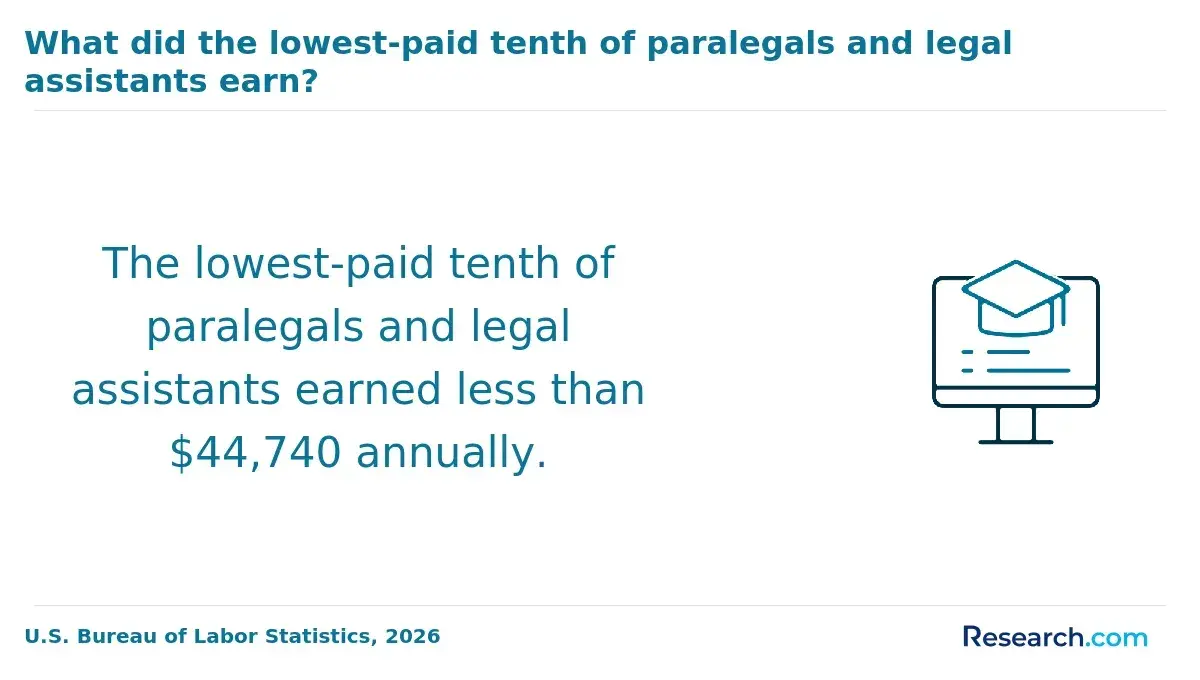
- A graduate certificate does not automatically lead to better pay. The Bureau of Labor Statistics reports median annual pay of $62,890 in May 2025 for paralegals and legal assistants across education levels.
- Before paying a deposit, confirm the program's credit level, total cost, practical training, institutional accreditation, and any claimed American Bar Association (ABA) program approval.
What is the difference between undergraduate and graduate paralegal certificates?
The distinction is the academic level of the coursework, not necessarily the student's age, career stage, or eventual job title. An undergraduate certificate can be designed for someone new to college or for a bachelor's degree holder taking undergraduate-level paralegal courses. A graduate certificate ordinarily consists of graduate-level coursework and requires a completed bachelor's degree for admission.
The comparison below identifies what each label usually means. Individual program rules take precedence, particularly for certificates offered through continuing education divisions.
| Decision factor | Undergraduate certificate | Graduate certificate |
| Typical starting point | High school completion, prior college study, or a bachelor's degree, depending on the program | Completed bachelor's degree; other prerequisites may apply |
| Course level | Undergraduate credit, or sometimes noncredit continuing education | Graduate credit if the school formally awards it; verify the transcript |
| Likely fit | Building foundational legal-support skills or adding paralegal training to an existing degree | Adding advanced legal study to an existing degree or professional background |
| Main limitation | Credits may not satisfy graduate-degree requirements | Higher course level does not guarantee more hands-on paralegal training or a hiring advantage |
Neither certificate qualifies someone to practice law as an attorney. If you hope to continue toward a bachelor's degree, examine associate-to-bachelor's legal studies transfer options before assuming certificate credits will count. The receiving institution decides whether and how credits apply.
What are the admission requirements for undergraduate paralegal certificate programs?
Requirements vary enough that "undergraduate" is not a reliable shortcut for "open to everyone." Some programs require a high school diploma or equivalent. Others require completed college credits, specified writing courses, or a bachelor's degree even though their paralegal courses carry undergraduate credit.
Check the current admissions page and catalog for the exact certificate you want. Determine whether transcripts, minimum grades, placement testing, or English-language proficiency documentation are required. If you already hold a degree, ask whether general education requirements are waived; a waiver at one school does not establish eligibility at another.
For an applicant without college experience, the most direct entry route may be a high-school-entry certificate. Compare it with an associate degree if you also want a broader college credential. For a degree holder changing careers, a post-baccalaureate undergraduate certificate may offer the needed practical courses without requiring graduate-level tuition or prerequisites.
What are the admission requirements for graduate paralegal certificate programs?
A completed bachelor's degree is the usual threshold for a graduate certificate. Programs may also request official transcripts, a minimum undergraduate GPA, a résumé, a statement of purpose, or relevant professional experience. Treat each item as a requirement only if the program's current admissions rules say it is; relevant work experience is not universally required.
Verify whether the certificate admits students directly or requires admission to a graduate school first. Also ask whether applicants need prior legal coursework and whether a credential awarded outside the United States needs an evaluation. A bachelor's degree may establish eligibility, but it does not mean you will skip foundational legal research or writing courses.
If your goal is paralegal employment rather than graduate credit, compare the actual assignments and supervised practice opportunities with those in undergraduate programs. A graduate-level title is most useful when its course content and credit value serve a goal you can name.
How do paralegal certificate accreditation and professional certification differ?
Institutional accreditation concerns the college or university. The ABA separately approves qualifying paralegal education programs; it does not institutionally accredit schools or certify individual paralegals. Check a school's accreditation status with its recognized accreditor, and verify any claim of ABA approval against the ABA's current paralegal program directory. Approval belongs to the listed program, not automatically to every certificate the institution offers.
A school-issued certificate documents completion of a course of study. Professional certification is a separate credential awarded under an organization's rules - for example, NALA's Certified Paralegal credential or the National Federation of Paralegal Associations' Registered Paralegal credential. Eligibility, examinations, and maintenance requirements differ. Completing a certificate does not automatically make you professionally certified.
Neither ABA program approval nor professional certification is a nationwide requirement for every paralegal job. Employers may prefer particular education or credentials, and state-specific rules can affect certain activities or titles. Check the rules relevant to the state and role you are targeting rather than relying on a school's broad employability claim.
What do undergraduate and graduate paralegal certificate programs teach?
Both routes may teach legal research, legal writing, civil procedure, document preparation, ethics, and work under attorney supervision. Undergraduate courses often emphasize building these skills from the beginning. Graduate courses may move more quickly or connect legal concepts to an existing professional field - but the label alone cannot tell you how much paralegal practice students actually get.
Compare syllabi and required assignments. For a litigation-support goal, drafting a research memorandum, organizing discovery, and working through a case file are more informative than a course title alone. For corporate or regulatory work, look for relevant document review, contracts, or compliance exercises. Ask whether students receive access to any named legal research or e-discovery tools and use them in graded work; a curriculum mention is not proof of hands-on proficiency.
If you mainly want legal knowledge for an existing nonparalegal role, a legal studies master's may be a different path. Explore choosing a specialization for a legal studies master's only after deciding whether you need job-focused paralegal training or broader graduate study. A non-JD legal studies degree does not qualify you to practice law.
How long do paralegal certificate programs take and what do they cost?
Completion time depends on required courses, prerequisites, course sequencing, and whether you study full time or part time. Undergraduate and graduate certificates can each have accelerated or extended schedules; neither level has a universal duration. Ask for a course-by-course plan based on your eligibility and intended start term, especially if required classes are not offered every term.
Compare total expected cost, not a single advertised tuition figure. Request the current tuition and mandatory fees for the complete certificate, then check textbooks, technology or research-platform charges, prerequisite courses, campus travel, and any internship expenses. Graduate credits may have a different price and billing structure from undergraduate or noncredit courses.
Federal student aid is not automatic for a certificate: eligibility depends on the institution, the specific program, and the student. Confirm program-level eligibility with the financial aid office before budgeting around loans or grants. If you are considering installments, monthly payment plans for paralegal degree tuition provide a useful comparison point, but verify the certificate's own payment terms. Paying over time changes cash flow, not the program's total price.
Are online or campus-based paralegal certificates better for your goals?
Online study can reduce travel and widen your program choices, but online does not mean self-paced. A program may require live classes, timed exams, a fixed cohort sequence, campus visits, or an in-person internship. Campus study may make scheduled discussion and local networking easier, while creating commute and attendance costs.
Choose based on the schedule you can actually meet and the practical work you will complete. Ask who arranges internship placements, whether a placement is required, and whether remote work or current employment can satisfy it. Those answers matter more to a working student than the delivery label.
If speed is the priority, compare published course sequences with fast-track options for online paralegal education. An accelerated calendar helps only if you meet its prerequisites and can accommodate its weekly workload and required meetings.
What paralegal careers can each certificate prepare you for?
Either certificate may help prepare you for paralegal or legal assistant work involving research, document preparation, case organization, and communication under attorney supervision. Neither authorizes independent legal advice or other services that would constitute the unauthorized practice of law. Hiring standards depend on the employer and position, not solely on whether coursework is labeled undergraduate or graduate.
For someone entering legal work, an undergraduate certificate with substantial writing and case-file practice may be a sensible starting point. A bachelor's degree holder considering a graduate certificate should look for a clear added benefit - such as relevant advanced coursework or graduate credit - rather than assuming the higher level will secure a more senior job.
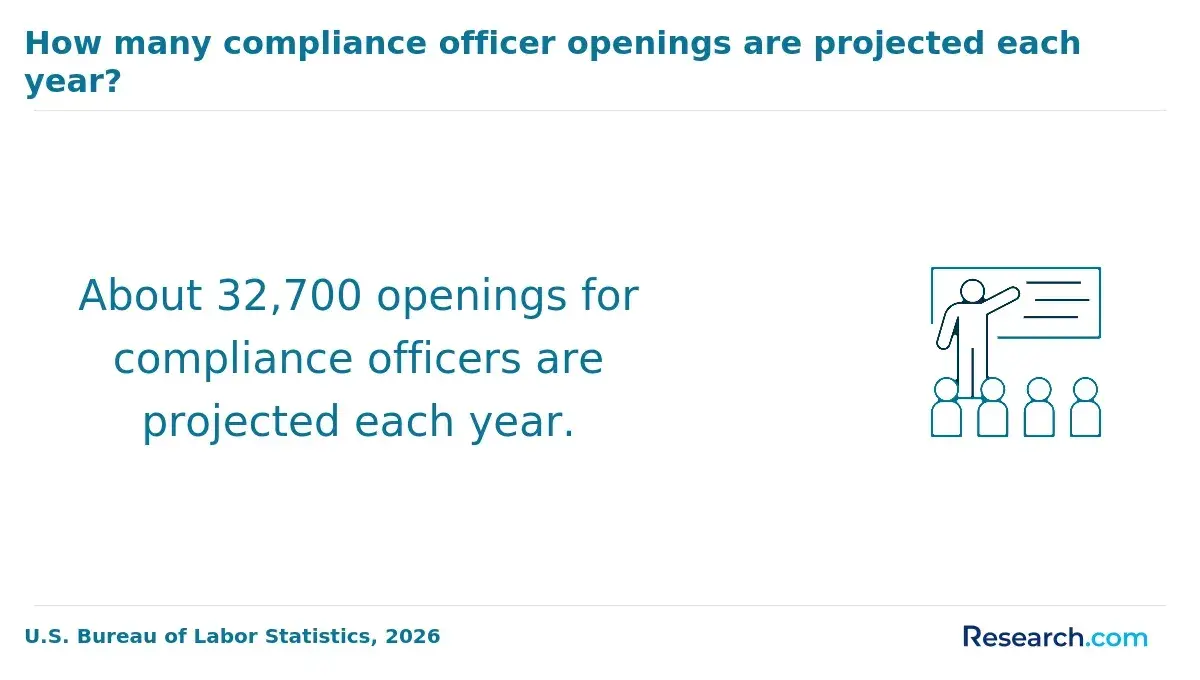
Prior experience can also shape the choice. Administrative work may transfer to scheduling and document control; finance or healthcare experience may be relevant to legal teams in those fields. You would still need to learn legal research, confidentiality, procedure, and the boundaries of the paralegal role. Some compliance positions draw on related legal knowledge, but a paralegal certificate alone is not a standard requirement for that occupation.
How much can paralegals earn after completing a certificate?
The Bureau of Labor Statistics reports $62,890 in median annual pay in May 2025 for paralegals and legal assistants. That occupational median includes workers with different credentials and experience; it is not a predicted starting salary or evidence that graduate certificate holders earn more than undergraduate certificate holders.
BLS projects 0% employment growth from 2025-2035, with about 40,800 openings per year despite little or no net growth. Openings can arise when workers leave the occupation, but the projection is not a promise of a job. When judging whether a certificate is worth its cost, compare local job postings' education requirements with the skills each program teaches - and consider what time away from paid work would cost you.
How do you choose a reputable paralegal certificate program?
Start with the work you want and the education you already have. Then request the current catalog, admissions rules, course sequence, and full cost from each program on your shortlist. This check helps separate meaningful differences from labels such as "graduate," "online," or "accelerated."
Before committing, make these checks in order:
- Confirm that you meet the certificate's published degree, coursework, and application requirements.
- Verify institutional accreditation and check any claimed ABA program approval for the specific program.
- Compare required assignments, legal technology practice, and internship rules against the jobs you want.
- Obtain the complete price and schedule, including prerequisites and required in-person commitments.
- Ask the receiving school about credit transfer or the certification organization about eligibility if either is central to your plan.
Be cautious of a school that calls its graduates "ABA-certified," promises employment or certification, or quotes tuition without identifying required extras. For another way to compare prices and school status, consult our guide to affordable accredited paralegal education; still confirm the details for the particular certificate you would enter. The stronger choice is the eligible program whose verified training and total commitment match your intended role - not necessarily the one with the higher academic label.
Other Things You Should Know About Law & Paralegal
Some schools may review an application before graduation, but enrollment can be conditional on providing proof that the degree was completed. Ask the program when it must receive your final transcript.
Only if the school's published policies permit a waiver, prior-learning credit, or another exception. Get a written determination before planning a shorter course schedule.
Admissions, internship placements, employer screening, and eligibility for optional professional credentials can have different rules. Ask the school and relevant credentialing organization about disclosures that apply to your circumstances before enrolling.
It may, but the school decides whether it is equivalent to its stated prerequisite and whether a credential evaluation is needed. Request its evaluation instructions before paying an application fee.
References
- Program Eligibility, Written Arrangements, and Distance Education | 2024-2025 Federal Student Aid Handbook https://fsapartners.ed.gov/knowledge-center/fsa-handbook/2024-2025/vol2/ch2-program-eligibility-written-arrangements-and-distance-education
- Certificate vs. Degree: Which Is Right for You? | UC San Diego Division of Extended Studies https://extendedstudies.ucsd.edu/news-events/extended-studies-blog/certificate-vs-degree-making-the-right-education-decision
- Graduate Certificate vs. Master's Degree: Which One Is Right for You? | UT Permian Basin Online https://online.utpb.edu/about/articles/general/graduate-certificate-vs-masters-degree-which-is-better/
- Degrees vs. Certificate Programs: What's the Difference? | snhu.edu https://www.snhu.edu/about-us/newsroom/education/certificates-vs-degrees
- Online Certified Paralegal Training | morgan.edu https://www.morgan.edu/center-for-continuing-and-professional-studies/non-credit-programs/online-career-training/featured-courses/online-certified-paralegal-training
- Paralegal Studies Certificates - [email protected] https://gpem.luc.edu/portal/program
- The Difference Between Certificates and Degrees | UT San Antonio Online https://online.utsa.edu/blog-content/difference-certificates-degrees/
- Are There Advantages to an ABA-Approved Paralegal Program? | Campus https://campus.edu/blog/paralegal/american-bar-association-approval
- Frequently Asked Questions - SIS Graduate Certificates https://cci.charlotte.edu/sis-certificates-faq/
- Is a Paralegal Certificate Worth It? | Bryan University Online© https://bryanuniversity.edu/faq/is-a-paralegal-certificate-worth-it/