2027 MLS Programs for Business Continuity Managers With Regulatory Duties

Co-Founder and Chief Data Scientist
Business continuity managers may have to turn regulatory requirements into workable recovery plans, vendor controls, tests, and records. A Master of Legal Studies (MLS) could strengthen that work, but it is a substantial investment - and not every legal studies curriculum covers operational resilience.
This guide is for U.S. professionals weighing an MLS against certifications, shorter courses, or employer training. It explains which legal subjects matter, how to assess online programs and costs, and when the degree is likely to add value to your existing experience.
Key Things You Should Know
- An MLS can help a business continuity manager interpret regulatory obligations and work with counsel, but it is not required for the role and does not qualify its holder to practice law.
- Prioritize courses in the rules governing your industry, privacy and cybersecurity, contracts, and regulatory research - not a program's broad "compliance" label alone.
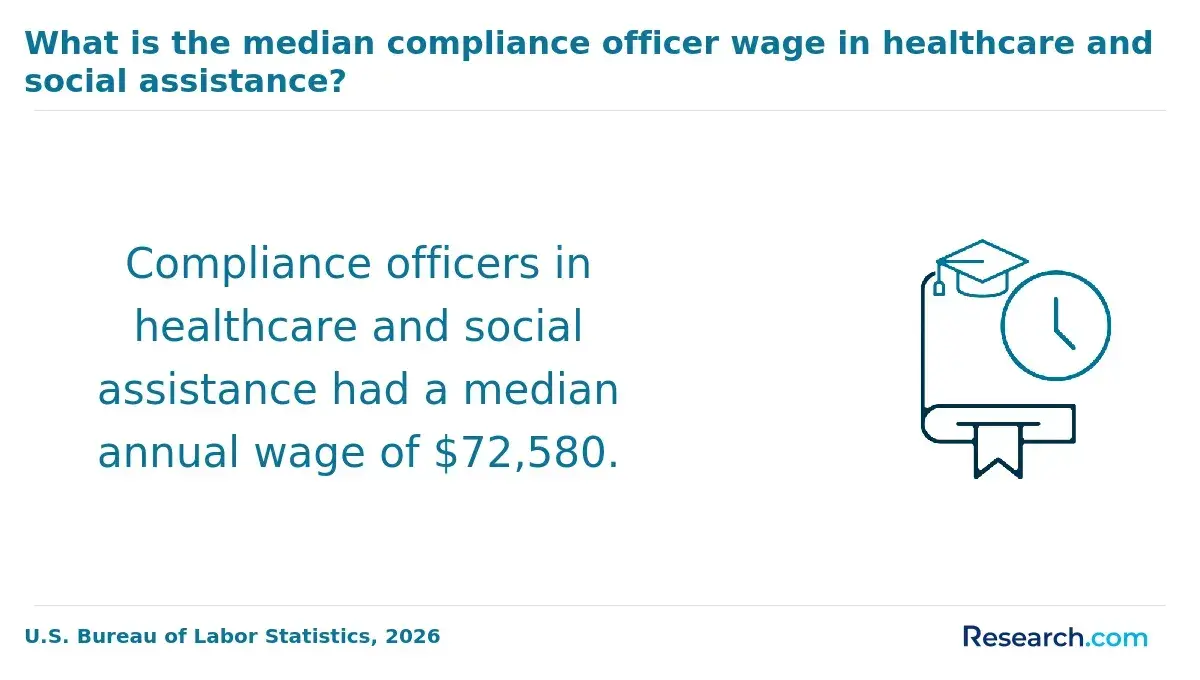
- The U.S. Bureau of Labor Statistics reports $80,730 median annual pay for compliance officers in May 2025 and 4% projected growth for 2025-2035; those figures describe a broad occupation, not MLS graduates or business continuity managers specifically.
What Is an MLS Degree for Business Continuity Managers?
An MLS is a graduate degree designed to teach legal reasoning and legal subject matter to people who generally do not plan to become attorneys. Schools may instead use names such as Master of Studies in Law (MSL) or Master of Jurisprudence. For a business continuity manager, its potential value is understanding how rules affect recovery procedures, incident escalation, third-party agreements, and documentation.
The degree does not replace experience running exercises, assessing operational dependencies, or coordinating a response. Nor does the MLS, by itself, authorize someone to give legal advice or practice law. A manager can identify issues and work with counsel, who remains responsible for legal advice.
If your goal is an entry-level legal support role rather than graduate-level regulatory work, finding an online legal studies associate program may be a more proportionate starting point. If you already lead continuity work, evaluate an MLS against the specific legal decisions your job requires.
What Regulatory Duties Can an MLS Program Prepare You For?
An MLS can prepare you to research requirements, recognize when legal review is needed, and translate approved interpretations into operational controls. It cannot make you the final authority on an organization's legal obligations. The relevant rules depend on the employer, its activities, location, and regulators.
The examples below show why a useful curriculum must connect legal rules to actual continuity tasks, rather than teach compliance only in the abstract.
| Setting or authority | Continuity-related work | Legal knowledge that helps |
| Financial institutions and FFIEC guidance | Assess resilience planning, testing, dependencies, and third-party risk against applicable supervisory expectations. | Distinguishing supervisory guidance from binding requirements and identifying which agencies oversee the institution. |
| FINRA Rule 4370 for member firms | Help maintain and test a business continuity plan and coordinate required communications. | Reading the rule alongside firm procedures and escalating interpretation questions to compliance or counsel. |
| HIPAA Security Rule for covered entities and business associates | Support contingency planning for electronic protected health information. | Understanding how the contingency-plan standard applies to the organization's role and systems. |
| Vendor and customer contracts | Track recovery commitments, notice provisions, audit rights, and subcontractor dependencies. | Recognizing contractual obligations that may differ from baseline regulatory requirements. |
A good program should teach you to trace a requirement to its source and scope. For example, National Institute of Standards and Technology guidance can inform a plan, but guidance is not automatically a legal mandate for every employer.
How Does an MLS Differ From a JD for Compliance Careers?
The choice turns primarily on whether you need legal knowledge for a nonlawyer role or intend to qualify to practice law. A Juris Doctor (JD) is the professional law degree normally associated with the attorney path; admission to practice also depends on the applicable jurisdiction's rules.
This comparison separates the credentials' purposes so you do not pay for attorney training when your target role does not require it.
| Consideration | MLS or related non-JD degree | JD |
| Primary purpose | Apply legal knowledge in a nonlawyer professional role. | Prepare for the attorney qualification pathway. |
| Practice of law | Does not independently qualify graduates to practice. | May satisfy an education requirement for bar admission, subject to jurisdiction-specific rules and other requirements. |
| Best continuity-related fit | Managers who must understand rules and collaborate with legal and compliance teams. | People whose goal is to serve as legal counsel, including counsel advising on resilience matters. |
| Commitment | Compare each program's credits, schedule, and total cost. | Requires a broader professional legal education and a distinct licensing path. |
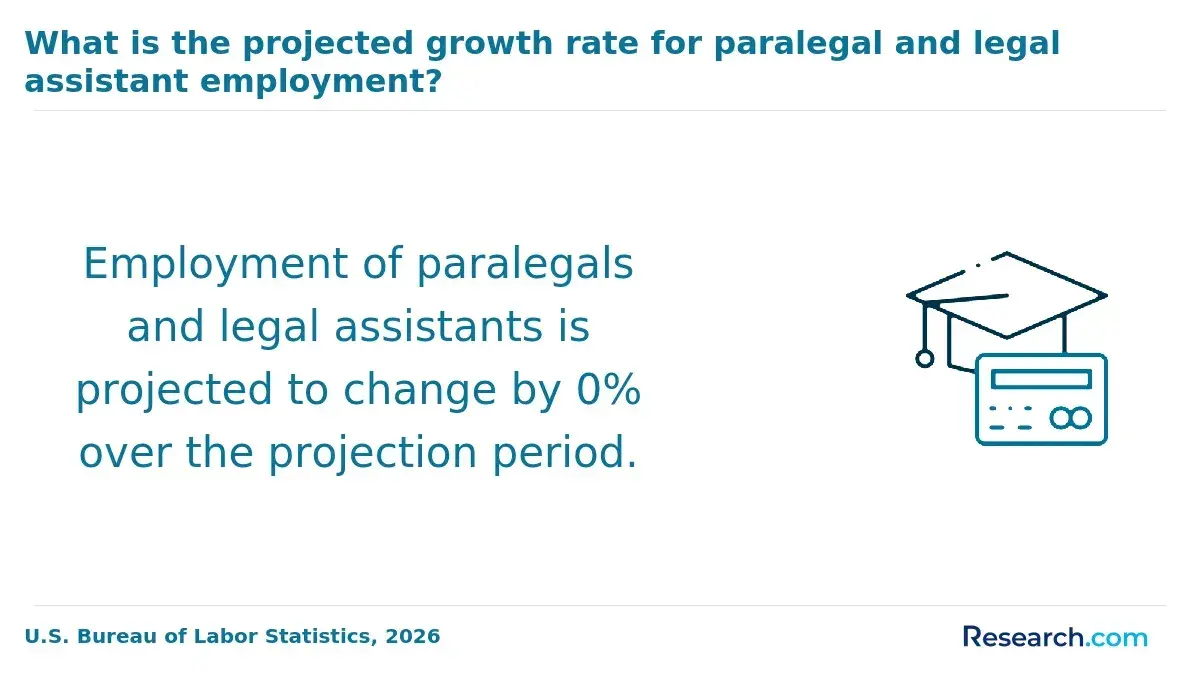
Neither degree is necessary solely to manage continuity operations. If your interest is legal support rather than regulatory leadership or attorney practice, comparing faster bachelor's pathways in paralegal studies may clarify that separate career route. Paralegal education does not qualify a graduate to practice law either.
What Do MLS Programs for Regulatory Compliance Typically Teach?
Relevant MLS programs commonly offer legal research and writing, administrative or regulatory law, contracts, privacy, cybersecurity, and compliance or risk-management coursework. Offerings vary: a named concentration is not the same as a few electives, and an embedded certificate has its own completion rules. Examine the current catalog rather than relying on a concentration title.
For continuity work, the strongest course choices help you answer concrete questions: Which authority governs this business unit? What must an incident notice say, and when is it due? Which vendor obligations survive an outage? How should decisions and exceptions be documented? A course that requires analysis of statutes, regulations, contracts, and realistic scenarios may be more useful than one that only surveys terminology.
Check whether the electives you need are offered often enough to fit your schedule. Also ask whether a capstone can address resilience, incident response, or third-party risk without exposing confidential employer information. Legal study should complement - not substitute for - hands-on testing and response experience.
Are Online MLS Programs Suitable for Working Business Continuity Managers?
They can be, especially if you need to stay employed while studying. But "online" does not mean self-paced: a program may require live class meetings, group work, fixed exam windows, or campus visits. Those commitments can be difficult to reconcile with an incident-response rotation.
Before enrolling, request a sample course calendar and the rules for attendance, exam rescheduling, leave, and reentry. Find out whether required courses are available in terms that match your planned pace; elective availability matters less if a required course delays completion. If you expect to use workplace incidents in assignments, confirm the school's confidentiality rules and your employer's approval process.
Choose the format based on your least predictable weeks, not an ordinary week. A flexible course sequence may be worth more to an on-call manager than a faster advertised completion schedule.
What Accreditation Should You Look for in an MLS Program?
Check that the university holds institutional accreditation from an accreditor recognized by the U.S. Department of Education. Confirm the status for the institution awarding the degree, then review the program's current catalog, degree requirements, and disclosures. Accreditation is an important baseline, not proof that its MLS courses fit your industry.
Do not confuse institutional accreditation with American Bar Association (ABA) approval. The ABA approves qualifying paralegal education programs; that approval is not the standard to use when selecting an MLS. Likewise, attending a university with an ABA-approved law school does not turn a non-JD degree into an attorney-qualifying credential.
If an employer offers tuition assistance, verify whether its policy accepts the institution, degree type, and delivery format before making a deposit.
What Are the Admission Requirements for an MLS Degree?
Applicants generally need a bachelor's degree, but each school sets its own rules for transcripts, statements, recommendations, work experience, and any testing. A JD or prior legal coursework is not generally the point of an MLS; relevant continuity or compliance experience may help explain your goals, but it does not waive published requirements unless the school says so.
Before applying, ask admissions whether prerequisites exist, whether you can take only the regulatory courses you need, and whether previous graduate coursework could count. Transfer credit is never automatic: the receiving school decides what it accepts and how accepted credits apply to its degree.
If you do not yet hold a bachelor's degree, an MLS application is premature. Readers with prior college coursework can first investigate prior college credits and online paralegal bachelor's study, while checking whether that subject area actually supports their intended career.
How Long Do MLS Programs Take and What Do They Cost?
Completion time depends on required credits, course sequencing, and whether you study full time or part time. Published tuition may be charged by credit or term, so an advertised rate alone does not establish the cost of the degree. Ask each school for a cost estimate based on your intended pace, including mandatory fees, books, technology, and any travel.
Compare that estimate with budget-friendly master's degrees in legal studies, but do not treat the lowest advertised tuition as the best value. A cheaper program can cost more in missed work time if its live meetings or course sequence conflict with your responsibilities.
Check eligibility for federal student aid with the school for the specific degree and your enrollment circumstances; do not assume that a stand-alone certificate has the same aid eligibility. If employer assistance is available, ask about annual caps, grade requirements, and repayment obligations if you leave. The central return-on-investment question is whether the MLS develops skills you will use often enough to justify tuition and study time over a narrower credential.
What Careers and Salaries Can MLS Graduates Pursue?
An experienced continuity manager might use an MLS when seeking responsibilities in regulatory compliance, operational resilience governance, third-party risk, privacy coordination, or enterprise risk. Those are possible directions, not positions reserved for MLS graduates. Hiring depends on industry knowledge, operational results, and the employer's requirements.
For salary context, the U.S. Bureau of Labor Statistics reports median annual pay of $80,730 in May 2025 for compliance officers and 4% projected job growth, 2025-2035. This broad category is a benchmark, not a salary forecast for business continuity managers or MLS holders. It cannot tell you what premium, if any, your employer would pay for the degree.
If you want to move into legal support instead of leading resilience or compliance programs, comparing online associate programs in paralegal studies addresses a different, potentially less extensive education path. Before committing to either route, compare actual job postings for your target roles and identify which ask for graduate legal study, which favor certifications, and which place the greatest weight on experience.
Which Certifications Complement an MLS for Business Continuity Work?
Professional certifications can demonstrate a narrower set of skills than an MLS and may be a better first investment if your main gap is operational practice. A certificate of course completion is different from a professional certification granted under a certifying organization's requirements.
The relevant choices depend on the work you do. DRI International's business continuity credentials, including the Certified Business Continuity Professional (CBCP), focus on continuity practice. ISACA's Certified Information Systems Auditor (CISA) may be relevant when your duties center on information-systems controls and audit. The International Association of Privacy Professionals' Certified Information Privacy Professional/United States (CIPP/US) may fit a role with substantial U.S. privacy responsibilities. Verify each organization's current eligibility, examination, experience, fee, and renewal rules directly before applying.
An MLS may be worth the additional commitment when you routinely interpret unfamiliar rules, negotiate with legal stakeholders, or oversee obligations across several regulated functions. A focused certification, graduate course, or employer-sponsored training may be the better first step when you need a specific operational skill. Ask your manager which responsibilities you could realistically take on after completing either option.
Other Things You Should Know About Law & Paralegal
Possibly, but obtain employer permission and follow the school's rules first. Incident records may contain protected personal information, security details, or privileged communications; an anonymized or hypothetical case may be safer.
Do not assume they will. A law school decides whether any prior graduate coursework receives credit under its policies and applicable requirements. Ask the specific JD program before enrolling in an MLS for that purpose.
Some associations offer nonlawyer, affiliate, or student memberships, but eligibility varies. Membership does not confer attorney status or permission to practice law.
It may be reasonable to request support if you can connect particular courses to assigned regulatory duties. Tuition assistance is an employer benefit, not an automatic entitlement; confirm its approval and repayment terms in writing.
References
- What We Do | NIST https://www.nist.gov/standardsgov/what-we-do
- Types of Financial Aid: Grants, Work-Study, and Loans | studentaid.gov https://studentaid.gov/understand-aid/types
- Business Continuity Management (BCM) - PMC - NIH https://pmc.ncbi.nlm.nih.gov/articles/PMC7123772/
- Cost of Attendance (Budget) | 2025-2026 Federal Student Aid Handbook https://fsapartners.ed.gov/knowledge-center/fsa-handbook/2025-2026/vol3/ch2-cost-attendance-budget
- Business Continuity Management Services | NCDIT - NC.gov https://it.nc.gov/programs/cybersecurity-risk-management/information-risk-management-services/business-continuity-management-services
- Is an MLS Worth It? ROI and Career Outcomes for Non-Lawyers | Drexel University Kline School of Law https://drexel.edu/law/news/legal-studies-blog/is-an-mls-worth-it-roi-and-career-outcomes-for-non-lawyers/
- Master of Legal Studies (MLS) vs. JD: Which Is Right for You? | Wake Forest MLS https://mls.law.wfu.edu/articles/mls-vs-jd-which-is-right-for-you/
- Cybersecurity Courses | scsu.edu https://scsu.edu/academics/departments/computer-science-and-mathematics/center_excellence_cybersecurity/cybersecurity_courses.php
- Working in Regulatory Affairs: Careers, Salaries, and Trends | Northeastern University Graduate Programs https://graduate.northeastern.edu/knowledge-hub/working-in-regulatory-affairs-careers-and-trends/
- MLS vs JD: Which Legal Path Is Right for You? | wsulaw.edu https://www.wsulaw.edu/news/mls-vs-jd-which-legal-path-is-right-for-you/