2027 MLS Programs for Emergency Management Professionals With Legal Responsibilities

Co-Founder and Chief Data Scientist
Emergency managers make decisions about public authority, contracts, privacy, and liability under pressure. A Master of Legal Studies (MLS) can help professionals understand those rules, but programs differ in how directly their coursework applies to disasters and public-sector work. This guide is for emergency managers, continuity planners, and related professionals deciding whether graduate legal study is worth the time and expense. It shows what to look for in a program, where an MLS may help, and when a shorter credential or employer training may be the better choice.
Key Things You Should Know
- An MLS is a non-Juris Doctor (non-JD) degree: it can build legal knowledge for emergency management work but does not authorize its holder to practice law.
- Compare current course schedules, not concentration names alone; disaster authority, procurement, privacy, and administrative law may be more useful than a broad homeland security label.
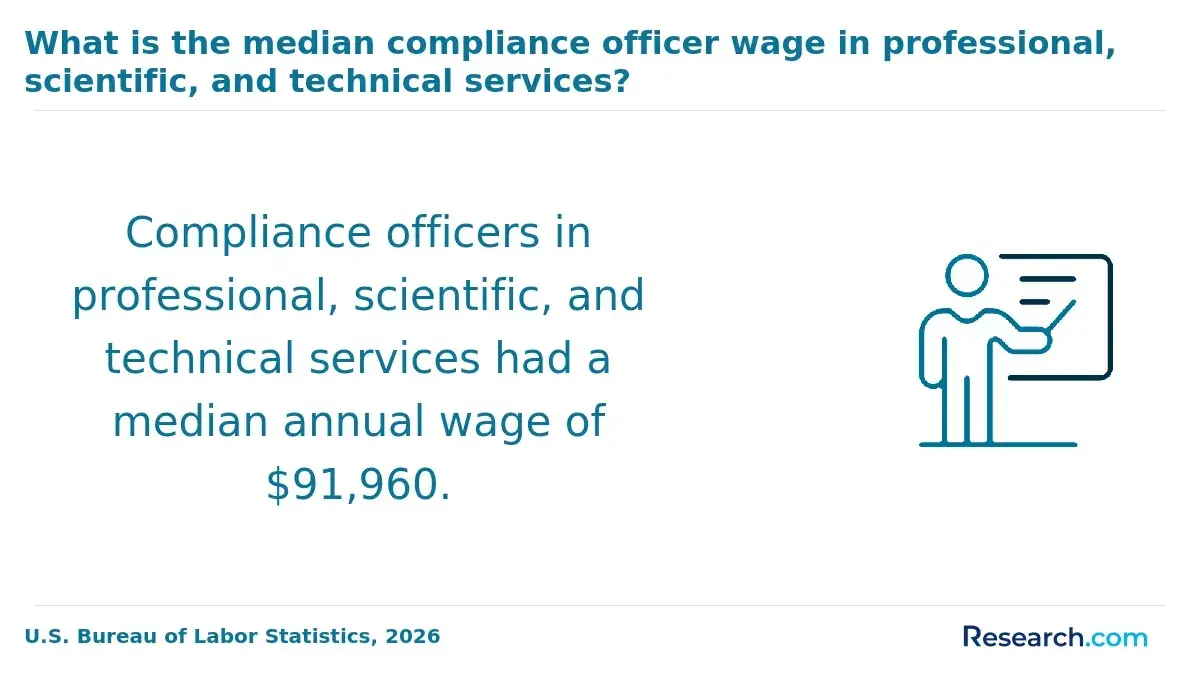
- The Bureau of Labor Statistics reports $80,730 in May 2025 median pay for compliance officers and 4% projected growth, 2025-2035; those occupation-wide figures do not predict an MLS graduate's pay.
What is an MLS program for emergency management professionals with legal responsibilities?
An MLS is a graduate degree designed to teach law to people whose jobs involve legal issues but who do not intend to become attorneys. For an emergency manager, that could mean understanding who may issue an order, what a grant agreement requires, when information can be shared, or when counsel should review a decision. Schools may instead call a comparable non-JD degree a Master of Studies in Law (MSL) or Master of Jurisprudence; the curriculum matters more than the abbreviation.
An MLS does not replace incident-command training, operational experience, or legal advice. It is most relevant when legal questions recur in your existing role and you need to recognize risks, work effectively with counsel, and implement decisions within your authority. If your work is primarily operational, compare targeted training before committing to a full master's degree.
Why pursue an MLS degree for emergency management legal responsibilities?
The strongest reason is a defined gap between your operational experience and your legal responsibilities. Someone who routinely reviews mutual-aid agreements, administers disaster funding, coordinates public-health measures, or handles sensitive records may benefit from sustained study of legal authority and regulatory process. An MLS can also help a professional communicate more precisely with agency counsel without attempting to act as counsel.
The trade-off is substantial: graduate study takes time and tuition that could instead support a focused certificate, agency-sponsored training, or experience in a new assignment. An MLS is a stronger choice when you need several connected areas of law, rather than one short course. If your goal is a narrower legal-support role, compare shorter routes through online paralegal study; paralegal education serves a different purpose and likewise does not qualify someone to practice law independently.

Which accredited MLS programs offer emergency management law coursework?
Start with institutionally accredited universities offering a non-JD legal studies degree, then inspect the current catalog for the subjects you actually need. Few programs are dedicated to emergency management law. The examples below offer different starting points, not an exhaustive ranking or a promise that every relevant elective will run during your enrollment.
| Program to investigate | Potential fit | What to confirm before applying |
| Arizona State University Master of Legal Studies | A starting point for applicants seeking homeland security law and policy within graduate legal study | Current emphasis requirements, available emergency-related courses, online scheduling, and whether needed electives are open to MLS students |
| University of Arizona Master of Legal Studies | A starting point for applicants whose work connects environmental regulation or public policy to emergency planning | Current concentration or elective options, course delivery, and how frequently relevant classes are offered |
Both universities are institutionally accredited, but accreditation does not mean a particular MLS curriculum has been endorsed for emergency management. A named emphasis and a set of relevant electives are also different: obtain a current degree plan and course rotation before treating either as a guaranteed specialization. For a broader way to evaluate that distinction, see choosing a specialization for a legal studies master's.
What do MLS programs teach about emergency management law and public policy?
Useful coursework connects legal rules to decisions an emergency manager actually makes. Administrative and constitutional law can clarify agency authority and limits on government action. Public health, environmental, and land-use law may matter for evacuations and recovery. Procurement and contracts apply to vendors and mutual-aid arrangements; privacy law matters when agencies exchange personal or health information.
Look beyond course titles to assignments and prerequisites. A class that requires students to analyze a statute, agency rule, or agreement may be more useful than one that only surveys policy debates. Ask whether the curriculum addresses federal, state, and local roles - and whether instructors make clear that the governing rule changes with the jurisdiction and type of emergency. No single course can establish your agency's legal authority in every situation.
How do online and campus-based MLS programs compare for emergency managers?
Delivery format affects whether you can keep studying during an unpredictable response schedule. The comparison is less about educational quality than about attendance requirements and access to the courses you need.
| Format | Potential advantage | Scheduling risk to check |
| Online | Study without routine travel to campus | Live meetings, timed exams, group work, or limited elective availability |
| Campus-based | In-person discussion and access to locally offered courses | Travel and fixed class times during an activation |
| Hybrid | A combination of remote coursework and in-person contact | Required campus visits that may be difficult to reschedule |
"Online" does not necessarily mean asynchronous or self-paced. Request the syllabus for required courses and ask what happens if an emergency deployment conflicts with an exam or live session. A program's stated flexibility is useful only if its attendance and make-up policies work with your job.
What are the admission requirements for emergency management MLS programs?
MLS applicants generally need a bachelor's degree, but schools set their own rules for transcripts, statements of purpose, recommendations, and any additional materials. A JD or prior law coursework is generally not the point of these non-JD programs. Check the current admissions page for each school rather than assuming that professional experience waives a published requirement.
Before applying, confirm that the emergency-related courses you want are available to students in your chosen degree and format. If you hope to use prior graduate study, request a written explanation of the receiving school's transfer-credit policy; institutional accreditation alone does not guarantee that credits will apply. Applicants comparing adjacent business-law options can also compare transfer policies for business law degrees, while verifying the rules of any MLS program separately.
How long do MLS programs take, and how much do they cost?
Completion time depends on required credits, course sequencing, and whether you enroll full- or part-time. An applicant who can take classes only between response seasons should ask for a sample part-time plan: an infrequently offered required course can delay graduation even when the program allows part-time enrollment.
Do not compare advertised tuition alone. Request a current, itemized estimate covering tuition, mandatory university and program fees, books or materials, technology, and any campus travel. Ask whether your employer offers tuition assistance and whether the specific degree and your enrollment status qualify for federal student aid; eligibility is not automatic. Borrowing to complete an MLS is harder to justify if a short course addresses the legal task you perform most often.
For a substantially different legal-support career goal, affordable accredited online paralegal degrees provide another cost comparison. They should not be treated as interchangeable with graduate legal study for emergency management.
What careers can emergency management professionals pursue with an MLS degree?
An MLS may complement experience in emergency management, business continuity, disaster recovery, public-sector contracting, grants oversight, regulatory compliance, or policy work. In those roles, the degree's value depends on whether the employer needs the legal analysis you learned and whether you also meet its operational and management requirements. It is not a substitute for experience or a credential for independent legal practice.
A sensible next step is to review postings for your target role and separate required qualifications from preferred ones. If postings consistently emphasize exercise design or field coordination rather than legal and regulatory work, build that experience first. If the work centers on workplace policies during disruptions, our guide to HR law concentrations in legal studies degrees may help you assess a more focused direction.
How much can MLS graduates in emergency management earn?
There is no reliable nationwide salary figure specifically for emergency managers with an MLS. As one adjacent benchmark, the Bureau of Labor Statistics reports that compliance officers had median annual pay of $80,730 in May 2025, with 4% projected job growth, 2025-2035. Those figures cover the occupation broadly; they do not measure an MLS pay premium or predict earnings in disaster management.
For a realistic return-on-investment estimate, compare compensation for the roles you could pursue without the degree against roles for which its coursework would strengthen your candidacy. Factor in tuition, borrowing costs, and any time away from work. A promotion that requires operational experience may not arrive sooner because you completed an MLS.
Do emergency management professionals need legal certifications or licenses?
An MLS is an academic degree, not a professional license or certification. Emergency management roles do not generally require a law license, and an MLS does not make its holder an attorney. Licensing rules for practicing law are set by state authorities; when a task calls for legal advice or representation, involve a properly licensed lawyer.
Employers may value emergency management credentials or specialized training, but requirements vary by position and credentialing organization. A certificate shows completion of an educational program; a professional certification is awarded under a separate organization's eligibility and assessment rules. Before paying for either, check the target job description and the credential provider's current requirements. If you are considering paralegal education instead, remember that American Bar Association approval applies to qualifying programs, not to individual graduates, and is separate from institutional accreditation.
Other Things You Should Know About Law & Paralegal
It can teach you how to research declaration authority, but it cannot give one answer for every incident. The applicable statute, jurisdiction, agency authority, and requested action all matter; consult your agency's legal counsel on an actual declaration.
Records and privacy courses can provide a foundation. Your agency's retention schedule, applicable public-records law, exemptions, and counsel's guidance still control how a particular request is handled.
Ask both your employer and the instructor first. Plans may contain sensitive operational, personal, or security information, and permission to use them at work does not necessarily permit sharing them in class.
Do not assume so. A law school decides whether it accepts prior coursework and how any accepted credit applies. Get its policy in writing before choosing an MLS primarily as a route toward a JD.
References
- HHS Policy for Records Management https://www.hhs.gov/digital/governance/it-policy-archive/hhs-ocio-policy-for-records-management.html
- Disaster and Emergency Management - Think Cultural Health https://thinkculturalhealth.hhs.gov/education/disaster-and-emergency
- Emergency Management Certification and Training Program | ny.gov https://www.dhses.ny.gov/emergency-management-certification-and-training-program
- CRS Guide to Federal Emergency Management | congress.gov https://www.congress.gov/crs_external_products/IF/HTML/IF12384.web.html
- 2 CFR Part 200 -- Uniform Administrative Requirements, Cost Principles, and Audit Requirements for Federal Awards https://www.ecfr.gov/current/title-2/subtitle-A/chapter-II/part-200
- NDEMU | Emergency Management Professional Program https://training.fema.gov/programs/emergency-management-professional/
- Employer-offered educational assistance programs can help pay for college | Internal Revenue Service https://www.irs.gov/newsroom/employer-offered-educational-assistance-programs-can-help-pay-for-college
- Stafford Act | fema.gov https://www.fema.gov/disaster/stafford-act
- Military tuition assistance | usa.gov https://www.usa.gov/military-tuition-assistance
- The Stafford Act and the Disaster Mitigation Act | tamu.edu https://coastalresilience.tamu.edu/home/introduction-to-coastal-resilience/legal-framework-for-planning/federal/land-use/the-stafford-act-and-the-disaster-mitigation-act/