2027 Legal Studies Master's Programs for Public-Sector Human Resources Staff

Co-Founder and Chief Data Scientist
Public-sector HR staff routinely handle decisions shaped by employment law, civil-service rules, collective bargaining agreements, and employee due process. A legal studies master's may help you work through those issues, but it is a substantial commitment - and it does not qualify you to practice law.
This guide explains where graduate legal study can add value, how it compares with shorter training, and what to check before enrolling. Use it to decide whether a program addresses the legal problems you actually face at work.
Key Things You Should Know
- Choose a program for its coverage of public employment, labor relations, investigations, and administrative law - not simply for a concentration labeled "HR."
- A legal studies master's builds legal knowledge for nonlawyers; it does not confer a law license or replace agency counsel.
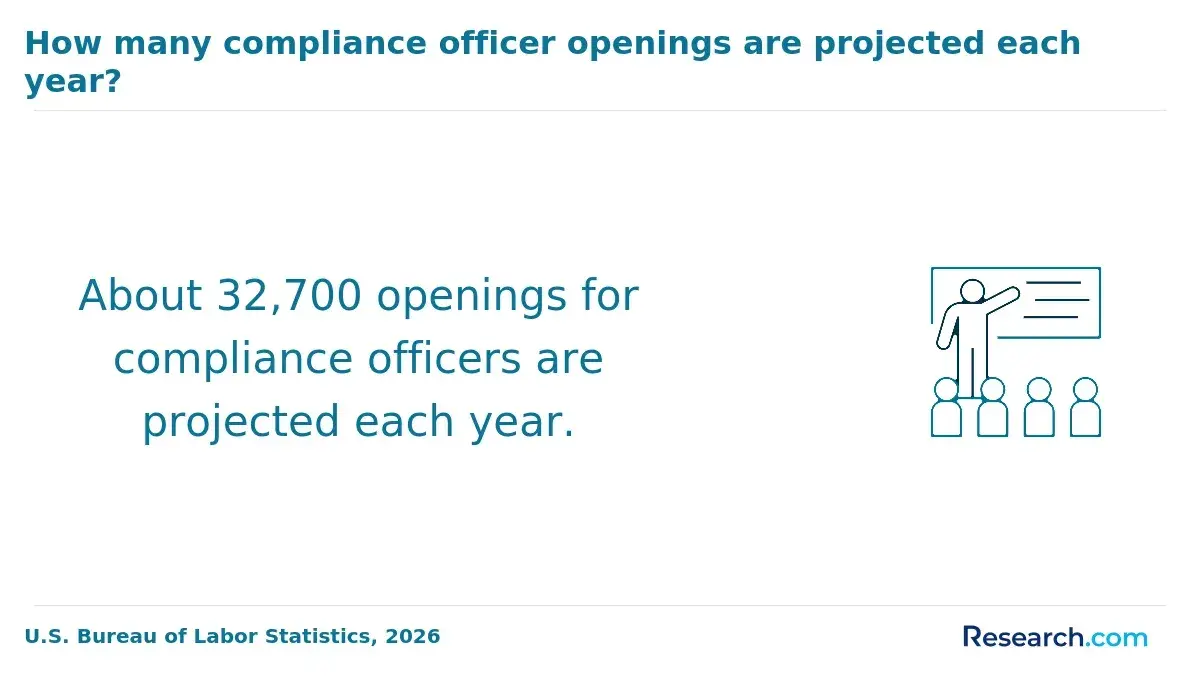
- Career prospects depend on experience and role: the Bureau of Labor Statistics projects about 32,700 compliance officer openings per year during 2025-2035, but the degree alone does not qualify someone for those openings.
What is a legal studies master's degree for public-sector human resources professionals?
A Master of Legal Studies (MLS), Master of Studies in Law (MSL), or similarly named degree teaches nonlawyers to understand legal rules, research legal questions, and recognize when counsel should be involved. For government HR staff, its value lies in applying that training to hiring, accommodations, discipline, workplace investigations, labor relations, and policy administration.
Program names are not standardized. An employment-law concentration is a formally defined course pathway; a few relevant electives are not necessarily a concentration. Check the required courses and available electives rather than assuming either option covers civil-service systems or public-sector labor law.
If you need focused instruction rather than a full degree, compare a legal studies graduate certificate versus full master's study. A certificate is an educational award, not a professional certification; whether its credits later count toward a master's depends on the receiving program.
Why should public-sector HR staff earn a master's in legal studies?
The strongest reason is a recurring need to work across legal boundaries: translating counsel's advice into procedures, spotting risk before a personnel decision, and documenting decisions under applicable rules. Graduate study can develop legal research and analysis skills that a single-topic workshop may not provide.
The degree is less compelling if your goal is narrow, such as learning one agency's leave procedure, or if your employer primarily rewards a different credential for advancement. Employer training, an HR or labor-relations credential, a graduate certificate, or an HR-focused master's may address that goal with less time away from work. Professionals considering broader management roles may also weigh finding a business law degree that fits working life, while checking whether its courses cover government employment.
Before choosing graduate study, identify the work you want to do differently. A course in legal research may help you frame questions for counsel; it will not authorize you to give legal advice on behalf of an agency.
What careers can a legal studies master's support in public-sector human resources?
The degree can complement experience in HR generalist and management roles, employee or labor relations, equal employment opportunity work, investigations, compensation and benefits, and compliance. These positions differ by agency: a labor-relations specialist may interpret agreements and support negotiations, while an HR compliance employee may review procedures and coordinate with counsel.
Experience, civil-service eligibility rules, and job-specific qualifications still matter. Read actual vacancy announcements before selecting courses: some positions emphasize bargaining experience, others investigations, classification, or benefits administration. An MLS or MSL is not a standard prerequisite for all of these jobs, and a specialized assignment is not an automatic promotion after graduation.
What courses do legal studies master's programs offer for HR professionals?
Useful foundations include legal research and writing, employment law, administrative law, contracts, and dispute resolution. For public-sector work, examine whether employment courses address discrimination, accommodations, wage-and-hour rules, leave, and retaliation - and whether assignments require students to analyze workplace decisions rather than memorize rules.
Public employment deserves particular scrutiny. A program may cover private-sector labor law yet give little attention to civil-service protections, constitutional issues affecting government employers, public-records obligations, or state-specific public employee bargaining systems. Ask for current syllabi and elective schedules: a course listed in a catalog may not be offered when you can take it. A capstone built around policy analysis can be useful if your employer permits the use of appropriately anonymized material.
Are online legal studies master's programs effective for working HR professionals?
Online study can work well when courses require substantive feedback on legal analysis and fit your agency's workload. "Online" does not mean self-paced: programs may schedule live classes, fixed assignment deadlines, group work, proctored exams, or campus visits.
Ask how often courses meet live, whether employment-law electives run regularly, and whether a practicum or capstone can be completed without disclosing protected personnel information. Compare those answers with your busiest hiring, bargaining, or benefits periods. A flexible format is useful only if the courses you need are available on a workable schedule.
What are the admission requirements for a legal studies master's program?
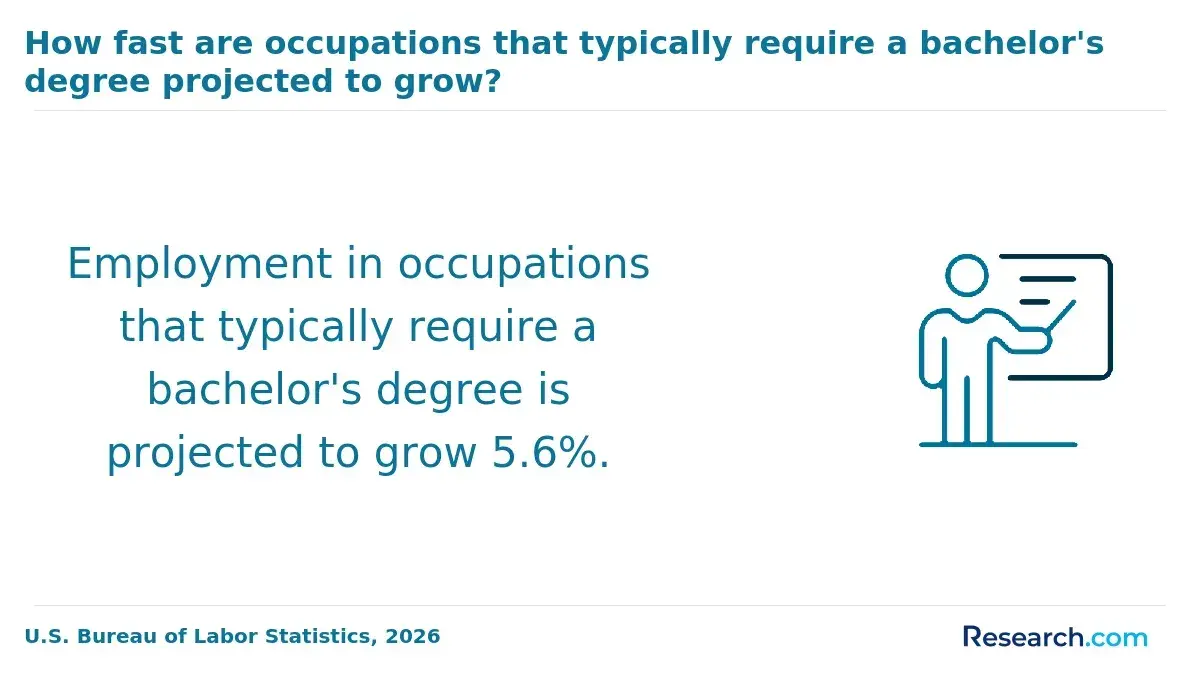
Applicants generally need a bachelor's degree, but each school sets its own rules for academic records, recommendations, statements, experience, and any required test. A law degree or prior legal coursework is not necessarily required. Check the current admissions page for the specific program rather than assuming requirements are shared across a university.
If you have an associate degree but not yet a bachelor's, first compare legal studies transfer pathways after an associate degree. The receiving college decides how prior credits apply; admission to a bachelor's pathway does not guarantee later admission to a master's.
How long do legal studies master's programs take, and what do they cost?
Completion time depends on required credits, course sequencing, and how many courses you can take while working. A part-time student may need to wait for a required course that is offered infrequently, so the advertised fastest completion time may not reflect a realistic working schedule.
Published per-credit tuition is only a starting point. Estimate your total by accounting for required credits, mandatory fees, books and research materials, technology, and any travel or campus requirements. Then compare that cost with available employer tuition support and the cost of a shorter credential. Federal financial aid may be available to eligible students in eligible programs, but admission to a university does not establish aid eligibility for every offering; confirm the specific program's status with its financial aid office.
Request a written course plan and cost breakdown for your intended enrollment pace. That makes it easier to spot a low advertised tuition rate offset by additional requirements or a schedule that extends your studies.
Do public-sector HR professionals need a law license or certification?
HR employees generally do not need a law license to perform ordinary personnel duties, but an MLS or MSL does not permit its holder to practice law. Agency counsel should handle matters requiring legal advice or representation. Specific jobs may have separate employer, civil-service, or state requirements, so check the vacancy announcement and applicable agency rules.
Professional HR credentials are separate from graduate degrees, and their usefulness depends on the role and employer. Paralegal education is another distinct route, generally aimed at legal-support work rather than HR policy leadership. If your actual goal is a supervised legal-support position, comparing accelerated paralegal program formats may be more relevant. Completing a paralegal program does not itself make someone a professionally certified paralegal; certification, where pursued, is granted under a credentialing organization's or state system's rules.
How much can public-sector HR professionals earn after graduate study?
There is no reliable salary figure for "public-sector HR staff with an MLS." The following Bureau of Labor Statistics figures describe broader occupations across employers, not government-only pay or the earnings of degree holders. They are useful for identifying career context, not predicting a raise.
| Related occupation | Median annual pay | Projected employment growth |
| Labor relations specialists | $95,420 in May 2025 | 2%, 2025-2035 |
| Compliance officers | $80,730 in May 2025 | 4%, 2025-2035 |
| Compensation, benefits, and job analysis specialists | $78,210 in May 2025 | 6%, 2025-2035 |
A prospective student should compare these broad benchmarks with posted pay ranges for the specific agency and grade they hope to reach. Pay schedules, geographic location, experience, and promotion rules may matter more than the degree itself.
How can students choose an accredited legal studies master's program?
Start by confirming that the university holds recognized institutional accreditation, then evaluate the particular degree. Institutional accreditation does not certify that an employment-law concentration fits public-sector HR, and American Bar Association approval of certain paralegal education programs is a separate matter - not an approval requirement for an MLS.
Use the same decision criteria for every program on your shortlist:
- Match required courses and reliably available electives to the legal issues in your current or target government role.
- Confirm live-class, campus, capstone, and course-sequencing commitments against your work calendar.
- Compare estimated total costs at your intended pace, including fees and available employer support.
- Ask your supervisor or hiring office whether the degree would satisfy a stated qualification or support a specific advancement path.
If cost is decisive, use choosing a legal studies master's with cost and career fit in mind as a starting point - not a substitute for checking current tuition and curriculum. A lower-priced program is a poor bargain if its schedule prevents completion or its courses miss the public-employment issues you need to understand.
Other Things You Should Know About Law & Paralegal
Follow your agency's confidentiality rules and the school's assignment policy. Do not upload personnel records, identifying details, or privileged communications without explicit authorization; use a hypothetical or properly approved, anonymized example instead.
No. Governing statutes, civil-service systems, bargaining rules, and agency policies differ. Look for coursework that teaches you to identify which authority controls a particular workplace decision.
Do not assume so. Continuing legal education rules vary by jurisdiction and course approval; a non-JD master's is not designed to meet attorney licensing requirements.
Possibly, if the program permits the topic and the agency approves the use of its information. Agree on confidentiality and review arrangements before building an academic project around workplace records.
References
- General Schedule Qualification Policies | U.S. Office of Personnel Management https://www.opm.gov/policy-data-oversight/classification-qualifications/general-schedule-qualification-policies/
- Cost of Attendance (Budget) | 2025-2026 Federal Student Aid Handbook https://fsapartners.ed.gov/knowledge-center/fsa-handbook/2025-2026/vol3/ch2-cost-attendance-budget
- Employer-offered educational assistance programs can help pay for college | Internal Revenue Service https://www.irs.gov/newsroom/employer-offered-educational-assistance-programs-can-help-pay-for-college
- Career Opportunities at the NLRB https://www.nlrb.gov/about-nlrb/who-we-are/careers
- Types of Financial Aid: Grants, Work-Study, and Loans | studentaid.gov https://studentaid.gov/understand-aid/types
- Online MS in Human Resources: Law, Leadership, and Policy | Albany Law School https://www.albanylaw.edu/graduate/online-ms-human-resources-law-leadership-and-policy
- Master of Legal Studies Jobs: Career Paths, Salaries & ROI | Wake Forest MLS https://mls.law.wfu.edu/articles/what-can-you-do-with-a-master-of-legal-studies/
- How a Master's in HR and Industrial Relations Prepares You for | umn.edu https://carlsonschool.umn.edu/graduate/resources/human-resources-careers-with-masters-in-human-resources
- Internship, Capstone, Thesis and Dissertation Information | ucdenver.edu https://publicaffairs.ucdenver.edu/current-students/internship-capstone-and-dissertation-information
- Teaching Private-Sector Labor Law... - Scholarship Commons https://scholarship.law.slu.edu/cgi/viewcontent.cgi