
2027 Legal Studies Master's Programs for Global Mobility and Immigration HR Teams

Co-Founder and Chief Data Scientist
Global mobility and immigration HR teams coordinate employee moves while managing visa processes, work authorization records, outside counsel, and employer compliance. A legal studies master's can deepen the knowledge behind that work, but it is a substantial investment - and it does not qualify graduates to practice law. This guide helps HR professionals and career changers compare programs by curriculum, schedule, cost, and career value, then decide whether a full degree or a shorter route better fits their responsibilities.
Key Things You Should Know
- Prioritize employer-side immigration, employment law, compliance, and practical HR coursework; a program labeled "international law" may not cover day-to-day U.S. mobility work.
- A Master of Legal Studies (MLS) or similar non-JD degree does not authorize legal practice or independently qualify someone to give immigration advice.
- The Bureau of Labor Statistics reports $80,730 in May 2025 median pay for compliance officers and 4% projected growth, 2025-2035; these broad occupation figures are not salary forecasts for immigration HR graduates.
What is a legal studies master's degree for immigration and global mobility professionals?
An MLS, Master of Studies in Law (MSL), or similarly named non-JD master's teaches legal concepts to people whose jobs intersect with law but who do not intend to become attorneys. For mobility teams, useful applications include recognizing when an employee move raises work authorization questions, maintaining compliant HR processes, and communicating effectively with immigration counsel.
Program names alone reveal little about fit. A formal immigration or employment-law concentration has defined requirements; a few relevant electives are not the same thing. Compare the actual course list with your work. Someone managing corporate policy and counsel relationships may benefit from a broad legal curriculum, while an HR professional seeking mainly employment-law depth might also consider business law programs for career-focused adult learners.
What careers can a legal studies master's prepare you for in immigration HR?
The degree can support advancement within an existing HR, mobility, or compliance career, but it is rarely a universal entry requirement. The distinction is whether a role calls for coordinating legal processes or independently providing legal advice.
These common responsibilities show where graduate legal knowledge may help without expanding the employee's authority to practice law.
| Role | Typical responsibility | Potential value of legal study |
| Global mobility specialist or manager | Coordinates assignments, vendors, employee communications, and relocation policy | Spots issues that require timely review by immigration, tax, or employment counsel |
| Immigration HR specialist | Tracks cases, gathers documents, and coordinates with employees and counsel | Understands process terminology, recordkeeping, and escalation points |
| HR compliance professional | Reviews policies, training, and employment-related controls | Connects legal requirements to operational procedures |
| Immigration paralegal | Supports attorneys with case preparation and document management | Builds broader legal context; paralegal-specific training may be a more direct entry route |
For someone targeting an entry-level attorney-support position rather than a mobility management role, online paralegal certificate education may be a narrower, less extensive option. Completing a certificate is not the same as earning professional paralegal certification, and paralegals work under applicable supervision rather than independently practicing law.
What are the admission requirements for legal studies master's programs?
Applicants generally need a bachelor's degree. Schools may also request transcripts, a statement of purpose, recommendations, and a résumé; policies on GPA, standardized tests, international transcripts, and prior legal coursework vary. Do not assume a law degree or immigration experience is required - or that neither is required - without checking the current admissions page.
If you have an associate degree, you will generally need to complete a bachelor's degree before applying to a master's program. Review continuing from an associate degree to legal studies as a possible route, but ask the receiving undergraduate institution which credits it will accept and how they will apply. Transfer decisions belong to that institution.
How do online and campus-based legal studies master's programs compare?
Online study can make graduate work possible without leaving a mobility job, but "online" does not mean self-paced. A program may require live sessions, group work across time zones, fixed-term deadlines, or campus visits. Campus study can make face-to-face discussion and local networking easier, while adding commuting or relocation costs. Neither format, by itself, establishes curriculum quality.
Request a sample course schedule and ask whether immigration-related electives are offered regularly and remotely. Also check whether required courses can be taken in the order a part-time student needs. If completion speed is a priority, compare the sequencing - not just the advertised duration - of fast-track business law graduate programs with programs offering more directly relevant immigration coursework.
What courses do legal studies master's programs typically include?
Many programs begin with legal research, legal writing, the U.S. legal system, and regulatory analysis. For global mobility work, examine the specific immigration, employment, administrative law, privacy, and compliance courses available. A broad international-law course may address treaties without teaching the employer-side U.S. immigration processes your job requires.
Course descriptions should reveal whether students analyze workplace scenarios, draft internal policies, or evaluate risks, rather than merely survey legal doctrine. If a program advertises immigration case-management software or legal research tools, ask whether students receive access and complete hands-on assignments. A tool mentioned in a syllabus is not evidence of practical proficiency. Ask, too, who teaches the relevant courses and whether a capstone can address a realistic mobility problem without exposing confidential employee information.

How long do legal studies master's programs take and what do they cost?
Completion time depends on required credits, course sequencing, and whether you study full-time or part-time. A school's advertised fastest route may assume a workload that is unrealistic during assignment launches or peak filing periods. Request a term-by-term plan based on the number of courses you can actually take.
For cost, compare total required tuition and mandatory fees rather than a per-credit price alone. Add textbooks, technology, any travel, and income you might give up by reducing work hours. Ask whether your employer reimburses this specific degree and whether reimbursement requires a minimum grade or continued employment. Federal aid eligibility depends on the institution, program, and student; confirm it with the school's financial aid office rather than assuming every legal education option qualifies.
If your goal is entry-level legal support, compare the master's expense with shorter training before borrowing. Information about financial aid for affordable online paralegal degrees can help frame that alternative, although aid eligibility and career fit must be checked for the particular program. A lower advertised price alone does not establish better value.
Does a legal studies master's qualify graduates to practice law?
No. An MLS, MSL, Master of Jurisprudence, or comparable non-JD degree does not, by itself, qualify a graduate for attorney licensure or authorize independent legal advice. Attorney admission requirements are set by jurisdictions and generally follow a different educational and licensing route.
In an HR role, legal knowledge should improve issue-spotting, process design, and communication with counsel - not replace counsel's judgment. Before taking on tasks such as advising employees about visa eligibility or interpreting an individual's legal options, clarify your employer's escalation policy and the applicable state's rules on unauthorized practice of law.
What accreditation should you look for in a legal studies master's program?
Verify that the university holds institutional accreditation from an accreditor recognized by the U.S. Department of Education. Check the institution's current status and the program's place within that institution, especially if credits, employer reimbursement, or financial aid matter to you. Accreditation does not establish that a particular immigration curriculum is strong or that another school will accept its credits.
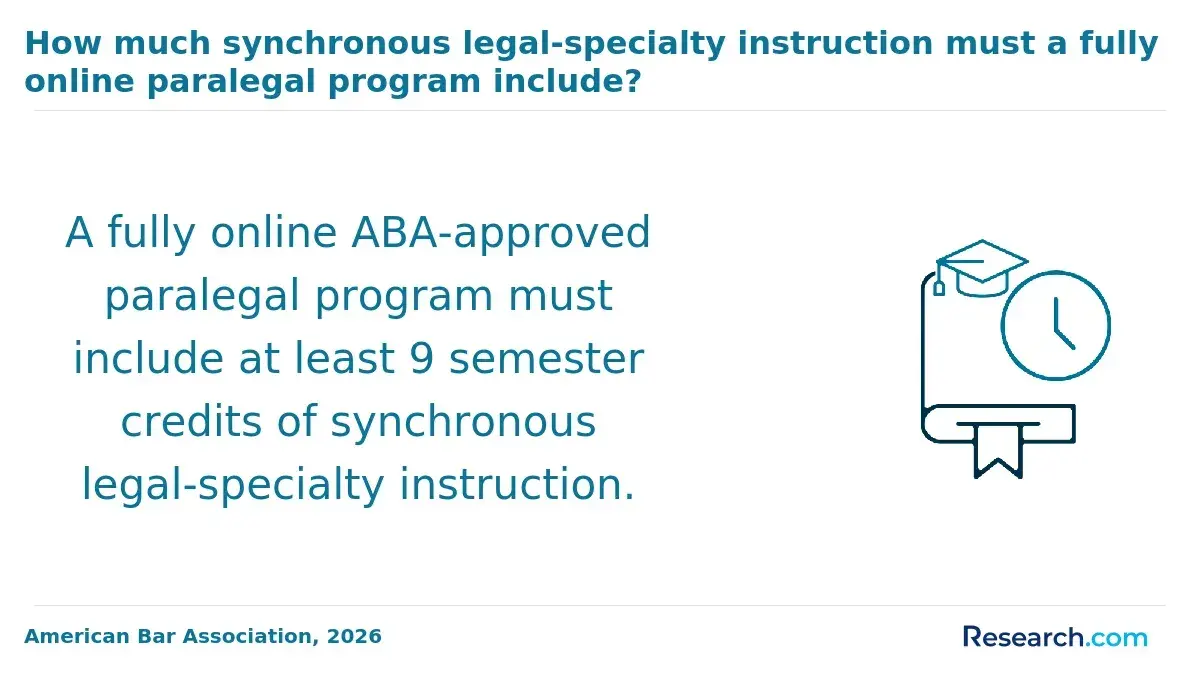
Do not confuse institutional accreditation with American Bar Association approval of certain paralegal education programs. ABA paralegal-program approval is a separate designation; it is not institutional accreditation, an MLS requirement, or certification of individual graduates.
What salaries and job outlook can immigration HR graduates expect?
There is no single national salary measure for "immigration HR graduate." Pay depends on the role, employer, location, prior experience, and scope of responsibility. Bureau of Labor Statistics occupations provide context, not a predicted return on this degree: compliance officers had median annual pay of $80,730 in May 2025 and 4% projected growth, 2025-2035. That category includes work well beyond immigration HR.
For a different comparison, paralegals and legal assistants had median annual pay of $62,890 in May 2025, with 0% projected growth, 2025-2035, and about 40,800 openings per year projected. Those figures describe a broad attorney-support occupation, not MLS graduates specifically. When assessing return on investment, compare postings for the exact role you want with your current pay and experience; do not attribute an occupation's median wage to the degree.
How should you choose a legal studies master's for global mobility work?
Start with the tasks you want to perform more effectively, not the degree title. An MLS is most persuasive when you already handle mobility, immigration operations, or HR compliance and need sustained legal study for broader responsibility. If you need to learn one process or enter an attorney-support role, employer training, a targeted graduate certificate, or paralegal education may carry less cost and time away from work.
Before applying, use the same checks for every shortlisted program:
- Match required courses and reliably available electives to your U.S. immigration, employment, and compliance responsibilities; distinguish a formal concentration from optional electives.
- Confirm institutional accreditation, admission rules, delivery format, live meetings, campus requirements, and a feasible part-time course sequence.
- Get a written estimate of total required costs and ask your employer about reimbursement before comparing it with shorter alternatives.
- Ask whether assignments build usable policy, research, or issue-escalation skills, and confirm that program staff describe career outcomes without promising a promotion or legal-practice eligibility.
A warning sign is a program that markets "immigration law" prominently but cannot identify current courses or explain when you can take them. Choose the degree only if its verified curriculum and schedule solve a work problem substantial enough to justify its full cost.
Other Things You Should Know About Law & Paralegal
Possibly. Ask HR whether the specific program qualifies for tuition assistance, when reimbursement occurs, and whether grade or continued-employment conditions apply.
Not without appropriate authorization and safeguards. Ask the instructor about simulated or properly de-identified scenarios, and follow your employer's confidentiality rules.
Not necessarily. Check course descriptions for the jurisdictions covered. Teams coordinating moves into multiple countries may still need local counsel and country-specific training.
It depends on the credentialing organization's current rules and the course content. Confirm eligibility directly with that organization before treating degree credits as continuing-education credit.
References
- Executive Office for Immigration Review | Recognition and Accreditation Program Frequently Asked Questions https://www.justice.gov/eoir/recognition-and-accreditation-program-frequently-asked-questions
- Cost of Attendance (Budget) | 2025-2026 Federal Student Aid Handbook https://fsapartners.ed.gov/knowledge-center/fsa-handbook/2025-2026/vol3/ch2-cost-attendance-budget
- Accreditation in the U.S. | ed.gov http://www.ed.gov/laws-and-policy/higher-education-laws-and-policy/college-accreditation/accreditation-in-the-us
- Types of Financial Aid: Grants, Work-Study, and Loans | studentaid.gov https://studentaid.gov/understand-aid/types
- Education | ca.gov https://www.calbar.ca.gov/admissions/requirements/education
- Applicants | NYU School of Law https://www.law.nyu.edu/jdadmissions/applicants
- Juris Doctor (JD) vs Master of Legal Studies | Pepperdine Caruso School of Law https://law.pepperdine.edu/blog/posts/jd-vs-mls.htm
- Master of Legal Studies (MLS) vs. JD: What's the Difference? | SMU Online Master of Legal Studies https://onlinemasterlegalstudies.smu.edu/articles/mls-vs-jd/


