2027 ABA-Approved Associate Programs vs. Certificate Programs: Which Matches Your Education?

Co-Founder and Chief Data Scientist
An associate degree and a paralegal certificate can both prepare you for legal-support work, but they may require very different starting qualifications, time commitments, and costs. The distinction matters most if you already have college credit - or if you hope to transfer credits later.
This guide compares what each route teaches, how to check ABA approval and institutional accreditation, and what to ask about admissions, online study, and financial aid. You can use those differences to identify the shorter route that still meets your education and career goals.
Key Things You Should Know
- Choose an ABA-approved associate program if you need both a college degree and paralegal training; a certificate may be more direct if you already meet its college-level prerequisites.
- ABA approval belongs to a specific paralegal education program, not its institution or graduates. Some certificate programs are ABA-approved, so verify the exact credential in the ABA directory.
- Compare total cost and credit value, not tuition alone. The U.S. Bureau of Labor Statistics reports $62,890 in May 2025 median pay for paralegals and legal assistants, not a salary promised by either credential.
What is the difference between an ABA-approved associate degree and a paralegal certificate?
An ABA-approved associate degree combines college-level general education with paralegal coursework in a program approved by the American Bar Association. A paralegal certificate documents completion of a defined course of study; depending on the school, it may be designed for people with a prior degree, people with some college credit, or beginners. A certificate program can also have ABA approval, but approval must be checked for that particular program.
The central decision is how much education you already have and which credential you need at the end. These distinctions explain why a shorter certificate is not automatically the better bargain.
| Decision factor | Associate degree | Certificate |
| Starting point | Often open to applicants with a high school diploma or equivalent | Prerequisites vary; some require a degree or specified college coursework |
| What you earn | A college degree with general education and paralegal study | A program certificate, which may be credit-bearing or noncredit |
| Best potential advantage | Builds a degree and legal-support skills together | May avoid repeating general education already completed |
| Main limitation to check | More credits and time if you already hold a degree | May not provide transferable credit or satisfy your intended employer's preferences |
Neither credential qualifies its holder to practice law as an attorney. A school-issued certificate is also different from professional certification, which a separate credentialing organization or state system may award after its own requirements are met.
Which students should choose an ABA-approved associate paralegal program?
An associate program is usually the stronger starting point if you do not yet have a college degree and want a structured route through writing, general education, and paralegal skills. It may also make sense if a prospective employer prefers a degree or you plan to pursue further undergraduate study. Compare associate-level paralegal education options against your intended schedule, then confirm each program's current ABA status separately.
The trade-off is time: general education can be valuable, but it adds coursework if you already completed similar classes. Ask the receiving college how prior credits would apply. If a bachelor's degree is your eventual goal, request a written explanation of which associate credits a prospective transfer institution will accept; ABA approval alone does not guarantee transfer.
Which students benefit most from a paralegal certificate program?
A certificate can be the more efficient route for someone who already has the college education its admissions policy requires and needs focused legal research, writing, and procedure training. It can also suit a working professional testing a move into legal support, provided the course schedule and any internship are manageable. Prior experience in administration, healthcare, or business may help, but it does not replace legal-specific training.
Check the certificate's entry requirements before assuming it is a shortcut. If you have substantial transferable college credit but want a bachelor's degree rather than a certificate, short-duration online paralegal bachelor's options may be worth comparing. Published completion times depend on how your credits are accepted, not merely on the program's advertised pace.
What accreditation should you verify before enrolling in a paralegal program?
Check two separate statuses. First, search the ABA's current directory of approved paralegal education programs for the exact school and program you intend to enter. ABA approval applies to a qualifying paralegal program; it is not institutional accreditation, and the ABA does not certify individual graduates. Do not assume that every certificate or degree offered by a school shares the approval listed for another program.
Second, verify the institution's accreditation through its recognized accreditor or U.S. Department of Education resources. Institutional accreditation matters when evaluating educational oversight and potential eligibility for federal aid, but it does not make every program or student aid-eligible. When reviewing budget-friendly accredited paralegal degree programs, check both statuses independently rather than treating "accredited" and "ABA-approved" as interchangeable.
What courses do associate and certificate paralegal programs include?
Both routes commonly cover legal research and writing, civil procedure, litigation support, legal ethics, and the boundaries of a paralegal's role. Electives may introduce areas such as contracts, real estate, or family law. An associate degree also includes general education, while a post-degree certificate may concentrate its coursework on legal subjects because students have completed broader college study elsewhere.
Course titles alone reveal little about hands-on preparation. Compare assignments: Will you draft documents, locate and evaluate legal authority, organize a case file, and receive feedback on writing? If a school advertises training in legal research platforms, e-discovery, or AI tools, ask whether students actually use those tools in assessed work. Exposure is not the same as proficiency, and paralegals perform legal work under appropriate attorney supervision rather than giving independent legal advice.
Are online paralegal programs as effective as campus-based programs?
Either format can provide useful preparation when it includes substantive assignments, instructor feedback, and opportunities to practice legal research and writing. Delivery format alone does not establish quality. For an online program, find out whether classes meet live, whether exams require scheduled attendance, and whether any campus visits are mandatory. "Online" does not necessarily mean self-paced.
An internship can change the calculation. Ask whether one is required, who finds the placement, when hours must be completed, and whether a current workplace or remote placement can qualify. A campus program may offer convenient local connections; an online program may reduce commuting while still requiring daytime placement hours. Compare those actual commitments before choosing a format.
What are the admission requirements for each paralegal program?
Associate programs generally admit students at the beginning of their college education, subject to the institution's published admission and placement rules. Certificate requirements differ substantially: one may admit high school graduates, while another requires prior college coursework or a completed associate or bachelor's degree. Read the requirements for the specific certificate, not just the college's general admissions page.
If you have prior credits, ask admissions which prerequisites they satisfy and whether you need an official transcript evaluation. If further study is part of your plan, review online paralegal bachelor's transfer eligibility and obtain a decision from the prospective receiving school. Neither institutional accreditation nor ABA approval obligates another college to accept a course.
How long do paralegal programs take and how much do they cost?
A full-time associate degree often takes about two academic years; part-time enrollment can take longer. Certificate length varies more because prerequisites, required courses, sequencing, and internship hours differ. Compare the time from your current starting point: a short post-degree certificate is not short for someone who must first complete its college prerequisites.
No single tuition figure reliably represents either route. Request an itemized estimate covering tuition, mandatory fees, books, research-platform or technology charges, and any travel or placement expenses. For a credit-bearing program, ask which completed courses might reduce your remaining cost. For a noncredit certificate, ask what academic credit - if any - you will receive.
Do not assume a certificate qualifies for federal financial aid. The institution and specific program must meet applicable eligibility rules, and your own eligibility also matters. If cash flow is the constraint, examine paralegal degree tuition plans and payment timing, then ask whether a payment plan has fees or changes when charges are due. Spreading payments does not lower the total price.
What careers, salaries, and job outlook can graduates expect?
Both routes can support applications for paralegal and legal assistant roles in law firms, corporate legal departments, government, and other organizations. Duties can include research, drafting under attorney supervision, organizing records, and supporting litigation or transactions. Hiring criteria vary: an employer may value a degree, relevant experience, strong writing samples, or a particular certificate's training. Neither credential guarantees a job.
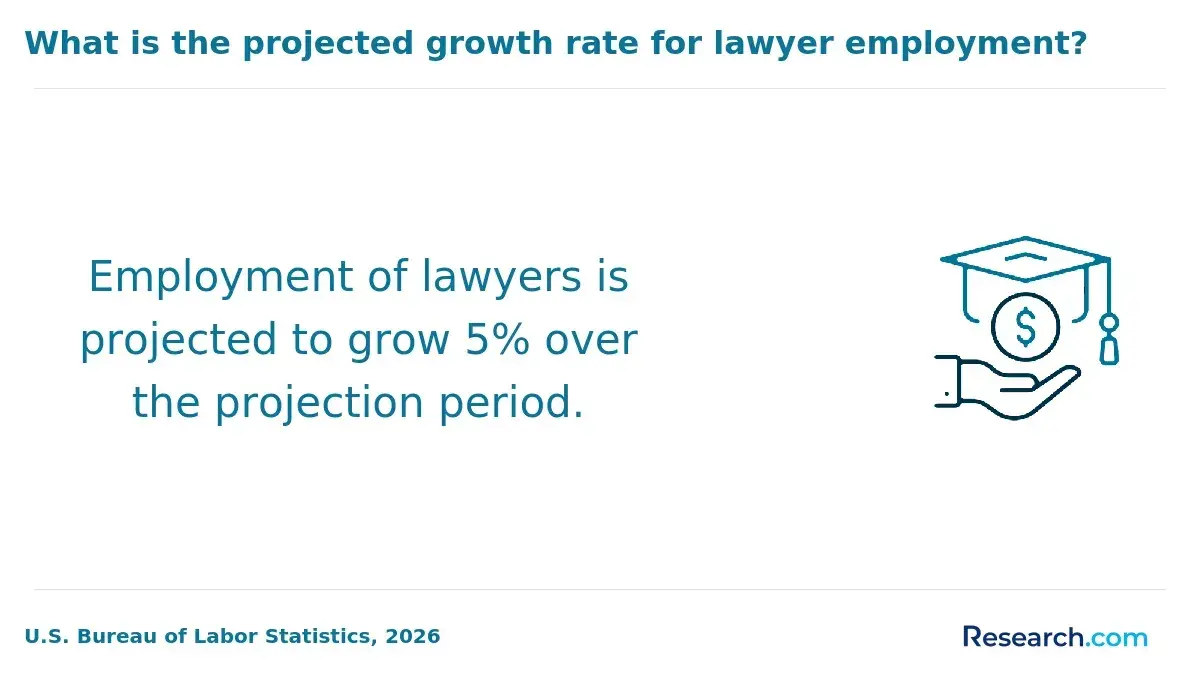
For the combined occupation of paralegals and legal assistants, the Bureau of Labor Statistics reports $62,890 in May 2025 median annual pay and 0% projected growth, 2025-2035. It nevertheless projects about 40,800 openings per year, largely because workers leave the occupation. These are occupation-wide figures, not entry-level offers or a comparison of associate and certificate graduates' earnings. Choose between programs based on their requirements, skills training, and cost - not an unsupported claim that one credential produces a particular salary.
Do paralegal graduates need certification or a state license?
Completing an associate degree or certificate does not automatically make someone a professionally certified paralegal. Professional certification is a separate credential awarded under a certifying organization's rules. The ABA approves education programs but does not issue an "ABA-certified paralegal" credential.
There is no single nationwide paralegal license requirement. State rules, protected titles, and employer expectations can differ, so check the relevant state court, bar, or regulatory authority before relying on general guidance. If a job posting requests certification, identify the issuing organization and check its current education, experience, and examination requirements before paying for a program. Education alone does not authorize a paralegal to practice law independently.
Other Things You Should Know About Law & Paralegal
Neither is a law degree or qualifies you to practice as an attorney. Law schools set their own admission requirements; check those requirements if a JD is your long-term goal.
A school-issued certificate generally records completed education, but verify the school's documentation policy. An optional professional certification may have separate renewal requirements set by its issuer.
Possibly. Ask whether your employer offers tuition assistance and whether it covers the institution, credential type, and courses you are considering. Confirm any grade or continued-employment conditions before enrolling.
That depends on the school. Ask whether it accepts the credential and requires an evaluation of your transcript before assuming you qualify for admission.
References
- Paralegal (Transfer) - Career Bridge https://careerbridge.wa.gov/learn/program/5864
- Eligibility Requirements | Federal Student Aid https://studentaid.gov/understand-aid/eligibility/requirements
- Cost of Attendance (Budget) | 2025-2026 Federal Student Aid Handbook https://fsapartners.ed.gov/knowledge-center/fsa-handbook/2025-2026/vol3/ch2-cost-attendance-budget
- How Long Does It Take to Get an Associate Degree? | snhu.edu https://www.snhu.edu/about-us/newsroom/education/how-long-is-an-associate-degree
- Paralegal Certificate | jccc.edu https://www.jccc.edu/academics/credit/paralegal/
- Paralegal Certification vs. Degree: What's the Difference? | Bryan University Online© https://bryanuniversity.edu/faq/the-difference-between-a-paralegal-certification-and-degree/
- How Long Are Community College Programs? | Edison State Community College https://www.edisonohio.edu/blog/how-long-are-community-college-programs
- How to Choose a College Program That Fits Your Goals | coalingacollege.edu https://coalingacollege.edu/blog/posts/college-101/how-to-choose-a-college-program.php
- Course Transfer Policies | University of La Verne https://law.laverne.edu/legal-studies/course-transfer-policies/