2027 Paralegal Certificate or E-Discovery Certification: Which Training Should Come First?

Co-Founder and Chief Data Scientist
A paralegal certificate builds a broad legal-support foundation; an e-discovery certification demonstrates knowledge of handling electronically stored evidence or a particular platform. Choosing the wrong one first can mean paying for training that does not address your next hiring hurdle.
This guide is for new entrants, career changers, and legal staff considering a technology specialty. It compares what each path teaches, what employers may expect, and the costs and commitments to check before enrolling.
Key Things You Should Know
- New to legal work? Start with paralegal education if the jobs you want require legal research, drafting, and litigation basics; add e-discovery training when you know which skills or tools those employers use.
- Already work in legal support, records, or IT? Targeted e-discovery training may come first if you can demonstrate the legal or technical foundation required by the roles you seek.
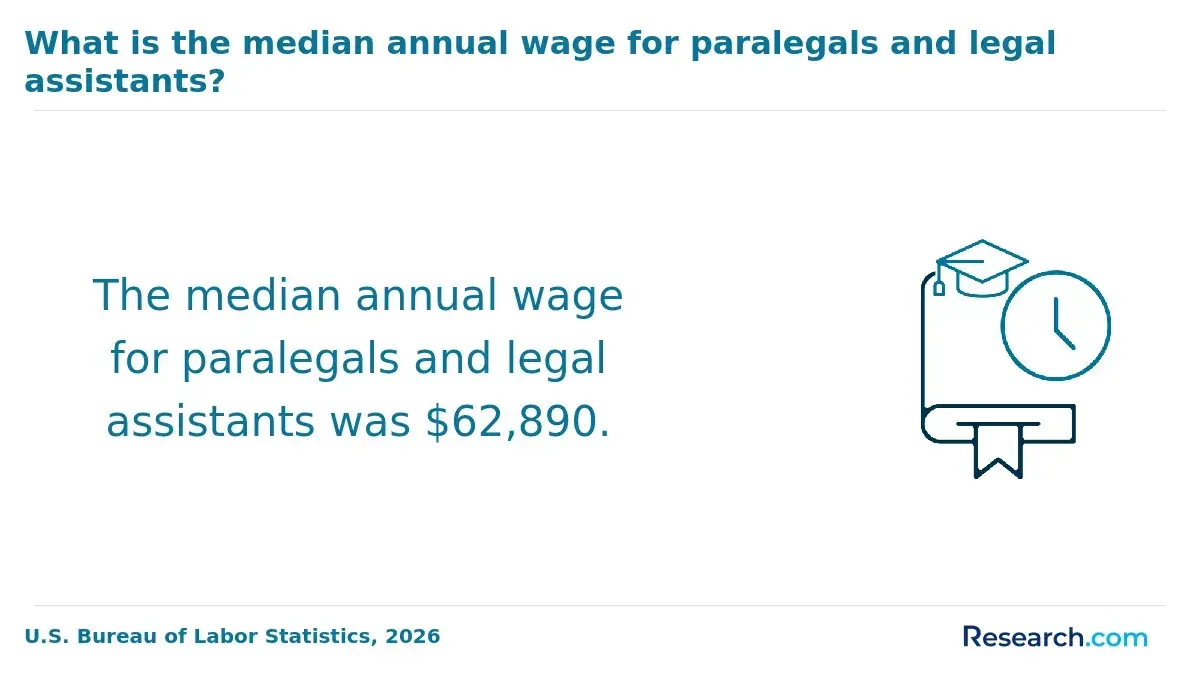
- Neither credential guarantees a job: The Bureau of Labor Statistics (BLS) reports $62,890 median annual pay for paralegals and legal assistants in May 2025, with 0% projected employment growth for 2025-2035.
What Is the Difference Between a Paralegal Certificate and E-Discovery Certification?
A paralegal certificate is an educational award earned by completing a school's prescribed coursework. It is not the same as professional certification, a credential granted by a separate organization after its requirements are met. Completing a certificate does not automatically make someone a professionally certified paralegal.
E-discovery is the process of identifying, preserving, collecting, reviewing, and producing electronically stored information for a legal matter. E-discovery certification usually means passing a credentialing organization's assessment, although providers also sell courses and issue completion certificates. For example, the Association of Certified E-Discovery Specialists awards the Certified E-Discovery Specialist (CEDS) credential, while Relativity offers certifications tied to its software. A training completion badge should not be presented as either credential.
The comparison below separates broad education from a specialized professional credential. That distinction matters more than the word "certificate" on a provider's website.
| Decision factor | Paralegal certificate | E-discovery certification |
| Primary purpose | Build legal-support knowledge across tasks and practice areas | Validate defined discovery-process or software knowledge |
| Typical issuer | College or other education provider | Professional or software credentialing organization |
| Best immediate use | Preparing for general paralegal or legal assistant work | Showing a targeted skill relevant to discovery roles |
| Main limitation | May offer limited hands-on technology training | Does not replace foundational legal education |
Should You Earn a Paralegal Certificate Before E-Discovery Certification?
Usually, yes - if you are entering legal support without prior legal training. A paralegal program can give context to discovery deadlines, attorney supervision, confidentiality, and litigation documents. Certification study is easier to apply when you understand why a legal team collects and reviews records.
The order can reverse for someone who already has that context. A litigation assistant seeking discovery duties, an IT professional supporting legal holds, or a records specialist moving into review operations may benefit more immediately from targeted training. Check the specific certification's current eligibility rules before paying; an introductory course and a professional exam are different commitments.
Do not buy two credentials simply because they sound complementary. Review several target job postings first: if they emphasize general research and drafting, prioritize paralegal education; if they emphasize collections, review workflows, or named software, identify training that provides hands-on practice with those tasks. If ABA program approval matters to your search, compare budget-friendly ABA-approved paralegal programs, then confirm each program's current approval status directly with the American Bar Association (ABA).
What Are the Education Requirements for Paralegal and E-Discovery Careers?
There is no single nationwide education requirement for every paralegal or e-discovery job. Employers set hiring criteria, and state rules affecting paralegal titles, registration, or permitted work can differ. A certificate program's own admissions requirements also vary: some accept high school graduates, while others require college coursework or a prior degree. Read the requirements for the specific program, not certificates in general.
E-discovery roles draw candidates from legal support, information technology, and records management. Employers may value relevant experience as much as a credential, but an entry-level applicant still needs to understand legal workflow and data handling. Check whether a target position requires a degree, experience with a particular platform, or both.
If you need a broader academic foundation than a short certificate provides, compare associate-level legal studies education against local hiring requirements. College credits are not automatically transferable; the receiving institution decides how they apply. Neither a paralegal credential nor a non-JD legal studies degree qualifies its holder to practice law as an attorney.
What Do Paralegal and E-Discovery Programs Teach?
Paralegal curricula commonly cover legal research and writing, civil litigation, ethics, and document preparation. Those skills support work performed under an attorney's supervision, such as organizing case materials and preparing drafts for review. The depth of technology instruction varies by program.
E-discovery training concentrates on electronically stored information: preservation, collection, processing, review, production, and defensible documentation. Some offerings teach vendor-neutral workflows; others teach a named platform. Look beyond a course description that merely mentions software. Ask whether students receive access, complete realistic assignments, and practice checking the accuracy of outputs - including outputs from AI-assisted review tools.
Neither route is the best substitute for every legal career goal. If your aim is broader regulatory or policy work rather than legal-support tasks, comparing graduate certificate and master's pathways in legal studies may be more useful than adding a discovery credential.
Are Paralegal Certificates or E-Discovery Certifications Recognized by Employers?
Recognition depends on the employer and the credential. A paralegal certificate can show completion of legal coursework, but employers may also assess the school, curriculum, prior degree, and practical experience. ABA approval applies to qualifying paralegal education programs; it is not institutional accreditation, and the ABA does not certify individual paralegals. Check institutional accreditation separately.
For e-discovery, distinguish an independent professional credential such as CEDS from a vendor-specific software certification. The former may signal knowledge of discovery processes across systems; the latter may be especially relevant when a job names that platform. Neither proves that an applicant can manage an unfamiliar matter without supervision. Search postings for the exact credential and tool names employers request before choosing an exam.
How Long Do Paralegal and E-Discovery Programs Take to Complete?
A paralegal certificate can take a semester or longer, depending on prerequisites, course sequence, internship requirements, and whether you study full- or part-time. A focused e-discovery course may be shorter, but preparing for a professional certification exam can take longer if you first need practical experience. Published completion times are not promises of how quickly you can secure required courses or pass an exam.
Compare calendar commitments, not just advertised duration. Ask when required courses run, whether classes meet at set times, and whether an internship must be arranged around your job. If you already have legal experience and need one platform skill, a short course may avoid months of broader study. If you are considering accelerated graduate study in legal studies instead, treat it as a separate, more extensive non-JD route - not a faster version of discovery certification.
How Much Do Paralegal and E-Discovery Programs Cost?
There is no reliable single price for either route: schools, credentialing organizations, and software providers charge differently, and their published prices can change. Compare the total cost to reach your goal, not a paralegal program's tuition against an e-discovery exam fee alone.
The cost categories below show why the lower advertised price may not be the lower-cost path. Request a current, itemized quote from each provider before enrolling.
| Cost category | Paralegal certificate | E-discovery training or certification |
| Core charge | Tuition and mandatory program fees | Course, exam, or platform-training fees |
| Possible extras | Books, technology, prerequisites, travel, or internship expenses | Practice materials, software access, retakes, or renewal requirements |
| Value to verify | Credit status, practical work, and possible transfer | Exam eligibility, hands-on access, and relevance to target jobs |
Do not assume a certificate qualifies for federal financial aid. Eligibility depends on the institution and the specific program; noncredit training may have different funding options. Ask the school's financial aid office about that program, and ask your employer whether it reimburses job-related training.
Are Online or Campus-Based Programs Better for Paralegal Training?
Neither format is automatically better. An online program may reduce travel and expand your choices, but "online" does not necessarily mean asynchronous or self-paced. A campus program may make scheduled discussion and local networking easier, yet commuting can increase its true cost.
For a paralegal certificate, prioritize legal research and writing feedback, access to research resources, and workable internship arrangements over delivery format alone. For e-discovery training, verify whether you will actually use a review platform or practice with realistic data; watching demonstrations is different from completing a workflow. Ask about scheduled meetings, campus visits, required software, and who arranges any placement before accepting a program's flexibility claim.
What Jobs Can You Get With Paralegal or E-Discovery Training?
Paralegal education can support applications for paralegal and legal assistant roles involving research, drafting, case organization, and attorney-supervised litigation support. E-discovery training may strengthen applications for litigation support, discovery coordination, document review operations, or legal technology support. Job titles overlap, and a certificate alone does not meet every employer's degree or experience requirements.
For a first legal job, seek work that develops document handling, confidentiality, and case-management skills. If you already support litigation, ask whether your team has supervised discovery tasks you can learn before purchasing an exam. If target jobs consistently require a bachelor's degree, transferring toward a bachelor's in legal studies may address a hiring requirement that software certification cannot; confirm transfer decisions with the receiving school.
In either path, paralegals and discovery staff work within applicable supervision and unauthorized-practice-of-law rules. They do not independently act as attorneys or give legal advice.
What Are the Salary and Job Outlook for Paralegals and E-Discovery Specialists?
According to the BLS, paralegals and legal assistants had median annual pay of $62,890 in May 2025. The BLS projects 0% employment growth for 2025-2035, but about 40,800 openings per year, largely as workers leave or change occupations. This is a useful benchmark for general legal-support work, not a salary prediction for someone holding either credential.
"E-discovery specialist" is not a separate occupation in those figures. Its duties may fall under different job classifications, so applying the paralegal median to every discovery position would be misleading. Compare local postings by duties, experience level, and software requirements. With little projected net growth in the broader paralegal occupation, the strongest reason to pay for additional training is evidence that it closes a specific skills gap - not an assumption that another credential will raise your pay.
Other Things You Should Know About Law & Paralegal
Not without authorization and appropriate safeguards. Use provider-supplied sample data or other approved materials, and follow your employer's confidentiality and security rules.
Renewal rules depend on the credentialing organization and can change. Check its current continuing-education, fee, and expiration policies before registering.
Some employers offer tuition assistance or professional-development funds, but coverage may depend on your role, the provider, and whether you pass an exam. Get the reimbursement terms in writing first.
No. You can accurately list coursework as "in progress," but reserve a credential's name for when its issuer has awarded it.
References
- How To Get Certified | North Carolina State Bar https://www.ncbar.gov/paralegal-certification/how-to-get-certified/
- E-Discovery | Bryan University https://catalog.bryanuniversity.edu/ediscovery
- Legal Ethics for Paralegals: Essential Principles and Real-World Dilemmas | Rasmussen University https://www.rasmussen.edu/degrees/justice-studies/blog/legal-ethics-for-paralegals/
- Online Certified Paralegal Training | Kirkwood Community College https://careertraining.kirkwood.edu/training-programs/certified-paralegal/
- Advanced Paralegal: e-Discovery at UGA - Georgia Center https://www.georgiacenter.uga.edu/professional-programs/advanced-paralegal-e-discovery/
- Paralegal Certificate - Emory Continuing Education https://ece.emory.edu/areas-of-study/paralegal/paralegal-certificate.php
- Paralegal Specialist Certificate - Legal Technology and E-Discovery | National University https://www.nu.edu/degrees/professional-studies/programs/paralegal-specialist-certificate-legal-technology-and-e-discovery/
- Certified Paralegal (Voucher Included) | ed2go.com https://www.ed2go.com/courses/legal/legal-studies/ctp/certified-paralegal-voucher-included
- Litigation and eDiscovery Specialist Jobs: Salary, Skills and Career Paths in Legal Technology | Robert Half https://www.roberthalf.com/us/en/insights/career-development/litigation-ediscovery-specialist-jobs
- Paralegal Core Competencies for Career Advancement | NALA https://nala.org/paralegal-core-competencies-for-career-advancement/