2027 Master of Legal Studies vs. a Contract Management Master's

Co-Founder and Chief Data Scientist
A Master of Legal Studies and a contract management master's can both strengthen your work with agreements, but they prepare you for different responsibilities. If you work in compliance, procurement, legal operations, or another law-adjacent role, that distinction matters more than the degree title alone.
This guide compares what you would study, which jobs each route supports, what neither degree qualifies you to do, and how to weigh cost against career value. You can use it to decide which curriculum solves the problems you actually face at work.
Key Things You Should Know
- Choose a Master of Legal Studies for broad legal and regulatory knowledge; choose a contract management master's when sourcing, agreements, and contract performance are central to your work.
- Neither degree qualifies you to practice law. Contract management jobs do not generally require a particular master's, so compare the degree with experience and shorter training options.
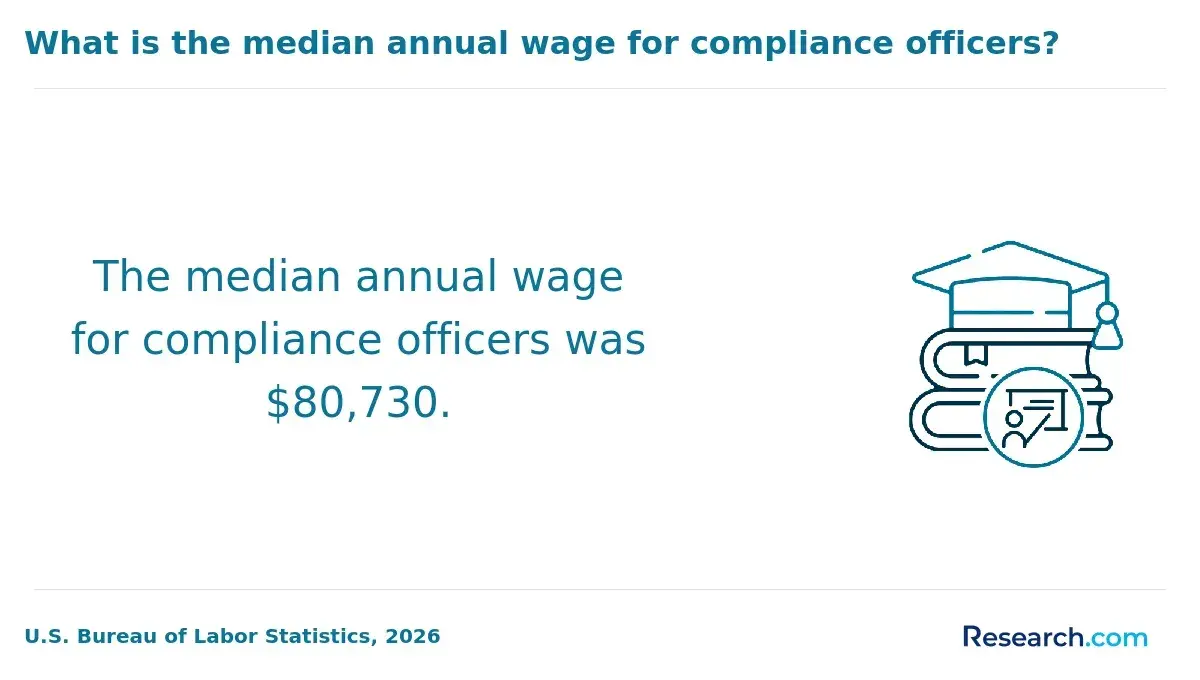
- The Bureau of Labor Statistics reports $80,730 in May 2025 as the median annual pay for compliance officers, with 4% projected growth for 2025-2035. That is an occupational benchmark, not a salary forecast for either degree.
What is the difference between a Master of Legal Studies and a contract management master's?
A Master of Legal Studies (MLS), sometimes called an MSL, is a non-Juris Doctor graduate degree designed to help professionals understand law without training them to become attorneys. A contract management master's focuses on the lifecycle of agreements: planning, solicitation or sourcing, negotiation support, administration, performance, and closeout. Schools may use different degree titles, so compare required courses rather than assuming identical content from the name.
The central distinction is breadth versus specialization. This comparison shows where each degree is likely to be useful; individual curricula can differ substantially.
| Decision factor | Master of Legal Studies | Contract management master's |
| Primary focus | How legal rules affect organizations and decisions | How organizations acquire, negotiate, administer, and monitor agreements |
| Typical range | May cover compliance, employment, privacy, business, or other areas of law | May cover procurement, pricing, risk allocation, supplier relationships, and contract performance |
| Likely fit | A professional whose work crosses multiple legal or regulatory topics | A professional whose work revolves around commercial or government contracts |
| Important limit | Does not confer authority to practice law | Does not confer authority to practice law or replace job-specific contracting experience |
Which degree is better for your career goals: legal studies or contract management?
Choose the MLS if your next role calls for interpreting policies, coordinating with counsel, or understanding legal risk across departments. It may be particularly useful when you expect to move among compliance, human resources, privacy, and legal operations rather than stay in one contracting function.
Choose contract management if you want deeper preparation for procurement, supplier or customer agreements, government acquisition, or post-award administration. Examine whether a program emphasizes the contracts you handle: commercial sales and federal acquisition involve different rules and workflows.
Neither is automatically the stronger investment. If you already manage contracts, a targeted graduate certificate, employer training, or an optional professional credential may address a specific skills gap with less time away from work. If you are changing fields, ask employers whether your existing experience plus a master's would qualify you for the roles you want; a degree alone may not substitute for contract or compliance experience.
What careers can you pursue with each master's degree?
An MLS may complement experience in compliance, legal operations, policy, human resources, or regulated business functions. A contract management master's more directly supports applications for contract administrator, contract specialist, procurement, vendor-management, or commercial-operations roles. These are possible paths, not jobs reserved for degree holders.
For paralegal work, employers commonly look for relevant legal-support skills and may prefer paralegal-specific education. An MLS is not automatically a substitute. Someone seeking that entry route may benefit from finding an online paralegal certificate program and checking its admission requirements and practical coursework. Completing a certificate is education, not the same as earning professional certification.
Whichever degree you consider, compare job postings for your target role. Look for required experience, software, industry knowledge, and education; distinguish a stated minimum from a preferred qualification. That exercise can reveal whether graduate study would fill a genuine hiring gap.
What do you study in a Master of Legal Studies versus contract management?
MLS coursework often begins with legal research, analysis, and the U.S. legal system, then offers subjects such as contracts, employment law, compliance, and dispute resolution. Contract management programs commonly give more sustained attention to drafting and interpreting contract terms, procurement processes, negotiation, financial considerations, and monitoring obligations after signature.
The course list should match the work you expect to do. For an HR-focused career, for example, examine whether employment law and workplace compliance are required courses, electives, or part of a formal concentration. You can compare legal studies degree options for studying human resources law, then confirm each school's current concentration requirements.
For contracting, look beyond a course titled "Contract Law." Ask whether students practice analyzing clauses, documenting changes, evaluating performance, or working through acquisition scenarios. If a program advertises particular software or legal research tools, verify whether students actually use them in assignments rather than merely hearing about them.
Do either degree qualify you to practice law or manage contracts?
Neither degree qualifies you to practice law. An MLS or contract management master's is not a Juris Doctor (JD), and graduates cannot provide legal advice or represent clients merely because they completed one. Attorney licensing requirements are set by jurisdictions and involve a separate educational and admissions path.
Managing contracts is different: there is no single nationwide license required for every contract manager. Employers set qualifications for their roles, while particular government positions or regulated duties may have additional requirements. A master's can help you understand the work, but an employer may still require procurement experience, delegated authority, or training in its procedures. Professional certifications offered by contracting organizations are separate credentials with their own eligibility rules; a degree does not automatically award one.
What are the admission requirements for each master's program?
Both routes generally require a bachelor's degree, but schools determine acceptable academic backgrounds and application materials. Some welcome applicants without prior legal or procurement coursework; others may value relevant work experience or require prerequisites. Check each program's current admissions page for transcript, recommendation, statement, and testing rules rather than assuming that one master's type is harder to enter.
If you have prior graduate or business-law coursework, ask how many credits the receiving school may accept and whether those credits would replace required courses. The receiving institution makes the transfer decision. For applicants comparing earlier study options as well, business law degree programs that accept transfer credits can be a starting point, but an undergraduate transfer policy does not establish a master's program's policy.
How long do these master's programs take, and how much do they cost?
Completion time depends on required credits, course sequencing, enrollment pace, and whether courses run every term. A faster advertised schedule may require a workload that is difficult to combine with full-time employment. If speed matters, review online legal studies master's programs by duration, then verify current course availability and the pace assumed in each estimate.
There is no reliable universal price difference between the two degree types. Compare each school's estimated total cost at your intended pace: tuition for all required credits, mandatory fees, books or materials, technology, and any required travel. Ask whether tuition can change before you finish and whether employer assistance applies to the specific program. Federal aid eligibility depends on the institution and program; confirm it with the school's financial aid office rather than assuming that every graduate option qualifies.
Finally, count opportunity cost. A less expensive degree can still be the poorer choice if it lacks the coursework you need; a shorter credential may be the better first step if it addresses your immediate skills gap without delaying paid work.
Are online or campus-based programs better for working professionals?
Online study may reduce commuting, but "online" does not necessarily mean self-paced. A program can still require live meetings, group work, fixed exam times, or a particular sequence of courses. Campus study may offer face-to-face practice and local connections, but travel and class times can make completion harder alongside a job.
For either degree, request a sample course schedule and ask which activities require attendance at set times. Contract management applicants should also check how negotiation exercises and team projects work online. If a capstone, internship, or campus visit is required, confirm its scheduling and any travel costs before enrolling.
What salaries and job outlooks can graduates expect?
There is no dependable salary figure that applies to all MLS or contract management graduates. Pay depends on occupation, experience, industry, location, and responsibilities. The Bureau of Labor Statistics reports a median annual pay of $80,730 in May 2025 for compliance officers and 4% projected job growth for 2025-2035. That benchmark is relevant to some MLS career plans, but it does not measure the degree's salary effect.
For comparison, BLS reports $62,890 in May 2025 as median annual pay for paralegals and legal assistants, with 0% projected growth for 2025-2035. It still projects about 40,800 openings per year, largely because workers leave or change occupations. These figures describe an occupation, not the earnings of MLS holders or a reason to pursue a master's for paralegal work.
Contract manager titles do not map neatly to one BLS occupation: responsibilities can overlap procurement, operations, and legal support. For a more useful pay comparison, examine postings for the specific contract roles and experience level you could realistically pursue after graduation.
How can you choose an accredited and reputable program?
First, verify the institution's recognized accreditation and confirm that the degree and delivery format are currently offered. Institutional accreditation is distinct from curriculum quality or a promise that credits will transfer. Compare published required courses, instructor expertise, practical assignments, scheduling, and the complete cost against the jobs you identified.
Do not confuse this check with American Bar Association (ABA) approval. The ABA approves qualifying paralegal education programs; it does not confer institutional accreditation or certify individual paralegals. ABA paralegal-program approval is not a general quality label for MLS or contract management master's degrees. If paralegal preparation is your actual goal, you can compare affordable ABA-approved paralegal programs and verify a program's current approval status directly.
Before committing, ask each master's program for its current degree requirements, a realistic schedule for working students, an itemized cost estimate, and examples of assessed practical work. Be cautious if a program implies that graduation alone brings attorney eligibility, professional certification, or a particular job or salary.
Other Things You Should Know About Law & Paralegal
Yes, if a school offers one and you meet its admission rules. Ask whether its credits can later apply to a specific master's; stacking is not automatic, even at the same institution.
Not necessarily. A contracts course may emphasize legal principles rather than drafting practice. Check its syllabus and assessed assignments if drafting is your goal.
Do not assume so. JD programs set their own credit policies, and a non-JD degree does not shorten the attorney-licensing path by default. Ask the prospective law school directly before relying on any transfer possibility.
Describe the processes you supported, such as tracking obligations or documenting amendments, without disclosing protected terms. A permitted, de-identified work sample or a fictional contract exercise can demonstrate your approach.
References
- Fact Sheet 13: Employment Relationship Under the Fair Labor Standards Act (FLSA) | U.S. Department of Labor https://www.dol.gov/agencies/whd/fact-sheets/13-flsa-employment-relationship
- Cost of Attendance (Budget) | 2025-2026 Federal Student Aid Handbook https://fsapartners.ed.gov/knowledge-center/fsa-handbook/2025-2026/vol3/ch2-cost-attendance-budget
- Accreditation in the U.S. | ed.gov http://www.ed.gov/laws-and-policy/higher-education-laws-and-policy/college-accreditation/accreditation-in-the-us
- Part 31 - Contract Cost Principles and Procedures | Acquisition. GOV https://www.acquisition.gov/far/part-31
- Master of Legal Studies | Sturm College of Law https://law.du.edu/academics/graduate-degrees/masters-degrees/master-legal-studies
- Florida Tech's Online M.S. Opens Doors to High-Paying Procurement Careers https://online.fit.edu/degrees/graduate/business/ms-acquisition-contract-management/top-careers/
- Master of Legal Studies Requirements | University of Miami School of Law https://admissions.law.miami.edu/apply/mls/
- Online Master of Legal Studies | University of Cincinnati | UC News https://www.online.uc.edu/degrees-programs/masters/mls-legal-studies.html
- Can You Practice Law Without Passing the Bar? | J.D. Jobs https://www.collegesoflaw.edu/blog/2022/04/12/jobs-for-j-d-s-bar-exam-not-required/
- How to Become a Compliance Officer: Steps, Salary & Skills | Pepperdine Caruso School of Law https://law.pepperdine.edu/blog/posts/how-to-become-a-compliance-officer.htm