2027 Master of Legal Studies vs. Master of Healthcare Administration for Compliance Careers

Co-Founder and Chief Data Scientist
Healthcare compliance professionals need to understand regulations and make them work inside complex organizations. A Master of Legal Studies (MLS) emphasizes legal interpretation; a Master of Healthcare Administration (MHA) emphasizes running healthcare operations. Neither is automatically the better credential. If you work in healthcare, law, auditing, or another field and are considering graduate school, this guide will help you compare the work each degree prepares you to do, identify gaps in specific programs, and decide whether a full master's degree is worth the time and cost.
Key Things You Should Know
- Choose an MLS when your target work centers on interpreting regulations, advising internal teams on legal risk, or drafting policies; it does not qualify you to practice law.
- Choose an MHA when you want to lead a compliance function within healthcare operations and need stronger preparation in budgets, quality, staffing, and organizational change.
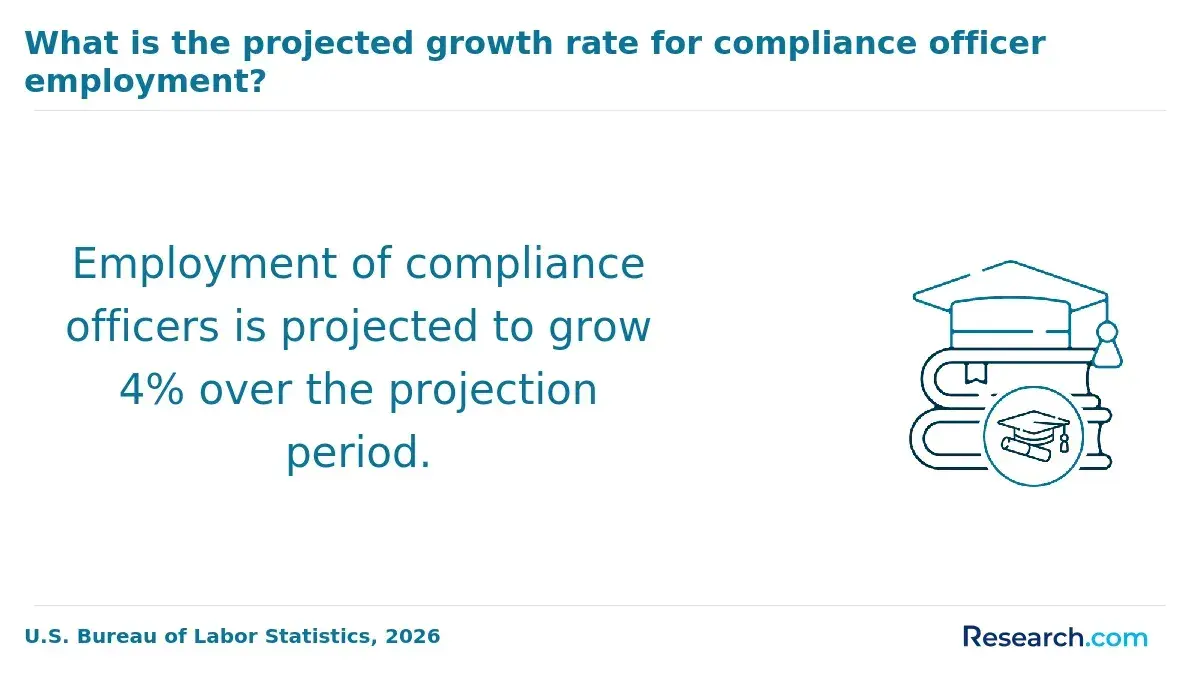
- Neither degree is a standard license for compliance work. The Bureau of Labor Statistics reports $80,730 in May 2025 median annual pay for compliance officers and 4% projected growth, 2025-2035; those figures cover multiple industries, not just healthcare.
What Is the Difference Between an MLS and MHA for Compliance Careers?
The distinction is the problem each degree teaches you to solve. Healthcare compliance staff interpret requirements, assess risks, investigate concerns, train employees, and help organizations correct failures. An MLS approaches those tasks through legal analysis; an MHA approaches them through healthcare management and implementation.
This comparison shows where each degree is most likely to add value. Individual curricula vary, so the program's required courses matter more than its title alone.
| Decision factor | MLS | MHA |
| Primary emphasis | Law, regulation, legal research, and risk analysis | Healthcare operations, finance, quality, and leadership |
| Potential compliance strength | Interpreting rules and translating them into policies | Putting controls into practice across a health organization |
| Important gap to check | Hands-on knowledge of care delivery and healthcare operations | Depth of legal research and regulatory analysis |
| Typical applicant | Professional seeking legal knowledge without becoming an attorney | Professional seeking healthcare management responsibility |
| Attorney qualification | No | No |
An MLS may also be called a Master of Studies in Law, Master of Science in Law, or Master of Jurisprudence; names and requirements differ by school. Our guide to types of legal studies master's degrees can help you distinguish these non-JD options before comparing their healthcare coursework.
Which Degree Better Prepares You for Healthcare Compliance Jobs?
For regulatory interpretation, an MLS may be the stronger fit; for managing a compliance program inside a healthcare organization, an MHA may be stronger. Neither conclusion holds if the particular program lacks relevant coursework or if your existing experience already supplies its main strength.
Consider the job's daily responsibilities. A role reviewing privacy incidents, researching federal and state requirements, or revising contracting policies may reward legal-analysis skills. A role coordinating audits across departments, improving reporting processes, supervising staff, and working with clinical leaders may reward operational and leadership skills. Senior positions can require both.
Your starting point changes the calculation. A hospital manager who already understands workflows might gain more from legal study. A lawyer, paralegal, or regulatory analyst entering healthcare might gain more from an MHA's operational perspective. For either applicant, relevant work experience, employer training, and a focused graduate certificate may address a skill gap at less cost than another full degree.

What Careers Can You Pursue With an MLS or MHA?
Both degrees can support applications for compliance analyst, privacy, auditing, policy, and compliance management roles. Employers generally hire for a combination of subject knowledge, judgment, communication, and experience - not a degree title alone. The roles below illustrate where the degrees may contribute differently.
| Role or direction | Where an MLS may help | Where an MHA may help |
| Healthcare compliance analyst | Researching requirements and assessing policy language | Understanding workflows and monitoring implementation |
| Privacy or regulatory specialist | Interpreting privacy and disclosure requirements | Coordinating organization-wide processes and training |
| Compliance manager or director | Evaluating legal risk and escalating issues to counsel | Leading teams, budgets, audits, and corrective action |
| Healthcare operations leader | Recognizing regulatory implications of decisions | Managing services, quality, and organizational performance |
An entry-level analyst position may not require a master's degree, while management jobs often call for substantial relevant experience. If your goal is legal-support work at a healthcare law practice rather than an internal hospital compliance role, paralegal education is a different route worth comparing. Affordable ABA-approved paralegal programs online address that route, but paralegals do not independently provide legal advice, and ABA approval of a paralegal program is not a healthcare compliance credential.
How Do MLS and MHA Curricula Compare for Compliance Professionals?
MLS coursework commonly emphasizes legal research, statutory and regulatory interpretation, contracts, and administrative law. Some programs offer healthcare law, privacy, employment law, or compliance electives. MHA coursework commonly emphasizes healthcare finance, organizational leadership, quality improvement, health policy, and management; some programs add compliance, risk management, or health law.
Look beyond a course name to its assignments. A healthcare law survey may develop awareness without teaching students to investigate a reported violation. Conversely, an operations practicum may teach implementation without much practice interpreting regulations. For a compliance-focused degree, useful evidence includes required work on audits, policy drafting, incident response, investigations, corrective action, and communication with legal counsel.
Check whether advertised healthcare or business-law study is a formal concentration, an optional set of electives, or just several available courses. Working adults considering an MLS can also compare business law degree options for working adults, especially if their intended work involves contracts or organizational risk beyond healthcare.
Are MLS or MHA Degrees Accredited and Professionally Recognized?
Start with the institution's current accreditation by an accreditor recognized by the U.S. Department of Education. Then check whether the specific program has any relevant specialized accreditation. The Commission on Accreditation of Healthcare Management Education (CAHME) accredits eligible graduate healthcare management programs, but not every MHA is CAHME-accredited. Verify a program's current status and scope rather than assuming the school's accreditation covers that distinction.
MLS programs are generally evaluated through their institution and curriculum, not a universal MLS-specific accreditor. American Bar Association accreditation of a law school's JD program does not mean its MLS is separately ABA-accredited or approved. Likewise, ABA approval of certain paralegal education programs is separate from institutional accreditation and does not apply to an MLS simply because both involve legal study.
Professional recognition is more practical than a label alone: ask whether local healthcare employers recruit from the program, whether instructors have relevant compliance experience, and whether graduates can show work samples or supervised experience. None of these factors guarantees hiring or certification eligibility.
What Are the Admission Requirements for MLS and MHA Programs?
Both are graduate degrees and generally require a bachelor's degree. Schools may also request transcripts, recommendations, a résumé, a statement of purpose, or an interview. Requirements for work experience, prerequisite coursework, and standardized tests vary; do not assume that an MLS requires prior legal study or that every MHA requires prior healthcare employment.
Admissions flexibility is useful only if the resulting curriculum fits your goal. If preparing an essay is a barrier, compare legal studies programs without personal statement submissions, then confirm the current requirements directly with each school. Before applying, ask whether your background meets any practicum prerequisites and whether relevant prior graduate credits may transfer; the receiving institution decides whether and how to apply them.
How Long Do MLS and MHA Programs Take, and What Do They Cost?
Either degree may be offered part-time or full-time, but completion time depends on required credits, course sequencing, enrollment load, and any capstone or practicum. A program advertised as fast can still require fixed-term courses or scheduled group work. Fast-track business law graduate programs provide a useful schedule comparison for MLS shoppers, though speed is not evidence of healthcare compliance depth.
Compare costs using the same unit: estimated total required tuition and fees for the credits you would actually take, not one school's per-credit price against another's advertised program total. Add required materials, technology charges, travel or campus visits, and any practicum-related expenses. Tuition varies too widely by institution and enrollment status for a single MLS-versus-MHA price to be meaningful.
Before accepting an offer, request a written cost estimate and a course-by-course completion plan. Check the specific program's eligibility for federal student aid, current loan terms, scholarships, and employer tuition benefits rather than assuming that all graduate options receive the same support. The opportunity cost matters too: if your employer will give you compliance assignments now, a certificate or targeted training may offer a more direct first step than paying for a full master's degree.
Should You Choose an Online or Campus-Based Compliance Degree?
Choose based on access to relevant practice, not the format label. Online delivery can help a working professional stay employed, but "online" does not mean asynchronous or self-paced. Live classes, team projects, timed exams, campus visits, and fixed course sequences can still constrain your schedule.
Campus study may make it easier to build local healthcare contacts or participate in in-person projects. An online program can be equally useful if it offers substantive feedback, accessible faculty, and compliance-focused assignments. If a practicum is required, confirm who finds the placement, whether your current job can qualify, whether remote work is permitted, and what happens if a placement falls through. Those details can determine whether a seemingly flexible program is feasible.
Do Compliance Careers Require a License or Professional Certification?
There is no general U.S. license to work as a healthcare compliance officer, and neither an MLS nor an MHA grants one. Particular clinical or legal duties may require a separate professional license. An MLS does not qualify its holder to practice law; compliance staff should refer matters requiring legal advice to appropriately licensed counsel.
Professional certification is distinct from an academic degree or certificate. The Compliance Certification Board's Certified in Healthcare Compliance (CHC) credential is one option for eligible professionals. Eligibility, examination rules, and continuing education requirements are set by the credentialing body and can change. Before paying for a degree on the assumption that it leads to CHC certification, check the current rules and whether your work experience qualifies; completing an MLS or MHA alone does not confer the credential.
What Salaries and Job Outlook Can Compliance Graduates Expect?
The Bureau of Labor Statistics reports $80,730 in May 2025 median annual pay for compliance officers, with 4% projected growth, 2025-2035 and about 32,700 openings per year. The occupation spans industries, so these figures are not a healthcare-only salary estimate or a forecast for MLS or MHA graduates. Openings also do not establish that a master's degree is required.
Pay and advancement depend on the role, location, employer, and experience. A degree may help you compete for work that matches its skills, but it cannot substitute for evidence that you can identify risks, work with operational teams, and follow through on corrective action. Compare job postings for your target positions before enrolling: if they consistently emphasize healthcare operations, lean toward an MHA with meaningful compliance study; if they emphasize regulatory interpretation, consider an MLS with substantial healthcare coursework. If they prioritize experience over either degree, seek relevant assignments or training first.
Other Things You Should Know About Law & Paralegal
Do not assume so. A law school decides whether any prior graduate coursework can apply to its JD under its own policies. Ask the JD program directly before enrolling in an MLS for that purpose.
No. Depending on the employer, it can involve billing, reimbursement, fraud and abuse, research, contracting, quality, and other requirements. Privacy is one possible focus, not the whole field.
Yes, clinical experience can be valuable when reviewing workflows or communicating with care teams. Whether to maintain an active license depends on the position, employer, and licensing board's rules.
Ask to assist with an internal audit, policy review, training project, or corrective-action follow-up. That experience can reveal whether you prefer analyzing requirements or managing their implementation - the same distinction that should guide your degree choice.
References
- Annual Earnings by Educational Attainment - COE https://nces.ed.gov/programs/coe/indicator/cba/annual-earnings
- Compliance Jobs: Top Officer and Analyst Careers | USC Online https://online.usc.edu/news/compliance-jobs-best-careers-pursue-legal-certificate/
- Career Paths in Healthcare Compliance | Seattle U School of Law https://onlinelaw.seattleu.edu/blog/career-paths-in-healthcare-compliance/
- MLS in Health Law: Career Opportunities in a Growing Sector | William & Mary Law https://online.law.wm.edu/blog/mls-health-law-career-opportunities
- How to Choose the Right MLS Program in Healthcare Compliance | wsulaw.edu https://www.wsulaw.edu/news/how-to-choose-the-right-master-of-legal-studies-program-for-healthcare-compliance/
- Legal and Compliance Issues in Healthcare | miami.edu https://news.miami.edu/law/stories/2025/06/legal-and-compliance-issues-in-healthcare-how-an-mls-helps.html
- How to Become a Compliance Officer: Steps, Salary & Skills | Pepperdine Caruso School of Law https://law.pepperdine.edu/blog/posts/how-to-become-a-compliance-officer.htm
- Online Master's in Health Care Compliance, MLS | ASU Online https://asuonline.asu.edu/online-degree-programs/graduate/masters-in-healthcare-compliance/
- Online MS in Health Law and Healthcare Compliance | Albany Law School https://www.albanylaw.edu/graduate/online-ms-health-law-and-healthcare-compliance
- Get Certified in Health Care Compliance: Key Steps & Tips | Pitt Law MSL Online Program https://online.law.pitt.edu/blog/how-to-get-certified-in-health-care-compliance