2027 Online Legal Studies Master's Programs for Engineers With Regulatory Responsibilities

Co-Founder and Chief Data Scientist
An engineer who reviews safety requirements, documents product compliance, or responds to regulators may need more legal fluency without needing to become a lawyer. An online legal studies master's can provide that knowledge, but its value depends on the rules you work with, the courses offered, and what your employer expects. This guide explains how to assess programs, compare them with shorter training options, and judge the time and cost against your regulatory career goals.
Key Things You Should Know
- An online Master of Legal Studies (MLS), Master of Studies in Law (MSL), or similar non-JD degree can strengthen regulatory analysis; it is not required for engineering compliance work and does not qualify you to practice law.
- Prioritize verified institutional accreditation, courses tied to your industry's rules, and a schedule that accommodates audits, projects, and possible live classes.
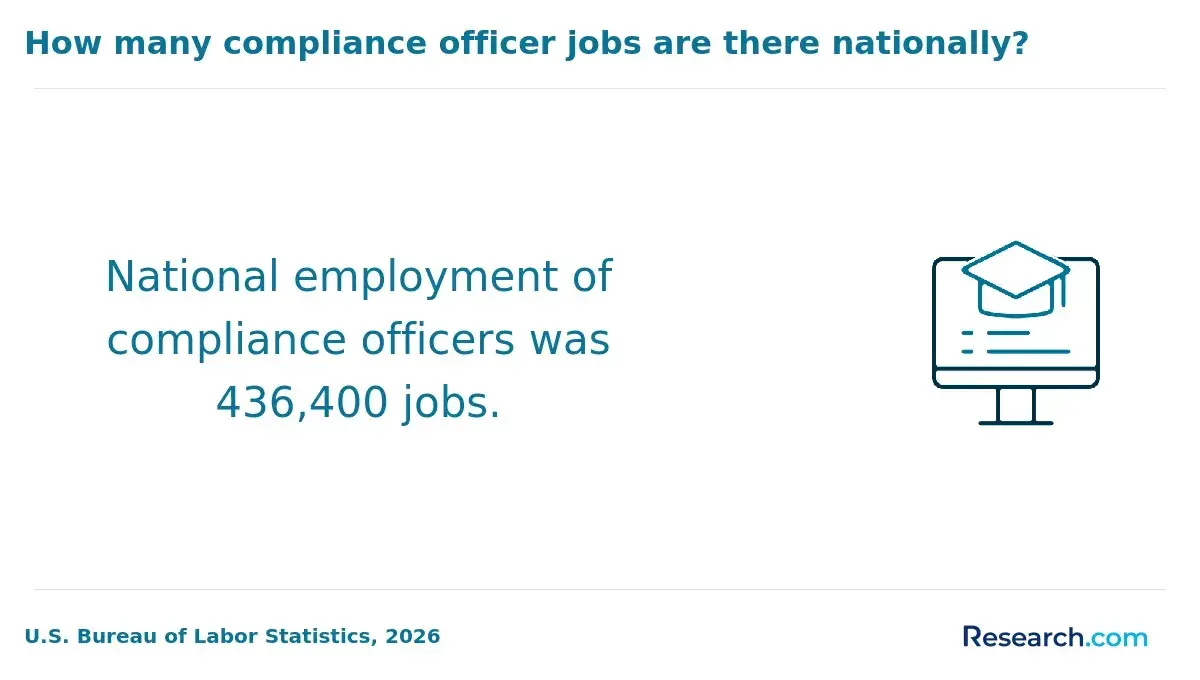
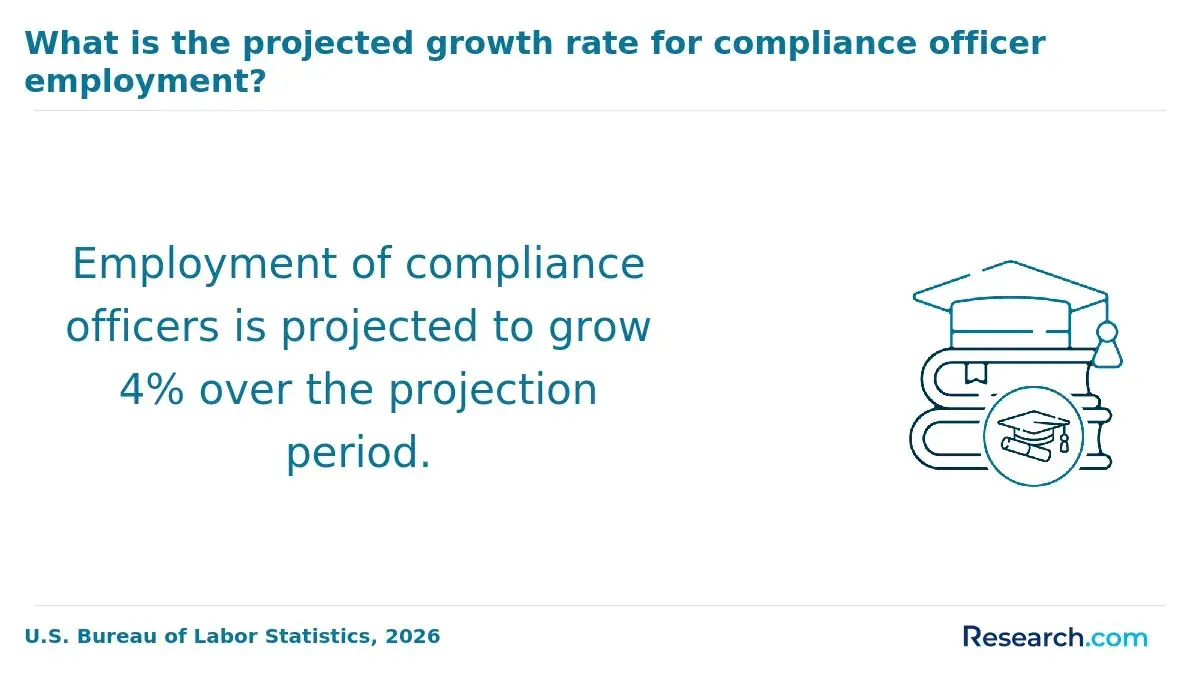
- The Bureau of Labor Statistics reports $80,730 in median annual pay for compliance officers in May 2025 and 4% projected job growth for 2025-2035; those occupation-wide figures are not a predicted return on a master's degree.
What is an online legal studies master's degree for engineers?
It is a graduate degree that teaches professionals to read legal authorities, understand regulatory processes, and work more effectively with counsel and compliance teams. Schools use names including Master of Legal Studies, Master of Studies in Law, and Master of Jurisprudence; the credential name alone does not establish its curriculum or career value.
For an engineer, the useful connection is between technical decisions and legal obligations. A product-design change, for example, may affect testing records, reporting duties, contracts, and agency submissions. Legal study can help you identify those issues and communicate them clearly, while attorneys remain responsible for legal advice and representation.
Look past a program's broad description. A formal regulatory concentration, a few relevant electives, and a separate graduate certificate represent different amounts of structured study. Compare the actual requirements when exploring legal studies master's specializations and career paths.
Can engineers use a legal studies master's to advance regulatory careers?
Yes, particularly when an engineer's work already includes interpreting requirements, maintaining evidence of compliance, managing corrective actions, or explaining technical risks to legal and business teams. The degree may help with roles that combine engineering judgment and regulatory coordination, but experience with the relevant products, facilities, or systems remains important.
The stronger case for a master's is a recurring need to analyze unfamiliar rules or lead cross-functional regulatory work. If you mainly need to follow established procedures, employer training, a targeted graduate certificate, or an industry-specific credential may be a faster and less costly first step. Review job postings for your intended role: distinguish a required credential from preferred legal knowledge, then compare that demand with the program's coursework.
Does an online legal studies master's qualify engineers to practice law?
No. An MLS, MSL, or similar non-JD degree is not a Juris Doctor (JD) and does not, by itself, establish eligibility for a bar examination or a law license. It does not authorize an engineer to give independent legal advice, represent clients, or take on work reserved for licensed attorneys.
Engineers can still use legal knowledge in their own jobs: gathering facts for counsel, translating technical findings, tracking regulatory obligations, and helping implement approved compliance decisions. If your goal is to advise clients as an attorney, research the JD and the admission rules of the jurisdiction where you intend to practice instead. Engineering licensure and attorney licensure are separate systems, with requirements that vary by jurisdiction.
Which accreditation should engineers look for in online legal studies programs?
Start with institutional accreditation recognized by the U.S. Department of Education. Confirm the university's current status through the recognized accreditor or federal accreditation records, rather than relying only on a program advertisement. Then check that the degree and its online delivery are offered by that institution.
Do not confuse institutional accreditation with American Bar Association (ABA) approval. ABA approval is relevant to certain paralegal education programs; it is not the standard to use when selecting a non-JD legal studies master's. Nor should you assume that accreditation of a school's JD program establishes the quality or content of a separate MLS or MSL. For an engineer, course fit, instruction, assessment, and access to relevant electives require their own review.
What coursework do engineers study in regulatory-focused legal studies programs?
Common foundations include legal research and writing, administrative law, contracts, statutory interpretation, and compliance or risk management. Relevant electives depend on the work: environmental and workplace-safety rules for facilities, health or product regulation for device teams, and privacy or cybersecurity law for software and systems engineers.
Inspect syllabi or course descriptions for practical assignments, not just course titles. An engineer may benefit more from analyzing an agency rule, drafting a compliance memorandum, or mapping contractual obligations to technical controls than from a survey course unrelated to their sector. Also confirm whether a subject is a required concentration, an elective offered regularly, or simply listed as a possible topic.
Engineers moving into workforce-policy or internal-investigation work may find employment-law study useful; exploring HR law-focused legal studies degree pathways can help clarify whether that is a genuine career direction rather than an elective chosen for its broad appeal.
What are the admission requirements for engineers applying to online programs?
Expect a bachelor's degree and an application that may request transcripts, a statement of purpose, a résumé, and recommendations. Requirements differ by school. An engineering degree can provide useful technical context, but it does not automatically waive admission criteria or guarantee entry; many non-JD programs are designed for applicants without prior legal coursework.
Before applying, check whether the program expects professional experience, requires introductory courses, or restricts entry to particular terms. If you have previous graduate study, ask the receiving school whether it accepts transfer credit and how that credit would apply to degree requirements. Accreditation alone does not make credits transferable. Engineers considering broader business-law study can use comparing business law transfer opportunities as a starting point, but the receiving program's current policy controls.
How long do online legal studies master's programs take, and what do they cost?
Completion time depends on required credits, course sequencing, enrollment pace, and whether the school offers the courses you need each term. "Online" does not mean self-paced: live sessions, fixed deadlines, or a capstone can affect how well study fits an engineer's project and audit calendar.
There is no reliable single price for this category. For each school, obtain its current 2026-27 per-credit tuition, required credit total, mandatory online and university fees, and any costs for materials, technology, or required visits. Compare the resulting program costs on the same basis, and ask what happens to tuition if you study part time or need an extra term. Confirm aid eligibility for the specific degree with its financial aid office; do not assume that every certificate or course has the same eligibility.
A less expensive credential is not automatically a substitute for graduate legal study. For example, cheapest accredited online paralegal degree programs address a different educational and occupational goal. If your employer needs you to master one regulatory topic rather than lead broader legal-risk work, compare the master's with a focused course or certificate before committing to the larger expense.
How do online and campus-based legal studies programs compare for engineers?
Delivery format matters most when it changes access to the courses and interactions you need. This comparison highlights scheduling trade-offs; neither format is inherently more rigorous.
| Decision factor | Online program | Campus-based program |
| Work schedule | May reduce travel, but can still require live meetings and fixed deadlines | Usually requires attendance at set locations and times |
| Professional interaction | May use virtual discussions, office hours, and group projects | Allows in-person classes and campus events |
| Location-related cost | May avoid relocation, but technology or required-visit costs can apply | May add commuting or relocation costs |
| Course access | Depends on which electives the online track actually offers | Depends on campus scheduling and seat availability |
Ask for a sample course schedule and the next planned offerings of your priority electives. If a program requires a practicum or campus visit, confirm its timing, location, and whether current employment can satisfy any practical-work requirement. An online label is useful only when the actual schedule works with your responsibilities.
What careers can engineers pursue after earning a legal studies master's?
Potential directions include regulatory affairs, product compliance, environmental or safety compliance, technical risk management, and roles coordinating engineering work with legal teams. Titles and hiring standards vary by industry and employer. The strongest applications typically combine the engineer's existing technical experience with new ability to research requirements, document decisions, and communicate risks.
Choose a target role before choosing a degree. For regulatory affairs, look for coursework and projects tied to agency processes and submissions. For internal compliance leadership, prioritize controls, investigations, contracts, and clear writing. An MLS may support either direction, but it cannot replace the technical record or sector experience an employer requires.
Paralegal work is a different path centered on supervised legal support rather than engineering-based regulatory ownership. If that is the job you actually want, compare paralegal education routes - including accelerated paralegal bachelor's study and career potential - instead of assuming a legal studies master's is the most direct preparation. Completing a paralegal program also does not, by itself, make someone a professionally certified paralegal.
What salaries and job outlook can graduates expect in regulatory compliance?
The Bureau of Labor Statistics reports median annual pay of $80,730 in May 2025 for compliance officers, with 4% projected job growth for 2025-2035 and about 32,700 projected openings per year. This is a broad occupational benchmark, not a salary estimate for engineers with a legal studies master's or for a particular regulatory specialty.
Pay and opportunities depend on industry, location, experience, responsibility, and the employer's requirements. To evaluate the degree's possible return, compare postings for your target jobs with your present qualifications. If they chiefly demand engineering experience and knowledge of a specific regulatory framework, targeted training may offer a better next step. If they repeatedly call for broader legal analysis and cross-functional leadership, a relevant master's may be easier to justify.
Other Things You Should Know About Law & Paralegal
Possibly. Check your employer's tuition-assistance policy before enrolling, including eligible programs, approval deadlines, grade requirements, and any repayment obligation if you leave.
Do not assume it will. Continuing-education rules vary by state licensing board, and credit may depend on the course content and documentation. Ask the board or consult its current rules before relying on a course for renewal.
No. Registration to practice before the U.S. Patent and Trademark Office has separate eligibility and examination requirements. Engineering training may be relevant, but a legal studies degree does not replace that process.
That depends on the instructor's rules and your employer's confidentiality policies. Ask whether you can use a public, anonymized, or simulated matter before sharing technical records or regulatory correspondence.
References
- EDUCATION REQUIREMENTS FOR ENGINEERING LICENSURE | nysed.gov https://www.op.nysed.gov/professions/engineering/advisory-notices/education-requirements
- Regulatory Compliance | Energy.gov https://www.energy.gov/em/regulatory-compliance
- Employer-offered educational assistance programs can help pay for college | Internal Revenue Service https://www.irs.gov/newsroom/employer-offered-educational-assistance-programs-can-help-pay-for-college
- Types of Financial Aid: Grants, Work-Study, and Loans | studentaid.gov https://studentaid.gov/understand-aid/types
- Online Master of Legal Studies | University of Cincinnati | UC News https://www.online.uc.edu/degrees-programs/masters/mls-legal-studies.html
- Student Guide to Instructional Modes | Teaching and Learning Resource Center https://teaching.resources.osu.edu/StudentInstructionalModes
- Frequently Asked Questions for New Online Students | South Central College https://www.southcentral.edu/south-central-online/frequently-asked-questions-for-new-online-students.html
- and Ask For - Employer Tuition Reimbursement Benefits | Harvard Extension School https://extension.harvard.edu/blog/how-to-use-and-ask-for-employer-tuition-reimbursement-benefits/
- Academic Experience | Master of Science in Biomedical Regulatory Affairs https://www.regulatoryaffairs.uw.edu/academic-experience
- Graduate Certificate in Regulatory Affairs and Regulatory Science for Medical Devices - Purdue Online https://www.purdue.edu/online/program/graduate-certificate-in-regulatory-affairs-and-regulatory-science-for-medical-devices/