2027 Purdue Global vs. Keiser: Comparing Online Associate-Level Legal Support and Paralegal Programs

Co-Founder and Chief Data Scientist
Purdue Global and Keiser offer different starting points for an associate-level legal career: one emphasizes legal support broadly, while the other is framed around paralegal studies. For prospective online students, the important differences extend beyond the degree title to course requirements, scheduling, total cost, and whether the available format matches their goals.
This guide compares those decision points, explains what accreditation and program approval do - and do not - mean, and identifies the questions to resolve with each school before enrolling.
Key Things You Should Know
- Purdue Global's associate degree is in Legal Support and Services; Keiser's is an Associate of Science in Paralegal Studies. Compare the current required courses, not just the titles.
- Institutional accreditation is different from American Bar Association (ABA) approval of a paralegal program. Verify any ABA approval claim for the specific program and format before relying on it.
- The U.S. median pay for paralegals and legal assistants was $62,890 in May 2025, but neither associate degree guarantees a paralegal job or that salary.
How do Purdue Global and Keiser compare for online paralegal associate degrees?
Purdue Global lists an Associate of Applied Science in Legal Support and Services, while Keiser lists an Associate of Science in Paralegal Studies. Both can be relevant to legal-support work, but a broader degree title does not establish that one curriculum is less practical, and a paralegal-specific title does not establish that every employer will prefer it.
This comparison isolates the first distinctions to check. Keiser students should confirm that the online format is available for their intended start date and location rather than assuming every campus offering has an identical online counterpart.
| Decision point | Purdue Global | Keiser |
| Associate credential | Associate of Applied Science in Legal Support and Services | Associate of Science in Paralegal Studies |
| Primary comparison question | Which required courses develop paralegal-specific research, writing, and procedure skills? | Which required courses and practical assignments support the legal work you want to do? |
| Online enrollment question | What live meetings, exams, or placement requirements apply to your courses? | Is the full degree available online for your start date, and are any in-person activities required? |
Students still exploring the field can also compare online pathways to an associate degree in legal studies. Keep the distinction in mind: a legal studies program may teach useful legal concepts without offering the same paralegal preparation as a practice-focused curriculum.
Are Purdue Global and Keiser accredited for legal support programs?
Purdue Global identifies the Higher Learning Commission as its institutional accreditor; Keiser identifies the Southern Association of Colleges and Schools Commission on Colleges. Institutional accreditation concerns the university. It is not the same as ABA approval of an individual paralegal education program.
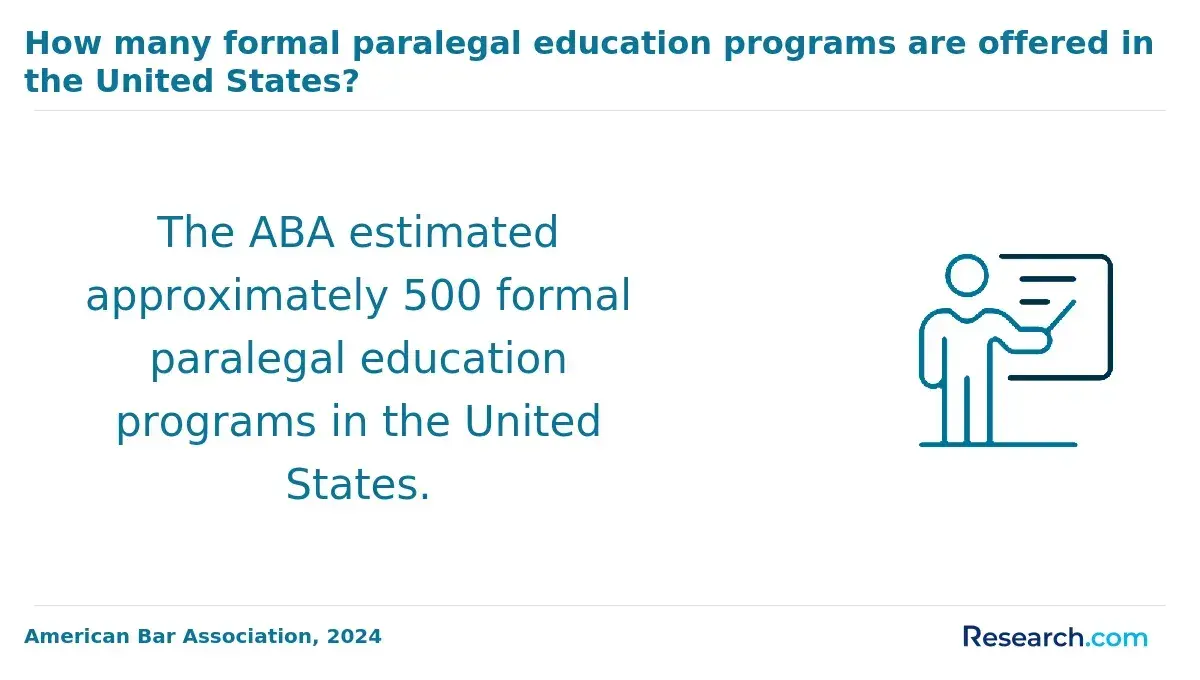
Do not treat either university's accreditation as proof that its associate program is ABA-approved. If approval matters to a prospective employer, certification body, or to you personally, check the ABA's current approved-program directory for the exact program and ask the school whether that approval covers the enrollment format you intend to use. The ABA approves qualifying education programs; it does not certify individual graduates as paralegals.
What are the admission requirements for each online paralegal program?
For either associate route, ask admissions for the current program-specific checklist rather than relying on general university admission language. Confirm the required proof of secondary education, any placement or prerequisite coursework, application steps, and whether online enrollment is available where you live. Requirements and document procedures can change by applicant background.
If you have college credit, request a written evaluation showing which requirements it would satisfy. Transfer acceptance and degree applicability are separate decisions: a school may accept a course without applying it to a required legal-support class. Ask how the evaluation affects your remaining courses before using a projected graduation date to compare the schools.
How do Purdue Global and Keiser online paralegal curricula differ?
The useful comparison is between required learning experiences, not catalog descriptions alone. Obtain each current degree plan and mark where students practice legal research and writing, civil procedure, document preparation, ethics, and work with legal technology. Then distinguish required courses from electives: an attractive elective is less valuable to your plan if it is not offered when you can take it.
Ask both schools for examples of assessed assignments and whether an internship, externship, or other practical experience is required or optional. A course that discusses research software is not necessarily one that provides access to a platform or requires hands-on work. Neither degree prepares a graduate to practice law as an attorney.
If you already hold substantial college credit and need targeted job preparation rather than another associate degree, compare certificate programs for paralegal education. A school-awarded certificate documents completed education; it is different from professional certification awarded by a credentialing organization.
How long do the programs take and what do they cost?
Neither school has a meaningful single price or completion date for every applicant. Remaining credits, transfer evaluations, course sequencing, enrollment pace, and required fees can change the result. Do not compare a per-credit quote from one school with an estimated full-degree price from the other.
Request a written, program-specific estimate from each school showing tuition for your remaining coursework, mandatory fees, books and research materials, technology costs, and any placement-related expense. Request a term-by-term course plan alongside it. That lets you compare both the amount you may pay and the time you may need to keep paying it.
Ask each financial aid office which aid applies to your actual degree and enrollment plan; eligibility depends on the student and program, not just institutional accreditation. If a bachelor's degree may follow, include likely additional study in your calculation. Credit transfer considerations for paralegal bachelor's programs matter because the eventual receiving institution decides how associate coursework applies.
How do online and campus-based formats compare for paralegal students?
Online study removes a routine commute, but it does not automatically mean self-paced study. For both schools, check whether your courses have scheduled live sessions, timed exams, group projects, or fixed weekly deadlines. If Keiser offers both campus and online sections for your program, ask whether course availability or practical requirements differ between them.
Campus study may make face-to-face discussion and local networking easier; online study may better accommodate work or caregiving. Either format can build practical skills if students receive substantive feedback on research and writing. If a placement is required, ask who finds it, whether your current workplace can qualify, and whether remote work is permitted. Get those answers before assuming an online degree can be completed entirely from home.
What careers can graduates pursue with a legal support associate degree?
Potential entry routes include legal assistant, paralegal, litigation-support assistant, and legal administrative roles in law firms, corporate legal departments, government offices, or other organizations. Duties vary by employer. A graduate might organize case materials, draft documents for attorney review, track deadlines, or conduct supervised research; the degree itself does not authorize independent legal advice or representation.
Hiring standards also vary. Some employers seek paralegal-focused coursework, while others place more weight on writing samples, office experience, or familiarity with their practice area. If your goal is a broader regulatory or compliance career, investigate its separate hiring requirements rather than assuming an associate degree is sufficient. For readers considering a much later graduate-level step, online legal studies master's tuition and career prospects provide a different comparison; a non-JD legal studies master's does not qualify someone to practice law.
What salary and job outlook can paralegals expect after graduation?
The Bureau of Labor Statistics reports median annual pay of $62,890 in May 2025 for paralegals and legal assistants. That occupation-wide figure is not an entry-level offer or a forecast for graduates of either school; location, employer, duties, and experience affect individual pay.
BLS projects 0% employment growth for the occupation from 2025-2035, alongside about 40,800 openings per year. Openings can arise when workers leave or change occupations even without net growth. For applicants, the implication is to assess the quality of practical work and local hiring opportunities rather than treating a degree title as a job-placement promise.
Do graduates need paralegal certification or state licensing?
There is no single nationwide paralegal license required of every graduate. State rules, permitted tasks, and employer expectations differ, so check the rules where you intend to work. Paralegals generally work under attorney supervision and cannot use an associate degree to independently practice law.
Professional certification is separate from graduation. Organizations such as NALA and the National Federation of Paralegal Associations award credentials under their own eligibility and examination rules; neither school's diploma automatically awards one. If a particular credential matters to you, check its current eligibility criteria against the exact degree and coursework before enrolling.
How should students choose between Purdue Global and Keiser?
Start with the work you want. Purdue Global may appeal if its broader legal-support degree plan contains the paralegal skills you need and its scheduling works for you. Keiser may appeal if you want a degree explicitly titled Paralegal Studies and can confirm that its available online courses, practical requirements, and price suit your circumstances. Neither title alone settles the decision.
Before paying an enrollment deposit, obtain each school's current degree plan, a written transfer evaluation, a term-by-term schedule, and a complete cost estimate. Confirm online availability and any live or in-person obligations. If ABA approval matters to your goal, verify the specific program's status separately. Be cautious of an unusually short completion estimate that omits prerequisite courses or assumes unapproved transfer credit.
Someone who already holds a bachelor's degree may have a different opportunity cost: repeating general education courses could be less useful than targeted paralegal training. Graduate legal studies serves another purpose; faster pathways through graduate legal studies are worth considering only if advanced legal knowledge, rather than entry-level paralegal preparation, matches the intended role.
Other Things You Should Know About Law & Paralegal
No. An associate degree in legal support or paralegal studies is not a Juris Doctor and does not, by itself, qualify a graduate to practice law.
Yes, corporate legal departments employ legal-support staff, but openings and qualifications vary. Review job postings for the specific department's expectations, such as contracts experience or document-management skills.
Possibly. If your employer offers tuition assistance, confirm its approved-school rules, grade requirements, reimbursement limits, and whether the benefit covers fees as well as tuition.
Not automatically. Compare the remaining associate requirements with a targeted paralegal education program and the jobs you want. Ask employers or credentialing organizations whether the alternative meets their requirements before committing.
References
- Educational Program Standards | North Carolina State Bar https://www.ncbar.gov/paralegal-certification/educational-program-standards/
- Military Training Evaluation Program (MTEP) | dantes.mil https://www.dantes.mil/credit4training/
- Paralegal Studies AA Degree | keiseruniversity.edu https://www.keiseruniversity.edu/programs/criminal-justice/associates-paralegal-studies/
- ABA Approved!! | Paralegal College https://paralegal.edu/blog/aba-approved/
- Undergraduate and Graduate Tuition and Fees | Purdue Global https://www.purdueglobal.edu/tuition-financial-aid/undergraduate-graduate-tuition-and-fees/
- Are There Advantages to an ABA-Approved Paralegal Program? | Campus https://campus.edu/blog/paralegal/american-bar-association-approval
- Do You Need ABA Approval for a Paralegal Program? | Bryan University Online© https://bryanuniversity.edu/faq/aba-approval-accreditation-paralegal-programs/