
2027 Master of Legal Studies vs. a Master's in Sustainability for Regulatory Roles

Co-Founder and Chief Data Scientist
Regulatory work can mean interpreting legal requirements, managing compliance controls, or measuring environmental impacts - and those tasks do not call for the same graduate education. A Master of Legal Studies (MLS) may suit someone who needs to apply rules across an organization, while a master's in sustainability may better serve someone working with environmental data and operational change.
This guide compares what each degree teaches, where it may help, and what it can cost in time and money so you can choose a program based on the work you want to do.
Key Things You Should Know
- Choose an MLS when the target job centers on interpreting regulations, drafting policies, investigating compliance issues, or advising internal teams on legal risk. It is a non-JD degree and does not qualify you to practice law.
- Choose a sustainability master's when the job centers on environmental measurement, resource management, or implementing sustainability initiatives. For environmental regulatory work, look for substantial coursework in the applicable rules - not just broad sustainability strategy.
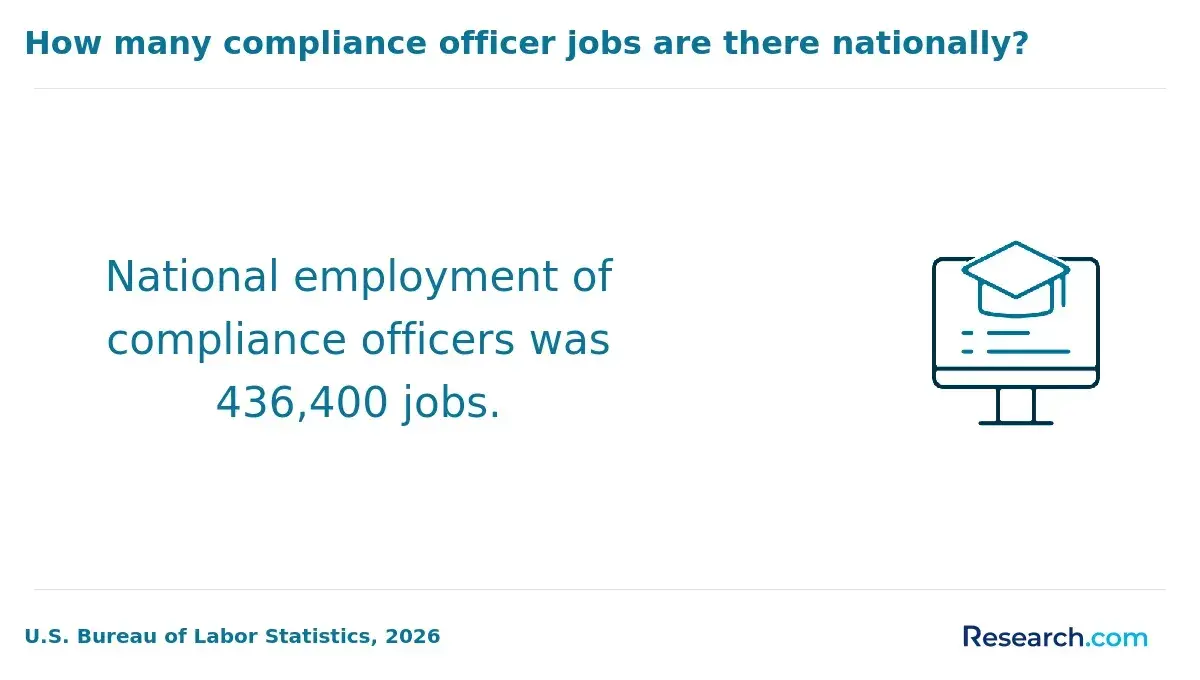
- Neither degree is a universal hiring requirement for compliance work. The U.S. Bureau of Labor Statistics (BLS) reports median pay of $80,730 in May 2025 for compliance officers and projects 4% job growth from 2025-2035; those figures cover many industries, not just environmental roles.
What is the difference between a Master of Legal Studies and a master's in sustainability?
An MLS, sometimes called a Master of Studies in Law (MSL), is graduate legal education generally designed for people who do not intend to become attorneys. A master's in sustainability studies how organizations manage environmental, social, and economic impacts. Program names and emphases vary: a sustainability degree may lean toward science, public policy, business, or management.
For regulatory roles, the useful distinction is the work you will perform. The comparison below shows where each degree is more likely to build directly applicable skills; individual curricula can differ substantially.
| Decision point | MLS | Master's in sustainability |
| Primary lens | What a rule requires and how an organization responds | What an activity affects and how an organization improves it |
| Common regulatory tasks | Researching requirements, developing policies, documenting controls, supporting investigations | Assessing impacts, analyzing data, designing initiatives, tracking environmental performance |
| Best fit | Compliance, regulatory policy, and legal-operations work across industries | Environmental programs, sustainability operations, and technically grounded regulatory work |
| Main limitation | May offer too little environmental science or quantitative training | May offer too little legal analysis or compliance-process training |
Neither label tells you enough by itself. A sustainability program with environmental law and policy courses may fit a permitting role better than a general MLS; an MLS with environmental regulation courses may fit a compliance-policy role better than a broad sustainability degree.
Which degree is better for regulatory compliance careers?
An MLS is usually the more direct match for compliance roles centered on regulatory interpretation and organizational controls. A sustainability master's may be stronger when compliance depends on environmental expertise - for example, understanding emissions data, waste practices, or resource-use metrics. Neither degree replaces knowledge of the specific rules and operations an employer must manage.
Read job descriptions before applying to schools. If several target jobs emphasize monitoring regulatory changes, writing procedures, conducting investigations, and reporting findings, compare MLS programs with compliance coursework. If they emphasize environmental assessment, technical reporting, and implementing site-level changes, compare sustainability programs with relevant regulatory coursework.
Experience may matter more than another degree for someone already employed in a regulated field. An internal compliance project, employer training, or a focused graduate certificate could address a specific skill gap with less time away from work. Conversely, a graduate degree may be worthwhile when your target roles repeatedly call for broader legal or technical preparation.
What jobs can each degree lead to in regulatory affairs?
Regulatory affairs is not one occupation. Employers hire people to identify requirements, maintain records, coordinate submissions, investigate problems, and improve operations. The examples below describe plausible directions, not jobs that either degree automatically qualifies you to hold.
| Role or work area | Potentially useful preparation | What else employers may seek |
| Compliance officer or analyst | MLS coursework in regulation, investigations, and internal controls | Industry knowledge, documentation, and auditing experience |
| Environmental compliance specialist | Sustainability coursework in environmental systems, paired with regulatory study | Knowledge of applicable permits, operations, and reporting practices |
| Sustainability reporting or program specialist | Data analysis and program implementation in a sustainability master's | Experience with the employer's metrics and reporting obligations |
| Regulatory policy or legal-operations specialist | MLS coursework in legal research, policy, and risk | Clear writing and the ability to work with counsel and business teams |
Someone entering through legal support may not need either master's degree at the outset. Associate pathways into paralegal education can provide a different starting point for supervised legal-support work, though paralegal education is not a substitute for environmental technical training or attorney qualification.
How do the curricula compare for legal and sustainability programs?
MLS coursework often covers legal research, statutory and regulatory interpretation, administrative law, contracts, ethics, and compliance. Sustainability programs may cover environmental systems, climate or resource policy, data analysis, organizational strategy, and project implementation. These are common patterns, not required courses in every program.
For an environmental regulatory goal, compare actual syllabi or catalog descriptions. Look for assignments that require students to apply rules to a realistic scenario, assess evidence, and communicate a defensible recommendation. A course title alone does not show whether you will practice those tasks.
Also check whether a school advertises a formal concentration, a separate certificate, or simply relevant electives. Those distinctions affect which courses are available and what appears on your academic record. An MLS can also target other regulatory settings: human resources law as a legal studies concentration is more relevant to workplace compliance than to environmental measurement.
Do either degree programs require a license or bar admission?
Admission to an MLS or sustainability master's program does not ordinarily require a law license or bar admission. Graduating from either program does not make you an attorney or authorize you to give legal advice reserved for licensed lawyers. Becoming a lawyer follows a different path, with admission rules set by each jurisdiction.
Compliance work itself has no single nationwide license. Particular jobs may, however, involve licensed professional duties or employer-required credentials. Check the job description and the rules governing the work rather than assuming a graduate degree satisfies them. If a role calls for an engineer, attorney, or another licensed professional to approve a decision, an MLS or sustainability graduate cannot take over that responsibility solely because they studied the subject.
What are the admission requirements for each master's degree?
Both routes typically require a completed bachelor's degree, but schools set their own admissions rules. An MLS may welcome applicants from business, public administration, healthcare, science, and other fields; legal training is not necessarily a prerequisite. A sustainability program may welcome varied majors but expect evidence that an applicant can handle its quantitative, scientific, or policy coursework.
Compare each current admissions page for prerequisite courses, professional-experience expectations, writing samples, recommendations, and any test policy. Distinguish a stated requirement from a preferred background. If you are still completing undergraduate study, bachelor's pathways after an associate degree in a related field may help you plan the step that normally comes before graduate admission; the receiving institution determines how prior credits apply.
How long do these programs take and how much do they cost?
Completion time depends on required credits, course sequencing, enrollment pace, and any capstone or practicum. A part-time option can make continued employment possible but may extend the time before you finish. Ask whether needed electives are offered often enough for your intended schedule.
Do not compare programs using advertised tuition alone. Request a current, program-specific estimate covering tuition, mandatory fees, books or software, technology, required travel, and any practicum expenses. Then compare the total expected cost at your enrollment pace with what each curriculum adds to your existing skills. Guides to cheapest online legal studies master's degrees can help you identify candidates, but verify each school's current charges directly.
Graduate financial aid eligibility depends on the institution, program, and student. Ask the school's financial aid office about your specific program and review employer tuition assistance before borrowing. A lower-priced degree is not automatically the better investment if it omits the coursework or experience your target roles require.
Are online or campus programs better for regulatory careers?
Neither format is inherently better. Online study may help a working professional keep a job and apply coursework immediately; campus study may make scheduled discussions and local connections easier. The decisive question is whether the format gives you access to relevant courses, useful feedback, and feasible practical work.
"Online" does not necessarily mean asynchronous or self-paced. Before enrolling, confirm live-meeting times, campus visits, group-project expectations, course sequencing, and whether a practicum can be completed through your current employer. If speed matters, compare these constraints alongside shorter routes to a master's in legal studies; an advertised completion time may depend on a course load you cannot maintain while working.
What salaries and job outlook apply to regulatory roles?
For a broad U.S. benchmark, BLS reports that compliance officers had median annual pay of $80,730 in May 2025, with 4% projected growth from 2025-2035 and about 32,700 projected openings per year. This occupational category spans industries and experience levels. It does not establish the pay or hiring outlook for graduates of either degree, or for the narrower title "environmental compliance specialist."
Use that benchmark as context, not a return-on-investment forecast. Compare local job postings for your target role, required experience, and preferred skills with the full cost of a program. A degree is a stronger investment when it closes a recurring qualification gap - not merely because a related occupation has an attractive median wage.
How can you choose an accredited program for regulatory work?
First, verify that the institution holds recognized institutional accreditation; then evaluate the specific degree. Accreditation and career fit are separate questions. American Bar Association approval applies to qualifying paralegal education programs, not to an MLS or sustainability master's simply because it includes legal coursework. Neither degree needs ABA paralegal-program approval to be a legitimate graduate option.
A final comparison should be based on evidence you can check before paying a deposit:
- Collect recent job postings for the regulatory roles and industry you want; note which skills and credentials recur.
- Match those requirements to required courses and available electives, not just the degree title or marketing language.
- Verify institutional accreditation, admissions prerequisites, schedule, practical-work requirements, and the complete current cost with the school.
- Ask whether a focused course, certificate, or relevant work assignment could close your remaining skill gap at lower cost.
Choose the MLS if legal interpretation and compliance processes are the skills you chiefly lack. Choose the sustainability master's if environmental analysis and implementation are the larger gap. If the job requires both, favor a program with credible coursework in both areas - or pair one degree with targeted training and work experience.
Other Things You Should Know About Law & Paralegal
Do not assume they will. A law school decides whether any prior graduate coursework can apply to its Juris Doctor program under its own policies. Get a written answer from the JD program before enrolling in an MLS for that purpose.
Possibly, if your target employer values a specific credential and you already have the underlying education or experience. Check the credentialing organization's eligibility rules and relevant job postings; completing a certificate course does not automatically confer professional certification.
Yes. Ask which degrees and courses your employer will fund, whether reimbursement depends on grades, and whether you must remain employed for a set period afterward. Those terms can materially change your personal cost.
Relevant work samples may help: for example, a clearly sourced regulatory analysis or a documented environmental-data project completed through coursework. Remove confidential information, explain your individual contribution, and do not present a classroom exercise as professional compliance experience.
References
- Students and Recent Graduate Opportunities | dol.gov https://www.dol.gov/general/jobs/students-and-recent-grads
- Rules for Admission to the Practice of Law | courtswv.gov https://www.courtswv.gov/legal-community/rules-for-admission
- Statutory Interpretation: Theories, Tools, and Trends | congress.gov https://www.congress.gov/crs-product/R45153
- Annual Earnings by Educational Attainment - COE https://nces.ed.gov/programs/coe/indicator/cba/annual-earnings
- Working in Regulatory Affairs: Careers, Salaries, and Trends | Northeastern University Graduate Programs https://graduate.northeastern.edu/knowledge-hub/working-in-regulatory-affairs-careers-and-trends/
- Tuition and College Costs - The City University of New York https://www.cuny.edu/financial-aid/tuition-and-college-costs/
- When Is It the Right Time To Earn a Master of Legal Studies? | UMKC Online Master of Legal Studies https://onlinemls.law.umkc.edu/articles/when-to-get-a-master-of-legal-studies/
- What Can You Do With a Master of Legal Studies? | WashU Law https://online.law.washu.edu/articles/what-can-you-do-with-master-of-legal-studies/
- Master of Legal Studies (MLS) - Online & Hybrid | UC Law SF https://mls.uclawsf.edu/
- What Can You Do with a Master's in Legal Studies Degree? | Vanderbilt Master of Legal Studies https://law.vanderbilt.edu/master-legal-studies/articles/what-jobs-can-you-earn-with-masters-in-legal-studies/


