2026 What Can You Do with an ESL & TESOL Doctorate? Careers, Salaries, Academic Roles, and Industry Paths

Co-Founder and Chief Data Scientist
A doctorate in ESL and TESOL can open doors beyond classroom teaching, but the payoff depends on the role you want. NCES reports more than 5 million English learners in U. S. public schools, keeping multilingual education, assessment, and teacher preparation on the agenda for schools, colleges, nonprofits, and employers. This guide is for educators, curriculum leaders, and language professionals comparing doctoral options. You will learn where the credential is valued, what it can lead to, how salaries vary, and how to decide whether the investment fits your career goals.
Key Things to Know About Online ESL & TESOL Doctorate Career Outcomes
- An ESL & TESOL doctorate is most directly useful for university faculty roles, teacher education, language program leadership, curriculum and assessment design, research, and senior roles in multilingual education initiatives.
- Recent BLS wage data show wide salary variation by path: postsecondary teachers had a median pay of $83,980, postsecondary education administrators $103,960, and training and development managers $127,090.
- The degree is usually not required for standard ESL teaching jobs, so the best return tends to come when the doctorate supports a clear move into research, higher education, administration, consulting, policy, or organizational leadership.
What skills do you gain from ESL & TESOL doctorate degrees?
An ESL & TESOL doctorate develops advanced expertise in teaching English to speakers of other languages, second language acquisition, applied linguistics, teacher preparation, and educational research. Compared with a master's degree, the doctoral level emphasizes generating knowledge, evaluating programs, leading systems, and designing evidence-based solutions for multilingual learners.
The skills you gain matter because the credential is strongest when paired with specialized, transferable abilities. The table below summarizes common doctoral competencies and where they tend to create career value.
| Skill area | What it involves | Career value |
| Applied linguistics and second language acquisition | Understanding how people learn additional languages across age groups, contexts, and proficiency levels | Supports faculty roles, curriculum design, assessment work, and program evaluation |
| Research design | Using qualitative, quantitative, mixed-methods, or practitioner research to study language learning and instruction | Essential for academic publishing, institutional research, grant-funded projects, and evidence-based consulting |
| Curriculum and instructional design | Creating courses, instructional materials, learning outcomes, and culturally responsive language supports | Useful in universities, K-12 systems, adult education, edtech, and corporate learning |
| Assessment and evaluation | Designing placement tools, proficiency measures, rubrics, and program effectiveness studies | Valuable for testing organizations, school districts, accreditation reviews, and language program administration |
| Teacher education and supervision | Preparing, mentoring, and evaluating ESL, bilingual, world language, and content-area teachers | Supports roles in colleges of education, district professional development, and instructional leadership |
| Leadership and policy analysis | Interpreting language education policy, compliance expectations, funding priorities, and equity implications | Helps doctoral graduates compete for director-level, nonprofit, and public sector roles |
| Technology and AI literacy | Evaluating language-learning platforms, adaptive tools, translation tools, and AI-supported writing or tutoring systems | Increasingly important in online education, edtech, assessment, and institutional innovation roles |
A strong doctorate should also improve your ability to explain complex language-learning issues to non-specialists. That skill is often what separates a subject expert from a leader who can influence budgets, policy, hiring, and program strategy.
One common mistake is choosing a program only because it sounds academically interesting. Before enrolling, compare the curriculum with the work you actually want to do: publish research, lead a language program, train teachers, build digital products, evaluate grants, or shape policy. The more closely the coursework and dissertation match your target role, the easier it is to convert the degree into career mobility.
What specializations can you pursue within ESL & TESOL doctorate degrees?
Specialization is one of the biggest career-shaping choices in an ESL & TESOL doctorate. A general TESOL path may preserve flexibility, while a niche specialization can help you stand out for specific roles in assessment, technology, higher education, or multilingual learner policy.
The table below shows how common areas of focus connect to career directions. These are not rigid tracks, but they can help you evaluate whether a program's faculty, courses, and research culture match your goals.
| Specialization | Best fit for | Career paths it may support |
| Second language acquisition | Students who want a research-heavy foundation in language learning theory | University faculty, research analyst, language acquisition specialist, doctoral-level curriculum consultant |
| Applied linguistics | Students interested in language structure, discourse, sociolinguistics, and classroom application | Faculty roles, assessment work, publishing, instructional design, language program leadership |
| TESOL teacher education | Experienced teachers who want to prepare or supervise other educators | College of education faculty, district professional learning director, teacher preparation coordinator |
| Multilingual learner policy and equity | Professionals focused on access, compliance, advocacy, and educational systems | Policy analyst, nonprofit program director, district multilingual education administrator, grant evaluator |
| Language assessment | Students drawn to testing, placement, proficiency, rubrics, and outcomes measurement | Assessment specialist, testing organization researcher, institutional effectiveness analyst, program evaluator |
| Online language learning and educational technology | Educators interested in digital instruction, AI tools, learning platforms, and online program design | Edtech strategist, instructional design leader, online program director, learning experience researcher |
| Adult ESL and workforce education | Professionals focused on adult learners, immigrants, refugees, and workplace language development | Adult education administrator, workforce development consultant, nonprofit education director |
A niche specialization can be powerful when the labor market clearly values it. For example, assessment and educational technology expertise can transfer beyond traditional ESL departments into testing companies, edtech firms, universities, and workforce training organizations. However, overspecializing can limit options if you want a broad range of academic jobs, especially at institutions that need faculty who can teach multiple TESOL, linguistics, and teacher education courses.
Use these questions before selecting a specialization:
- Does the specialization connect to job titles you can actually find in current U.S. postings?
- Are there faculty members publishing or consulting in the area you want to enter?
- Will the dissertation help you build a portfolio, not just finish a requirement?
- Does the specialization transfer outside higher education if tenure-track hiring is limited?
- Can you explain the specialization's value to a school district, college, nonprofit, or company in one clear sentence?
The safest choice is not always the broadest or the most niche option. The right choice is the one that gives you enough depth to be credible and enough flexibility to adapt if your preferred path changes.
Are online ESL & TESOL doctorate programs respected by employers?
Online ESL & TESOL doctorates can be respected by employers when they come from accredited institutions, use rigorous research expectations, and align with the candidate's career field. Employers usually care less about whether courses were online and more about whether the university is legitimate, the dissertation or applied project is strong, and the graduate can demonstrate advanced expertise.
Respect varies by hiring context. A university faculty search committee may scrutinize research output, dissertation quality, faculty reputation, teaching experience, and scholarly fit. A school district may focus more on leadership experience, licensure or administrative credentials, and evidence that you can improve multilingual learner outcomes. A company may prioritize learning design, data skills, product experience, or consulting results over the delivery format of the degree.
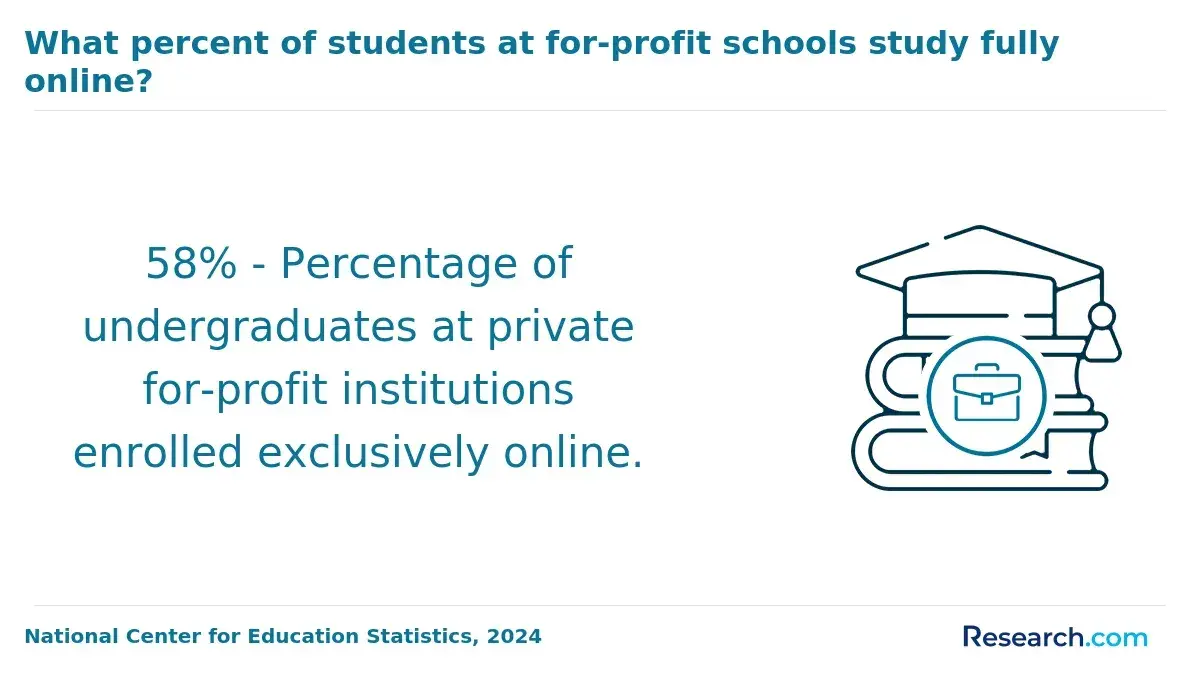
The rise of online graduate education also makes format less unusual. The National Center for Education Statistics has reported sustained graduate participation in distance education, which means many employers now encounter online credentials regularly. For readers, the practical takeaway is that online format is rarely the only issue; program quality, accreditation, field experience, and professional outcomes matter more.
Before choosing an online or hybrid doctorate such as an EdD degree, compare formats carefully. The table below highlights the decision factors that most often affect fit and career usefulness.
| Format | Strengths | Trade-offs | Best fit |
| Fully online | Highest scheduling flexibility; often accessible to working educators outside commuting range | May offer fewer in-person research, teaching, or networking opportunities | Mid-career professionals who need to remain employed while studying |
| Hybrid | Combines online coursework with residencies, campus sessions, or cohort meetings | Travel can add cost and time; residency timing may conflict with work | Students who want flexibility but also value face-to-face mentoring and networking |
| Campus-based | More direct access to faculty, teaching assistantships, research groups, and campus networks | Less flexible; may require relocation or reduced employment | Students pursuing research-intensive academic careers or funded doctoral study |
Red flags include unclear accreditation, vague dissertation requirements, limited faculty expertise in TESOL or applied linguistics, unusually aggressive admissions promises, no transparent tuition information, or no evidence of graduate outcomes. A respected online doctorate should make it easy to verify faculty credentials, course sequence, research expectations, student support, and total cost.
What industries value professionals with ESL & TESOL doctorate degrees?
ESL & TESOL doctorate holders are valued in sectors where language access, multilingual learning, curriculum quality, assessment, teacher preparation, or cross-cultural communication affect performance. The degree is most valuable when the employer needs someone who can lead programs, evaluate evidence, train professionals, or solve complex language-learning problems.
The following table compares major industries and how they tend to use doctoral-level ESL & TESOL expertise. It also shows whether the doctorate is typically required or simply advantageous.
| Industry or sector | How the doctorate is used | Is the doctorate usually required? | Typical roles |
| Higher education | Teaching, research, teacher education, program coordination, graduate supervision | Often required for tenure-track faculty roles | Professor, lecturer, TESOL program director, applied linguistics researcher |
| K-12 education systems | District multilingual learner strategy, professional development, curriculum leadership, compliance support | Usually not required, but can strengthen leadership candidacy | Director of multilingual education, curriculum supervisor, instructional coordinator |
| Adult education and workforce development | Adult ESL program design, immigrant and refugee education, workplace language training | Usually not required | Adult education director, workforce language consultant, program evaluator |
| Educational technology | Language-learning product strategy, AI tool evaluation, user research, content quality | Rarely required, but useful for senior subject-matter roles | Learning experience researcher, curriculum lead, language learning strategist |
| Assessment and testing | Proficiency testing, placement systems, validity studies, rubric development | Often preferred for senior research roles | Assessment specialist, research scientist, test development lead |
| Nonprofit and public sector | Language access, program evaluation, grant design, community education, policy implementation | Usually not required | Program director, policy analyst, grant evaluator, education initiative lead |
| Corporate learning and global talent development | Workplace communication, language training, intercultural learning, instructional systems | Rarely required | Training director, learning consultant, global communication specialist |
Recent BLS data show that training and development managers had a median annual pay of $127,090, which is higher than many education-only roles. That does not mean corporate work is automatically a better path; it means doctoral graduates who can translate TESOL expertise into measurable business outcomes may have access to higher-paying environments than traditional teaching roles.
Demand also differs by skill mix. Higher education tends to reward publication, teaching record, and disciplinary fit. School systems value compliance knowledge, teacher coaching, and student outcome improvement. Edtech and assessment employers often look for data literacy, product thinking, and experience translating language-learning research into scalable tools.
What executive or leadership roles can ESL & TESOL doctorate degrees qualify you for?
An ESL & TESOL doctorate can support executive or leadership roles, especially when combined with management experience, budget responsibility, staff supervision, and a track record of improving programs. The degree alone rarely moves someone into leadership; it works best as a credibility multiplier for professionals who already understand institutions and can lead change.
Leadership roles often fall into three categories: education administration, learning and development, and program or policy leadership. The table below compares examples and salary context using recent U.S. labor market categories where available.
| Role | Where it appears | How the doctorate helps | Salary context |
| Director of multilingual learner programs | School districts, state education agencies, charter networks | Supports credibility in curriculum, assessment, teacher training, and policy interpretation | BLS reports instructional coordinators had median pay of $74,720 |
| TESOL or applied linguistics program director | Universities, intensive English programs, graduate programs | Helps with faculty leadership, accreditation, graduate curriculum, and program review | BLS reports postsecondary education administrators had median pay of $103,960 |
| Director of language assessment | Testing organizations, universities, school systems, edtech firms | Builds authority in validity, reliability, placement, proficiency, and evaluation design | Pay varies widely because roles may fall under education, research, or management categories |
| Chief learning officer or training director | Corporations, workforce organizations, global employers | Strengthens expertise in adult learning, language training, and intercultural communication | BLS reports training and development managers had median pay of $127,090 |
| Executive director of language access or immigrant education initiatives | Nonprofits, foundations, community organizations | Supports grant strategy, program evidence, stakeholder trust, and policy advocacy | BLS reports social and community service managers had median pay of $78,240 |
For leadership-track students, the most important question is not simply "Will this doctorate qualify me?" It is "Will this doctorate help me prove I can lead people, budgets, programs, and measurable outcomes?" Employers hiring senior leaders usually want evidence of both expertise and execution.
To position the degree for leadership, take deliberate steps while enrolled:
- Choose research projects tied to your organization's real multilingual learner challenges.
- Seek committee work, accreditation projects, grant writing, or program evaluation responsibilities.
- Build a portfolio showing outcomes, such as curriculum redesign, teacher training impact, assessment improvements, or learner support models.
- Translate dissertation findings into executive language, including cost, risk, equity, compliance, and performance implications.
- Maintain relationships with district, college, nonprofit, or industry leaders who understand the value of your doctoral work.
A common mistake is assuming a doctorate substitutes for supervisory experience. It does not. If your goal is executive leadership, use the doctoral years to gain management exposure alongside academic progress.
Are there academic careers available for ESL & TESOL doctorate holders?
Yes, academic careers are one of the clearest reasons to pursue an ESL & TESOL doctorate. Many tenure-track faculty roles in TESOL, applied linguistics, language education, bilingual education, literacy, or teacher education require a doctorate or strongly prefer one. Academic work may include teaching, research, student advising, program administration, grant activity, and service to the institution or profession.
Academic roles differ significantly by institution type. The table below compares common options so you can judge which environment fits your goals and risk tolerance.
| Academic path | Main responsibilities | What hiring committees often value | Trade-off |
| Tenure-track professor | Research, teaching, advising, service, publication, grant activity | Doctorate, dissertation fit, publications, teaching record, research agenda | Competitive hiring and pressure to publish |
| Clinical professor or professor of practice | Teacher preparation, field supervision, applied teaching, program partnerships | Doctorate or advanced terminal degree, strong practitioner record, school partnerships | May offer less research time or different promotion expectations |
| Lecturer or instructor | High teaching load, course coordination, student support | Teaching effectiveness, TESOL expertise, curriculum experience | Doctorate may help but may not lead to tenure |
| Program director | Curriculum oversight, adjunct supervision, assessment, accreditation, recruitment | Doctorate, administrative experience, language program leadership | Can involve heavy operational work with less research time |
| Researcher or postdoctoral scholar | Studies on language learning, assessment, policy, or teacher education | Research methods, publication potential, grant alignment | Often time-limited and dependent on funding |
Recent BLS data place the median pay for postsecondary teachers at $83,980, but that category includes many disciplines, ranks, and institution types. Salaries can vary by region, union status, contract length, research expectations, and whether the role is tenure-track, full-time non-tenure-track, or adjunct.
The academic path can pay off when you want to produce research, teach future educators, supervise graduate students, and participate in the scholarly field. It may not be the best fit if your primary goal is immediate salary growth, geographic flexibility, or faster promotion, because faculty hiring can be competitive and location-dependent.
Applicants interested in academia should ask programs directly about placement outcomes, teaching opportunities, research assistantships, conference support, dissertation supervision, and publication mentoring. A doctorate with little research mentorship may be less helpful for tenure-track searches, even if the institution is accredited. For those interested in other pathways, you might also want to look into the best library science programs.
Are there consulting opportunities for ESL & TESOL doctorate holders?
Consulting can be a strong path for ESL & TESOL doctorate holders, especially for professionals with a clear niche and a record of solving institutional problems. Consultants may help schools, colleges, nonprofits, publishers, edtech firms, testing organizations, or employers improve language programs, train staff, evaluate outcomes, or design curriculum.
Consulting usually rewards specificity. The more clearly you can name the problem you solve, the easier it is for clients to understand why your doctoral expertise is worth paying for.
- Curriculum consulting: designing or reviewing ESL, EAP, adult education, bilingual, or workplace language curricula.
- Assessment consulting: developing rubrics, placement systems, proficiency frameworks, and program evaluation plans.
- Professional development: training teachers, faculty, tutors, or workplace trainers to support multilingual learners.
- Edtech and AI evaluation: reviewing language-learning tools, automated feedback systems, AI writing supports, and digital courseware.
- Grant and program evaluation: helping organizations measure whether language access or multilingual education initiatives are working.
- Expert review and publishing: advising textbook publishers, assessment vendors, nonprofits, or legal teams on language education issues.
The consulting path can be attractive because it allows you to combine research expertise with practical problem-solving. It can also be unpredictable. Income depends on client development, reputation, contracts, pricing, and whether consulting is full-time or a supplement to academic or administrative work.
BLS reports a median pay of $101,190 for management analysts, a category that includes many consultants across industries. This figure should not be treated as a TESOL consulting salary, but it provides context: consulting compensation often depends more on the value of the business or institutional problem than on the academic discipline alone.
Consulting makes the most sense if you already have a network, a recognizable niche, and evidence of results. A full-time leadership role may be better if you prefer stable income, benefits, team authority, and long-term institutional influence. Some doctorate holders combine both by consulting selectively while holding a university, district, or nonprofit position, subject to employer policies.
What nonprofit or public sector roles are open to ESL & TESOL doctorate holders?
Nonprofit and public sector roles can be a strong fit for ESL & TESOL doctorate holders who care about access, equity, immigration, adult education, refugee support, workforce development, public schools, or community language services. These roles may not always require a doctorate, but the credential can help with program design, evaluation, grant credibility, and policy interpretation.
Common roles include program director for adult ESL services, multilingual education policy analyst, refugee education coordinator, language access specialist, grant evaluator, community college partnership lead, and director of immigrant education initiatives. In public agencies, doctoral training can also support roles involving compliance, statewide professional development, research, or accountability systems.
The table below compares nonprofit and public sector work with corporate and academic paths. This can help you evaluate not only salary, but also mission fit, influence, and stability.
| Path | Primary value of the doctorate | Typical upside | Typical limitation |
| Nonprofit | Evidence-based program design, grant evaluation, community credibility | Mission alignment and direct community impact | Budgets and salaries may be constrained by funding cycles |
| Public sector | Policy analysis, compliance, statewide or district-level systems improvement | Broad influence and public service stability | Hiring may depend on civil service rules, credentials, or administrative experience |
| Corporate | Language learning, workforce communication, cross-cultural training, digital learning strategy | Higher salary potential in some management roles | TESOL expertise must be translated into business outcomes |
| Academic | Research, teaching, graduate supervision, teacher preparation | Scholarly identity and long-term field influence | Competitive hiring and publication expectations |
Recent BLS data show social and community service managers had a median annual pay of $78,240. That figure is not specific to TESOL, but it helps set expectations: nonprofit and public interest work can be meaningful and influential, yet it may not match the compensation available in corporate learning or senior higher education administration.
Avoid the mistake of treating mission-driven work as automatically easier to enter. Nonprofit and public sector employers often want grant experience, partnership management, data reporting, community trust, and sometimes bilingual skills or state-specific credentials. If this path interests you, use your doctorate to build evaluation, funding, and stakeholder communication experience, not only theoretical expertise.
How do ESL & TESOL doctorate degrees impact long-term earning potential?
An ESL & TESOL doctorate can improve long-term earning potential when it helps you move into roles with higher responsibility, such as professor, program director, postsecondary administrator, assessment leader, training manager, or consultant. However, the degree does not automatically raise income in every ESL-related role. Standard classroom teaching, tutoring, or entry-level adult ESL positions may not compensate doctoral credentials enough to justify the cost by themselves.
Because the federal government does not publish a salary category for "ESL & TESOL doctorate holders," the most honest way to evaluate earning potential is to compare likely career paths. The table below uses recent BLS wage categories as salary context, not as guaranteed outcomes for graduates.
| Career direction | Relevant BLS role category | Recent median annual pay | How to interpret it |
| University teaching and research | Postsecondary teachers | $83,980 | Relevant for faculty careers, but salaries vary widely by rank, institution, field, and contract type |
| Higher education administration | Postsecondary education administrators | $103,960 | Useful benchmark for program directors, deans, and administrative leaders |
| K-12 curriculum leadership | Instructional coordinators | $74,720 | Relevant for district-level curriculum and professional learning roles |
| Adult ESL instruction | Adult basic and secondary education and ESL teachers | $60,560 | Shows why a doctorate may be financially weaker if used only for direct adult ESL teaching |
| Corporate learning leadership | Training and development managers | $127,090 | Provides context for higher-paying industry roles where TESOL expertise is paired with management and business skills |
| Program and community leadership | Social and community service managers | $78,240 | Relevant for nonprofit leadership, though pay depends heavily on funding and organization size |
Cost is the other side of the ROI question. NCES graduate tuition data show that average graduate tuition and required fees are generally lower at public institutions than at private nonprofit institutions, but an ESL & TESOL doctorate's total cost depends on credits, residency requirements, dissertation fees, travel, books, technology fees, and lost work time. Since national datasets do not isolate ESL & TESOL doctoral cost of attendance, prospective students should calculate total program cost from each school's official tuition schedule rather than relying on averages.
Completion time also affects ROI. Many working educators pursue online doctorates part time, which can protect income but extend the timeline. Research doctorates often take longer than professional doctorates because of dissertation scope, methodological training, and publication expectations. No current national dataset reports ESL & TESOL doctoral attrition separately, so ask programs for their own completion rates, median time to degree, dissertation support model, leave-of-absence policy, and percentage of students who finish within the advertised timeline.
The financial case is strongest when the doctorate helps you access a role category with higher pay, stronger stability, or greater authority than your current position, such as an EdD leadership program. It is weaker when the degree is pursued without a target role, when the program is expensive relative to your salary ceiling, or when a lower-cost certificate, endorsement, second master's, administrative credential, or applied linguistics specialization would meet your goal.
How can you assess if a doctorate degree in ESL & TESOL is aligned with your career goals?
To decide whether an ESL & TESOL doctorate is aligned with your career goals, start with the outcome, not the degree. The right question is not "Can I get into a doctoral program?" but "What specific work will this doctorate help me do that I cannot reasonably do now?"
Use the following decision process before applying. It is designed to help you compare academic, leadership, consulting, nonprofit, and industry outcomes in practical terms.
- Name your target role: Write down three job titles you want within five to seven years, such as TESOL professor, multilingual education director, assessment specialist, edtech curriculum lead, or nonprofit program director.
- Check whether the doctorate is required: Review current U.S. job postings and note whether they require a doctorate, prefer it, or do not mention it.
- Compare degree alternatives: Ask whether a certificate, endorsement, administrative license, EdD, PhD, applied linguistics master's, MLIS, or leadership credential would reach the same goal at lower cost.
- Estimate total cost: Include tuition, fees, travel, books, technology, dissertation continuation fees, reduced work hours, and the opportunity cost of time.
- Evaluate program fit: Confirm accreditation, faculty expertise, research methods training, dissertation support, online or hybrid expectations, and placement history.
- Plan your professional portfolio: Decide what you will produce during the doctorate, such as publications, conference presentations, grant evaluations, curriculum redesigns, assessment tools, or leadership case studies.
- Stress-test your assumptions: Ask what you would do if tenure-track hiring is limited, your employer does not increase pay, or your specialization becomes less marketable.
The table below summarizes when the doctorate is more likely or less likely to be the right investment.
| A doctorate may make sense if... | A doctorate may not make sense if... |
| You want a tenure-track or research-focused academic career. | You only need eligibility for standard ESL teaching positions. |
| You are moving toward director-level, policy, assessment, or program evaluation work. | You have not identified a target role or salary ceiling. |
| Your employer supports tuition, research access, promotion, or leadership projects. | You would need heavy debt for a career path with modest salary growth. |
| You want to become a recognized expert in a specialized TESOL area. | You mainly want a credential for prestige rather than a defined professional outcome. |
| You can manage long-term research, writing, and independent study. | You underestimate the dissertation workload or need a fast credential. |
Common mistakes include choosing a program without verifying accreditation, assuming all doctorates have the same market value, ignoring dissertation support, selecting a specialization without checking job demand, and relying on institution type alone to predict ROI. Public, private nonprofit, and private for-profit institutions can all vary in cost, support, reputation, and outcomes, so compare specific programs rather than broad categories.
If you are deciding between an online and hybrid format, choose online when flexibility is essential and you can build networking intentionally. Choose hybrid when you value periodic face-to-face mentoring, cohort relationships, and campus access enough to justify travel. Choose campus-based study when research apprenticeships, assistantships, and academic placement networks are central to your goal.
The best-fit ESL & TESOL doctorate is one that connects your research interests, professional experience, financial reality, and target labor market. If those pieces do not line up, pause before enrolling and refine the plan.
Other Things You Should Know About ESL & TESOL
A PhD is usually better for research-intensive academic careers, while an EdD is often better for applied leadership, practitioner research, and system improvement roles. The best choice depends on whether you want to publish as a scholar, lead programs, or solve workplace and school-based problems.
It depends on the role. University faculty, consultants, and edtech professionals may not need a state teaching license, but K-12 public school roles often require state-specific licensure, endorsements, or administrative credentials. Always verify requirements with the state, district, or employer.
Many programs take about three to seven years, depending on full-time or part-time enrollment, dissertation progress, transfer credits, and whether the program is research-focused or professionally applied. Working students should ask each program for its median time to completion.
Yes, international teaching experience can strengthen an application and career profile when it is connected to clear research questions, leadership experience, curriculum work, or multilingual learner expertise. It is most useful when you can explain what you learned and how it informs your doctoral goals.
References
- Make Your Experience Count: Careers in EFL - BridgeUniverse - TEFL Blog, News, Tips & Resources https://bridge.edu/tefl/blog/careers-in-efl/
- ESL Career Paths: Teaching Young Learners - World TESOL Academy https://www.worldtesolacademy.com/esl-career-paths-teaching-young-learners/
- ESL Teaching Opportunities Explained: Global Paths | TEFL Institute https://teflinstitute.com/blog/esl-teaching-opportunities-explained/
- English Second Language Professor (ESL) - Salary, How to Become, Job Description & Best Schools https://www.onlinedegree.com/careers/education-childcare/english-second-language-professor-esl/
- Highest Paying Countries for Teaching English Abroad in 2025 | Go Overseas https://www.gooverseas.com/blog/countries-pay-highest-salaries-teaching-abroad
- Teaching English Abroad Salaries: Top Regions & Countries | The TEFL Org https://www.tefl.org/teach-english-abroad/salary/
- TESOL Jobs | ESL Teacher Jobs and Job Description for TESOL Careers https://www.eslteacheredu.org/careers/
- Exploring Lucrative Career Paths For TESOL Master's Degree Holders https://www.teacherstrainingmalaysia.com/blog/130-Exploring-Lucrative-Career-Paths-For-TESOL-Masters-Degree-Holders-blog.php