2027 Accredited Online Machine Learning Degree Programs That Accept the Most Transfer Credits

Co-Founder and Chief Data Scientist
Choosing an online machine learning degree is harder when you already have college credits and do not want to pay twice for the same coursework. The stakes are high: BLS data lists the 2024 median pay for computer and information research scientists at $140,910, with strong demand tied to AI adoption.
This guide is for transfer students, associate degree holders, veterans, and working adults comparing accredited online programs. You will learn which programs are most transfer-friendly, how credits are evaluated, and how to estimate the real time and cost left to finish.
Key Things You Should Know
- Most transfer-friendly online bachelor's programs related to machine learning usually cap transfer credit at 75% of the degree, often around 90 credits in a 120-credit program; a few institutions advertise higher limits, but residency rules still apply.
- The best program is not always the one with the highest transfer-credit maximum; the stronger choice is the one that applies your credits to general education, math, programming, statistics, and major requirements rather than only electives.
- Transfer savings can be substantial because every accepted 3-credit course can remove one course from tuition and scheduling, but students should compare this against career value, accreditation, remaining upper-division coursework, and AI or machine learning curriculum depth.
Which Accredited Online Machine Learning Degree Programs Accept the Most Transfer Credits?
The accredited online programs below are among the stronger options to investigate if your goal is a machine learning-adjacent bachelor's degree and you want to maximize transfer credit. Because stand-alone online "machine learning" bachelor's degrees are still uncommon, the most relevant options usually appear as artificial intelligence, data science, analytics, software development, or computer science programs with machine learning coursework.
This table summarizes transfer-credit ceilings that are commonly advertised by institutions or reflected in undergraduate residency policies. Treat these as planning limits, not promises, because your official evaluation may award fewer credits depending on grades, course age, accreditation, course equivalency, and degree fit.
| Institution | Relevant online degree path | Institutional accreditation | Advertised or typical maximum transfer credit | Best fit | Transfer-efficiency note |
| Franklin University | BS in Artificial Intelligence or related computing programs | Higher Learning Commission | Up to 94 semester credits in many bachelor's programs | Students with extensive prior college coursework | High ceiling can be valuable if credits map to lower-division and elective requirements. |
| Southern New Hampshire University | BS in Computer Science with Artificial Intelligence concentration | New England Commission of Higher Education | Up to 90 credits toward a bachelor's degree | Associate degree holders and returning adults | Strong option when previous math, programming, and general education courses align cleanly. |
| University of Maryland Global Campus | BS in Data Science | Middle States Commission on Higher Education | Up to 90 credits toward a bachelor's degree | Community college transfers and working adults | Applied data science curriculum can fit students targeting analytics and machine learning support roles. |
| Colorado State University Global | BS in Artificial Intelligence and Robotics or computing-related pathways | Higher Learning Commission | Often up to 90 credits toward a bachelor's degree | Students seeking applied AI coursework online | Check whether previous programming, statistics, and calculus courses satisfy major requirements. |
| Western Governors University | BS in Computer Science or BS in Data Analytics | Northwest Commission on Colleges and Universities | Transfer credit varies by evaluation and program requirements, commonly limited by institutional completion rules | Self-paced learners with strong technical background | Competency-based structure can shorten time, but transfer fit depends heavily on specific course equivalencies. |
| Liberty University | Online computer science, data science, or technology-related bachelor's pathways | Southern Association of Colleges and Schools Commission on Colleges | Up to 75% of a bachelor's degree, commonly equal to 90 credits in a 120-credit program | Students seeking a broad online transfer policy | Confirm whether technical credits count toward the major or only as electives. |
| Bellevue University | BS in Artificial Intelligence or related technology programs | Higher Learning Commission | Transfer-friendly bachelor's completion structure; exact accepted credits depend on evaluation | Students with an associate degree or prior technical coursework | Often attractive for degree-completion students, but the remaining major sequence may still take multiple terms. |
A practical way to interpret this table is to separate "maximum possible transfer" from "credits that actually reduce your remaining degree plan." A program that accepts 84 credits into required areas can be faster and cheaper than one that accepts 94 credits but leaves you with the same upper-division AI, machine learning, and capstone sequence.
Students comparing machine learning pathways may also want to look at how transfer policies work in adjacent technical fields; for example, a video game design degree can involve similar questions about programming prerequisites, portfolio-based learning, and how technical credits apply to major requirements.
How Do Online Machine Learning Degree Programs Evaluate Transfer Credits?
Online machine learning degree programs evaluate transfer credits by comparing your previous coursework with the new program's curriculum. The evaluation usually looks at where the credit came from, what grade you earned, how old the course is, and whether the course matches a requirement in the degree plan.
Most schools use a layered review process. Admissions may perform an initial unofficial estimate, while the registrar, academic department, or faculty evaluator determines how credits apply after official transcripts arrive.
- Submit official transcripts from every college or university you attended, including institutions where you earned only a few credits.
- Provide syllabi or course descriptions for technical courses such as calculus, discrete mathematics, data structures, statistics, databases, Python, Java, algorithms, or introductory artificial intelligence.
- Ask for a degree audit that separates credits applied to general education, major requirements, concentration requirements, electives, and unused credits.
- Confirm whether the school has course-age limits for fast-changing technical subjects, especially programming, cloud computing, cybersecurity, data science, and machine learning.
- Request written clarification when a course transfers as elective credit but appears similar to a required course in the machine learning curriculum.
The key point is that transfer credit is not just a credit-counting exercise. A 3-credit statistics course is far more valuable if it satisfies the program's statistics requirement than if it lands in a general elective bucket that you do not need.
Common red flags include vague transfer estimates, refusal to show how credits apply before enrollment, and policies that accept many credits but still require nearly the full major sequence. If the program cannot explain how your previous coursework changes your remaining plan, you do not yet have enough information to compare ROI.
How Can Transfer Credits Shorten an Online Machine Learning Degree?
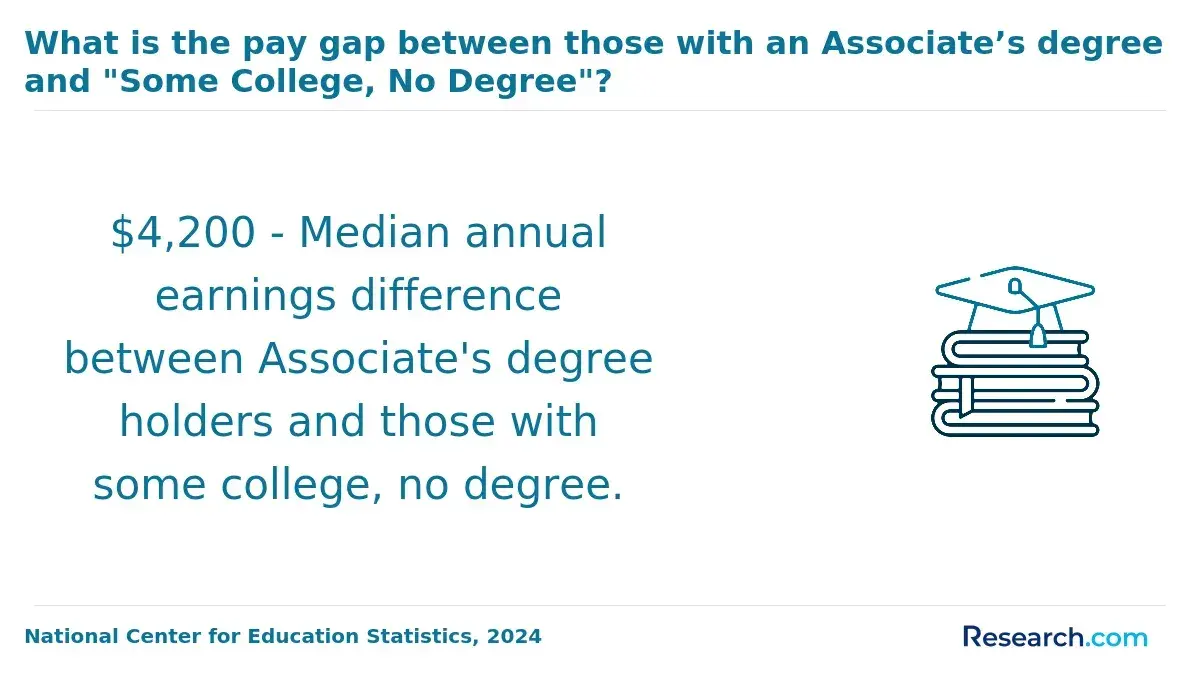
Transfer credits shorten an online machine learning degree by reducing the number of courses you still need to complete. In a typical 120-credit bachelor's program, transferring 60 credits can move a student from a four-year plan to roughly the second half of the degree, while transferring 90 applicable credits can leave mainly upper-division major courses, concentration courses, and the capstone.
This table shows how different transfer-credit scenarios may affect remaining coursework in a 120-credit bachelor's program. It is a planning model, not a guarantee, because online terms, course sequencing, prerequisites, and course availability vary by institution.
| Applicable transfer credits | Estimated credits remaining | Likely remaining coursework | Potential completion impact |
| 0 credits | 120 credits | Full general education, math, programming, major, electives, and capstone | Traditional full-degree timeline |
| 30 credits | 90 credits | Many general education and lower-division technical courses remain | May save about one year of full-time study |
| 60 credits | 60 credits | Upper-division computing, statistics, AI, machine learning, and project courses | Often works well for associate degree holders |
| 75 credits | 45 credits | Major core, concentration, advanced electives, and capstone | Can support accelerated completion if prerequisites are satisfied |
| 90 credits | 30 credits | Residency courses, upper-division major requirements, and capstone | Fastest common pathway, but only if credits apply to the degree plan |
Students often focus on the maximum transfer number, but sequencing can be just as important. If a machine learning course requires calculus, statistics, programming, and data structures, missing one prerequisite can delay progress even if your total credit count is high.
To estimate your real timeline, compare the official degree audit with the school's course calendar. A transfer-friendly program that offers required courses every term may be faster than a higher-transfer program where key AI or machine learning courses run only once or twice per year.
If speed is your main priority, compare this transfer-credit strategy with other accelerated online formats. Similar decision-making applies to an accelerated MSW program online, where students must look beyond advertised pace and examine prerequisites, fieldwork, residency, and course sequencing.
How Much Can Transfer Credits Reduce the Cost of an Online Machine Learning Degree?
Transfer credits can reduce the cost of an online machine learning degree by lowering the number of credits you must pay for at the new institution. The savings are easiest to estimate when a school charges by the credit hour, but students should also include technology fees, transcript fees, course materials, subscription platforms, and any flat-rate tuition rules.
One current cost factor is borrowing: Federal Student Aid set the undergraduate Direct Loan interest rate at 6.53% for the 2024-2025 award year. That means reducing the number of paid credits may lower not only tuition but also the amount of debt that can accrue interest after disbursement.
Use this simple method to estimate transfer-related tuition savings before you apply. It will not replace an official financial aid package, but it can help you compare programs consistently.
- Find the tuition rate per credit or the term-based tuition model for each program.
- Ask the school how many of your credits are expected to apply to the degree, not just how many are accepted in total.
- Multiply the number of applicable transfer credits by the per-credit tuition rate to estimate avoided tuition.
- Subtract any extra costs created by the transfer path, such as prerequisite retakes, portfolio assessment fees, proctored exam fees, or required bridge courses.
- Compare the remaining total cost against program quality, accreditation, curriculum depth, career services, and employer recognition.
For example, if a program charges $400 per credit and 60 of your credits apply, the gross tuition avoided would be $24,000 before fees and financial aid. That number is useful, but it should not be the only factor; a cheaper path with weak machine learning coursework may be less valuable than a slightly more expensive program with stronger projects, faculty support, and employer-aligned technical skills.
Affordability comparisons are also useful outside computing. Students who are weighing broad online degree options can see how cost-per-credit and transfer policies shape value in programs such as the cheapest online human resources degree, where tuition savings must still be balanced against career relevance and accreditation.
Can Military, Professional, or Prior Learning Credits Transfer to an Online Machine Learning Degree?
Yes, some online machine learning degree programs may accept military training, professional certifications, standardized exams, or prior learning credits, but policies vary widely. These credits are often most useful for general education, lower-division technology, elective, or workplace-learning requirements rather than advanced machine learning courses.
Programs may evaluate nontraditional learning through several recognized channels. The strongest options are usually those that document learning clearly and align with college-level outcomes.
- Military credit: Schools may use Joint Services Transcript recommendations, Community College of the Air Force credits, or ACE credit recommendations to evaluate military training.
- Standardized exams: CLEP, DSST, and AP credits may satisfy general education or introductory requirements when scores meet institutional minimums.
- Professional certifications: Some schools review certifications in areas such as cloud computing, data analytics, cybersecurity, project management, or programming for elective or technical credit.
- Portfolio assessment: A few institutions allow students to document college-level learning from work experience, but advanced AI and machine learning requirements usually require close faculty review.
- Employer or academy training: Corporate training may transfer when it has ACE or NCCRS recommendations or a formal school partnership.
The main limitation is rigor and equivalency. A professional certificate may prove practical experience with tools, but it may not replace a required course in linear algebra, probability, algorithms, or supervised learning if the degree requires theory-based assessment.
This is also why transfer rules differ sharply across fields. Programs connected to licensure or supervised practice, such as a clinical psychology online master's, typically have stricter limits on prior learning because accreditation, clinical training, and state requirements can control what must be completed in the program itself.
Which Types of Previous College Credits Transfer Best to Online Machine Learning Degrees?
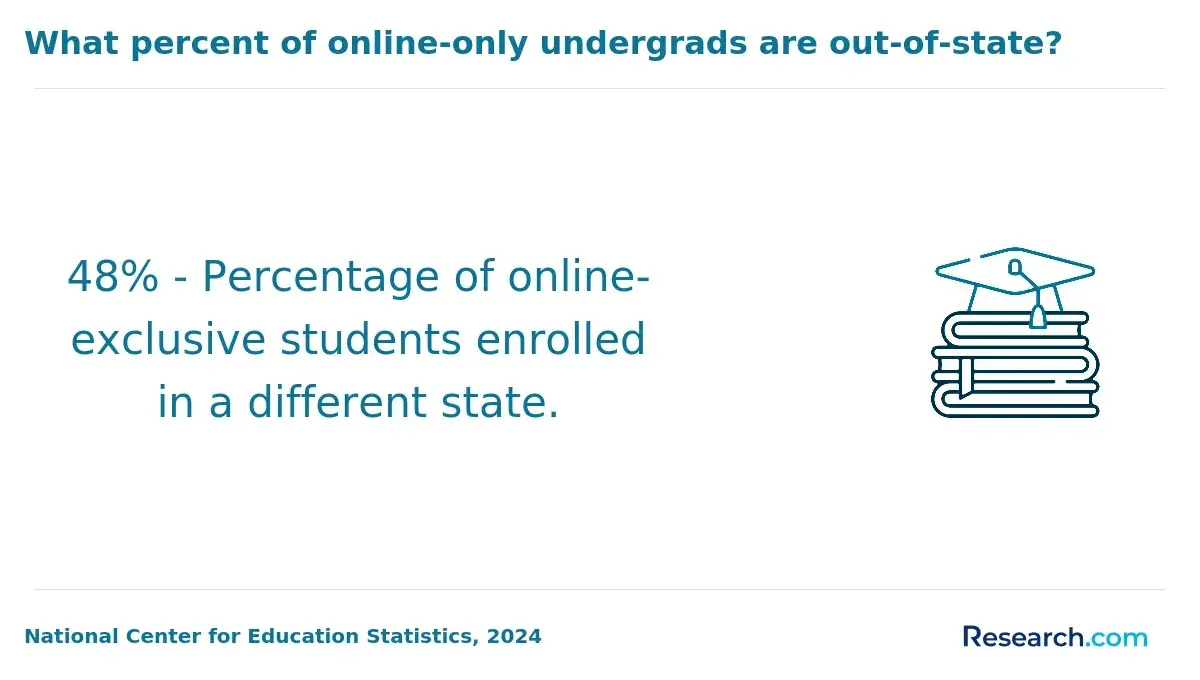
The credits that transfer best to online machine learning degree programs are usually recent, graded, college-level courses from accredited institutions that match the receiving school's curriculum. Courses that are broad, foundational, and clearly equivalent tend to travel better than highly specialized or outdated technical electives.
This table explains which prior credits are most likely to help a student finish faster. It focuses on degree applicability, not just whether a school will accept the credit somewhere on the transcript.
| Previous credit type | Transfer strength | Why it matters for machine learning degrees | Common limitation |
| General education courses | High | They often satisfy communication, humanities, social science, and natural science requirements. | Some schools have institution-specific writing or diversity requirements. |
| College algebra, precalculus, calculus, or linear algebra | High when recent and equivalent | Machine learning relies on mathematical reasoning, optimization, and model interpretation. | Programs may require a specific level of calculus or linear algebra. |
| Statistics or probability | High when course outcomes match | Statistics supports data modeling, inference, validation, and experimentation. | Business statistics may not always replace calculus-based or data-science statistics. |
| Introductory programming | Moderate to high | Python, Java, C++, and object-oriented programming can satisfy lower-division computing requirements. | Older courses may be rejected or may not match the required language. |
| Data structures, algorithms, and databases | High for computer science pathways | These courses support model implementation, software engineering, and scalable data work. | Departments may require a syllabus review before granting major credit. |
| Specialized AI or machine learning electives | Variable | They may reduce advanced elective requirements if outcomes match closely. | Upper-division major courses are often harder to transfer. |
| Unrelated career or vocational courses | Low to moderate | They may fill free electives if the degree has room. | They rarely replace technical major requirements. |
Students with associate degrees in computer science, information technology, engineering, mathematics, or data analytics often have the strongest transfer position. However, an associate degree does not automatically satisfy all lower-division requirements unless the school has a formal articulation agreement or a block-transfer policy.
A common mistake is assuming that "accepted" credits equal "useful" credits. If a program accepts 70 credits but 25 count only as free electives, the student may still need many of the same math and programming courses required of a new student.
How Do Transfer Agreements Affect Online Machine Learning Degree Completion?
Transfer agreements can make online machine learning degree completion faster and more predictable because they pre-map courses from one institution to another. The most helpful agreements show exactly which community college or prior university courses satisfy general education, prerequisite, and major requirements at the receiving school.
There are several types of agreements students may encounter. Understanding the difference helps you avoid assuming that every partnership provides the same benefit.
- Course-to-course equivalency: A specific prior course is approved as equal to a specific required course in the new degree.
- Program articulation: An associate degree or defined course sequence is designed to transfer into a specific bachelor's program.
- Block transfer: A completed credential satisfies a group of requirements, often general education or lower-division electives.
- Reverse transfer: Credits from the bachelor's institution may be sent back to a community college so the student can complete an associate degree while continuing the bachelor's path.
- Employer or military partnership: The school may offer reviewed pathways for certain training, certifications, or workforce programs.
The strongest transfer agreement for a machine learning student is one that protects major prerequisites, not just general education. If calculus, statistics, programming, databases, and data structures are already mapped, the student is less likely to lose time repeating foundational courses.
Before relying on an agreement, confirm that it is current. Machine learning and AI curricula change quickly, and an older transfer guide may not reflect new requirements in Python, cloud computing, ethics, generative AI, or data engineering.
What Transfer Policies Should Students Compare Before Choosing an Online Machine Learning Degree?
Before choosing an online machine learning degree, compare transfer policies that affect both credit quantity and credit usefulness. A generous transfer limit is only valuable when the institution applies credits to requirements that reduce your remaining tuition and time.
Use the following checklist when speaking with admissions, advising, or the registrar. These questions help reveal whether a program is truly transfer-efficient for your situation.
- What is the maximum number of transfer credits allowed for this specific degree, and does the limit differ for lower-division, upper-division, major, or elective credits?
- What is the minimum residency requirement, and how many credits must be completed at the institution after transfer?
- Which of my previous courses apply to general education, major core, concentration, electives, prerequisites, or unused credit?
- Are there minimum grade requirements, such as requiring a C or higher, for transfer courses?
- Do technical courses expire after a certain number of years, especially programming, databases, cybersecurity, cloud, statistics, or machine learning courses?
- Will my associate degree transfer as a block, or will each course be evaluated individually?
- Can professional certifications, military training, CLEP, DSST, AP, or portfolio learning count toward this degree?
- Will transfer credits affect eligibility for scholarships, tuition discounts, financial aid packaging, or honors requirements?
- Can I receive a written degree audit before committing to enrollment?
- Are the institution and any relevant programmatic accreditations recognized by employers, graduate schools, and licensing or certification bodies connected to my goals?
One red flag is a school that emphasizes a high transfer-credit maximum but will not show how your credits apply. Another is a degree plan that accepts many credits but still requires a long prerequisite chain before you can begin upper-division AI or machine learning coursework.
Transfer flexibility matters differently in regulated fields. For comparison, students exploring online BCBA programs must pay close attention to accreditation, supervised experience, and certification rules, not only course transferability.
Which Students Benefit Most From Transfer-Friendly Online Machine Learning Degree Programs?
Transfer-friendly online machine learning degree programs are most useful for students who already have credits that match the curriculum. They are especially valuable for adults who started a computing, math, engineering, business analytics, or information technology degree and want to finish with a credential aligned with AI-related work.
The students below are often well positioned to benefit, provided their credits apply to the degree plan and not only to electives.
- Associate degree graduates in computer science, data analytics, information technology, engineering technology, mathematics, or related fields.
- Students who completed general education requirements at a community college and now want an online bachelor's path with AI or machine learning coursework.
- Working adults with prior college credits and professional experience in software development, analytics, databases, cloud platforms, or automation.
- Veterans and military-affiliated students with documented technical training that may be reviewed for credit.
- Students who left a STEM bachelor's program before finishing and still have recent math, programming, and science credits.
However, not every student should choose a program primarily because it accepts many transfer credits. If your long-term goal is a research-heavy machine learning role, graduate study, or competitive AI engineering position, curriculum depth, math rigor, projects, faculty expertise, and internship access may matter more than shaving off a few extra courses.
BLS projections for computer and information research scientists show 20% growth from 2024 to 2034, which indicates strong national demand for advanced computing skills. The practical takeaway is that a faster degree can be valuable, but it should still build credible skills in programming, statistics, model evaluation, data management, and ethical AI use.
How Should Students Choose an Online Machine Learning Degree Based on Transfer Efficiency?
Choose an online machine learning degree based on transfer efficiency, not just transfer generosity. Transfer efficiency means the program converts your prior credits into the shortest, least wasteful, academically credible path to the credential you need.
A good decision process should compare programs side by side after you have unofficial or official evaluations. The steps below keep the choice grounded in real cost, time, and career value.
- Identify your career target first, such as data analyst, machine learning engineer, AI product specialist, software developer, data engineer, or graduate-school applicant.
- Shortlist only institutionally accredited schools, then check whether the curriculum includes the math, programming, statistics, data, and AI coursework your target role requires.
- Request transcript evaluations from multiple programs before enrolling whenever possible.
- Compare how many credits apply to required categories, not just the total number accepted.
- Calculate remaining credits, tuition, fees, and likely terms to completion for each program.
- Check whether prerequisites or course sequencing could delay graduation even after a large transfer award.
- Review career support, portfolio opportunities, capstone quality, employer partnerships, and graduate-school preparation.
- Select the program that offers the best combination of applied transfer credit, credible curriculum, manageable cost, and realistic completion timeline.
When two programs are close, choose the one that gives you clearer documentation and stronger academic advising. Transparent evaluations are especially important in technical degrees because a single missing prerequisite can change your schedule and cost.
Finally, remember that transfer-friendly does not always mean low-effort. Machine learning degrees require sustained work in mathematics, coding, data handling, model evaluation, and problem solving. The right program helps you avoid repeating what you already know while still making sure you graduate with skills that employers and graduate programs can recognize.
Other Things You Should Know About Machine Learning
They can be, especially when the institution is accredited and the curriculum includes substantial programming, statistics, data science, and project work. Employers usually care less about the online format than about demonstrated skills, portfolio quality, internships or work experience, and whether the school is credible.
Some research and advanced modeling roles prefer or require a master's or doctorate, but many analytics, software, data engineering, and applied AI roles may be accessible with a strong bachelor's degree plus projects and relevant experience. Review job postings for your target role before deciding whether a bachelor's completion path is enough.
A bootcamp can help with focused skills, but it usually does not replace an accredited degree when employers require a bachelor's credential or when graduate school is part of your plan. Bootcamps may work best as a supplement for portfolio building, tool practice, or career switching.
Many are fully online, but requirements vary. Some programs may require proctored exams, synchronous sessions, team projects, or capstone presentations, while others are asynchronous. Always check format requirements before enrolling, especially if you work full time or live far from campus.
References
- AI in Master's distance learning: 7 top programmes in Germany https://www.fernstudi.net/en/magazine/master-artificial-intelligence-distance-learning-7-top-degree-programs
- Transfer Acceptance Rates: What You Need to Know | Edvisorly https://www.edvisorly.com/student-guides/transfer-acceptance-rates
- Online Degrees https://www.naviata.com/pages/online-colleges
- Transfer Credit Policies at Online Colleges: What Students Need to Know | Credit Transfer Process https://credittransferprocess.com/online-college-transfer-policies/
- Best Online Schools for Transferring Credits [2026 Guide] https://www.straighterline.com/blog/transfer-best-online-schools-for-transferring-credits
- Transfer Credit Planning for Online Data Science Degrees | Data Analytics Career Entry Research https://eduinsightlab.com/online-data-science-degree-transfer-credit-planning/
- 25 Best Master's in AI Programs - MastersInAI.org https://www.mastersinai.org/degrees/best-masters-in-artificial-intelligence/
- Best AI Degree Options for Working Professionals https://www.mygreatlearning.com/blog/best-ai-degree-options-for-working-professionals/
- The 11 Best Masters in AI for Working Professionals in 2026 - AI Degree Center https://aidegreecenter.org/masters/working-professionals/
- Online Master's Degree in Artificial Intelligence (AI) & Machine Learning | CSU Global | Accredited https://csuglobal.edu/academic-programs/graduate-degrees/masters-science-degree-artificial-intelligence-machine-learning