2027 Accredited Online Accounting Degree Programs for Working Adults: Flexible, Part-Time, and Self-Paced Options

Co-Founder and Chief Data Scientist
Choosing an online accounting degree while working full time is really a scheduling, cost, and accreditation decision. The Bureau of Labor Statistics reported a May 2024 median annual wage of $81,680 for accountants and auditors, which helps explain why adults are looking for flexible paths into the field.
This guide is for working learners comparing accredited online accounting programs, including part-time, asynchronous, and self-paced options. You will learn how to evaluate accreditation, workload, transfer credits, costs, financial aid, timelines, and career fit so you can choose a program that supports both your schedule and long-term goals.
Key Things You Should Know
- Accreditation matters more than delivery format: choose a regionally or nationally accredited institution, and check whether the accounting program has business accreditation such as AACSB, ACBSP, or IACBE if you want stronger employer recognition or CPA preparation.
- Most online bachelor's accounting programs require about 120 credits and often take 4 years full time or 5 to 6 years part time; working adults commonly plan for 10 to 20 hours of coursework per week depending on credit load, course length, and accounting intensity.
- Cost varies widely, but College Board's 2024-25 benchmark shows average published tuition and fees of $11,610 for in-state public four-year colleges and $43,350 for private nonprofit four-year colleges; transfer credits can reduce total cost if the school accepts prior coursework or an associate degree.
What Is an Accredited Online Accounting Degree Program and Why Does Accreditation Matter?
An accredited online accounting degree program is a college credential delivered fully or mostly online by an institution recognized by an approved accrediting agency. For working adults, accreditation is the first filter because it affects federal financial aid eligibility, credit transfer, employer trust, graduate school admission, and, in many cases, CPA exam eligibility.
There are two levels to understand. Institutional accreditation applies to the whole college or university. Programmatic accreditation applies to a business school or accounting program and is often awarded by organizations such as AACSB, ACBSP, or IACBE. Programmatic accreditation is not always required, but it can be useful when comparing schools with similar tuition, curriculum, and flexibility.
Accounting programs may be offered at several levels, and the right choice depends on your background and goal. A certificate can support entry-level bookkeeping or payroll work, an associate degree may help you qualify for accounting clerk roles or transfer into a bachelor's program, a bachelor's degree is the common baseline for staff accountant and auditor roles, and a master's degree can help meet the 150-credit education requirement used by many state CPA boards.
If you are not ready for a full degree, short bookkeeping courses can be a lower-cost way to test your interest in accounting before committing to a bachelor's program.
Working adults should verify accreditation before applying. A school's website is a starting point, but it should not be the only proof. Use this sequence before you pay an application fee or enroll:
- Confirm the institution appears in the U.S. Department of Education or Council for Higher Education Accreditation database.
- Check whether the business school or accounting program lists AACSB, ACBSP, IACBE, or another recognized programmatic accreditor.
- Ask whether the online accounting degree appears on the same transcript as the campus degree.
- If CPA licensure is a goal, compare the curriculum with your state board's accounting and business credit requirements.
- Get transfer-credit and licensure guidance in writing, because verbal admissions advice is not enough for a high-stakes decision.
A common mistake is assuming "online" means "less legitimate." Employers usually care more about the institution, accreditation, curriculum, skills, and experience than whether courses were completed online. A more serious mistake is enrolling in a low-cost program without checking whether its credits can transfer or count toward CPA education requirements.
Which Flexible Accounting Degree Formats Are Best for Working Adults: Part-Time, Full-Time, or Self-Paced?
The best format depends on how predictable your work schedule is, how quickly you want to graduate, and how much structure you need to stay on track. Online accounting programs often use terms like asynchronous, synchronous, part-time, accelerated, and self-paced, but schools define these differently.
The table below compares common formats from the perspective of a working adult. Use it to narrow your choices before speaking with admissions advisors.
| Format | Typical structure | Best fit | Main trade-off |
| Part-time online | Usually 1 to 2 courses at a time with weekly deadlines | Adults working full time or managing family responsibilities | Slower completion, but more sustainable workload |
| Full-time online | Usually 3 to 5 courses per term with regular deadlines | Learners who can reduce work hours or have strong schedule control | Faster graduation, but higher weekly workload |
| Asynchronous online | No fixed class meeting time, but assignments still have due dates | Shift workers and parents who study evenings or weekends | Requires self-management and consistent weekly planning |
| Synchronous online | Live virtual classes at scheduled times | Learners who want instructor interaction and class discussion | Less flexible for changing work shifts |
| Self-paced or competency-based | Students move faster or slower within term or subscription limits | Experienced learners with prior accounting, bookkeeping, or business knowledge | Not ideal for students who need frequent structure or instructor prompting |
| Accelerated online | Shorter terms, often 5 to 8 weeks per course | Motivated adults who can handle compressed deadlines | Fast pace can be difficult during tax season, busy work periods, or caregiving demands |
Part-time study is usually the safest option if you work full time and cannot predict overtime. It gives you room for accounting problem sets, exams, group projects, and discussion boards without turning every week into a deadline crisis. The downside is time: a bachelor's degree can stretch beyond the traditional 4-year timeline unless you bring transfer credits.
Self-paced study can be powerful for adults who already know the basics of bookkeeping, Excel, payroll, or business math. However, "self-paced" rarely means unlimited time. Many programs still have term end dates, minimum progress requirements, subscription periods, or financial aid rules that affect pacing.
Before choosing a format, ask schools these questions because the answers reveal how flexible the program really is:
- Are courses asynchronous, synchronous, or a mix of both?
- Are exams proctored live, recorded, or completed through a testing platform?
- How many hours per week do successful part-time accounting students usually study?
- Can I pause enrollment for one term without losing my catalog year, tuition rate, or academic standing?
- Are upper-division accounting courses offered every term, or only once or twice per year?
- Does self-paced progress have a maximum completion window or minimum credit requirement?
The best choice is not always the fastest option. If your job has a busy season, variable shifts, or heavy travel, a slightly slower part-time program may produce a better academic record and lower dropout risk than an aggressive accelerated schedule.
What Are the Admission Requirements for Accredited Online Accounting Degree Programs?
Admission requirements vary by degree level and institution, but accredited online accounting programs usually ask for proof that you can succeed in college-level quantitative, writing, and business coursework. Requirements are often more flexible for adult learners than for first-time freshmen, especially when applicants have previous college credit or relevant work experience.
For undergraduate programs, schools commonly request a high school diploma or GED, official transcripts, an application form, and sometimes a minimum GPA. Transfer applicants may need college transcripts from every institution attended. Some schools waive standardized tests for adult learners, online students, or applicants with prior credits.
If you are starting from scratch but want a shorter first credential before transferring, a fast track associates degree online can be worth comparing with a direct-entry bachelor's program, provided the credits are transferable and the curriculum aligns with accounting prerequisites.
Graduate accounting programs are different. A master's in accounting or taxation may require a bachelor's degree, minimum GPA, resume, statement of purpose, recommendation letters, and prerequisite courses in financial accounting, managerial accounting, taxation, auditing, business law, or statistics. Some programs accept non-accounting majors but require bridge courses.
Working adults should prepare these items before applying so admissions and transfer review move faster:
- Collect official transcripts from high school, community college, military training, and any prior universities.
- Create a list of completed accounting, business, math, statistics, economics, and information systems courses.
- Ask whether prior learning, CLEP, DSST, military credit, professional certifications, or employer training can reduce degree requirements.
- Confirm whether admission to the university is separate from admission to the accounting major or business school.
- Request a written degree plan showing remaining credits, expected terms, course sequence, and estimated graduation date.
A major red flag is a school that gives an instant credit estimate without reviewing official transcripts or syllabi. A good transfer evaluation may take longer, but it gives you a more accurate picture of cost, time, and remaining workload.
How Much Does an Online Accounting Degree Cost, and What Financial Aid Options Are Available?
Online accounting degree costs include more than tuition. Working adults should compare total program cost, not just the per-credit rate, because fees, textbooks, accounting software, proctoring, technology, graduation fees, and repeated courses can change the real price.
College Board's 2024-25 pricing data reported average published tuition and fees of $11,610 for in-state students at public four-year institutions, $30,780 for out-of-state students at public four-year institutions, and $43,350 at private nonprofit four-year institutions. These figures are not online-accounting-specific, but they provide a useful benchmark when deciding whether a program's tuition is unusually low, typical, or expensive.
When comparing programs, separate direct school charges from living costs you already pay. Online learners may save on commuting or campus housing, but they still need reliable internet, a capable computer, and enough schedule space to complete coursework.
The table below summarizes cost categories that commonly affect online accounting students. It is meant to help you ask better cost questions, not to predict the exact price of any one program.
| Cost category | Why it matters for working adults | What to check |
| Tuition | Usually the largest cost and often charged per credit | Resident, nonresident, military, employer-partner, and online rates |
| Mandatory fees | Can make a low tuition rate less affordable | Technology, online course, student service, proctoring, and graduation fees |
| Books and materials | Accounting texts, homework platforms, and tax software can add recurring costs | Open educational resources, inclusive access fees, and software licenses |
| Transfer-credit limits | Accepted credits can reduce cost, but only if they apply to the degree | Maximum transfer credits, upper-division requirements, and residency rules |
| Course repeats | Accounting courses build on each other, so failed prerequisites can delay graduation | Repeat policy, tutoring support, withdrawal deadlines, and grade replacement rules |
Financial aid can make a major difference if the program is properly accredited and you meet eligibility rules. The maximum Federal Pell Grant for the 2025-26 award year is $7,395, but your actual aid depends on enrollment intensity, financial need, cost of attendance, and federal methodology.
Build a financial plan before enrolling. A practical process looks like this:
- Submit the FAFSA and compare net price estimates after grants, scholarships, and employer benefits.
- Ask whether tuition is locked, subscription-based, flat-rate, or charged per credit.
- Calculate the cost of completing only the credits you still need after transfer evaluation.
- Check whether your employer offers tuition assistance, reimbursement, paid study time, or partnerships with specific universities.
- Borrow only after estimating monthly repayment and comparing it with realistic salary pathways in accounting.
Do not choose solely on tuition. A cheaper program that accepts fewer transfer credits, offers limited upper-division courses, or lacks strong advising can cost more in the long run than a moderately priced program with a clear graduation path.
How Long Does It Take to Complete an Online Accounting Degree, and Can Transfer Credits Help You Graduate Faster?
A bachelor's degree in accounting typically requires about 120 credits, while CPA-oriented pathways often require additional coursework because many states use a 150-credit education standard for licensure. An associate degree usually requires about 60 credits, and master's programs often require 30 to 36 credits, though prerequisites can add more.
Transfer credits can be the difference between a manageable adult-degree plan and an overly long commitment. The most transfer-friendly programs provide a written audit showing which credits satisfy general education, business core, accounting major, elective, and residency requirements.
The table below shows realistic completion patterns. Exact timelines vary by school calendar, course availability, transfer credit, and whether you study during summer or compressed terms.
| Starting point | Common remaining credits | Likely pace for working adults | Planning note |
| No prior college credit | About 120 credits | 4 years full time or 5 to 6 years part time | Part-time study is more sustainable, but transfer or summer courses may help shorten the timeline |
| Completed associate degree | About 60 credits if fully transferable | 2 years full time or 3 years part time | Best results occur when the associate curriculum aligns with business and accounting prerequisites |
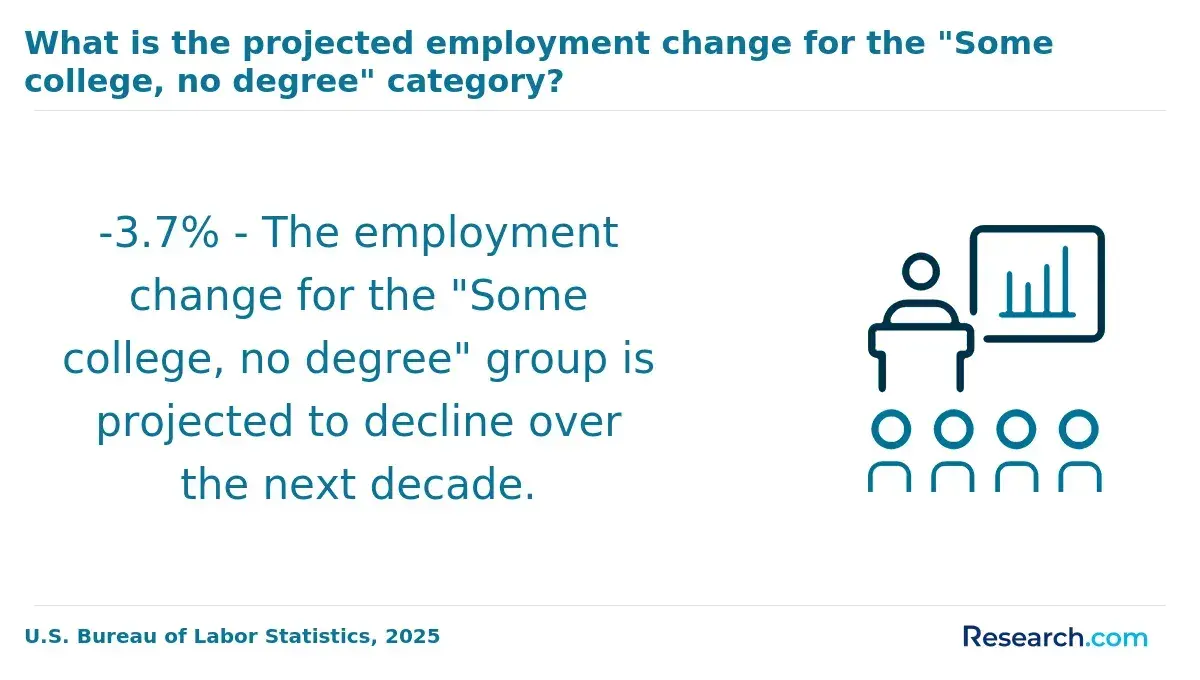
| Some college, no degree | Varies widely | Depends on accepted credits and course sequence | Ask for a transcript evaluation before committing |
| Bachelor's in another field | Accounting prerequisites plus major courses | Often 1 to 3 years depending on goal | A certificate, second bachelor's, or master's bridge program may be more efficient |
| Accounting bachelor's to master's | Usually 30 to 36 graduate credits | 1 to 2 years depending on enrollment load | Useful when CPA education credits or advanced specialization are goals |
Adults sometimes underestimate sequencing. Intermediate accounting, auditing, tax, accounting information systems, and advanced accounting may have strict prerequisites. Even if you can transfer many electives, missing one prerequisite can delay upper-division progress.
If you are mapping a long-term academic path beyond accounting, it can be useful to compare graduate and doctoral timelines across disciplines. For example, guides on the easiest PhD to get can help you understand how doctoral pacing differs from professional accounting education, though CPA preparation has its own state-specific rules.
To use transfer credit wisely, take these steps before enrolling:
- Send all transcripts early, even from schools where you completed only one course.
- Ask how many credits can transfer into the degree and how many must be completed at the new institution.
- Verify whether old accounting, tax, or information systems courses expire for major requirements.
- Request a course-by-course map for every remaining term.
- Confirm whether transfer credits affect Latin honors, GPA calculation, financial aid pace, or scholarship eligibility.
The best accelerated option is not always the one with the shortest advertised timeline. It is the program that accepts the right credits, offers required courses when you need them, and lets you maintain grades while working.
What Should You Look for When Comparing Accredited Online Accounting Degree Programs?
Comparing accredited online accounting programs is easier when you separate marketing language from practical student experience. "Flexible," "career-ready," and "accelerated" can mean very different things depending on course design, faculty availability, transfer policy, and exam requirements.
Use the table below to compare program quality factors that are especially important for working adults. These are not rankings criteria by themselves, but they help you identify programs that fit your schedule and goals.
| Comparison factor | Why it matters | Evidence to request |
| Accreditation | Supports financial aid, transferability, employer recognition, and licensure planning | Institutional accreditation and business or accounting accreditation details |
| Course delivery | Determines whether classes fit around work shifts and family obligations | Sample syllabus, live meeting schedule, assignment deadlines, and exam format |
| Transfer policy | Can reduce cost and completion time | Official degree audit and residency requirement |
| CPA alignment | Important if you plan to pursue licensure | State-specific advising and accounting credit breakdown |
| Faculty access | Accounting concepts often require explanation and feedback | Office hours, response-time policy, tutoring availability, and faculty credentials |
| Career support | Helps adult learners translate coursework into promotions or new roles | Internship support, resume help, employer connections, and accounting career advising |
Program fit also depends on your career identity. If you are choosing accounting because it is practical but your real interest is creative technology, comparing a game design and development degree may clarify whether you want financial reporting work or a different digital career path.
Working adults should watch for red flags before committing. The following checklist helps you avoid common enrollment mistakes:
- A school says it is accredited but does not clearly identify the accrediting agency.
- The program advertises flexibility but requires live meetings during your work hours.
- The self-paced format has strict term limits that do not match your available study time.
- The tuition page excludes required fees, textbook platforms, software, or proctoring costs.
- The transfer policy is described generally, but you do not receive a written credit evaluation.
- The program claims to prepare students for the CPA exam but does not explain state-by-state education differences.
- Upper-division accounting courses are offered infrequently, making it hard to graduate on your preferred timeline.
- Career support is limited to a generic job board rather than accounting-specific advising.
A strong program will answer detailed questions clearly. If admissions staff cannot explain course pacing, transfer rules, accounting prerequisites, faculty access, or licensure limitations, keep comparing.
What Career Opportunities and Salary Potential Can You Expect With a Accounting Degree?
An accounting degree can support careers in financial reporting, auditing, taxation, payroll, budgeting, compliance, accounting systems, and advisory work. The degree is often attractive to working adults because accounting skills are used across industries, including healthcare, government, manufacturing, financial services, technology, education, and nonprofit organizations.
The Bureau of Labor Statistics reported a May 2024 median annual wage of $81,680 for accountants and auditors. This median is not a starting salary and does not guarantee an outcome, but it shows the earnings midpoint for a large occupation that commonly values accounting education, experience, certifications, and software skills.
The table below summarizes common career paths connected to accounting education. Actual requirements vary by employer, state, industry, and whether the role involves public accounting or licensed work.
| Role | Typical responsibilities | Common education expectation | Credential considerations |
| Bookkeeper or accounting clerk | Records transactions, reconciles accounts, processes invoices, and supports payroll | Certificate, associate degree, or relevant experience | Software credentials can help for QuickBooks, Excel, or payroll systems |
| Staff accountant | Prepares journal entries, reconciliations, reports, and month-end close documents | Bachelor's degree often preferred | CPA track may be useful for advancement |
| Tax associate | Prepares returns, researches tax issues, and supports client or corporate tax planning | Bachelor's degree in accounting or taxation coursework | CPA, Enrolled Agent, or graduate tax coursework may help depending on role |
| Internal auditor | Reviews controls, processes, compliance, and risk management | Bachelor's degree in accounting, finance, or business | CPA, CIA, or CISA may be relevant |
| Public accountant or auditor | Performs audits, assurance work, tax services, or advisory projects for clients | Bachelor's degree plus CPA-eligible coursework often expected | CPA licensure requirements vary by state |
| Management accountant | Analyzes budgets, costs, forecasts, and performance metrics | Bachelor's degree, sometimes master's preferred | CMA may be useful for corporate accounting roles |
AI and automation are changing accounting work, but they are not eliminating the need for judgment. Routine data entry is increasingly automated, while employers place more value on analysis, controls, tax interpretation, audit evidence, data tools, communication, and ethical decision-making. A strong online accounting program should therefore include accounting information systems, analytics exposure, spreadsheet skills, and applied case work, not only textbook problem solving.
Accounting is not the right degree for everyone. If you dislike structured deadlines, detailed documentation, spreadsheets, regulations, or repetitive review work, another business or technology path may fit better. Career exploration is useful across fields; for example, adults asking what can I do with a masters in forensic psychology are often doing the same kind of outcome-based research that accounting students should do before enrolling.
To evaluate return on investment, compare total net cost with realistic career steps. A bachelor's degree may be worth it if it helps you move from clerical accounting into staff accounting, qualify for promotion, prepare for CPA education requirements, or enter a more stable professional track. It may be less compelling if you only need a narrow bookkeeping skill, your employer does not require a degree, or you would need to borrow heavily without a clear career plan.
How Can Working Adults Balance a Accounting Degree With Full-Time Work and Family Responsibilities?
Balancing an accounting degree with full-time work requires more than motivation. Accounting courses involve cumulative problem solving, so falling behind in the first two weeks of a term can make later topics much harder. Adults should build a study system before classes begin.
A realistic weekly workload depends on credit load, course length, prior experience, and the difficulty of the course. A common planning rule is to reserve 2 to 3 hours of study time per credit each week, which means a 3-credit course may require 6 to 9 hours outside class. Compressed 5- or 8-week courses can feel heavier because the same material arrives faster.
Use this planning sequence before choosing your first term schedule:
- Block fixed obligations first, including work shifts, commute time, childcare, meals, sleep, and recurring appointments.
- Choose study blocks when your energy is reliable, not only when your calendar looks empty.
- Start with one accounting course if you have been out of school for several years or are entering a busy work season.
- Pair harder accounting courses with lighter electives when possible.
- Tell family members or roommates your weekly study windows so they know when you are unavailable.
- Check the withdrawal deadline early so you can make an informed decision if the workload becomes unrealistic.
Part-time study is often the better choice for adults with unpredictable work hours, caregiving responsibilities, or financial pressure that requires continued employment. Full-time study can work if your job is stable, your support system is strong, and you can protect study time every week.
Self-paced programs require a different kind of discipline. Instead of waiting for weekly deadlines to keep you moving, set your own internal deadlines for readings, homework sets, quizzes, and exams. If you tend to procrastinate without instructor reminders, a structured asynchronous program may be a better fit than fully self-paced learning.
One common mistake is scheduling classes as if every week will be normal. Tax season, year-end close, school breaks, family illness, and overtime can disrupt even careful plans. Build buffer weeks into your study calendar and avoid stacking two difficult accounting courses during known busy periods.
What Student Support Services and Online Learning Resources Should You Expect From a Accounting Degree Program?
Student support can determine whether an online accounting program is truly workable for adults. A flexible schedule helps, but students also need academic, technical, career, and administrative support outside traditional campus hours.
Look for services that match the realities of online accounting coursework. Accounting students often need help with multi-step problems, spreadsheet formulas, tax research, proctored exams, and course sequencing, so generic online support may not be enough.
Before enrolling, ask whether the program offers these resources:
- Accounting-specific tutoring for financial accounting, managerial accounting, tax, audit, and intermediate accounting.
- Faculty office hours available by video, phone, chat, or evening appointment.
- Academic advising that understands CPA education rules, transfer credits, and course sequencing.
- Career services with accounting resumes, interview preparation, internship guidance, and employer connections.
- Technical support during evenings and weekends, especially for exams and homework platforms.
- Library access to business databases, tax research tools, citation help, and online writing support.
- Disability services for online exams, timed assessments, captioning, and accessible course materials.
- Financial aid counseling for part-time enrollment, satisfactory academic progress, and employer reimbursement timing.
The quality of support is easier to judge when you ask specific questions. For example, "Do you have tutoring?" is less useful than "Can I get help with intermediate accounting on weekends?" Similarly, "Do you offer career services?" should become "Do you help online accounting students find internships, audit roles, tax seasonal work, or staff accountant positions?"
Online learning resources should also include orientation modules, sample course shells, clear grading rubrics, recorded lectures, practice problems, spreadsheet templates, and prompt instructor feedback. If a program will not show you a sample syllabus or course demo, that is a sign to investigate further.
Do Online Accounting Degree Programs Include Internships, Practicums, or Other Hands-On Learning Requirements?
Online accounting degree programs may include internships, practicums, capstones, simulations, case studies, tax projects, audit projects, or accounting information systems assignments. Requirements vary widely, so do not assume every online program includes hands-on experience or that every internship can be completed remotely.
For working adults, hands-on learning should be evaluated for both career value and scheduling feasibility. An internship can help career changers build experience, but it may be difficult if it requires daytime availability. A capstone or simulation may fit better for someone who cannot reduce work hours, though it may provide less direct employer exposure.
Common applied learning options include:
- Virtual accounting simulations using case files, ledgers, audit evidence, or tax scenarios.
- Capstone projects involving financial statement analysis, internal controls, budgeting, or business decision-making.
- Internships with public accounting firms, corporations, nonprofits, government agencies, or tax preparation offices.
- Volunteer tax assistance opportunities, when available and appropriate for the student's location and schedule.
- Accounting information systems projects involving spreadsheets, databases, enterprise systems, or data visualization.
- Portfolio assignments that demonstrate reconciliations, reports, research memos, and analytical work.
Ask about location rules early. Some online programs allow local internships near your home, while others rely on employer partnerships in specific regions. If you already work in finance, payroll, operations, or administration, ask whether current job duties can satisfy experiential requirements. Schools may require a formal approval process, supervisor documentation, or duties that clearly connect to accounting outcomes.
Hands-on learning is especially valuable if you are changing careers. Employers may view an adult learner with strong coursework and applied projects more favorably when that learner can explain what they did: reconciled accounts, analyzed variance reports, prepared tax forms, tested controls, or built a spreadsheet model.
Other Things You Should Know About Accounting
No. Accounting uses arithmetic, algebra, logic, and careful analysis more than advanced calculus. The bigger challenge is learning rules, applying them consistently, and explaining financial information clearly.
Excel is essential, and many students also benefit from exposure to QuickBooks, payroll systems, tax software, enterprise accounting systems, and data visualization tools. The best programs teach concepts while giving students practice with commonly used platforms.
A certificate may be enough for basic bookkeeping, payroll, or skills updating. A degree is usually stronger for staff accountant, auditor, tax, management accounting, or long-term advancement pathways.
Yes, but start with a manageable course load, use tutoring early, and choose a program with adult-focused advising. Many returning students succeed when they treat the first term as a transition period rather than overloading their schedule.
References
- Best Online Accounting Degrees of 2025 | Accounting.com https://www.accounting.com/degrees/accounting/bachelors/best-online-programs/
- Pathways to becoming a Chartered Professional Accountant (CPA) - CPA Canada https://www.cpacanada.ca/become-a-cpa/pathways-to-becoming-a-cpa
- About the CPA Program | CPA Australia https://www.cpaaustralia.com.au/become-a-cpa/cpa-program
- Accounting Major Online Degree | SUNY Plattsburgh https://www.plattsburgh.edu/programs/accounting-major-online.html
- Bachelor of Arts in Accounting | Warner Pacific University https://www.warnerpacific.edu/programs/accounting-ba/
- CPA Preparatory Courses https://www.cpaalberta.ca/Become-a-CPA/CPA-Preparatory-Courses
- CPA Exam Guide: A Concise Overview - 300Hours https://300hours.com/cpa/
- Accounting https://www.bcit.ca/programs/accounting-bachelor-of-accounting-full-time-part-time-8630bacc/
- Earn an Online Accounting Degree | OEDb.org https://www.oedb.org/rankings/online-accounting-programs/