2027 Accredited Online Music Business Degree Programs for Working Adults: Flexible, Part-Time, and Self-Paced Options

Co-Founder and Chief Data Scientist
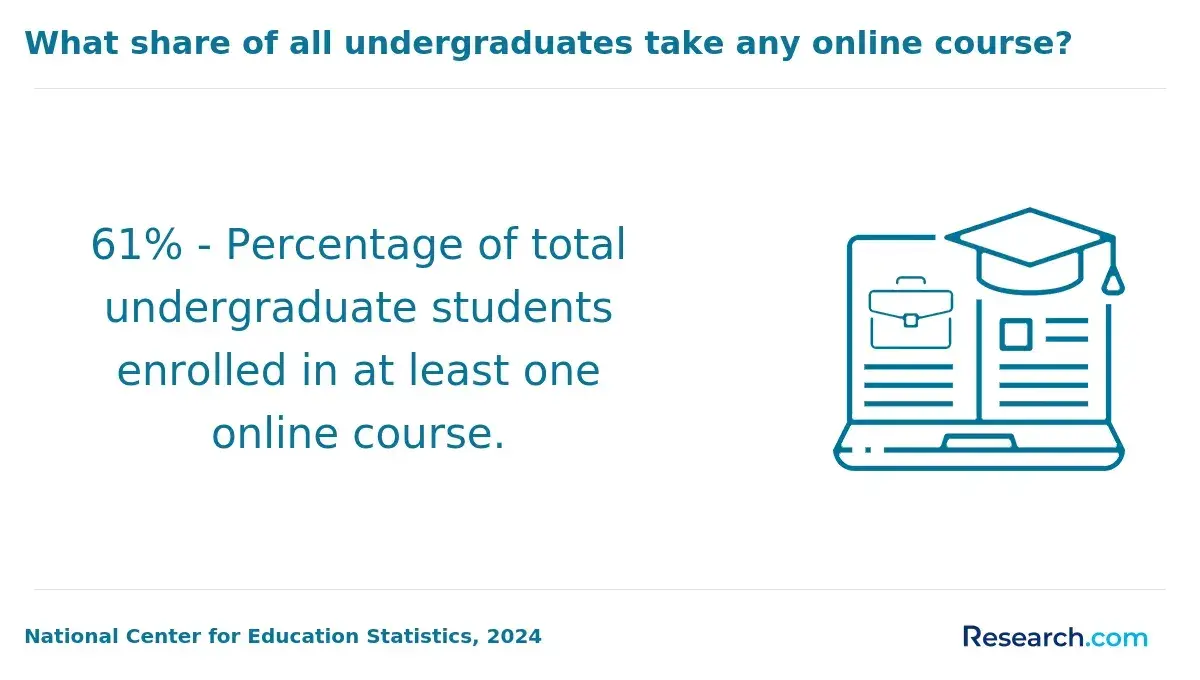
Choosing an online music business degree while working full time usually comes down to four questions: Is it accredited, flexible enough, affordable, and useful for your career? NCES reported in 2024 that about 9.4 million U. S. college students took at least one distance education course in fall 2022, showing how common online learning has become. This guide is for adults comparing accredited online music business programs, including part-time and self-paced formats. You will learn how to evaluate scheduling, admissions, cost, transfer credits, support services, and career fit before enrolling.
Key Things You Should Know
- Accreditation is the first filter: choose a school with institutional accreditation recognized by the U.S. Department of Education or CHEA; music-focused accreditation such as NASM can add value but is not always required for music business careers.
- Flexible does not always mean easy: many part-time online bachelor's students take 6 to 9 credits per term, often requiring about 12 to 27 hours of weekly study depending on course design, assignments, and prior experience.
- Costs vary widely: College Board's 2024 pricing data lists average published tuition and fees of $11,610 for in-state public four-year colleges and $43,350 for private nonprofit four-year colleges, while transfer credits may reduce total completion time and tuition if the program accepts them.
What Is an Accredited Online Music Business Degree Program and Why Does Accreditation Matter?
An accredited online music business degree is a college program delivered fully or mostly online by an institution that has been reviewed by a recognized accrediting agency. The curriculum usually blends business foundations with music industry topics such as artist management, music publishing, copyright, concert promotion, digital distribution, licensing, entrepreneurship, and marketing.
Accreditation matters because it affects financial aid eligibility, credit transfer, graduate school admission, and employer confidence. For most working adults, institutional accreditation is the nonnegotiable requirement. Programmatic accreditation, such as accreditation from the National Association of Schools of Music, may be helpful for programs housed in music schools, but many legitimate music business degrees are offered through business, communication, entertainment management, or professional studies departments.
Use this comparison to understand what each accreditation layer means before you spend time on applications or tuition deposits.
| Accreditation type | What it reviews | Why it matters to working adults |
| Institutional accreditation | The college or university as a whole | Usually required for federal financial aid, credit transfer, and broad employer recognition |
| Programmatic music accreditation | Music-specific curriculum, faculty, facilities, and outcomes | Can be useful if you want a program closely connected to a school of music or performance-based environment |
| Business school accreditation | Business curriculum, faculty qualifications, and academic processes | May add value if the degree emphasizes management, finance, entrepreneurship, or marketing |
| State authorization | Whether the school can enroll online students in your state | Important if you live outside the school's home state or plan to move while enrolled |
To verify accreditation, check the school's official accreditation page, then confirm it in the U.S. Department of Education's Database of Accredited Postsecondary Institutions and Programs or the CHEA directory. Do not rely only on language such as "licensed," "approved," or "internationally recognized," because those phrases do not necessarily mean the school is accredited in a way that supports U.S. financial aid or transferability.
Which Flexible Music Business Degree Formats Are Best for Working Adults: Part-Time, Full-Time, or Self-Paced?
The best format depends on how predictable your work schedule is, how quickly you want to graduate, and how much structure you need. A full-time format may be efficient for adults with fewer outside obligations, while part-time or self-paced study is often more realistic for learners with full-time jobs, caregiving duties, touring schedules, or freelance music work.
This table compares common online formats so you can match the program structure to your weekly availability instead of choosing based on the word "flexible" alone.
| Format | Typical pace | Best fit | Main trade-off |
| Full-time online | Often 12 or more credits per term | Adults who can protect significant weekly study time and want a faster path | Harder to sustain with overtime, family responsibilities, or irregular industry work |
| Part-time online | Often 6 to 9 credits per term | Working adults who need steady progress without overloading their schedule | Usually takes longer and may extend total fees if charged by term |
| Asynchronous online | Weekly deadlines without required live class meetings | Students who work evenings, weekends, or changing shifts | Requires strong self-management because instructors may not meet live every week |
| Synchronous online | Scheduled live classes at set times | Students who want real-time discussion, networking, and accountability | Less convenient if your job schedule changes frequently |
| Self-paced or competency-based | Progress may depend on assessments, course windows, or subscription terms | Highly disciplined adults with prior college credit or professional experience | Not every course may be self-paced, and completion limits can apply |
Before enrolling, ask the school exactly how each online course works. Some programs advertise online delivery but still require scheduled presentations, group projects, proctored exams, or short residencies. That may be manageable, but it should not be a surprise after classes begin.
A practical way to choose is to match your schedule to the format, not the other way around. Consider these scenarios before deciding:
- Choose part-time study if you work full time, have family responsibilities, or need predictable tuition payments across several terms.
- Choose full-time study if you can reduce work hours, have strong financial support, or need to finish quickly for a career transition.
- Choose asynchronous courses if your work schedule changes or you live in a different time zone from the school.
- Choose synchronous courses if you learn better through live discussion and want structured networking with instructors and classmates.
- Choose self-paced study only if you can create your own weekly deadlines and confirm that the program's pacing rules fit your graduation goal.
What Are the Admission Requirements for Accredited Online Music Business Degree Programs?
Admission requirements depend on the degree level and school. Bachelor's programs usually require a high school diploma or equivalent, transcripts, an application, and sometimes a personal statement. Completion-degree programs may require prior college credits. Master's programs may require a bachelor's degree, a minimum GPA, resume, statement of purpose, and sometimes professional experience in music, media, business, or entertainment.
Music business programs are usually different from performance degrees because they may not require an audition. However, some schools may ask for a portfolio, music background, writing sample, interview, or evidence of industry experience. If you are comparing adult-friendly online degrees across fields, resources such as this guide to an accelerated bachelor's degree in psychology can help you understand how transfer-heavy admissions models often work in online bachelor's programs.
Working adults should review requirements through the lens of time and documentation. The admissions step can move quickly if you prepare the right materials before deadlines.
- Request official transcripts from every college previously attended, even if you withdrew or earned only a few credits.
- Ask whether the school offers unofficial transfer evaluations before you apply or before you pay an enrollment deposit.
- Confirm whether standardized tests are required, optional, or waived for adult learners.
- Prepare a resume that highlights music, business, marketing, event, retail, finance, technology, or leadership experience.
- If a portfolio is required, include relevant work such as event plans, artist campaigns, social media projects, production credits, contracts, or business plans.
One common mistake is assuming that a music business degree requires advanced music theory or performance ability. Some programs do include musicianship or production coursework, but many focus more on the commercial side of the industry. Read the course catalog closely so you know whether the program leans toward business management, music entrepreneurship, audio production, performance, or entertainment law concepts.
How Much Does an Online Music Business Degree Cost, and What Financial Aid Options Are Available?
The cost of an online music business degree depends on tuition, fees, transfer credits, residency status, course load, and how long you remain enrolled. College Board's 2024 data shows average published tuition and fees of $11,610 for in-state students at public four-year colleges, $30,780 for out-of-state students at public four-year colleges, and $43,350 at private nonprofit four-year colleges. Online programs may charge different rates, but these benchmarks help you judge whether a quoted price is high, moderate, or comparatively affordable.
When comparing programs, look beyond the per-credit tuition rate. Music business students may also pay for recording software, business software, online learning fees, proctoring, textbooks, equipment, or travel for optional residencies and networking events.
- Tuition per credit or per term
- Online course fees, technology fees, and student service fees
- Books, subscriptions, music software, business tools, and licensing platforms
- Graduation, transcript, portfolio, or assessment fees
- Travel costs if the program includes internships, campus intensives, showcases, or industry events
Financial aid may include federal grants, federal student loans, state aid, institutional scholarships, employer tuition assistance, military education benefits, and payment plans. For undergraduate students with financial need, the maximum federal Pell Grant for the 2024-25 award year is $7,395, which can meaningfully reduce out-of-pocket cost but usually will not cover the full cost of attendance by itself.
Use the FAFSA if the school participates in federal student aid programs, and ask the financial aid office for a full cost-of-attendance estimate. Adults comparing graduate options can also review broader affordability patterns in affordable online master's programs, especially if they are deciding between a bachelor's completion path and a later master's degree.
A smart cost comparison includes both price and pace. A lower tuition rate may not save money if the program accepts few transfer credits, charges recurring term fees, or requires you to retake courses you already completed elsewhere.
How Long Does It Take to Complete an Online Music Business Degree, and Can Transfer Credits Help You Graduate Faster?
A bachelor's degree commonly requires about 120 credits, while a master's degree may require roughly 30 to 45 credits depending on the school. Full-time bachelor's students often finish in about four years from the start of college, but working adults entering with prior credits may complete much faster. Part-time students usually take longer because they enroll in fewer courses each term.
Transfer credit can be one of the biggest time-saving factors for adults. Schools may accept credits from community colleges, prior universities, military training, standardized exams, professional certifications, or prior learning assessments. Policies vary, so do not assume every completed course will count toward your major or general education requirements.
The table below summarizes typical timeline considerations. It is not a guarantee, but it can help you compare workload and completion pace before you commit.
| Student profile | Common enrollment pattern | Timeline consideration |
| First-time bachelor's student | Full-time or part-time | May need the full 120-credit pathway unless the school awards exam or prior learning credit |
| Adult with an associate degree | Part-time or full-time completion program | May finish faster if general education and elective credits transfer cleanly |
| Adult with scattered prior credits | Part-time online | Needs a detailed degree audit to determine which credits apply to major, electives, or general education |
| Master's student | Part-time evening, asynchronous, or accelerated terms | May finish in a shorter window than a bachelor's degree, but workload can be intensive |
| Self-paced learner | Competency-based or flexible course windows | May move faster with strong prior knowledge, but delays are possible without consistent weekly progress |
To avoid losing time, request a written transfer evaluation before enrolling whenever possible. Ask which credits count toward the music business major, which count only as electives, and whether there is a maximum number of transfer credits the school will accept.
- Ask whether lower-division community college credits can satisfy upper-division requirements.
- Confirm the minimum number of credits you must complete at the school to graduate.
- Check whether old business, technology, or music credits expire under department rules.
- Ask whether professional music industry experience can be evaluated for prior learning credit.
- Compare the estimated graduation date under part-time and full-time course loads before choosing a format.
What Should You Look for When Comparing Accredited Online Music Business Degree Programs?
The strongest online music business program is not automatically the cheapest, fastest, or most flexible. It is the one that fits your career target, schedule, budget, learning style, and need for industry access. A good program should make its accreditation, curriculum, faculty background, tuition, transfer policies, and online format easy to verify.
Start with curriculum alignment. If you want artist management, look for contracts, touring, negotiation, publishing, and entrepreneurship. If you want label, streaming, or digital marketing work, look for analytics, audience development, social media strategy, copyright, and distribution coursework. Students focused on audience growth may also want to compare music business curricula with options like an online degree social media marketing pathway, especially if their goal is digital promotion rather than venue, publishing, or label operations.
This comparison can help you separate quality indicators from marketing language when reviewing school websites.
| Factor | What to check | Why it matters |
| Accreditation | Institutional accreditation and any music or business program accreditation | Supports financial aid eligibility, credit transfer, and employer recognition |
| Course delivery | Asynchronous, synchronous, hybrid, self-paced, or cohort-based structure | Determines whether coursework can fit around full-time employment |
| Curriculum focus | Publishing, touring, artist management, marketing, entrepreneurship, finance, law, or technology | Helps you match the degree to your intended music industry role |
| Faculty background | Academic credentials and current or prior music industry experience | Can affect how practical and current the instruction feels |
| Career connections | Internships, alumni network, guest speakers, career fairs, and employer relationships | May improve access to industry information and professional contacts |
| Transfer policy | Credit maximums, residency requirements, prior learning assessment, and degree audit rules | Can reduce cost and time to graduation |
Red flags are just as important as positive features. Watch for these common mistakes before signing an enrollment agreement:
- Enrolling before independently verifying institutional accreditation through a recognized database.
- Assuming "online" means every class is asynchronous, self-paced, or free of scheduled meetings.
- Choosing the lowest tuition without adding fees, software, books, and repeated course costs.
- Ignoring transfer-credit limits and discovering later that prior coursework counts only as electives.
- Overlooking internship or practicum requirements that may conflict with work hours.
- Choosing a program based on celebrity guests or brand appeal without checking graduation requirements and student support.
Before you apply, ask admissions and academic advising for specific answers in writing. A transparent school should be able to explain weekly workload, course sequencing, transfer credits, internship expectations, tuition, and withdrawal policies clearly.
What Career Opportunities and Salary Potential Can You Expect With a Music Business Degree?
A music business degree can support careers in artist management, music publishing, concert promotion, venue operations, marketing, licensing, streaming operations, entrepreneurship, and entertainment administration. It can also complement experience as a performer, producer, songwriter, DJ, tour professional, or content creator who wants stronger business skills.
Salary potential varies widely because the music industry includes salaried roles, freelance work, commissions, contract projects, royalties, and entrepreneurial income. The U.S. Bureau of Labor Statistics reported a median annual wage of $58,030 for arts, design, entertainment, sports, and media occupations in May 2024; this gives a broad labor-market reference point, but individual music business roles can fall above or below it depending on market, employer, experience, and revenue model.
The following table summarizes common paths linked to music business study. It focuses on role fit rather than promising a specific outcome.
| Career path | Typical responsibilities | Useful degree coursework |
| Artist manager or assistant manager | Coordinate career strategy, bookings, promotion, budgets, and team communication | Artist management, contracts, entrepreneurship, accounting, negotiation |
| Music publishing or licensing coordinator | Support song registration, sync licensing, copyright administration, and royalty tracking | Copyright, publishing, music law, data management, business communication |
| Concert or event promoter | Plan shows, manage vendors, coordinate ticketing, market events, and track budgets | Live entertainment, marketing, finance, venue operations, project management |
| Digital marketing coordinator | Manage campaigns, audience analytics, social platforms, release calendars, and content strategy | Music marketing, analytics, branding, consumer behavior, social media strategy |
| Label or distribution operations assistant | Support release logistics, metadata, playlist pitching, reporting, and partner communication | Music distribution, digital platforms, data analysis, business systems |
| Music entrepreneur | Build an independent label, management company, production business, or creative services brand | Entrepreneurship, finance, contracts, marketing, leadership |
Current industry trends make business and technology skills especially important. Streaming platforms, short-form video, direct-to-fan marketing, AI-assisted production tools, metadata quality, and rights management all influence how music is discovered and monetized. A strong program should help students understand both creative culture and business infrastructure.
This degree may be worth it if you need structured business knowledge, an accredited credential, and access to internships or industry-connected faculty. It may be less useful if you already have strong industry experience, a narrow technical goal better served by a certificate, or no clear plan for using the degree. Career changers comparing entertainment careers with other people-centered online fields may also explore options such as MSW programs online to understand how different degree paths connect to different labor markets and credentials.
How Can Working Adults Balance a Music Business Degree With Full-Time Work and Family Responsibilities?
Balancing an online degree with work and family requires more than motivation. It requires a realistic course load, a repeatable weekly schedule, early communication with instructors, and a plan for high-demand weeks when projects, exams, job deadlines, or family needs overlap.
A practical starting point is to estimate study time before registering. Many colleges advise students to expect several hours of work outside class for each credit hour, so a 6-credit part-time term can still create a meaningful weekly workload. The exact number depends on course level, writing demands, group projects, and your familiarity with business or music industry concepts.
Use these steps to build a schedule that can survive a busy workweek:
- Choose your course load based on your busiest normal week, not your best-case week.
- Block recurring study time on your calendar before the term starts, including one backup block for missed work.
- Tell family members or roommates which hours are protected for classwork.
- Review every syllabus during the first week and identify major projects, presentations, and exams.
- Contact instructors early if work travel, touring, caregiving, or shift changes may affect deadlines.
- Use short study sessions for reading and discussion posts, but reserve longer blocks for writing, budgeting projects, research, and group assignments.
Adults should also be honest about format fit. If you need external structure, a fully self-paced program may create procrastination risk. If your job schedule changes weekly, live evening classes may cause attendance problems. If you are returning to school after several years, starting part time can be a safer way to rebuild academic habits before increasing your course load.
Avoid the common mistake of treating online classes as something you can "fit in" after everything else. Successful working students usually treat coursework as a fixed responsibility, then adjust work, family, and personal commitments around the busiest academic weeks.
What Student Support Services and Online Learning Resources Should You Expect From a Music Business Degree Program?
Strong student support can make the difference between staying enrolled and quietly falling behind. Working adults should look for support services that are available outside traditional business hours, especially if they study at night, on weekends, or across time zones.
At minimum, an online music business program should provide academic advising, technical support, library access, writing help, tutoring or coaching, career services, disability accommodations, and clear instructor communication policies. Programs with stronger music industry alignment may also offer internship advising, portfolio support, alumni panels, guest speakers, student organizations, and access to industry tools or databases.
Because music business is applied and network-driven, ask how the online program helps students build evidence of skills. That could include campaign plans, tour budgets, licensing research, artist branding projects, release strategies, pitch decks, or capstone portfolios. Online programs in other project-heavy fields, such as an architect degree online, can also show why portfolio support, software access, and faculty feedback matter when a degree depends on applied work rather than exams alone.
Before enrolling, ask schools these support-focused questions:
- Are academic advisors available by phone, video, chat, or email during evening or weekend hours?
- How quickly do online instructors typically respond to student questions?
- Does the program provide career coaching specifically for music, entertainment, media, or creative industries?
- Are internships, job boards, alumni contacts, or employer events available to online students?
- Does the school provide access to library databases, copyright resources, industry publications, or music business research tools?
- What happens if a working adult needs to stop out for a term because of job, family, health, or military obligations?
Support policies should be specific, not vague. "Online students receive the same support" sounds good, but you need to know hours, formats, response times, eligibility, and whether services are included in tuition or charged separately.
Do Online Music Business Degree Programs Include Internships, Practicums, or Other Hands-On Learning Requirements?
Many online music business programs include applied learning, but requirements vary. Some require internships or practicums, while others offer optional internships, simulated projects, capstones, virtual consulting work, or portfolio courses. For working adults, the key question is not whether hands-on learning exists; it is whether the requirement can be completed without disrupting employment.
Internships can be valuable because music business hiring often depends on experience, contacts, and proof that you can handle real deadlines. However, unpaid or daytime internships can be difficult for adults with full-time jobs. Ask whether your current job, freelance music work, volunteer event role, or independent project can count if it meets learning outcomes.
These questions can help you evaluate applied-learning requirements before choosing a program:
- Is an internship required, optional, or replaceable with a capstone or practicum?
- Can internships be completed remotely, locally, during evenings, or on weekends?
- Does the school help online students find placements, or are students responsible for locating their own?
- Can current music industry employment or freelance work satisfy the requirement?
- Are there minimum hours, site supervisor requirements, background checks, or liability insurance rules?
- What happens if a student cannot secure an internship by the planned term?
Hands-on learning should strengthen your resume, not create an impossible scheduling barrier. If a program requires an internship, get the policy in writing and ask for examples of how recent online students completed it while working.
Capstones and portfolios can be especially useful for adults who cannot pause their careers for internships. A strong final project might include a business plan for an independent label, a tour budget, a music marketing campaign, a licensing research project, or an artist development strategy. These projects can help demonstrate skills to employers, clients, or collaborators even when your previous work experience is outside the music industry.
Other Things You Should Know About Music Business
No. Many students enter music business programs as fans, marketers, event workers, entrepreneurs, or career changers rather than performers. Musical knowledge can help, but business, communication, organization, and analytical skills are often just as important.
A degree is usually broader and may be better if you need an accredited credential, transfer options, or preparation for multiple business roles. A certificate may be better if you already have a degree or want focused training in one area such as licensing, artist management, or digital marketing.
Most students need a reliable computer, high-speed internet, webcam, microphone, office software, and access to the school's learning platform. Some courses may require music, analytics, spreadsheet, project management, or creative software, so check technical requirements before classes begin.
Employers are more likely to respect an online degree when it comes from an accredited institution and is supported by relevant experience, internships, projects, references, and a clear portfolio of work. The delivery format matters less when the credential and skills are credible.
References
- Online Education Programs: Benefits of Online Degrees https://potomac.edu/online-education-why-get-an-online-degree/
- Flexible Learning Options: Asynchronous, Online, Part-Time and more https://www.fanshawec.ca/blog/flexible-learning-asynchronous-online-part-time
- Music Career Opportunities: 25+ Career Opportunities in the Music Industry | C&S Music https://candsmusic.com/music-career-opportunities/
- Music Business Degree: Is It Worth It? | Orphiq https://orphiq.com/resources/music-business-degree-worth-it
- 7 Best Music Business Degree Programs https://www.careersinmusic.com/music-business-degree/
- Integrating Work Experience into Curriculum: A Practical Guide - Changing Education https://changingeducation.co.uk/integrating-work-experience-into-curriculum-a-practical-guide/
- Join Our Music Business Program Online | Musicians Institute https://www.mi.edu/music-business/
- 10 Types of Music Degrees - Inside Music Schools https://insidemusicschools.com/blog/the-10-different-types-of-music-degrees/
- The Importance of Internships and Practical Experiences for Career Guidance https://www.philippevivier.com/en/the-importance-of-internships-and-practical-experiences-for-career-guidance.html
- World's Largest platform as University Common Application https://www.planstudyabroad.uniagents.com/course-details.php