2027 Endoscopy Nurse Workday: Patient Mix, Responsibilities, and Teamwork
Audited and Verified:
Our Editorial and Data Verification Process
Research.com uses government datasets, official education statistics and primary institutional information to support its career and degree guides. Our review process checks factual accuracy, occupational definitions, source dates and the requirements associated with the credentials discussed.
How This Article Was Fact-Checked
Our editorial team verifies salary estimates, employment projections, education requirements and program information against original data providers and official organizations. Salary figures are checked against the relevant occupational definitions and reporting periods. Information about licensure, accreditation and required in-person training is reviewed separately.
Fact-checked and verified on:

Co-Founder and Chief Data Scientist
Endoscopy nursing can look like a series of short procedures, but the RN's work extends from pre-procedure assessment through monitoring, recovery, and discharge. For nursing students, new graduates, and RNs considering a move into gastrointestinal care, that distinction matters: the pace, staffing, and sedation responsibilities can differ sharply from bedside nursing.
This guide follows a typical workday, explains the patient mix and team roles, and shows what education, orientation, and job-offer questions can help you decide whether the specialty fits.
Key Things You Should Know
- Endoscopy RNs may rotate among intake, the procedure room, and recovery; assignments and sedation duties depend on staffing, training, and facility policy.
- Most RN endoscopy jobs require an active RN license, not a specialty graduate degree. Employers typically provide procedure-specific orientation and assess competence before independent assignments.
- The U.S. Bureau of Labor Statistics reports a $93,600 median annual wage for all registered nurses in May 2024 and projects 5% RN employment growth from 2024 to 2034; neither figure is specific to endoscopy.
What does an endoscopy nurse do during a typical workday?
An endoscopy nurse cares for people having procedures that use a flexible scope to examine or treat part of the digestive tract. In an outpatient unit, the day often begins with a schedule review, equipment and room-readiness checks, and a team discussion of patients who may need extra preparation or monitoring. The RN may spend a shift in one area or rotate among admission, procedures, and recovery.
The sequence below describes common work, not a fixed assignment or a target number of cases.
| Part of the day | Common nursing focus |
| Before the first case | Review the schedule, handoff information, staffing, supplies, and patients with anticipated safety needs. |
| Intake | Assess the patient, reconcile relevant information, confirm required checks, provide education, and prepare for the planned procedure. |
| Procedure | Carry out the assigned RN role, monitor and document care as required, and communicate changes promptly. |
| Recovery and discharge | Assess recovery, reinforce instructions, document care, and coordinate a safe transition home or to another unit. |
Turnover and schedule changes are part of the work: a delayed preparation, an unplanned intervention, or a patient who needs longer recovery can affect later cases. An experienced RN considering the specialty should ask whether the job is primarily intake, intraprocedure care, recovery, or a rotation. An nontraditional practice format in an RN-to-BSN program may help with academic advancement, but it does not replace endoscopy-specific onboarding.
What types of patients does an endoscopy nurse care for?
Patient mix depends on the facility. A screening center may see many adults arriving for planned colonoscopies. A hospital-based unit may also care for patients with gastrointestinal bleeding, swallowing problems, anemia, suspected obstruction, or complex medical histories. Procedures can include upper endoscopy, colonoscopy, and, where offered, more specialized interventions such as ERCP or endoscopic ultrasound.
Two patients scheduled for the same procedure may need very different nursing attention. Factors such as age, cardiopulmonary disease, anticoagulant use, diabetes, mobility, communication needs, prior sedation problems, and the quality of bowel preparation can change the assessment and coordination required. The RN identifies concerns and communicates them to the appropriate clinician rather than treating the procedure name as a complete measure of risk.
Some patients also need support for anxiety or behavioral health concerns, but endoscopy nursing is not psychiatric advanced practice. A nurse whose long-term goal is that separate role would evaluate online psychiatric NP programs by cost against their own RN-to-APRN requirements, not as preparation for an endoscopy RN position.
How do endoscopy nurses support patients before, during, and after procedures?
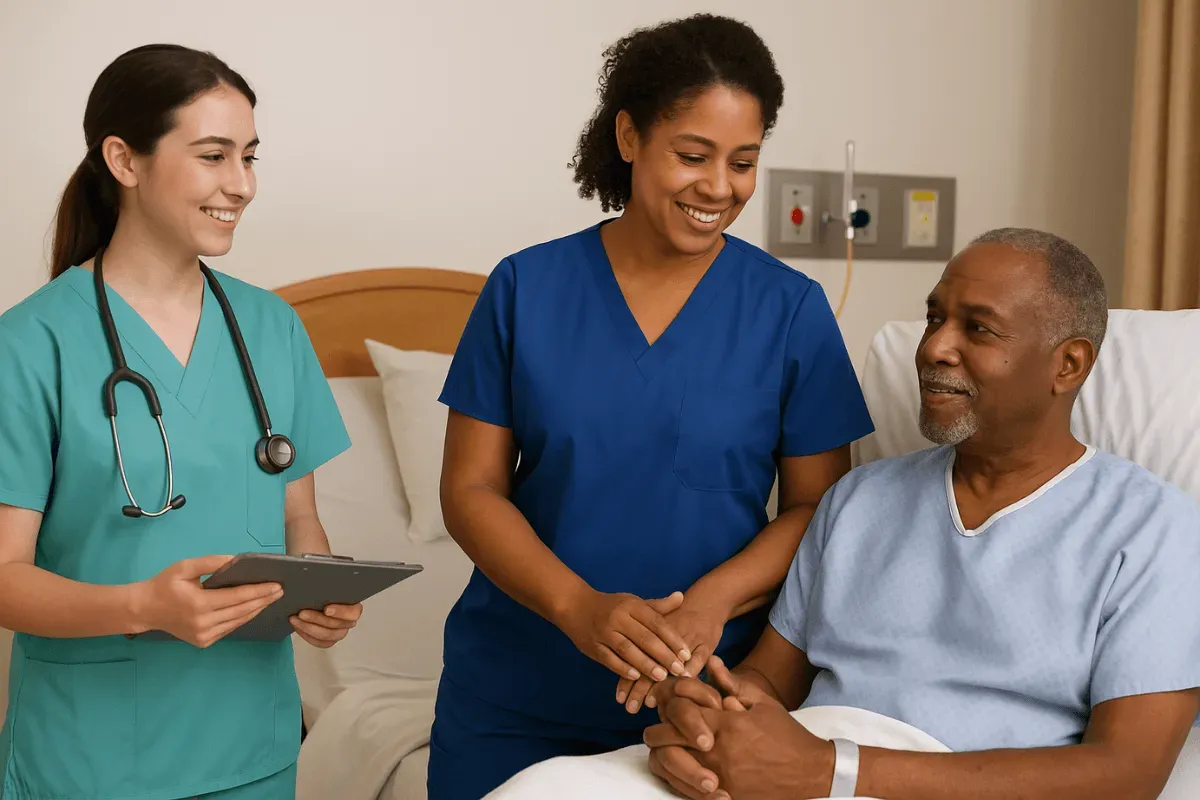
Before the procedure, the nurse reviews the patient's condition and relevant history, checks preparation and required documentation, and explains what the patient can expect. Concerns about medications, fasting, preparation, or a change in health are escalated under facility policy; the RN does not independently rewrite the procedural or anesthesia plan.
During the procedure, support may include positioning, maintaining patient privacy, monitoring, documentation, and communicating changes to the procedural and anesthesia teams. The exact assignment depends on who provides sedation and which personnel are present.
Afterward, the nurse assesses recovery, watches for concerning changes, reinforces the clinician's instructions, and confirms that discharge criteria and escort arrangements are met when applicable. A patient who needs extended observation may be transferred rather than discharged on the original schedule. The same attention to follow-up appears in broader primary care, but exploring 12-month FNP study pathways concerns a different, advanced practice role; it is not necessary to provide endoscopy RN care.
In the procedure room, the RN helps maintain an accurate picture of the patient's condition while the gastroenterologist concentrates on the examination or intervention. Depending on the assignment, the nurse may participate in the team's preprocedure verification, document care and medications, monitor the patient, coordinate specimens, and respond to changes that require the team's attention. A trained technician or another team member may handle scope-related assistance; titles and task assignments vary by facility.
Sedation is an important boundary to clarify before accepting a job. Some facilities use RN-administered moderate sedation under authorized orders and policy; others use an anesthesia professional. Monitoring requirements, rescue capabilities, staffing, and who may administer medications depend on the patient, procedure, state rules, professional standards, and facility policy. Orientation and demonstrated competence - not an RN license alone - determine when a nurse can take on a particular assignment.
Procedural nursing is also distinct from advanced practice or doctoral study. A nurse considering a future leadership or APRN goal might separately investigate planning an accelerated DNP pathway, but a DNP is not a requirement for procedure-room RN responsibilities.
Good teamwork starts before the scope is inserted. The RN communicates assessment findings and preparation concerns; the gastroenterologist confirms the procedural plan and addresses procedural decisions; and an anesthesia professional, when involved, evaluates and manages anesthesia within their role. The team confirms its plan for monitoring, anticipated interventions, and escalation.
During the case, concise updates matter more than job-title assumptions. A change in breathing, responsiveness, vital signs, or bleeding concern needs prompt communication to the clinicians responsible for assessment and treatment. At handoff, the receiving nurse needs to know what occurred, what medications were given, and what recovery concerns remain. This coordination is a major difference between a well-supported unit and one where an RN is expected to cover incompatible tasks at once.
Behavioral health specialists may be consulted for particular patients, but postgraduate PMHNP certificate comparisons address a separate APRN career transition, not a credential the endoscopy team ordinarily requires.
For an endoscopy RN position, the usual starting point is an active, applicable RN license. An approved prelicensure associate-degree, diploma, or BSN pathway can lead toward eligibility to take the NCLEX-RN, subject to state board requirements; graduation and passing the exam are separate from receiving a license. Employers may prefer a BSN or prior acute-care, perioperative, or procedural experience, but preferences vary by position.
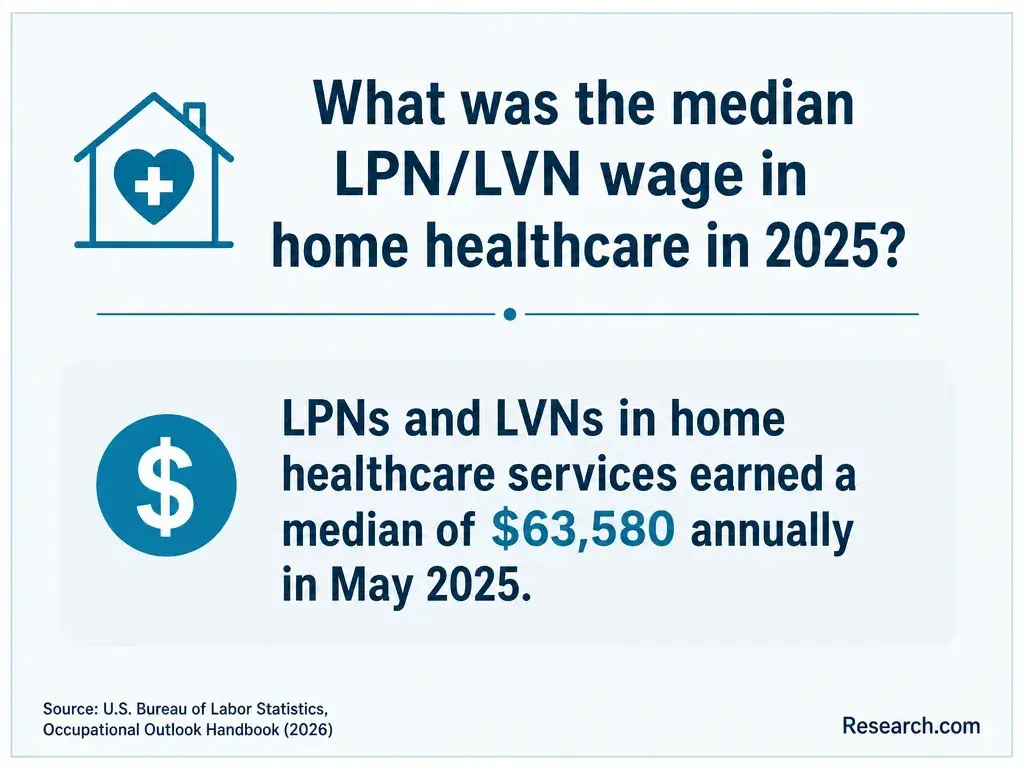
An LPN/LVN or endoscopy technician may work in the same unit under a different scope and job description. Neither role automatically carries the RN's assessment or sedation-related responsibilities. Likewise, an MSN or DNP does not substitute for RN licensure or specialty orientation.
Career changers with a non-nursing bachelor's degree can compare prelicensure routes, including online graduate-entry MSN pathways. They should verify that the exact program prepares them for initial RN licensure in their state and includes required in-person clinical education; an online label does not make the clinical component remote.
The Certified Gastroenterology Registered Nurse (CGRN) credential, awarded by the American Board of Certification for Gastroenterology Nurses, is a specialty option for eligible RNs with gastroenterology experience. Its current eligibility rules, examination requirements, fees, and renewal terms should be checked directly with the certifying organization before making a study or payment plan. CGRN is professional certification, not a state license or permission to perform an unfamiliar procedure independently.
Employers may also require or provide training in basic life support, advanced resuscitation, sedation, or facility-specific equipment and safety processes. Ask which credentials must be held at hiring, which can be completed during orientation, and whether the employer pays for them. For an RN with an associate degree, associate-degree RN to MSN options are a separate academic advancement decision; an MSN is not a prerequisite for CGRN or a substitute for specialty experience.
Foundational nursing study in anatomy, physiology, pharmacology, health assessment, infection prevention, and clinical judgment supports the role. Endoscopy adds setting-specific learning: gastrointestinal conditions and procedures, monitoring and escalation, recovery assessment, specimen workflows, patient teaching, and safe documentation. Classroom knowledge is a starting point; supervised practice and competency checks show whether a new hire can apply it in the unit.
A useful orientation should identify who precepts the nurse, how assignments progress, which sedation and recovery competencies are assessed, and how the nurse gets help when a case changes unexpectedly. For a new graduate, a unit willing to provide that progression may matter more than an advertised fast route to independent assignments.
Someone considering LPN programs combining online learning and clinical training should first check the target job title. LPN/LVN preparation can lead to valuable patient-care roles, but it is not a shortcut to RN endoscopy positions that require an RN license.
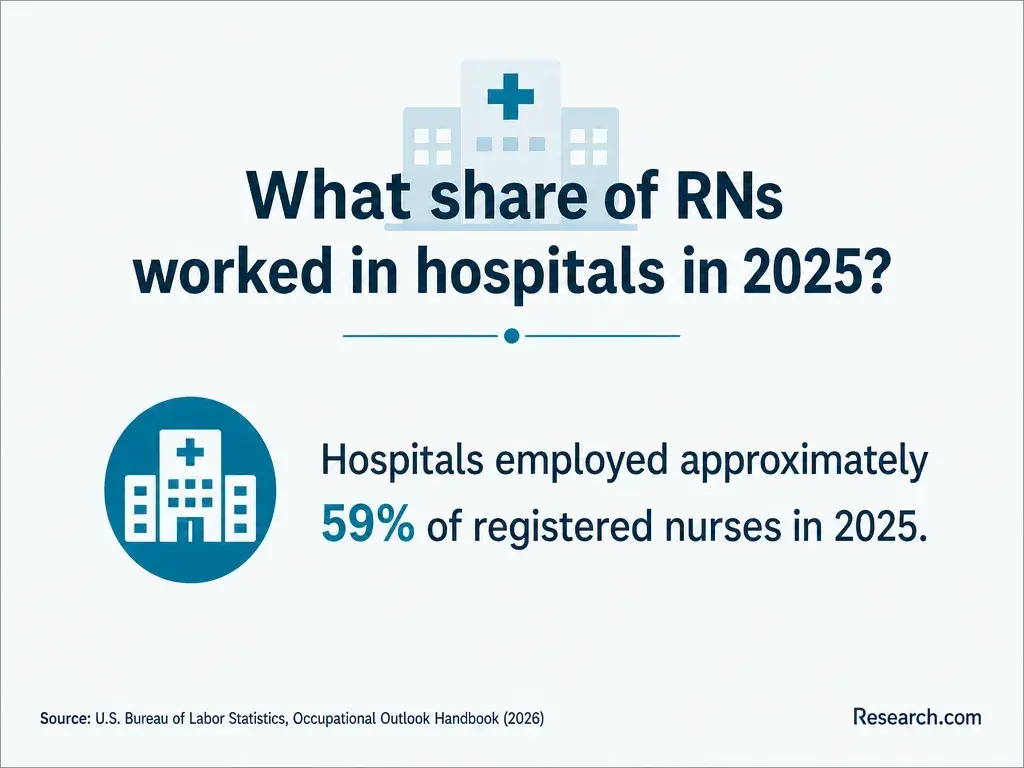
The U.S. Bureau of Labor Statistics does not publish a separate occupational wage or growth projection for endoscopy nurses. Its registered nurse figures are the broadest relevant benchmark: the median annual wage for RNs was $93,600 in May 2024, and RN employment was projected to grow 5% from 2024 to 2034. Those figures cover many specialties and settings, so they cannot predict an endoscopy offer.
Compare actual offers by base pay, hours, call requirements, weekend coverage, differentials, benefits, and paid orientation. An ambulatory center and a hospital unit may differ in schedules, case complexity, and compensation structure. Ask whether the posted rate assumes experience or certification, and whether call time is compensated separately.
A graduate degree should not be treated as a guaranteed pay increase in this specialty. Lower-cost online BSN-to-MSN degree routes may be worth comparing for a defined future role, but weigh their full cost against that role's actual hiring requirements rather than the occupation-wide RN median.
How can students choose an accredited nursing program for endoscopy careers?
Choose a program that leads to the license required for the job, then evaluate how well it prepares you to enter practice - not whether its marketing names endoscopy as a track. Confirm the institution's accreditation, the nursing program's applicable accreditation, state board approval or recognition, and eligibility for RN licensure where you intend to practice. These are different checks; one does not establish the others.
After confirming eligibility, use the following questions to compare programs and plan the transition into a specialty unit:
- Where and when do supervised clinical placements, labs, and simulation occur, and who arranges them?
- What are the program's published NCLEX-RN outcomes, reporting years, and cohort sizes?
- What will tuition, fees, travel, equipment, and time away from work cost in total?
- Can graduates access hospital or ambulatory employers that offer structured endoscopy orientation?
Endoscopy-specific competence is usually developed after initial nursing education. For students whose goal is an RN procedure-room job, a prelicensure route plus supportive onboarding is more direct than doctoral study. Even when later comparing GPA and experience policies for DNP study, judge that separate degree against a specific future role rather than assuming it improves entry into endoscopy nursing.
Other Things You Should Know About Nursing
It depends on the employer. Scheduled outpatient centers may have predominantly daytime cases, while hospital units may cover urgent procedures after hours. Ask about actual shift end times, weekends, call frequency, and callback expectations.
It can be. Nurses may stand for long cases, help position patients, and move quickly between rooms. Ask about lifting support, staffing, breaks, and the physical demands of the specific assignment.
Hospitals may handle more urgent or medically complex cases and coordinate transfers with inpatient units. Outpatient centers often emphasize scheduled procedures and discharge home. Individual facilities vary, so compare case mix and staffing rather than relying on the setting's name.
No. A technician typically assists with equipment and procedure workflows under the facility's assigned duties. An endoscopy RN holds a nursing license and is accountable for nursing assessments, care, and documentation within the RN scope.
- Enhancing Collaboration in the Endoscopy Suite - PMC - NIH https://pmc.ncbi.nlm.nih.gov/articles/PMC9540138/
- Quality Assurance in Pre-Endoscopic Evaluation | sciencedirect.com https://www.sciencedirect.com/science/article/am/pii/S2590030722000289
- Endoscopy - Harvard Health https://www.health.harvard.edu/diagnostic_tests_medical_procedures/endoscopy-a-to-z
- What Does an Endoscopy Nurse Do? Roles, Skills, and Career Path - Marian https://onlineabsn.marian.edu/blog/endoscopy-nurse/
- Endoscopy: Procedure, Types, What To Expect - Cleveland Clinic https://my.clevelandclinic.org/health/diagnostics/25126-endoscopy
- Our procedures (endoscopy) | uhs.nhs.uk https://www.uhs.nhs.uk/departments/gastroenterology/endoscopy/what-do-we-do
- ASGE | Procedures and Treatments https://www.asge.org/home/for-patients/procedures