2027 Accelerated vs. Traditional Accounting Degrees: Pros & Cons

Co-Founder and Chief Data Scientist
The choice between an accelerated and a traditional accounting degree is really a choice about pace, risk, cost, and readiness. Accelerated programs can help motivated students finish sooner, reduce time away from the workforce, and move faster toward accounting roles. Traditional programs give students more time to build fundamentals, use campus resources, complete internships, and develop professional networks.
This decision matters because accounting students are balancing more than coursework. Many are weighing transfer credits, work schedules, family obligations, CPA preparation, tuition, and the need to qualify for jobs as quickly as possible. Accelerated learning formats have grown by over 30% in popularity among accounting students in the U.S., which reflects rising demand for faster and more flexible routes into the field.
This guide compares accelerated and traditional accounting programs across completion time, admissions, course structure, cost, financial aid, support services, accreditation, and employment outcomes. Use it to decide which format matches your academic background, learning style, and career timeline.
Key Points About Accelerated vs. Traditional Accounting Degrees
- Accelerated accounting degrees offer flexibility and faster completion, ideal for career changers and motivated professionals aiming for rapid advancement and cost savings through reduced tuition duration.
- Traditional programs foster deeper academic engagement and skill mastery with a balanced pace, benefiting learners who prefer structured study and comprehensive knowledge before entering the workforce.
- Traditional degrees promote stronger peer connections and networking opportunities, supporting collaboration and professional growth essential in the accounting field's relationship-driven environment.
What Are the Differences Between Accelerated vs. Traditional Accounting Programs?
Accelerated and traditional accounting programs usually cover similar core subjects, including financial accounting, managerial accounting, auditing, taxation, business law, and accounting information systems. The main difference is how quickly students move through that material and how much structure they receive along the way.
An accelerated program is designed for speed. Courses are compressed into shorter terms, assignments arrive more frequently, and students often study online or in hybrid formats. A traditional program follows a standard academic calendar, giving students more time to practice accounting concepts, meet faculty, participate in campus activities, and explore electives.
- Course intensity: Accelerated programs place more material into shorter sessions, often using 8-week terms. Traditional programs spread the workload across longer semesters, which can make weekly demands more predictable.
- Learning pace: Accelerated students must absorb, apply, and retain accounting concepts quickly. Traditional students usually have more time to work through difficult topics such as cost accounting, taxation, auditing standards, and financial statement analysis.
- Flexibility and scheduling: Accelerated formats commonly use online or hybrid delivery so students can study around work or family obligations. Traditional programs more often follow fixed class schedules and standard academic calendars.
- Student support and interaction: Accelerated programs may offer less spontaneous interaction with faculty and classmates because courses move quickly. Traditional programs often provide more time for mentoring, study groups, campus events, and faculty relationships.
- Eligibility and admissions: Accelerated programs may expect stronger academic preparation, completed prerequisites, or transfer credits. Traditional programs are often more accessible to first-time college students or those still building foundational skills.
The best option depends on how well you handle pressure. If you already have college credits, professional experience, or strong study habits, an accelerated format may be efficient. If you want more time to develop as a student, build a network, or prepare gradually for accounting credentials, a traditional program may be the safer choice. Students comparing faster graduate options may also review 1 year masters degrees to understand how condensed academic formats work.
How Fast Can You Finish an Accelerated vs. Traditional Accounting Program?
Accelerated accounting programs are built to shorten the path to graduation, while traditional programs usually follow a standard four-year timeline for a bachelor's degree. The actual completion time depends on transfer credits, enrollment status, course availability, and whether the student can maintain the required workload.
Speed is not automatically an advantage. Finishing quickly can lower opportunity cost and help students enter the job market sooner, but it also leaves less time for internships, campus recruiting, and repeated practice with technical accounting topics. Students should compare timelines honestly against their weekly availability.
- Transfer credits: Students who transfer more credits, sometimes up to 90, can shorten their degree timeline substantially. This is especially important in accelerated and degree-completion programs.
- Full-time vs. part-time enrollment: Full-time students usually finish faster in either format. Accelerated programs often require heavier course loads, which may be difficult for part-time students with demanding work or caregiving responsibilities.
- Course intensity: Accelerated accounting degree completion time is shorter because students complete more work in less time. Traditional accounting degree length is longer because courses are distributed across a steadier academic calendar.
- Program delivery: Fully online and asynchronous courses may help students progress faster if they can manage deadlines independently. Hybrid and traditional campus programs often require attendance at set times, which can slow progress for working adults.
- Admission requirements: Accelerated programs sometimes require a minimum GPA or completed credits before students can start. Meeting those requirements may affect the actual time from application to graduation.
Some online accelerated programs and degree-completion tracks can be completed in as little as one year, particularly for adult learners who already hold significant credits. Students comparing flexible formats may find useful context in guides to the best online degrees for seniors, which discuss online options designed for nontraditional learners.
What Are the Admission Requirements for Accelerated vs. Traditional Accounting Programs?
Accelerated and traditional accounting programs often ask for similar basic materials, such as transcripts and an application form. The difference is that accelerated programs usually evaluate whether the applicant is ready for a compressed workload. Traditional programs tend to focus more on general college readiness and may admit a wider range of students.
Applicants should not assume that a faster program is easier to enter. Because the pace is more demanding, accelerated programs may screen for prior academic success, completed prerequisites, professional maturity, and time-management ability.
- Academic performance: Accelerated programs usually require a higher minimum GPA, often around 2.5 or above. Traditional programs may accept students with lower GPAs, sometimes as low as 2.0, especially when the program is designed for broader access.
- Prerequisite courses: Accelerated tracks often expect students to have completed specific accounting, business, or general education requirements before enrollment. Traditional programs typically allow students to complete more prerequisites after admission.
- Transfer credits: Many accelerated programs work best for students who already have college credits. Traditional programs are usually better suited to students starting from the beginning of a degree plan.
- Work experience and application materials: Accelerated accounting program admission requirements may include a resume, letters of recommendation, and a statement of purpose. Traditional accounting degree entry criteria often rely more heavily on transcripts and standard application documents.
- Standardized testing: Some accelerated programs may require SAT or ACT scores, especially when applicants have limited college credit. Traditional programs may waive testing requirements for adult learners or transfer students.
- Readiness assessment: Accelerated admissions teams may look for evidence of self-discipline, problem-solving ability, leadership, and realistic planning. These traits matter because students have less time to recover from missed assignments or weak early performance.
Before applying, students should compare the admissions checklist with their current transcript. If several prerequisites are missing, a traditional path or transfer-friendly program may be more practical. Students thinking about long-term return on investment may also consider broader labor-market questions, including which majors make the most money.
How Are Accelerated Accounting Courses Structured Compared to Traditional Ones?
Accelerated accounting courses usually teach the same major competencies as traditional courses but compress them into shorter terms. That means students may cover accounting theory, problem sets, exams, discussions, and projects in a much tighter schedule. The academic expectations should remain rigorous, but the rhythm of learning is different.
- Course length: Accelerated programs typically run six to eight weeks per term and may allow completion in 15 to 24 months, depending on the credential and the student's prior credits. Traditional courses usually follow 15-16 week semesters over four years.
- Weekly workload: Accelerated students often face frequent readings, assignments, quizzes, and exams. Missing a week can be difficult to recover from because the course may already be moving into a new unit. Traditional students generally have more time between major deadlines.
- Instruction style: Accelerated accounting programs often use asynchronous online instruction so students can study outside standard class hours. Traditional programs are more likely to include scheduled lectures, labs, discussion sections, and in-person faculty access.
- Assessment format: Accelerated courses may rely on shorter but more frequent assessments to keep students progressing. Traditional courses may include larger midterms, finals, papers, projects, and presentations spread across the semester.
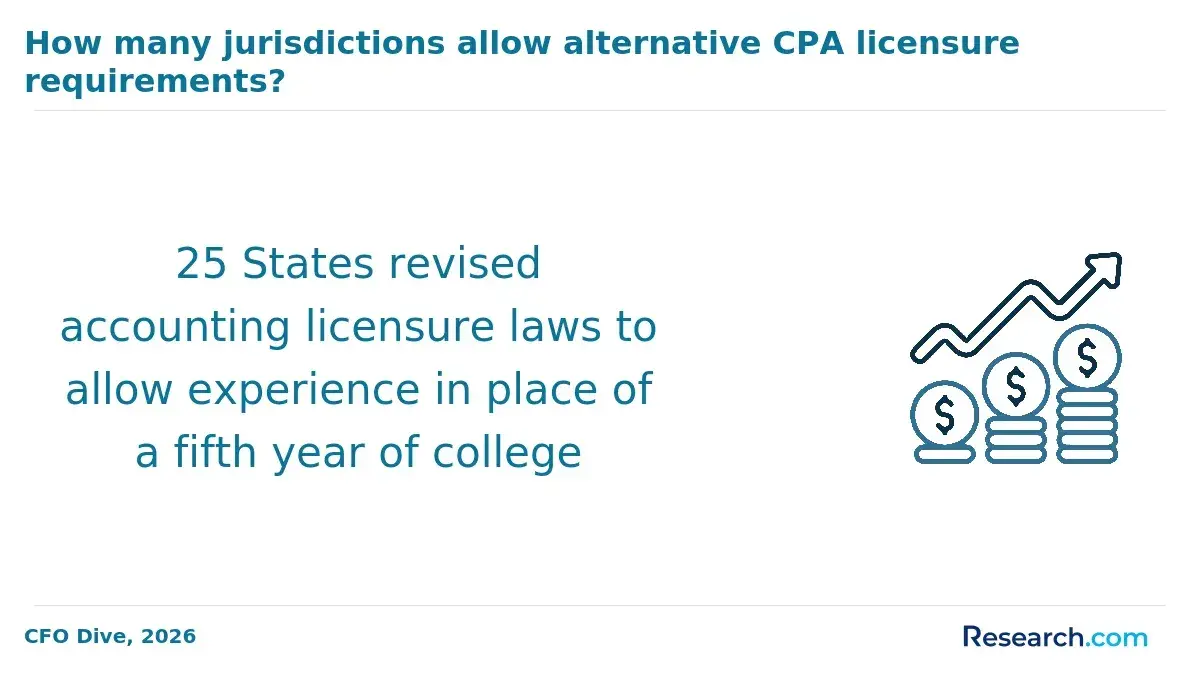
- CPA preparation: Both formats can support pathways to credentials like the CPA, but students should confirm that required coursework, credit hours, and state-specific licensure expectations can be met through the program they choose.
The central question is whether you learn best through immersion or repetition. Accelerated courses reward students who can study consistently without extended breaks. Traditional courses may be better for students who need more time to practice calculations, review standards, and ask questions before exams.
How Much Do Accelerated Accounting Programs Cost Compared to Traditional Programs?
Accelerated programs may cost less in total when students finish sooner, but the cheaper option is not always obvious from tuition alone. Students should compare per-credit tuition, required fees, transfer credit policies, living expenses, technology costs, and the income they may gain or lose based on time in school.
Traditional programs can have higher total costs because they usually take longer, but they may also offer campus resources, scholarships, internships, and recruiting access that affect long-term value. Accelerated programs can reduce opportunity cost, especially for students ready to work full time sooner.
- Tuition rate per credit: Accelerated online accounting courses usually charge between $330 and $600 per credit. Traditional on-campus programs have a wider range from $220 up to $2,440 per credit, depending on the institution, residency status, and whether the school is public or private.
- Program duration and total cost: Accelerated students may complete their degrees in about 2.5 to 3.5 years, compared to four years for traditional paths. A shorter timeline can reduce tuition exposure, housing costs, transportation expenses, and other costs tied to enrollment.
- Financial aid availability: Both formats may qualify for scholarships, grants, and loans when the institution and program meet eligibility rules. Because accelerated students finish sooner, they may borrow less overall, but this depends on tuition rates and enrollment intensity.
- Opportunity cost: Accelerated graduates can enter the workforce earlier, which may reduce lost income. Traditional students may spend more time in school, but they may also have more time for internships or part-time accounting work.
- Credit load impact: Accelerated students may pay more in a single term because they take heavier course loads. This can create cash-flow pressure even if the total credit requirement does not increase.
When comparing programs, calculate total degree cost rather than only semester cost. Students looking for affordable online options can also compare programs through resources such as the best online accounting degree guide.
What Financial Aid Is Available for Accelerated vs. Traditional Accounting Degrees?
Financial aid can be available for both accelerated and traditional accounting degrees, but the timing can differ. Accelerated programs may use shorter or year-round terms, which can affect disbursement schedules, renewal deadlines, and how quickly students use their aid eligibility.
The most important rule is accreditation. Students should confirm that the school and program qualify for the aid they plan to use before enrolling. They should also ask the financial aid office how aid is packaged for compressed terms.
- Federal aid eligibility: Students in both formats may access federal loans and Pell Grants if the institution is accredited and enrollment requirements are met. Accelerated students should ask how aid applies across shorter terms.
- Scholarship timelines: Scholarships from organizations like AICPA and state CPA societies may be available to accounting students in either format. Some deadlines follow traditional semester calendars, so accelerated students need to track dates carefully.
- Employer tuition assistance: Employer benefits may apply to both accelerated and traditional programs. However, some employers have rules about minimum grades, eligible institutions, reimbursement timing, or part-time attendance.
- Aid disbursement and renewal: Accelerated pacing can create more frequent funding checkpoints. Students may need to submit forms, maintain satisfactory academic progress, and monitor balances more closely.
- Out-of-pocket planning: A shorter program can reduce total cost, but compressed billing can make individual terms expensive. Students should plan for books, software, exam fees, technology, and any gap between billing deadlines and aid disbursement.
One professional who pursued an accelerated accounting degree described financial aid as a balancing act. He said the hardest part was keeping paperwork updated before each term started. The process was stressful but manageable with careful organization, and the faster timeline helped him complete the degree efficiently without losing access to support.
What Kind of Student Support Do Accelerated vs. Traditional Accounting Programs Offer?
Student support can determine whether a program is manageable, especially in accounting, where courses build on one another. Accelerated and traditional programs may offer similar services, but access, timing, and delivery can differ sharply.
Academic Advising
Traditional programs usually provide scheduled advising appointments, degree planning, and in-person support throughout the academic year. Accelerated programs often rely on virtual advising with flexible hours, including evenings or weekends, because many students are working adults. In an accelerated program, advising should happen early because a missed prerequisite can delay graduation.
Tutoring
Traditional students may use campus tutoring centers with set hours. Accelerated and online students often depend on virtual tutoring, recorded explanations, accounting labs, or remote office hours. Because compressed courses move quickly, students should seek tutoring as soon as they struggle with a concept rather than waiting until exam week.
Career Services
Traditional programs often provide career fairs, employer visits, resume workshops, mock interviews, and on-campus recruiting. Accelerated programs may offer online career coaching, virtual employer sessions, and resources geared toward adult learners or career changers. Students who want internships should ask whether the accelerated calendar leaves enough time to complete one.
Peer Interaction
Traditional programs make it easier to build relationships through group projects, student organizations, study sessions, and campus events. Accelerated programs may use discussion boards, team assignments, and video meetings, but students often need to be more intentional about networking. This matters because accounting hiring can be influenced by referrals, internship connections, and faculty recommendations.
What to Ask Before Enrolling
- Are tutoring and advising available outside standard business hours?
- Will I have a dedicated academic advisor?
- Does the program help students find internships or entry-level accounting roles?
- Are faculty available during compressed terms?
- Does the program offer CPA exam planning or licensure advising?
Do Graduates from Accelerated vs. Traditional Accounting Programs Get Hired More Quickly?
Graduates from accelerated programs may enter the job market sooner simply because they finish faster. That does not always mean they are hired faster after graduation. Hiring speed depends on accreditation, internship experience, accounting skills, networking, location, employer demand, and how well the student can explain the value of the degree.
Both accelerated and traditional accounting programs can lead to employment when the program is credible and the student has relevant skills. Employers generally care most about whether graduates can perform accounting work, use accounting systems, communicate clearly, and meet professional standards.
- Employer perception: Traditional degrees may still be viewed by some employers as more familiar or comprehensive. However, that distinction is less significant when the accelerated program is accredited and academically rigorous.
- Career readiness: Accelerated graduates can reach the job market sooner, which may be useful in a field facing workforce pressure, with around 75% of CPAs expected to retire within the next decade.
- Job placement speed: Many accelerated graduates secure roles within three months, especially when internships, employer partnerships, or career services are built into the curriculum. Traditional graduates may benefit from broader campus networks and more time for internships.
- Industry demand: Demand for accounting professionals supports both pathways, particularly for graduates with technology skills, adaptability, and familiarity with digital accounting tools.
- Student initiative: The degree format matters less if the student waits until graduation to begin networking. Students in either format should build a resume, connect with employers, and pursue practical experience before the final term.
A professional who completed a traditional accounting degree said networking events and career fairs helped her stand out. She was hired within a few months and credited the longer program format with giving her more time to prepare for interviews, build confidence, and practice technical material.
The practical takeaway is that accelerated programs can shorten the time to eligibility for jobs, while traditional programs may provide more time to build a job-search foundation. Either pathway can work if students choose an accredited program and use career resources early.
Are Accelerated Accounting Degrees Accredited the Same Way as Traditional Programs?
Yes, accelerated accounting degrees can be accredited in the same way as traditional programs. Accreditation is based on academic quality, institutional standards, faculty qualifications, curriculum, student outcomes, and review processes, not simply on whether courses are accelerated or delivered online.
Accreditation matters because it can affect federal financial aid eligibility, transfer credit, graduate school admission, employer recognition, and licensure planning. Students considering CPA licensure should be especially careful because education requirements vary by state, and not every accounting degree automatically satisfies every requirement.
Students should verify both institutional accreditation and, when relevant, programmatic accreditation. Regional or programmatic accrediting bodies such as AACSB, ACBSP, and regional agencies review program quality through documentation and periodic peer evaluations. AACSB accreditation for accelerated accounting programs is often viewed as a rigorous benchmark, but students should still confirm how the program aligns with their goals.
The key issue is not whether a program is accelerated. The issue is whether the compressed format preserves required content, learning outcomes, and academic rigor. Accrediting agencies expect accelerated coursework to meet the same standards as traditional coursework, even when the schedule is shorter.
Before enrolling, students should ask the admissions office or accounting department whether the program is accredited, whether credits transfer, whether graduates are eligible for CPA-related coursework requirements, and whether the degree is treated differently from the school's traditional format. Students looking for reputable low-cost options may also compare affordable degrees online.
How Do You Choose Between an Accelerated vs. Traditional Accounting Degree?
Choose an accelerated accounting degree if speed, flexibility, and entering the workforce sooner are your top priorities and you can handle a compressed workload. Choose a traditional accounting degree if you want more time for academic development, campus engagement, internships, faculty relationships, and a steadier pace.
The right choice depends less on which format is “better” and more on which format matches your current life. A student with transfer credits, work experience, and strong self-discipline may thrive in an accelerated program. A first-time college student who wants a full campus experience may benefit more from a traditional program.
- Time commitment: Accelerated programs can be completed in 2-3 years for a bachelor's degree, compared to the typical four years of traditional programs. The shorter path can reduce time in school, but weekly demands are higher.
- Learning style: Accelerated formats fit students who can study independently, manage deadlines, and move quickly through technical material. Traditional formats fit students who prefer more structure, in-person interaction, and repeated practice.
- Career goals: If rapid advancement or meeting certification-related education requirements is a priority, an accelerated degree may be strategic. If you want more time for internships, campus recruiting, and deeper academic exploration, a traditional degree may be stronger.
- Support needs: Students who need frequent faculty access, tutoring, or peer study groups should compare support services carefully. A fast program with weak support can become difficult quickly.
- Financial fit: Accelerated programs may lower total costs by shortening enrollment, but heavier term costs can strain cash flow. Traditional programs may cost more over time but can provide more opportunities for scholarships, assistantships, or campus employment.
A useful way to decide is to match the program to your constraints. If your main constraint is time, accelerated study may be worth the intensity. If your main constraint is academic confidence, a traditional program may reduce risk. Students interested in combining academic areas may also explore dual degree universities.
What Students of Accelerated vs. Traditional Accounting Programs Say About Their Degree
- : "The accelerated accounting program was intense, and the cost was higher than I first expected. Still, the pace fit my goal of entering the workforce quickly. The focused curriculum helped me build practical skills in less time, and the career head start made the challenge worthwhile. — Benjamin"
- : "My traditional accounting program was demanding, but the structured semesters helped me balance work and school. The longer timeline increased my total expenses, yet the in-person access to professors and the deeper review of accounting concepts helped me feel prepared for my CPA exams. — Eden"
- : "The traditional route gave me a strong foundation in financial principles. It moved more slowly than I expected, but that extra time helped me absorb the material and build analytical skills. The degree has already helped me move toward auditing roles, and I feel confident about future growth. — Ryker"
Other Things You Should Know About Traditional vs. Accelerated Accounting Degrees
Many employers value the ability of accelerated accounting graduates to manage intense workloads and deadlines, often seeing them as equally qualified. However, it can depend on the specific employer's familiarity with and perspective on accelerated programs.
Accelerated accounting programs cover core topics similar to traditional programs but in a compressed time frame. This often means less time for reflection or supplementary learning. While the curriculum is equivalent in content, students may miss out on the extended practice and networking opportunities that longer programs offer.
No. CPA education rules are set by each state board, and most require 150 semester credits, specific accounting and business coursework, and sometimes a separate ethics class. An accelerated bachelor’s degree alone usually does not satisfy licensure rules without additional credits.
Postgraduate opportunities such as CPA preparation and advanced accounting roles are generally accessible to graduates from both accelerated and traditional degrees. The main consideration is meeting state board requirements for credit hours and exam eligibility, which accelerated programs often accommodate. Choosing additional certifications or graduate study depends more on individual goals than degree format.
References
- Rewriting accounting’s employment narrative https://www.journalofaccountancy.com/issues/2024/sep/rewriting-accountings-employment-narrative/
- Comparison of NCLEX-RN Pass Rates between Accelerated and Traditional Prelicensure BSN Programs https://www.gavinpublishers.com/article/view/comparison-of-nclex-rn-pass-rates-between-accelerated-and-traditional-prelicensure-bsn-programs
- Accelerated vs. traditional accounting education and CPA exam performance - ScienceDirect https://www.sciencedirect.com/science/article/abs/pii/S0748575117300702
- What are the Pros and Cons of an Accelerated Degree Program? - Best Degree Programs https://www.bestdegreeprograms.org/faq/what-are-the-pros-and-cons-of-an-accelerated-degree-program/
- Jobs for Accounting Majors | SNHU https://www.snhu.edu/about-us/newsroom/business/do-with-an-accounting-degree-besides-accounting
- Online Accounting Degrees Explained: Which Path Suits You.. https://online.edgewood.edu/blog/online-accounting-degrees-explained-which-path-suits-you-best/
- A Preliminary Evaluation of Students' Learning and Performance Outcomes in an Accelerated 3-Year MD Pathway Program https://pmc.ncbi.nlm.nih.gov/articles/PMC8848877/
- Accelerated Accounting Degree in CT | Goodwin College https://www.goodwin.edu/enews/what-an-accelerated-accounting-degree-can-mean-for-your-career/
- The Decline of Accounting Degrees: A Looming Crisis and How Outsourcing Can Help | Blog | RedHammer https://www.redhammer.io/blog/the-decline-of-accounting-degrees-a-looming-crisis-and-how-outsourcing-can-help
- Did You Know You Can Complete Your Accounting Degree Online? - Saint Mary's University of Minnesota https://www.smumn.edu/blog/did-you-know-you-can-complete-your-accounting-degree-online/