2027 Online Paralegal Studies Degrees That Prepare Students for Promotion and Career Mobility

Co-Founder and Chief Data Scientist
Choosing an online paralegal studies degree is really a career-mobility decision: will the credential help you qualify for better legal support roles, specialize, or move toward law-related leadership? The U.S. Bureau of Labor Statistics reported a $61,010 median annual wage for paralegals and legal assistants in 2024, making program cost, accreditation, and employer relevance especially important.
This guide is for working adults, career changers, legal assistants, and students comparing degree options. You will learn how credentials differ, what quality programs teach, what they cost, and how to choose one with practical return on investment.
Key Things You Should Know
- Institutional accreditation is the baseline requirement; ABA approval can strengthen employer confidence, but it is not mandatory for every paralegal job or every reputable program.
- The BLS reported a 2024 median annual wage of $61,010 for paralegals and legal assistants, but earnings vary by legal specialty, location, experience, and employer type.
- College Board data for 2024-25 shows published tuition and fees averaging $4,050 at public two-year colleges and $11,610 for in-state students at public four-year colleges, so credential level can greatly affect total cost.
What is an online paralegal studies degree and how can it advance your legal career?
An online paralegal studies degree is a college credential that prepares students to perform substantive legal work under attorney supervision. Paralegals do not practice law, give legal advice, set legal fees, or represent clients in court unless specifically authorized by law. They do, however, draft legal documents, organize case files, conduct legal research, manage discovery, summarize records, support trial preparation, and communicate with clients, courts, agencies, and opposing counsel.
The career value of the degree depends on your starting point. If you are new to legal services, an associate degree or bachelor's degree can provide the legal vocabulary, research training, writing practice, and professional credibility needed for entry-level roles.
If you already work as a legal secretary, records clerk, administrative assistant, or intake coordinator, a paralegal degree can help you move into higher-responsibility assignments that involve billable work, case management, compliance support, or litigation coordination.
For promotion and mobility, the key is alignment. A program should not only teach legal concepts; it should help you build job-ready evidence of skill. Strong online programs often require legal research projects, drafting assignments, technology practice, ethics exercises, and sometimes an internship or capstone.
These experiences matter because employers commonly want proof that candidates can work accurately with deadlines, confidential information, court rules, and legal documents.
This degree is usually a good fit for students who want a practical legal career without attending law school, working adults who need scheduling flexibility, and legal support staff seeking advancement. It may be a poor fit for students whose main goal is to become an attorney quickly, because paralegal education does not replace a Juris Doctor degree or bar admission.
How do online paralegal programs compare to campus-based options for flexibility and outcomes?
Online and campus-based paralegal programs can lead to similar credentials, but the learning experience and trade-offs differ. The best choice depends on your schedule, learning style, local employer expectations, and access to internships or legal networks.
The table below compares the decision factors that usually matter most to prospective paralegal students. Use it to identify which format fits your life and career goals rather than assuming one format is always better:
| Decision factor | Online paralegal programs | Campus-based paralegal programs | Best fit |
| Scheduling | Often asynchronous or evening-friendly, which helps working adults manage study around employment and caregiving. | Class times are fixed, although some schools offer evening or hybrid courses. | Online is usually stronger for students who cannot commute or attend during standard hours. |
| Networking | May use virtual events, discussion boards, online career services, and remote advising. | May provide easier access to local legal clinics, campus events, and in-person faculty contact. | Campus or hybrid can help students who need local legal connections, while online works if career services are active. |
| Internships | Can be local to the student, remote, optional, or arranged through employer partnerships, depending on the school. | May be tied to nearby law firms, courts, agencies, or legal aid offices. | Students changing careers should verify internship support before enrolling in either format. |
| Learning style | Requires self-direction, strong time management, and comfort with legal databases and digital files. | Provides more face-to-face structure and immediate classroom interaction. | Online fits independent learners; campus fits students who need scheduled accountability. |
| Employer perception | Generally acceptable when the institution is accredited and the curriculum is rigorous. | May be familiar to local employers, especially if the program has a long regional history. | Outcomes depend more on accreditation, curriculum, and experience than delivery mode alone. |
Online learning is increasingly normal in higher education, but paralegal students should be selective. Legal work depends on precision, ethics, writing quality, and deadlines, so an online program should have frequent feedback, instructor access, library support, and practice with legal research platforms. A low-touch program that only delivers recorded lectures may be convenient but less useful for career mobility.
If you are already employed in a law office, online study may be especially valuable because you can connect coursework to your daily work. If you are entering the field with no legal experience, prioritize programs with internships, externships, simulations, career coaching, or alumni employer connections.
What accreditation should paralegal studies programs have to support promotion and mobility?
Accreditation is one of the most important quality checks for any paralegal studies program. At minimum, the college or university should hold institutional accreditation from an agency recognized by the U.S. Department of Education or the Council for Higher Education Accreditation. This affects transfer credit, federal financial aid eligibility, employer trust, and access to graduate education later.
Paralegal students should understand the difference between institutional accreditation and program-level recognition. The American Bar Association approves paralegal education programs, but it does not accredit entire colleges. ABA approval can be a valuable signal because approved programs must meet specific standards for curriculum, faculty, administration, library resources, and legal specialty coursework.
However, not every reputable paralegal program is ABA-approved, and some employers care more about regional reputation, legal experience, and demonstrated skills.
Use the following checks to reduce risk before you apply. These steps are especially important if you want the credential to support promotion, transfer, or future education:
- Confirm the institution's accreditation directly through the school's accreditation page and a recognized accreditor database.
- Check whether the paralegal program is ABA-approved, and if not, ask how the curriculum meets employer expectations in your region.
- Verify whether credits are transferable to a bachelor's degree if you are starting with a certificate or associate degree.
- Ask whether legal specialty courses are taught by attorneys, experienced paralegals, or faculty with relevant legal practice backgrounds.
- Review whether the program includes ethics, legal research, civil litigation, legal writing, and technology training rather than only general legal survey courses.
A common mistake is choosing a program because it is advertised as "nationally recognized" without verifying what that means. Marketing language is not the same as accreditation. Another red flag is a school that cannot clearly explain transfer policies, graduate outcomes, or who teaches legal specialty courses.
What types of paralegal credentials exist, from certificates to bachelor's degrees?
Paralegal education is not one-size-fits-all. The right credential depends on your prior education, budget, desired timeline, and whether you want entry-level employment, promotion, specialization, or a pathway to further study.
The table below summarizes the most common paralegal credential options. It can help you decide whether a short certificate, associate degree, bachelor's degree, or post-baccalaureate certificate is the most efficient route:
| Credential | Typical audience | Common length | Career use | Important trade-off |
| Undergraduate certificate | Students seeking focused legal support training, often with limited time or budget. | Several months to about one year. | Entry-level legal assistant or paralegal support roles, depending on employer expectations. | May have fewer general education credits and less transfer value than a degree. |
| Associate degree in paralegal studies | New students who want a college credential and legal career preparation. | About two years full time. | Entry-level paralegal roles, legal assistant jobs, and transfer into a bachelor's program. | May be sufficient for many roles but less competitive for some corporate or specialized positions. |
| Bachelor's degree in paralegal studies or legal studies | Students seeking broader mobility, management potential, or future graduate options. | About four years full time, less with transfer credit. | Paralegal, compliance, legal operations, contracts, government, and corporate legal support roles. | Costs more and takes longer, so ROI depends on career goals and credit transfer. |
| Post-baccalaureate paralegal certificate | Career changers who already have a bachelor's degree in another field. | Often less than one year to about 18 months. | Fast transition into paralegal work with an existing degree. | Can be efficient, but students should confirm that the certificate includes enough legal specialty coursework. |
| Master's-level legal studies credential | Professionals seeking advanced legal knowledge without becoming attorneys. | Often one to two years. | Compliance, contracts, risk, policy, or legal operations roles. | Usually not necessary for standard paralegal entry-level jobs. |
Students comparing adjacent justice-related programs should be careful not to confuse paralegal studies with criminal justice. A criminal justice curriculum may cover courts, policing, corrections, and policy, while paralegal studies focuses more directly on legal research, drafting, litigation procedure, and attorney support.
If cost is a major concern and you are comparing law-related pathways broadly, reviewing criminal justice degree cost information can provide a useful benchmark, but the best program still depends on the job duties you want.
For promotion, the bachelor's degree is often the most versatile credential because it can support movement into corporate legal departments, compliance teams, contract administration, legal operations, and supervisory roles. For career changers with a completed bachelor's degree, however, a post-baccalaureate certificate may offer a faster and less expensive path into the field.
What courses and skills do quality online paralegal studies programs typically include?
Quality online paralegal studies programs combine legal knowledge with applied skills. The strongest programs do not merely ask students to memorize legal terms; they require students to research, analyze, draft, organize, cite, and communicate like legal professionals.
The table below outlines courses and competencies commonly found in solid paralegal programs. These areas matter because they map directly to tasks paralegals perform in law firms, courts, agencies, corporations, and nonprofit legal services:
| Course or skill area | What students usually learn | Why it matters for mobility |
| Legal research and writing | How to locate statutes, cases, regulations, secondary sources, and draft legal memoranda or briefs. | Research and writing ability often separates clerical support from substantive paralegal work. |
| Civil litigation | Pleadings, discovery, motions, trial preparation, calendaring, and court procedures. | Litigation is a major employment area and a common pathway into higher-responsibility case roles. |
| Legal ethics | Confidentiality, unauthorized practice of law, conflicts of interest, client communication, and professional conduct. | Ethics knowledge protects clients, attorneys, employers, and the paralegal's career reputation. |
| Contracts and business law | Contract formation, review, terminology, corporate structures, and transaction support. | Useful for corporate legal departments, contract administration, compliance, and business-facing roles. |
| Family, probate, real estate, or criminal law | Specialized procedures, documents, and terminology in common practice areas. | Specialization can help students target local employer demand or higher-value niches. |
| Legal technology | Case management systems, e-discovery tools, document automation, spreadsheets, databases, and electronic filing. | Technology fluency supports efficiency and promotion into case coordination or legal operations. |
Current legal workplaces increasingly use AI-assisted research tools, e-discovery platforms, automated forms, document management systems, and client intake software.
That does not eliminate the need for paralegals; it changes what competitive paralegals need to do well. Employers may value people who can verify AI-generated summaries, protect confidentiality, check citations, manage digital evidence, and apply court-specific rules accurately.
Before enrolling, review actual course descriptions and assignment types. A strong program should help you produce work samples such as research memos, pleadings, discovery plans, case chronologies, contract summaries, and professional correspondence. Those artifacts can be useful in interviews, especially for students without prior legal experience.
What are the typical admission requirements and prerequisites for online paralegal degrees?
Admission requirements vary by credential level and institution, but most online paralegal programs are designed to be accessible to working adults. The main differences are whether the program is undergraduate, post-baccalaureate, or degree-completion focused.
Applicants commonly encounter the following requirements. Review them early so you can avoid delays with transcripts, placement tests, or transfer evaluations:
- Certificate or associate programs usually require a high school diploma, GED, or equivalent documentation.
- Bachelor's programs may accept first-year applicants, transfer students, or associate degree graduates, depending on the school.
- Post-baccalaureate certificates usually require an earned bachelor's degree from an accredited institution.
- Some programs require placement in college-level English because legal writing is central to paralegal work.
- Schools may request official transcripts, a short application, proof of identity or residency, and sometimes a statement of purpose.
- Internship courses may require background checks, minimum GPA, professional liability requirements, or employer approval.
Prerequisites are usually light compared with STEM or health programs. Still, students who have not written academic papers recently should prepare for a writing-heavy workload. Legal writing is precise, source-driven, and deadline-sensitive, so weak writing preparation can make even an accessible program feel difficult.
Transfer credit policies deserve close attention. If you already completed general education courses, an associate degree, military training, or prior legal coursework, transfer credit can shorten your timeline and reduce cost. Ask the school to complete a formal transfer evaluation before you commit, not after you enroll.
A common mistake is assuming that "open admission" means the program will be easy. Paralegal coursework requires careful reading, rule application, citation accuracy, and ethical judgment. Students who plan weekly study time before classes begin are more likely to manage the workload successfully.
How long do online paralegal programs take and what do they usually cost?
Program length and cost depend on credential level, transfer credit, enrollment pace, residency status, and whether the school charges online fees. For many students, the cheapest-looking tuition rate is not the full price. Books, legal database access, technology fees, graduation fees, exam fees, and lost work hours can affect the real cost.
College Board's 2024-25 pricing data shows why credential choice matters: published tuition and fees averaged $4,050 at public two-year colleges, $11,610 for in-state students at public four-year colleges, and $43,350 at private nonprofit four-year colleges. These are broad averages, not paralegal-specific prices, but they help students understand why community college pathways, transfer agreements, and public in-state options can lower total cost.
The table below summarizes common timeline and cost considerations by credential type. Use it as a planning guide, then request a school-specific net price estimate:
| Program type | Typical completion time | Cost factors to verify | Best cost-control strategy |
| Undergraduate certificate | Several months to about one year. | Per-credit tuition, legal database fees, books, and whether credits apply to a later degree. | Choose a certificate that stacks into an associate or bachelor's degree if you may continue studying. |
| Associate degree | About two years full time; longer part time. | Residency tuition, transferability, online course fees, and general education requirements. | Use a public community college or transfer pathway when available. |
| Bachelor's degree | About four years full time; shorter for transfer students. | Upper-division tuition, transfer credit limits, internship costs, and elective requirements. | Maximize transfer credit and compare total program cost, not only annual tuition. |
| Post-baccalaureate certificate | Often less than one year to about 18 months. | Graduate or undergraduate tuition rate, ABA approval status, and required legal specialty credits. | Use prior bachelor's credits to avoid paying again for general education coursework. |
Students should also evaluate financing carefully. Federal student aid may be available for eligible degree programs and some certificates, but not every short program qualifies. Employer tuition assistance can be especially valuable for legal assistants already working in law firms, government offices, insurance companies, banks, or corporate legal departments.
To estimate ROI, compare the total out-of-pocket cost with the jobs you realistically want within one to three years after completion. A lower-cost certificate may be enough for entry-level mobility. A bachelor's degree may make more sense if you want supervisory, compliance, contracts, or legal operations work where employers often prefer broader education.
What paralegal career paths, promotions, and advanced roles can these degrees support?
Online paralegal studies degrees can support multiple career paths, from traditional law firm support to corporate compliance and legal operations. The degree is most useful when students match electives, internships, and work samples to a target practice area.
The table below shows how paralegal credentials can connect to entry-level roles, promotions, and advanced non-attorney legal career paths. Actual titles vary by employer and jurisdiction:
| Career path | Typical responsibilities | How a degree supports mobility |
| Litigation paralegal | Manage case files, draft pleadings, prepare discovery, organize exhibits, and support trial teams. | Civil procedure, legal writing, e-filing, and research training help candidates move beyond clerical support. |
| Corporate paralegal | Maintain entity records, support transactions, prepare board materials, and track filings. | Business law, contracts, and compliance coursework can support movement into corporate legal departments. |
| Contracts specialist | Review contract terms, maintain contract databases, route approvals, and coordinate renewals. | Legal drafting, business law, and technology skills are useful for contract lifecycle roles. |
| Compliance assistant or analyst | Track regulations, organize audits, maintain policies, and support internal investigations. | Legal research and regulatory coursework can help paralegals move into risk and compliance teams. |
| Immigration paralegal | Prepare filings, collect documentation, manage deadlines, and communicate with clients. | Procedure-focused training and bilingual skills can increase value in immigration practices. |
| Senior paralegal or case manager | Coordinate complex matters, mentor junior staff, manage deadlines, and liaise with attorneys and clients. | A degree plus experience can support advancement into leadership or specialized case roles. |
Students interested in law-adjacent public safety or investigation careers should distinguish those paths from paralegal work. For example, preparing for a profiler job usually involves behavioral science, law enforcement, or investigative experience rather than paralegal training alone.
Paralegal studies can still be useful in prosecution offices, defense firms, victim advocacy organizations, and government agencies, but it is not a direct substitute for criminal investigation credentials.
Promotion often comes from combining education with specialization. A student who studies litigation, learns e-discovery, and completes a court-related internship may be more competitive for litigation support roles. A student who focuses on contracts, spreadsheets, databases, and business law may be better positioned for corporate legal operations. In both cases, the degree is only one part of the mobility strategy; practical experience and technical fluency matter.
What are the salary expectations and earning potential for paralegals with degrees?
Salary expectations for paralegals should be grounded in national labor data but interpreted locally. The BLS reported a $61,010 median annual wage for paralegals and legal assistants in 2024. A median is not a starting salary or a guaranteed outcome; it means half of workers in the occupation earned more and half earned less.
New graduates, rural workers, small-firm employees, and part-time workers may earn below the median, while experienced paralegals in specialized or high-cost markets may earn more.
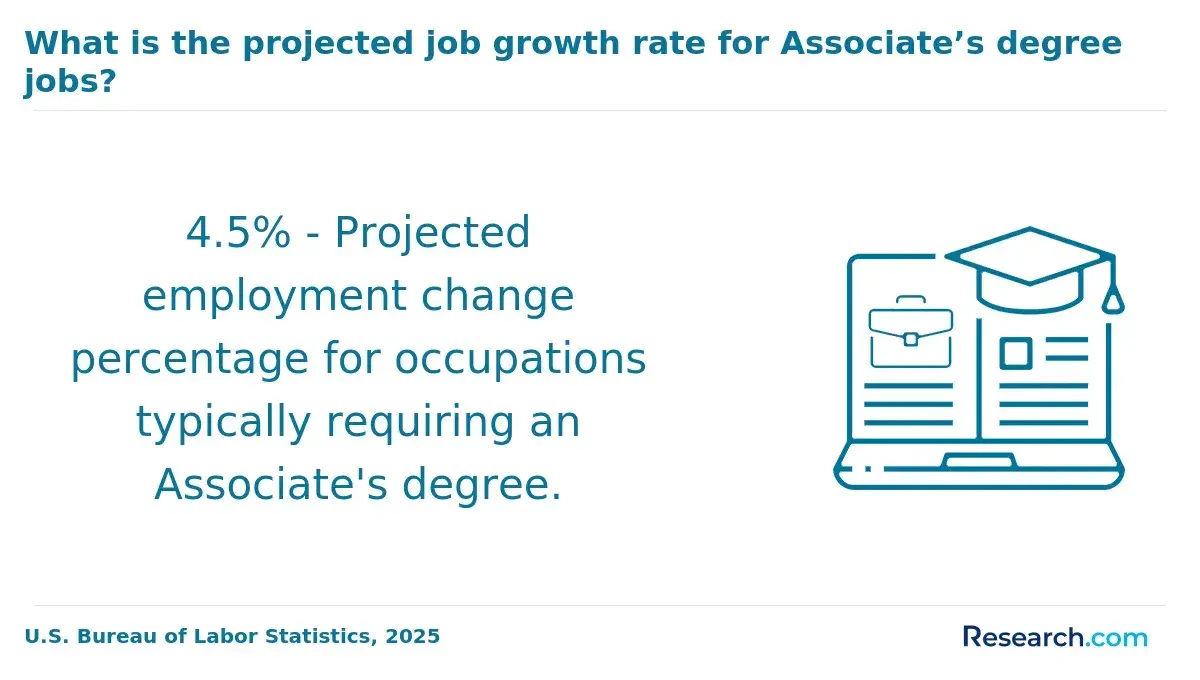
The BLS also projected limited employment growth for paralegals and legal assistants over the 2023-33 period, which means advancement may depend less on broad job expansion and more on skills that employers find hard to replace: legal writing, litigation technology, deadline management, client communication, e-discovery, contracts, compliance, and practice-area specialization.
Several factors commonly influence earning potential. Consider these as levers you can control when planning your education and early career moves:
- Practice area: Corporate law, intellectual property, litigation, compliance, healthcare, and real estate may value different skill sets and pay differently by market.
- Employer type: Large law firms, corporate legal departments, government agencies, nonprofits, and small firms often have different salary structures and promotion ladders.
- Location: Wages tend to reflect local demand, cost of living, and concentration of legal employers.
- Credential level: A bachelor's degree may help with broader mobility, but experience and specialization often matter more than the degree title alone.
- Technology skills: E-discovery, case management software, contract systems, and advanced document tools can make a paralegal more useful to modern legal teams.
Students comparing legal support with adjacent forensic or justice careers should use occupation-specific data rather than assuming all law-related jobs pay similarly. For instance, autopsy technician salary considerations involve different employers, training expectations, and work environments than paralegal roles. The same caution applies when comparing law firms, courts, medical examiner offices, and public agencies.
The practical takeaway is to evaluate salary by target role, not by degree name alone. Ask schools where graduates work, which employers recruit from the program, and whether students build skills tied to higher-responsibility roles. A lower-cost program with strong local employer connections can sometimes provide better ROI than a more expensive program with weak career support.
How can prospective students evaluate and choose a reputable online paralegal program?
Choosing a reputable online paralegal program requires more than scanning tuition and rankings. The right program should fit your goal, provide credible training, and produce evidence of skills that employers understand.
Use the following steps to compare programs in a disciplined way. This process can help you avoid common enrollment mistakes and focus on programs that support actual career mobility:
- Define your target role first, such as litigation paralegal, corporate paralegal, contracts specialist, immigration paralegal, or compliance assistant.
- Verify institutional accreditation and confirm whether the paralegal program has ABA approval or another credible employer-recognized structure.
- Request a total cost estimate, including tuition, fees, books, software, legal database access, internship costs, and graduation fees.
- Ask for a transfer credit review before enrolling if you have prior college credits or military training.
- Review course assignments to confirm that students draft legal documents, complete research projects, and use legal technology.
- Ask how online students access faculty, tutoring, law library resources, career services, internships, and alumni networks.
- Compare graduation, retention, job placement, and employer-partnership information when available, while recognizing that schools may report outcomes differently.
- Check whether the program supports your state or regional employment market, especially if you plan to work locally after graduation.
Red flags include vague accreditation claims, pressure to enroll immediately, unclear total cost, no legal specialty faculty information, limited writing assignments, no career support for online students, and credits that do not transfer.
Another warning sign is a program that promises specific salaries or job placement. A reputable school can discuss outcomes and support services, but it should not guarantee employment.
Students with broader interests in evidence, investigation, or laboratory-based justice work may want to compare paralegal studies with careers in forensic science before committing. The two areas can intersect in criminal litigation, but the education, daily tasks, and hiring expectations are different.
A good final test is whether the program can answer this question clearly: "What will I be able to do on the job after completing this credential that I cannot credibly do now?" If the answer is specific, skill-based, and supported by coursework or experience, the program is more likely to help with promotion and mobility.
Other Things You Should Know About Paralegal Studies
Yes, some employers hire paralegals without a degree, especially candidates with legal office experience. However, a certificate or degree can make it easier to compete for roles that require legal research, drafting, litigation support, or specialized practice-area knowledge.
It can be helpful if you want early exposure to legal research, writing, ethics, and court procedure. However, law schools generally accept many undergraduate majors, so students should also consider GPA strength, writing preparation, LSAT or admissions readiness, and long-term career goals.
Not always. Some programs require internships, while others offer them as optional electives or use capstone simulations instead. Career changers and students with no legal experience should strongly consider programs with internship support or employer-connected projects.
Pursuing an online paralegal studies degree in 2027 offers flexibility and convenience, allowing students to balance work and study. It provides a comprehensive curriculum to enhance legal knowledge and skills, facilitating promotion and career mobility. Online programs often offer networking opportunities and access to a wide range of resources.
References
- Paralegal Programs https://paralegal.edu/paralegal-programs/
- How to get a paralegal certificate? | edX https://www.edx.org/resources/how-to-get-a-paralegal-certificate
- Paralegal Certificate, Certification and Certified: What’s the difference? https://www.becomeaparalegal.org/blog/paralegal-certificate-certification-and-certified-whats-the-difference/
- What is a Paralegal’s Salary in the UK? Your 2026 Forecast https://www.remitly.com/blog/en-gb/jobs-and-careers/paralegal-salary/
- Affordable Online Paralegal Certification - Get Certified Today https://www.expertrating.com/certifications/personal-development-and-enrichment/paralegal-certification.asp
- Paralegal Studies Online Training Program - Campus Sacramento https://sacramento.campus.edu/programs/legal/paralegal-studies-online
- Top Online Paralegal Degrees https://www.online-paralegal-degree.org/top-online-paralegal-degrees/
- Earn an Online Paralegal Degree | OEDb.org https://www.oedb.org/rankings/online-paralegal-programs/
- Paralegal Professional Certificate Part-Time Evening Program https://www.villanova.edu/university/professional-studies/academics/professional-education/parttime_evening_online_program.html