2027 Accredited Online Environmental Management Degree Programs That Accept the Most Transfer Credits

Co-Founder and Chief Data Scientist
Choosing an online environmental management degree is often a transfer-credit decision as much as a major decision. The U.S. Bureau of Labor Statistics projects environmental scientists and specialists to grow 7% from 2023 to 2033, which keeps the field relevant for students moving into compliance, sustainability, conservation, and environmental health roles.
This guide is for students with prior college, military training, professional credentials, or an associate degree. You will learn which accredited online programs advertise high transfer limits, how credits are evaluated, and how to estimate whether transferring will actually save time and tuition.
Key Things You Should Know
- Several accredited online environmental management or closely related environmental science and sustainability bachelor's programs advertise transfer limits of up to 90 semester credits, but the number that applies to the major may be lower.
- The most important number is not the maximum transfer cap; it is the combination of accepted credits, credits applied to requirements, minimum residency credits, and remaining upper-division major coursework.
- Cost savings can be substantial because College Board's 2024-25 data lists average published tuition and fees at $11,610 for in-state public four-year students and $43,350 at private nonprofit four-year institutions, making every accepted credit financially meaningful.
Which Accredited Online Environmental Management Degree Programs Accept the Most Transfer Credits?
The most transfer-friendly online environmental management degrees are usually bachelor's completion programs or adult-focused online programs that allow students to bring in prior college credit. In practice, many high-limit programs cap transfer credit at around 90 semester credits toward a 120-credit bachelor's degree, leaving at least 30 credits to be completed at the awarding institution.
The table below summarizes accredited online programs with environmental management, environmental science, sustainability, or closely related curricula and publicly advertised transfer-friendly structures. Always confirm the policy directly with the school because transfer caps, residency rules, and major requirements can change:
| School | Online degree or related program | Accreditation type to verify | Advertised transfer-credit potential | Best fit |
| University of Maryland Global Campus | BS in Environmental Management | Institutional accreditation | Up to 90 transfer credits toward a 120-credit bachelor's degree | Students with an associate degree, military credit, or prior general education coursework |
| Southern New Hampshire University | BS in Environmental Science | Institutional accreditation | Up to 90 transfer credits toward a bachelor's degree | Students seeking a broad environmental science degree with online flexibility |
| American Public University | BS in Environmental Science | Institutional accreditation | Up to 90 transfer credits toward a bachelor's degree | Military-affiliated students and adult learners with previous college credit |
| Columbia Southern University | BS in Environmental Management | Institutional accreditation | Up to 90 semester hours may be accepted toward a bachelor's degree | Students focused on safety, environmental compliance, and workplace regulation |
| Unity Environmental University | Online environmental science and sustainability-related bachelor's options | Institutional accreditation | Transfer-friendly bachelor's pathways may accept substantial prior credit, subject to evaluation | Students interested in environmental careers with applied sustainability or climate emphasis |
| Oregon State University Ecampus | BS in Environmental Sciences | Institutional accreditation | Transfer credit accepted subject to degree, residency, and upper-division requirements | Students who want a public university environmental science credential and are willing to complete required OSU coursework |
A program that accepts up to 90 credits is usually the strongest starting point for transfer-heavy students, but it is not automatically the cheapest or fastest option. A student with 75 transferable credits that fit general education, science prerequisites, and electives may finish faster than a student with 90 credits that count mostly as free electives.
For environmental management specifically, look for coursework in environmental law, environmental policy, ecology, Geographic Information Systems, sustainability, risk assessment, hazardous materials, occupational safety, statistics, and project management. These courses are more likely to support both degree completion and career relevance than unrelated electives alone.
How Do Online Environmental Management Degree Programs Evaluate Transfer Credits?
Online environmental management programs typically evaluate transfer credits in two stages: first, whether the credit is acceptable at the institution, and second, whether it applies to the environmental management degree plan. The second stage is where many students lose expected savings.
Most schools review the following items before issuing an official degree audit. These documents help evaluators decide whether your previous coursework is equivalent to required courses or should count only as elective credit:
- Official transcripts from every college or university previously attended.
- Course descriptions or syllabi for older, specialized, or science-heavy courses.
- Credit level, such as lower-division, upper-division, undergraduate, or graduate.
- Final grade earned, because many programs require at least a C for transfer.
- Institutional accreditation status of the sending school at the time the credit was earned.
- Course age, especially for science, technology, compliance, or environmental regulation courses.
A transfer evaluation can produce several different outcomes. A course may satisfy a specific requirement, satisfy a general education category, count as a major elective, count only as a free elective, or be denied. For degree planning, credits that satisfy required categories are far more valuable than credits that merely raise your total credit count.
Students should also understand the difference between institutional accreditation and programmatic accreditation. Most environmental management bachelor's degrees rely primarily on institutional accreditation, while some related programs may have specialized recognition in areas such as environmental health, occupational safety, engineering technology, or public health. Accreditation matters because it affects financial aid eligibility, graduate school acceptance, employer recognition, and transferability.
How Can Transfer Credits Shorten an Online Environmental Management Degree?
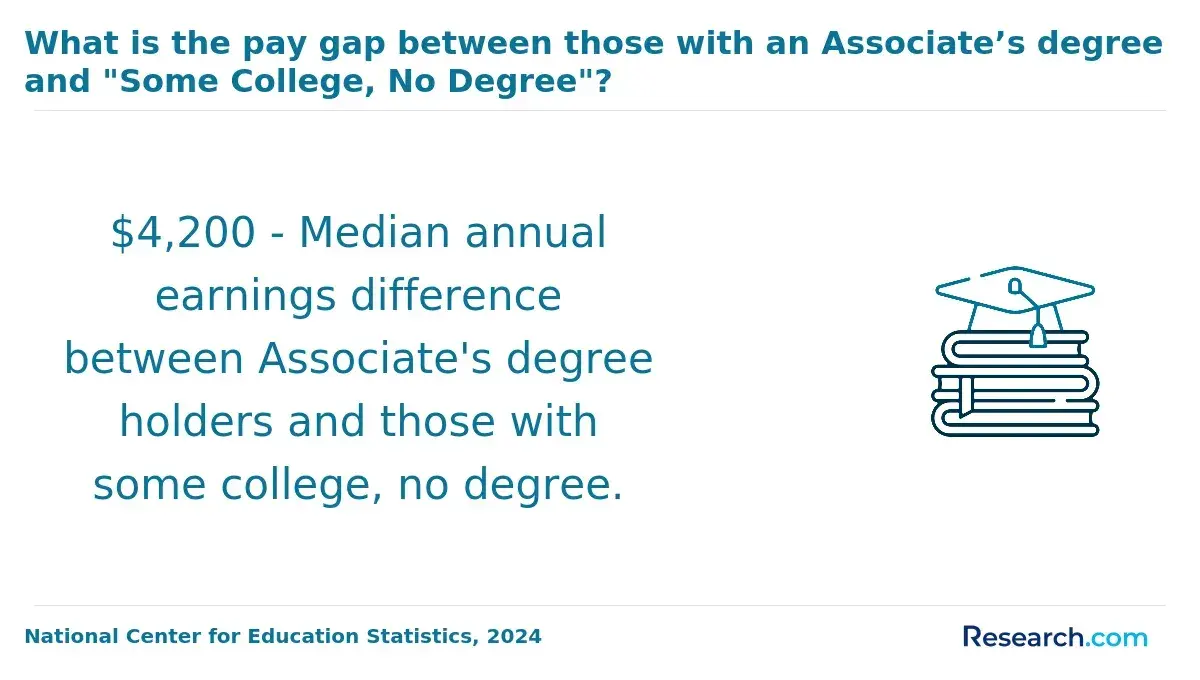
A typical bachelor's degree requires about 120 semester credits. If a school accepts 60 credits from an associate degree and applies most of them to requirements, the student may enter with roughly half the degree completed. If a school accepts 90 credits, the student may need only the residency minimum and remaining major requirements.
The table below illustrates how transfer credits can affect a 120-credit online bachelor's degree. These are planning examples, not guarantees, because actual timelines depend on course availability, prerequisites, term length, and whether the accepted credits apply to the degree plan:
| Transfer credits applied to degree | Credits remaining | Possible completion pattern | Key limitation |
| 30 credits | 90 credits | About three years at 30 credits per year | Student may still need most general education and major courses |
| 60 credits | 60 credits | About two years at 30 credits per year | Science prerequisites may still extend the sequence |
| 75 credits | 45 credits | About 18 months to two years depending on course load | Upper-division environmental courses may be offered in sequence |
| 90 credits | 30 credits | About one year at full-time pace | Residency and major-course requirements usually still apply |
Transfer credits shorten a degree most effectively when they remove prerequisites and required categories, not just electives. For example, prior courses in biology, chemistry, statistics, environmental policy, and writing may help unlock upper-division environmental management courses sooner.
Students who already hold a bachelor's degree and are deciding between a second bachelor's and graduate study should compare the timeline carefully. In some cases, an accelerated graduate option, such as a 1 year masters degree online, may be more efficient than using transfer credits toward another undergraduate degree.
How Much Can Transfer Credits Reduce the Cost of an Online Environmental Management Degree?
Transfer credits reduce cost only when they reduce the number of credits you must pay the new school to complete. The financial effect can be large because tuition is usually charged per credit, and online students may also pay technology fees, course fees, transcript fees, and graduation fees.
The simplest estimate is to multiply the number of accepted credits that apply to your degree by the program's per-credit tuition. Use this calculation only after receiving an official or preliminary degree audit because elective-only credits may not reduce the courses you still need.
- If 30 credits apply to degree requirements at a school charging $350 per credit, the gross tuition reduction is $10,500 before fees and financial aid.
- If 60 credits apply at $350 per credit, the gross tuition reduction is $21,000 before fees and financial aid.
- If 90 credits apply at $350 per credit, the gross tuition reduction is $31,500 before fees and financial aid.
College Board's 2024-25 figures show why transfer efficiency matters: average published tuition and fees reached $11,610 for in-state public four-year students and $43,350 at private nonprofit four-year institutions. These are broad averages rather than program-specific costs, but they show why reducing even one semester of coursework can meaningfully affect total price.
The best ROI does not always come from the school with the lowest tuition or the highest transfer cap. It often comes from the school that applies the most prior credit to required courses while still offering strong environmental management coursework, career services, and employer-recognized accreditation. Students comparing long-term earnings across fields may also want to review how environmental pathways compare with the most lucrative college majors, especially if salary is a major decision factor.
Can Military, Professional, or Prior Learning Credits Transfer to an Online Environmental Management Degree?
Yes, many online environmental management programs consider military training, standardized exams, professional certifications, and prior learning, but these credits are usually evaluated differently from traditional college coursework. They may be useful for general electives, lower-division requirements, or career-related credits, but they do not always replace upper-division environmental management courses.
Students with nontraditional learning should ask how each source is reviewed before assuming it will shorten the degree. The most common categories include the following:
- Military training evaluated through Joint Services Transcript recommendations.
- CLEP, DSST, AP, or International Baccalaureate exam credit that meets school score requirements.
- Workplace or professional training reviewed through ACE or NCCRS recommendations.
- Professional certifications related to safety, emergency management, hazardous materials, or environmental compliance.
- Prior learning assessment portfolios documenting college-level learning from work experience.
The strongest nontraditional credits are those that align clearly with a degree requirement. For example, emergency management training may support electives, while a documented environmental compliance certification may be reviewed for a more relevant applied requirement. However, schools often protect the integrity of the major by requiring students to complete advanced environmental policy, research, science, or capstone courses in residence.
Students considering environmental justice, community health, or human services careers should be careful not to overvalue unrelated transfer credits. If your long-term goal is direct service rather than compliance or sustainability management, comparing adjacent paths such as social work masters programs may clarify whether an environmental management degree is the best credential.
Which Types of Previous College Credits Transfer Best to Online Environmental Management Degrees?
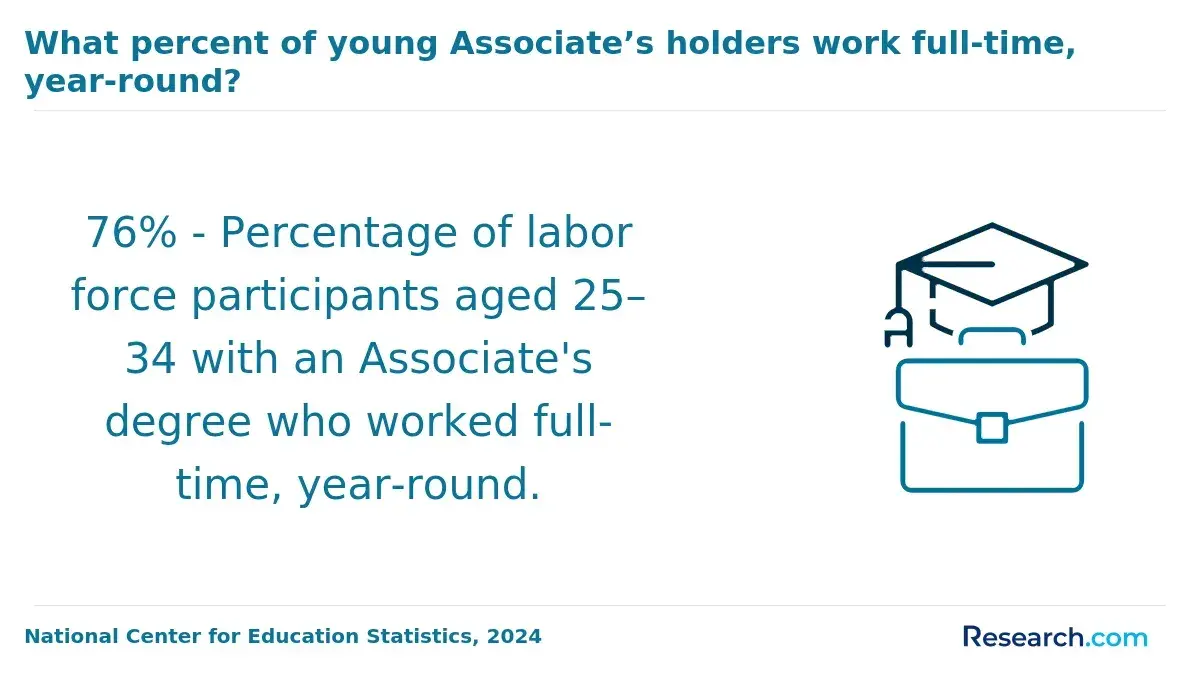
The credits that transfer best are recent, college-level courses from accredited institutions with clear equivalencies to the receiving school's curriculum. Environmental management is interdisciplinary, so students may benefit from science, policy, business, communication, and quantitative coursework.
The table below shows which prior courses tend to provide the most practical transfer value. The main issue is not whether the credits transfer somewhere on the transcript, but whether they reduce the remaining degree requirements:
| Previous coursework type | Transfer value | Why it matters for environmental management |
| English composition and technical writing | High | Environmental managers often prepare reports, compliance documentation, and policy summaries |
| Biology, chemistry, ecology, or geology | High | These may satisfy science prerequisites or environmental science foundations |
| Statistics, college algebra, or quantitative methods | High | Data interpretation is important for monitoring, risk analysis, and sustainability reporting |
| Environmental policy, law, or ethics | High if content matches | These courses may align with compliance, regulation, and governance requirements |
| Business, project management, or public administration | Moderate to high | Useful for students targeting management, consulting, or operations roles |
| Unrelated electives | Variable | May help reach total credit minimums but may not reduce major coursework |
| Old science or technology courses | Variable | Some schools limit older credits if content is outdated or safety-sensitive |
General education credits often transfer most smoothly because they fit broad categories. Major credits require closer review because course content must match the receiving program's learning outcomes. If you took environmental courses years ago, gather syllabi and lab descriptions to improve your chances of receiving specific equivalency credit.
How Do Transfer Agreements Affect Online Environmental Management Degree Completion?
Transfer agreements can make online degree completion faster and more predictable. These agreements are formal pathways between institutions, often between community colleges and universities, that specify which courses satisfy bachelor's degree requirements.
The most useful agreements for environmental management students are those that map associate-degree courses directly into the bachelor's curriculum. They reduce uncertainty because students can see in advance which credits will apply to general education, lower-division science requirements, electives, or major prerequisites.
Transfer agreements commonly include the following structures, each with different benefits for students:
- Articulation agreements that match specific community college courses to university requirements.
- Associate-to-bachelor pathways that allow an applied or transfer associate degree to satisfy many lower-division requirements.
- Statewide transfer systems that guarantee general education transfer among participating public institutions.
- Military-friendly transfer pathways that combine prior college, military credit, and online degree completion.
- Reverse-transfer options that let students complete an associate degree after transferring to a university.
The main advantage is predictability. A student who follows a mapped pathway may avoid taking unnecessary electives, repeating science courses, or discovering too late that a community college course does not meet the environmental management program's requirements.
The main limitation is that transfer agreements are often specific to school pairs, catalog years, and degree versions. If you change majors, delay enrollment, or transfer from a non-partner school, the agreement may not apply exactly as expected.
What Transfer Policies Should Students Compare Before Choosing an Online Environmental Management Degree?
Students should compare transfer policies before applying, not after enrolling. A generous transfer-credit headline can hide rules that affect cost, pace, and degree completion.
Use the following checklist when speaking with admissions counselors, transfer evaluators, or academic advisors. The goal is to identify how many credits will actually reduce your remaining coursework:
- Ask for the maximum number of transfer credits allowed toward the bachelor's degree.
- Confirm the minimum number of credits that must be completed at the school awarding the degree.
- Ask whether transferred credits can satisfy upper-division major requirements or only lower-division and elective requirements.
- Check whether science, technology, environmental regulation, or compliance courses expire after a certain number of years.
- Confirm the minimum grade required for transfer, especially for major prerequisites.
- Ask whether quarter credits convert cleanly into semester credits if your previous school used a different calendar.
- Request a written preliminary or official degree audit before committing financially.
- Ask whether portfolio, military, exam, or certification credits count toward the major, general education, or electives.
- Confirm whether financial aid eligibility is affected by your remaining credit load or enrollment intensity.
- Ask whether the capstone, internship, lab, field, or project courses must be completed through the university.
Common red flags include schools that discuss transfer credits only in broad marketing language, refuse to provide a degree audit before enrollment, or count many credits as electives without reducing required coursework. Another warning sign is a program that lacks clear accreditation information or does not explain whether online students have access to advising, career support, and required course rotations.
Which Students Benefit Most From Transfer-Friendly Online Environmental Management Degree Programs?
Transfer-friendly online environmental management degrees are especially valuable for students who have already paid for college credits and want those credits to count toward a career-relevant credential. They are often a strong fit for working adults because online formats can reduce relocation and scheduling barriers.
The students most likely to benefit share one key trait: their previous learning aligns with degree requirements. The strongest candidates often include the following groups.
- Associate degree holders with completed general education and introductory science coursework.
- Former environmental science, biology, public health, engineering technology, or safety majors who did not finish a bachelor's degree.
- Military-affiliated students with documented training in safety, logistics, emergency management, or environmental operations.
- Working adults in utilities, manufacturing, construction, public works, conservation, or compliance roles.
- Students with prior college credit who need a flexible online format to finish while employed.
These programs may be less ideal for students whose prior credits are mostly unrelated, very old, or from non-accredited sources. They may also be a poor fit for students seeking laboratory-intensive research careers, licensed engineering roles, or graduate programs that require specific in-person science prerequisites.
Environmental management can also overlap with business operations, sustainability reporting, risk management, and organizational leadership. Students who are more interested in executive, finance, or operations roles than environmental compliance may want to compare transfer-friendly environmental degrees with the best MBA programs online before choosing a path.
How Should Students Choose an Online Environmental Management Degree Based on Transfer Efficiency?
The best program is the one that converts your existing credits into the shortest credible path to a useful degree, not necessarily the one with the largest advertised transfer maximum. Transfer efficiency combines four factors: accepted credits, applied credits, remaining cost, and career fit.
A practical selection process should move from documentation to comparison to final fit. Follow these steps before enrolling:
- Collect official transcripts from every institution attended, including withdrawn or incomplete programs.
- List courses that may match environmental science, policy, statistics, writing, business, or compliance requirements.
- Shortlist only accredited online programs that clearly publish transfer, residency, tuition, and degree requirements.
- Request a preliminary transfer review or official degree audit from each school.
- Compare how many credits apply to required categories rather than total credits accepted.
- Calculate remaining tuition using the school's per-credit rate and the number of credits still required.
- Check whether remaining courses are offered frequently enough to support your intended graduation timeline.
- Review career alignment, including internships, capstone projects, faculty expertise, employer partnerships, and alumni outcomes where available.
- Choose the program with the best combination of time saved, cost reduced, academic credibility, and relevance to your target role.
A stricter program can be worthwhile if it has stronger science depth, better employer recognition, clearer graduate-school preparation, or stronger advising. A more generous program may be better if your goal is to complete a recognized bachelor's degree quickly for advancement in compliance, operations, sustainability, or public-sector roles.
Students should also be honest about whether environmental management is the right field. If your main interest is creative therapy, counseling-adjacent work, or another helping profession, a path such as a masters in art therapy may fit your goals better than maximizing transfer credits into an environmental degree.
Other Things You Should Know About Environmental Management
Many are fully online, but requirements vary. Some programs may include labs, fieldwork, internships, or capstone projects that can be completed locally or through approved alternatives. Always ask whether any in-person component is required before enrolling.
No. Environmental science usually emphasizes natural science, ecosystems, data, and environmental processes. Environmental management focuses more on regulation, compliance, sustainability planning, risk, policy, and organizational decision-making. Some online programs combine both areas.
It may help prepare for certain environmental, safety, sustainability, or compliance certifications, but certification eligibility is set by the certifying organization. Requirements may include work experience, exams, specific coursework, or continuing education.
Many schools require an application before an official evaluation, but admissions teams may provide informal guidance earlier. If transfer credits are central to your decision, ask whether the school offers a preliminary review before you pay deposits or commit to enrollment.
References
- Full Transfer Guide - OnlineDegree.com https://www.onlinedegree.com/full-transfer-guide/
- Educational Partner Register - ISEP https://www.isepglobal.org/skills/isep-sustainability-training/educational-partner-register/
- Online Master's Degree: Environmental Management https://www.umgc.edu/online-degrees/masters/environmental-management
- 2025 Most Affordable Online Environmental Science Degrees https://www.onlineu.com/most-affordable-colleges/environmental-science-degrees
- Transfer Access for All? Depends on Where You Start https://www.nists.org/post/transfer-access-for-all-depends-on-where-you-start
- Master's Degree Environmental Management https://europe.umgc.edu/online-degrees/masters/environmental-management
- Green & Sustainability Focused Graduate Degrees https://www.gograd.org/resources/green-grad-degrees/
- Best Online Universities With Generous Transfer Credit Policies https://www.collegetransitions.com/blog/best-online-universities-with-generous-transfer-credit-policies/
- Transfer College Credit Limits https://www.ivyscholars.com/transfer-college-credit-limits/