2027 Cheapest Accredited Online Environmental Management Degree Programs That Accept FAFSA

Co-Founder and Chief Data Scientist
Choosing an online environmental management degree is really a cost, accreditation, and career-value decision. Federal data show the maximum Pell Grant remains $7,395 for eligible students in the 2025-26 award year, which can meaningfully reduce borrowing when a program participates in federal student aid. This guide is for transfer students, working adults, military learners, and first-time undergraduates comparing affordable online options. You will learn how FAFSA eligibility works, which programs tend to have lower published tuition, and how to judge whether the cheapest option is also the smartest investment.
Key Things You Should Know
- The cheapest FAFSA-eligible online environmental management options are often public universities, competency-friendly private schools, and transfer-heavy bachelor's programs; published tuition can range from about $270 to more than $600 per credit before aid and fees.
- FAFSA acceptance means the institution participates in federal student aid, not that every student will receive grants or that the full degree cost will be covered; Pell Grants, Direct Loans, scholarships, and transfer credits determine the real net price.
- Career ROI depends on total borrowing and role target: the BLS reports a 2024 median pay of $80,060 for environmental scientists and specialists, but entry-level compliance, technician, sustainability, and EHS roles can vary widely by employer and region.
Which Are the Cheapest Accredited Online Environmental Management Degree Programs That Accept FAFSA?
The lowest-cost accredited online environmental management degree is not always labeled exactly "environmental management." Many affordable programs use titles such as environmental science, sustainability, environmental policy, or environmental health and safety, while still preparing students for compliance, conservation, sustainability reporting, site assessment, and environmental operations roles.
| School | Online degree or closely related program | Institutional accreditation | Published online tuition snapshot | Estimated tuition for full bachelor's before transfer or aid | Why it may be low-cost |
| Columbia Southern University | B.S. Environmental Management | Distance Education Accrediting Commission | About $270 per credit | About $32,400 for 120 credits | Low per-credit tuition and a directly titled environmental management degree |
| Southern New Hampshire University | B.S. Environmental Science | New England Commission of Higher Education | About $330 per credit | About $39,600 for 120 credits | Flat online tuition, frequent transfer use, and broad online student support |
| University of Maryland Global Campus | B.S. Environmental Management | Middle States Commission on Higher Education | About $336 per credit for Maryland residents and higher for nonresidents | About $40,320 at the Maryland resident rate before fees | Public university pricing, military discounts, and generous transfer pathways |
| American Public University | B.S. Environmental Science with management-relevant coursework | Higher Learning Commission | About $350 per credit for undergraduate courses | About $42,000 for 120 credits | Lower online tuition and strong fit for military and working adult learners |
| Unity Environmental University | Online environmental science, sustainability, or related environmental bachelor's options | New England Commission of Higher Education | About $470 per credit | About $56,400 for 120 credits | Environment-focused institution with online formats built around green careers |
| Oregon State University Ecampus | B.S. Environmental Sciences | Northwest Commission on Colleges and Universities | About $375 per quarter credit, plus applicable fees | About $67,500 for 180 quarter credits before fees | Public research university reputation and science-heavy curriculum |
| Arizona State University Online | B.S. Sustainability or related environmental online programs | Higher Learning Commission | Often above $560 per credit depending on program and fees | Often above $67,000 before aid | Large online catalog, employer partnerships, and strong sustainability branding |
For a student with many transfer credits, the "cheapest" school may be the one that accepts the most credits toward the major, not the one with the lowest per-credit rate. A $350-per-credit program that accepts 90 credits can cost less than a $270-per-credit program that accepts only 60 credits.
When comparing programs, prioritize these cost variables together rather than one at a time:
- Per-credit tuition for online students, including whether out-of-state online learners pay more
- Program fees, technology fees, lab fees, proctoring charges, and required software or field supplies
- Maximum transfer credits accepted toward the degree and toward upper-division major requirements
- Whether the specific degree, not just the institution, is eligible for federal student aid
- Availability of Pell Grants, state grants, institutional scholarships, military benefits, employer tuition assistance, or payment plans
How Does FAFSA Eligibility Work for Online Environmental Management Degree Programs?
FAFSA eligibility starts with the institution. A school must participate in Title IV federal student aid programs, and the student must be enrolled in an eligible degree or certificate program. Online delivery does not automatically disqualify a program, but the school must be properly approved to offer federal aid for that program.
For environmental management students, FAFSA can connect eligible learners with federal grants, federal loans, and sometimes work-study. However, FAFSA is an application, not a funding promise. Aid depends on financial need, enrollment intensity, dependency status, cost of attendance, satisfactory academic progress, and annual federal limits.
Use this sequence before you treat an online program as affordable. It helps separate "the school accepts FAFSA" from "this degree will be financially workable for me."
- Confirm the institution appears in the federal school code search and participates in federal student aid.
- Ask the financial aid office whether the specific online environmental management, environmental science, or sustainability degree is Title IV eligible.
- Request a full cost of attendance, not just tuition, including fees, books, technology, travel, residency requirements, and estimated living expenses if applicable.
- Submit the FAFSA and compare each school's financial aid offer side by side.
- Check whether aid renews automatically or requires GPA, credit completion, enrollment level, or annual forms.
A common mistake is assuming FAFSA acceptance means the program will be fully funded by grants. In practice, many students receive a package that mixes grants, scholarships, subsidized or unsubsidized federal loans, and remaining out-of-pocket costs.
How Much Does an Online Environmental Management Degree Cost After Financial Aid?
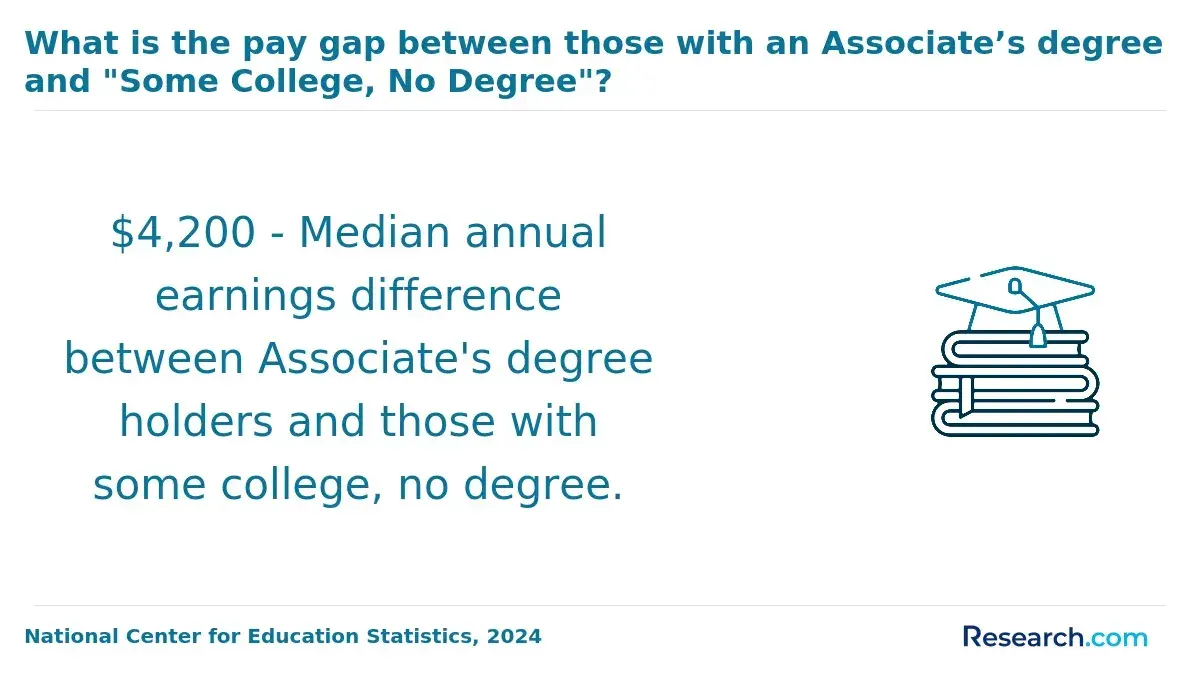
The after-aid cost depends on three numbers: the school's total cost of attendance, gift aid that does not need to be repaid, and the number of credits you still need to complete. For an online bachelor's degree, transfer credits often matter as much as FAFSA because they reduce the number of credits you must buy.
The federal Pell Grant maximum is $7,395 for the 2025-26 award year. For a high-need student attending an eligible low-tuition program, that amount can cover a meaningful share of annual tuition; for a higher-cost program, it may only reduce the bill before loans are needed.
The table below shows how cost can change under different aid and transfer scenarios. These are simplified examples, not guaranteed award amounts, because actual aid depends on your FAFSA results and school-specific packaging.
| Scenario | Remaining credits | Tuition rate example | Tuition before aid | Illustrative grant impact | What the student should watch |
| Full bachelor's from start | 120 credits | $330 per credit | $39,600 | Annual grants may reduce yearly cost if the student qualifies | Four years of fees, books, and possible loan use |
| Associate-degree transfer | 60 credits | $330 per credit | $19,800 | Gift aid can stretch further because fewer credits remain | Whether science and major prerequisites transfer cleanly |
| High-transfer adult learner | 30 credits | $350 per credit | $10,500 | Even modest grants or employer aid can substantially reduce borrowing | Residency rules requiring a minimum number of credits at the school |
| Higher-cost online public or private option | 60 credits | $560 per credit | $33,600 | Grants help, but remaining balance can still be large | Whether reputation, curriculum, or employer partnerships justify the extra cost |
Students comparing undergraduate and graduate pathways should also consider timeline. Some accelerated graduate programs can reduce opportunity cost, but they do not replace the need to compare aid eligibility and total borrowing; a guide to 1 year masters degree online options can help you understand how time-to-completion affects cost in a broader degree search.
Red flags include relying only on the advertised per-credit rate, ignoring online fees, using federal loans to cover avoidable repeated credits, or assuming part-time enrollment will always qualify for the same grant amount as full-time enrollment.
Which Affordable Online Environmental Management Degree Programs Offer the Best Value?
Best value means the program has a reasonable net price, recognized accreditation, useful curriculum, transfer flexibility, and a realistic path into your target role. The cheapest program by tuition alone may not be the best fit if it lacks upper-level environmental compliance coursework, GIS exposure, statistics, environmental law, or internship options.
Compare programs across academic and financial value, not just sticker price. The table below shows how different affordability profiles can make sense for different students.
| Value profile | Best for | Potential advantage | Possible drawback | Decision rule |
| Lowest per-credit tuition | Students starting with few transfer credits | Lower predictable tuition over many credits | May have fewer electives, brand recognition, or specialized labs | Choose if accreditation is valid and curriculum matches your target role |
| Generous transfer school | Community college graduates, military learners, and adult students | Can sharply reduce total credits paid | Per-credit price may be higher than the cheapest school | Choose if accepted credits lower your total remaining bill |
| Public university online program | Students who value institutional reputation or graduate school preparation | May offer stronger science depth and faculty research ties | Out-of-state or online fees can raise total cost | Choose if career or graduate goals benefit from the added rigor |
| Environment-specialized institution | Students committed to sustainability, climate, conservation, or environmental policy | Curriculum may be closely aligned with green-sector work | May not be the lowest tuition option | Choose if specialization improves fit and completion odds |
A higher-cost program can be worth it when it offers stronger employer recognition in your region, better transfer evaluation, a required internship you can complete locally, or coursework aligned with environmental health and safety, sustainability reporting, hazardous materials, or regulatory compliance.
Students who are also comparing management-oriented degrees may find it useful to benchmark total cost against other career-focused online options, such as the best MBA programs online, because the same ROI logic applies: low tuition matters most when completion rates, employer value, and debt remain reasonable.
Are the Cheapest Online Environmental Management Degree Programs Properly Accredited?
Accreditation is the quality-control checkpoint that helps determine whether a school's credits, degrees, and federal aid participation are recognized. For FAFSA purposes, the institution must be accredited by an agency recognized for federal student aid eligibility and approved to participate in Title IV programs.
Environmental management bachelor's programs do not always require a separate programmatic accreditation the way nursing, engineering, or counseling programs often do. Institutional accreditation is usually the main requirement, but students interested in environmental engineering, industrial hygiene, occupational safety, or licensure-linked roles should check employer, certification, or state requirements carefully.
Before enrolling, verify accreditation directly rather than relying only on marketing pages. This short checklist can prevent costly mistakes:
- Search the school in the U.S. Department of Education's accreditation and federal aid databases.
- Confirm the accreditor named on the school website matches the official database listing.
- Ask whether the online environmental management degree is offered under the same accredited institution, not a separate unapproved entity.
- Check transfer policies at graduate schools or employers if you plan to pursue advanced study later.
- Be cautious with schools that promise unusually fast completion, guaranteed employment, or aid packages before reviewing your FAFSA.
Do not assume "nationally accredited" and "institutionally accredited" mean the same thing for transferability. Some nationally accredited institutions participate in federal aid, but their credits may not transfer as easily to regionally accredited universities; always ask receiving schools before making a decision.
What FAFSA Grants and Federal Aid Can Pay for an Online Environmental Management Degree?
FAFSA can open access to several federal aid types, but the mix differs by student. Grants and scholarships are the most valuable because they do not need to be repaid, while loans can help cover gaps but increase long-term cost.
The main federal aid categories for eligible online degree students include the following. Each has different rules, so confirm your award letter instead of assuming you qualify for every item.
- Federal Pell Grant: Need-based grant aid for eligible undergraduate students who have not already earned a bachelor's degree.
- Federal Supplemental Educational Opportunity Grant: Campus-based grant aid for undergraduates with exceptional financial need, available only at participating schools with limited funds.
- Direct Subsidized Loan: Need-based undergraduate loan where the government generally pays interest during eligible in-school periods.
- Direct Unsubsidized Loan: Federal loan available to eligible undergraduate and graduate students, with interest accruing from disbursement.
- Federal Work-Study: Part-time job funding through participating schools, though online students should ask whether remote or local options exist.
Federal undergraduate loan limits matter when comparing costs. A dependent first-year undergraduate can generally borrow up to $5,500 in Direct Loans for the year, which means a higher-cost program may still require grants, savings, employer aid, parent support, or private funding.
FAFSA can also connect to state grants and institutional aid at some schools. However, online students should ask whether state residency, enrollment level, course start dates, or program format affects eligibility.
How Do Transfer Credits Lower the Cost of an Online Environmental Management Degree?
Transfer credit is one of the fastest ways to reduce the price of an online environmental management degree. If a school accepts prior general education, science, math, military, or professional training credits, you pay for fewer courses and may graduate sooner.
That said, transfer policies vary. Some schools accept up to 90 credits toward a 120-credit bachelor's degree, but may still require a minimum number of upper-division credits, major credits, or residency credits taken through the degree-granting institution.
Use this process before choosing a school based on tuition alone. It helps you compare the true remaining cost instead of the published full-degree price.
- Request an unofficial transfer estimate before applying if the school offers one.
- Send official transcripts early, including community college, military, CLEP, AP, prior university, and industry training records.
- Ask how many credits apply to the degree requirements, not just how many are accepted as electives.
- Confirm whether environmental science labs, statistics, chemistry, GIS, or policy courses must be retaken.
- Calculate remaining tuition using only the credits still required after the evaluation.
The key trade-off is simple: a school with a higher per-credit rate may be cheaper if it accepts more usable credits. Conversely, a very low tuition rate loses value if many prior credits do not apply to the major or graduation requirements.
Which Students Benefit Most From a Low-Cost Online Environmental Management Degree With FAFSA?
Low-cost FAFSA-eligible online programs are especially useful for students who need flexibility and want to avoid high debt while preparing for environmental compliance, sustainability, conservation, or environmental health and safety roles. They are not ideal for every goal, especially if the target career requires extensive lab work, field placements, engineering accreditation, or state-specific licensure.
The students most likely to benefit usually share several characteristics. These factors make affordability and online delivery work together rather than against completion.
- Working adults who need asynchronous courses and cannot relocate for a campus program
- Community college graduates who can transfer an associate degree into upper-division coursework
- Military-affiliated students combining tuition assistance, GI Bill benefits, or transfer credit with federal aid
- Career changers moving from operations, construction, public works, safety, or natural resources into environmental compliance
- Students targeting roles where a bachelor's degree plus practical experience is more important than a highly specialized campus credential
Students should be cautious if they need a field-intensive science pathway, plan to become a licensed professional engineer, or expect an online degree alone to replace required experience. In those cases, the cheapest option may delay rather than accelerate the career goal.
If your main motivation is mission-driven work but you are still deciding between environmental, public service, and human-services careers, comparing environmental management with alternatives such as social work masters programs can clarify whether you want to work primarily with ecosystems, organizations, communities, or direct client services.
How Does the Cost of an Online Environmental Management Degree Affect Career ROI?
Career ROI depends on the relationship between total education cost, debt, completion time, and the roles you can realistically pursue. Environmental management graduates may work in compliance coordination, sustainability analysis, environmental health and safety, conservation planning, permitting support, waste management, or environmental consulting support.
The BLS reports a 2024 median pay of $80,060 for environmental scientists and specialists. That figure is useful as a labor-market benchmark, but it is not a starting-salary guarantee; pay varies by region, employer type, technical skills, experience, and whether the role requires fieldwork, data analysis, regulatory expertise, or graduate education.
Use ROI as a practical debt test. If you can complete the degree with grants, transfer credits, employer aid, and modest federal loans, the program may be financially easier to justify than a higher-cost option that requires large borrowing for the same entry-level roles.
Compare likely outcomes using these questions before enrolling:
- What job titles do recent graduates pursue, and are they aligned with environmental management rather than general science?
- Does the curriculum include marketable skills such as GIS, environmental law, statistics, sustainability reporting, hazardous materials, or environmental impact assessment?
- Will you need certifications such as OSHA safety training, HAZWOPER, LEED credentials, or industry-specific credentials after graduation?
- How much total federal loan debt would you carry at graduation under conservative aid assumptions?
- Can you gain experience through internships, local field projects, employer-based projects, or capstone work while studying online?
Environmental management is not typically grouped with the most lucrative college majors by default, so keeping tuition and debt controlled is especially important. The degree can still offer strong value when it connects to regulated industries, public agencies, consulting firms, utilities, construction, energy, manufacturing, or corporate sustainability teams.
How Should Students Choose the Cheapest FAFSA-Eligible Online Environmental Management Degree?
Start with the lowest net cost, not the lowest advertised tuition. The best choice is the accredited program that accepts the most useful credits, provides enough aid, fits your schedule, and prepares you for the environmental role you actually want.
A strong comparison process should include both financial and academic checks. Follow these steps before you commit to a program or accept loans.
- Shortlist only accredited schools that participate in federal student aid and offer an eligible online degree.
- Request a written transfer evaluation and calculate the cost of remaining credits.
- Ask for the full cost of attendance, including online fees, books, technology, proctoring, field requirements, and graduation fees.
- Compare financial aid offers by separating grants and scholarships from loans.
- Review curriculum for environmental law, compliance, sustainability, science methods, data analysis, and applied projects.
- Ask about career support, internship flexibility, employer partnerships, and outcomes for online students.
- Choose the program that minimizes debt while preserving accreditation, completion likelihood, and career relevance.
Also ask direct questions that schools should be able to answer clearly:
- Is this specific online degree eligible for federal student aid?
- What is the average number of transfer credits accepted for students in this program?
- Are there any in-person labs, field experiences, internships, or residencies?
- What happens to my aid if I enroll part time or take accelerated sessions?
- What environmental employers, agencies, or graduate programs commonly recognize this degree?
If you are comparing several purpose-driven fields, do not judge them by tuition alone. A specialized helping-profession path such as a masters in art therapy, for example, has different licensure, clinical training, and career requirements than environmental management, so the cheapest degree in one field may not be the best investment for another goal.
Other Things You Should Know About Environmental Management
Many programs can be completed fully online, especially those focused on policy, compliance, sustainability, or management. Science-heavy programs may require labs, field assignments, internships, or local projects, so confirm in-person requirements before enrolling.
A bachelor's degree is often enough for entry-level compliance, sustainability, conservation, or environmental operations roles. A master's degree may help for senior policy, consulting, research, leadership, or specialized technical positions, but it is not always necessary.
Employers are more likely to focus on accreditation, relevant coursework, skills, experience, and the institution's credibility than on whether courses were online. Practical skills in compliance, data analysis, GIS, environmental law, and reporting can strengthen the degree's value.
Compare the net price at several accredited schools, ask about scholarships and transfer credits, consider part-time enrollment with employer assistance, and avoid borrowing more than your likely career path can reasonably support. The lowest tuition is not always the lowest out-of-pocket cost.
References
- Online Master's Degree: Environmental Management https://www.umgc.edu/online-degrees/masters/environmental-management
- Best Online Construction Management Degrees https://www.affordablecollegesonline.org/degrees/construction-management-programs/
- ENVIRONMENTAL SCIENCE ENVIRONMENTAL ... https://www.eianz.org/document/item/4276
- The 4 Best Online Colleges that Accept FAFSA https://joinjuno.com/financial-literacy/financial-aid/online-colleges-accept-fafsa
- Online MBAs in Environmental Management Degree Info | OnlineMBA.com https://www.onlinemba.com/rankings/best-online-mba/environmental-management/
- 2025 Most Affordable Online Environmental Science Degrees https://www.onlineu.com/most-affordable-colleges/environmental-science-degrees
- Environmental Management Courses https://www.rrc.co.uk/courses/environmental-courses/
- Master of Science in Environmental Sciences, Policy and Management (MESPOM) https://www.ceu.edu/academics/degrees/ms-environmental-sciences-policy-management