2027 Fastest Accredited Online Environmental Management Degree Programs That Accept Transfer Credits

Co-Founder and Chief Data Scientist
Your fastest route to an accredited online Environmental Management degree usually depends less on the school's advertised pace and more on how many of your prior credits actually apply. NCES distance education data released in 2024 show that more than half of U.S. postsecondary students now take at least one online course, making credit mobility a bigger enrollment issue.
This guide is for transfer students, adult learners, military students, and degree completers who want the quickest legitimate path to graduation. You'll learn how to compare programs, verify accreditation, estimate completion time, and avoid transfer-credit mistakes.
Key Things You Should Know
- The fastest realistic bachelor's completion path is usually a regionally accredited 120-credit online program that accepts up to 90 transfer credits and requires about 30 credits in residence, which can take roughly 8 to 15 months for a well-prepared full-time student.
- Transfer-friendly options to compare include online environmental management, environmental science, sustainability management, and environmental policy programs from accredited institutions such as UMGC, Columbia Southern University, SNHU, APU, Unity Environmental University, Bellevue University, and Everglades University.
- The key question is not "How many credits will the school accept?" but "How many credits will apply to the degree plan?" because major prerequisites, upper-division requirements, labs, capstones, and residency rules can add one or more terms.
What Are the Fastest Accredited Online Environmental Management Degree Programs That Accept Transfer Credits?
The fastest accredited online Environmental Management degree programs are typically bachelor's completion programs that combine online delivery, multiple start dates, accelerated terms, and a high transfer-credit ceiling. In practice, the most transfer-friendly programs usually allow up to 90 credits toward a 120-credit bachelor's degree, but speed depends on whether your prior coursework fits general education, elective, and major requirements.
Because "environmental management" programs may be housed under environmental science, sustainability, occupational safety, natural resources, or environmental policy departments, it is smart to compare closely related degrees as long as they match your career goal.
The table below summarizes accredited online options that are commonly relevant for transfer students seeking environmental management, environmental policy, sustainability, compliance, or environmental science roles.
| Program or school | Online degree area | Accreditation to verify | Transfer-friendly feature | Best fit |
| University of Maryland Global Campus | Environmental Management | Middle States Commission on Higher Education | Often allows up to 90 transfer credits toward a bachelor's degree, subject to degree applicability | Adult learners, military students, and students with substantial prior college credit |
| Columbia Southern University | Environmental Management | Southern Association of Colleges and Schools Commission on Colleges | Typically transfer-friendly for prior college, military, and professional training review | Students interested in environmental compliance, safety, and management roles |
| Southern New Hampshire University | Environmental Science or related online science pathway | New England Commission of Higher Education | Accepts up to 90 transfer credits for many bachelor's programs | Students who want frequent terms, broad transfer evaluation, and a recognizable online format |
| American Public University | Environmental Science or Environmental Policy-related study | Higher Learning Commission | Known for transfer review of prior college, military training, and ACE-evaluated learning | Military-affiliated students and working adults who need monthly starts |
| Unity Environmental University | Environmental Studies, Sustainability, or related environmental programs | New England Commission of Higher Education | Online programs often use short terms and may consider substantial transfer credit | Students focused on sustainability, conservation, climate, or environmental careers |
| Bellevue University | Sustainability Management or related applied management pathway | Higher Learning Commission | Designed for degree completion and transfer students, especially those with associate degrees | Students who want environmental management through a business and operations lens |
| Everglades University | Environmental Policy and Management | Southern Association of Colleges and Schools Commission on Colleges | Online and transfer evaluation options may support degree completion, depending on prior coursework | Students interested in policy, regulation, planning, and applied environmental management |
The strongest candidates for these programs are students who already have an associate degree, a large block of general education credits, military transcripts, or prior coursework in biology, chemistry, geology, environmental science, statistics, business, or public policy. Students with many unrelated credits may still graduate faster than first-time students, but they should request an official degree audit before enrolling.
A practical way to compare these schools is to look at the remaining credits after the transfer evaluation, not the maximum transfer limit on the admissions page. Before choosing, ask each school for a written plan showing the exact courses still required, the term schedule, and whether any required environmental courses are offered every term.
How Fast Can You Complete an Online Environmental Management Degree With Transfer Credits?
A transfer student can sometimes finish an accredited online Environmental Management bachelor's degree in less than a year, but that is realistic only when the student transfers close to the maximum number of applicable credits and can study full time. For most working adults, a more realistic accelerated timeline is 12 to 24 months after transfer evaluation.
The table below gives a planning estimate for a 120-credit bachelor's degree. It is not a guarantee, because schools may require specific upper-division environmental courses, labs, writing-intensive courses, or a capstone that cannot be skipped.
| Applicable transfer credits | Credits remaining | Fast full-time estimate | Working-adult estimate | What may slow completion |
| 90 credits | 30 credits | About 8 to 15 months | About 12 to 18 months | Capstone timing, upper-division major courses, prerequisite gaps |
| 75 credits | 45 credits | About 12 to 18 months | About 18 to 24 months | Missing science labs, statistics, environmental law, or management courses |
| 60 credits | 60 credits | About 18 to 24 months | About 24 to 36 months | Sequential courses and limited course loads while working |
| 30 credits | 90 credits | About 30 to 36 months | About 36 to 48 months | General education, foundational science, and major sequencing |
| 0 credits | 120 credits | About 36 to 48 months | About 48 months or more | Full degree sequence and part-time enrollment |
Several factors determine whether the fastest estimate is realistic. A student who can take two accelerated courses every eight-week term may move quickly, while a student balancing shift work, family responsibilities, or lab-heavy courses may need a slower pace.
Use this checklist before trusting an advertised completion timeline:
- Request an official transfer-credit evaluation before committing to the program.
- Confirm how many transferred credits apply to the Environmental Management major, not just to electives.
- Ask whether remaining required courses are available in every term or only once or twice per year.
- Check whether the program requires a final capstone, internship, field course, lab, or proctored assessment.
- Build a term-by-term graduation plan with your advisor and compare it with your work schedule.
If you plan to continue into graduate study, undergraduate speed is only one part of the pathway. Some students later look at 1 year masters degree online options, but graduate acceleration has different admissions, credit, and specialization rules than bachelor's completion.
How Many Transfer Credits Can You Apply Toward an Online Environmental Management Degree?
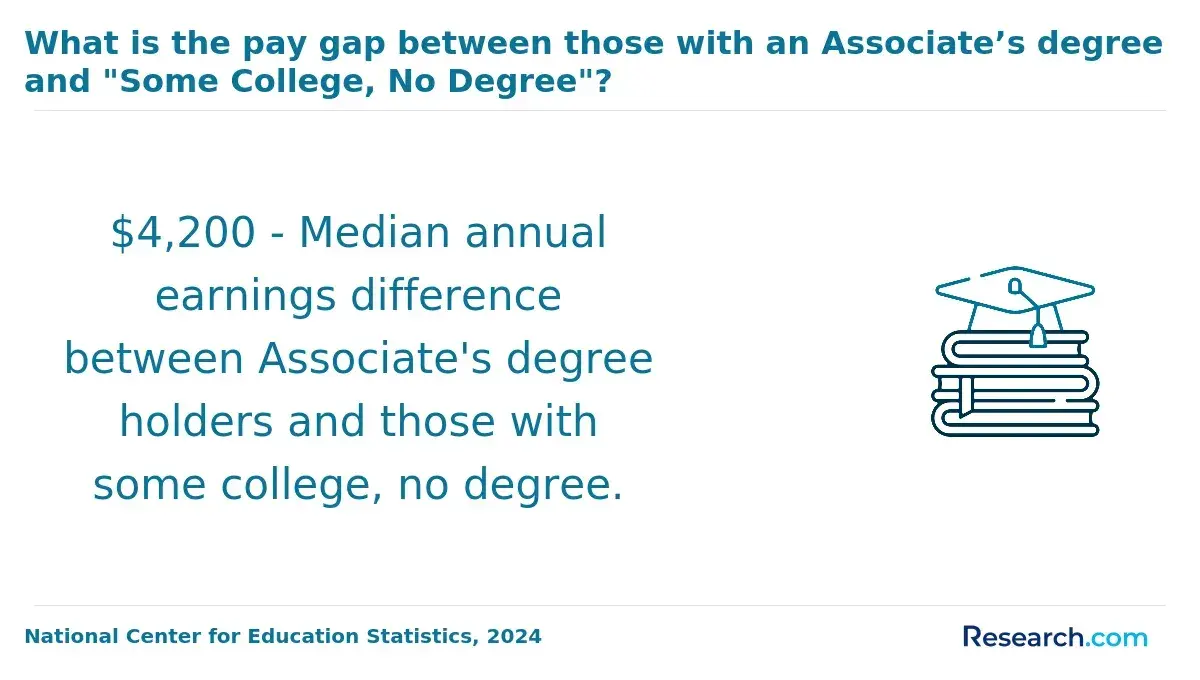
Many accredited online bachelor's programs allow up to 90 transfer credits, but students should treat that number as a ceiling rather than an outcome. A school may accept 90 credits institutionally, yet only 70 may apply if the remaining credits duplicate courses, fall outside the curriculum, or do not meet upper-division requirements.
For a standard U.S. bachelor's degree, the most common transfer structure looks like this:
| Credit category | Typical role in a 120-credit degree | Transfer issue to watch | Why it matters for speed |
| General education | Usually covers writing, math, science, social science, and humanities | Older or non-equivalent courses may transfer as electives | Completed general education can remove many lower-division requirements |
| Lower-division environmental or science courses | May cover biology, chemistry, geology, ecology, or environmental science foundations | Lab requirements may not match the receiving school's expectations | Missing labs can delay upper-division environmental coursework |
| Major courses | May include environmental law, policy, risk management, sustainability, GIS, or compliance | Some schools require core major courses to be taken in residence | Major applicability is often the biggest factor in graduation speed |
| Free electives | Fill remaining degree credits after general education and major requirements | Electives help total credits but may not replace required courses | Too many elective credits can create a false sense of being close to graduation |
| Upper-division credits | Usually required for junior- and senior-level completion | Community college credits are usually lower division | Students with associate degrees may still need many 300- or 400-level courses |
The most common mistake is assuming that an associate degree automatically leaves only 60 credits. It may, but only if the degree satisfies the receiving institution's general education and prerequisite structure. Environmental Management programs can be especially sensitive to math, statistics, science, and policy prerequisites.
When comparing schools, ask for these transfer details in writing:
- The maximum number of transfer credits allowed toward the bachelor's degree.
- The minimum number of credits that must be completed at the school.
- The number of upper-division credits required in the major.
- Whether courses with grades below C are accepted.
- Whether science, technology, or professional courses expire after a certain number of years.
- Whether your prior credits satisfy prerequisites or only count as electives.
How Can You Verify Accreditation for Fast Online Environmental Management Degree Programs?
Accreditation is the quality-control step that keeps a fast degree from becoming a risky credential. For most online Environmental Management bachelor's programs, the most important form is institutional accreditation from a recognized accreditor, such as the Higher Learning Commission, Middle States Commission on Higher Education, New England Commission of Higher Education, or Southern Association of Colleges and Schools Commission on Colleges.
Environmental Management usually does not require the same kind of specialized accreditation that appears in some licensed professions. That is different from fields such as counseling, nursing, or social work masters programs, where programmatic accreditation can affect licensure eligibility.
Use this process before applying to any fast online program:
- Search the school's official accreditation page and note the accrediting agency name.
- Confirm that the accreditor is recognized by the U.S. Department of Education or the Council for Higher Education Accreditation.
- Verify that the online program is offered by the accredited institution, not by an unaccredited third-party provider.
- Check whether the degree name on the transcript will match the program you are evaluating.
- Ask whether transfer credits from your prior institution are eligible based on that institution's accreditation at the time you attended.
- Review any state authorization disclosures if you live outside the school's home state.
Red flags include vague language such as "internationally accredited" without a recognized U.S. accreditor, promises of a bachelor's degree in only a few weeks, unusually large credit awards without transcript review, or refusal to provide a written degree plan. A legitimate accelerated program can be fast, but it should still require documented learning, faculty-led coursework, and clear academic standards.
Which Types of Transfer Credits Can Count Toward an Online Environmental Management Degree?
Transfer credits can come from several sources, but each source is evaluated differently. Traditional college coursework is usually the simplest to transfer, while exams, military learning, professional training, and prior learning portfolios require additional documentation.
The table below explains the main types of credits that may help shorten an online Environmental Management degree. The key is whether the credit satisfies a specific requirement in the degree plan.
| Transfer credit type | Examples | How it may apply | Common limitation |
| Regionally accredited college coursework | English composition, biology, chemistry, statistics, business, public policy | General education, prerequisites, electives, or major courses | Course equivalency and grade requirements |
| Associate degree block transfer | AA, AS, AAS, or applied science transfer pathway | May satisfy large portions of lower-division requirements | Applied credits may transfer mostly as electives |
| Military training | Joint Services Transcript and ACE-reviewed training | Electives, safety, leadership, technical, or management credit | Not all credits match environmental major requirements |
| Credit by exam | CLEP, DSST, AP, IB | General education or lower-division requirements | Score thresholds and subject limits vary by school |
| Professional certifications and training | OSHA, emergency management, hazardous materials, sustainability, GIS, or compliance training | Elective, technical, or prior learning credit if approved | May require ACE recommendation or portfolio review |
| Prior learning assessment | Work experience portfolio documenting college-level learning | May reduce elective or applied requirements | Usually cannot replace every major course or capstone |
Environmental Management programs can be more flexible than degrees with tightly regulated clinical requirements. For comparison, fields such as a masters in art therapy often have strict practicum, studio, and licensure-related expectations, while environmental degree transfer decisions usually depend more on course match, level, and documented learning outcomes.
To get the best result, send every transcript and training record early. Do not rely only on your most recent college transcript, because older credits, military coursework, exams, and industry credentials may reduce the number of courses you still need.
How Do Residency and Major Requirements Affect Transfer Credits for an Online Environmental Management Degree?
Residency requirements are one of the biggest reasons a student with many transfer credits may still need several terms to graduate. In this context, "residency" does not usually mean living near campus; it means completing a minimum number of credits through the degree-granting institution.
Many bachelor's programs require about 30 institutional credits, which is why a 90-credit transfer maximum is common. However, major requirements can be more restrictive than overall credit requirements, especially when the school wants students to complete advanced environmental management, environmental law, sustainability planning, research methods, or capstone courses through its own curriculum.
These are the requirements most likely to affect your remaining timeline:
- Minimum institutional credits, often around 30 credits for a 120-credit bachelor's degree.
- Minimum upper-division credits, which may require junior- and senior-level coursework even if you have many lower-division credits.
- Major core requirements that must be taken at the school, such as environmental management, environmental policy, risk assessment, or capstone courses.
- Prerequisite chains, where one missing course delays access to a higher-level course.
- Course rotation, especially if a required environmental course is not offered every term.
- Minimum GPA requirements for transferred major coursework.
A common red flag is a school that advertises "transfer up to 90 credits" but cannot show exactly how those credits fit the degree. The better alternative is to ask for a curriculum map that lists completed requirements, remaining requirements, course availability, and the earliest possible graduation term.
Can Prior Learning, CLEP, Military Training, or Certifications Help You Finish an Online Environmental Management Degree Faster?
Yes, nontraditional credit can help, especially for adult learners with work experience in safety, compliance, environmental operations, emergency management, military logistics, natural resources, construction, utilities, manufacturing, or public works. The biggest benefit is usually reducing electives or lower-division requirements, not replacing the entire Environmental Management major.
Prior learning credit is most useful when it is documented, college-level, and aligned with the curriculum. Students should expect schools to require official score reports, ACE recommendations, military transcripts, certification records, or a portfolio.
Use these steps to maximize credit without creating delays:
- Order official transcripts from every college you attended, even if you completed only one course.
- Request your Joint Services Transcript if you have military experience.
- Send CLEP, DSST, AP, or IB score reports directly to the school when applicable.
- Ask whether OSHA, FEMA, hazardous materials, GIS, sustainability, or emergency management credentials are eligible for credit review.
- Request the school's prior learning assessment policy before paying portfolio fees.
- Compare the cost and time of earning prior learning credit against simply taking the remaining course.
The main trade-off is administrative time. A portfolio review may be worthwhile if it removes multiple courses, but it may not be worth the delay if it saves only one elective. For students near the finish line, the fastest route may be a mix of accepted transfer credits, one or two credit-by-exam options, and a carefully planned course load.
How Much Does a Fast Online Environmental Management Degree Cost After Transfer Credits and Financial Aid?
The cost of a fast online Environmental Management degree depends on the number of credits you still need, the per-credit tuition rate, fees, books, technology charges, and financial aid. Transfer credits can lower total cost because you pay only for remaining credits, but some schools charge portfolio, transcript, graduation, lab, or proctoring fees.
Recent national tuition data help frame the decision. The College Board reported average published tuition and fees of $11,610 for in-state students at public four-year institutions and $43,350 at private nonprofit four-year institutions for the 2024-25 academic year. Online programs can fall above or below those figures, so your actual comparison should use total remaining cost rather than sticker price.
The table below shows how transfer credits can change the tuition portion of a degree when tuition is charged per credit. It is a planning model, not a quote from a specific school.
| Credits remaining | At $350 per credit | At $500 per credit | At $700 per credit | What to add before deciding |
| 30 credits | $10,500 | $15,000 | $21,000 | Fees, books, prior learning costs, graduation fee |
| 45 credits | $15,750 | $22,500 | $31,500 | Extra terms, course materials, possible lab fees |
| 60 credits | $21,000 | $30,000 | $42,000 | Longer enrollment and more opportunity cost |
| 90 credits | $31,500 | $45,000 | $63,000 | Full major sequence and general education requirements |
Financial aid can reduce out-of-pocket cost if the school participates in federal aid programs and you meet eligibility rules. The maximum Federal Pell Grant for the 2024-25 award year is $7,395, but the amount a student receives depends on financial need, enrollment intensity, cost of attendance, and other aid.
Before enrolling, calculate the full cost this way:
- Multiply remaining required credits by the per-credit tuition rate.
- Add mandatory online, technology, lab, graduation, transcript, and assessment fees.
- Subtract grants, scholarships, employer tuition assistance, military benefits, or tuition discounts you are eligible to receive.
- Estimate the cost of taking longer than planned, especially if required courses are not offered every term.
- Compare the lower-cost option with the fastest option, because the cheapest program is not always the fastest and the fastest program is not always the best value.
If you are comparing environmental management with business-oriented leadership paths, it can also help to review cost-conscious graduate options such as the best MBA programs online, especially if your long-term goal is operations, sustainability leadership, or corporate compliance management.
How Do Accelerated, Competency-Based, and Self-Paced Online Environmental Management Degree Programs Compare?
Accelerated, competency-based, and self-paced programs can all shorten time to graduation, but they work differently. The fastest format for you depends on your transfer credits, study habits, work schedule, and comfort with independent learning.
The table below compares the main online formats transfer students are likely to encounter. Use it to match the program model to the way you actually learn, not just to the fastest advertised timeline.
| Program format | How it works | Why it can be fast | Best for | Potential drawback |
| Accelerated term-based | Courses run in shorter sessions, often 5 to 8 weeks | Multiple start dates let students complete more courses per year | Students who want structure and predictable deadlines | Heavy workload if taking multiple courses per term |
| Competency-based | Students progress by demonstrating mastery of required competencies | Students with strong prior knowledge may move faster | Experienced professionals and highly self-directed learners | Not always available for environmental management majors |
| Self-paced online | Students complete coursework within flexible windows | Motivated students may finish courses ahead of schedule | Students with changing work schedules | Requires discipline and may offer less peer interaction |
| Traditional asynchronous online | Weekly online modules with fixed due dates | Flexible access supports steady part-time enrollment | Working adults who need balance | May be slower than accelerated formats |
| Cohort-based online | Students move through a set sequence together | Clear schedule can reduce planning errors | Students who want structure and community | Less flexible for transfer students with unusual credit patterns |
For many transfer students, accelerated term-based programs are the most practical fast option because they combine structure with frequent starts. Competency-based programs can be faster for students with strong professional experience, but only if the degree is available in that format and the student can complete assessments quickly.
Choose a slower format if you need more instructor interaction, have not taken science or math courses recently, or cannot consistently study each week. A slightly longer accredited program may produce a better outcome than a rushed schedule that leads to withdrawals, repeated courses, or debt without completion.
Are Fast Accredited Online Environmental Management Degrees Respected by Employers and Graduate Schools?
A fast online Environmental Management degree can be respected when it comes from an accredited institution, appears as a legitimate bachelor's degree on the transcript, and includes coursework aligned with the student's career goal. Employers and graduate schools generally care more about accreditation, relevant skills, internship or work experience, GPA, and course content than whether the courses were online.
The labor-market case is also reasonable for students who choose the right pathway. The U.S. Bureau of Labor Statistics lists the median pay for environmental scientists and specialists at $80,060 using May 2024 wage data, with demand tied to environmental protection, regulation, remediation, sustainability, and public health needs. That figure is not a guaranteed outcome for degree holders, but it helps students evaluate whether the cost and time of completion fit their career plans.
Fast online programs are most likely to be valued when they help students build job-relevant skills. Environmental Management students should look for coursework or projects involving environmental law, compliance, environmental impact assessment, sustainability reporting, GIS, data analysis, risk management, hazardous materials, occupational safety, climate adaptation, and project management.
Students should also compare degree ROI with other academic pathways. Broader salary comparisons, such as lists of the most lucrative college majors, can provide context, but environmental management decisions should also account for mission fit, regional job markets, public-sector opportunities, and long-term advancement goals.
Before you enroll, ask employers, graduate admissions offices, or professional contacts these questions:
- Is a bachelor's degree in Environmental Management, Environmental Science, Sustainability, or Environmental Policy appropriate for the roles I want?
- Do local employers prefer technical science coursework, regulatory experience, safety credentials, GIS skills, or project management experience?
- Would an internship, capstone project, or professional certification strengthen my application?
- Does the degree meet prerequisites for the graduate program I may want later?
- Will the transcript show the same institutional accreditation and degree award as other programs from the school?
The safest decision is to choose the fastest accredited program that still preserves transfer value, academic fit, employer recognition, and realistic workload. Speed matters, but completion, credibility, and career alignment matter more.
Other Things You Should Know About Environmental Management Degrees
No. Environmental Science is usually more science-focused, with courses in ecology, biology, chemistry, geology, and environmental systems. Environmental Management is more applied and often emphasizes compliance, policy, sustainability, risk, operations, and project management. Some online programs blend both areas.
Yes. Community college credits often satisfy general education and lower-division requirements. However, many community college courses transfer as lower-division credits, so you may still need upper-division environmental management, policy, science, or capstone courses at the bachelor's-granting school.
Some do, especially programs with an environmental science emphasis. Others are more policy, management, or compliance focused and may not require traditional labs. Always check the curriculum before applying because lab, field, internship, or capstone requirements can affect both cost and completion time.
Most schools require an application, official transcripts from every college attended, proof of high school completion or prior college standing, and sometimes a minimum GPA. Military students may need a Joint Services Transcript, and students seeking prior learning credit may need exam reports, certificates, or portfolios.
References
- Transfer Credit Policies at Online Colleges: What Students Need to Know | Credit Transfer Process https://credittransferprocess.com/online-college-transfer-policies/
- 2025 Most Affordable Online Environmental Science Degrees https://www.onlineu.com/most-affordable-colleges/environmental-science-degrees
- Master of Science in Environmental Sciences, Policy and Management (MESPOM) https://www.ceu.edu/academics/degrees/ms-environmental-sciences-policy-management
- Online Master's Degree: Environmental Management https://www.umgc.edu/online-degrees/masters/environmental-management
- Full Transfer Guide - OnlineDegree.com https://www.onlinedegree.com/full-transfer-guide/