2027 Cheapest Accredited Online Aerospace Engineering Degree Programs That Accept FAFSA

Co-Founder and Chief Data Scientist
This guide is for working adults, transfer students, military-affiliated learners, and engineering graduates comparing affordable online options. You will learn which programs are likely to cost less, how FAFSA works, and how to avoid paying more than necessary.
Key Things You Should Know
- The lowest-cost FAFSA-eligible online aerospace engineering options are usually master's programs at public universities, with estimated tuition commonly starting around $13,200 to $17,000 before fees and aid.
- Fully online ABET-accredited bachelor's degrees specifically in aerospace engineering are extremely rare, so most online aerospace engineering searches lead to institutionally accredited master's programs instead.
- The 2025-26 maximum Federal Pell Grant is $7,395, but graduate aerospace engineering students generally rely more on federal loans, employer tuition benefits, military benefits, and institutional scholarships than Pell Grants.
Which Are the Cheapest Accredited Online Aerospace Engineering Degree Programs That Accept FAFSA?
The cheapest accredited online aerospace engineering degree programs that accept FAFSA are typically offered by public universities with distance-learning engineering divisions. Most are master's degrees, because aerospace engineering requires advanced math, physics, design, simulation, propulsion, controls, and fluid mechanics that are often taught after a bachelor's foundation in engineering.
The table below compares lower-cost online aerospace engineering options at U.S. institutions that are institutionally accredited and participate in federal student aid programs. Tuition changes often, so treat these figures as a decision screen rather than a final bill; always ask each school for a written cost-of-attendance estimate.
| School | Online aerospace engineering degree | Level | Published tuition basis to verify | Estimated tuition before fees and aid | Best fit |
| University of Alabama | MS in Aerospace Engineering and Mechanics | Master's | About $440 per credit for online graduate engineering coursework | About $13,200 for 30 credits | Students seeking a low flat online rate from a public research university |
| University of Central Florida | MS in Aerospace Engineering | Master's | Lower published rate for Florida residents; higher nonresident rate may apply | Can be among the cheapest for Florida residents | Florida residents and students able to qualify for favorable tuition classification |
| University of Florida EDGE | MS in Aerospace Engineering | Master's | Distance engineering tuition commonly listed around the mid-$500s per credit | About $16,500 to $17,000 for 30 credits, before fees | Students who want a highly recognized public engineering school with online delivery |
| Mississippi State University | MS in Aerospace Engineering | Master's | Online graduate tuition commonly listed around the mid-$500s per credit | About $16,700 for 30 credits, before fees | Cost-conscious students comparing public land-grant engineering options |
| North Carolina State University | MS in Aerospace Engineering through Engineering Online | Master's | Resident and nonresident graduate distance rates vary | Lower for North Carolina residents; substantially higher for many nonresidents | North Carolina residents or students prioritizing a large engineering research university |
| Old Dominion University | MS or MEng in Aerospace Engineering | Master's | Online graduate engineering tuition varies by residency and program status | Often mid-range among public online aerospace options | Working engineers who want an applied online format with public-university pricing |
| Missouri University of Science and Technology | MS in Aerospace Engineering | Master's | Distance graduate engineering tuition is usually higher than the lowest-cost public options | Often above $30,000 before aid if paying standard distance rates | Students prioritizing engineering specialization over the absolute lowest sticker price |
| Embry-Riddle Aeronautical University Worldwide | MS in Aerospace Engineering | Master's | Private nonprofit online graduate tuition is usually higher than the lowest public rates | Often higher than low-cost public programs before aid | Students who value an aviation-focused university and can use employer, military, or institutional aid |
For undergraduate students, the market is different. A student who needs a bachelor's degree in aerospace engineering may have to consider a campus-based ABET-accredited program, an online mechanical engineering pathway with aerospace electives, or a hybrid format. If your main priority is low online tuition at the bachelor's level, comparing broader cheap online universities can help you identify affordable prerequisites, general education, or transfer coursework before moving into an engineering major.
How Does FAFSA Eligibility Work for Online Aerospace Engineering Degree Programs?
FAFSA eligibility means a school uses the Free Application for Federal Student Aid to determine whether an admitted student may receive federal grants, federal loans, and work-study funds. It does not mean every student will receive grants, and it does not mean the full aerospace engineering degree will be covered.
For an online aerospace engineering program to be FAFSA-eligible, several conditions usually need to line up. Students should verify each item before applying or enrolling because online delivery, degree status, and enrollment intensity can affect aid.
- Confirm the institution participates in Title IV federal student aid programs through the U.S. Department of Education's official school search or the school's financial aid office.
- Make sure the specific online aerospace engineering degree is an eligible degree program, not a non-credit certificate, professional short course, or non-degree enrollment option.
- Apply and be admitted as a degree-seeking student because many universities do not award federal aid to students taking isolated courses without formal admission.
- Meet enrollment rules, since half-time or full-time status may affect federal loan amounts, deferment eligibility, and school-based aid.
- Maintain satisfactory academic progress, which usually includes minimum GPA and completion-rate standards set by the institution.
A common mistake is assuming that "accepts FAFSA" equals "affordable." FAFSA is an application, not a scholarship. It can unlock aid, but the final net price depends on your Student Aid Index, enrollment level, dependency status, residency, school aid policies, and whether you are an undergraduate or graduate student.
Students comparing online institutions should also separate accreditation from aid participation. A college can be familiar or popular online and still require careful verification, so reviewing resources on the most popular online colleges can be useful only if you also confirm Title IV participation, degree eligibility, and engineering relevance directly with the school.
How Much Does an Online Aerospace Engineering Degree Cost After Financial Aid?
The cost of an online aerospace engineering degree after financial aid depends on tuition, mandatory fees, transfer credits, grants, scholarships, federal loans, employer benefits, and the number of credits still needed. The cheapest published tuition is not always the cheapest net cost.
The table below shows how the same type of 30-credit online master's degree can lead to very different borrowing needs. The examples are simplified planning scenarios, not promises of aid.
| Scenario | Published tuition before fees | Grant or scholarship aid | Employer or military assistance | Approximate remaining tuition exposure | What it means |
| Low-cost public online program with no outside aid | $13,200 | $0 | $0 | $13,200 plus fees | Low tuition helps, but the student may still need savings or federal loans. |
| Mid-cost public online program with employer assistance | $17,000 | $0 | $5,250 | $11,750 plus fees | A higher sticker price can become cheaper if the employer pays part of the bill. |
| Higher-cost private nonprofit program with institutional scholarship | $27,000 | $6,000 | $0 | $21,000 plus fees | A scholarship helps, but the net cost may still exceed public alternatives. |
| Resident-rate public program | $10,000 to $18,000 | Varies | Varies | Often lower than nonresident pricing | Residency classification can be one of the biggest cost drivers. |
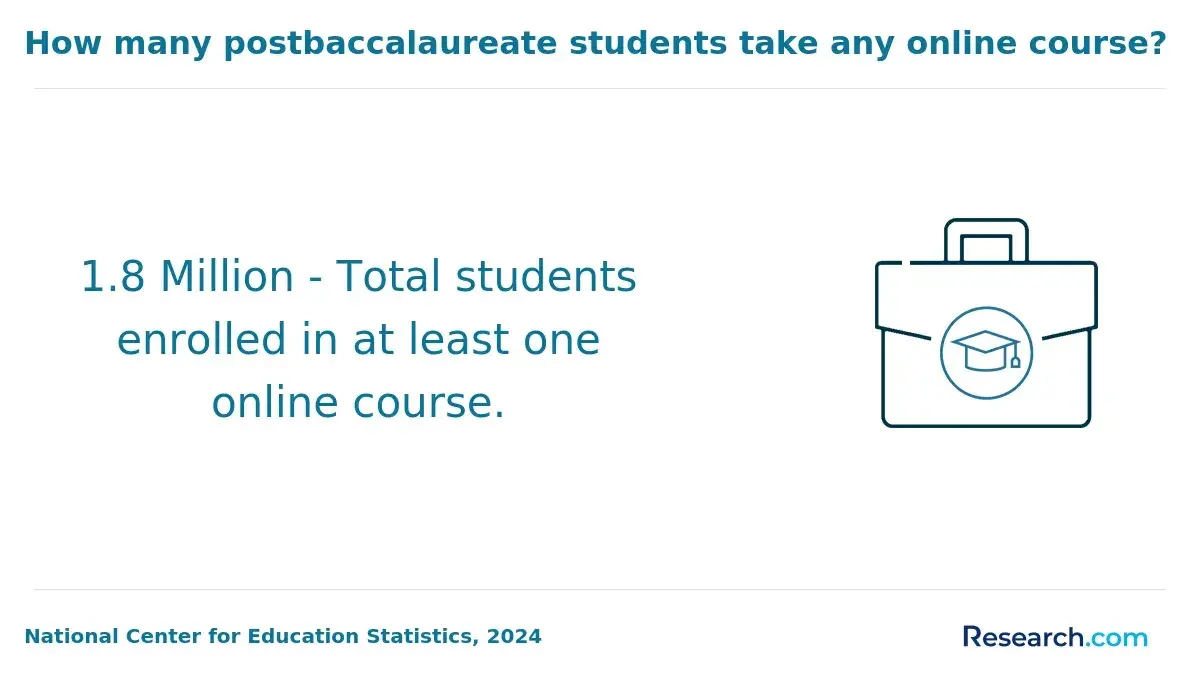
Undergraduate students may see more grant aid than graduate students. The maximum Federal Pell Grant for the 2025-26 award year is $7,395, but Pell Grants generally apply to eligible undergraduate students who have not already earned a bachelor's degree. Graduate students in aerospace engineering usually depend more on direct unsubsidized loans, Grad PLUS Loans, assistantships, scholarships, or employer reimbursement.
When comparing affordability, use the same disciplined approach that students use when evaluating the cheapest MBA programs: calculate total tuition, required fees, books, software, travel for any residency, interest on loans, and the number of credits you are likely to complete at that school.
Which Affordable Online Aerospace Engineering Degree Programs Offer the Best Value?
The best value is usually not the program with the lowest advertised per-credit rate. It is the program that offers the best combination of recognized accreditation, manageable out-of-pocket cost, flexible scheduling, strong engineering curriculum, transfer or prerequisite efficiency, and credible career alignment.
Use the table below to compare value profiles rather than ranking schools only by sticker price. This is especially important in aerospace engineering because course availability, faculty expertise, and technical focus areas can matter for career goals.
| Value factor | Why it matters | When a higher-cost program may be worth it |
| Net price after aid | This is closer to what you actually pay or borrow. | If scholarships, employer aid, or resident tuition reduce the final cost. |
| Curriculum fit | Aerospace roles may emphasize structures, propulsion, controls, aerodynamics, orbital mechanics, or computational methods. | If the program offers courses tied directly to your target role. |
| Engineering reputation | Employers often understand the difference between a rigorous engineering degree and a loosely related technical credential. | If the university has strong aerospace research, labs, or industry connections. |
| Online flexibility | Working adults may need asynchronous lectures, part-time pacing, and predictable course rotation. | If flexibility prevents stopping out, the higher tuition may still reduce wasted credits. |
| Admissions fit | Some programs require an ABET-accredited engineering bachelor's degree or prerequisite coursework. | If the school offers a realistic pathway for your background without excessive leveling courses. |
A low-cost program makes the most sense when it teaches the technical area you need and lets you finish without excessive prerequisite delays. A more expensive program can make sense when it offers a specialized aerospace concentration, better support for working engineers, stronger research alignment, or tuition benefits that reduce the net price.
Program-specific quality signals matter across fields. For example, students comparing an AACSB online MBA know that specialized accreditation can change how a degree is evaluated; engineering students should use the same mindset by checking institutional accreditation, ABET relevance, curriculum rigor, and employer expectations.
Are the Cheapest Online Aerospace Engineering Degree Programs Properly Accredited?
Yes, the programs worth considering should be properly accredited, but students need to understand the difference between institutional accreditation and programmatic engineering accreditation. Institutional accreditation applies to the university and is essential for federal financial aid. Programmatic accreditation, such as ABET, applies to specific engineering programs and is especially important for many undergraduate engineering degrees.
Online aerospace engineering students should verify accreditation in a specific order. This prevents two common mistakes: assuming all online engineering degrees are equivalent and assuming a university's general accreditation automatically means the aerospace program has specialized engineering accreditation.
- Check institutional accreditation first through the U.S. Department of Education or the Council for Higher Education Accreditation databases.
- Confirm the school participates in federal student aid programs and that the online aerospace engineering degree is an eligible degree program.
- Look up ABET accreditation for the exact program name if you are choosing an undergraduate engineering degree or if licensure may matter to your career path.
- Ask whether the diploma or transcript identifies the same degree as the campus program, especially if you are concerned about employer perception.
- Ask the department whether the program prepares students for aerospace, mechanical, defense, aviation, or systems engineering roles, depending on your goal.
For master's programs, ABET accreditation is less common and often less central than it is for bachelor's programs. Many reputable online aerospace engineering master's degrees are offered by institutionally accredited universities even when the graduate program itself is not ABET-accredited. However, if your goal includes professional engineer licensure, government engineering classifications, or an employer-required credential, confirm the requirement before enrolling.
What FAFSA Grants and Federal Aid Can Pay for an Online Aerospace Engineering Degree?
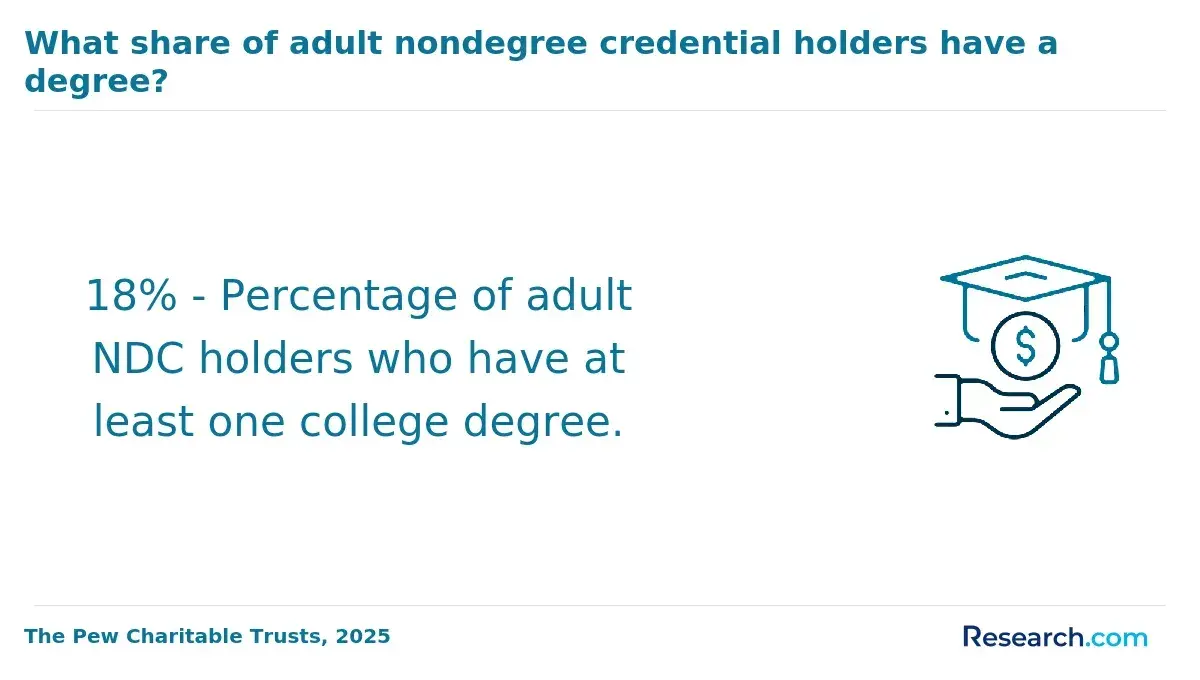
FAFSA can connect eligible students to several forms of federal aid, but the mix differs sharply between undergraduate and graduate aerospace engineering students. Undergraduate students may qualify for grants, while graduate students usually receive federal loans unless they secure scholarships, assistantships, employer support, or military education benefits.
The list below summarizes the major aid categories and how they typically apply to online aerospace engineering students. Use it to ask better questions when speaking with a financial aid counselor.
- Federal Pell Grant: Usually for eligible undergraduate students who have not earned a bachelor's degree; the maximum award for 2025-26 is $7,395, but the actual award depends on federal need calculations and enrollment level.
- Federal Supplemental Educational Opportunity Grant: Campus-based undergraduate aid for students with high financial need; availability depends on the school's allocation and may run out.
- Direct Subsidized Loan: Available only to eligible undergraduate students with financial need; the government pays interest during certain periods.
- Direct Unsubsidized Loan: Available to eligible undergraduate and graduate students; interest accrues, so borrowing should be limited to what is necessary.
- Grad PLUS Loan: Available to eligible graduate and professional students after credit approval; useful for gaps but usually more expensive than unsubsidized loans.
- Federal Work-Study: May be available to eligible students, though online engineering students should confirm whether remote or relevant positions exist.
- Institutional scholarships: Award rules vary widely and may depend on GPA, residency, academic department, military status, or professional background.
- Employer tuition assistance: Especially valuable for working engineers because annual employer benefits can reduce borrowing without changing FAFSA eligibility.
The biggest red flag is using federal loans to cover a program you have not priced fully. Before accepting aid, ask the school for tuition, mandatory fees, expected course materials, software costs, and the loan amount needed for each term.
How Do Transfer Credits Lower the Cost of an Online Aerospace Engineering Degree?
Transfer credits can lower the total cost of an online aerospace engineering degree by reducing the number of credits you must pay for at the degree-granting university. The savings can be substantial for undergraduate students, but master's programs often limit transfer credit more strictly.
Use the table below to understand where transfer savings are most likely. It helps separate realistic savings from assumptions that may not survive a transcript evaluation.
| Degree path | Typical transfer opportunity | Potential cost impact | Main caution |
| Online bachelor's pathway before aerospace specialization | General education, calculus, physics, chemistry, programming, and lower-division engineering courses | Can reduce total tuition significantly if credits are accepted from a lower-cost institution | Engineering programs may require specific grades, lab formats, or ABET-aligned coursework. |
| Online aerospace engineering master's | Limited graduate transfer credits, often from another accredited graduate engineering program | Usually modest because many schools cap transfer credits | Credits may be rejected if they are too old, not equivalent, or already counted toward another degree. |
| Post-bachelor's leveling coursework | Prerequisites in math, mechanics, thermodynamics, fluids, or controls | Can either save money or add cost depending on your background | Students without an engineering bachelor's may need extra courses before starting the degree plan. |
Students should request an unofficial transfer review before committing. A higher-tuition university that accepts more credits may cost less than a lower-tuition school that requires repeated prerequisites.
If you need to strengthen calculus, statistics, or proof-based quantitative skills before engineering graduate study, an online mathematics degree or selected online math coursework may help build preparation, but confirm transferability before paying for any course.
Which Students Benefit Most From a Low-Cost Online Aerospace Engineering Degree With FAFSA?
A low-cost online aerospace engineering degree with FAFSA access is best for students who already have a clear engineering goal and need flexibility without giving up institutional legitimacy. It is not ideal for every learner, especially if the cheapest program lacks the specialization, advising, or prerequisites needed for the student's career target.
The following student groups often benefit most because online delivery and federal aid access solve specific barriers. The key is matching the program to the student's starting point.
- Working engineers: They can study part-time, use employer tuition assistance, and apply coursework directly to aerospace, defense, aviation, manufacturing, or systems roles.
- Military-affiliated students: They may combine FAFSA-based aid with military education benefits but should coordinate benefits carefully to avoid overborrowing.
- Residents of states with strong public online tuition rates: In-state pricing can make a public online engineering degree much cheaper than private alternatives.
- Students with strong transfer credit: Undergraduates who complete lower-cost prerequisites before moving into engineering may reduce total cost if credits are accepted.
- Career changers with adjacent STEM backgrounds: Students from mechanical engineering, physics, mathematics, or computer science may be able to enter some graduate pathways after completing prerequisites.
Students should be cautious if they need extensive hands-on undergraduate lab experience, want a traditional campus research environment, or are choosing aerospace engineering mainly because the tuition looks low. Aerospace engineering is mathematically demanding, and a cheap program becomes expensive if a student withdraws, repeats courses, or discovers too late that the curriculum does not support the intended career.
How Does the Cost of an Online Aerospace Engineering Degree Affect Career ROI?
The cost of an online aerospace engineering degree affects ROI through three main variables: how much you pay, how much you borrow, and whether the credential supports the role you want. A low-cost degree can improve ROI by reducing debt, but only if the program is credible and relevant to your career plan.
The BLS reported a May 2024 median annual wage of $134,830 for aerospace engineers in the United States. That figure is useful as a labor-market benchmark, not a guarantee; salaries vary by experience, region, industry, clearance requirements, graduate education, and technical specialization.
Use this ROI framework before enrolling. It is more practical than comparing salary numbers alone because it connects degree cost to realistic repayment pressure.
- Estimate the total program cost, including tuition, fees, books, software, loan fees, and any required travel.
- Subtract grants, scholarships, employer assistance, military benefits, and tuition waivers that do not need to be repaid.
- Identify how much you would borrow each term and what the total principal could be at graduation.
- Compare the degree's curriculum to your target job postings, especially requirements for propulsion, aerodynamics, finite element analysis, computational fluid dynamics, controls, structures, or systems engineering.
- Ask whether the program has career services, faculty advising, research options, capstone projects, or employer connections relevant to aerospace work.
A more expensive program may be worth considering if it reduces time to completion, offers a high-value specialization, fits employer reimbursement rules, or has stronger alignment with your target aerospace role. The cheapest program may be the better choice if it is accredited, technically rigorous, flexible enough to finish, and does not require unnecessary extra credits.
How Should Students Choose the Cheapest FAFSA-Eligible Online Aerospace Engineering Degree?
Students should choose the cheapest FAFSA-eligible online aerospace engineering degree by comparing net cost, accreditation, degree fit, transfer rules, and career alignment in the same decision process. Do not start with rankings alone; start with the outcome you need.
Before applying, ask each school the following questions. These questions are designed to uncover costs and eligibility issues that are easy to miss on program pages.
- Is the university institutionally accredited, and by which recognized accreditor?
- Does the institution participate in Title IV federal student aid programs?
- Is this exact online aerospace engineering degree eligible for federal student aid?
- What is the total cost of attendance for my enrollment level, residency status, and start term?
- What mandatory fees, software, proctoring, lab, or course-material costs should I expect?
- How many transfer credits or graduate credits can be applied to this degree?
- Are courses asynchronous, synchronous, or mixed, and are there any campus visits?
- What happens to my aid if I enroll part-time or take only one course in a term?
- What GPA and completion-rate standards must I meet to keep aid?
- Which employers, industries, or roles commonly align with this curriculum?
A practical shortlist should include at least one low flat-rate public program, one strong in-state public option, and one program with the best curriculum fit even if it costs more. Then compare written financial aid estimates side by side. If a school cannot clearly explain accreditation, FAFSA eligibility, full cost, and transfer policy, treat that as a red flag.
Other Things You Should Know About Aerospace Engineering
Many aerospace engineering master's degrees can be completed online, but fully online bachelor's degrees specifically in aerospace engineering are uncommon. Some programs may also require proctored exams, specific software, or synchronous project work.
Some programs require the GRE, some waive it, and others make it optional based on GPA, work experience, or prior engineering study. Always check the current admissions page because testing policies change frequently.
Often yes, if your bachelor's degree is in mechanical engineering, another engineering field, physics, mathematics, or a closely related STEM area. However, you may need prerequisite courses in areas such as fluid mechanics, dynamics, thermodynamics, or advanced calculus.
Many universities issue the same diploma for online and campus students, but policies vary. Ask the registrar whether the diploma or transcript identifies the delivery format before enrolling.
References
- 2025 Best Online Bachelor's in Aerospace Engineering https://www.onlineu.com/degrees/aerospace-engineering
- Aerospace and Aeronautical Engineering: What is it? Studies, Career Paths https://www.itaerea.com/aeronautical-engineering
- Cost & Financial Aid https://www.semesteratsea.org/financial-aid/
- Study Aerospace Engineering - Experience, Job Opportunities, Salary + Survey https://jobtensor.com/uk/Studies/Aerospace-Engineering
- The 4 Best Online Colleges that Accept FAFSA https://joinjuno.com/financial-literacy/financial-aid/online-colleges-accept-fafsa
- Graduate Engineering Schools That Award Financial Aid to International Students | WorldTrips Travel Insurance https://www.worldtrips.com/resources/graduate-engineering-financial-aid-to-international-students
- Popular Colleges for Aerospace Engineering Majors https://www.remitly.com/blog/education/colleges-for-aerospace-engineering-majors/