2027 Fastest Accredited Online Aerospace Engineering Degree Programs That Accept Transfer Credits

Co-Founder and Chief Data Scientist
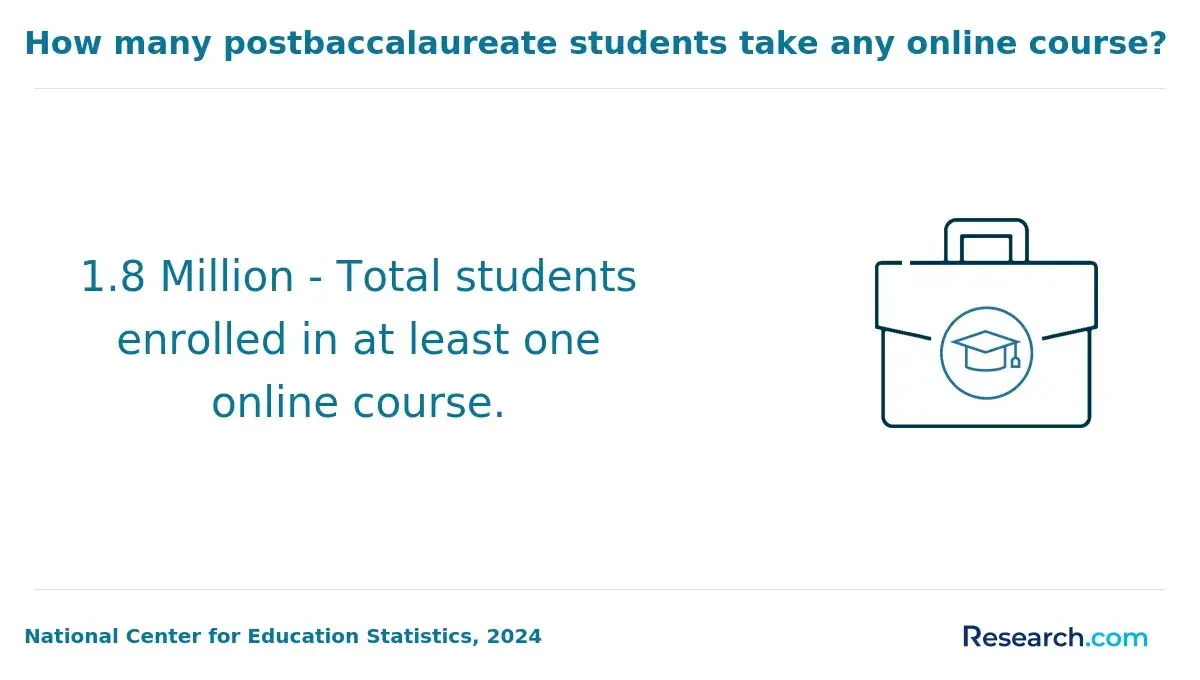
Transfer students often face the same problem: many credits earned may not shorten the path to an accredited online aerospace engineering degree. NCES tables published in 2024 show that more than half of U.S. postsecondary students took at least one distance education course in fall 2022, making online degree completion a mainstream option.
This guide is for transfer students, adult learners, military students, and degree completers who want the fastest legitimate route. You will learn which program types are most transfer-friendly, how accreditation works, and how to estimate a realistic graduation timeline.
Key Things You Should Know
- The fastest legitimate undergraduate route is usually not the school with the highest advertised transfer cap; it is the ABET-accredited online bachelor's program that accepts the most credits directly into calculus, physics, engineering science, lab, and design requirements.
- For a true online bachelor's in aerospace engineering, the U.S. market is very limited; the University of North Dakota is the clearest online BS Aerospace Engineering option to verify for ABET accreditation and transfer fit, while related aeronautics or engineering technology programs may be faster but are not the same credential.
- A student with 60 to 90 applicable credits may still need about 2 to 3 years because aerospace engineering courses are sequenced, while online master's programs in aerospace engineering are typically 30 credits and may allow only a small number of approved graduate transfer credits.
What Are the Fastest Accredited Online Aerospace Engineering Degree Programs That Accept Transfer Credits?
The fastest accredited online aerospace engineering degree programs are the ones that combine recognized institutional accreditation, appropriate engineering accreditation where it matters, a clear online delivery model, and a transfer evaluation that applies prior coursework to the degree plan rather than only to elective space.
For bachelor's students, the key distinction is between a true aerospace engineering degree and a related aviation, aeronautics, engineering technology, or applied science degree.
In the U.S., fully online ABET-accredited bachelor's options specifically named aerospace engineering are rare. That scarcity matters because a student who wants engineering licensure eligibility, graduate engineering admission, or aerospace engineering roles should be cautious about choosing a faster but less aligned program.
If you want to broaden your school search beyond aerospace-specific programs, resources that compare the most popular online colleges can help you screen delivery format, student support, and institutional reputation before you narrow the list by engineering accreditation.
The table below summarizes the most realistic fast online pathways. Use it as a decision filter, not as a substitute for a school-issued transfer evaluation, because engineering departments often make final decisions course by course.
| Online pathway | Best fit | Accreditation to verify | Transfer-credit speed factor | Fastest realistic use case |
| University of North Dakota online BS in Aerospace Engineering | Students seeking a true online aerospace engineering bachelor's degree | Institutional accreditation and ABET Engineering Accreditation Commission status for the specific BS program | Prior calculus, chemistry, calculus-based physics, general education, and lower-division engineering courses may reduce the plan if accepted as equivalents | A transfer student with strong lower-division STEM credits may shorten the degree, but upper-division aerospace sequences still control the timeline |
| Online MS in Aerospace Engineering or Aeronautics and Astronautics at accredited public or nonprofit universities | Students who already hold an engineering or closely related bachelor's degree | Institutional accreditation; ABET generally applies to bachelor's programs, not most research master's programs | Graduate transfer credit is usually limited and must match graduate-level requirements | Fastest for students who already meet prerequisites and can take a heavy graduate course load |
| Online aeronautics, aviation, or engineering technology bachelor's programs | Students targeting aviation operations, aerospace manufacturing support, maintenance management, technical sales, or degree completion | Institutional accreditation and any applicable programmatic accreditation | Often more transfer-friendly for military, aviation, technical, and applied credits | Can be faster for degree completion, but it may not satisfy aerospace engineering job or graduate-school expectations |
A useful rule is to choose the fastest program that still matches the outcome you need. If your target is aerospace engineer, propulsion engineer, structures analyst, flight systems engineer, or graduate study in engineering, prioritize the true engineering curriculum. If your target is aviation management, aerospace operations, maintenance leadership, or technical coordination, an adjacent program may be faster and more practical.
How Fast Can You Complete an Online Aerospace Engineering Degree With Transfer Credits?
With transfer credits, an online aerospace engineering degree can sometimes be completed faster than a standard four-year plan, but it is rarely as simple as "120 credits minus transferred credits." Aerospace engineering includes course sequences in calculus, differential equations, physics, statics, dynamics, thermodynamics, fluid mechanics, controls, structures, propulsion, labs, and senior design. If one prerequisite is missing, the next course may be delayed by a full term.
The table below gives realistic timeline ranges based on the number of credits that actually apply to the degree. These are planning estimates, not promises, because course rotation, lab availability, math placement, and transfer equivalency decisions vary by school.
| Applicable transfer credits | Typical student profile | Likely remaining work | Realistic online completion range |
| 0 to 30 credits | New student or student with mostly unrelated credits | Most general education, full math/science sequence, and full engineering core | 4 to 5 years, especially if studying part time |
| 31 to 60 credits | Student with general education and some STEM coursework | Calculus-based sciences, engineering prerequisites, major courses, labs, and design | 3 to 4 years |
| 61 to 90 credits | Community college engineering transfer student or prior engineering major | Upper-division aerospace engineering sequence, major labs, electives, and capstone | 2 to 3 years |
| 90 or more accepted by institution | Student with many credits, often from a related engineering program | Residency credits, required major courses, and any missing prerequisites | Often still 18 to 30 months because of sequencing and residency rules |
To estimate your fastest possible timeline, do not start with the transfer maximum. Start with the degree map. A student who transfers 75 credits including calculus I through III, chemistry, physics I and II, programming, statics, and general education is often in a stronger position than a student who transfers 90 credits that mostly count as electives.
Before enrolling, ask the program for a term-by-term completion plan. The plan should show not only remaining credits but also when each course is offered, whether labs require special scheduling, whether summer terms are available, and whether senior design must be taken over more than one term.
How Many Transfer Credits Can You Apply Toward an Online Aerospace Engineering Degree?
Many bachelor's programs allow a large number of institutional transfer credits, sometimes up to about three-fourths of a 120-credit degree, but aerospace engineering students should focus on applicable transfer credits. "Accepted by the university" and "applied to the aerospace engineering major" are not the same thing.
The table below explains the most common difference between transfer-credit categories. This distinction is one of the biggest reasons advertised speed and actual graduation speed can differ.
| Credit category | What it means | How it affects speed | Common risk |
| University elective credit | The school accepts the credit, but it does not replace a specific requirement | May help reach total credits but may not shorten the engineering sequence | Student has many credits but still needs most major courses |
| General education credit | The credit satisfies humanities, social science, communication, or other core requirements | Can free up time for engineering courses | Helpful but not enough to accelerate the major by itself |
| Direct course equivalency | The prior course replaces a required course such as calculus I or physics I | Most valuable for faster completion | Syllabi may be required before approval |
| Major technical credit | The prior course satisfies an engineering science, aerospace, lab, or technical elective requirement | Can shorten the upper-division plan if approved | Engineering departments may be strict about content, level, and ABET alignment |
If you still need inexpensive general education or lower-division courses before applying, compare regionally accredited and transfer-oriented options carefully. Lists of cheap online universities can be useful for cost screening, but you should confirm in writing that the target aerospace engineering program will accept the exact courses you plan to take.
For the most accurate answer, request a preliminary transfer evaluation before you commit. Strong evaluations usually require transcripts, course descriptions, syllabi for math and engineering courses, lab details, credit hours, grades, and the catalog year from your prior institution.
How Can You Verify Accreditation for Fast Online Aerospace Engineering Degree Programs?
Accreditation is the quality-control step you should complete before you compare price, speed, or transfer limits. For online aerospace engineering, there are two levels to check: institutional accreditation and programmatic engineering accreditation.
Institutional accreditation means the college or university is recognized by an accreditor approved for federal financial aid purposes. Programmatic accreditation, especially ABET Engineering Accreditation Commission accreditation for a bachelor's engineering degree, is often important for engineering licensure pathways, employer recognition, and admission to some graduate engineering programs.
Use the following process before applying or paying a deposit. These steps help you avoid programs that sound fast but may not support your intended career path.
- Search the school in the U.S. Department of Education's Database of Accredited Postsecondary Institutions and Programs to confirm institutional accreditation.
- Search ABET's accredited program database for the exact degree name, campus or online modality if listed, accreditation commission, and accreditation dates.
- Confirm that the online student earns the same degree title as an on-campus student, if the school also offers the program on campus.
- Ask whether the aerospace engineering program is accredited separately from engineering technology, aviation, aeronautics, or applied science programs.
- Request written confirmation that transfer students remain eligible for the same degree, capstone, labs, and graduation requirements as other students.
Be especially careful with vague phrases such as "engineering-focused," "aerospace-related," or "designed for aerospace careers." Those descriptions may be accurate for some goals, but they do not automatically mean the degree is an ABET-accredited aerospace engineering bachelor's program.
Which Types of Transfer Credits Can Count Toward an Online Aerospace Engineering Degree?
Transfer credits can come from several sources, but aerospace engineering programs evaluate them differently depending on rigor, level, recency, and match to the curriculum. The most valuable credits are usually those that replace prerequisite STEM courses and unlock upper-division engineering sequences.
The following credit types are commonly reviewed. Their usefulness depends on whether they satisfy a specific degree requirement rather than simply increasing your total credit count.
- Community college engineering pathway courses, especially calculus, chemistry, physics, programming, statics, dynamics, and introductory engineering design.
- Credits from another ABET-accredited or engineering-focused university program, which may be more likely to align with technical requirements.
- General education courses such as writing, communication, economics, ethics, humanities, and social science.
- Military and technical training evaluated through recognized credit recommendations, though these credits often apply better to electives or applied programs than to upper-level aerospace engineering requirements.
- Prior bachelor's or associate degree coursework, which may waive broad general education categories but not necessarily engineering major requirements.
- Graduate credits for students entering an online aerospace engineering master's program, subject to strict limits, minimum grades, age limits, and faculty approval.
Math is a common bottleneck. If you need to rebuild your foundation before transferring, an online mathematics degree is not the same as aerospace engineering, but reviewing online math curricula can help you understand the level of calculus, linear algebra, differential equations, and numerical methods expected in engineering programs.
A smart transfer plan starts with prerequisites. If you can complete approved calculus and physics before entering the aerospace program, you may be able to start engineering courses sooner. If those courses do not transfer cleanly, your timeline may reset to the beginning of the technical sequence.
How Do Residency and Major Requirements Affect Transfer Credits for an Online Aerospace Engineering Degree?
Residency requirements define how many credits you must complete at the degree-granting institution. Major requirements define which specific aerospace engineering courses you must complete, regardless of how many credits you already have. Together, they often determine the real minimum time to graduation.
The table below shows how these rules affect transfer students. It helps explain why two students with the same number of transferred credits can have very different graduation dates.
| Requirement | What schools commonly require | Why it matters for transfer students | Question to ask |
| Institutional residency | A minimum number of credits completed through the university awarding the degree | Even with many accepted credits, you may need a set block of remaining coursework | What is the minimum number of credits I must complete with your university? |
| Major residency | A portion of upper-division engineering or aerospace credits taken at the institution | Technical transfer credits may be limited even if general credits transfer easily | How many aerospace engineering credits must be completed in your department? |
| Capstone or senior design | Completion of a final design sequence through the program | Capstone courses may be offered once per year or across multiple terms | Can transfer students enter capstone immediately after prerequisites are met? |
| Lab and design requirements | Hands-on or simulation-based work tied to ABET student outcomes | Prior online or non-lab courses may not replace required engineering labs | Which labs cannot be transferred under any circumstance? |
Common mistakes include assuming an associate degree automatically covers the first two years, transferring credits before checking equivalencies, and choosing the cheapest prerequisite provider without confirming transferability. A better approach is to build a transfer matrix that matches each completed course to a specific requirement in the aerospace engineering degree plan.
Students who should consider a slower path include those missing calculus readiness, those working full time, and those who need stronger academic preparation for graduate school or competitive technical roles. A compressed plan is only helpful if you can handle the math-heavy workload without repeating courses.
Can Prior Learning, CLEP, Military Training, or Certifications Help You Finish an Online Aerospace Engineering Degree Faster?
Prior learning, CLEP exams, military training, and certifications can reduce time to degree in some online programs, but they usually have limited impact on the core of an aerospace engineering curriculum. They are most useful for general education, free electives, introductory computer applications, communication, or leadership requirements.
Before spending time or money on exams or portfolio assessments, ask the school how each option will apply. The goal is to avoid earning credits that are accepted by the university but do not move you closer to the engineering degree.
- CLEP and DSST exams may help with general education, but they rarely replace advanced engineering, calculus-based lab science, or upper-division aerospace courses.
- ACE-recommended military training may count toward electives or applied technical requirements, especially in aviation-related programs.
- FAA, maintenance, manufacturing, CAD, project management, or quality certifications may support elective credit in some programs but usually do not replace ABET engineering design outcomes.
- Portfolio-based prior learning assessment may help adult learners document workplace learning, but engineering departments may restrict its use for major courses.
- Graduate students may receive limited credit for prior graduate coursework, but it normally requires a close course match and departmental approval.
If you are comparing engineering completion with a future business or management route, remember that credit-for-prior-learning policies differ sharply by field. For example, guides to the cheapest programs can be useful later if your long-term plan is aerospace project management, but MBA transfer rules do not predict how an aerospace engineering department will treat technical credits.
The practical test is simple: will the credit remove a required course from your official aerospace engineering plan? If not, it may still have value, but it may not make the degree faster.
How Much Does a Fast Online Aerospace Engineering Degree Cost After Transfer Credits and Financial Aid?
The cost of a fast online aerospace engineering degree depends on remaining credits, tuition rate, fees, books and software, lab requirements, proctoring, travel if any, and financial aid eligibility. Transfer credits can lower the total price, but only when they replace required courses you would otherwise pay to take.
College Board's 2024 pricing data reported average published tuition and fees of $11,610 for in-state students at public four-year institutions for the 2024-25 academic year. That figure is useful as a benchmark, but online aerospace engineering students should compare total program cost because engineering fees, nonresident online rates, and course materials can change the final number.
The table below shows how transfer credits can affect cost decisions. It is meant to help you compare scenarios rather than predict a specific bill.
| Cost factor | Why it matters | Best way to evaluate it |
| Remaining required credits | This is the clearest driver of tuition after transfer evaluation | Ask for an official remaining-credit count by requirement category |
| Per-credit tuition | A low rate matters more when many credits remain | Compare online, resident, nonresident, and engineering-specific rates |
| Course fees and lab costs | Engineering programs may require specialized software, labs, kits, or proctoring | Request a full fee estimate for the remaining plan |
| Financial aid eligibility | Institutional accreditation affects federal aid access | Confirm FAFSA participation and satisfactory academic progress rules |
| Time away from work | Accelerated study can reduce calendar time but increase weekly workload | Estimate lost income or reduced hours alongside tuition |
To lower cost without delaying graduation, prioritize credits that transfer into the degree map, use employer tuition assistance if available, ask about military or veteran benefits, compare summer tuition, and avoid retaking courses unnecessarily.
If your career goal shifts toward aerospace leadership, an AACSB online MBA may become a later credential to compare, but it should not be treated as a substitute for an engineering degree when technical aerospace roles require engineering preparation.
A common red flag is choosing the lowest tuition program without checking whether it is the right degree type. A less expensive aviation or technology degree may be valuable, but it may not qualify you for the same engineering roles or graduate programs as an accredited engineering curriculum.
How Do Accelerated, Competency-Based, and Self-Paced Online Aerospace Engineering Degree Programs Compare?
Accelerated, competency-based, and self-paced formats can all shorten some online degrees, but aerospace engineering is harder to compress than many business or general studies programs. The reason is structural: engineering courses build on prerequisite chains, labs, design reviews, and faculty-assessed technical outcomes.
The table below compares the main online formats. Use it to decide whether a fast format actually matches the way aerospace engineering coursework is delivered.
| Format | How it works | Strength for transfer students | Limitation in aerospace engineering |
| Accelerated term-based | Courses run in shorter sessions or with more start dates | Can help students complete general education or electives faster | Major engineering courses may still follow fixed sequences |
| Traditional semester online | Courses follow standard academic terms | Often best for complex STEM courses and faculty interaction | May be slower if key courses are offered only once per year |
| Competency-based education | Students progress by demonstrating mastery | Can be very fast in some fields with strong prior knowledge | Rare for ABET-style aerospace engineering bachelor's programs |
| Self-paced online | Students control pacing within course limits | Useful for prerequisites, review courses, or non-major requirements | Labs, team design, and sequential engineering topics may not be self-paced |
If speed is your priority, evaluate the format in this order. The most efficient path is usually a planned sequence rather than the most flexible catalog description.
- Confirm which remaining courses are offered online and how often they run.
- Identify prerequisite chains that cannot be taken out of order.
- Ask whether summer courses include the technical courses you need, not only electives.
- Check whether labs, exams, or design reviews require synchronous attendance or travel.
- Build a full-time and part-time version of the plan so you can compare speed with workload risk.
Students often compare accelerated engineering degrees with faster business or management credentials. That comparison can be useful for career planning, and guides to the cheapest MBA programs can help with later management options, but aerospace engineering degree speed is limited more by technical sequencing than by general online flexibility.
Are Fast Accredited Online Aerospace Engineering Degrees Respected by Employers and Graduate Schools?
Fast accredited online aerospace engineering degrees can be respected by employers and graduate schools when the institution is recognized, the degree title is legitimate, and the curriculum meets expected engineering standards. For bachelor's students, ABET accreditation is often the strongest signal because it shows that the program has been reviewed against engineering education outcomes.
BLS occupational data published in 2024 reports that aerospace engineers have median pay above $130,000 and projected employment growth of 6% from 2023 to 2033. Those figures do not guarantee an individual outcome, but they show why students are willing to be careful about choosing a recognized program rather than simply choosing the shortest one.
Employer perception usually depends on the match between degree and role. Aerospace companies, defense contractors, spacecraft firms, aircraft manufacturers, systems suppliers, and engineering consulting groups may look closely at technical coursework, projects, internships, software skills, citizenship or security-clearance eligibility for some roles, and whether the degree is engineering rather than aviation operations.
Graduate schools may also review prerequisites in detail. A fast degree-completion plan should still include enough mathematics, engineering science, lab work, and design experience to support admission to a master's or doctoral program. If the transcript is filled with elective credit but lacks core engineering depth, the fast route may create barriers later.
Before enrolling, ask admissions, the department, or a transfer advisor these questions. Their answers will tell you whether the fast path is also a credible path.
- Will my diploma and transcript identify the same degree as other students in the program?
- Is the specific bachelor's program ABET-accredited, and does that accreditation apply to online students?
- Which of my transferred credits will satisfy required engineering courses rather than electives?
- What senior design, lab, simulation, or project work will I complete before graduation?
- Where have recent online or transfer students gone for employment, graduate school, or internships?
- Will the program meet prerequisites for the graduate programs or professional goals I am considering?
The safest conclusion is this: fast is valuable only when the credential remains aligned with your career target. A slightly slower ABET-accredited engineering path may be more useful than a much faster adjacent degree if your goal is to work as an aerospace engineer.
Other Things You Should Know About Aerospace Engineering
Usually not. Even when a university accepts many credits, aerospace engineering programs often require upper-division major courses, labs, senior design, and institutional residency. A one-year finish is uncommon unless the remaining requirements are unusually limited and offered in the right sequence.
They can transfer well if they were designed for engineering transfer and include calculus, calculus-based physics, chemistry, programming, and introductory engineering courses. Always confirm equivalency with the receiving aerospace engineering department before enrolling in additional courses.
No. Aeronautics programs often focus on aviation operations, safety, management, maintenance, or applied aviation topics. Aerospace engineering programs are more math- and design-intensive and are better aligned with engineering analysis, spacecraft, aircraft systems, propulsion, structures, and controls roles.
Possibly, but schools may review older math, science, and engineering courses more carefully because technical content and software expectations change. Some departments may require recent coursework, placement testing, syllabi, or course repetition if the prior credit no longer supports the current curriculum.
References
- 2025 Best Online Bachelor's in Aerospace Engineering https://www.onlineu.com/degrees/aerospace-engineering
- Accredited vs. Credit-Recommended vs. Transfer Policy: What It All Means for Your College Credits https://www.straighterline.com/blog/transfer-accredited-vs-credit-recommended-vs-transfer-policy-what-it-all-means-for-your-college-credits
- Popular Colleges for Aerospace Engineering Majors https://www.remitly.com/blog/education/colleges-for-aerospace-engineering-majors/
- Best Online Universities With Generous Transfer Credit Policies https://www.collegetransitions.com/blog/best-online-universities-with-generous-transfer-credit-policies/
- Criteria for Accrediting Engineering Programs, 2025 - 2026 - ABET https://www.abet.org/accreditation/accreditation-criteria/criteria-for-accrediting-engineering-programs-2025-2026/
- Fastest Online Engineering Degree Programs - Educating Engineers https://educatingengineers.com/degrees/fastest-online-engineering-degree-programs/
- GE Aerospace Opportunities for Students & New Graduates https://careers.geaerospace.com/global/en/global-students-new-graduates
- Cost & Financial Aid https://www.semesteratsea.org/financial-aid/
- Top Online Schools That Accept Transfer Credits https://www.edvisorly.com/student-guides/online-schools-that-accept-transfer-credits