
2027 Best Online Project Management Courses

Co-Founder and Chief Data Scientist
Choosing an online project management course is usually a practical career decision: you want stronger credentials, better project skills, or preparation for certification without committing to a full degree program. The challenge is that “project management course” can mean anything from a free introductory class to a university certificate, PMP exam prep, or a full academic pathway.
This guide explains how online project management courses work, what they cost, how long they take, which options stand out for 2027, and when a course is enough versus when a degree or graduate credential may make more sense. It is designed for working adults, career changers, coordinators moving into manager roles, and professionals comparing certification-focused training with broader academic programs.
Quick answer: Are online project management courses worth it?
Online project management courses can be worth it if they match your career goal. A short course may be enough if you need practical skills in planning, budgeting, scheduling, Agile, or stakeholder communication. A certificate or PMP exam prep course may be better if you want a recognized credential. A degree may be more appropriate if you are targeting senior leadership roles, changing industries, or need a broader academic foundation.
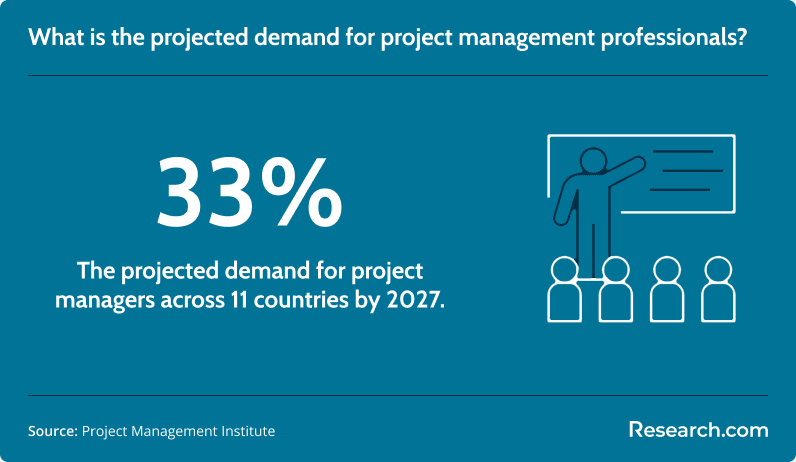
The labor market also supports the value of project management training. Employment of project management specialists is projected to grow by 7% from 2023 to 2033, with about 77,000 openings each year, according to the U.S. Bureau of Labor Statistics. PMP certification holders also earn 33% higher median salaries than non-certified professionals, making credential-focused training especially attractive for experienced professionals.
What are the benefits of taking online project management courses?
Online project management courses are useful because they let learners build job-ready skills without putting work or personal responsibilities on hold. The biggest advantages are flexibility, lower cost compared with many degree programs, and the ability to target a specific skill or certification goal.
- Career flexibility: Project management skills transfer across construction, finance, manufacturing, professional services, technology, operations, and administrative roles.
- Schedule control: Many online courses are self-paced or offer recorded lessons, which helps working adults study around job and family responsibilities.
- Lower upfront cost: Short online courses and certificate programs often cost far less than full bachelor’s or master’s programs.
- Credential-building potential: A project management certificate or PMP-focused course can support promotion, career change, or a move into leadership.
- Practical skill development: Courses often focus on tools and methods used in real projects, including scheduling, budgeting, risk tracking, communication, Agile, and Waterfall.
What can I expect from an online project management course ?
An online project management course usually teaches how projects move from idea to completion. Most programs cover project scope, scheduling, budgets, risk management, stakeholder communication, team leadership, and performance tracking. Many also introduce commonly used project management approaches, including Agile and Waterfall.
Course delivery varies. Some programs rely on short recorded videos and quizzes, while others include live virtual classes, case studies, peer discussions, group assignments, simulations, or capstone-style projects. PMP exam prep courses are usually more structured around exam domains, practice questions, and test-taking strategy.
Because project management specialists are projected to see 7% employment growth from 2023 to 2033, with around 77,000 job openings each year, completing the right course can help you compete for roles that require planning, coordination, budgeting, reporting, and team leadership skills.
| Course feature | What it usually means for learners |
| Self-paced lessons | You can move through the material on your own schedule, but you need discipline to finish. |
| Live online sessions | You get more structure and instructor interaction, but less scheduling flexibility. |
| Case studies and projects | You can practice applying project management concepts to realistic workplace situations. |
| Certificate of completion | You receive proof of completion, though employer recognition depends on the provider and credential. |
| PMP exam preparation | The course is designed for certification readiness rather than general career exploration. |
Where can I work if take online project management courses?
Project management training can be applied in many industries because most organizations need people who can plan work, manage deadlines, control budgets, communicate with stakeholders, and solve delivery problems. The strongest fit depends on your prior experience, technical knowledge, and the specialization you choose.
- Professional, scientific, and technical services (29%): Common roles include project manager, project coordinator, business analyst, implementation lead, and consulting project specialist.
- Construction (21%): Training may support roles such as construction project manager, site manager, project director, project scheduler, or project controls specialist.
- Manufacturing (8%): Opportunities often involve process improvement, product development, production planning, operations projects, and supply chain initiatives.
- Administrative and support services (6%): Project skills are useful in office operations, business support, scheduling, workflow improvement, and internal coordination roles.
- Finance and insurance (5%): Project managers may support compliance projects, technology implementation, process redesign, risk initiatives, and strategic operations.
A course alone does not guarantee a job, but it can help you document relevant skills, especially if you combine it with work examples, software familiarity, and industry knowledge.
How much can I make if I take online project management courses?
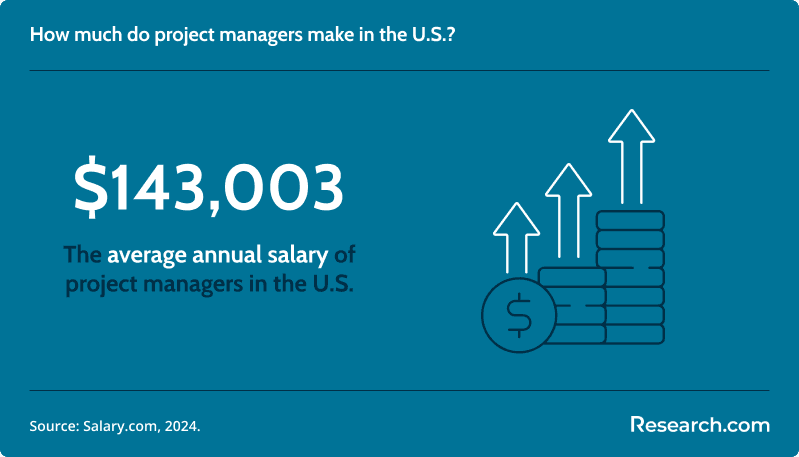
Your pay after completing online project management training depends on your experience, industry, location, education level, certification status, and job title. The median annual wage for project management specialists was $98,580 in May 2023.
Median wages also vary by industry:
| Industry | Median annual wage |
| Finance and insurance | $107,070 |
| Professional, scientific, and technical services | $103,610 |
| Manufacturing | $100,990 |
| Administrative and support services | $94,280 |
| Construction | $91,940 |
These figures should be used as benchmarks, not promises. Entry-level coordinators may earn less, while experienced project managers with strong technical, industry, or leadership backgrounds may qualify for higher-paying roles.
- Best Online Project Management Courses for 2027
- How long does it take to complete online project management courses?
- How do online project management courses compare to on-campus programs?
- What is the average cost of online project management courses?
- What are the financial aid options for students enrolling in online project management courses?
- What are the prerequisites for enrolling in online project management courses?
- What courses are typically in online project management courses?
- What types of specializations are available in online project management courses?
- Is an online project management degree the right choice for career advancement?
- What is the return on investment for online project management courses?
- How can online project management courses be paired with further academic credentials?
- How can you balance affordability with quality in online project management education?
- Can a master’s degree accelerate your project management career?
- Is a doctorate the right next step after project management certification?
- What soft skills are developed through online project management courses?
- What challenges might online project management courses present?
- Should I consider a short-term master’s program to boost my credentials?
- Can online project management courses be integrated with an accelerated bachelor's degree online?
- How are emerging trends reshaping online project management education?
- How do you choose the best online project management courses?
- What career paths are available for graduates of online project management courses?
- What is the job market for graduates with online project management courses?
Best Online Project Management Courses for 2027
How do we rank the courses?
We review online project management courses by looking at the usefulness of the curriculum, delivery format, cost transparency, certificate availability, industry relevance, and alignment with common career goals such as entry-level project coordination, management advancement, and PMP exam preparation. We also consider whether a course teaches practical skills that employers commonly expect, including planning, risk management, budgeting, communication, Agile methods, and project execution.
| Course | Best fit | Cost | Estimated length |
| Project Management Specialization by Coursera | Learners who want a structured beginner-friendly sequence | Varies; typically $49 per month for subscription access | 6 months based on 5 hours/week |
| Google Project Management Professional Certificate by Coursera | Career changers and entry-level learners | $39 per month with a 7-day free trial | 6 months at 10 hours/week |
| eCornell Project Management Certificate | Professionals who want a university-backed certificate | $3,900 | Approximately 6 months |
| Alison Diploma in Project Management | Budget-conscious learners exploring the field | Free enrollment with optional certificate purchase | Self-paced |
| Brain Sensei PMP Exam Prep | PMP candidates who want exam-focused training | $499.99 | Self-paced; typically several weeks |
| edX: University of Adelaide Introduction to Project Management | Beginners who want a short university-affiliated introduction | Free to audit; $249 for certification | Approximately 6 weeks, 3-5 hours per week |
| Master of Project Academy PMP Exam | PMP candidates who want subscription-based exam prep | $99/month | Self-paced, approximately 35 hours of content |
| Colorado State University Online | Learners seeking a comprehensive university online certificate | $3,395 | Complete at your own pace; typically several months |
1. Project Management Specialization by Coursera
The Project Management Specialization by Coursera is a multi-course option for learners who want to build a foundation in project management concepts, tools, and workflows. It is a practical choice for beginners, coordinators, and professionals who want structured training before pursuing a more advanced credential.
- Cost: Varies; typically $49 per month for subscription access
- Program length: 6 months (based on 5 hours/week commitment)
- Courses: 5 courses covering key project management principles, tools, and methodologies
- Prerequisites: None; suitable for beginners or those looking to formalize their knowledge
- Verified Completion Certificate: Yes
2. Google Project Management Professional Certificate by Coursera
The Google Project Management Professional Certificate by Coursera is built for learners who want an accessible entry point into project management. It introduces planning, execution, Agile concepts, team coordination, and workplace scenarios through a hands-on certificate format.
- Cost: $39 per month (with a 7-day free trial)
- Program length: 6 months (estimated at 10 hours/week)
- Courses: 6 courses covering project management fundamentals, planning, execution, and agile methodologies
- Prerequisites: None; suitable for beginners
- Verified Completion Certificate: Yes
3. eCornell Project Management Certificate
The eCornell Project Management Certificate from Cornell University is a higher-cost option for professionals who value a university-branded certificate and a more formal approach to project planning, scheduling, risk, budgets, and leadership.
- Cost: $3,900
- Program length: Approximately 6 months to complete
- Courses: Covers essential topics such as project planning, scheduling, budgeting, risk management, and leadership
- Prerequisites: None specified; suitable for various experience levels
- Verified Completion Certificate: Yes
4. Alison Diploma in Project Management
The Alison Diploma in Project Management is a low-cost way to explore project management fundamentals. It may be useful for learners testing interest in the field before paying for a certificate, university program, or PMP-focused course.
- Cost: Free enrollment with the option to purchase a certificate
- Program length: Self-paced; completion time varies based on individual progress
- Courses: Covers project initiation, planning, execution, monitoring, and closure
- Prerequisites: None; open to all interested learners
- Verified Completion Certificate: Yes
5. Brain Sensei PMP Exam Prep
Brain Sensei PMP Exam Prep is designed for learners preparing for PMP certification who want an interactive course format. Its main value is exam preparation rather than general project management exploration, so it is best for learners who already understand basic project management concepts.
- Cost: $499.99
- Program length: Self-paced; typically takes several weeks to complete
- Courses: Covers all knowledge areas of the PMBOK guide with quizzes and practice exams
- Prerequisites: Requires prior knowledge of project management fundamentals
- Verified Completion Certificate: Yes
6. edX: University of Adelaide Introduction to Project Management
The University of Adelaide Introduction to Project Management on edX is a short introductory course for learners who want to understand project management basics before investing in a longer program.
- Cost: Free to audit; $249 for certification
- Program length: Approximately 6 weeks, 3-5 hours per week
- Courses: Covers project management principles, methodologies, and tools
- Prerequisites: None specified; suitable for beginners
- Verified Completion Certificate: Yes
7. Master of Project Academy PMP Exam
The Master of Project Academy PMP course is a subscription-based exam preparation program that covers PMP exam content, including Agile concepts. It is most relevant for learners who are actively preparing for certification and want focused study materials.
- Cost: $99/month
- Program length: Self-paced, approximately 35 hours of content
- Courses: Covers all aspects of PMP exam content, including agile methodologies
- Prerequisites: Basic understanding of project management recommended
- Verified Completion Certificate: Yes
8. Colorado State University Online
The Project Management Online Certificate from Colorado State University is a university-backed option for learners who want a more comprehensive certificate covering project initiation, planning, execution, monitoring, and closure.
- Cost: $3,395
- Program length: Complete at your own pace; typically takes several months
- Courses: Covers project initiation, planning, execution, monitoring, and closure
- Prerequisites: None specified; suitable for beginners and experienced professionals alike
- Verified Completion Certificate: Yes
How long does it take to complete online project management courses?
Completion time depends on course depth, pacing, and the number of hours you can study each week. Short introductory courses may take only a few weeks, while university certificates and professional certificate programs may take several months. PMP exam prep courses often vary based on how much project management experience you already have and how much practice you need before testing.
Many online project management courses can be completed in 4 to 6 weeks with part-time study, but longer programs may require several months. Self-paced programs can be faster for highly motivated learners, but they can also take longer if there are no deadlines.
Completion discipline matters. Research on online course completion has found that only 5% to 15% of students finish online courses, and some ResearchGate studies report Massive Open Online Course completion rates of 3% to 6%. The flexibility that makes online learning appealing can also make it easier to postpone assignments.
| Course type | Typical time commitment | Best for |
| Introductory short course | Several weeks or less | Learners exploring the field or filling one skill gap |
| Professional certificate | Several months | Career changers and professionals building a stronger credential |
| University certificate | Several months | Learners who want structured academic-style training |
| PMP exam prep | Several weeks to several months | Experienced professionals preparing for certification |
How do online project management courses compare to on-campus programs?
Online project management courses are usually better for learners who need flexibility, lower travel costs, and the ability to study while working. On-campus programs may be better for learners who want face-to-face instruction, a fixed schedule, and more in-person networking.
| Factor | Online project management courses | On-campus programs |
| Schedule | Often self-paced or flexible | Usually follows fixed class times |
| Location | Can be completed from anywhere with reliable internet | Requires travel or relocation in some cases |
| Networking | May rely on discussion boards, virtual groups, and online events | Usually offers more direct peer and faculty interaction |
| Cost | Often lower, especially for short courses and certificates | May include campus fees, transportation, and other expenses |
| Learning structure | Requires strong self-management | Provides more built-in routine and accountability |
The best format depends on how you learn. If you are organized and need schedule control, online training may be the stronger option. If you benefit from classroom interaction and direct accountability, an on-campus format may be worth the extra time and cost.
What is the average cost of online project management courses?
Online project management course costs vary widely. A basic self-paced course may cost only a few hundred dollars or less, while university certificates and degree programs can cost several thousand dollars or more. The right price point depends on whether you need basic skills, a completion certificate, certification preparation, or an academic credential.
| Program type | Typical cost range | What you usually get |
| Short courses | $200 - $1,000 | Focused training on core project management skills, often self-paced |
| Certificate programs | $1,000 - $4,000 | More structured training, often through universities or professional providers |
| Degree programs (Bachelor's or Master's) | $10,000 - $50,000 | A full academic credential with broader coursework and longer completion time |
Online education has become common across higher education. According to the National Center for Education Statistics, in fall 2021, about 61% of all undergraduate students were enrolled in at least one distance education course, and 28% were taking online courses exclusively. That growth reflects the appeal of flexibility, though cost and quality still vary significantly by provider.
Do not choose based on tuition alone. Compare the curriculum, instructor access, certificate value, employer recognition, refund policies, and whether the course prepares you for your specific goal.
What are the financial aid options for students enrolling in online project management courses?
Financial aid depends on the type of course and the provider. Federal aid is generally tied to eligible institutions and programs, while many short courses, subscription platforms, and standalone certificates may not qualify for FAFSA-based aid. However, learners may still have options such as scholarships, employer reimbursement, payment plans, or tuition discounts.
- Federal grants and loans: If the program is offered through an eligible institution, students may be able to submit the FAFSA to be considered for grants, work-study, or loans.
- Scholarships: Universities, professional associations, and education providers may offer scholarships for online learners or career-focused certificates.
- Employer tuition assistance: Some employers reimburse project management training when it supports your current role or a planned promotion path.
- Payment plans: Many providers let students divide tuition into installments instead of paying everything upfront.
- Free audit options: Some platforms allow learners to access course content at no cost and pay only if they want a verified certificate.
For the 2023-24 academic year, students left $4 billion in federal grants unclaimed. If you are considering a degree, university certificate, or eligible academic program, it is worth checking aid options before assuming you must pay the full listed price.
What are the prerequisites for enrolling in online project management courses?
Most beginner-level online project management courses have no formal prerequisites beyond basic computer literacy and the ability to complete online coursework. More advanced certificates or PMP preparation courses may expect prior exposure to project work, business operations, leadership, or formal project management terminology.
Basic requirements
Introductory courses typically accept learners with a high school diploma or GED, and many open online courses do not require formal admission. You should be comfortable using email, video platforms, learning management systems, spreadsheets, and collaboration tools.
Experience and educational background
Advanced project management training may be better suited to learners with experience in business, engineering, operations, technology, construction, healthcare, finance, or team leadership. PMP-focused courses usually assume that you already understand project management fundamentals and are preparing for a professional exam.
Online learning readiness
Online courses serve learners at many career stages. About 27% of students pursuing online degrees are 40 years old or older, showing that online education is not limited to recent high school graduates. What matters most is whether you can set a study schedule, meet deadlines, and apply the course material to real workplace problems.
What courses are typically in online project management courses?
Most online project management programs teach the core responsibilities of managing work from initiation to completion. The exact course list depends on whether the program is introductory, certificate-based, exam-focused, or part of a degree.
- Project planning and scheduling: Students learn how to define scope, build timelines, assign resources, track milestones, and adjust schedules when conditions change.
- Budgeting and cost management: Coursework explains how to estimate costs, monitor spending, control project budgets, and report financial status.
- Risk management: Learners practice identifying threats, analyzing impact, planning responses, and monitoring risk throughout the project lifecycle.
- Communication and leadership: Because it is estimated that 90% of a project manager's time is spent communicating, many programs emphasize stakeholder updates, team coordination, conflict management, and decision-making. Learners who want a deeper communication foundation may also compare options such as an online master’s in communication.
- Quality management: Students learn how to define standards, measure deliverables, manage expectations, and support continuous improvement.
- Project lifecycle management: Courses explain initiation, planning, execution, monitoring, controlling, and closing, along with how responsibilities change at each stage.
- Agile and traditional methodologies: Many courses compare iterative Agile approaches with more sequential methods such as Waterfall.
The most useful courses do more than define terms. They give you templates, exercises, scenarios, or assignments that help you practice managing scope, people, money, time, and risk.
What types of specializations are available in online project management courses?
Project management specializations help you connect general project skills to a specific industry. This matters because employers often prefer candidates who understand the technical, regulatory, financial, or operational realities of their field.
Professional services
Professional, scientific, and technical services account for 29% of project management roles. Courses in this area may focus on consulting projects, client delivery, business analysis, implementation planning, reporting, and cross-functional stakeholder management.
Construction
Construction accounts for 21% of project management jobs. A construction-focused path may cover scheduling, contracts, procurement, site coordination, safety considerations, budgets, and coordination among architects, contractors, owners, and inspectors.
Manufacturing
Manufacturing represents about 8% of project management employment. Relevant courses may address production processes, supply chains, process improvement, product launches, quality control, and operations planning.
Finance and insurance
Finance and insurance make up about 5% of project management roles. Courses in this area may emphasize compliance projects, systems implementation, risk controls, process redesign, reporting, and stakeholder management in regulated environments.
| Specialization | Choose it if you want to work on |
| Professional services | Consulting, implementation, client delivery, business transformation, or technical services projects |
| Construction | Building, infrastructure, site coordination, project controls, or contractor management |
| Manufacturing | Process improvement, product development, production planning, or operations projects |
| Finance and insurance | Compliance, risk, financial systems, operations strategy, or regulated project environments |
Is an online project management degree the right choice for career advancement?
An online project management degree may be the right move if you need more than a short credential. Degree programs typically provide broader coursework in business, leadership, organizational behavior, finance, operations, and strategic management. That depth can matter for people who want long-term advancement, management credibility, or eligibility for roles that prefer or require a degree.
A course or certificate may be enough if your goal is to improve current job performance, prepare for certification, or move from coordinator to project manager. A degree may be more appropriate if you lack a bachelor’s degree, want to change industries, or plan to compete for senior roles.
What is the return on investment for online project management courses?
The ROI of an online project management course depends on what you pay, how recognized the credential is, whether it helps you qualify for better roles, and whether you apply the skills at work. The strongest return usually comes when the course aligns with a clear outcome, such as PMP exam preparation, promotion eligibility, or transition into a project coordinator or project manager role.
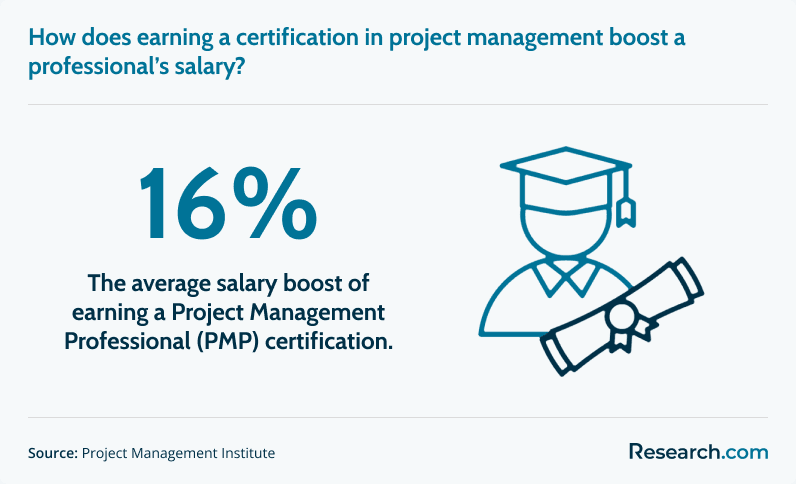
Certification can have a measurable salary impact. PMP certification holders earn 33% higher median salaries than non-certified professionals. However, that figure should not be interpreted as a guaranteed raise. Salary outcomes depend on experience, industry, location, job level, and employer demand. Learners seeking a more formal academic route can also compare a full project management degree.
| Path | Potential value | Main caution |
| Free or low-cost short course | Low-risk way to learn basics or test interest | May carry limited employer recognition |
| Professional certificate | Structured proof of project management training | Quality and recognition vary by provider |
| PMP exam prep | Targets a credential associated with higher median salaries | Best suited to learners who meet certification expectations and have experience |
| Degree program | Broader academic credential for long-term advancement | Higher cost and longer time commitment |
How can online project management courses be paired with further academic credentials?
Online project management courses can be used as a first step toward broader education. A short course can help you confirm interest before committing to a degree, while a certificate can strengthen your application or help you perform better in a current role. Learners who want an affordable academic starting point may compare online 2-year degree programs and then build toward a bachelor’s or specialized credential.
This layered approach works well when each credential has a clear purpose. For example, you might complete a short course to learn project basics, earn a certificate to document skills, and later pursue a degree if leadership roles require broader business knowledge.
How can you balance affordability with quality in online project management education?
The cheapest course is not always the best value, and the most expensive option is not automatically the most useful. To balance cost and quality, compare what the program teaches, who offers it, whether the certificate is recognized, how much instructor support is available, and whether the course includes projects, templates, or career resources.
If you are considering a degree rather than a short course, review affordable options carefully and compare tuition with outcomes, accreditation, support services, and transfer policies. A guide to a cheap project management degree online can help you evaluate lower-cost academic pathways without ignoring quality indicators.
Can a master’s degree accelerate your project management career?
A master’s degree can support advancement for experienced professionals who already manage complex work and want to move into senior leadership, program management, portfolio management, consulting, or executive-level roles. Compared with a short course, a graduate program usually goes deeper into strategy, analytics, leadership, organizational change, and decision-making.
It is not always necessary. If your immediate goal is entry-level project coordination or PMP preparation, a course or certificate may be more efficient. If your goal is senior management, compare graduate pathways and career outcomes, including what can you do with a masters in project management.
Is a Doctorate the Right Next Step After Project Management Certification?
A doctorate is usually not the next step for most project management professionals after certification. It may make sense for people who want to teach, conduct research, lead high-level consulting work, or develop expertise in organizational systems, leadership theory, or complex project environments.
Because doctoral study requires a major time and financial commitment, compare goals carefully before enrolling. If affordability is a major factor, reviewing the cheapest online PhD options can help you understand possible pathways, but you should still evaluate accreditation, faculty expertise, research fit, and career relevance.
What soft skills are developed through online project management courses?
Project management is not only about schedules and budgets. Strong courses also develop the human skills needed to lead teams, manage expectations, resolve problems, and keep stakeholders aligned.
- Communication: Writing updates, running meetings, clarifying scope, and translating technical details for different audiences.
- Leadership: Motivating teams, assigning responsibilities, removing barriers, and supporting accountability.
- Conflict resolution: Handling disagreements over deadlines, resources, priorities, and deliverables.
- Negotiation: Managing trade-offs among cost, time, quality, and stakeholder expectations.
- Adaptability: Responding when requirements shift, risks become real, or resources change.
- Decision-making: Using data, constraints, and stakeholder input to choose practical next steps.
These skills also support broader academic and career planning. Learners still exploring their long-term direction may benefit from comparing related college majors.
What challenges might online project management courses present?
Online project management courses are convenient, but they are not effortless. The biggest challenges are staying motivated, getting enough feedback, building a professional network, and choosing a program that employers will respect.
| Common challenge | Why it matters | Better approach |
| Choosing only by price | A cheap course may not offer enough depth, support, or recognition. | Compare curriculum, provider reputation, certificate value, and learner support. |
| Ignoring accreditation or provider credibility | Some credentials may carry little weight with employers. | Verify the institution, platform, or professional relevance before enrolling. |
| Assuming online means easy | Self-paced courses require discipline and time management. | Create a weekly study schedule and set completion milestones. |
| Skipping hands-on practice | Definitions alone do not prepare you to manage real projects. | Choose courses with case studies, templates, assignments, or simulations. |
| Expecting guaranteed salary gains | Pay depends on experience, industry, role, and location. | Use salary data as a benchmark, not a promise. |
Working adults who want more structure at a manageable price can also compare options from affordable online colleges for working adults.
Should I consider a short-term master’s program to boost my credentials?
A short-term master’s program may be worth considering if you already have project experience and want a stronger academic credential for leadership, consulting, or senior management roles. It can also be useful if your employer values graduate education for promotion.
However, a master’s program is a larger investment than a project management course. Before enrolling, compare cost, time commitment, accreditation, curriculum, and whether the program supports the role you want. If speed is a priority, review 1 year master programs and compare them with certificate or PMP preparation options.
Can online project management courses be integrated with an accelerated bachelor's degree online?
Yes. Online project management courses can complement an accelerated bachelor's degree online by giving learners practical skills while they work toward a broader academic credential. This combination may appeal to adults who want immediate workplace benefits and a faster path to degree completion.
The key is to avoid stacking credentials randomly. Choose courses that support your degree concentration, career target, or industry specialization. Also check whether any prior coursework, certificates, or professional learning can support transfer credit or prior learning assessment, if available.
How are emerging trends reshaping online project management education?
Online project management education is changing as workplaces rely more on digital collaboration, automation, analytics, and hybrid teams. Modern courses increasingly include project management software, virtual teamwork, Agile practices, dashboards, simulations, and scenario-based learning.
AI and automation are also affecting how project managers work. Tools can help with scheduling, reporting, risk monitoring, and workflow tracking, but they do not replace judgment, stakeholder management, leadership, or accountability. The most useful courses teach learners how to combine tools with sound project decisions.
Cost pressure is another important trend. Learners are comparing short courses, certificates, and degree programs more carefully, including lower-cost academic options such as the cheapest online college pathways that may support broader educational goals.
How do you choose the best online project management courses?
The best online project management course is the one that fits your current experience, career target, budget, schedule, and credential needs. Use a decision process instead of relying only on rankings or brand names.
- Define your goal first: Decide whether you need basic skills, PMP exam preparation, a certificate for your resume, a promotion credential, or a stepping stone to a degree.
- Review the syllabus: Look for planning, scheduling, budgeting, risk, communication, leadership, Agile, Waterfall, and practical project assignments.
- Check provider credibility: Consider whether the institution, platform, or organization is recognized by employers in your industry.
- Compare total cost: Include subscription fees, certificate fees, exam prep materials, textbooks, technology costs, and possible extension charges.
- Evaluate flexibility: Make sure the course format works with your schedule, especially if you work full time.
- Look for applied learning: Prioritize courses with case studies, templates, simulations, peer work, or projects you can discuss in interviews.
- Assess support: Check whether the course offers instructor access, feedback, community forums, career resources, or technical help.
- Read student feedback carefully: Reviews can reveal whether the course is organized, current, practical, and worth the price.
If your career goals overlap with supply chain, operations, transportation, or inventory management, you may also compare project management training with programs related to logistics degree salary outcomes.
Questions to ask before enrolling
- Does this course match my target role or certification goal?
- Will employers in my field recognize the provider or credential?
- Does the course include practical assignments or only videos and quizzes?
- How long will I realistically need to finish?
- What is the full cost, including certificate or subscription fees?
- Can I get a refund if the course is not a good fit?
- Does the program prepare me for PMP, a promotion, or a specific industry path?
What career paths are available for graduates of online project management courses?
Graduates of online project management courses may qualify for roles that involve planning, coordinating teams, tracking deadlines, managing budgets, reporting progress, and improving workflows. The right role depends on your experience and whether you also have industry-specific knowledge.
- Project manager: Oversees project scope, timelines, resources, risks, communication, and delivery from start to finish.
- Project coordinator: Supports project managers by tracking tasks, scheduling meetings, updating documents, and communicating with team members.
- Construction manager: Manages building-related schedules, budgets, contractors, and site activities. Learners who want a construction-specific path may compare an accredited online construction management degree.
- Operations manager: Focuses on improving systems, staffing, workflows, productivity, and resource use across an organization.
- Program manager: Oversees multiple related projects and ensures they support broader organizational goals.
- Business consultant: Helps organizations improve project processes, delivery systems, communication, and strategy. Learners interested in finance-heavy consulting or project controls may also compare the cheapest online masters in accounting.
| Role | Typical focus | Useful added skills |
| Project coordinator | Scheduling, documentation, task tracking, meeting support | Spreadsheets, communication, project software |
| Project manager | Scope, budget, risks, teams, stakeholders, delivery | Leadership, budgeting, Agile, reporting |
| Program manager | Multiple related projects and long-term planning | Strategy, portfolio thinking, resource management |
| Operations manager | Process improvement and organizational efficiency | Analytics, workflow design, people management |
| Construction manager | Construction timelines, budgets, contractors, and site coordination | Construction methods, safety, contracts, scheduling |
What is the job market for graduates with online project management courses?
The job market for project management specialists is favorable compared with many occupations. Employment is projected to grow by 7% from 2023 to 2033, and about 77,000 openings are expected each year. Many openings are expected as workers leave the field, retire, or move into other roles.
Online project management training can help job seekers show they understand project planning, scheduling, risk, communication, budgets, and execution. However, employers usually look at the whole candidate: experience, industry knowledge, leadership ability, software skills, certification, education, and measurable results from past projects.
Graduates can find opportunities in professional services, construction, healthcare, IT, finance, manufacturing, and operations-focused organizations. Those aiming for executive or cross-functional leadership may also consider broader business or healthcare leadership combinations such as best MSN/MBA programs, depending on their field.
Here’s What People Have to Say about Online Project Management Courses
-
: "
My project management certification helped me move into a project manager role within six months. I now lead a team, coordinate several projects, and use the planning and communication skills from the course almost every day. — Mitch
"
-
: "
After completing my project management certification, I started seeing more opportunities. Employers seemed especially interested in my training in budgeting, team coordination, and project planning. It also gave me more confidence to take on larger assignments. — Jessica
"
-
: "
Certification helped me shift from a technical position into a project-focused role. I now work more on strategy, timelines, and delivery, and I have gained recognition for keeping projects on schedule and within budget. — Alex
"
Key Insights
- Match the course to the outcome you want: A free or low-cost course is useful for exploration, a certificate can document skills, PMP prep is best for certification candidates, and a degree is better for broader advancement.
- Project management skills are broadly employable: Roles exist in professional services (29%), construction (21%), manufacturing (8%), administrative and support services (6%), and finance and insurance (5%).
- Salary potential is strong but not guaranteed: The median annual wage for project management specialists was $98,580 in May 2023, with higher medians in finance and insurance and professional, scientific, and technical services.
- Certification can strengthen ROI: PMP certification holders earn 33% higher median salaries than non-certified professionals, but experience, industry, and role level still matter.
- Online learning requires self-discipline: Flexible courses can be easier to start than finish, so choose programs with structure, milestones, support, and applied assignments.
- Do not shop by price alone: Compare curriculum depth, provider credibility, certificate value, support services, hands-on practice, and alignment with your career target.
- AI is changing the work, not removing the need for project managers: Tools can support scheduling, reporting, and monitoring, but leadership, judgment, communication, and stakeholder management remain central.
References:
- Hanson, M. (2025, February 3). Financial Aid Statistics [2025]: Average aid per student. Education Data Initiative. https://educationdata.org/financial-aid-statistics
- National Center for Education Statistics. (n.d.). Fast Facts: Distance learning (80). https://nces.ed.gov/fastfacts/display.asp?id=80
- Occupational Outlook Handbook--Project Management Specialists. (2025, January). U.S. Bureau of Labor Statistics. Retrieved February 7, 2025, from https://www.bls.gov/ooh/business-and-financial/project-management-specialists.htm#tab-1
- Walden University. (2023, November 9). Demographics of an online learner. Walden University. https://www.waldenu.edu/programs/resource/demographics-of-an-online-learner
Other Things You Should Know About Online Project Management Courses
In 2027, many online project management courses offer accreditation or certification. For instance, Coursera's Project Management Professional (PMP) course is PMI-accredited. It ensures alignment with industry standards, vital for professionals aiming for certification or further career advancement.
In 2027, the best online project management courses offer asynchronous learning, allowing professionals to access material anytime. Features like self-paced modules, weekend workshops, and varied course durations also provide busy professionals with learning flexibility.
In 2027, the best online project management courses feature interactive virtual classrooms, self-paced modules, real-world case studies, industry-recognized certifications, and supportive online communities. These features ensure comprehensive learning experiences that can adapt to various schedules and professional needs.


