2027 Industrial Design Transfer Credit Trends: How Schools Are Adapting for Adult Learners

Co-Founder and Chief Data Scientist
Jessica, a military veteran, faces an unexpected hurdle when enrolling in an industrial design program: 40% of her previously earned credits were deemed non-transferable. This not only inflates her educational costs but also delays graduation, a setback common as recent data from the National Student Clearinghouse Research Center shows only 56% of transfer students retain full credit equivalency in technical fields.
The misalignment reflects shifting institutional priorities and inconsistent credit evaluation standards that disproportionately affect adult learners with diverse educational backgrounds. This article examines how industrial design programs are adapting transfer credit policies and flexible pathways, empowering students to strategically navigate credit acceptance and accelerate degree completion without unnecessary delays or costs.
Key Things to Know About Industrial Design Transfer Credit Trends for Adult Learners
- Expanded credit acceptance increasingly includes military training and workforce certifications, raising employer expectations for applied skills but requiring learners to verify equivalency rigorously to avoid non-transferable credits.
- Technology-enabled transcript evaluations reduce processing times by up to 40% based on 2024 data, improving access but creating potential mismatches if automated systems overlook nuanced program differences.
- Greater reliance on community college pathways offers cost savings and access but often imposes tradeoffs with limited upper-level specialization, affecting degree completion timetables and industry-relevant credentialing.
- Key Things to Know About Industrial Design Transfer Credit Trends for Adult Learners Key Things to Know About Industrial Design Transfer Credit Trends for Adult Learners
- How Are Industrial Design Programs Changing Transfer Credit Policies for Adult Learners? Evolving Adult Transfer Policies
- Why Are More Industrial Design Schools Accepting Credit for Prior Learning and Work Experience? Prior Learning Credit Benefits
- How Do Industrial Design Colleges Evaluate and Award Transfer Credits Today? Transfer Credit Evaluation Process
- Which Alternative Credits Are Most Commonly Accepted by Industrial Design Programs? Accepted Alternative Credits
- How Are Industrial Design Schools Improving Transfer Pathways for Community College Students? Improved Community College Pathways
- How Can Transfer Credits Help Industrial Design Students Graduate Faster? Accelerating Degree Completion
- How Much Money Can Students Save Through Industrial Design Transfer Credit Opportunities? Cost Saving Through Transfers
- How Are Industrial Design Programs Supporting Military Students and Workforce Learners Through Transfer Credits? How Are Industrial Design Programs Supporting Military Students and Workforce Learners Through Transfer Credits?
- What Transfer Credit Innovations Are Shaping the Future of Industrial Design Education? What Transfer Credit Innovations Are Shaping the Future of Industrial Design Education?
- How Can Adult Learners Maximize Transfer Credits in an Industrial Design Program? Maximizing Your Transfer Credits
How Are Industrial Design Programs Changing Transfer Credit Policies for Adult Learners?
Industrial design programs are increasingly adapting transfer credit policies to better accommodate the diverse realities of adult learners, working professionals, and military-affiliated students. This shift extends beyond mere credit acceptance; it reflects a strategic recognition of prior learning through mechanisms like portfolio assessments and competency evaluations.
For example, a professional transferring from a community college often finds that expanded articulation agreements allow foundational courses in technical drawing or materials science to count fully toward degree requirements, reducing redundant coursework and speeding time-to-degree. However, students must navigate variable standards among institutions, as some programs impose caps on transferable credits or require supplemental bridge classes to align curriculum depth and maintain program rigor.
This evolving approach directly impacts affordability and credit mobility by allowing many transfer students to capitalize on previous academic or workplace achievements, which can shorten degree timelines by up to 25% according to the Council for Adult and Experiential Learning. Yet, these policy enhancements also demand careful planning; working professionals must evaluate which programs offer the most flexible transfer credit recognition to avoid unexpected course sequencing delays that can increase costs.
When comparing schools, adult learners benefit from analyzing how programs integrate transcript evaluation tools and recognize alternative credit pathways, including industry certifications. This practical understanding is essential for those seeking the best practices for transferring credits in industrial design programs for working professionals and informed decisions about maximizing earned credits while maintaining alignment with employer expectations and degree outcomes.
Those interested in cross-disciplinary advancement might also consider related opportunities such as an AI master's degree, which increasingly values flexible credit pathways as well.
Why Are More Industrial Design Schools Accepting Credit for Prior Learning and Work Experience?
The growing acceptance of credit for prior learning and work experience in industrial design programs reflects fundamental shifts in how institutions respond to changing demographics and labor market demands rather than a simple loosening of transfer policies. Schools increasingly recognize that formal coursework alone no longer captures the full scope of relevant skills, especially for adult learners and military-affiliated students whose competencies often derive from certifications, on-the-job training, or portfolio-based assessments.
However, this expanded credit recognition requires balancing academic rigor with flexibility-programs must establish clear frameworks to evaluate the authenticity and relevance of experiential learning against curriculum standards, or risk diluting the degree's value in the eyes of employers. These adaptations are tied closely to degree-completion strategies aimed at improving retention and reducing time to graduation, particularly for working professionals managing competing priorities.
According to the Council for Adult and Experiential Learning's 2024 report, over 60% of postsecondary institutions offer some form of credit for prior learning, underscoring a significant institutional trend toward competency-based education models. Yet variability remains a practical challenge-some industrial design schools accept military training and industry certifications more readily than others, while rigorous portfolio reviews or standardized assessments are still relied upon to confirm learning equivalency.
This variability can compel students to carefully assess institutional policies beforehand, as inadequate credit transfer may extend degree timelines or require unexpected elective courses, affecting both cost and employability timing in design-related fields experiencing steady occupational growth. One returning student with extensive military experience in technical maintenance sought credit for leadership training and systems design certifications but found uncertain policies at multiple schools prolonged her application process.
While she appreciated the schools' increasing openness to nontraditional credits, inconsistent documentation requirements and discretionary evaluation committees fostered frustration. The student eventually secured partial credit after submitting detailed training records and a professional portfolio, which accelerated her path through required coursework. Her experience highlights how industrial design programs' evolving prior learning policies can offer meaningful advancement opportunities but also demand diligence, thorough preparation, and patience from adult learners navigating institutional complexity.
How Do Industrial Design Colleges Evaluate and Award Transfer Credits Today?
Transfer credit evaluation in industrial design colleges has evolved into a strategic function that directly impacts student retention and graduation timelines rather than serving as a mere administrative checkpoint. Institutions rigorously analyze prior coursework, emphasizing alignment with core program requirements, course content, and learning outcomes over simple credit accumulation.
For example, a working professional transferring from a community college must navigate policies prioritizing regional accreditation and course currency, where credits older than a typical 5-7 year window may be discounted, affecting their ability to shorten degree duration and reduce tuition costs. In addition to traditional transcript reviews, many programs now formally recognize professional experience, credentialing, and military training through credit-for-prior-learning policies, which can unlock upper-division credit where applicable.
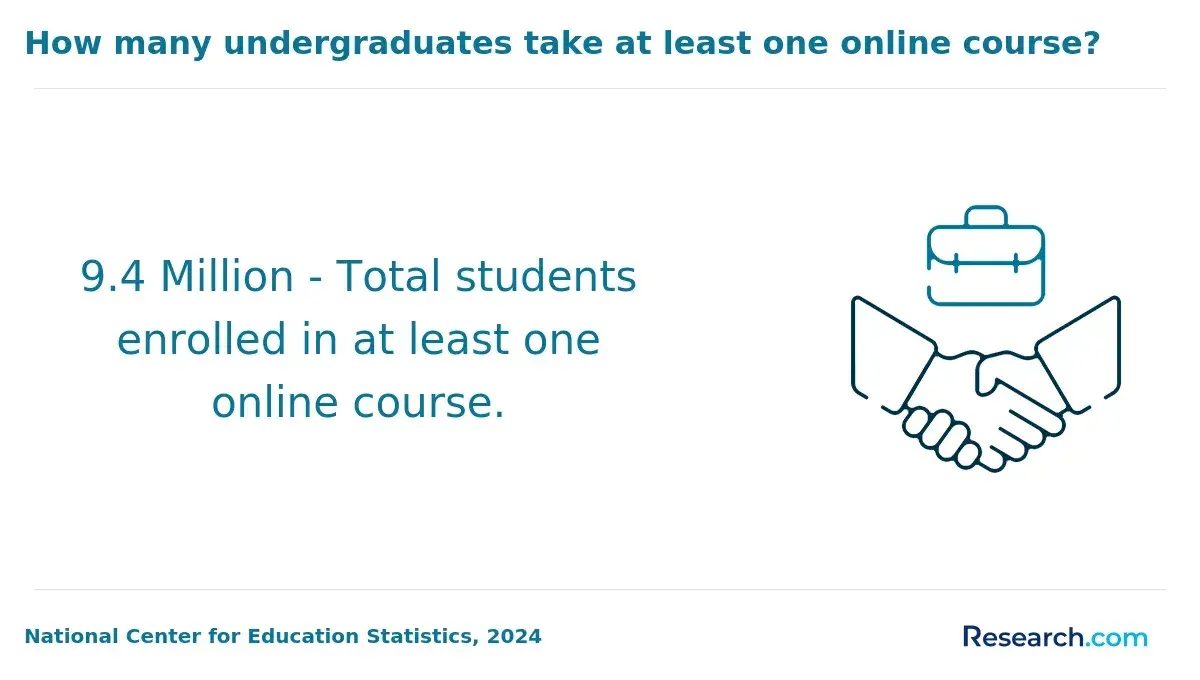
However, transferability hinges on articulation agreements, residency rules, and program-specific standards to maintain academic rigor and industry relevance. According to the National Center for Education Statistics in 2024, approximately 76% of students transferring between accelerated bachelor's degree online accredited successfully move over half their credits, a figure that highlights both the potential and limits of credit portability in this field.
These evaluation practices require adult learners to carefully strategize academic planning by balancing timely course completion against the risk of redundant credit denial. Leveraging emerging technology such as AI-enabled transcript analysis improves transparency and speeds decisions but does not eliminate the need for expert interpretation of equivalencies and program fit. For military-affiliated students and adult professionals, understanding the nuanced interplay of accreditation, syllabus alignment, and transfer policies is critical to maximizing prior learning value and mitigating the financial and temporal costs of re-education.
Which Alternative Credits Are Most Commonly Accepted by Industrial Design Programs?
Acceptance of alternative credits has evolved into a strategic approach within industrial design programs to expand accessibility and expedite degree completion for adult learners rather than merely reflecting a policy adjustment. Programs increasingly assess credit for prior learning (CPL), military training, standardized exams like CLEP, competency-based evaluations, and community college coursework through rigorous equivalency reviews that consider accreditation standards and residency requirements.
For example, while military-affiliated students often gain credit for leadership and technical training due to recognized ACE credit guides, these credits typically fulfill general education or elective requirements instead of core design studio courses, highlighting a critical tradeoff between credit transfer and mastery of specialized hands-on skills. Recent findings from the Council for Adult and Experiential Learning indicate that over 75% of institutions offering industrial design or related fields incorporate some form of CPL, reflecting a growing commitment to flexible degree pathways.
However, limitations on upper-division transfer credits and program-specific policies can extend time-to-degree if students rely heavily on alternative credits. Those navigating transfer credit acceptance for adult learners in industrial design should prioritize programs with transparent credit evaluation processes and clear transfer planning strategies to maximize affordability and maintain progress toward career-relevant competencies.
Such scrutiny ensures that previously earned credits translate into meaningful academic and workforce advantages without undermining essential professional standards. Additionally, prospective students concerned with how much does a doctorate in education cost might find similar complexities in transfer policies in other professional fields, making it vital to understand institutional nuances before committing to a program.
How Are Industrial Design Schools Improving Transfer Pathways for Community College Students?
Industrial design programs increasingly prioritize strengthening transfer pathways because minimizing credit loss directly affects time to degree and student retention. Articulation agreements and dual-admission partnerships now more often specify precise course equivalencies, addressing the persistent issue where up to 40% of transfer students find their community college credits partially rejected.
This clarity allows students to maintain academic momentum rather than repeating content, though variation in rigor and institutional policies means credit acceptance remains uneven. Transfer advising combined with degree maps tailored for adult learners and working students is essential to navigating these complexities, enabling strategic selection of prerequisite and general education courses aligned with industrial design requirements.
Schools are also expanding recognition of prior learning assessments to credit relevant professional experience, catering to military-affiliated and non-traditional learners whose skills may not originate from standard coursework. Digital platforms expedite transcript evaluations, fostering transparency but still requiring student diligence amid differing institutional standards. These adaptations can shorten degree timelines and broaden accessibility, yet prospective transfer students must carefully weigh whether program-specific transfer frameworks match their prior studies.
A community college student pursuing a degree in industrial design faced uncertainty when initial credit evaluations differed between the community college and the four-year institution. Despite an extensive articulation agreement, some design studio credits were flagged for review due to content mismatch. Transfer advisors helped the student adjust course selections in the final semester, aligning them closely with the receiving program's map. Although relieved to avoid significant credit loss, the student experienced frustration navigating conflicting information and appreciated the proactive advising that clarified expectations, enabling a more predictable transfer process and shorter path to degree completion.
How Can Transfer Credits Help Industrial Design Students Graduate Faster?
Transfer credit policies for industrial design students rarely guarantee a straightforward acceleration of degree completion because acceptance hinges on nuanced program requirements and institutional evaluations. Many industrial design programs maintain strict residency rules and require significant upper-division studio and hands-on coursework that transfer credits cannot replace, especially for core skill-building in areas like technical drawing or capstone projects.
Adult learners and military-affiliated students may find value in prior learning assessments or credit from workforce certifications, but this often applies only to general education or foundational courses, making careful planning essential to align credits with program-specific demands and avoid unexpected delays. Programs adapting transfer credit policies to better accommodate nontraditional students do create opportunities to shorten graduation timelines, but the variability in acceptance rates and the need for portfolio reviews can extend the decision process and complicate enrollment strategies.
Students transferring from community colleges or other universities should scrutinize articulation agreements and credit applicability to avoid losing credits due to inconsistent credit equivalency standards. Balancing affordability and timely degree completion involves understanding these transfer acceptance limits alongside evolving flexible scheduling or hybrid delivery options. These practical considerations give working professionals and transfer students a clearer picture of how transfer credits impact their course sequencing and long-term career plans.
For those exploring pathways to reduce time-to-degree, integrating transfer credits requires a strategic approach grounded in realistic academic planning. Industrial design students evaluating options should consider their unique prior credits and how these fit within program structures that emphasize specialized skill development.
Programs increasingly recognize the importance of transfer credit flexibility for adult learners, a trend reflected across related fields like blockchain school education, where course relevancy and transferability also affect degree completion. Navigating these complexities with informed expectations helps maximize credit mobility while aligning with employer expectations for practical competencies.
How Much Money Can Students Save Through Industrial Design Transfer Credit Opportunities?
Transfer credit acceptance can materially lower the overall cost of completing an industrial design degree by shortening time-to-degree and reducing redundant coursework, but its effectiveness heavily depends on institutional policies and program requirements. For example, adult learners or military-affiliated students with relevant prior training may use assessments and credit recommendations-such as those endorsed by the American Council on Education-to bypass foundational classes, yet residency rules often require completing 30 to 50 percent of credits directly through the awarding institution.
These constraints mean that, despite potential tuition savings of 20 to 30 percent identified by the National Student Clearinghouse Research Center in 2024, full financial gains are contingent on how rigorously a program enforces course equivalencies and credit caps, especially given the specialized studio and technical classes in industrial design. Community colleges frequently serve as cost-efficient stepping stones by providing transferable credits at roughly one-third to one-half the tuition of four-year schools, allowing for thousands of dollars in savings.
However, uneven articulation agreements and the necessity to retake certain courses to meet degree-specific standards can reduce these benefits. Working professionals must also weigh indirect costs such as lost income or childcare when planning transfers, as delayed graduation due to partial credit acceptance may offset upfront tuition reductions. Strategic evaluation of transfer policies relative to individual academic backgrounds is critical to ensure that previously earned credits translate into tangible time and financial advantages within industrial design pathways.
How Are Industrial Design Programs Supporting Military Students and Workforce Learners Through Transfer Credits?
Industrial Design programs increasingly recognize the varied training and professional experience military-affiliated and workforce learners bring, but translating this into meaningful degree credit remains complicated. While more than 85% of colleges accept some form of military or professional certification credits, as noted by a 2024 American Council on Education report, actual credit awarded in Industrial Design programs often depends heavily on alignment with specific curricula and learning outcomes, which limits the transferability of many workforce credentials or military training.
For example, a service member with advanced CAD software certification may gain partial credit, but wide variations in program technical requirements often leave significant coursework still required, affecting time-to-degree and educational cost.
Many schools employ Prior Learning Assessments to attempt validation of apprenticeships, portfolios, or challenge exams, yet the inconsistency in PLA standards and credit articulation causes up to 30% of military students to face "credit loss" during transfer, according to a 2024 Government Accountability Office analysis. This gap not only prolongs degree completion but also complicates academic planning for adult learners balancing professional obligations.
Consequently, while flexible degree pathways blending online and competency-based modules exist, their effectiveness depends on how comprehensively institutions integrate workforce credentials and military experience into credit decisions, underscoring the need for prospective students to critically evaluate credit acceptance policies to avoid unexpected course-load burdens and delayed graduation timelines.
These evolving transfer policies reflect growing but uneven institutional responsiveness to the needs of military and workforce learners in Industrial Design, highlighting that reductions in required coursework are often partial rather than full. Adult learners must therefore weigh program-specific credit recognition practices alongside employer expectations for industry-relevant skills, ensuring that prior learning validation aligns not only with academic standards but also with practical career advancement objectives in the design field.
What Transfer Credit Innovations Are Shaping the Future of Industrial Design Education?
Transfer credit innovations are increasing degree accessibility and shortening completion timelines for adult learners and working professionals in industrial design education, but variability in credit acceptance remains a significant barrier. Institutions leveraging AI-assisted transcript evaluation report up to 30% faster processing times, helping reduce administrative delays yet raising concerns about uniform credit quality across diverse programs.
For example, students with military training or micro-credentials must navigate inconsistent policies on prior learning credit, complicating education planning despite these being recognized pathways. Such disparities require prospective students to critically assess how flexible transfer credit policies for adult learners in industrial design apply in practice rather than rely on touted institutional flexibility.
Expanding credit for prior learning (CPL) beyond portfolios to include employer-verified skills and digital credentials enhances recognition of informal learning but introduces challenges in standardizing assessments and ensuring alignment with workforce expectations. Competency-based education models, increasingly integrated into transfer frameworks, offer the potential to validate mastery over seat time yet require careful calibration to avoid curricular dilution or accreditation issues.
Institutions are also developing formal transfer pathway agreements and utilizing digital credentialing platforms to improve credit portability, but these solutions vary widely in execution. Adult learners should weigh these real-world tradeoffs when considering options like online interdisciplinary studies admissions and costs as part of a broader strategy to leverage prior learning and reduce overall time to degree in industrial design.
How Can Adult Learners Maximize Transfer Credits in an Industrial Design Program?
Maximizing transfer credit acceptance in industrial design programs requires adult learners to strategically navigate institutional credit evaluation frameworks and anticipate the real impact on degree progression. For instance, a student transferring from a community college may find that only core design courses transfer fully, while electives do not, limiting credit applicability and potentially extending time-to-degree.
Many institutions cap transferable credits around 50% to 75%, and adult learners must weigh how these limits affect both course sequencing and overall educational costs. Recognizing how prior learning assessments-such as portfolio reviews or competency exams-translate into credits can reduce redundant coursework but demands proactive engagement during the application process.
Transfer credit strategies for adult learners in industrial design also involve leveraging military or workforce experience, which some schools formally recognize to streamline degree completion. However, policies vary widely, so learners should verify how nontraditional credits from certifications or MOOCs integrate with program requirements, especially since such credits often have limited transferability or apply only to electives.
Effective use of degree-mapping tools and academic advising can clarify these nuances well in advance, preventing unexpected credit denial. Navigating these complexities aligns closely with the goals of many seeking accelerated or flexible pathways, akin to options explored in the fastest online MBA programs, where reducing time and cost without sacrificing credential validity is paramount.
References
- Save money as a transfer student vs. going straight to SCAD https://boards.core77.com/t/save-money-as-a-transfer-student-vs-going-straight-to-scad/24260
- Donald J. Smith School of Building Technology and Design https://www.fanshawec.ca/programs-and-courses/schools/donald-j-smith-building-technology-design
- Increasing Community College Transfers: Progress and Barriers - Public Policy Institute of California https://www.ppic.org/publication/increasing-community-college-transfers-progress-and-barriers/
- Transfer Students https://handbooks.artcenter.edu/artcenter-catalog/transfer-students
- Industrial Design Track AFA, Degrees | Programs Near Me | County College of Morris (CCM) https://www.ccm.edu/programs/industrial-design/
- Transfer Students | Undergraduate Admissions https://www.artcenter.edu/admissions/undergraduate-admissions/transfer-students.html
- The Future of Industrial Design Education - Interwoven https://getinterwoven.com/insight/the-future-of-industrial-design-education/
- New Techniques in Industrial Design Education https://www.jonkolko.com/writing/new-techniques-in-industrial-design-education
- Seamless Transfer Pathways - Education Design Lab https://eddesignlab.org/project/seamlesstransferpathways/
- 3 higher ed program design strategies to serve career changers and advancers | EAB https://eab.com/resources/blog/adult-education-blog/3-higher-ed-program-design-strategies-to-serve-career-changers-and-advancers/
Other Things You Should Know About Industrial Design
Transfer credits often cover general education or foundational design theory, but many programs require in-person studio courses to develop critical hands-on skills. Relying heavily on transferred credits can leave gaps in practical experience, which employers prioritize for job readiness. Prospective students should weigh whether accepting more credits shortens their time in active design labs, possibly affecting portfolio depth and skill mastery.
Industrial design evolves rapidly with new software and prototyping methods, so programs often update curricula to stay aligned with industry standards. Transferred credits from older courses may not fully reflect these updates, risking outdated knowledge. Students should prioritize programs that require updated core design courses, even if it means fewer credit transfers, to maintain competitive relevance in the job market.
While transferring credits can reduce time to degree, rushing through remaining requirements might diminish opportunities to refine a comprehensive and diverse portfolio. Employers in industrial design value depth of problem-solving and experimental work that often comes from extended studio projects. Adult learners should balance the appeal of rapid completion with the need for robust, demonstrable design capabilities that support long-term career growth.
While flexible transfer policies offer clear time and cost advantages, programs emphasizing structured mentorship and career services can enhance practical skills and job placement. For adult learners and working professionals, investing in programs with strong industry connections and individualized guidance often yields better employment outcomes than maximizing transferred credit volume alone. Prioritizing holistic program support can outweigh marginal differences in credit acceptance.