2027 How to Become a Computer Forensics Investigator

Co-Founder and Chief Data Scientist
Becoming a computer forensics investigator is a strong career option for people who want to combine technical problem-solving with investigative work. These professionals recover, examine, and explain digital evidence from computers, phones, cloud systems, networks, and connected devices. Their work can support criminal cases, corporate breach investigations, civil litigation, fraud reviews, and national security matters.
The need for this skill set is tied to a broader cybersecurity talent gap. According to the SANS Institute, over 700,000 cybersecurity jobs were unfilled in 2022, and employers in government, law enforcement, healthcare, finance, consulting, and technology continue to compete for people who can investigate digital incidents accurately and legally.
This guide explains what computer forensics investigators do, which degrees and certifications are most useful, how to enter the field without experience, what tools professionals use, where jobs are available, and how to evaluate whether this career path fits your goals. It is designed for students, IT professionals, cybersecurity beginners, and career changers who want a practical roadmap rather than a vague overview.
Quick Answer: How do you become a computer forensics investigator?
To become a computer forensics investigator, you typically need a bachelor’s degree in digital forensics, cybersecurity, computer science, information technology, or a related field; practical experience with forensic tools and evidence handling; and industry certifications that validate your technical ability. Many entry-level candidates begin in IT support, cybersecurity, incident response, law enforcement technology units, internships, or lab-based academic programs before moving into full forensic investigation roles.
The strongest candidates understand operating systems, networks, cybersecurity fundamentals, scripting, data recovery, legal evidence procedures, documentation, and chain of custody. Certifications such as EnCE, CCE, CEH, CISSP, and GCFA can strengthen job applications, especially for roles involving incident response, expert testimony, or advanced technical analysis.
Key Things You Should Know About Becoming a Computer Forensics Investigator
- Technical depth matters. Investigators need strong knowledge of computers, storage systems, operating systems, networks, cybersecurity controls, malware behavior, and forensic acquisition methods.
- Legal procedure is part of the job. Because digital evidence may be used in court or internal investigations, professionals must understand chain of custody, evidence integrity, privacy rules, and documentation standards.
- The field changes quickly. New devices, encrypted platforms, cloud services, AI-generated content, and cyberattack methods require continuous learning.
- Communication is as important as analysis. Investigators must explain complex technical findings in reports, briefings, and sometimes testimony for nontechnical audiences.
- Hands-on practice is essential. Degrees and certifications help, but employers also look for lab work, tool experience, internships, case simulations, capture-the-flag work, or a portfolio of forensic projects.
- What does a computer forensics investigator do?
- What degree is best for becoming a computer forensics investigator for 2027?
- What certifications are required for a career in computer forensics?
- How do I get started in computer forensics with no experience?
- Where can computer forensics investigators work?
- What is the average salary of a computer forensics investigator?
- What are the most commonly used computer forensics tools?
- What emerging technologies are shaping the future of computer forensics?
- What legal and ethical challenges do computer forensics investigators face?
- How can interdisciplinary expertise enhance computer forensic investigations?
- How can advanced education boost computer forensics expertise?
- How can data science empower computer forensic investigations?
- How do computer forensic investigators keep up with the trends in digital forensics?
- How do international regulations affect computer forensic investigations?
- How can advanced cybersecurity education enhance computer forensics expertise?
- What are the biggest challenges in computer forensics investigations?
- What career advancement opportunities are there for computer forensics investigators?
- How can interdisciplinary studies complement computer forensic investigations?
What does a computer forensics investigator do?
A computer forensics investigator, also called a digital forensics analyst or digital forensic examiner, collects and analyzes electronic evidence while preserving its integrity. The role sits at the intersection of cybersecurity, law, data recovery, incident response, and investigative reporting.
These professionals may work on criminal investigations, corporate data breaches, insider threats, intellectual property theft, ransomware incidents, fraud cases, workplace misconduct, or civil litigation. Their findings can influence legal strategy, disciplinary action, insurance claims, regulatory reporting, and criminal prosecution.
- Acquire digital evidence without altering it: Investigators create forensic images of drives, mobile devices, cloud accounts, logs, and other data sources so the original evidence remains protected.
- Recover hidden, deleted, encrypted, or damaged files: They use specialized methods to locate information that may have been deleted, corrupted, concealed, or intentionally protected.
- Trace the source and scope of security incidents: By reviewing logs, user activity, network traffic, malware artifacts, and system timelines, investigators determine what happened and how far an incident spread.
- Support law enforcement and legal teams: They help investigate hacking, fraud, identity theft, harassment, exploitation, financial crime, and other cases involving digital evidence.
- Write reports that can stand up to scrutiny: A good report explains methods, evidence, findings, limitations, and conclusions clearly enough for attorneys, executives, investigators, judges, juries, or regulators.
- Maintain chain of custody: Every transfer, action, and access point must be documented so evidence remains credible and admissible when needed.
- Provide expert testimony when required: Some investigators explain technical evidence in court, depositions, hearings, or internal proceedings.
Professionals who enjoy the strategic side of technology may later move into security leadership or technology management. For example, a CTO career path can be a long-term option for people who want to oversee broader technology infrastructure and risk management.
| Task | What it involves | Why it matters |
| Evidence acquisition | Creating verified copies of drives, devices, accounts, and logs | Protects original evidence from contamination |
| Forensic analysis | Examining files, metadata, timelines, network activity, and user behavior | Helps reconstruct what happened |
| Incident investigation | Identifying compromise points, attacker movement, and affected systems | Supports containment and remediation |
| Documentation | Recording methods, findings, assumptions, and evidence handling | Makes conclusions defensible |
| Testimony or briefing | Explaining findings to legal, executive, or investigative audiences | Turns technical evidence into usable decisions |
What degree is best for becoming a computer forensics investigator for 2027?
The best degree for becoming a computer forensics investigator is usually a bachelor’s degree in digital forensics, cybersecurity, computer science, information technology, or a closely related field. A dedicated digital forensics degree is the most direct route, but broader technical degrees can also work if you add forensic coursework, labs, internships, and certifications.
Many employers use a bachelor’s degree as a baseline for entry-level analyst or investigator roles. A master’s degree is not always required, but it can be helpful for federal roles, senior analyst positions, research-heavy work, expert consulting, management, or specialized areas such as malware analysis, cloud forensics, and incident response leadership.
| Degree option | Best for | Strengths | Limitations to consider |
| Digital Forensics | Students who want the most targeted preparation | Focuses on evidence recovery, forensic tools, legal procedures, and investigation workflows | May be less flexible than broader computing degrees if you later change career direction |
| Cybersecurity | Students interested in breach investigations and incident response | Covers threats, defenses, risk, security operations, and attack methods | May require extra coursework in evidence handling and forensic reporting |
| Computer Science | Students who want strong technical foundations | Builds programming, systems, algorithms, and software knowledge | May not include legal procedure or forensic labs unless you choose electives |
| Information Technology | Students aiming for practical systems and network roles | Develops skills in systems administration, networking, databases, and infrastructure | May need additional specialization in cybersecurity and digital forensics |
Students who want flexibility can compare traditional programs with online or accelerated options. For example, an accelerated computer science degree online may help motivated students complete a technical bachelor’s pathway faster, while still leaving room for forensic electives or certifications.
Computer and digital forensics professionals are especially important in law enforcement because many modern investigations involve digital evidence. A degree should therefore do more than teach tools. Look for programs that include forensic imaging, evidence handling, operating systems, networking, scripting, report writing, legal foundations, and hands-on labs.
How to choose the right degree program
- Check accreditation first. Make sure the institution is properly accredited before comparing tuition, format, or course titles.
- Review the lab environment. Strong programs give students access to realistic forensic cases, disk images, mobile data, network logs, and industry tools.
- Look for legal and ethics coursework. A purely technical program may not prepare you for evidence admissibility, privacy rules, or expert reporting.
- Ask about internships or agency partnerships. Experience with police departments, corporate security teams, cyber ranges, or forensic labs can improve employability.
- Compare transfer policies. Career changers with prior college credit may be able to reduce time and cost.
- Match the degree to your target role. Law enforcement forensics, corporate incident response, e-discovery, malware analysis, and consulting can require different skill mixes.
What certifications are required for a career in computer forensics?
Computer forensics certifications are not always legally required, but they are often valuable because they show employers that you can follow recognized methods, use specific tools, and work within professional standards. Certifications can be especially helpful for candidates who are changing careers, applying for competitive government roles, or trying to move from general IT into investigations.
The right credential depends on your background and target job. Someone comparing a career path cyber security vs computer science degree should understand that cybersecurity-focused roles often place heavy emphasis on certifications, while computer science-heavy paths may rely more on technical portfolios, programming strength, and systems knowledge.
| Certification | Primary focus | Best fit |
| Certified Information Systems Security Professional (CISSP) | Broad cybersecurity leadership, risk, operations, and security management | Experienced professionals moving toward senior security or management roles |
| Certified Ethical Hacker (CEH) | Ethical hacking methods, vulnerability discovery, and attacker mindset | Investigators who want stronger offensive security knowledge |
| EnCase Certified Examiner (EnCE) | Use of EnCase for digital evidence collection, preservation, and analysis | Forensic examiners working in labs, law enforcement, or litigation support |
| Certified Computer Examiner (CCE) | Computer forensic examination, evidence handling, and investigative process | Professionals seeking a recognized digital forensic examiner credential |
| GIAC Certified Forensic Analyst (GCFA) | Advanced incident response, intrusion analysis, and forensic investigation | Analysts working on cyberattacks, enterprise investigations, and response teams |
A scientific study determined that the passing score for the GCFA exam is 71%. Candidates should verify current exam requirements, experience recommendations, renewal rules, and costs directly through each certifying organization before enrolling.
Which certification should you pursue first?
- If you are new to cybersecurity: Start with foundational security knowledge before attempting advanced forensic or incident response certifications.
- If you want law enforcement or lab work: Prioritize evidence-focused credentials such as EnCE or CCE.
- If you want corporate incident response: Consider credentials that emphasize intrusion analysis, malware artifacts, logs, and enterprise investigations.
- If you want leadership later: CISSP can be useful once you meet experience expectations and want to move toward strategy, governance, or management.
How do I get started in computer forensics with no experience?
You can enter computer forensics without direct investigation experience, but you need to build proof that you understand systems, security, evidence handling, and forensic methods. The most realistic entry routes are education, IT support, cybersecurity operations, internships, law enforcement technology roles, military cyber work, and self-directed lab practice.
- Build a technical foundation. Learn operating systems, file systems, networking, basic scripting, cybersecurity fundamentals, and data storage concepts.
- Choose a relevant degree or coursework. A computer science degree online, cybersecurity degree, IT program, or digital forensics program can provide the academic base employers expect.
- Practice with forensic tools. Use legal training datasets and lab images to practice imaging, hashing, file recovery, timeline analysis, and report writing.
- Earn an entry-level certification. Certifications such as CompTIA Security+ and CEH can show baseline knowledge and commitment, especially when your resume lacks paid experience.
- Create a portfolio. Document lab projects, tool walkthroughs, mock investigations, writeups, certifications, and scripts you have built. Do not include private or unauthorized data.
- Look for adjacent jobs. Help desk, systems administration, SOC analyst, IT audit, e-discovery technician, and incident response support roles can all lead toward forensics.
- Join professional communities. Local cybersecurity groups, LinkedIn communities, Reddit forums, conferences, and professional associations can help you find mentors and entry-level opportunities.
- Apply for internships or volunteer opportunities. Universities, nonprofits, local agencies, and security teams may offer supervised ways to gain practical exposure.
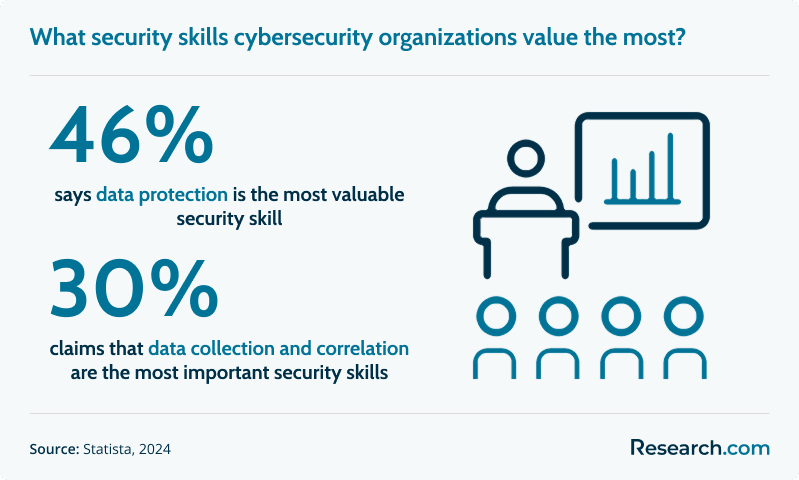
Hands-on work is critical. Capture-the-flag events, cyber ranges, open-source tools such as Autopsy and FTK Imager, and structured labs can help you demonstrate practical ability. Cybersecurity organizations also identify data protection as one of the important skills digital forensics professionals should have.
Beginner-friendly experience paths
| Starting point | Useful next step | Why it helps |
| No technical background | Take introductory networking, operating systems, and cybersecurity courses | Builds the vocabulary and concepts needed for forensic work |
| IT support experience | Move into security operations, endpoint support, or systems administration | Develops real-world knowledge of devices, users, logs, and networks |
| Cybersecurity beginner | Practice incident response labs and forensic imaging | Connects security alerts to evidence-based investigation |
| Law enforcement background | Add technical training in digital evidence and forensic tools | Combines investigative procedure with technical capability |
| College student | Seek internships, research projects, and forensic lab coursework | Creates job-ready evidence of practical skills |
Where can computer forensics investigators work?
Computer forensics investigators work anywhere digital evidence matters. Some jobs focus on criminal investigations, while others center on corporate breaches, compliance, litigation, fraud, or national security. The work setting affects the types of cases you handle, the tools you use, the legal rules you follow, and the pace of the job.
- Law enforcement agencies: Police departments, state agencies, and federal investigative units use digital forensics professionals to examine devices and online evidence in criminal cases involving fraud, hacking, identity theft, exploitation, threats, and other offenses.
- Government agencies: Federal organizations, including the FBI, NSA, and Department of Homeland Security hire cybersecurity professionals, including digital forensics specialists who support national security, cyber terrorism investigations, infrastructure protection, and breach response.
- Private corporations: Large organizations in finance, healthcare, retail, technology, manufacturing, and energy hire forensic professionals to investigate incidents, insider threats, policy violations, data theft, and regulatory matters.
- Cybersecurity firms: Consulting and managed security companies provide digital forensics and incident response services to clients after ransomware, intrusions, business email compromise, malware infections, or data exposure.
- Law firms and legal consultancies: Legal teams use forensics experts for e-discovery, evidence review, expert analysis, litigation support, and testimony preparation.
- Consulting firms: Broader advisory firms hire investigators to support compliance, risk reviews, cyber strategy, internal investigations, and post-incident analysis.
- Academic institutions: Colleges, universities, and research centers may employ experienced professionals to teach, conduct research, operate labs, or train future investigators. Some roles require doctoral preparation, and working professionals may explore part time PhD programs if they want to balance advanced study with employment.
| Work setting | Common case types | Good fit for |
| Law enforcement | Criminal investigations, device analysis, warrants, court evidence | People comfortable with legal procedure and public service |
| Corporate security | Breaches, insider threats, data loss, compliance incidents | Professionals interested in business risk and enterprise systems |
| Consulting | Client incidents, litigation support, expert analysis | Investigators who like variety and high-pressure problem-solving |
| Government | National security, cyber threats, infrastructure protection | Candidates who can meet eligibility, background, or clearance requirements |
| Academia | Teaching, research, lab development, workforce training | Professionals interested in education and research |
What is the average salary of a computer forensics investigator?
Computer forensics investigator pay depends on experience, employer, location, specialization, security clearance requirements, and whether the role is in law enforcement, consulting, corporate security, or federal service. According to Glassdoor data from 2025, the annual salary typically ranges between $79,000 and $134,000, which places the role among the highest paying computer science jobs.
- Entry-level roles: New investigators can expect to earn around $67,000 annually. Early work may include assisting senior examiners, preparing evidence, running standard tool workflows, reviewing logs, and learning documentation procedures.
- Mid-level and senior roles: Professionals with four to six years of experience can move closer to the higher end of the range, with potential earnings exceeding $142,000 in senior or specialized positions. These jobs may involve complex investigations, forensic team leadership, malware analysis, cloud investigations, or network forensics.
- Location and employer type: Metropolitan labor markets, federal agencies, large corporations, and specialized consulting firms may offer higher pay, although cost of living and workload expectations also matter.
- Specialization and credentials: Investigators with skills in cloud forensics, malware analysis, mobile forensics, incident response, expert testimony, or certifications such as CEH and GCFA may be more competitive for higher-paying roles.
Salary ranges are not guarantees. Before choosing a program or certification based on earnings, compare job postings in your target location, look at required experience, and review whether employers are asking for law enforcement background, security clearance, tool-specific certifications, or advanced degrees.
What are the most commonly used computer forensics tools?
Computer forensics tools help investigators collect, preserve, search, recover, decode, analyze, and report digital evidence. No single tool does everything. Professionals often use several platforms depending on whether the evidence comes from a computer, mobile device, network, cloud account, memory image, or enterprise security system.
For students choosing between cybersecurity and data science degrees, forensic tools show how investigative cybersecurity can be: the job requires technical analysis, pattern recognition, evidence correlation, and careful interpretation of data.
| Tool | Common use | Why investigators use it |
| EnCase | Evidence acquisition, disk analysis, preservation, and reporting | Widely used in legal and investigative environments |
| FTK (Forensic Toolkit) | Processing, indexing, and searching large evidence sets | Helps investigators review large volumes of data efficiently |
| Autopsy | Disk image analysis, file recovery, and activity review | Open-source platform with a user-friendly interface |
| Wireshark | Network traffic capture and protocol analysis | Useful for identifying suspicious communications and network behavior |
| X-Ways Forensics | Disk imaging, file recovery, and detailed forensic analysis | Often valued for advanced and complex examinations |
| Magnet AXIOM | Analysis of computers, smartphones, and cloud services | Combines evidence from multiple sources into one investigative workflow |
According to a survey of more than 200 digital forensics investigators, more than 81% of these professionals learn a new technique or try a new tool every few months. That finding reflects a central truth of the field: tool familiarity cannot be static. Investigators must keep testing new methods as devices, apps, encryption, cloud platforms, and attacker behavior evolve.
What emerging technologies are shaping the future of computer forensics?
Computer forensics is being reshaped by artificial intelligence, machine learning, cloud computing, distributed systems, blockchain, mobile ecosystems, and Internet of Things devices. These technologies are not replacing investigators, but they are changing what investigators must know and how evidence is collected, searched, and interpreted.
- AI and machine learning: These methods can help sort large datasets, flag anomalies, cluster similar artifacts, and prioritize evidence for review. Investigators still need to validate results and avoid overreliance on automated outputs.
- Cloud computing: Evidence may be stored across providers, regions, user accounts, logs, backups, and collaboration platforms. Access, preservation, and jurisdiction become more complicated.
- Blockchain and distributed ledgers: Investigators may need to trace transactions, verify records, and understand how decentralized systems affect attribution and evidence integrity.
- IoT and connected devices: Smart home devices, wearables, vehicles, cameras, and industrial sensors can contain valuable timelines and location data, but access may be limited.
- Encrypted platforms: Encryption protects privacy and security, but it can also make evidence recovery and attribution more difficult.
Professionals who want deeper preparation in algorithms, systems, and advanced computing may consider programs such as online masters in computer science, especially if they want to move into advanced technical analysis, research, or leadership roles.
What legal and ethical challenges do computer forensics investigators face?
Computer forensics investigators must balance thorough evidence collection with privacy, legality, proportionality, and professional ethics. The fact that data is technically accessible does not automatically mean it can be lawfully reviewed or used. Investigators must work within warrants, consent agreements, employer policies, court orders, regulatory rules, and jurisdictional limits.
- Chain of custody: Evidence handling must be documented from collection through storage, analysis, transfer, and presentation.
- Privacy and scope: Investigators should collect and review only what is authorized and relevant to the matter.
- Evidence integrity: Methods must avoid altering original data or creating uncertainty about authenticity.
- Cross-border restrictions: Data stored in another country may be subject to different legal requirements.
- Bias and interpretation: Investigators must avoid overstating conclusions, ignoring alternative explanations, or allowing outside pressure to shape findings.
- Use of automated tools: AI-assisted or automated analysis should be validated and explained rather than treated as unquestionable truth.
Although an online game development degree is not a standard requirement for forensic work, interdisciplinary technical training in software, simulation, virtual environments, and interactive systems can help some professionals understand complex digital artifacts and user-generated environments more deeply.
How can interdisciplinary expertise enhance computer forensic investigations?
Digital investigations increasingly involve more than computers and networks. Cases may include health records, financial systems, mobile applications, online communities, industrial devices, cloud collaboration tools, or behavioral data. Interdisciplinary knowledge helps investigators understand context, risk, and regulatory obligations.
For example, professionals familiar with the health informatics career pathway may better understand electronic health records, privacy-sensitive workflows, data governance, and regulated information environments. That perspective can be useful when investigations involve healthcare systems, patient data, insider access, or compliance concerns.
| Complementary field | How it can support forensic work |
| Data science | Improves pattern detection, anomaly analysis, and large-scale evidence review |
| Law or criminal justice | Strengthens understanding of procedure, warrants, testimony, and admissibility |
| Healthcare informatics | Adds insight into sensitive records, privacy rules, and clinical data systems |
| Behavioral analytics | Helps interpret user activity, insider threats, and suspicious behavior patterns |
| Software development | Supports reverse engineering, artifact interpretation, and tool validation |
How can advanced education boost computer forensics expertise?
Advanced education can help experienced investigators move beyond standard tool operation into deeper analysis, research, leadership, and specialized technical work. Graduate study may be useful for professionals who want to lead incident response teams, become expert witnesses, teach, manage forensic programs, or work on emerging areas such as AI-assisted analysis and cloud investigations.
Programs that emphasize machine learning, data analytics, secure systems, and advanced computing can be especially relevant. For example, affordable online master's programs in artificial intelligence may help professionals understand how automated analysis, anomaly detection, and model-driven workflows can support modern investigations.
Before enrolling, compare the curriculum against your career target. A degree that sounds advanced is not automatically useful for forensics. Look for practical labs, research options, cybersecurity depth, tool access, and faculty with relevant experience.
How can data science empower computer forensic investigations?
Data science can make digital investigations more efficient when the evidence volume is too large for manual review alone. Investigators may need to analyze logs, user behavior, file metadata, communications, transactions, endpoint alerts, or cloud records across many systems. Data science methods can help detect patterns, rank suspicious activity, identify anomalies, and connect artifacts that would otherwise be difficult to link.
Machine learning and big data analytics can support evidence triage, but they do not replace forensic judgment. Investigators still need to verify data quality, document methods, explain limitations, and ensure that conclusions are supported by defensible evidence. Professionals seeking structured training may review affordable online data science master's programs as one route to building these skills.
How do computer forensic investigators keep up with the trends in digital forensics?
Computer forensic investigators stay current through formal training, tool experimentation, professional communities, vendor updates, conferences, research, and case-based learning. Continuous learning is not optional because operating systems, apps, attack methods, encryption, cloud services, and legal standards change frequently.
Many resources used by forensic professionals also help people looking for tips for starting your career in cybersecurity, especially when they combine theory with hands-on practice.
- Print books: A digital forensics survey conducted by Belkasoft found that 45% of respondents use print books for reference and deeper study.
- Webinars and YouTube: Online sessions and videos are widely used for learning about new tools, DFIR workflows, case examples, and practical techniques.
- Hands-on tool testing: Because forensic platforms change often, investigators regularly test new tools and techniques to avoid falling behind.
- Online communities and forums: Discussion boards and professional groups help investigators troubleshoot unusual artifacts, compare methods, and learn from peers.
- Vendor documentation: Tool vendors often publish release notes, white papers, webinars, and training materials for new features.
- Conferences and workshops: Events can provide exposure to current cases, research, legal updates, and specialized labs.
- Internal case reviews: Teams improve by reviewing what worked, what failed, and how evidence handling or reporting can be strengthened.
Technical ability remains central, but soft skills are also highly valued in cybersecurity and forensic work. Investigators need patience, ethics, curiosity, clear writing, attention to detail, and the ability to explain uncertainty without weakening the credibility of their work.
How do international regulations affect computer forensic investigations?
International regulations can significantly affect digital forensic investigations because evidence may be stored, transmitted, or controlled across multiple jurisdictions. A company headquartered in one country may use cloud infrastructure in another, employ staff globally, and serve customers under several privacy regimes. Investigators must know when local authority is enough and when additional legal steps are required.
- Data protection laws: Rules such as Europe's GDPR and region-specific mandates can affect what data may be collected, reviewed, transferred, or disclosed.
- Cross-border evidence transfers: Moving data between countries may require legal approval, contractual safeguards, or specific handling procedures.
- Admissibility standards: Evidence that is collected improperly may be challenged or excluded in legal proceedings.
- Cloud provider policies: Providers may have their own procedures for lawful requests, preservation, and access logs.
- Chain of custody across borders: Investigators must document who accessed data, where it was stored, how it was transferred, and how integrity was verified.
Professionals from heavily regulated fields can sometimes bring useful perspectives to these problems. For instance, people familiar with biotechnology masters jobs may already understand controlled data environments, compliance obligations, and documentation-heavy workflows.
How can advanced cybersecurity education enhance computer forensics expertise?
Advanced cybersecurity education can strengthen forensic work by deepening an investigator’s understanding of how attacks occur, how systems are defended, and how digital traces are created. This is especially valuable for professionals moving from device-level examination into enterprise incident response, breach investigation, threat hunting, or leadership.
A strong cybersecurity program should connect technical skills with real-world scenarios: intrusion analysis, network defense, malware behavior, cloud security, risk management, and incident response planning. Cost-conscious students may compare options such as the cheapest online master's in cyber security while also checking accreditation, curriculum quality, faculty experience, and hands-on lab access.
What are the biggest challenges in computer forensics investigations?
Computer forensics can be rewarding, but the work is demanding. It requires technical precision, legal awareness, emotional resilience, and constant adaptation. The career may be connected to high-value educational paths, including some of the highest paying degrees, but salary potential should not obscure the difficulty of the work.
- Encryption and data obfuscation: Suspects, attackers, and even normal security tools may use encryption, anti-forensic methods, hidden containers, or obfuscation that makes evidence harder to access and interpret.
- Rapid technological change: New operating systems, apps, devices, cloud platforms, and security controls force investigators to update methods frequently.
- Large evidence volumes: Modern cases may involve terabytes of data, multiple endpoints, mobile devices, cloud accounts, logs, chat platforms, and backups.
- Cloud and IoT forensics: Cloud services and connected devices can scatter evidence across remote systems, vendor-controlled platforms, and limited-access environments.
- Legal complexity: Privacy rules, warrants, consent, employment policies, and international regulations can limit what investigators can collect or review.
- Work-life balance: The 2021 Digital Forensics Survey by Belkasoft highlighted that computer forensics investigators often struggle with maintaining a healthy work-life balance because investigations can be urgent and time-sensitive.
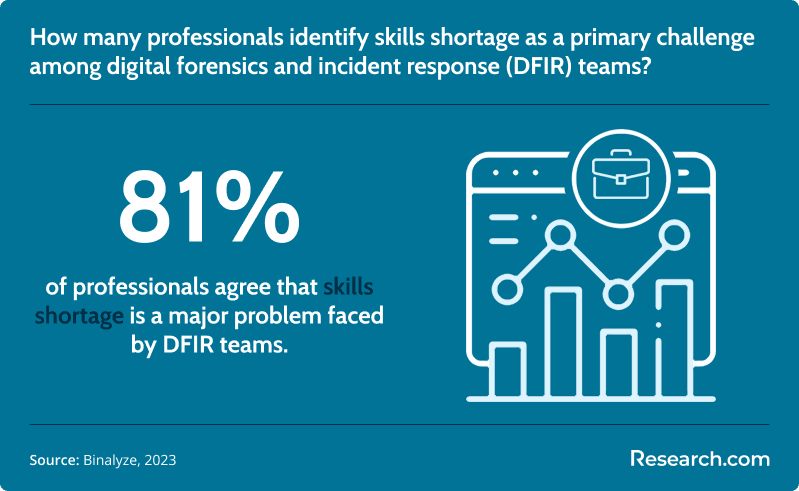
- Skills shortage: A recent survey by Binalyze reports that skills shortage is one of the biggest challenges in digital forensics incident response and management.
| Common mistake | Why it causes problems | Better approach |
| Choosing a degree without checking accreditation | Credits, financial aid eligibility, and employer recognition may be affected | Verify institutional accreditation before enrolling |
| Focusing only on tuition | Tool access, labs, fees, transfer policies, and internship support also affect value | Compare total cost and career preparation |
| Assuming all online programs provide hands-on experience | Some programs are theory-heavy and may not build practical forensic skills | Ask about labs, datasets, tools, and capstone projects |
| Relying only on rankings | A highly ranked school may not fit your schedule, budget, or target role | Match program features to your career plan |
| Learning tools without learning legal procedure | Evidence may be challenged if collection and documentation are weak | Study chain of custody, privacy, reporting, and admissibility |
| Assuming salary outcomes are guaranteed | Pay varies by location, experience, specialization, and employer | Review job postings and local labor market expectations |
What career advancement opportunities are there for computer forensics investigators?
Computer forensics investigators can advance into senior technical roles, incident response leadership, cybersecurity consulting, management, expert witness work, research, or teaching. Career growth usually comes from a combination of case experience, specialized tools, certifications, advanced education, strong reporting, and leadership ability.
Some professionals pursue the shortest masters degree they can find in computer science, cybersecurity, or a related field to accelerate advancement. Speed can matter, but it should not be the only factor. The program still needs credible accreditation, relevant coursework, and enough technical depth to support your goals.
- Senior Forensics Analyst: Handles complex investigations, reviews junior analysts’ work, manages evidence workflows, and advises on investigative strategy.
- Cybersecurity Consultant: Helps organizations investigate incidents, improve defenses, prepare for litigation, and reduce future risk.
- Incident Response Manager: Leads teams that contain, investigate, and recover from cyber incidents.
- Chief Information Security Officer (CISO): Oversees cybersecurity strategy, governance, risk management, and organizational security programs.
- Forensics Instructor: Teaches digital forensics in academic, law enforcement, government, or industry training settings.
- Expert witness or litigation consultant: Provides technical opinions, reports, deposition support, and testimony in legal matters.
- Specialist roles: Focuses on malware forensics, mobile forensics, cloud forensics, memory analysis, e-discovery, or threat intelligence.
Questions to ask before choosing this career path
- Do I enjoy detailed technical work that may require long periods of careful analysis?
- Am I comfortable documenting every step and defending my conclusions?
- Can I handle sensitive, disturbing, or confidential case material professionally?
- Do I want to work in law enforcement, corporate security, consulting, government, or legal support?
- Am I willing to keep learning new tools, platforms, and legal requirements throughout my career?
- Would I prefer a broader cybersecurity role, or am I specifically drawn to evidence-based investigation?
What do graduates say about becoming a computer forensics investigator?
-
: "
Moving from IT into computer forensics gave me the kind of work I had been looking for. Each investigation feels different, and I like knowing that my technical skills can help uncover evidence that matters. The career also feels stable because organizations continue to need people who can investigate digital incidents. Drew
"
-
: "
After earning a computer forensics certification, I was able to step into a role that combines analysis, problem-solving, and collaboration with investigators. The work changes constantly, so I am always learning new tools and techniques. That challenge is one of the reasons I enjoy the field. Marla
"
-
: "
Digital forensics has allowed me to contribute to significant cybercrime investigations. It is a demanding field, but the constant learning keeps it interesting. I take pride in producing careful, defensible work that can help people understand what happened. Garrett
"
How can interdisciplinary studies complement computer forensic investigations?
Interdisciplinary study can strengthen computer forensic investigations when cases involve sensitive data, regulated systems, specialized software, or complex human behavior. Investigators who understand another domain can ask better questions, interpret records more accurately, and avoid overlooking context that a purely technical review might miss.
Healthcare informatics is one example. Professionals who study health data systems learn about privacy, access controls, audit trails, ethical handling of sensitive information, and regulatory compliance. For investigators working on cases involving medical systems or patient data, an affordable online nursing informatics degree may provide useful background in how sensitive digital information is managed and protected.
Key Insights
- Computer forensics investigators recover, preserve, analyze, and explain digital evidence for criminal, corporate, legal, and government investigations.
- A bachelor’s degree in digital forensics, cybersecurity, computer science, or IT is the most common entry point, while graduate study can support specialization or leadership.
- Certifications such as EnCE, CCE, CEH, CISSP, and GCFA can strengthen credibility, but the best choice depends on whether you want lab work, incident response, consulting, or management.
- Hands-on experience is essential. Build skills through labs, internships, tool practice, cyber ranges, entry-level IT work, and documented portfolio projects.
- According to Glassdoor data from 2025, annual salaries typically range between $79,000 and $134,000, with entry-level roles around $67,000 and senior or specialized positions potentially exceeding $142,000.
- Investigators commonly use tools such as EnCase, FTK, Autopsy, Wireshark, X-Ways Forensics, and Magnet AXIOM, but tool knowledge must be updated regularly.
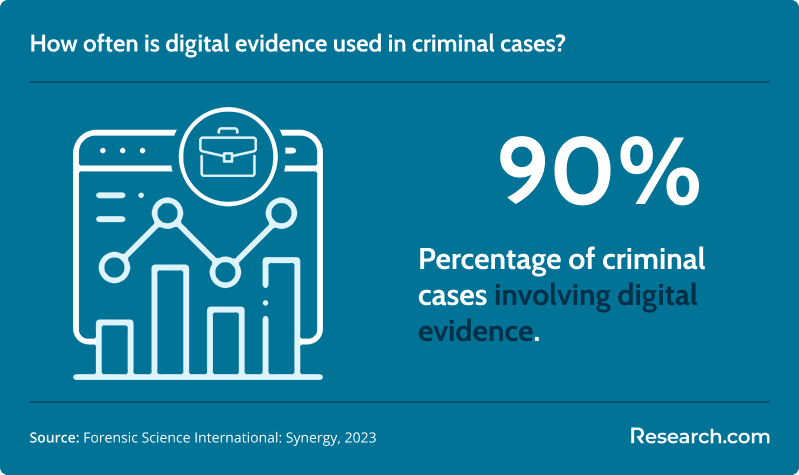
- Digital evidence is involved in nearly 90% of criminal cases, emphasizing its importance in modern investigations.
- About 46% of cybersecurity organizations place data protection among the top five required skills for cybersecurity professionals.
- More than 46% of computer forensics investigators report working overtime beyond the expectations of their jobs.
- Nearly 80% of investigators rely on free internet content to stay current with their skills and knowledge.
- A Master’s in Computer Science is one of the master’s degrees that can be completed in less than two years.
- The biggest risks for students are choosing an unaccredited or weakly practical program, ignoring legal procedure, assuming salary outcomes are guaranteed, or relying on rankings instead of career fit.
References:
- Binalyze, & IDC. (2023). The State of Digital Forensics and Incident Response 2023. Binalyze.com. Retrieved March 25, 2025.
- FBI. (2023, April). FBI careers: Digital forensics specialist. Federal Bureau of Investigation. Retrieved March 20, 2025.
- Glassdoor. (2024, June 6). How much does a Digital Forensic Investigator make? Glassdoor.com. Retrieved March 20, 2025.
- ISC2. (2024, October 31). 2024 ISC2 cybersecurity workforce study. International Information System Security Certification Consortium. Retrieved March 25, 2025.
- Miller, C. M. (2023). "A survey of prosecutors and investigators using digital evidence: A starting point". Forensic Science International: Synergy, 6, 100296.
- NICCS. (n.d.). Computer forensics boot camp training. National Initiative for Cybersecurity Careers and Studies. Retrieved March 20, 2025.
- SANS Institute. (2022, August 9). SANS Institute answers the White House call to help build a diverse cybersecurity talent pipeline and fill 700,000 jobs across the United States. PR Newswire. Retrieved March 19, 2025.
Other Things You Should Know About Becoming a Computer Forensics Investigator
In 2027, the cost of certification in computer forensics can vary widely, depending on the certification body and course provider. On average, expect to invest anywhere from $500 to $3,500 for courses and exam fees combined. Some advanced certifications may cost more but offer broader career opportunities.
In 2027, aspiring computer forensics investigators typically need a bachelor's degree in computer science, cybersecurity, or a related field. Additionally, certifications like Certified Computer Examiner (CCE) or EnCase Certified Examiner (EnCE) are beneficial to demonstrate specialized skills and improve job prospects.