2027 Public Safety Transfer Credit Trends: How Schools Are Adapting for Adult Learners

Co-Founder and Chief Data Scientist
After transferring from a community college, a working firefighter discovers that nearly 30% of their credits in emergency management won't transfer to their new public safety bachelor's program. This gap threatens to add extra semesters and thousands of dollars in tuition. A 2024 study from the National Student Clearinghouse Research Center found that while overall credit mobility improves, specialized fields like public safety see slower acceptance rates due to inconsistent course equivalencies and evolving certification requirements. For adult learners balancing careers and families, these credit transfer challenges reshape educational timelines and financial planning significantly.
This article analyzes how schools are adapting transfer credit policies, expanding prior learning assessments, and refining flexible degree pathways to help public safety students complete programs more efficiently and affordably.
Key Things to Know About Public Safety Transfer Credit Trends for Adult Learners
- Institutions increasingly accept military and workforce training as credit, reflecting employer demand for practical experience; however, variability in credit evaluation can limit applicability, requiring careful verification for transferability.
- Advanced technology-enabled transcript reviews speed credit assessments but may overlook nuance in non-traditional courses, affecting adult learners' ability to leverage alternative credits fully within degree completion timelines.
- Expanded credit-for-prior-learning policies lower direct education costs and reduce time to degree, yet some programs trade breadth for depth, potentially impacting skill comprehensiveness valued by public safety employers.
- Key Things to Know About Public Safety Transfer Credit Trends for Adult Learners Key Things to Know About Public Safety Transfer Credit Trends for Adult Learners
- How Are Public Safety Programs Changing Transfer Credit Policies for Adult Learners? Evolving Adult Transfer Policies
- Why Are More Public Safety Schools Accepting Credit for Prior Learning and Work Experience? Prior Learning Credit Benefits
- How Do Public Safety Colleges Evaluate and Award Transfer Credits Today? Transfer Credit Evaluation Process
- Which Alternative Credits Are Most Commonly Accepted by Public Safety Programs? Accepted Alternative Credits
- How Are Public Safety Schools Improving Transfer Pathways for Community College Students? Improved Community College Pathways
- How Can Transfer Credits Help Public Safety Students Graduate Faster? Accelerating Degree Completion
- How Much Money Can Students Save Through Public Safety Transfer Credit Opportunities? Cost Saving Through Transfers
- How Are Public Safety Programs Supporting Military Students and Workforce Learners Through Transfer Credits? How Are Public Safety Programs Supporting Military Students and Workforce Learners Through Transfer Credits?
- What Transfer Credit Innovations Are Shaping the Future of Public Safety Education? What Transfer Credit Innovations Are Shaping the Future of Public Safety Education?
- How Can Adult Learners Maximize Transfer Credits in a Public Safety Program? Maximizing Your Transfer Credits
How Are Public Safety Programs Changing Transfer Credit Policies for Adult Learners?
Public safety programs are increasingly shifting toward more flexible and inclusive transfer credit policies to address the complex realities faced by adult learners, transfer students, and military-affiliated individuals. This broader acceptance includes recognizing a wider range of prior learning experiences, such as work history and military training, which can substantially reduce time-to-degree and limit redundant coursework.
For example, a student transitioning from a community college with law enforcement coursework or EMT certification might find that expanded articulation agreements allow these credits to apply directly toward their degree requirements, improving affordability and course sequencing. Such policies, while beneficial, require careful planning, as institutional credit caps and varying acceptance standards can significantly influence how much credit ultimately transfers and how quickly a student progresses.
The trend reflects a response to growing demand across healthcare systems and public safety sectors for professionals who already hold relevant credentials or certifications. Many programs now incorporate technology-driven transcript evaluations and credit recommendation systems to streamline transfer decisions, providing greater transparency for students comparing options or aiming to maximize their previously earned credits.
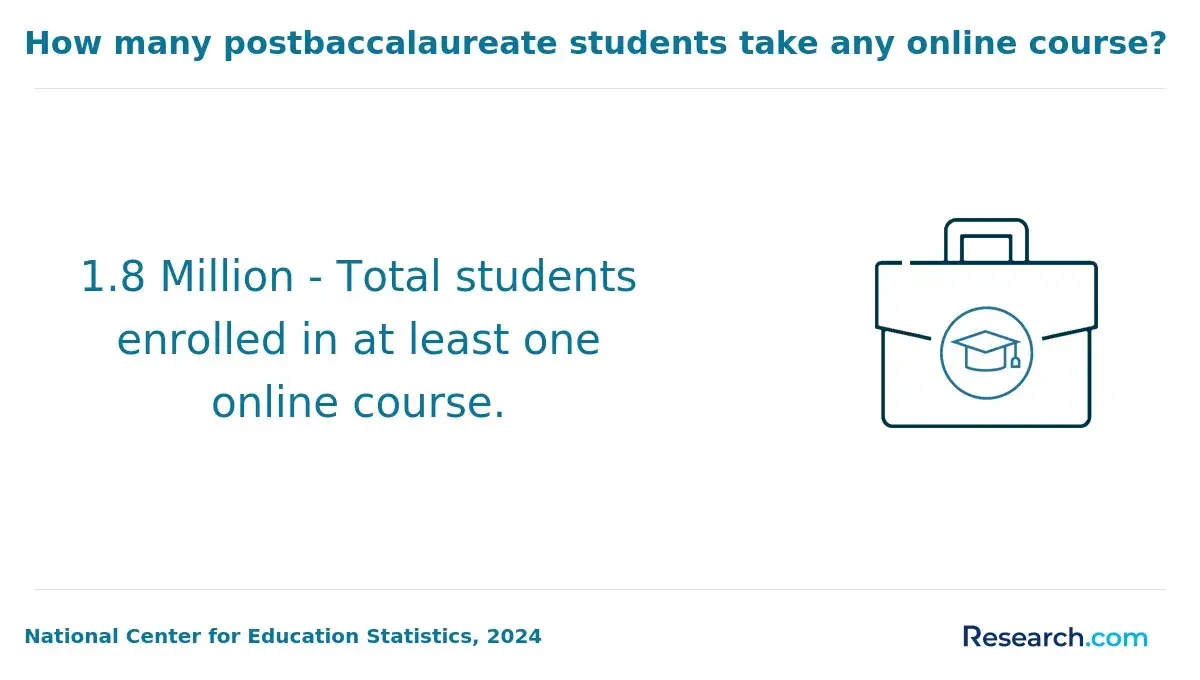
However, not all institutions treat certifications or alternative credits equally, creating a landscape where understanding specific school policies becomes a critical decision point. According to a recent report by the National Center for Education Statistics, nearly 70% of adult learners benefit from some form of credit for prior learning or transfer credits, highlighting the importance of these evolving policies in boosting credit mobility and educational access for learners navigating public safety adult education pathways.
For those seeking flexible nursing pathways that minimize clinical requirements, options like RN to BSN online with no clinicals complement these trends by further addressing adult learner needs in allied fields.
Why Are More Public Safety Schools Accepting Credit for Prior Learning and Work Experience?
The increasing acceptance of credit for prior learning (CPL) and work experience in public safety schools signals a shift in institutional strategy, driven less by generosity and more by pragmatic alignment with workforce realities and adult learner needs. Schools are recognizing that military training, industry certifications, and employer-based competency assessments often map directly onto core public safety competencies, reducing redundant coursework and shortening time-to-degree. This adaptation is not uniform, however, and institutions must balance the efficiency gained through CPL with maintaining academic rigor and ensuring that experiential credits reflect substantive, verifiable learning outcomes rather than just experience duration. A 2024 report from the Council for Adult and Experiential Learning notes that students receiving CPL credits are 2.5 times more likely to complete their programs, emphasizing how credit acceptance supports persistence and enrollment accessibility amidst competing life commitments.
The practical implications extend into degree-completion strategies, where adult learners leverage CPL to navigate flexible pathways tailored to their prior experience while managing work and family responsibilities. Yet, this can create challenges in how schools assess and validate experiential learning, with significant variation in portfolio evaluations and credit transfer policies that influence student decisions about where and how to apply for credit. From a workforce perspective, expediting credential attainment allows graduates to enter critical public safety roles more swiftly, addressing urgent staffing needs in fields such as emergency management and firefighting. However, some students face tradeoffs when CPL accelerates educational timelines but may limit exposure to deeper theoretical content, which can affect long-term career mobility and specialized expertise within public safety sectors.
An adult learner with a military background recounted grappling with the CPL process while transferring into a public safety degree. Although confident that military training aligned well with course outcomes, they found the prior learning assessment demanding, requiring detailed documentation of training modules and supervisor verification. The institution's evolving policies meant the credit evaluation timeline was uncertain, adding stress but also cautious optimism about potentially shortening degree completion. This experience highlighted the tension between recognizing valid professional knowledge and navigating administrative hurdles that can complicate credit transfer, underscoring why more but not all public safety schools increasingly accept CPL as a deliberate, carefully managed strategy rather than a straightforward benefit.
How Do Public Safety Colleges Evaluate and Award Transfer Credits Today?
Transfer credit evaluation in public safety colleges has evolved into a critical function that balances enrollment management with student progression, rather than a mere administrative step. Institutions increasingly treat the process as a strategic decision that impacts time-to-degree and cost efficiency, especially for adult learners balancing work, military service, or prior professional training. For instance, a veteran transitioning from military emergency response roles must navigate not only transcript equivalencies but also how documented operational experience and certifications convert into academic credit within program-specific frameworks, which often impose limits on experiential learning credits to maintain accreditation standards.
Colleges scrutinize factors like institutional accreditation, detailed course equivalencies, and course recency, typically requiring coursework completed within a 5- to 7-year window to ensure relevancy. A growing number of programs also weigh military and non-traditional credits more heavily-over 70% have expanded acceptance policies since 2023, according to the National Center for Education Statistics-reflecting the necessity to accelerate degree completion without compromising rigor. This layered approach influences how credits satisfy core competencies and state certification requirements, affecting how transfer students from community colleges, four-year institutions, or workforce programs plan their academic paths to avoid redundant coursework and prolongation of educational costs.
While modern evaluations incorporate AI-assisted tools to streamline transcript analysis, final decisions often require expert judgment to interpret specialized content in areas like fire science or law enforcement training. This combination aims to optimize student mobility and degree flexibility through modular, competency-based pathways, allowing credits to fulfill specific skills rather than strict course-for-course replacements. However, students must carefully assess institutional policies on residency and upper-division credit thresholds to align their prior learning with program demands, a factor crucial to minimizing delays and maximizing the practical value of previously earned credits.
Which Alternative Credits Are Most Commonly Accepted by Public Safety Programs?
Acceptance of alternative credits has evolved into a strategic approach within many public safety programs to enhance degree accessibility and expedite completion for adult learners. Credit for prior learning (CPL) and military training credits remain central, reflecting institutional recognition of practical experience equivalent to formal coursework. However, navigating program-specific policies-such as residency requirements and upper-division credit limits-is essential since many schools impose caps or require thorough course equivalency reviews, which can affect how much credit is ultimately transferable. For example, a working professional with extensive emergency services certifications might find that some credits count toward core requirements, but must balance this against institutional mandates that safeguard academic rigor and prevent excessive reliance on nontraditional credits.
Incorporating workforce certifications and standardized exams like CLEP and DSST into transfer credit options for adult learners in public safety programs has gained traction, with about 60% of programs accepting these methods to varying degrees. Competency-based assessments and select online coursework also offer flexible pathways but vary widely in acceptance depending on accreditation and alignment with program outcomes. These dynamic policies influence affordability and degree timelines significantly, pressing learners to strategically plan credit transfers to avoid redundant courses while maximizing prior learning.
Prospective students should weigh these factors carefully, especially when choosing programs with different transfer benchmarks to ensure smoother academic progression aligned with employment goals. More on structuring such programs is detailed in accelerated college programs.
How Are Public Safety Schools Improving Transfer Pathways for Community College Students?
Improving transfer pathways has become a critical strategy for public safety programs to address the unique challenges faced by adult learners who balance education with work and other responsibilities. Rather than relying on informal credit reviews, many institutions now establish formal articulation agreements that define exactly which community college credits are applicable, reducing unexpected credit rejections and shortening time to degree completion.
Data from the National Student Clearinghouse Research Center in 2024 shows that such structured agreements can boost transfer student retention and on-time graduation rates by up to 20%. Additionally, public safety schools increasingly recognize prior professional training, certifications, and military experience, allowing transfer students to convert existing competencies into academic credit—a crucial factor for those with non-traditional educational backgrounds seeking to avoid redundant coursework.
However, students must still navigate varying policies across institutions, as not all credits transfer equally due to differences in course content, state regulations, and accreditation standards. Transfer advising plays an essential role in helping students strategically select courses and understand degree requirements, boosting academic momentum and preventing costly delays.
Dual-admission and co-enrollment options also ensure smoother transitions by granting access to resources at both sending and receiving schools. These adaptations enhance educational accessibility but require students to remain proactive and informed, particularly when planning transfer decisions that impact career credentials and local employment eligibility.
A community college student pursuing a public safety degree recalls facing uncertainty during the initial transcript evaluation, unsure if key emergency management courses would fulfill the receiving school's requirements. Early conversations with transfer advisors provided conflicting information, causing frustration.
After the student engaged in iterative credit assessments and leveraged a dual-admission agreement enabling concurrent enrollment resources, a clearer pathway emerged. The formal articulation agreement ultimately clarified transferable credits, allowing the student to plan a course sequence that minimized credit loss and supported a realistic graduation timeline—highlighting the practical impact of evolving transfer policies on individual educational trajectories.
How Can Transfer Credits Help Public Safety Students Graduate Faster?
Transfer credits can significantly influence how quickly public safety students complete their degrees, but their actual impact depends heavily on institutional policies and program-specific criteria. Not all credits transfer equally; for instance, many programs enforce upper-division course requirements and residency constraints that limit how much previously earned coursework counts toward graduation. Students must also weigh whether transferred credits fulfill core public safety competencies or merely elective requirements, as misaligned credits may not reduce time to degree effectively. This complexity underscores the importance of scrutinizing credit acceptance rates and evaluating how prior learning aligns with degree maps, especially for those balancing education with professional responsibilities.
Adult learners, military-affiliated students, and working professionals often rely on flexible transfer policies and prior learning assessments (PLAs) to translate service training or workplace experience into credits, reflecting broader trends in accelerating graduation with public safety transfer policies. However, these pathways can involve tradeoffs, including navigating inconsistent acceptances among institutions and potential gaps in foundational knowledge. Articulation agreements between community colleges and four-year institutions facilitate smoother credit mobility but vary in scope and rigor, making early advising essential for effective enrollment strategies. These factors collectively affect affordability and timeline planning, considerations that are critical for degree completion and workforce entry.
Those evaluating public safety degree options should also consider broader academic offerings, such as programs recognized as the best kinesiology programs, where overlapping coursework or dual majors may enhance transfer credit utility. Thoughtful planning around transfer credits—not merely accumulating them—enables students to reduce redundancy and strategically shorten their educational pathways without compromising essential training or certification requirements.
How Much Money Can Students Save Through Public Safety Transfer Credit Opportunities?
Transfer credit policies within public safety programs can substantially reduce the financial burden for adult learners, military-affiliated students, and working professionals who possess prior training or coursework. For instance, recognizing military service and workforce certifications enables some students to bypass between 6 and 15 credit hours, effectively cutting tuition costs and condensing the time needed to complete their degrees.
A 2024 report from the National Student Clearinghouse Research Center found that transfer students maximizing credit acceptance trimmed nearly 30% off their tuition expenses, demonstrating how avoiding redundant classes and leveraging prior learning assessments can influence educational investment.
However, these savings are conditioned by institutional constraints such as residency requirements, transfer credit limits, and stringent course equivalency reviews that vary significantly across colleges. Many public safety degree pathways still restrict how much prior experiential learning can count toward core requirements, often forcing retakes and prolonging enrollment.
Furthermore, inconsistent articulation agreements mean that credits from fire academies or law enforcement training are not uniformly accepted, necessitating careful advising and strategic selection of programs to ensure credits translate directly into reduced cost and time. As such, students must weigh transfer policies critically, recognizing that credit acceptance shapes not only immediate tuition savings but also long-term degree completion trajectories and workforce entry timing.
How Are Public Safety Programs Supporting Military Students and Workforce Learners Through Transfer Credits?
Transfer credit policies in public safety programs increasingly reflect the complexities of assessing military training and workforce credentials beyond traditional transcripts. Although over 80% of colleges employ formal evaluation processes aligned with American Council on Education (ACE) guidelines, these mechanisms often vary in how they translate military and professional experiences into academic credits.
For adult learners and military-affiliated students, this inconsistency directly affects degree-completion timelines and remaining course requirements, requiring careful academic planning to avoid redundant coursework or unexpected credit denials. Institutions expanding credit for prior learning frameworks must balance rigorous validation with flexibility, as misalignment can impede the practical goal of faster progression without compromising academic standards.
Despite improvements, many workforce learners face barriers when professional licenses or certifications do not neatly align with established credit categories, a factor limiting educational accessibility in public safety fields. For instance, approximately 25% of military veterans report credit denials according to the National Center for Education Statistics, illustrating ongoing fragmentation in policy application and highlighting the need for clearer national standards.
Some programs are experimenting with competency-based assessments and portfolio reviews to capture real-world skills more accurately, potentially reducing time-to-degree and improving employability outcomes. These evolving transfer practices represent strategic adaptations but also introduce tradeoffs, as adult learners must navigate varying institutional requirements that may affect their educational and career trajectories differently across regions and institutions.
What Transfer Credit Innovations Are Shaping the Future of Public Safety Education?
Emerging transfer credit innovations are reshaping access and degree mobility in public safety education, particularly for adult learners balancing workforce demands and prior experience. Institutions increasingly deploy AI-assisted transcript evaluations, which the National Center for Education Statistics reported in 2024 can cut credit review times by up to 40%, enabling faster degree progression while maintaining scrutiny over academic quality.
However, inconsistencies in credit acceptance—especially for military and workforce learning—pose challenges; for example, a student transferring from military service may find uneven recognition of training across institutions, complicating long-term planning. These technology-driven transfer credit assessment methods highlight tradeoffs where rapid processing must be balanced with maintaining rigorous standards to ensure skill relevance and employer expectations are met.
Credit for prior learning continues to expand as a significant pathway, including through competency-based education models that prioritize practical skills over traditional seat time, aligning more closely with public safety workforce needs. Yet, the complexity of assessing nontraditional credentials means that improved credit portability relies on cross-institutional agreements and emerging digital credentialing systems that use blockchain for validation, enhancing trust but requiring broad collaboration.
Such innovations can reduce redundant coursework, but they demand learners understand variability in transfer policies and degree articulation. Adult learners and transfer students should also consider credentials linked to specialized roles, including options like becoming a functional medicine nurse practitioner, which illustrate how sector-specific pathways interface with these evolving credit policies.
How Can Adult Learners Maximize Transfer Credits in a Public Safety Program?
Adult learners aiming to maximize transferable credits in public safety programs must strategically navigate institutional policies that often cap credit acceptance between 60-75% of total degree requirements. For example, a working professional transferring military training and community college coursework may find that some credits meet foundational public safety topics under articulation agreements while others fall outside alignment due to competency or accreditation mismatches.
These tradeoffs affect course sequencing and can extend time-to-degree when repeated classes are required to meet residency rules or specific program outcomes. A thorough understanding of each institution's transfer limits and credit evaluation criteria is essential to ensure efficient pathway planning and avoid unexpected coursework.
Credit for prior learning (CPL) assessments remain a vital tool, especially for military-affiliated students or those with relevant workforce certifications, as data from the National Center for Education Statistics (2024) shows institutions with CPL policies have a 25% higher credit acceptance rate. Still, learners must weigh whether transferring older or non-aligned credits benefits long-term academic flexibility or risks leaving gaps in essential public safety competencies.
Degree-mapping tools can help visualize how applied credits integrate into degree requirements, but early, detailed transcript reviews by program advisors are critical to avoid costly missteps that affect educational costs and timing. For working professionals, leveraging these evaluations alongside informed choices about which credits to transfer can sustain both employability and timely degree completion. Those seeking specialized paths may also consult resources on related fields, such as SLP grad school acceptance rate.
References
- Shaping the Future of Public Safety https://papers.govtech.com/How-Next-Gen-Technology-is-Shaping-the-Future-of-Public-Safety-144240.html
- 2.04 – Transfer and Exam-based Credit | Ozarks Technical Community College https://ozarkstech.edu/policy/2-04-transfer-of-credit/
- Findings (Beyond Transfer) - Public Agenda https://publicagenda.org/resource/beyond-transfer/findings/
- 4 Ways Transfer Students Can Maximize College Credits for Prior Experience https://www.umassglobal.edu/blog-news/4-ways-transfer-students-can-maximize-college-credits-prior-experience
- Public Safety https://www.klamathcc.edu/en-US/academics/academic-programs/public-safety/
- The Missing Link: Adult Learners and the Transfer Process https://www.cael.org/resouces/pathways-blog/the-missing-link-adult-learners-and-the-transfer-process
- Increasing Community College Transfers: Progress and Barriers - Public Policy Institute of California https://www.ppic.org/publication/increasing-community-college-transfers-progress-and-barriers/
- Improving the Share of Adult Learners at Four-Year Institutions - Ithaka S+R https://sr.ithaka.org/blog/improving-the-share-of-adult-learners-at-four-year-institutions/
- College Credit for Heroes: Accelerating Degree Completion | Journal of Veterans Studies https://journal-veterans-studies.org/articles/10.21061/jvs.v8i1.264
- Giving Credit Where Credit is Due | All4Ed https://all4ed.org/publication/giving-credit-where-credit-is-due/
Other Things You Should Know About Public Safety
While transfer credits can shorten time to degree completion, they sometimes substitute for courses that provide critical hands-on training or scenario-based learning crucial in public safety education. This can affect skill readiness for fieldwork, as some accepting schools may waive practical components linked to the transferred credits. Adult learners should evaluate whether the accepting institution requires supplemental labs, simulations, or field hours post-transfer to maintain competency standards expected by employers and certification bodies.
Employers in public safety fields often prioritize candidates with comprehensive, up-to-date training that aligns with current protocols and technologies. Accepting a large volume of older or generalized transfer credits may mean missing out on recently updated coursework or specialized certifications. Prospective students should prioritize programs that balance credit transfers with opportunities to engage in targeted, employer-valued skill-building to sustain or improve job market competitiveness.
Transferring credits from unrelated disciplines can reduce overall credit hours but may lead to gaps in foundational knowledge pivotal for public safety roles, such as emergency response techniques or criminal justice principles. This can extend the time and cost required to catch up on missed core subjects later in the program. It is generally advisable to focus transfers on closely related coursework to protect the integrity of career-relevant competency development and avoid unintended delays in degree progression.
Flexible transfer credit policies can ease the course load, allowing adult learners to balance work and study more effectively by reducing redundant coursework. However, inconsistencies in credit acceptance may force students to repeat similar material, increasing workload unexpectedly and complicating time management. Selecting programs with transparent, consistent credit evaluation processes and clear pathways can mitigate these risks, helping students plan their schedules with greater certainty and reduce burnout.