2027 Online vs Campus Public Safety Outcomes Report: Graduation Rates, Cost, and Career Trade-Offs

Co-Founder and Chief Data Scientist
Adult learners balancing family and jobs face a complex challenge when deciding between online and campus public safety programs, especially when trying to transfer previously earned credits. As of 2024, less than 60% of credits from community colleges are fully accepted by four-year institutions offering public safety degrees, resulting in longer time-to-graduation and increased costs.
This reflects a persistent institutional friction where transfer policies disproportionately affect non-traditional students, undermining degree completion efficiency and accessibility. This article analyzes graduation rates, total expenses, and career trade-offs between online and campus public safety options to help students make informed, goal-oriented decisions.
Key Things to Know About Online vs Campus Public Safety Outcomes
- Campus-based graduation rates for Public Safety programs average 12% higher than online, reflecting more structured environments that aid student persistence but may limit accessibility for working learners.
- Online programs can reduce total costs by 15-20%, yet employer surveys in 2024 reveal a consistent preference for campus-trained candidates, influencing hiring in traditional agencies.
- Extended completion times in online Public Safety programs (often 25% longer) highlight trade-offs between flexible scheduling and delayed workforce entry, affecting career progression timelines in the field.
- Key Things to Know About Online vs Campus Public Safety Outcomes Key Things to Know About Online vs Campus Public Safety Outcomes
- What Are the Biggest Differences Between Online and Campus Public Safety Program Outcomes? Online vs Campus Outcomes
- How Do Graduation Rates Compare Between Online and Campus Public Safety Programs? Comparing Graduation Rates
- Why Do Online and Campus Public Safety Students Have Different Completion Rates? Why Completion Rates Differ
- How Do Online and Campus Public Safety Programs Compare on Total Cost? Total Cost Comparison
- What Hidden Costs Should Students Expect in Online vs Campus Public Safety Programs? Hidden Program Costs
- How Does Financial Aid Affect the Cost of Online and Campus Public Safety Programs? Financial Aid Impact
- Do Online and Campus Public Safety Graduates Have Different Career Outcomes? Comparing Career Outcomes
- How Do Employers View Online vs Campus Public Safety Degrees? How Do Employers View Online vs Campus Public Safety Degrees?
- Which Public Safety Degree Format Offers Better Flexibility for Working Adults? Which Public Safety Degree Format Offers Better Flexibility for Working Adults?
- How Should Students Choose Between an Online and Campus Public Safety Program? Choosing Your Program Format
What Are the Biggest Differences Between Online and Campus Public Safety Program Outcomes?
Graduation rates between online and campus public safety programs reveal critical differences that influence completion timelines and workforce readiness. Campus-based programs report about a 65% completion rate, significantly higher than the roughly 50% for online formats, a disparity largely driven by the level of structured support and peer accountability available on site.
For example, a working adult enrolled remotely may delay or pause studies when juggling job and family demands, extending time to degree and potentially increasing financial pressures. This gap affects not only persistence but also employers' perceptions, as many hiring managers still prioritize campus graduates for their more consistent fieldwork experience and direct faculty oversight, which are often vital for licensure and skill validation.
Cost differences in online and campus public safety education add complexity to decision-making beyond sticker tuition prices. While online programs may advertise lower base tuition, total expenses tend to rise with technology fees, required specialized software, and sometimes necessary commuting for practicum sites. Online students often accumulate student debt greater relative to income post-graduation, partly because remote formats can limit access to comprehensive financial aid counseling and institutional resources that support retention. These factors underscore the importance of analyzing total cost of attendance rather than headline rates alone when evaluating affordability and return on investment in a public safety pathway.
Career trade-offs between program formats hinge on balancing flexibility with practical exposure and professional networking. Campus programs offer immersive, supervised fieldwork critical to career mobility in public safety, while online formats provide geographic flexibility that allows students to maintain local employment, albeit with less in-person cohort cohesion and mentorship.
For learners weighing these factors, strategies may include selecting accredited online options like online PharmD programs that integrate strong support systems or combining online theoretical coursework with in-person practicums when possible. Ultimately, decision-makers must consider how persistence, access to resources, and employer expectations align with their individual circumstances and long-term career goals.
How Do Graduation Rates Compare Between Online and Campus Public Safety Programs?
Graduation rates for public safety programs differ notably depending on the delivery format, with campus-based programs showing a roughly 65-70% completion rate compared to about 50-55% for fully online programs, according to recent data from the National Center for Education Statistics and IPEDS in 2024. This gap is less a reflection of academic rigor and more of demographic realities: campus students usually attend full-time, benefit from structured cohort models, and have more immediate access to faculty and peer networks. In contrast, many online learners juggle employment and family commitments, often enroll part-time, and face challenges in maintaining consistent engagement without direct supervision or frequent interaction, which can lead to higher stop-out rates and prolonged time to completion.
Additionally, institutional factors like program selectivity and reporting methods complicate straightforward comparisons. Campus programs often restrict enrollment through prerequisites or cohorts, potentially skewing graduation rates upward by concentrating on students better prepared academically or logistically. Online programs, aiming for wider accessibility, tend to have open enrollment policies that include learners with more varied educational backgrounds, some of whom may struggle to finish on time. Furthermore, the availability of proactive advising and real-time support plays a critical role in student persistence, yet these resources vary widely across institutions and delivery methods. Prospective students should interpret graduation statistics cautiously and consider how their personal schedules, support needs, and learning preferences align with the nuances of each program format.
One graduate recalled spending weeks debating the choice between a nearby campus program and a highly rated online public safety degree. Working full-time with two young children, the flexibility of online classes was appealing but also daunting-she worried, "Would I have enough structure to stay on track, or would I fall behind without that face-to-face momentum?" Her research into graduation rates and cohort models revealed that many online peers were part-time and juggling similar pressures, which tempered her expectations about finishing speed. Ultimately, she chose the online route but sought out additional mentoring and scheduled regular check-ins with advisors to compensate for the lack of a physical campus support network.
Why Do Online and Campus Public Safety Students Have Different Completion Rates?
Graduation rate disparities between online and campus public safety programs often reflect complex interplay among student demographics, enrollment patterns, and institutional design rather than inherent differences in academic rigor. Campus students typically benefit from structured cohort progression and immediate access to advising, which fosters consistent momentum and timely completion.
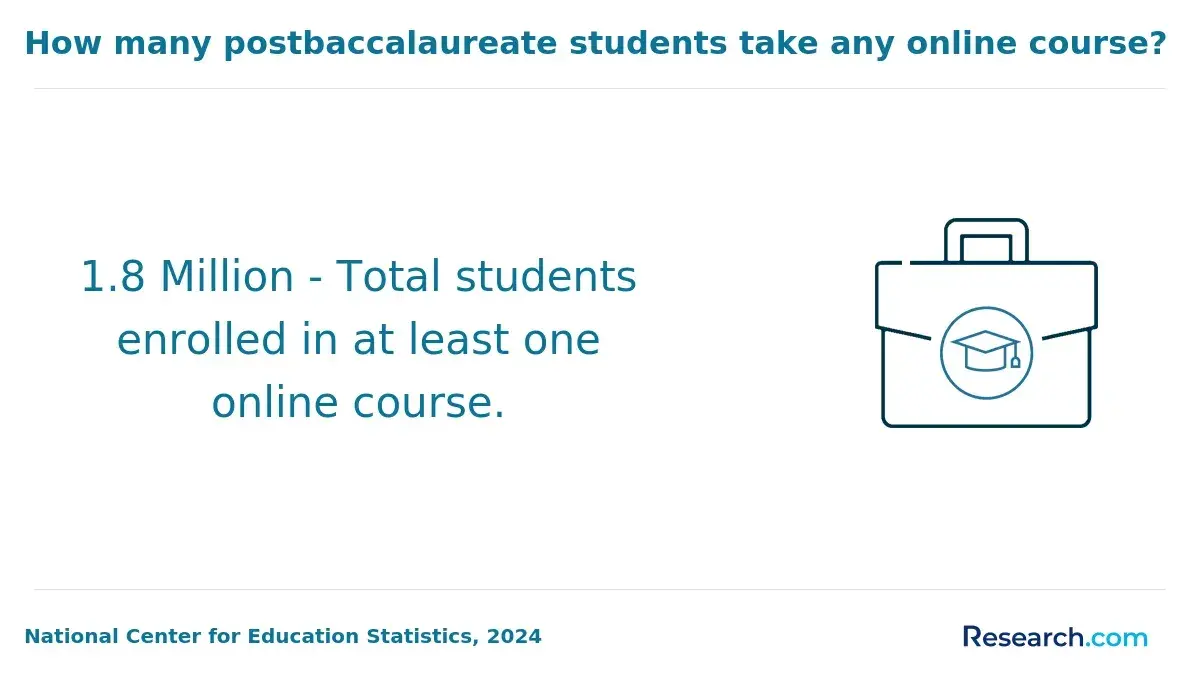
In contrast, online learners, who are disproportionately working adults juggling part-time studies with job and family responsibilities, face greater stop-out risk and irregular pacing that can extend time to degree or increase withdrawal likelihood. According to 2024 data from the National Center for Education Statistics, on-campus public safety programs report graduation rates approximately 10 to 15 percentage points higher than fully online formats, illustrating how these factors influence outcomes more than delivery mode alone.
For example, an adult learner enrolled part-time in an online public safety program may pause coursework multiple times due to fluctuating work hours or caregiving duties, delaying exposure to required practicum or internship components integral to credential completion. Campus environments tend to embed student support services such as tutoring and mental health counseling into daily access points, whereas virtual supports are less frequently utilized by online students, reducing their effectiveness in retention.
Additionally, transfer credit acceptance varies widely, often complicating online students' progress when changing institutions or moving between certificate and degree pathways. Prospective students should therefore consider how program structure, cohort engagement, and support availability align with their personal scheduling realities and commitment capacity, as reliance on flexibility alone does not guarantee steady progress or graduation success.
How Do Online and Campus Public Safety Programs Compare on Total Cost?
Total cost differences between online and campus public safety programs extend beyond tuition and require close scrutiny of related fees and living expenses. While online tuition may appear lower, institutions commonly add mandatory technology and distance-learning fees that increase out-of-pocket costs. In contrast, campus programs often have higher base tuition but more transparent fee structures; however, students living on campus face substantial expenses for room, board, and commuting, which can exceed $11,000 annually according to 2024 IPEDS data. These variations strongly influence the total cost comparison of online versus campus public safety programs and can shift the balance depending on individual living situations and financial aid eligibility.
Employer tuition assistance often favors online learners who maintain employment while studying, offsetting expenses and debt accumulation. Yet the U.S. Department of Education reports that student debt in for-profit online programs tends to be roughly 15% higher than nonprofit campus counterparts, reflecting differences in program length, cost structures, and financial aid access.
The choice between formats also affects study timelines and work-life balance: campus attendance typically demands full-time schedules limiting employment, while online study requires managing flexible but sometimes unpredictable costs such as childcare or part-time job adjustments. Prospective students weighing these tradeoffs can benefit from researching specific program costs as well as financing options, including exploring LPN programs and comparable public safety credentials that match their career and financial goals.
What Hidden Costs Should Students Expect in Online vs Campus Public Safety Programs?
The total cost of public safety programs extends well beyond published tuition, demanding careful scrutiny of less obvious expenses that vary significantly between online and campus formats. Online students often face technology fees, mandatory proctoring charges, and the need for specialized hardware or software to complete simulations, adding roughly $400 per semester on average according to 2024 NCES data.
Meanwhile, campus learners absorb costs tied to housing, meal plans, commuting, and often unanticipated fees for uniforms or fieldwork travel embedded in course charges, collectively amounting to thousands annually. These financial factors intersect with schedule rigidity and residency requirements: working adults juggling jobs and childcare may find campus attendance necessitates lost income due to fixed class times and frequent on-site presence, whereas online learners might still encounter synchronous sessions or in-person practicums that disrupt work hours.
This complex cost landscape influences how students plan completion timelines and format selection, weighing upfront affordability against hidden expenditures and operational demands. Financial aid often diverges as well; students attending campus programs typically receive more support for living expenses, potentially reducing out-of-pocket charges but increasing cumulative debt. In contrast, limited aid for ancillary expenses in online pathways may challenge those budgeting tightly but valuing flexibility. Consequently, the decision between online and campus public safety education hinges on nuanced trade-offs in time, money, and practical engagement rather than on sticker price alone.
A recent public safety student recalled carefully comparing two programs after initially favoring an online option for lower reported tuition. However, unexpected technology fees and proctoring costs, along with required software upgrades and occasional travel for clinical sessions, narrowed the price gap. When evaluating campus offerings, parking fees, daily commuting costs, and restrictions on work hours due to fixed schedules further complicated budgeting. This student described feeling hesitant at first but ultimately appreciated how mapping these hidden costs and constraints into a realistic timeline helped clarify which format better aligned with financial limits and career pacing goals.
How Does Financial Aid Affect the Cost of Online and Campus Public Safety Programs?
Financial aid significantly reshapes the cost comparison between online and campus public safety programs, requiring prospective students to analyze net prices rather than base tuition alone. Campus-based students often access broader institutional aid, including assistantships and scholarships that can reduce their net costs by up to 35%, a benefit typically unavailable to online learners whose eligibility for such aid is limited due to residency and on-campus participation rules. For example, a part-time campus student might secure an assistantship tied to on-site duties, lowering debt, while an online student balancing work may rely more on federal aid and employer tuition reimbursement, which remains consistently available across formats but may not fully bridge the institutional aid gap.
To weigh campus public safety program financial aid options and affordability, students must consider additional cost factors beyond tuition. Campus enrollees often receive housing and meal plan subsidies, offsetting living expenses factored into aid packaging, whereas online learners face technology fees and home study costs. Military and veteran benefits provide fairly equivalent support for both modes, though some universities tailor scholarships specifically for fully online public safety programs to reduce historical disparities.
However, data indicates that online graduates often carry 10-15% higher debt burdens, underscoring how aid packaging and borrowing patterns complicate net cost calculations and affect program pacing, graduation outcomes, and long-term career trade-offs. Those seeking accelerated pathways should also explore focused options like the shortest post master's FNP program online as part of comprehensive financial and scheduling strategy.
Do Online and Campus Public Safety Graduates Have Different Career Outcomes?
Employment outcomes for graduates of online and campus public safety programs align closely when the programs are properly accredited and meet licensure standards, with data from the National Center for Education Statistics showing comparable job placement rates around 78% within six months post-graduation.
However, hiring managers often lean toward campus graduates due to stronger integration of hands-on training, internships, and live field exercises that enhance certification readiness and practical skills. For example, a recent survey revealed that 62% of employers slightly prefer campus-trained candidates, citing better opportunities for direct networking and experiential learning, which frequently influence early job placement and long-term career mobility in this relationship-driven field.
Online public safety students typically gain flexibility and lower overall debt owing to reduced tuition and living costs, making this format attractive for working adults balancing employment and education. Nevertheless, these students may face challenges in building the professional networks critical for accessing localized employment opportunities and advancing within public safety agencies.
While virtual internships and collaborative projects are growing in online curricula, they often do not fully replicate the immediacy of campus-based networking or live scenario training. Importantly, since transcript notations rarely indicate delivery mode, licensure eligibility remains equitable across formats, provided the institution maintains accreditation, allowing graduates from either path to pursue required certifications without disadvantage.
How Do Employers View Online vs Campus Public Safety Degrees?
Employer evaluation of online versus campus public safety degrees hinges less on delivery format and more on tangible program features like accreditation, applied training, and institutional reputation. Hiring managers place strong emphasis on whether programs are accredited by recognized bodies such as CALEA or regionally accredited universities, as this signals adherence to professional and academic standards regardless of modality.
For example, an applicant from a well-established, regionally accredited online program supplemented with verified internships may be considered equally qualified as one from a traditional campus, particularly in agencies familiar with online formats and focused on demonstrated competencies rather than the mode of instruction alone.
However, practical experience remains a key discriminator in hiring decisions, with campus programs often providing more direct access to networking, hands-on scenario training, and clinical placements that employers value in public safety roles. Transcript notations rarely differentiate online from campus completion, reducing early-stage screening bias, but hiring supervisors sometimes report greater confidence in candidates whose credentials come with visible, employer-verified experiential components.
According to the U.S. Department of Education's 2024 College Scorecard data, employment and salary outcomes are comparable between graduates of online and campus public safety programs when controlling for quality. Still, the choice of format can shape long-term career trajectories by influencing access to networks and opportunities for in-person mentoring, which remain significant in fields reliant on practical readiness and peer trust.
Which Public Safety Degree Format Offers Better Flexibility for Working Adults?
Flexibility in public safety degree programs is less about the delivery mode and more about how scheduling and practical requirements align with working adults' real-world constraints. Online programs often offer asynchronous coursework that accommodates shift work and caregiving demands better than campus-based programs, which typically rely on fixed class times and mandatory on-site participation. However, the necessity of clinical practicums and fieldwork in many public safety curricula means even online students face in-person commitments, limiting pure remote convenience and sometimes increasing travel-related costs or time away from work.
Campus programs may mitigate scheduling conflicts with evening or weekend classes, providing a more structured environment that some learners find beneficial for motivation and peer engagement. Conversely, online study can lack consistent faculty interaction and cohort community, factors tied to persistence and graduation timing. Students must evaluate how stop-out policies and part-time pacing options prevalent in many online programs affect their ability to maintain steady progress amid work crises or family emergencies. The trade-off includes weighing reduced commuting time against potential gaps in hands-on training and real-time academic support critical for career readiness in public safety roles.
Working adults prioritizing schedule control should carefully compare flexible public safety degree programs for working adults in online, hybrid, evening, and campus formats to ensure alignment with their employment patterns. For example, a firefighter balancing irregular shifts may benefit more from asynchronous online courses but still must plan for on-site labs. Additionally, the total cost of degree completion can be influenced by extended time to graduate due to scheduling conflicts or interruptions. Prospective students might also explore accelerated options such as a 6 month RN to BSN program to assess if condensed timelines better suit their career continuity and cost considerations.
How Should Students Choose Between an Online and Campus Public Safety Program?
Graduation success and total cost are pivotal when choosing between online and campus public safety programs, as these factors directly affect both time-to-completion and financial burden. Campus programs report a higher 6-year completion rate-around 60% compared to roughly 48% for fully online formats, highlighting challenges in student persistence and academic support in virtual settings. While campus attendance often exceeds $25,000 annually once housing and commuting are included, online enrollment may reduce some expenses but shifts costs toward technology and platform fees, complicating straightforward cost comparisons. These financial and academic realities influence opportunity costs and career trajectory, especially for working adults balancing multiple responsibilities.
Beyond cost and graduation rates, access to hands-on training, networking, and employer expectations weigh heavily in career outcomes. Campus students typically benefit from direct faculty engagement, labs, and field placements that support skill development valued by employers in public safety roles. Conversely, online students may struggle with limited experiential learning and peer interaction, potentially affecting their career readiness and employer perceptions. Flexibility favors online formats, appealing to those requiring adaptable schedules, though certain licensing bodies and employers may still mandate in-person components or credentials tied to campus-based programs. Students must assess how these dynamics align with their individual professional goals and life circumstances, balancing flexibility with practical training and credential recognition to optimize career mobility.
Choosing the right format depends on weighing these real-world trade-offs critically. For prospective learners exploring which LPN programs are easiest to get into, parallels exist in evaluating public safety education pathways where graduation likelihood, experiential opportunities, and cost interplay in complex ways. Programs offering robust academic support and clear field placement options tend to improve outcomes irrespective of delivery mode. Ultimately, selecting a public safety program requires aligning personal affordability and schedule flexibility with proven educational support and career access to meet long-term workforce demands in this vital sector.
References
- Grow Your Career with an Online Master’s in Public Safety Leadership | UMGC https://www.umgc.edu/blog/grow-career-online-masters-public-safety-leadership
- What is a Bachelor's Degree in Public Safety Administration? https://learn.neumann.edu/neuperspectives/what-is-a-bachelors-degree-in-public-safety-administration
- How Employers View Online Degrees: Interviews with Nine Hiring Executives https://www.onlineeducation.com/features/how-employers-view-online-degrees
- Financial Aid Tips for Criminal Justice Students https://www.criminaljusticeprograms.com/financial-aid/
- How Campus Safety Impacts University Reputation and Enrollment https://volt.ai/blog/how-campus-safety-impacts-university-reputation-and-enrollment
- Making College Affordable by Improving Aid Policy https://issues.org/long-2/
- 5 Ways Modern Cloud Technology Improves Campus Safety https://www.campussafetymagazine.com/insights/5-ways-modern-cloud-technology-improves-campus-safety/171192/
- Safeguarding the Virtual Campus: Ensuring Remote Learning Security in Higher Education - Campus Commerce https://campuscommerce.com/safeguarding-virtual-campus-higher-ed/
- Higher Education Campus Safety Challenges and How to Meet Them https://www.centegix.com/how-to-meet-higher-education-campus-safety-challenges/
- What campus police are and are not: 7 important distinctions | Axon - Axon.com https://www.axon.com/resources/campus-police
Other Things You Should Know About Public Safety
Campus programs typically offer more direct access to practical training facilities and live simulation environments crucial for public safety skills like emergency response and tactical decision-making. Online programs often rely on virtual simulations and at-home assignments, which may limit immediate hands-on experience. Students prioritizing skill mastery for field readiness should weigh whether online formats provide enough practical engagement or if occasional in-person labs are available to supplement remote learning.
Campus settings naturally facilitate stronger peer connections and networking opportunities through in-person group exercises, mentoring, and local internships. Online students often face challenges building these relationships, which can impact job referrals or community integration in local public safety agencies. Prospective students should consider if their program offers structured live collaboration or networking events to offset the isolation of remote learning, as these connections often influence early career advancement.
Online public safety students typically need higher self-discipline to juggle coursework alongside other responsibilities, as virtual formats can blur boundaries between study and personal time. Campus students encounter more rigid schedules but benefit from clearer structure and immediate access to instructors, which can reduce procrastination-related stress. For learners with limited time or weaker self-regulation skills, campus programs may better support consistent progress, though online flexibility can suit motivated, self-directed individuals balancing work or family.
Campus programs often integrate certification prep into their curriculum through dedicated workshops, hands-on labs, and instructor-led review sessions, a format that can improve exam readiness. Online programs vary widely, and some may not emphasize certification strongly, potentially requiring supplemental study outside regular coursework. Students aiming for credentials tied to faster job placement should prioritize programs that explicitly incorporate exam preparation and practical applications, which are more consistently found in campus environments or hybrid models.