2027 Remote Work Report for Public Safety Graduates: Flexible Roles, Pay, and Hiring Trends

Co-Founder and Chief Data Scientist
Fresh Public Safety graduates often face a unique challenge when seeking remote work opportunities. Many roles in this field require physical presence or on-site duties, limiting purely remote openings. Remote positions tend to focus on specialized functions like emergency dispatch, cybersecurity, or administrative compliance, which may not align with all graduates' training.
A recent report notes that only about 12% of Public Safety roles in the US offer remote flexibility, reflecting cautious employer attitudes toward fully remote work in safety-critical sectors. Understanding these patterns can help graduates set realistic expectations for pay and role availability.
This article outlines the types of remote Public Safety roles, typical compensation ranges, and current hiring trends to guide graduates in making informed employment decisions.
Key Points About Working Remotely for Public Safety Graduates
- The average annual salary for remote Public Safety roles centers around $65,000, reflecting positions like emergency dispatcher, safety coordinator, or compliance analyst. This pay scale limits options compared to frontline roles but suits graduates targeting administrative tracks.
- Remote roles typically involve data analysis, policy enforcement, or training coordination rather than fieldwork, requiring technical and administrative expertise. Graduates lacking these skills may face delayed employment or limited flexibility in job choice.
- Graduates should prioritize certifications and proficiency with remote communication tools, focusing on organizations with flexible structures. Many traditional Public Safety jobs remain on-site, extending remote hiring timelines beyond initial graduation periods.
- Key Points About Working Remotely for Public Safety Graduates Key Points About Working Remotely for Public Safety Graduates
- Are there remote work opportunities in the Public Safety industry? Remote Opportunities
- Which Public Safety niches offer remote roles? Which Public Safety niches offer remote roles?
- What entry-level Public Safety roles allow remote work? Entry-Level Roles
- What is the average salary of Public Safety graduates who are working remotely? Average Salary
- Do remote Public Safety jobs pay the same as on-site roles? Pay Comparison
- What benefits do remote Public Safety employees receive? What benefits do remote Public Safety employees receive?
- Where can Public Safety graduates look for remote jobs? Where to Find Jobs
- What do Public Safety employers look for in candidates? What do Public Safety employers look for in candidates?
- How can Public Safety graduates prepare for remote roles? Preparing for Remote Roles
- How can Public Safety graduates if remote roles are a good fit for them? How can Public Safety graduates if remote roles are a good fit for them?
Are there remote work opportunities in the Public Safety industry?
Remote work opportunities in the Public Safety industry remain limited but are evolving. Approximately 12% of entry-level positions are fully remote, while 38% offer hybrid options, making on-site roles still dominant at 50%. This distribution reflects the essential hands-on nature of fieldwork such as emergency response.
Flexible arrangements vary widely based on regional compliance laws and specific organizational workflows. In some states, regulations restrict remote capabilities for particular roles, while others enable remote administrative functions supported by real-time communication tools and data sharing systems.
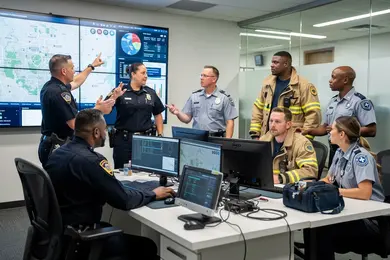
For example, a dispatch operator may complete report writing and training remotely while responding to calls requires physical presence. A study from a leading workforce analytics provider shows 45% of organizations in related sectors have adopted hybrid policies, signaling a measured shift towards flexibility within operational constraints.
Graduates should consider the tradeoffs between limited remote availability and on-site experience. Hands-on exposure remains critical for employability in Public Safety careers, but leveraging hybrid roles can provide work-life balance without sacrificing practical skill development.
Which Public Safety niches offer remote roles?
Remote roles within Public Safety primarily exist where tasks rely on data analysis, digital communication, or coordination rather than direct field intervention. This distinction is critical because frontline positions such as firefighting or patrol require physical presence and immediate response, limiting remote flexibility.
A practical example is an emergency management planner working from home, who coordinates disaster response strategies and risk assessments across agencies using digital platforms. The growing availability of Remote Public Safety job opportunities reflects this shift toward flexible roles in specialties suited for off-site work.
Below are key remote-friendly niches in Public Safety and why they fit asynchronous or hybrid models:
- Emergency Management Planning: Professionals develop and coordinate response protocols using collaboration software. Their work involves synthesizing information from multiple sources, allowing remote multitasking and real-time strategy updates without on-site presence.
- Cybersecurity for Public Infrastructure: Specialists monitor digital security systems and respond to cyber threats remotely. The purely digital nature of these tasks makes this niche highly suited to remote work.
- Crime Analysis and Intelligence Gathering: Analysts interpret crime data to advise law enforcement. Since much of their workflow involves software and data review, they can operate effectively without field deployment.
- Public Health Emergency Coordination: This niche blends public safety with health analytics to monitor outbreaks and implement policy. Remote data communication and virtual stakeholder meetings drive efficient, flexible workflows.
- Regulatory Compliance and Policy Advisory: Roles focused on governance and oversight utilize remote meetings and document management systems, enabling streamlined off-site collaboration and review.
A recent report found a 12.7% increase in positions within these specialized remote niches, highlighting expanding opportunities for Public Safety graduates prioritizing flexibility. However, those seeking hands-on roles must balance this with operational demands that limit remote options.
These nuances make choosing an education path aligned with remote capabilities essential. For example, pursuing accelerated medical assistant programs may open remote healthcare roles linked to public safety, offering practical entry points into flexible work environments within the sector.
What entry-level Public Safety roles allow remote work?
Entry-level Public Safety remote job opportunities are limited but steadily growing in niche support roles that do not require physical presence. Flexibility suits positions focused on data, communication, and compliance rather than front-line duties. For example, an Emergency Communications Technician uses CAD systems to coordinate emergency responses, which can be managed remotely.
Below is a summary of flexible remote roles for Public Safety graduates that offer practical entry points without daily on-site demands:
- Emergency Communications Technician: Requires basic training and familiarity with computer-aided dispatch systems. This role involves logging incidents, prioritizing calls, and coordinating emergency agencies digitally, enabling remote handling of dispatch duties.
- Remote Crime Analyst: Entry-level analysts collect crime data and analyze trends using software like ArcGIS and Power BI. The position requires analytical skills and software proficiency, allowing effective work from any location with database access.
- Public Safety Social Media Coordinator: Candidates must understand social media platforms and scheduling tools. The role manages public communications and emergency updates online, perfectly suited for remote execution through digital content management.
- Compliance Assistant: Requires knowledge of regulatory policies and experience with electronic filing systems such as ZenGRC. Compliance roles focus on document review and policy adherence, tasks achievable without onsite presence.
- Risk Management Assistant: Entry-level clerical and audit tasks focus on safety reports and digital audits. Proficiency in Microsoft Office Suite is essential, and responsibilities can be conducted remotely with access to systems and data.
Market data shows a 17% rise in remote job listings for entry-level Public Safety support roles on specialized job boards, demonstrating a clear though modest shift toward telework. This matters because it highlights emerging opportunities for graduates to find flexible but specialized positions in a traditionally on-site field. Those considering these roles should balance the benefits of remote flexibility against the operational realities and growth limits inherent in non-physical positions.
Graduates exploring remote Public Safety jobs should also consider educational pathways carefully, weighing practical outcomes. For example, some students explore nursing schools that don't require TEAS as alternative routes for health-related emergency roles before shifting to support jobs. This decision impacts employability and access to remote work options within related emergency services.
What is the average salary of Public Safety graduates who are working remotely?
Remote Public Safety graduates typically start with salaries between $42,000 and $50,000. These figures mainly reflect hybrid roles, since fully remote Public Safety positions remain scarce due to the hands-on demands of many jobs. Entry-level candidates must weigh flexibility against limited income and practical experience opportunities in these remote settings.
Salary variations often depend on technical requirements or certifications tied to the position. Roles demanding advanced skills or specific qualifications may offer higher pay, but such remote opportunities are fewer. This tradeoff is vital for graduates evaluating the average remote salary for Public Safety graduates and their potential career trajectories.
Compared to related fields like emergency management or security coordination, which offer starting pay nearer to $45,000, remote Public Safety roles tend to earn slightly less. A 2024 industry study found only 18% of Public Safety roles allow any remote work, with median starting wages around $44,750. Geographic and employer type factors further influence this pay disparity, with government jobs generally paying less but offering more stability.
Graduates must consider these dynamics carefully. Flexibility can reduce starting pay and limit experience gains essential for advancement. For roles intersecting healthcare, such as mental health nurse practitioners, benchmarks can differ significantly; for more detailed comparisons see mental health nurse practitioner salary.
Do remote Public Safety jobs pay the same as on-site roles?
Remote Public Safety jobs typically pay about 7% less on average than comparable on-site roles after adjusting for geographic pay scales. This gap reflects how employers link compensation to location, often resulting in lower wages when remote workers live in areas with a reduced cost of living. The overall compensation structure therefore creates a financial disparity despite similar job responsibilities.
Compensation packages vary widely depending on employer policies. Some organizations apply strict location-based pay bands, which reduce salaries for remote workers outside higher-cost regions. Others use a national flat rate, narrowing the pay gap but also limiting regional salary growth. These differences significantly impact take-home pay for Public Safety graduates considering remote work.
A 2024 workforce trend highlights that 62% of Public Safety agencies adjust pay based on employee location. This means graduates in metropolitan areas may earn closer to on-site equivalents, while those in lower-cost regions face more pronounced salary reductions. The choice between remote flexibility and initial compensation must be weighed carefully.
In practice, some employers reallocate funds by cutting travel stipends but increasing home-office budgets. This trade-off can offset some financial loss but rarely closes the salary gap completely. Graduates should assess whether the income trade-offs align with their financial needs and career goals before choosing remote roles.
What benefits do remote Public Safety employees receive?
Remote Public Safety employees face unique challenges that require tailored benefits to maintain engagement and operational effectiveness. Flexible time-off policies recognize mental health strains linked to isolated work environments.
Meanwhile, reimbursement for certifications and home office subsidies ensure skill upkeep and sustained productivity outside traditional settings. About 62% of decentralized organizations allocate an average monthly stipend of $120 to remote workers, highlighting the growing acknowledgment of remote work costs by employers, a trend that significantly influences realistic budgeting for workspace needs.
The following summarizes key benefits often provided to remote Public Safety workers and why they matter:
- Flexible Time-Off Policies: Includes vacation, sick days, and additional personal or mental health days. This flexibility supports emotional resilience and encourages timely recovery, which is crucial due to the often stressful and solitary nature of remote Public Safety work.
- Healthcare Plans: Comprehensive coverage that can vary by employer location. Access to robust healthcare is vital given the physical and psychological demands of Public Safety roles, especially when working remotely without immediate onsite support.
- Certification Fee Reimbursements: Helps employees maintain necessary professional credentials. Continuous credentialing ensures workers remain qualified amid evolving regulations and technology, sustaining career viability in remote positions.
- Home Office Stipends: Monthly allocations to cover internet, ergonomic furniture, or equipment. These stipends directly impact productivity by reducing financial strain for essentials required to create an effective workspace at home.
- Retirement Plan Contributions: Standard employer contributions that may differ from onsite roles. This aspect affects long-term financial planning, making it important for remote workers to compare packages carefully before committing.
One remote Public Safety officer reflected on the benefits package from their medium-sized agency. They noted, "Initially, I hesitated about going remote because I wasn't sure the agency would support necessary equipment or recognize mental health needs. The monthly stipend for my home office made a big difference, allowing me to buy ergonomic furniture that prevented back pain. Also, getting extra personal days helps when the isolation feels tough after long shifts. It's not just about the pay-they made me feel seen remotely, which eased the transition and kept me effective in my role."
Where can Public Safety graduates look for remote jobs?
Public Safety graduates must strategically diversify their job search across multiple online platforms to capture remote opportunities, as relying on a single channel risks missing critical openings. For instance, an entry-level emergency management graduate focused solely on generalist job boards might overlook specialized listings on niche sites that value sector-specific skills.
Moreover, with recruitment agencies favoring broad job boards 38.6% of the time-even for technical roles-graduates should balance general and focused resources to optimize their visibility. Remote job board traffic among entry-level public service candidates has surged by 24.7%, a trend signaling increased employer willingness to offer flexible work options.
The following outlines key platforms and networks to monitor for legitimate remote Public Safety roles:
- Indeed and Glassdoor: These leading general job marketplaces aggregate thousands of remote listings in emergency management, compliance monitoring, and safety coordination. They use algorithmic matching based on keywords and location filters, helping graduates identify roles that fit broad occupational categories and remote work criteria.
- Emergency Management Jobs and LawEnforcementJobs.com: As niche-specific portals, these sites curate Public Safety roles with occasional remote opportunities, particularly in data analysis and training. Their targeted focus increases the chance of finding specialized positions less visible on broader job boards.
- LinkedIn Professional Networks: Beyond job listings, groups dedicated to Public Safety professionals offer access to unadvertised remote roles through peer sharing and recruiter outreach. Active engagement here can reveal opportunities missed during standard application processes.
- International Association of Emergency Managers (IAEM): This association distributes remote job leads through member forums and newsletters. Leveraging such professional networks connects candidates with curated listings verified by industry peers, adding credibility and insider access.
- Reddit and Discord Communities: Emerging online hubs where Public Safety professionals share real-time job alerts and employer insights. These informal spaces provide grassroots perspectives on employer expectations, certification requirements, and remote work feasibility.
What do Public Safety employers look for in candidates?
Public Safety employers hiring for remote roles demand a focused blend of digital fluency, recognized certifications, and proven decision-making abilities within crisis scenarios. For example, a remote incident coordinator managing multi-agency responses must leverage software platforms and asynchronous communication tools efficiently while maintaining clarity under pressure.
Below are key qualifications these employers prioritize in candidates:
- Technical Proficiency: Candidates must demonstrate skill with incident management software, cybersecurity concepts, and data analysis tools. These competencies are evaluated through practical tests replicating emergency scenarios, ensuring applicants can use technology to support distributed operations reliably.
- Relevant Certifications: Recognized credentials, including Certified Information Systems Security Professional (CISSP), Emergency Management certifications, and geographic information systems (GIS) qualifications, serve as standardized validators of expertise necessary for remote Public Safety roles.
- Cognitive and Collaborative Skills: Employers assess critical thinking and clear decision-making under pressure through scenario-based exams. The ability to collaborate asynchronously is also tested, reflecting the realities of geographically dispersed teams.
- Portfolio Evidence: Demonstrations of prior remote coordination, such as documented responses and digital tool utilization, are reviewed to verify applicants' practical experience. This approach bridges theoretical knowledge with field execution.
- Digital Communication Strategies: Mastery of remote communication platforms tailored for crisis response is essential. Employers gauge candidates' aptitude for maintaining effective information flow despite physical separation.
Recruiters increasingly incorporate digital skills benchmarks into screening, reflecting a shift in Public Safety remote job qualifications where 72.3% of organizations now require such assessments. This evolution signals that soft skills alone no longer suffice for remote success.
Graduates evaluating remote career paths should consider programs emphasizing applied digital competencies and certifications as these factors critically influence hiring outcomes and sustained employability in a technology-driven environment.
Accelerating degree completion through transfer credits or flexible schedules can hasten entry into this evolving field, as emphasized by options like online exercise science degrees that illustrate how diverse educational pathways align with workforce demands.
How can Public Safety graduates prepare for remote roles?
Public Safety graduates targeting remote roles must address the distinct challenge of integrating traditional expertise with digital competencies that virtual workplaces require.
For instance, a newly graduated emergency manager working remotely may need to coordinate multi-agency drills using cloud-based incident management platforms while communicating effectively via virtual collaboration tools. This scenario demands practical digital skills alongside foundational public safety knowledge.
Below are key preparatory strategies for those seeking such remote opportunities:
- Master Digital Tools and Software: Developing proficiency in incident management software, remote communication platforms, and data analysis programs is essential. Graduates should engage in hands-on practice with these technologies to ensure seamless virtual coordination and accurate reporting.
- Earn Targeted Certifications: Pursuing online courses or bootcamps focused on cybersecurity basics, emergency response technologies, or digital records management sharpens adaptability. These credentials can bridge gaps beyond classroom learning and signal readiness for tech-driven remote roles.
- Build a Practical Portfolio: Creating a collection of remote safety drills, cloud-based emergency plans, and data analysis projects provides concrete evidence of capability. This practice helps verify a candidate's self-management skills and remote work competence to potential employers.
- Ensure Reliable Infrastructure: Secure hardware and stable internet access form the foundation for any remote public safety role. Familiarity with virtual collaboration tools safeguards communication integrity across decentralized teams.
Research shows graduates who complete focused remote-readiness training have a 28.5% higher job placement rate in flexible roles, emphasizing the value of deliberate digital upskilling. Adding to this, exploring the best remote job training programs for Public Safety professionals can provide structured skill development paths aligned with industry demand.
Those weighing career decisions should also consider expenses associated with online learning; informed comparisons of online speech pathology degree tuition and fees offer a useful benchmark for educational investment in remote skill enhancement.
How can Public Safety graduates if remote roles are a good fit for them?
Public Safety graduates must weigh distinct operational and personal factors to judge whether remote roles suit their skills and career intentions. For instance, a graduate specializing in crime data analysis might thrive working from home if they can navigate software autonomously and maintain discipline without onsite oversight. Understanding these criteria helps graduates realistically assess remote options beyond surface appeal.
Below are key considerations Public Safety graduates should evaluate before pursuing remote opportunities:
- Self-discipline and autonomy: Remote Public Safety professionals often work with minimal direct supervision, requiring strong personal accountability. Graduates should honestly assess their ability to stay focused and meet deadlines independently since lapses can directly affect critical safety outcomes.
- Technical proficiency with digital tools: Many remote roles depend on virtual monitoring, data systems, and incident reporting platforms. Comfort with technology and rapid adaptability to evolving software are essential, so evaluating past digital experience indicates readiness for these positions.
- Role nature and task preference: Remote assignments frequently emphasize analysis, coordination, or administrative support rather than frontline response. Graduates preferring hands-on emergency involvement should recognize this shift to avoid job dissatisfaction.
- Emotional resilience and isolation tolerance: Reduced face-to-face teamwork can lead to feelings of isolation. Candidates must consider their ability to manage stress and maintain connection through virtual communications to sustain long-term performance.
- Work schedule flexibility: Public Safety services often operate 24/7, requiring shifts outside standard hours. Graduates should reflect on personal life balance needs and their willingness to accommodate irregular or extended work times remotely.
- Privacy and security responsibility: Handling sensitive information outside controlled environments intensifies security risks. Graduates must be vigilant about compliance and safeguards, making this a critical evaluation point for remote suitability.
- Market demand and stability: Although a National Public Safety Alliance study shows 18.7% of organizations expanding remote roles, turnover remains above 12% due to remote stressors. Understanding these trends helps set realistic expectations and prepare coping strategies.
After graduating from an online Public Safety program, one professional hesitated to accept a remote analyst role due to concerns about isolation and technology use. They decided to pilot working remotely part-time while maintaining in-office duties. This approach revealed strengths in independent workflow and digital collaboration, alleviating initial doubts.
The gradual transition allowed adjustment to asynchronous communication and flexible hours, aligning with personal life rhythms. This nuanced strategy helped affirm remote work as a viable and fulfilling path for them, reflecting the importance of testing fit pragmatically before full commitment.
References
- Online Public Safety Programs https://www.wlu.ca/academics/faculties/faculty-of-human-and-social-sciences/assets/resources/online-public-safety-programs.html
- Grow Your Career with an Online Master’s in Public Safety Leadership | UMGC https://www.umgc.edu/blog/grow-career-online-masters-public-safety-leadership
- No-Cost Public Safety Training Is Now in Your Hands https://cops.usdoj.gov/html/dispatch/07-2024/public_safety_training.html
- Public Awareness: Essential to Public Safety https://safesecuresystems.org/public-awareness-essential-to-public-safety/
- What People Get Wrong About Public Safety https://bailproject.org/data/what-people-get-wrong-about-public-safety/
- Bachelor's Degree Public Safety Administration https://europe.umgc.edu/online-degrees/bachelors/public-safety-administration
- APCO Training Catalog https://www.apcointl.org/training/courses/catalog/
- Justice, Law and Public Safety Studies Department https://www.lewisu.edu/academics/jlpss/admissionreq.htm
- Evaluating Park Safety: The Safety Audit Process https://www.pps.org/article/torontosafetyaudit
- School of Public Safety, Law and Administration https://www.fanshawec.ca/programs-and-courses/schools/public-safety
Other Things You Should Know About Public Safety
Remote roles often require graduates to be proactive in seeking additional training beyond their initial education, since on-the-job opportunities for mentorship and hands-on skill sharpening can be limited. This setup may slow the acquisition of critical practical skills that usually come from in-person experiences, especially in high-pressure or technical situations. Graduates should prioritize positions that offer structured virtual training programs or scheduled coaching sessions to mitigate these gaps and maintain career growth trajectories.
Remote jobs in Public Safety can involve irregular or extended hours due to shifts aligned with emergencies or 24/7 monitoring requirements, which may not be as predictable as traditional office jobs. Graduates need to evaluate whether the flexibility of working remotely outweighs potential challenges like maintaining work-life boundaries and coping with unexpected workload surges. Choosing employers with transparent scheduling policies and clear expectations around availability is essential to avoid burnout.
The quality and reliability of an employer's remote work technology directly affect the effectiveness and safety of Public Safety professionals working from home. Graduates should prioritize employers investing in secure communication tools, real-time data systems, and technical support, as inadequate infrastructure could compromise both job performance and critical decision-making. Assessing technology readiness before committing to a remote position can be as crucial as evaluating salary or benefits.
Remote positions may limit informal networking and visibility with key decision-makers, which often play a significant role in promotions and leadership opportunities within Public Safety fields. Graduates aiming for management or specialized roles should weigh the tradeoff between current convenience and future career mobility. It is generally advisable to seek roles with hybrid models or defined paths for remote employees to access mentorship and advancement, rather than fully isolated remote arrangements.