2027 What Prerequisites Do You Need for an Urban Planning Degree? Entry Requirements, Credits & Eligibility Rules

Co-Founder and Chief Data Scientist
Many prospective students feel unsure about the varying prerequisite requirements for urban planning degree programs, which can differ widely between institutions. Studies show that nearly 40% of urban planning applicants lack some required coursework, making it essential to understand specific entry requirements before applying.
This article clarifies common eligibility rules, prerequisite courses, and credit expectations to help students prepare effectively for admission into urban planning programs. With proper guidance, applicants can align their academic background to meet the standards set by most U.S. urban planning degrees.
Key Things to Know About the Prerequisites for a Urban Planning Degree
- A minimum GPA of 2.5 to 3.0 is commonly required, emphasizing strong performance in math, geography, and social sciences foundational courses.
- Applicants must complete 30 to 45 college credits, including statistics, economics, and environmental studies, to ensure readiness for advanced urban planning topics.
- Some programs prefer demonstrated skills in GIS software and critical thinking, reflecting the technical and analytical demands of urban planning careers.
Do Urban Planning Programs Require Specific High School Prerequisites?
Urban planning programs typically do not require very specific high school prerequisites, but requirements vary among institutions and program types. Many programs strongly recommend a foundation in particular subjects to build critical skills needed for success in their coursework and professional practice.
- Mathematics (algebra and geometry): These areas are vital for spatial analysis, statistical data interpretation, and understanding land use patterns common in urban planning tasks.
- Social studies/history: Knowledge of social dynamics, community development, and policy-making equips students to better understand how cities evolve and the socio-economic factors influencing planning decisions.
- Science/environmental science: This supports awareness of ecological systems and sustainable planning approaches that consider natural constraints and environmental impact.
- Technology/design (optional but advantageous): Skills in computer technology, drafting, or basic CAD are increasingly valuable for handling technical tools used in urban planning.
Entry prerequisites for urban planning programs in 2026 generally emphasize these subjects to enhance academic rigor and preparedness. Students who align their high school coursework accordingly may improve their admission prospects. Furthermore, students interested in the broader landscape of education options and career pathways might explore resources on the best college majors to get a job.
What College-Level Prerequisites Are Required Before Starting a Urban Planning Degree?
Being aware of college-level prerequisites ensures prospective students can meet urban planning degree eligibility requirements in 2026 and progress smoothly through their studies. These foundational courses develop essential skills and prepare students for the interdisciplinary nature of urban planning.
Below are the common college-level course prerequisites for urban planning 2026 programs:
- Introductory urban studies or geography: These courses introduce key concepts of city development and spatial planning, providing a necessary framework for understanding urban environments.
- Statistics: Required to develop analytical skills vital for interpreting demographic data and urban trends, statistics equips students with tools for quantitative analysis.
- College-level English or composition: Strong writing ability is essential for communicating complex ideas clearly in reports and presentations, making these courses crucial for effective communication.
- Lab sciences (e.g., environmental science): These classes help students grasp ecological factors impacting urban areas, integrating environmental awareness into planning decisions.
Meeting these entry requirements is key for academic success and readiness to tackle challenges in urban planning study and practice.
For insight on related academic pathways, consider reviewing easiest PhD degree programs.
How Many Credits Can You Transfer Into a Urban Planning Degree?
The number of credits that students can transfer into an urban planning degree varies significantly depending on the university, program design, and accreditation rules. Generally, institutions allow the transfer of between 30% and 50% of the total credits required, meaning for a typical 120-credit bachelor's degree, students might transfer 36 to 60 credits. These limits are influenced by factors such as the level of previous coursework, its relevance to the urban planning curriculum, and institutional policies.
Key considerations for credit transfer include whether prior courses align with core subjects like urban design or public policy, as well as the minimum grade earned, often a C or better. Residency rules commonly require students to complete a portion of credits directly through the awarding institution, typically 30 to 40 credits. Credits from vocational programs or non-accredited schools are frequently excluded.
As of 2026, most urban planning degree programs do not require SAT or ACT scores for admission, reflecting a broader shift toward test-optional and test-free policies across many institutions. This trend accelerated in recent years, especially following disruptions caused by the COVID-19 pandemic. However, certain competitive programs, merit-based scholarship applicants, and some public university systems may still ask for standardized test results to distinguish candidates. These exceptions remain because test scores can provide an additional metric in highly selective admissions processes.
Instead of relying on standardized exams, many urban planning programs focus on a holistic review of applicants. Schools often evaluate GPA and the completion of prerequisite courses in areas such as geography, environmental science, and mathematics. Personal essays are commonly used to assess motivation and familiarity with urban issues, while portfolios may highlight relevant projects or design experience. Letters of recommendation and interviews also contribute to a comprehensive application evaluation, aiming to capture the interdisciplinary skills important for success in urban planning careers.
Students aiming to enroll in an urban planning degree program must develop key skills to thrive academically and professionally. These competencies support their ability to analyze data, communicate clearly, and apply technical tools essential for effective planning.
Below are the crucial skills that prepare students for success in urban planning:
- Foundational academic abilities: Proficiency in math and writing is necessary for data interpretation and producing detailed reports.
- Technical skills: Familiarity with Geographic Information Systems (GIS), CAD software, and data visualization programs allows accurate spatial analysis and design.
- Analytical and problem-solving capabilities: Evaluating diverse environmental, social, and economic factors helps create sustainable community solutions.
- Effective communication: Strong verbal and written skills enable collaboration with stakeholders and clear explanation of complex ideas.
- Field-specific knowledge: Understanding zoning regulations, environmental policies, and urban design principles is fundamental to practical planning work.

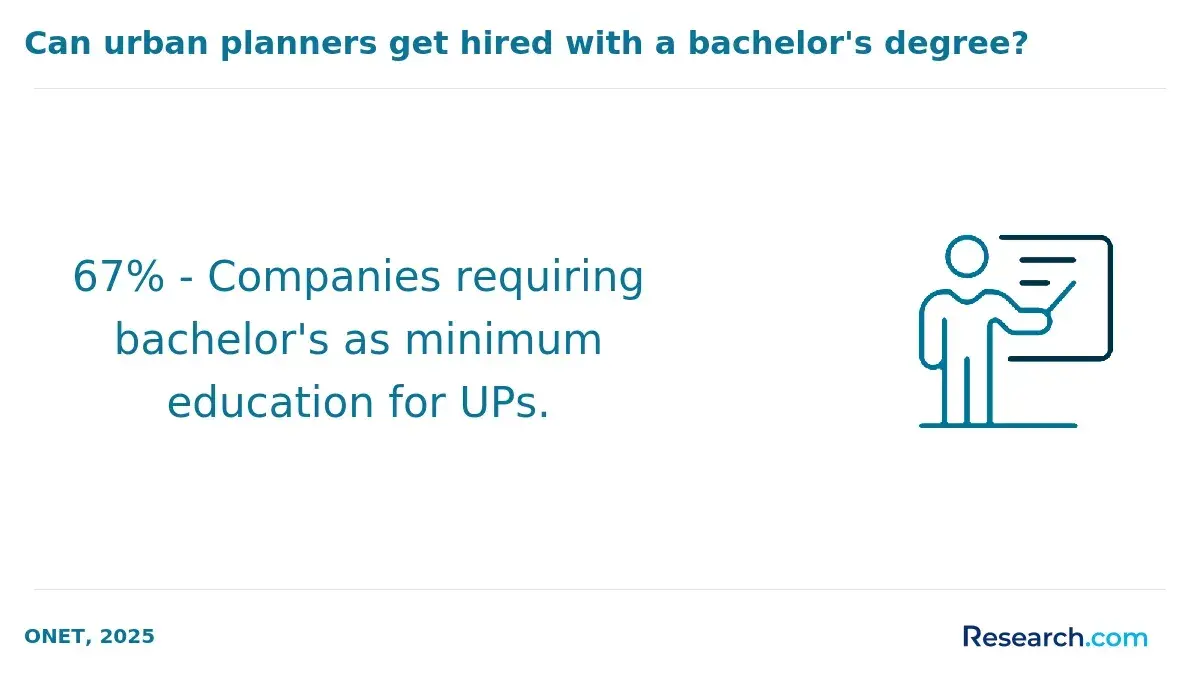
Professional experience requirements for urban planning degree programs vary widely depending on the institution, level of study, and area of focus. For bachelor's programs, experience is typically not required, with admissions prioritizing academic achievements and personal statements. In contrast, many master's and graduate specializations often recommend or require relevant experience, usually ranging from one to three years in fields such as community development, GIS, or sustainability planning. Typical roles that enhance applications include internships in municipal planning, research assistantships, or work with nonprofit urban development groups.
Urban planning programs frequently value professional experience because it reflects practical skills and preparedness for the demands of advanced coursework and complex planning challenges. Admissions committees often consider experience as evidence of a candidate's potential contribution to collaborative projects and discussions. However, applicants without prior experience may still be accepted, especially if they present strong academic records or relevant internships. Competitive programs tend to prefer candidates with experience to ensure they can fully engage in experiential learning and rigorous academic environments.
Online urban planning degree programs require specific technology prerequisites to ensure students can fully engage with digital coursework and collaborative tools essential to the discipline. These standards help maintain smooth access to software and remote learning environments critical for effective study and project development.
- Computer specifications: Students typically need a modern processor (Intel i5 or equivalent), at least 8GB of RAM, and a minimum of 256GB SSD storage to run GIS mapping and data analysis software efficiently without lag or crashes.
- Reliable internet speed: Broadband connectivity of at least 25 Mbps is recommended to support streaming video lectures, participating in live discussions, and uploading large datasets without interruption.
- Specialized software access: Urban planning heavily depends on tools like ArcGIS, AutoCAD, and SketchUp. Access to these programs through university or personal licenses is crucial for practical assignments and collaborative design tasks.
- Learning management systems: Familiarity with platforms such as Blackboard or Canvas is required to navigate course materials, submit assignments, and engage in virtual forums essential for remote education.
- Digital literacy skills: Students must possess the ability to manage large datasets, employ mapping technologies, and collaborate via cloud-based tools, which are integral to urban planning workflows and problem-solving.
Meeting these tech prerequisites aligns with urban planning degree eligibility requirements United States programs often emphasize, ensuring readiness to handle rigorous coursework. According to recent surveys, technology preparedness remains a pivotal factor in student success.
Prospective students might also consider the potential financial benefits of such programs by reviewing the bachelor degrees that make the most money to align career goals with educational investment.
International students applying to urban planning programs in 2026 typically face additional prerequisites beyond those required of domestic applicants. These extra conditions ensure that international candidates meet academic, language, and visa eligibility standards before enrollment.
Below is a list of the most common prerequisites for these students.
- Academic Credentials: Applicants must provide certified transcripts and diplomas equivalent to a U.S. bachelor's degree in a related field, such as geography, architecture, or environmental studies. Credential evaluation by an accredited agency is often required to confirm academic comparability.
- English Language Proficiency: Proof of proficiency in English is mandatory; usually, this involves submitting scores from standardized tests such as TOEFL or IELTS. Minimum score requirements vary by institution but generally range from 80 to 100 for TOEFL iBT.
- Statement of Purpose and Recommendations: Candidates should submit a clear statement outlining their motivation and career goals in urban planning, complemented by letters of recommendation from academic or professional references. These documents provide admissions committees insight into the applicant's commitment and preparedness.
- Financial Documentation: International students must demonstrate sufficient funds to cover tuition and living expenses during their study period. This requirement is necessary both for university admission and obtaining an F-1 student visa.
- Visa and Legal Requirements: Enrollment depends on meeting U.S. immigration regulations, including securing a student visa. Universities may also require documentation verifying eligibility for on-campus employment or internships related to urban planning.
For prospective students aiming to advance their education while balancing other responsibilities, programs offered by non profit accredited online colleges highlight the growing trend of flexible learning pathways, which can be relevant to urban planning graduate studies as well.
As international enrollment continues rising in areas such as California, New York, and Texas, understanding these prerequisites helps maintain smooth admission and integration processes.
This distinction can extend enrollment timelines as applicants assemble transcripts, portfolios, and gain relevant experience. Data from the American Planning Association show about 40% of urban planning programs now emphasize technical coursework and real-world exposure more than before, reflecting the field's growing interdisciplinary demands.
General university admission requirements
- GPA thresholds: Most universities require applicants to have a minimum GPA ranging from 2.5 to 3.0 on a 4.0 scale, ensuring academic readiness across disciplines.
- English language proficiency: International students often must demonstrate proficiency through standardized tests like TOEFL or IELTS to meet language standards.
- General education coursework: Completion of foundational courses in humanities, social sciences, and basic mathematics is typically necessary to establish broad academic skills.
Urban planning program-specific prerequisites
- Mathematics and technical skills: Programs often demand competence in statistics, calculus, or quantitative methods to support analytical tasks inherent in urban planning.
- Relevant science courses: Coursework in environmental science or geography is frequently required to address urban development's ecological aspects.
- Portfolio or experience submission: Applicants may need to present portfolios or document professional or volunteer experience highlighting skills in design, community planning, or related fields.
Students aiming for an urban planning degree should also consider exploring options in in-demand vocation jobs that complement their skills and increase employability.
Students usually must pay for prerequisite courses before enrolling in an urban planning program unless these credits have been previously earned or transferred. These prerequisites are commonly available at the same university, community colleges, or accredited online providers. Tuition varies significantly: community colleges often charge between $100 and $300 per credit hour, while four-year institutions may exceed $400 per credit hour. Online courses offer varying pricing models, including lower rates or subscription options. Additional expenses such as technology or administrative fees may also apply depending on the provider.
To reduce costs, many students seek financial aid like federal grants or scholarships targeted at urban planning or related fields. Transferring credits from past coursework is another popular approach to minimize paid prerequisites. Enrolling in accredited online courses can offer both flexibility and affordability. According to the National Center for Education Statistics, about 40% of undergraduates use financial aid, which helps alleviate tuition expenses and associated fees.
What Graduates Say About the Prerequisites for Their Urban Planning Degree
- Vicente: "I was initially nervous about meeting all the prerequisites for the urban planning degree program, but the clear guidance provided really helped me prepare. The cost was manageable since I qualified for several scholarships, making the overall investment feel worthwhile. This degree truly opened doors for me in sustainable city development, allowing me to contribute meaningfully to community projects."
- Zane: "Getting into an urban planning program required fulfilling specific course requirements, which I had overlooked initially, so that taught me the value of detailed academic planning. The average cost was higher than I expected, but considering the career advancement I gained, it was a solid return on investment. Now, as an urban planning consultant, I apply what I learned every day to shape smarter urban spaces."
- Gael: "Completing the prerequisite courses for my urban planning degree was a rigorous but rewarding process because it laid a strong foundation for the program. Though the program's tuition felt like a significant expense, the professional opportunities after graduation justified it without a doubt. I've since moved into a leadership role in city infrastructure development, where this degree's impact is clear and ongoing."
Other Things You Should Know About Urban Planning Degrees
Many urban planning degree programs recommend or require letters of recommendation as part of the application process. These letters typically come from teachers, employers, or professionals who can attest to your academic abilities, work ethic, or relevant experience. Strong letters can enhance your application by providing insight into your character and potential for success in urban planning.
In 2027, non-traditional students can apply for an urban planning degree even without a specific background in planning. Admission committees often look for diverse educational and professional experiences. Applicants should demonstrate analytical skills, a commitment to planning, and relevant interests through coursework or professional activities.
The strongest preparation is usually geography, mathematics, economics, and civics or government. Many universities also accept English and basic statistics. Competitive programs often expect at least a B average in these subjects, plus evidence of analytical writing and spatial reasoning skills.
- Urban and Regional Planning Technician - Geographic Information Systems (GIS) - 406 - 606 | Mohawk College https://www.mohawkcollege.ca/programs/technology/urban-and-regional-planning-technician-geographic-information-systems-gis-406-606
- Master of Urban Planning (MUP) – Hunter Urban Policy & Planning http://www.hunterurban.org/master-of-urban-planning
- Graduate Admissions: City and Regional Planning https://aap.cornell.edu/admissions/graduate/city-and-regional-planning
- List of Urban Planning Degree Programs https://www.gisdegree.org/programs/bachelors-in-urban-planning/
- What skills does an Urban Planner need? https://www.ube.ac.uk/whats-happening/articles/what-skills-does-an-urban-planner-need/
- ONET Online. (2025, December 15). 19-3051.00 - Urban and regional planners. https://www.onetonline.org/link/summary/19-3051.00
- Zippia. (2025). Urban planner jobs and career data. https://www.zippia.com/urban-planner-jobs
- U.S. Bureau of Labor Statistics. (2025, August 27). Urban and regional planners: Occupational outlook handbook. https://www.bls.gov/ooh/life-physical-and-social-science/urban-and-regional-planners.htm