2027 Does an Exercise Science Program Require In-Person Clinical Training?

Co-Founder and Chief Data Scientist
Choosing an exercise science program is not only a question of online versus campus learning. For many students, the bigger issue is whether they can complete required in-person clinical training while managing work, family responsibilities, transportation, and location limits.
Clinical training matters because exercise science is an applied field. Students often need supervised practice in settings such as rehabilitation facilities, hospitals, fitness centers, wellness programs, or community health organizations before they can graduate, sit for certain certifications, or qualify for roles connected to clinical and rehabilitation work. Studies show that 68% of exercise science graduates working in clinical or rehabilitation settings report that hands-on clinical experience was crucial to their licensure and certification success.
This guide explains what in-person clinical training means in an exercise science program, when it is required, how many hours students may need, whether online programs still include site-based requirements, and what to ask before enrolling. It is designed for prospective students who need a realistic view of the time, logistics, and professional stakes before committing to a program.
Key Things to Know About the Exercise Science Programs That Require In-Person Clinical Training
- Accreditation mandates often require specific in-person clinical hours-typically between 400 and 600-to ensure consistent skill development and professional standards across programs.
- Placement logistics can be challenging-students must secure approved clinical sites that comply with background checks and documentation protocols to validate their hands-on experience.
- Geographic constraints may limit options-remote students often face difficulty accessing nearby clinical placements, impacting timely completion and post-graduation certification eligibility.
What Is In-Person Clinical Training in the Context of a Exercise Science Program, and Why Does It Matter for Prospective Students?
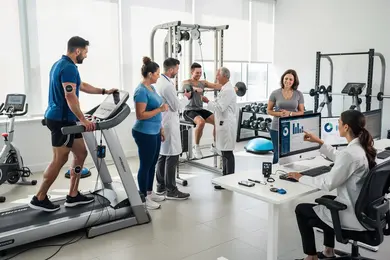
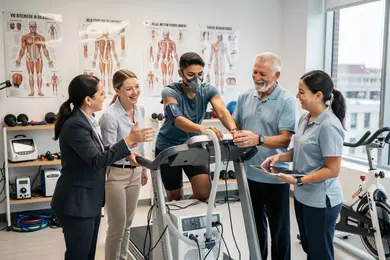
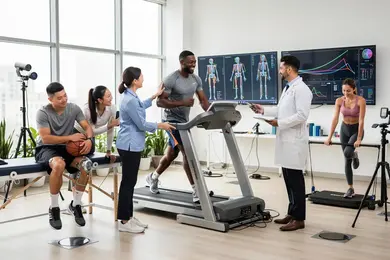
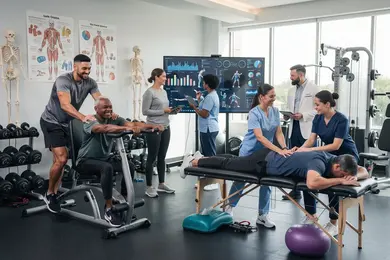
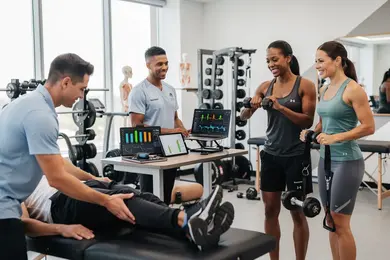
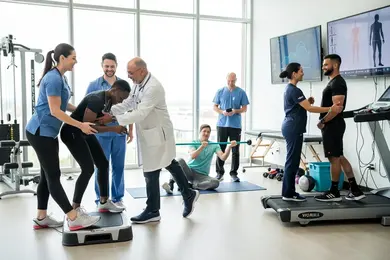
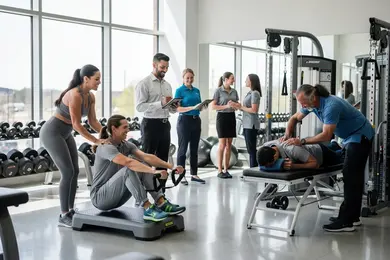
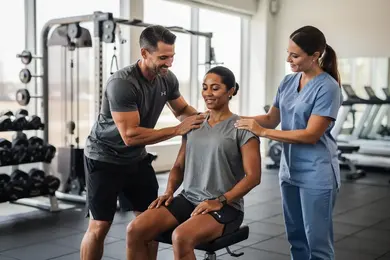
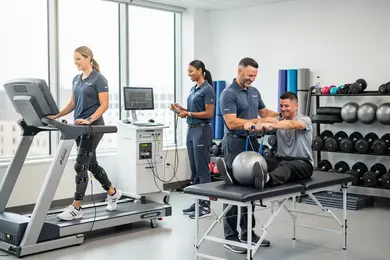
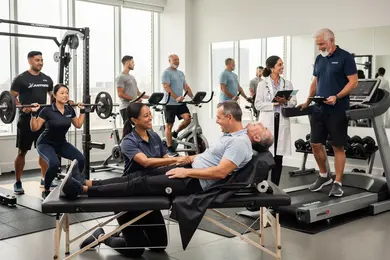
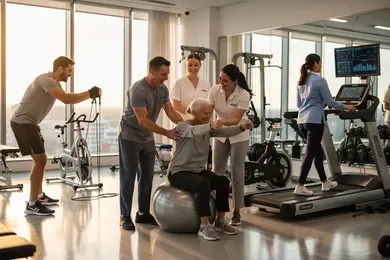
In-person clinical training in an exercise science program means supervised, direct practice in an approved real-world setting. Depending on the program and career track, this may take place in a hospital, rehabilitation clinic, athletic facility, wellness center, community organization, or other site where students work with clients, patients, athletes, or special populations under qualified supervision.
This training is different from lectures, online coursework, simulation activities, lab demonstrations, or virtual case studies. Those experiences can help students prepare, but they usually do not replace supervised on-site hours when a program, accreditor, certification pathway, or state requirement calls for direct clinical practice.
For prospective students, the requirement matters because it can affect almost every practical part of enrollment: where you can live, how much you can work, when you can take courses, how soon you can graduate, and whether the program supports your intended credential or career path. A program may advertise online coursework, but students may still need to appear in person at an approved site for a substantial number of hours.
When comparing programs, evaluate clinical training with the same seriousness as tuition, faculty credentials, curriculum, and accreditation. Students considering adjacent healthcare pathways may also want to compare how clinical expectations differ in an RN to BSN program, since clinical requirements vary widely by field and degree type.
Questions to ask before applying
- How many supervised hours are required? Ask for the total number of clock hours and how they are distributed across practicums, internships, or capstone experiences.
- Which settings qualify? Confirm whether hospitals, rehabilitation centers, fitness facilities, schools, community agencies, or employer sites are accepted.
- Who finds the placement? Determine whether the school assigns clinical sites or expects students to secure their own approved placements.
- Can any work be completed virtually? Ask whether online activities count only as preparation or whether a limited portion of supervised work may be accepted.
- Does the requirement support your goal? Make sure the clinical experience aligns with certification, licensure, graduate school, or employment expectations in your target role.
Is In-Person Clinical Training Legally or Professionally Required to Earn a Exercise Science Degree?
In-person clinical training may be required by the program, by an accreditor, by a certification pathway, or by a state licensing board, depending on the degree and career goal. The key point is that students should not assume a degree can be completed entirely online simply because the classroom portion is remote.
The Commission on Accreditation of Allied Health Education Programs (CAAHEP) serves as the primary accrediting body governing exercise science programs. Its standards require supervised clinical or practical experience to support program quality and student competency. If a program fails to meet required standards, it can risk its accreditation status, which may affect graduates seeking professional advancement.
State requirements can add another layer. Some roles connected to clinical exercise science, rehabilitation, allied health, or regulated practice may require documented in-person training before a graduate can qualify for licensure, registration, or certification-related employment. These requirements are not always identical to a program’s graduation rules, so students should verify both.
Institutional policies may also be stricter than outside requirements. A school may require approved sites, supervisor credentials, background checks, health documentation, liability insurance, specific forms, and pre-approval before any hours can be counted. Hours completed without approval may not be accepted.
Where to verify requirements
- Accreditation standards: Review the published requirements from the relevant accrediting body for the program type.
- State rules: Check the licensing or regulatory board in the state where you plan to work, not only the state where the school is located.
- Program handbook: Read the student handbook for exact policies on sites, supervisors, documentation, and deadlines.
- Certification requirements: If you plan to pursue a professional certification, confirm whether specific supervised experience is expected.
Students researching flexible healthcare degrees can also compare how remote programs manage required practice components in fields such as online DNP study. The comparison is useful because online course delivery does not automatically remove site-based training obligations.
The safest approach is to treat clinical training as a compliance requirement, not an optional experience. Before enrolling, ask the program to explain exactly how its clinical training supports graduation, certification eligibility, and any state-specific requirements relevant to your intended career.
How Many Hours of In-Person Clinical Training Does a Typical Exercise Science Program Require?
Exercise science clinical hour requirements vary by program, concentration, accreditation status, and professional goal. Accreditation bodies for exercise science programs typically require a minimum of 400 to 500 supervised clinical hours. Many programs require more than the minimum to give students broader exposure and stronger preparation for applied roles.
Nationally, the median clinical hour requirement ranges between 500 and 600 hours. More rigorous programs, especially those designed for students pursuing competitive clinical, rehabilitation, or specialized roles, may require 700 or more hours through internships, residencies, or extended field experiences.
| Clinical training level | Typical hour range | What it usually means for students |
| Minimum baseline | 400 to 500 supervised clinical hours | Meets foundational expectations but may offer less depth than higher-hour programs. |
| Common program range | 500 and 600 hours | Provides a substantial applied experience while still fitting into a standard academic plan. |
| More intensive programs | 700 or more hours | Often includes longer internships, more responsibility, and deeper preparation for specialized settings. |
How hours are usually divided
- Practicum phase: Early clinical work often includes 150 to 300 hours focused on observation, professional communication, basic assessment, and closely supervised practice.
- Internship or residency phase: Later clinical work typically accounts for 300 to 400 hours or more and may involve more independent responsibilities under supervision.
- Documentation and meetings: Students should plan for hour logs, evaluations, supervisor meetings, reflections, and compliance paperwork in addition to time spent on site.
A 600-hour requirement over two semesters can translate to about 15 to 20 on-site hours weekly. That time is usually in addition to coursework, commuting, study time, and any paid employment. Students with full-time jobs should ask whether the program permits extended timelines or placements with nontraditional hours.
One graduate described the experience as demanding but valuable, noting that balancing 18-hour weeks on-site with assignments and a part-time job was difficult. The clinical hours were not the only challenge; documentation, supervision sessions, travel, and schedule changes also required discipline. Still, the graduate said the hands-on exposure made the transition into the workforce more manageable.
Can Any Part of the Exercise Science Clinical Training Requirement Be Completed Online or Virtually?
Some parts of exercise science training may be supported online, but core clinical requirements usually still require in-person, supervised experience. Virtual coursework, telehealth observation, simulation, case review, documentation, and online supervision can be useful learning tools, but they rarely replace the direct practice needed to assess movement, interact with clients, respond to real-time concerns, or demonstrate hands-on competency.
During the COVID-19 pandemic, some programs and regulators temporarily allowed more telehealth, virtual supervision, and simulation-based activities. Many of those emergency allowances were later reduced, revised, or revoked. Students should not rely on pandemic-era policies unless the current program handbook, accreditor guidance, and state rules clearly permit them.
What may be completed virtually
- Case discussions and treatment planning meetings.
- Documentation review and reflective assignments.
- Some supervision meetings, if allowed by the program and site.
- Telehealth observation or limited telehealth participation, where permitted.
- Simulation activities used to prepare for placement.
What usually must remain in person
- Direct client or patient assessment.
- Movement screening, exercise instruction, and technique correction.
- Physical intervention or rehabilitation-related practice.
- Emergency response, safety monitoring, and real-time decision-making.
- Professional interaction in approved clinical or community settings.
Students comparing online or hybrid options should ask each program to provide a written breakdown of what counts toward required hours. It is also wise to compare how other health disciplines handle remote clinical components, such as online nursing doctorate programs, while recognizing that exercise science requirements must be verified independently.
The practical takeaway is simple: virtual components may add flexibility, but they should be viewed as supplements unless the program, accreditor, and relevant state authority all confirm that they count toward required clinical hours.
Who Is Responsible for Arranging Clinical Placements in a Exercise Science Program - the Student or the School?
Responsibility for clinical placement depends on the program. Some schools arrange placements directly through existing affiliation agreements. Others require students to identify possible sites, contact supervisors, collect documentation, and submit the placement for approval. Many programs use a shared model: the school sets requirements and approves sites, while students help locate options in their area.
This distinction is especially important for online, hybrid, rural, and working students. A program with strong coursework but weak placement support can still create serious delays if students cannot find an approved site on time.
| Placement model | How it works | Main advantage | Main risk |
| School-arranged placement | The program assigns students to sites through formal agreements. | More predictable and usually easier for students to manage. | Options may be limited by geography or availability. |
| Student-arranged placement | Students find a site and supervisor, then seek program approval. | Can offer more local flexibility for students outside the school’s region. | Students may face delays, unanswered inquiries, or rejected sites. |
| Shared placement model | The program provides criteria and support while the student helps identify possible sites. | Balances flexibility with institutional oversight. | Success depends on timely communication and clear approval procedures. |
Questions that reveal the level of support
- Affiliation agreements: Does the program already have approved sites in your area?
- Placement success: How often do students secure placements locally without delaying graduation?
- Rural access: What support exists for students in small markets or underserved regions?
- Backup plans: What happens if a site cancels, a supervisor leaves, or documentation is rejected?
- Approval timeline: How long does the school take to review a proposed site?
One graduate from a student-arranged model said she spent months contacting potential sites and often received no response. She also had to confirm that supervisors met credential requirements and could provide enough supervised hours. Although the process was stressful, she said it improved her networking, organization, and professional communication. That benefit, however, does not eliminate the risk: students who begin too late may have to postpone clinical training and extend their program timeline.
How Do Accreditation Standards Shape the In-Person Clinical Training Requirements of Exercise Science Programs?
Accreditation standards shape clinical training by defining what counts, who may supervise, where training can occur, how competency is evaluated, and how hours must be documented. Regional accreditation evaluates the institution as a whole, while programmatic accreditation focuses more directly on whether a specific program prepares students for professional expectations in the field.
For exercise science students, programmatic accreditation can influence both academic quality and post-graduation options. Accrediting standards may establish minimum supervised hours, often between 400 and 600, along with requirements for site approval, supervision qualifications, student evaluations, safety procedures, and exposure to appropriate populations.
Accreditation can also affect consistency. Without clear standards, one student’s “clinical experience” might involve meaningful supervised practice, while another’s might be mostly observation or administrative work. Strong accreditation rules help ensure that students perform relevant tasks, receive feedback, and build practical competency.
Common accreditation-related requirements
- Minimum supervised hours: Programs must document that students complete the required clinical or practical experience.
- Qualified supervisors: Supervisors generally must hold appropriate professional credentials, education, or experience.
- Approved sites: Training must occur in settings that support the program’s learning outcomes and safety standards.
- Supervision ratios: Some standards may limit the number of students assigned to one supervisor, such as no more than six students per supervisor.
- Competency evaluation: Students are usually assessed on professional behavior, communication, technical skills, and applied decision-making.
- Documentation: Hour logs, supervisor signatures, performance reviews, and site records may be needed for audits or accreditation review.
Before enrolling, students should verify the program’s accreditation status through the accrediting agency, ask whether the accreditation supports their intended certification or licensure pathway, and confirm that clinical training policies are current. Accreditation is not just an institutional label; it can directly shape whether clinical hours will be accepted for future professional goals.
What Types of Clinical Settings Are Accepted for Exercise Science Clinical Training Hours?
Accepted clinical settings vary by program and accreditor, but the site generally must provide supervised, relevant, hands-on experience aligned with exercise science learning outcomes. The setting must also have qualified supervision, appropriate safety procedures, and enough client, patient, athlete, or community interaction for students to develop applied skills.
Commonly accepted settings
- Healthcare systems: Hospitals, outpatient clinics, rehabilitation centers, and specialized medical facilities can expose students to clinical populations and interprofessional care.
- Rehabilitation facilities: These settings may support experience with injury recovery, chronic disease management, functional movement, and supervised exercise prescription.
- Schools and university clinics: K-12 schools, university wellness programs, athletic departments, and campus clinics may provide experience with youth, young adults, athletes, or general wellness populations.
- Private practices: Small clinics or individual providers may qualify if supervision, documentation, and scope of practice requirements are met.
- Government agencies: Military, veterans’ health programs, and public health departments may offer community health, prevention, or rehabilitation-focused experiences.
- Nonprofit organizations: Health promotion, disability services, chronic disease management, and community wellness organizations may be accepted when oversight standards are satisfied.
- Fitness and wellness settings: Fitness centers, corporate wellness programs, sports performance facilities, and research sites may qualify when they match program objectives and provide appropriate supervision.
- Community mental health centers: These may be accepted when exercise science activities are connected to wellness, behavior change, or health promotion under qualified supervision.
The best setting depends on the student’s career goal. A student interested in cardiac rehabilitation, for example, may need a different placement than someone focused on strength and conditioning, corporate wellness, or community health. Students should ask the program whether a site is merely allowed or truly aligned with their intended career path.
How to evaluate a potential site
- Does the site have a supervisor with credentials accepted by the program?
- Will the student have direct, supervised contact with appropriate populations?
- Can the site provide enough hours during the required semester?
- Does the site follow required safety, privacy, and documentation standards?
- Has the program approved this site before, or will a new agreement be needed?
Students in rural or smaller markets should pay special attention to site flexibility. A broader list of acceptable settings can make completion more feasible, while a narrow site policy may increase travel demands or delay graduation.
How Does In-Person Clinical Training in a Exercise Science Program Affect Students Who Work Full-Time?
In-person clinical training can be the hardest part of an exercise science program for students who work full-time. The issue is not only the number of hours; it is when those hours are available. Many approved clinical sites operate during weekday business hours, which can conflict with standard work schedules.
According to NACE First-Destination Survey data and research on adult learner completion rates, many students underestimate clinical scheduling conflicts until they begin coordinating placements. Employer leave policies may not cover the sustained weekly time needed for clinical training, and evening or weekend placements may be limited or unavailable.
Common challenges for full-time workers
- Daytime site hours: Clinics, hospitals, schools, and rehabilitation facilities may not offer enough evening or weekend opportunities.
- Unpaid time commitments: Clinical hours are often unpaid, which can create financial pressure if students reduce work hours.
- Commute time: Travel to and from a site can add a major burden, especially in rural or high-traffic areas.
- Documentation workload: Logs, reflections, evaluations, and supervisor meetings add time beyond the hours spent on site.
- Schedule instability: Site cancellations, supervisor availability, or client schedules may change with little notice.
Program features that can help
- Extended timelines that spread required hours across more than one semester.
- Clinical partners with some evening or weekend availability.
- Employer-partnered placements when the workplace meets program standards.
- Clear policies for leave of absence or part-time progression during intensive clinical phases.
- Dedicated clinical coordinators who understand adult learner constraints.
Students who need maximum flexibility should ask direct questions before enrolling: How many full-time working students complete clinicals on schedule? Are nontraditional hours available near your location? Can the requirement be extended without disrupting financial aid or graduation timelines? If the answer is vague, treat that as a risk.
For students comparing broader healthcare education options, a medical assistant course online may offer a different balance of online learning, hands-on training, and career timing, but the specific requirements should still be verified before enrollment.
Do Hybrid or Online Exercise Science Programs Still Require In-Person Clinical Training?
Yes. Hybrid and online exercise science programs can deliver lectures, assignments, discussions, and some assessments remotely, but they often still require in-person clinical training. Online course delivery changes how students learn academic content; it does not automatically remove supervised practice requirements.
This distinction is critical for students choosing a distance program because the clinical requirement may still determine whether the degree is realistic. Students may be able to complete coursework from home, but they still need access to an approved local site, a qualified supervisor, and a schedule that allows them to complete required hours.
Many online programs use a distributed clinical model. Students complete classes remotely and perform clinical hours at approved sites near where they live. This can reduce relocation needs, but it can also create challenges if the school has limited partnerships outside its home region.
If you are comparing remote options, an exercise physiology degree online may be convenient for coursework, but you should still confirm exactly how local clinical placements are approved and supervised.
What to verify in an online or hybrid program
- Clinical partnerships: Does the school already have sites near you, or will you need to find one?
- Site vetting: How does the program confirm that a site meets safety, supervision, and learning standards?
- Supervisor credentials: What licenses, certifications, degrees, or experience must the supervisor hold?
- Coordination support: Will the program help with agreements, background checks, hour tracking, and problem resolution?
- Placement success data: Can the program show that distance students complete placements on time?
- State compatibility: Does the program meet requirements in the state where you plan to work?
Students interested in related health and wellness fields can compare requirements with an online dietician program, but they should avoid assuming that one field’s clinical model applies to another. Exercise science students need written confirmation from their own program and, when relevant, their target state authority.
How Far in Advance Do Exercise Science Students Typically Need to Secure Their Clinical Placement Sites?
Exercise science students should usually begin preparing for clinical placement at least three to six months before the clinical semester begins. Starting earlier is often better, especially for students in rural areas, students who work full-time, or students pursuing placements at hospitals, schools, or large healthcare systems with lengthy onboarding processes.
The placement process involves more than finding a willing site. Students may need formal applications, interviews, supervisor agreements, background checks, health screenings, liability insurance, program approval, and site-specific orientation before any hours can be counted.
Typical steps before clinical training begins
- Site identification: Students research settings that match program standards and career goals.
- Initial outreach: Students or coordinators contact the site to confirm availability and interest.
- Application and interview: Some sites require formal applications, resumes, interviews, or reference checks.
- Supervisor agreement: The site supervisor must usually agree to the role and meet credential standards.
- Affiliation agreement: The school and site may need a formal agreement before placement can begin.
- Background and health clearance: Students complete required screenings and submit documentation.
- Liability insurance: Students verify coverage if required by the school or site.
- Program approval: The academic program must approve the site before hours are logged.
Waiting too long can lead to missed opportunities, delayed background clearances, incomplete paperwork, or a deferred clinical semester. A practical strategy is to work backward from the intended start date and assign deadlines for each step. Students should also keep copies of all approvals, forms, supervisor communications, and health documentation in case records need to be resubmitted.
What Background Check, Health, and Liability Requirements Must Exercise Science Students Meet Before Starting Clinical Training?
Before starting clinical training, exercise science students often must satisfy compliance requirements set by the program, clinical site, and sometimes state or institutional policy. These requirements protect clients, patients, students, supervisors, and the host organization. They can also take longer than expected, so students should begin early.
Common pre-clinical requirements
- Background checks: Criminal background screenings help sites identify offenses that may disqualify a student from working with vulnerable populations or entering certain facilities.
- Health clearance and immunizations: Students may need documentation for TB tests, MMR, varicella, hepatitis B vaccines, and occasionally flu shots or N95 respirator fit testing depending on the placement.
- Drug testing: Some hospitals, healthcare systems, schools, or government-related sites may require drug screening before approval.
- Professional liability insurance: Student malpractice or liability coverage may be required to protect the student and site from claims related to clinical activities.
- HIPAA training: Students in healthcare-related settings often must complete Health Insurance Portability and Accountability Act training before handling protected health information.
- Site orientation: Facilities may require training on safety procedures, emergency policies, confidentiality, infection control, documentation systems, or professional conduct.
- Child abuse clearances and fingerprinting: School-based or youth-focused placements may require additional state-specific clearances.
Background checks may take two to eight weeks. Immunization verification can also take time if students need to locate old records, complete vaccine series, or schedule medical appointments. Sites may impose requirements beyond the school’s baseline policy, so students should confirm both sets of rules before assuming they are cleared.
The most common mistake is waiting until a placement is confirmed to start compliance tasks. A better approach is to ask the program early for a complete pre-clinical checklist, estimated costs, accepted vendors, expiration dates, and deadlines. Students should also keep digital and physical copies of all documentation because clinical sites may request separate submissions.
What Graduates Say About the Exercise Science Programs That Require In-Person Clinical Training
- : "The strict accreditation mandates made the program feel serious from the start. The required clock hours were demanding, but they pushed me to work with different populations and understand how exercise science is applied outside the classroom. Placement logistics were not always easy, but having support from the program helped me find sites that fit my goals. — Arthur"
- : "Clinical training was the part that made the degree feel connected to real professional practice. I learned that completing the hours in person was not just a graduation requirement; it was tied to licensure and certification eligibility. The geographic limits were frustrating at first, but they also introduced me to local healthcare facilities I had not considered. — Roger"
- : "The in-person clinical requirement was intense, but it was also the most valuable part of the program. Meeting the clock-hour requirement took planning, flexibility, and constant communication with sites and supervisors. The process forced me to become more adaptable, and it gave me confidence before entering the field. — Miles"
Other Things You Should Know About Exercise Science Degrees
Geographic location greatly influences the number and diversity of clinical training sites available to exercise science students. Urban areas tend to offer more facilities with specialized services-such as rehabilitation centers and sports medicine clinics-providing richer training experiences. In contrast, rural or remote locations may have fewer approved sites, which can limit students' options and affect the variety of hands-on skills they acquire during clinical hours.
Most accredited exercise science programs require completion of in-person clinical hours to ensure competency, and alternatives are limited. Some programs may offer limited virtual simulations or supervised telehealth opportunities, but these rarely replace the full in-person hour requirement. Waivers are uncommon and usually granted only under extraordinary circumstances, such as health emergencies, and often require formal documentation and program approval.
Completion of in-person clinical training is often a mandatory prerequisite for certification exams and licensure in exercise science-related fields. Accreditation bodies and professional organizations stipulate specific minimum clinical hours to verify practical proficiency. Without fulfilling these requirements, graduates may be ineligible to sit for certification exams or obtain state licensure, which can significantly impact their career prospects.
When selecting an exercise science program, prospective students should examine the program's accreditation, faculty expertise, availability of in-person clinical opportunities, and alumni success. Evaluating these components ensures the program aligns with career goals and provides adequate practical experiences.
References
- Simulation-Based Learning in Exercise - TRAINFITNESS https://train.fitness/personal-trainer-blogs/simulation-based-learning-in-exercise
- Exercise science: What exactly is it? https://www.scienceforsport.com/exercise-science/
- Clinical exercise physiology professional experience placement - Flinders University Students https://students.flinders.edu.au/my-course/placements/compliance/exercise-science-clinical-exercise/clinical-exercise
- Clinical Exercise Science | Master/Ph.D. https://www.uni-potsdam.de/en/studium/what-to-study/master/clinical-exercise-science
- The Role of Student Background Checks in Clinical Placement Readiness - OneSource Screening https://onesourcescreening.com/blog/2025/08/12/student-background-checks-in-clinical-placement-readiness/
- Online Exercise Science Degrees: Top School Review https://www.edumed.org/online-schools/exercise-science-degrees/
- Navigating Clinical Placement Logistics: A Guide for Program Administrators https://eimpartnerships.com/articles/navigating-clinical-placement-logistics-a-guide-for-program-administrators
- FAQs - FL HealthSource • Health Care Resources for Consumers & Providers https://flhealthsource.gov/background-screening/bgs-faqs/
- 2027 ACSM-EP and ACSM-CEP Accreditation and Certification Requirements https://acsm.org/2027-acsm-ep-and-acsm-cep-accreditation-and-certification-requirements/
- Managing clinical placements for online programs https://corehighered.com/en/blog/managing-clinical-rotations-for-online-programs