2027 Best Online Bachelor's in Forensic Science With Internship Support

Co-Founder and Chief Data Scientist
When working professionals or recent high school graduates pursue a bachelor's in forensic science, limited access to timely, hands-on experience often stalls workforce entry or advancement. Field employers increasingly require practical engagement, yet geographic or schedule constraints hinder many from securing internships aligned with their studies. Recent data from the National Center for Education Statistics highlights a 35% rise in students enrolling in online forensic science programs offering integrated internships, revealing a critical shift toward flexible, experience-oriented pathways.
This trend signals growing recognition that career progression hinges on accessible, applied learning rather than classroom theory alone. This article identifies top online forensic science bachelor's programs with built-in internship support, guiding candidates to balanced choices that meet both educational rigor and practical placement demands.
Key Things You Should Know
- Forensic science internships often require proximity to urban forensic labs, limiting rural students' access and increasing relocation costs, with 42% of programs in 2024 reporting internship placement rate disparities tied to geographic constraints.
- Employers prioritize candidates with documented internship experience by 65% in 2024 hiring surveys, creating a competitive barrier for online degree holders lacking established local forensic partnerships.
- Programs charging above $32,000 annually show a 20% longer average graduate job placement time, indicating that higher tuition correlates with extended time-to-employment despite internship support, affecting return on investment.
What is an online bachelor's in forensic science with internship support?
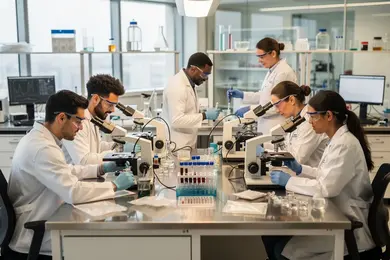
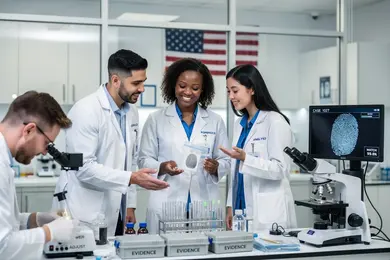
Online bachelor's in forensic science programs with internship opportunities address a critical gap: acquiring practical skills amid remote study. These programs often coordinate internships with local law enforcement or forensic labs, facilitating real-world experience in evidence handling and crime scene analysis not replicable by virtual exercises alone. For instance, a student interning at a metropolitan crime lab obtains firsthand exposure to procedural documentation and forensic techniques, significantly enhancing readiness for technical roles.
Employers prioritize candidates demonstrating both theoretical knowledge and applied competency with forensic tools and data interpretation. Without structured practical internship experiences, graduates may face longer job searches or need to accept entry-level positions below their qualifications. The U.S. Bureau of Labor Statistics forecasts a 13% growth in forensic science technician roles through 2032, heightening competition for internships as a decisive advantage.
Students pursuing a forensic science degree with practical internship experiences must vet programs for formal placement support, timing flexibility, and credit recognition. Coordination with approved local sites is essential because remote internships rarely provide sufficient hands-on training. Prioritizing programs mandating minimum in-person practicum hours ensures skill development aligns with employer expectations.
Understanding employment prospects is equally vital; for example, exploring the criminal profiler salary helps contextualize the return on educational investment and informs career decisions within forensic sciences.
How do online forensic science bachelor's programs compare with campus-based options?
Online forensic science bachelor's degree programs are increasingly competitive with campus programs but differ significantly in access to hands-on training and local industry networks. While Champlain College's online Computer Forensics & Digital Investigations graduates report a median salary of $89,716, these figures should be contextualized by internship availability and state certification demands.
Campus-based programs offer immediate access to specialized labs, in-person mentoring, and direct law enforcement connections, resources that shape technical skills and career trajectories. In contrast, the best online forensic science bachelor's internship opportunities online compared to traditional programs hinge on establishing local partnerships, enabling students-often working professionals or those in rural locations-to gain practical experience without relocating. For instance, an online student might intern at a regional digital forensics firm to fulfill experiential requirements.
Employers emphasize demonstrable technical proficiency and documented experience over program delivery mode. However, online students face operational friction securing relevant field placements aligned with their forensic focus. Prioritizing programs with integrated internship pathways and career support is essential, as is understanding hybrid approaches needed for in-person state licensing.
This dynamic is particularly relevant when evaluating options across disciplines, including forensic science and related fields. For prospective students reviewing career flexibility and outcomes, questions similar to what can I do with an environmental science degree offer transferable insight into balancing remote education benefits with employability realities.
Which accredited schools offer online bachelor's degrees in forensic science with internships?
Employers in forensic roles increasingly require demonstrable hands-on experience, making the availability and quality of internships a decisive factor in degree selection. Several accredited online forensic science degree programs with internship opportunities embed mandatory practicum components that act as practical training grounds. For example, Grand Canyon University's online bachelor's degree includes a structured internship that integrates analytical methods with real evidence under supervision, with tuition around $66,000. Such programs are designed not only to fulfill academic requirements but also to reduce employment barriers where 20% of graduates only secure jobs after gaining practical experience.
Trusted schools providing forensic science bachelor's degree online and internship placements, including Merrimack College and the University of New Haven, tailor their partnerships with crime labs and legal agencies to meet state credentialing rules. This geographic and institutional alignment matters because forensic positions often demand local clearance and chain-of-custody knowledge, posing a challenge for students in less populated areas. Programs offering nationwide lab connections or virtual simulations can mitigate these hurdles, improving return on investment despite high tuition costs.
Choosing the right program also means evaluating how internships enhance employability by fostering essential skills like report writing and evidence handling that differentiate technically skilled graduates in a competitive job market. Prospective students frequently compare these forensic pathways alongside related options such as an exercise science online degree, weighing practical training and local job market fit.
What admission requirements and prerequisites do online forensic science bachelor's programs have?
Admission criteria for online forensic science bachelor's programs often necessitate a high school diploma or equivalent, with GPA requirements usually between 2.5 and 3.0. Prerequisites for enrolling in bachelor's degree in forensic science online typically include foundational knowledge in biology, chemistry, and mathematics, which support the empirical methods central to forensic work. Applicants holding prior college credits or associate degrees can sometimes bypass general education courses, accelerating completion.
Programs evaluate candidates on their critical thinking ability, laboratory skills, and proficiency in scientific writing-essential for accurate forensic reporting and analysis. Many require official transcripts and sometimes standardized test scores, although some have removed testing demands to widen accessibility. Letters of recommendation and targeted personal statements demonstrating analytical problem-solving may enhance chances in selective admissions.
Internship placement logistics constitute a significant practical consideration. For working professionals, verifying if internships support flexible hours or virtual components is necessary since physical attendance demands vary. Programs that connect students with law enforcement or forensic labs better position graduates for roles such as crime scene technician and evidence analyst, a key factor in successful career entry.
Entry into field internships often requires background checks and drug screenings due to sensitive site access, impacting program timelines and requiring early preparation. Comparing programs on their internship support and credentialing guidance is crucial for aligning education with workforce expectations and avoiding delays in employment. For students evaluating pathways, also consider exploring an affordable online computer science degree if flexibility and broad skill sets align better with evolving forensic technologies.
What courses and hands-on learning experiences are included in these online programs?
Online bachelor's in forensic science programs demand careful navigation of experiential components critical for workforce readiness. Theoretical coursework alone fails to meet employer expectations, which heavily favor candidates with documented, hands-on experience in evidence collection, chain-of-custody, and courtroom testimony preparation.
For instance, a 120-hour internship at a county crime lab not only bridges this gap but provides direct exposure to case workflows often absent in purely academic programs. However, students must often arrange these internships independently within their local jurisdictions, which can delay degree completion but ensures alignment with professional competence standards.
Curricula cover essential subjects like criminalistics, toxicology, DNA analysis, forensic chemistry, and legal-ethical issues, consolidating technical skills with critical analytical training in tools such as SPSS or R-capabilities that improve investigative accuracy and influence employer assessments.
Cost represents a pragmatic factor for many: the lowest-priced programs charge around $190 per credit, a figure that students must weigh against the availability and quality of practical training opportunities to avoid diminished employability despite academic success.
- Core scientific courses integrated with virtual simulations and mandatory field internships
- Self-arranged internships as a logistical and scheduling challenge affecting timely graduation
- Statistical software proficiency enhancing lab and investigative capabilities
- Cost-quality tradeoffs influencing access to meaningful practical experience
These operational realities define the tangible value and limitations of pursuing a forensic science bachelor's degree online and should be central to decision-making for career pivots or advancement.
How do online forensic science programs arrange internships, labs, and practical training?
Practical training in forensic science programs hinges on effective internship placements tailored to specialized fields and geographic constraints, directly influencing graduate employment prospects. For example, candidates focusing on forensic toxicology may gain experience in regional crime labs with specific instrumentation, while digital forensics students might be aligned with cybersecurity units in law enforcement agencies. Such placements require structured coordination to meet both academic requirements and workplace security clearances.
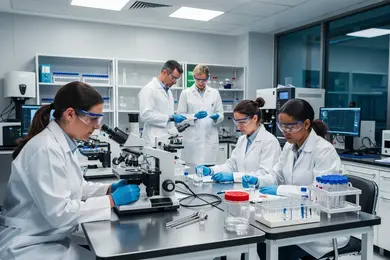
Hands-on lab experience remains a vital credential yet often encounters logistical hurdles. Many programs integrate virtual lab software or hybrid models, including shipped forensic kits or simulated crime scene exercises, to accommodate students unable to attend on-campus sessions. Verification of skill competencies through remote or third-party facilities attempts to mitigate geographic isolation but may fall short in replicating the depth of in-person training.
Employers persistently prioritize demonstrated competencies in casework and chain of custody protocols; consequently, programs that embed rigorous practical internships typically see stronger workforce outcomes. However, access disparities persist due to local resource scarcity or institutional capacity, requiring students to proactively secure relevant placements or adapt to extended virtual modules. Tuition cost considerations, such as Liberty University's relatively affordable residential rates within private peers, factor into strategic decisions, particularly for career changers balancing financial constraints without relocating.
How long do online forensic science bachelor's programs take, and what do they cost?
Choosing an online forensic science bachelor's degree involves balancing program length, cost, and practical experience with career realities. Typical programs require 120 to 130 credit hours, spanning four to five years full-time. Accelerated tracks can reduce this to three years but demand intensive schedules that may conflict with work or internships essential for applied skills. Part-time options extend duration beyond six years, often delaying employment advancement in forensic or criminal justice roles.
Tuition averages around $278 per credit hour at institutions like Columbia Southern University, translating to $33,360-$36,140 for tuition alone. Students must anticipate a 10-15% increase for textbooks, technology fees, and particularly the logistics of internships, which can include additional supervision or placement charges. Securing local internships is critical since many employers require hands-on forensic lab or law enforcement experience, which cannot be effectively substituted with remote work and may extend program duration if placements are hard to find.
Employers place significant value on internship experience, often favoring candidates who trade faster completion for robust practical exposure. Admission to FEPAC-accredited programs influences eligibility for certifications and can affect transfer credit acceptance, ultimately shaping cost and program length. Prospective students should weigh these tradeoffs carefully against their professional timelines and geographic constraints.
What careers can graduates pursue with an online bachelor's in forensic science?
Securing an online bachelor's in forensic science primarily prepares graduates for foundational roles such as forensic science technicians, crime lab analysts, and evidence specialists, but these positions come with practical constraints. Employers expect candidates to have completed 120-124 credit hours that encompass rigorous coursework in chemistry, biology, and criminal justice. The supply of entry-level jobs is concentrated in government or law enforcement labs, where handling DNA, toxicology, and trace evidence is routine and internship experience often differentiates candidates for permanent roles.
Private sector roles in forensic consulting or fraud investigation exist but tend to offer lower compensation and fewer opportunities for advancement. Specialized forensic careers-including toxicology, digital forensics, and forensic odontology-typically require graduate education or certification, underscoring that a bachelor's degree is a starting point rather than a final qualification.
Applicants targeting federal agencies like the FBI or DEA face additional barriers: security clearances and demanding technical assessments extend beyond academic achievement. Furthermore, geographic limitations restrict job availability to urban and regional hubs where forensic labs operate.
Prospective students must anticipate ongoing credentialing requirements, such as those from the American Board of Criminalistics, and continuous skills updates in technologies like molecular biology and spectroscopy to remain employable over time.
What salary ranges and job outlook can forensic science graduates expect?
Entry-level forensic science graduates in the U.S. face a varied salary landscape influenced heavily by geography, internship experience, and credentials beyond the bachelor's degree. While typical starting salaries range from $50,000 to $65,000 annually, internships during the bachelor's program often lift initial pay toward the higher end, particularly in urban markets where cost of living drives wages upward. Conversely, rural or smaller jurisdictions frequently offer salaries between $45,000 and $55,000, presenting early-career tradeoffs between compensation and location.
Forensic science degrees, often completed in four to five years, provide foundational knowledge, but the market rewards advanced certifications or graduate education, especially for roles such as forensic chemist or DNA analyst, which can command salaries exceeding $80,000. These specialized positions typically require several additional years of study or on-the-job training, underscoring a potential delay before financial returns improve significantly.
Employment growth is robust at a projected 16% from 2022 to 2032, outpacing many fields, yet state and federal budget fluctuations create instability in hiring and salary growth. Prospective students should critically assess program length, costs, and the expected need for postgraduate certification when considering how a forensic science degree fits within their strategic workforce plans.
- Internships correlate strongly with starting salary improvements
- Urban versus rural job markets show clear compensation disparities
- Advanced credentials substantially increase earning potential
- Budget variability affects long-term salary trajectory and hiring
How can students evaluate and choose a reputable online forensic science program?
Choosing an online forensic science program without verified accreditation and guaranteed internship access risks both time and financial investment, especially as the Bureau of Labor Statistics projects 13% job growth for forensic science technicians from 2022 to 2032. Accreditation recognized by the U.S. Department of Education or the Council for Higher Education Accreditation ensures credits are transferable and the program meets industry benchmarks.
Internships remain a non-negotiable component for practical readiness. Employers expect candidates with hands-on experience gained through established partnerships with accredited forensic facilities. Programs lacking structured internships typically result in graduates facing remedial training or costly certification delays.
Curricula must integrate applied components such as crime scene investigation, forensic biology, chemistry, and criminal law within labs or simulations. Overemphasis on theory without practical skills limits employability in forensic labs and law enforcement roles. Faculty credentials and active industry engagement further influence educational quality and relevance.
Delivery formats that include virtual labs or interactive case studies amplify skill acquisition remotely. Absence of such technology can leave students underprepared. Scrutinizing graduate outcomes, including placement rates and employer ties, offers crucial perspective on program effectiveness versus cost.
For example, a professional aiming for crime lab analyst certification should prioritize programs with both accredited internships and curricula aligned to certification standards to avoid delays and additional expenses. These decisions directly impact career trajectory in a competitive, growth-oriented field.
Other Things You Should Know About Forensic Science
Certification is not always legally required but is increasingly expected by employers in forensic science roles. Credentials like those from the American Board of Criminalistics provide a competitive edge and validate specialized skills, especially for advanced or forensic analyst positions. Graduates should prioritize certification programs aligned with their career goals since employers often use these as benchmarks for technical competence and reliability.
Students usually assist with evidence logging, chain-of-custody documentation, sample preparation, and supervised laboratory analysis. Many internships also include writing case notes, observing forensic toxicology or DNA procedures, and following lab safety rules set by the host agency or accrediting standards.
Recognition depends heavily on program accreditation and the quality of the internship placement rather than the delivery format alone. Employers focus on proven practical experience and demonstrated competencies; thus, an online degree paired with a reputable forensic internship can match in-person credentials in value. Prospective students should verify if their internship sites offer meaningful forensic casework exposure, as this directly influences employer perceptions.
Programs with integrated internships streamline the path to practical experience, ensuring supervised, curriculum-aligned placements that count toward graduation and reduce total time to workforce readiness. Independent internships post-graduation offer flexibility and diverse opportunities but can delay employment and lack academic oversight. Students aiming for immediate hands-on experience and guided mentorship should prioritize programs including internships in their structure.
References
- Forensic Science Courses | Internships | Training Delhi India https://sifs.in/
- Top Forensic Science Internships - Organizations & Eligibility https://www.forensicscolleges.com/blog/resources/cool-forensic-science-internships
- 10 Types of Experiential Learning: Unlocking the Power of Hands-On Education - JUMP! Foundation Official Website https://jumpfoundation.org/10-types-of-experiential-learning-unlocking-the-power-of-hands-on-education/
- The 9 Best Online Learning Platforms in 2026 https://www.ispring.com/knowledge-hub/best-online-learning-platforms
- Fun Fridays: Incorporating Hands-on Learning into Lecture Courses – Teaching in the University https://www.saskoer.ca/universityteaching/chapter/fun-fridays-incorporating-hands-on-learning-into-lecture-courses/
- Hands-On Learning: 12 Research-Backed Activities for Every Subject https://www.structural-learning.com/post/hands-on-learning
- Forensic Science Majors https://www.hamline.edu/academics/undergraduate/forensic-science
- The Do This, Get That Guide On Forensic Science Internships https://bloom-law.be/en/blog/the-do-this-get-that-guide-on-forensic-science-internships/
- List of Bachelors in Forensic Science Programs - Campus & Online https://yescollege.com/degrees/bachelors-in-forensic-science/
- Forensic Science Courses | training | Internship | Workshop | Sifs India https://www.sifs.in/