2027 Exercise Science Degree Jobs That Do Not Require Licensure

Co-Founder and Chief Data Scientist
An exercise science degree can lead to useful health, fitness, sport, wellness, and research roles even if you do not plan to pursue a state license. The key is knowing which jobs are truly non-licensed, which ones still expect certifications, and which career paths may eventually require regulated credentials if you want to advance.
This decision matters because licensure affects cost, time, job eligibility, and scope of practice. Some graduates want to work with clients, athletes, employees, or community programs without entering clinical practice. Others use non-licensed jobs to gain experience before deciding whether to continue into physical therapy, occupational therapy, athletic training, clinical exercise physiology, or another regulated field.
Employment in exercise science-related fields is projected to grow by 11% through 2031, but not every opportunity is open to every graduate. This guide explains the exercise science degree jobs that do not require licensure, the industries that hire for them, the skills employers look for, the highest-paying options, remote possibilities, and the limitations students should understand before choosing a non-licensed route.
Key Benefits of Exercise Science Degree Jobs That Do Not Require Licensure
- The absence of licensure requirements enables faster workforce entry, reducing job search time for exercise science graduates by up to 40% compared to licensed professions.
- Diverse industries such as wellness, fitness, and corporate health offer roles accessible without licensing, broadening employment opportunities across various sectors.
- Non-licensed positions facilitate early professional experience and transferable skill development, supporting sustained career growth and advancement in exercise science fields.
What Jobs Can You Get With an Exercise Science Degree Without Licensure?
With an exercise science degree and no professional license, you can pursue roles focused on fitness instruction, wellness programming, health education, athletic performance support, research assistance, and exercise program implementation. These jobs generally do not allow you to diagnose medical conditions, prescribe treatment, or practice independently in regulated healthcare roles. They do, however, let you apply training in anatomy, physiology, kinesiology, biomechanics, behavior change, and client communication.
Employment for fitness trainers and related professions is projected to grow significantly, with the U.S. Bureau of Labor Statistics estimating a 16% increase from 2022 to 2032. That growth supports several non-licensed entry points, especially for graduates who can show practical experience, strong communication, and comfort working with different populations.
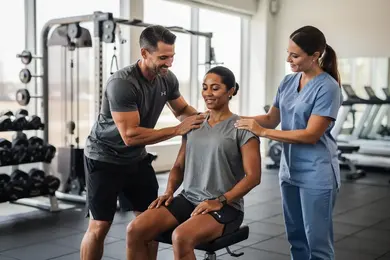
- Fitness Trainer/Wellness Coach: Fitness trainers and wellness coaches help clients improve strength, mobility, cardiovascular fitness, and general health habits. Licensure is not typically required, but employers may prefer or require a recognized fitness certification. Exercise science graduates have an advantage when they can translate academic knowledge into safe, understandable workout plans.
- Health Educator: Health educators create programs and materials that encourage physical activity, nutrition awareness, stress management, and preventive health behaviors. These roles can appear in schools, nonprofits, community agencies, corporate wellness departments, and public health settings. Licensure is usually not the main barrier, but experience with outreach, presentations, and program evaluation can matter.
- Strength and Conditioning Assistant: Strength and conditioning assistants support athletes, teams, or performance coaches by helping with workouts, warmups, conditioning sessions, and basic performance tracking. These roles are usually supervised and may not require licensure, though employers often value certifications, sport experience, and knowledge of safe lifting technique.
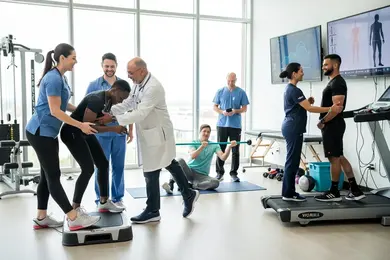
- Rehabilitation Assistant/Exercise Technician: Rehabilitation assistants and exercise technicians work under licensed professionals in physical therapy clinics, hospitals, or wellness facilities. They may prepare equipment, demonstrate basic exercises, monitor form, and document client progress, but they do not independently evaluate, diagnose, or treat patients. This can be a useful bridge role for graduates considering clinical graduate school later.
Students comparing broader healthcare education options should understand that requirements vary widely by field. For example, an online pharmacist degree follows a very different credentialing model than non-licensed exercise science roles.
Which Industries Hire Exercise Science Graduates Without Licensure?
Exercise science graduates without licensure are most competitive in industries where the work centers on performance, prevention, education, wellness, or program support rather than clinical diagnosis or medical treatment. Fitness trainer and instructor jobs are projected to grow 15% from 2021 to 2031, according to the U.S. Bureau of Labor Statistics, and many related opportunities exist outside traditional healthcare licensing structures.
| Industry | Common non-licensed roles | What employers usually value |
| Fitness and Wellness | Fitness trainer, group exercise instructor, wellness coach, gym program coordinator | Exercise programming, client rapport, safety awareness, sales or member-retention skills |
| Corporate Wellness | Wellness coordinator, health promotion assistant, employee fitness program specialist | Program planning, communication, behavior change strategies, basic data tracking |
| Sports Organizations | Strength and conditioning assistant, performance support assistant, team fitness aide | Sport-specific training knowledge, professionalism, ability to work under coaches |
| Community and Recreational Programs | Recreation fitness specialist, community health program assistant, youth or senior fitness instructor | Adaptability, inclusive programming, public-facing communication, group leadership |
| Research and Education | Research assistant, lab technician, program instructor, exercise testing assistant | Data collection, protocol compliance, attention to detail, comfort with academic settings |
The best industry depends on your preferred work environment. Fitness facilities offer direct client interaction but may involve evenings, weekends, and sales goals. Corporate wellness can provide more predictable schedules but may require program-management skills. Sports settings can be competitive and seasonal. Research roles are a strong fit for graduates who enjoy measurement, documentation, and evidence-based practice.
What Entry-Level Jobs Are Available Without Exercise Science Licensure?
Entry-level exercise science jobs without licensure are usually assistant, coordinator, instructor, or support roles. They are designed for graduates who understand human movement and health behavior but are not licensed to diagnose, treat, or independently manage clinical care. About 68% of exercise science graduates find relevant employment within six months after finishing their degree, indicating steady demand for roles that use the degree without requiring a license.
- Fitness Trainer or Wellness Coach: These roles involve helping clients follow exercise plans, improve consistency, and build healthier routines. New graduates often start in gyms, studios, recreation centers, or wellness companies. A degree can help you explain the “why” behind exercises, but employers may still expect confidence in coaching, demonstration, and client retention.
- Physical Therapy Aide: Physical therapy aides support licensed physical therapists by preparing treatment spaces, cleaning and setting up equipment, helping with administrative tasks, and assisting patients with basic supervised activities. This role is not the same as being a physical therapist or physical therapist assistant, and duties are limited by employer policies and state rules.
- Strength and Conditioning Assistant: These assistants help deliver training sessions, observe technique, set up equipment, track basic performance markers, and support coaches. Entry-level applicants are stronger when they can show experience from internships, collegiate athletics, internships, or volunteer work with teams.
- Exercise Physiology Research Assistant: Research assistants may help recruit participants, collect exercise testing data, maintain equipment, enter data, and follow study protocols. This option is especially useful for graduates considering graduate school or roles in health data, performance science, or academic research.
A common mistake is applying only to jobs with titles such as “exercise physiologist” or “rehabilitation specialist” without checking whether the employer requires licensure, certification, or clinical eligibility. Broaden your search to include “wellness coordinator,” “fitness specialist,” “health promotion assistant,” “exercise technician,” “research assistant,” and “performance assistant.”
A graduate with an exercise science degree shared that landing a non-licensed role was initially challenging because many postings still preferred licensure or certification. Persistence, networking, and willingness to start in a support role led to a research assistant position where academic skills were directly useful. The experience highlights a practical lesson: non-licensed graduates often need to prove readiness through internships, references, project work, and clear explanations of what they can legally and safely do.
Which Exercise Science Jobs Pay the Highest Salaries Without Licensure?
The highest-paying exercise science jobs without licensure tend to combine movement science with program leadership, business value, athlete performance, employee health, or specialized client outcomes. Graduates with a bachelor's degree in exercise science who avoid licensure can still earn competitive wages, with median salaries around $56,000 annually. Pay varies by employer, location, experience, setting, and whether the role includes management or revenue responsibility.
- Corporate Wellness Coordinator: Corporate wellness coordinators design and manage employee health initiatives, fitness challenges, screenings, education campaigns, and wellness communications. Salaries generally range between $50,000 and $80,000. This path can pay more than entry-level fitness roles because it connects exercise science to employee engagement, productivity, and healthcare cost concerns.
- Strength and Conditioning Coach: Strength and conditioning coaches create training programs for athletes and performance-focused clients. Income ranges from $45,000 to $90,000, with stronger earning potential in collegiate settings, private performance facilities, and roles serving competitive athletes. Some employers may not require licensure, but they may strongly prefer recognized certifications and proven coaching experience.
- Health Promotion Specialist: Health promotion specialists design and evaluate campaigns that encourage healthier behavior in workplaces, community organizations, schools, or public health settings. They earn roughly $60,000. Exercise science graduates are competitive when they can combine fitness knowledge with communication, outreach, and program assessment skills.
- Sports Nutrition Advisor: Sports nutrition advisors help clients connect training, recovery, and nutrition habits to performance goals. Experienced specialists typically make $50,000 to $85,000. Graduates should be careful with scope of practice: giving general education differs from providing medical nutrition therapy, which may be regulated depending on the jurisdiction and role.
To improve earning potential without licensure, focus on roles where you can document outcomes: improved participation, client retention, performance metrics, program completion, or employee engagement. Leadership duties, business development, and specialized population experience can also raise market value.
Students comparing health-related academic pathways may also look at a nursing school that does not require TEAS test, but nursing and exercise science lead to different credentialing expectations and scopes of practice.
What Skills Help Exercise Science Graduates Get Hired Without Licensure?
Without licensure, employers look for evidence that you can apply your degree safely, professionally, and independently within a non-clinical scope. According to a 2023 survey by the National Association of Colleges and Employers, over 70% of employers value hands-on abilities and communication more than formal credentials for entry-level health and wellness positions. That makes your resume, internship experience, coaching examples, and interview communication especially important.
- Technical Knowledge: Employers expect a working understanding of exercise physiology, anatomy, kinesiology, biomechanics, basic program design, and training principles. The strongest applicants can explain how they adjust exercises for different goals, ability levels, and safety considerations without making medical claims beyond their role.
- Data Analysis and Technology: Fitness trackers, scheduling platforms, wearable data, spreadsheets, client-management systems, and assessment tools are common in wellness and performance settings. Graduates who can collect, interpret, and communicate basic data are more useful to employers than those who only understand theory.
- Communication Skills: Non-licensed roles often depend on trust and motivation. You need to explain instructions clearly, correct form respectfully, present health information accurately, and adjust your language for clients, athletes, employees, supervisors, and other professionals.
- Critical Thinking: Exercise plans rarely work perfectly on the first attempt. Employers value graduates who can adapt sessions, recognize red flags, stay within scope, escalate concerns to licensed professionals when needed, and solve practical problems without overstepping.
- Organizational Abilities: Scheduling, documentation, progress tracking, equipment setup, safety checks, and follow-up communication show reliability. These details matter in gyms, clinics, corporate wellness programs, research labs, and sports settings.
How to show these skills when applying
- List internships, labs, practicum hours, coaching roles, or volunteer experience that involved real participants or clients.
- Use specific examples of programs you designed, assessments you supported, presentations you delivered, or data you tracked.
- Clarify that you understand scope-of-practice limits and know when to refer clients to licensed professionals.
- Prepare a short portfolio with sample exercise plans, wellness campaign ideas, or research support projects if the role allows it.
Can Certifications Replace Licensure in Some Exercise Science Careers?
Certifications can replace licensure only in careers where a license is not legally required. They do not replace licensure for regulated clinical professions. This distinction is important: licensure is government authorization to practice in a protected role, while certification is typically a professional credential that signals training, competence, or specialization.
In fitness, wellness, coaching, and some performance roles, employers may treat certification as sufficient because the work does not involve diagnosing or treating medical conditions. A 2022 survey by the National Academy of Sports Medicine found that over 70% of employers in fitness and wellness emphasized certification credentials when hiring, highlighting the practical value of recognized certifications for non-licensed exercise science graduates.
| Credential type | What it does | Where it matters most |
| Licensure | Grants legal permission to practice in a regulated profession | Clinical and rehabilitative roles such as physical therapy |
| Certification | Validates knowledge or skills through a professional organization | Personal training, group fitness, health coaching, strength and conditioning, wellness roles |
| Degree | Provides academic preparation in exercise science and related subjects | Entry-level wellness, fitness, research, sports support, and graduate-school preparation |
Certifications are most useful when they match the job you want. A personal training certification may help in a gym; a strength and conditioning credential may help in athletics; a health coaching credential may help in corporate wellness or virtual coaching. However, no certification gives you permission to perform duties reserved for licensed clinicians.
Graduates who want to build long-term expertise without immediate licensure can compare continuing education options, including an online phd in exercise science, especially if they are interested in research, teaching, leadership, or advanced study rather than clinical practice.
Some students also consider broader online education routes through online universities with no application fee, but they should still verify accreditation, employer recognition, and whether the program supports their intended credential path.
What Remote Jobs Can Exercise Science Graduates Get Without Licensure?
Remote exercise science jobs without licensure are most realistic when the work involves education, coaching support, content, programming, research, or data rather than hands-on assessment or clinical care. Remote work has surged across various fields thanks to digital tools and virtual collaboration, with a 159% increase in remote job listings over the last few years. Exercise science graduates can benefit from this shift if they are strong communicators and understand the limits of virtual guidance.
- Health Coach: Remote health coaches help clients set goals, build routines, track habits, and stay accountable through video calls, messaging, or coaching platforms. An exercise science background helps with safe general fitness guidance, but graduates should avoid diagnosing conditions or managing medical treatment unless properly licensed for that work.
- Content Creator: Exercise science graduates can write articles, develop videos, build educational resources, or create online course materials for fitness brands, wellness platforms, publications, or employers. The strongest content creators combine scientific accuracy with clear, practical explanations for non-specialists.
- Fitness Program Developer: Program developers create structured workouts, wellness challenges, onboarding materials, or digital fitness plans for apps, corporate wellness programs, gyms, or online coaching businesses. This role rewards graduates who understand progression, safety, accessibility, and user experience.
- Research Assistant or Data Analyst: Some research support roles can be remote, especially when tasks involve literature review, data cleaning, data entry, survey management, or analysis of health and fitness information. These jobs fit graduates who are detail-oriented and comfortable following research protocols.
What makes remote applicants competitive
- Strong writing and video communication skills
- Comfort with digital coaching platforms, spreadsheets, and fitness apps
- Clear disclaimers and referral practices for medical concerns
- Examples of programs, client education materials, or research projects
- Reliable follow-up habits and professional online presence
A professional with an Exercise Science degree explained that she was initially uncertain about pursuing licensure but found remote roles that valued program design and wellness communication. She described the challenge of turning academic knowledge into clear, practical online guidance as both demanding and rewarding.
- : "Working remotely, I appreciated how my degree gave me credibility and confidence even without formal licenses. It took patience to build my client base and prove my skills, but the flexibility and meaningful impact made it worthwhile."
Her experience shows that remote non-licensed work can be viable, but it usually requires more than subject knowledge. Graduates must build trust, communicate clearly, document their value, and stay within ethical and legal boundaries.
What Challenges Do Non-Licensed Applicants Face?
Non-licensed exercise science graduates can find good opportunities, but they face real hiring barriers. A study in the Journal of Allied Health found that about 40% of exercise science-related jobs prefer or require licensure or certification, which means applicants without those credentials may be screened out even for roles that use similar academic knowledge.
- Employer Preference for Credentials: Some employers use licensure or certification as a shortcut for verifying knowledge, safety awareness, and professionalism. Even when licensure is not legally required, a credentialed applicant may appear lower risk.
- Limited Recognition: “Exercise science degree” can mean different things to different employers. Hiring managers may not immediately understand what you can do unless you connect your coursework to job tasks such as coaching, program design, testing support, or health education.
- Experience Requirements: Entry-level postings may still ask for prior coaching, clinic, lab, or wellness experience. This creates a challenge for new graduates who need experience to get hired but need a first job to gain experience.
- Regulatory Limitations: Laws, employer policies, and insurance rules may restrict who can evaluate patients, provide treatment, conduct certain assessments, or work with clinical populations. Non-licensed graduates must know where support work ends and regulated practice begins.
How to reduce these barriers
- Pursue internships, practicums, volunteer roles, or campus employment before graduation.
- Consider recognized certifications for non-licensed fitness, coaching, or strength and conditioning roles.
- Use resumes that translate coursework into job-relevant skills instead of listing classes only.
- Network with alumni, faculty, clinic managers, coaches, and wellness coordinators.
- Be explicit in interviews that you understand scope-of-practice limits and referral responsibilities.
Are There Career Limitations for Non-Licensed Professionals?
Yes. Non-licensed exercise science professionals have more limited access to clinical, rehabilitative, and regulated healthcare roles. The U.S. Bureau of Labor Statistics notes that around 15% of health-related exercise roles require licensure, restricting access for those without official credentials. This does not make a non-licensed path a poor choice, but it does shape which jobs are realistic and how far you can advance in certain settings.
The most important limitation is scope of practice. Non-licensed professionals generally cannot diagnose injuries, prescribe medical treatment, independently manage rehabilitation plans, or represent themselves as licensed clinicians. In clinics, hospitals, and rehabilitation environments, they often work in support roles under licensed staff.
Career advancement can also be slower in organizations that reserve supervisory, specialist, or clinical roles for licensed professionals. A graduate may start as a fitness specialist, wellness assistant, or exercise technician but later discover that higher-level positions require licensure, graduate education, or a specific certification. This is why students should compare job postings early, not after graduation.
There are ways to reduce these limitations. Non-licensed professionals can build expertise in corporate wellness, fitness management, performance coaching, research coordination, community health programming, content development, or health technology. Others pursue complementary fields such as a health information management degree, which can support careers in health data, administration, and systems rather than direct exercise programming.
What Factors Should Students Consider Before Skipping Licensure?
Skipping licensure can be a smart choice if your target career is in fitness, wellness, coaching, health promotion, sports support, research, or program coordination. It can be a costly mistake if your actual goal is clinical rehabilitation, physical therapy, occupational therapy, athletic training, or another regulated profession. About 20% of exercise physiologists hold certifications or licenses, underscoring the role credentials play in certain employment pathways.
- Career Goals: Start with the job title you eventually want, not just the major you enjoy. If your goal involves clinical evaluation, rehabilitation, or patient treatment, licensure may be unavoidable. If your goal is fitness programming, wellness education, or performance support, licensure may not be necessary.
- Industry Requirements: Healthcare and government employers are more likely to have strict credential rules. Fitness companies, corporate wellness programs, sports organizations, research labs, and community programs may offer more non-licensed options, although they may still prefer certifications.
- Long-Term Growth: Your first job may not require licensure, but promotions might. Review senior-level postings to see whether managers, specialists, directors, or clinical leads need licenses, graduate degrees, or certifications.
- Job Accessibility and Geographic Variation: Licensing rules differ by state and country, affecting where graduates can practice and gain employment. A role that is non-licensed in one setting may have different requirements elsewhere, especially when clients have medical conditions or when services are billed through healthcare systems.
- Time and Cost Investment: Licensure pathways may require additional education, supervised hours, exams, fees, and time away from full-time work. Even accelerated programs involve trade-offs. Compare those costs with the earnings, stability, and advancement that licensed roles may offer.
A practical decision test
- If you want to treat patients, verify licensure requirements before choosing a non-licensed path.
- If you want to coach, teach, coordinate, or develop wellness programs, look at certifications and experience first.
- If you are unsure, choose early jobs that build transferable experience and keep graduate or licensure options open.
- If you need to earn income quickly, non-licensed roles may offer faster entry, but plan how you will grow beyond entry-level work.
What Graduates Say About Exercise Science Degree Jobs That Do Not Require Licensure
- : "Choosing not to pursue licensure after my exercise science degree was a practical decision for me because it allowed me to enter the workforce more quickly. I started my career in wellness coaching right away, which gave me valuable hands-on experience without the added pressure of certification exams. Having a career path that doesn't require licensure has given me greater flexibility and the freedom to explore various roles within the health industry. — Arthur"
- : "Reflecting on my journey, I never felt the need to get licensed because my passion was always in fitness program design and community health, areas where formal licensure isn't mandatory. This choice enabled me to focus more on building personal connections and creating impactful programs rather than administrative hurdles. Working in a licensure-free environment has truly allowed me to foster creativity and adaptability in how I help others improve their well-being. — Roger"
- : "Professionally, I find that not requiring licensure opened doors that might otherwise have been closed for years. My exercise science degree prepared me well for roles in corporate wellness and health education, fields where practical knowledge is valued over formal licensure. This career path has been rewarding because it combines my expertise with the ability to directly influence healthier lifestyles without the constraints of regulatory processes. — Miles"
Other Things You Should Know About Exercise Science Degrees
Experience is often a key factor for securing roles in non-licensed exercise science jobs. Practical experience through internships, volunteer work, or part-time positions can demonstrate hands-on skills and enhance a candidate's employability. Employers typically value candidates who have applied their knowledge in real-world settings, even if formal licensure is not required.
Exercise science graduates can work independently in many situations, such as personal training or fitness coaching, as long as they comply with local laws governing professional practice. However, they cannot perform tasks reserved for licensed professionals, like diagnosing medical conditions or prescribing treatment plans. It is important to understand scope-of-practice limits to avoid legal issues.
Continuing education is available through workshops, online courses, and certificate programs that focus on fitness, wellness, nutrition, and related topics. Staying current with industry developments helps maintain competitiveness and can improve job prospects. Although not mandatory for all non-licensed roles, ongoing learning is recommended to enhance expertise and career growth.
In 2027, non-licensed exercise science professionals can play crucial roles in multidisciplinary teams by specializing in areas like health coaching, fitness training, and wellness coordination. They contribute by providing expertise in exercise testing, program design, and health promotion, enhancing the team's ability to deliver comprehensive care and wellness solutions.
References
- ESSA's career guide for Accredited Exercise Scientists https://www.essa.org.au/Web/Web/Resources/Tools-and-templates/ESSA-AES-Guide.aspx
- Exercise Science Degree Careers: The complete list https://traineracademy.org/blog/exercise-science-careers/
- Fitness Industry Careers That Don't Require a Degree | NESTA https://www.nestacertified.com/fitness-industry-careers-that-dont-require-a-degree/
- Exercise Science Careers: Paths with Degrees https://www.fitnessmentors.com/exercise-science-careers/
- Best Exercise Science Careers - Let's Find out! https://www.ptpioneer.com/personal-training/exercise-science-careers/
- What you can do with a degree in Exercise and Sport Science: careers and opportunities in Australia today https://www.curtin.edu.au/news/advice/exercise-sport-science-careers-australia/
- jcep https://jcep.kglmeridian.com/view/journals/ceph/1/1/article-p35.xml