2027 How to Choose an Online Criminal Justice Degree for Law Enforcement Careers

Co-Founder and Chief Data Scientist
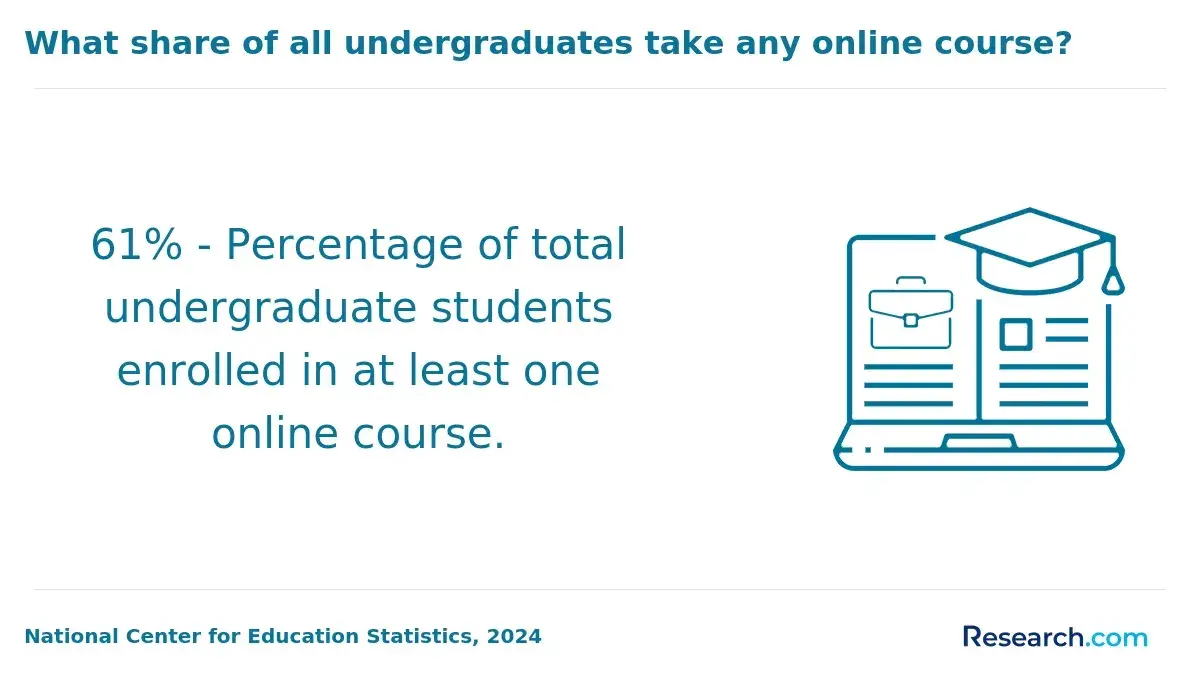
Choosing an online criminal justice degree presents a complex challenge for professionals balancing shift work, family demands, and career advancement. With 75% of online students identified as working adults by the National Center for Education Statistics, flexibility in course scheduling and program pacing directly impacts timely graduation and readiness for promotion.
Not all programs align with law enforcement credentialing standards or offer pathways recognizing real-world experience, leaving candidates vulnerable to wasted time and resources. Employers increasingly scrutinize curriculum relevance and practicum opportunities, especially amid growing competition for specialized roles.
This article examines program structures, accreditation nuances, and strategic factors to help candidates select online criminal justice degrees that tangibly enhance law enforcement careers.
Key Things You Should Know
- Online criminal justice programs vary widely in accreditation rigor, with 32% of graduates from non-CAEP-accredited schools facing 15% lower law enforcement hiring rates, impacting career entry prospects.
- Federal law enforcement increasingly favors candidates from programs emphasizing cybercrime and data analytics, reflecting a 27% job growth in digital forensics roles by 2028 per BLS projections.
- Programs offering accelerated 18-month tracks reduce opportunity costs but correlate with a 22% higher dropout rate among working adults, influencing long-term credential completion and employer perceptions.
What types of online criminal justice degrees best support law enforcement careers?
Bachelor's and master's degrees in online criminal justice degree programs for law enforcement careers provide the critical operational knowledge needed to pass certification exams and secure positions within police and federal agencies.
These degrees differ sharply in career impact: a bachelor's with a law enforcement administration focus prepares candidates for supervisory roles, while a master's can open paths to specialized federal assignments or complex investigations. By contrast, associate degrees typically limit holders to entry-level roles unless significantly supplemented by hands-on experience or professional certifications.
Employers favor applicants who can demonstrate practical readiness beyond academic credentials. Programs that include internships or scenario-based training tend to produce candidates better suited for agency demands. For those evaluating best online criminal justice degrees supporting police careers, emphasis on law enforcement procedures and legal frameworks correlates directly with improved hiring outcomes in competitive local agencies.
Given workforce data, 2.9 million U.S. jobs projected by 2025 and 7.9% growth through 2035, student choices materially affect job accessibility amid nearly 208,000 annual openings and median income near $66,800. Prospective students should weigh program accreditation, cost, and degree focus carefully; these factors impact long-term eligibility for federal positions and career mobility.
For nuanced perspectives on how much is a criminal justice degree, cost considerations are critical when balancing return on investment with job market prospects.
Degrees that integrate law enforcement best practices and legal studies, coupled with tailored career services, offer the strongest practical leverage for those targeting street-level policing or federal law enforcement roles.
How does an online criminal justice degree compare to a campus-based program?
Online criminal justice degrees can match traditional campus programs in academic rigor, yet their value diverges sharply when examining hands-on training and professional networking. Campus-based students routinely engage in direct law enforcement interactions through labs, ride-alongs, and agency partnerships, experiences that translate into situational judgment and employer-readiness.
In contrast, those pursuing online programs must independently seek internships or field placements, adding logistical complexity and potential delays toward workforce entry.
Employers now emphasize accredited degrees as minimum qualifications, responding to a surge in policing openings driven by retirements and transfers of about 62,200 annually.
Accreditation remains a critical benchmark for program quality, particularly for online degrees where skepticism about rigor and authenticity persists. This dynamic shapes hiring filters that prospective students cannot overlook when assessing how an online criminal justice degree compares to traditional campus programs.
Students weighing these pathways must balance personal circumstances against career expectations and the need for experiential training. For those considering ancillary fields, the paralegal studies associate degree offers a comparison point in credential specificity and market positioning within justice professions.
What accreditation should an online criminal justice program have for law enforcement work?
Regional accreditation from a recognized U.S. Department of Education agency or the Council for Higher Education Accreditation (CHEA) is the fundamental credential for any online criminal justice program aimed at law enforcement careers. This accreditation not only validates academic quality but also determines eligibility for federal financial aid and employer acceptance, especially within federal and state agencies that require degrees meeting national academic standards.
While programmatic accreditation such as certification by the Academy of Criminal Justice Sciences (ACJS) enhances curriculum relevance and hiring prospects in agencies valuing specialized training, it cannot replace regional accreditation's core importance. Graduates from programs lacking regional accreditation often encounter significant barriers when pursuing competitive roles or specialized assignments like federal investigations.
Employers expect law enforcement candidates to have education encompassing legal principles, ethics, and investigative methodology, all assured through regionally accredited programs. Considering that 34.5% of criminal justice professionals hold a bachelor's degree, those without accredited credentials risk limited access to advancement and specialized positions.
Students assessing the best accredited criminal justice degrees for law enforcement careers should verify accreditation status through official databases to ensure credit transferability and recognition. For those exploring related fields, options like an online forensic psychology masters can complement or enhance practical expertise within criminal justice disciplines.
What courses and concentrations are most important in an online criminal justice curriculum?
Programs emphasizing criminal law, investigative techniques, and criminal procedure are foundational to online criminal justice degree courses for law enforcement, reflecting hiring priorities and the realities of fieldwork.
Concentrations in investigative methods cater to roles such as detectives and criminal investigators, positions with a median annual wage near $90,270 and steady projected growth. Students focusing on these tracks position themselves for mid- to upper-level enforcement jobs, where technical investigative skills meet operational demands.
Specialized study in areas like forensic science and cybercrime investigation strengthens employability amid agencies' rising reliance on technology. However, students must weigh programs' balance between theory and practical exercises; field conditions demand decision-making under pressure and proficiency in evidence collection and reporting.
Programs incorporating scenario-based learning or simulation labs notably enhance readiness. Supervisory or federal law enforcement roles require understanding operational management and jurisdictional differences, underscoring the value of leadership and legal coursework beyond foundational topics.
One practical implication is that narrow theoretical focus risks underpreparing candidates for diverse agency requirements and licensing standards, which vary geographically. Selecting a curriculum integrating core courses with targeted concentrations maximizes career flexibility in policing. For prospective students evaluating an online pathway, comparing curriculum depth and practical orientation is essential.
Beyond direct criminal justice tracks, it is important to consider related fields like animal science bachelor degree online, which can provide complementary skills and perspectives useful in specialized law enforcement units.
What admission requirements and prior experience do online criminal justice programs expect?
Admission to online criminal justice programs reflects a balance between academic preparedness and practical workforce relevance. While most programs require a high school diploma or GED, direct bachelor's entry often demands prior college credits or an associate degree.
Applicants targeting law enforcement careers typically need several years of public safety, corrections, or military experience; otherwise, programs require internships or supplemental fieldwork to meet employer expectations.
Academic criteria generally include a minimum GPA around 2.5, with many institutions waiving standardized tests. However, candidates with felony convictions encounter significant eligibility barriers due to hiring limitations in the criminal justice sector. For working professionals, detailed resumes and recommendations help justify credit for prior learning or access accelerated curricula.
A realistic pathway must consider the tradeoffs between programs focused on applied, scenario-based training, beneficial for officers seeking promotion, and those emphasizing theory, which may have limited immediate impact on job advancement. Practical field experience remains critical, as employers value demonstrated competence beyond online coursework.
Labor market data reinforce this: the civilian unemployment rate for graduates holding criminal justice and fire protection bachelor's degrees was only 1.8% in 2019, illustrating robust employer demand for well-aligned programs. Prospective students should prioritize evidence of such outcomes when choosing programs relative to their professional background and objectives.
How long do online criminal justice degrees take and what schedules are offered?
Degree pacing and schedule flexibility profoundly impact the value of online criminal justice programs for working professionals. Full-time bachelor's degrees commonly span four years, but accelerated tracks can reduce this to three, while part-time formats often extend to five or six years. Such variation is critical for officers balancing demanding shift work, as rigid semester schedules can impede steady progress and delay career milestones.
Programs that divide coursework into shorter 8- to 12-week modules, rather than traditional 15-week semesters, better accommodate irregular hours. For instance, a police dispatcher working overnight shifts can complete a module in sequence without losing momentum. Supplementary evening or weekend webinars offer engagement without mandatory attendance, meeting workforce needs without compromising educational rigor.
Financial considerations are equally consequential. Average tuition ranges from $38,496 to $60,593, while median entry-level law enforcement salaries sit near $65,170. Delayed degree completion due to inflexible scheduling inevitably increases overall costs and slows wage growth, underlining the importance of verifying policies on course load, transfer credits, and leaves of absence before enrollment.
Key operational tradeoffs for prospective students include:
- Choosing between accelerated completion and manageable workload.
- Balancing asynchronous learning with opportunities for interactive sessions.
- Minimizing total time to degree to maximize earnings potential.
Education decisions hinge on both workforce realities and academic structuring, factors that shape career trajectory beyond credential acquisition.
What tuition costs, financial aid options, and total program expenses should students expect?
Tuition costs for online criminal justice degrees typically fall between $200 and $600 per credit hour, with public institutions generally offering lower rates than private ones. Candidates transferring prior credits can substantially reduce expenses. For example, a working professional applying 30 transfer credits might save $6,000 to $18,000.
This strategic credit transfer shortens time to degree, helping mitigate total costs, which average $15,000 to $35,000 including fees and materials. Part-time enrollment and geographic factors further impact these expenses.
Available financial aid ranges from Federal Pell Grants, covering up to $7,395 annually, to Direct Loans with fixed rates. Employer tuition reimbursement programs also offset costs but typically require employees to stay for a designated period. Complementing these are state grants, scholarships targeting law enforcement careers, and GI Bill benefits for veterans, each influencing net cost and accessibility.
From 2010 to 2019, the number of degree holders aged 25-29 in criminal justice and fire protection increased by 56%, signaling a robust talent pool. Employers frequently prioritize candidates with transfer-friendly degrees, recognizing that prior learning assessments accelerate readiness and reduce time-to-hire.
Prospective students should weigh programs based on their ability to maximize transferable credits and preserve accreditation, as this balances cost containment with labor market credibility and employability.
What law enforcement roles can you pursue with an online criminal justice degree?
An online criminal justice degree serves as a foundational credential but is often insufficient on its own for frontline law enforcement roles, where field training and certifications weigh heavily in hiring decisions. For instance, a patrol officer aiming to become a detective must supplement academic knowledge with on-the-job investigative experience and analytical skills that cannot be fully captured in coursework.
Similarly, federal agencies like the FBI and DEA seek candidates whose degrees include federal law and intelligence components, yet require specialized training beyond the classroom.
Correctional positions such as case managers or officers value degree holders who understand inmate rights and rehabilitation, but practical skills and interpersonal acumen remain decisive factors. Supervisory openings may open for those combining legal knowledge with management capabilities, although experience often trumps education alone.
Key workforce realities include:
- More than half of online criminal justice students continue full-time employment, necessitating flexible program structures that accommodate shift work.
- Employers in fast-paced or high-risk jurisdictions prioritize certifications and real-world experience alongside degrees.
- Balancing education with professional development and field credentials is essential for upward mobility.
This pathway demands strategic planning. Understanding where formal education enhances eligibility and where experiential credentials must fill gaps to remain competitive in a complex, credential-driven labor market.
What salaries and job outlook can law enforcement graduates with criminal justice degrees expect?
The modest 3% employment growth projected for police and detective roles through 2034 indicates a highly competitive market, especially in urban areas where candidate supply outpaces openings. With approximately 826,800 positions nationwide but limited expansion, entry-level candidates face stiff competition not only from new graduates but also from existing officers advancing through promotions or lateral moves.
This dynamic emphasizes the value of specialized skills, such as cybercrime analysis or community-based policing, that differentiate applicants beyond a standard criminal justice degree.
Salaries hover around a median of $77,270, but federal or specialized agency roles often offer higher pay due to stringent security and training demands. Candidates aiming for agencies like the FBI or DEA must meet physical, background, and training prerequisites beyond the bachelor's degree requirement, underscoring the necessity for well-rounded qualifications.
Regional salary disparities pose additional tradeoffs: metropolitan areas usually offer better compensation but also carry elevated living costs and more intense competition. Prospective candidates should realistically assess these geographic factors against personal circumstances.
Ultimately, pursuing a criminal justice degree as a gateway into law enforcement requires balancing limited market growth, regional variances, and skill diversification. Informed decisions shape whether this pathway advances one's career or merely adds credential weight without competitive leverage.
How can you evaluate and choose a reputable online criminal justice school?
Accreditation is the primary filter for evaluating online criminal justice programs, directly impacting employer recognition, credit transfer, and curriculum quality.
When assessing programs, compare course emphases against evolving law enforcement needs, such as forensic analysis or community policing, rather than defaulting to generic curricula. Employers increasingly value practical experience-scenario-based training and internships-because they correlate strongly with field readiness.
Job placement data aligned with median earnings around $45,410 for bachelor's graduates aged 25-29 offers a meaningful benchmark. Declining incarceration rates (32% since 2007) reflect shifting priorities in public safety roles, affecting both hiring volume and required competencies. Graduates entering roles tied to traditional correctional work may face more competitive markets compared to those oriented toward emerging community engagement or forensic specialties.
For working professionals, flexibility often dictates persistence. Asynchronous coursework and targeted advising mitigate dropout risk. Balancing tuition costs against potential salary trajectories and available financial aid is critical to prevent unmanageable debt, especially given the variable relevance of local versus generalist criminal justice curricula. Certain state agencies mandate degrees with region-specific policy emphasis, influencing degree acceptance and career pathway viability.
Other Things You Should Know About Criminal Justice Degrees
Balancing an online criminal justice degree with full-time law enforcement work is possible but demands strict time management and realistic scheduling expectations. Many programs offer asynchronous courses, which allow for flexibility, but students should prioritize programs with clear deadlines and structured modules to prevent falling behind. Employers often value degrees earned while working, but missed classes or inconsistent engagement can impact learning outcomes and program completion speed.
Online criminal justice degrees frequently deliver comparable content to campus programs, yet employer perception can vary, especially among agencies valuing traditional education routes. To maximize career advancement, choose programs with regional or national accreditation and alumni networks linked to law enforcement. Practical experience and internships remain critical, so prioritize online programs that integrate fieldwork or partnerships with policing agencies to ensure your degree supports tangible career growth.
In 2027, consider a program's accreditation and reputation, as these factors are crucial for career advancement. Also, evaluate the curriculum to ensure it covers recent developments in law enforcement and includes networking opportunities that can lead to career growth.
Choosing between specialization and a broad curriculum depends on your career goals within law enforcement. If you aim for a specific role, such as forensic analysis or cybersecurity, prioritize programs offering targeted courses and credentials in those areas. Conversely, a broad curriculum suits those seeking flexibility or entry-level roles across multiple sectors. Specialized programs often require more commitment but enhance expertise and employability in niche areas critical for advancement.
References
- Criminal Justice Degree Requirements | University of Bridgeport https://www.bridgeport.edu/news/criminal-justice-degree-requirements/
- Online Criminal Justice Degrees: Find the Right Program https://www.degreesforgood.org/online-degrees/criminal-justice-programs/
- 25 Jobs You Can Get With A Criminal Justice Degree https://www.criminaljusticedegreeschools.com/careers/best-criminal-justice-jobs/
- Online Criminal Justice Degree & Career Information https://www.criminaljustice.com/online-degrees/
- Bachelor's in criminal justice | edX https://www.edx.org/bachelors/criminal-justice
- How Much Will I Need for Non-Billed College Expenses? https://www.mefa.org/article/how-much-will-i-need-for-non-billed-college-expenses/
- Online Criminal Justice Degrees (Types, Benefits & FAQ) https://www.allcriminaljusticeschools.com/criminal-justice/criminal-justice-online-degree/
- Top Online Criminal Justice Degrees https://www.criminaljusticeprograms.com/online-criminal-justice-degrees/
- Earn An Online Criminal Justice Degree | OEDb.org https://www.oedb.org/rankings/online-criminal-justice-programs/