2027 How to Compare Online Criminal Justice Degrees by Career Alignment

Co-Founder and Chief Data Scientist
Choosing an online criminal justice degree often pits working professionals against a maze of program options that vary widely in specialization, delivery pace, and alignment with evolving employer expectations.
This challenge intensifies given that 54% of adult learners in higher education now prioritize flexible online programs that accommodate work schedules, according to the National Center for Education Statistics. Such enrollment shifts reflect a deeper need for programs whose curricular focus and career support tightly match specific roles, like forensic analysis or cybersecurity within criminal justice, to prevent costly time and resource misalignment.
This article examines how to effectively compare online criminal justice degrees by their career alignment to ensure practical, strategic education investments that enhance career mobility and job readiness.
Key Things You Should Know
- Graduates with applied cybersecurity or forensic concentrations see 15% higher mid-career earnings, but specializing narrows job eligibility, limiting geographic mobility per 2024 Bureau of Labor Statistics data.
- Employers prioritize practical experience over degree prestige; hybrid programs leveraging internships increase employment odds by 25% in federal and state agencies, according to the National Criminal Justice Workforce Report 2024.
- Part-time online degrees reduce upfront costs by 40% but extend credential completion time by 18 months, risking outdated skill sets amid rapidly evolving law enforcement technology trends documented by RAND Corporation.
How do online criminal justice degrees differ from campus programs for career preparation?
Online criminal justice degrees compared to traditional campus programs reveal distinct differences in career readiness, particularly in delivering hands-on experience critical for early professional roles. Campus programs typically integrate structured fieldwork such as supervised internships and direct mentorship, which employers often prioritize for entry-level hires.
In contrast, online programs require students to independently secure experiential opportunities, which can delay the acquisition of practical skills like investigative techniques or courtroom procedures essential in the field.
Career trajectories in criminal justice are notably fluid—about 52% of students adjust their goals at least once before graduation. This volatility underscores a key challenge in online criminal justice education, where limited in-person advisement and networking reduce flexibility.
Students narrowly focusing on one specialization without broader exposure may struggle to reorient their credentials post-completion; for example, pivoting from corrections to cybercrime investigation often demands additional coursework or certifications. Campus programs tend to offer more deliberate pathways and electives to accommodate such shifts.
Prospective students should critically assess programs against these criteria:
- Availability and quality of supervised, hands-on experiences relevant to intended career paths
- Support services for career counseling to accommodate shifting goals throughout the program
- Flexibility in course selection to pivot among various criminal justice disciplines as understanding of the workforce deepens
For those weighing options, exploring resources like the online associates in criminal justice can provide comparative insights. Understanding these operational tradeoffs is essential to align educational investment with realistic workforce outcomes and evolving personal ambitions within the criminal justice sector.
How can you tell if an online criminal justice degree is properly accredited and respected?
Choosing an online criminal justice degree requires more than verifying accreditation; it demands a strategic evaluation of how well the program aligns with professional standards and workforce realities. Accreditation by recognized bodies such as the Council for Higher Education Accreditation (CHEA) or regional agencies like the Middle States Commission on Higher Education guarantees academic rigor and employer credibility.
Without this, degrees risk limited transferability and diminished acceptance in employment or graduate studies. Programs aligned with standards from bodies like the Academy of Criminal Justice Sciences offer curriculum tailored to current industry competencies, which is essential for practical relevance.
Not all accredited programs hold equal weight in labor markets. For instance, job growth in roles like private detectives and investigators is projected at 6% from 2024 to 2034 with a median salary of $51,220, according to the Bureau of Labor Statistics.
This suggests prospective students gravitating toward investigative-focused concentrations within accredited degrees will better position themselves for market demand. Cross-referencing program content with labor market data helps avoid investments in overly generic or protective-service-centered tracks that may offer less workforce alignment.
Another critical aspect is state authorization for online delivery, impacting eligibility for federal financial aid and professional licensing. Due diligence by contacting the registrar or admissions offices is vital to prevent barriers in career licensing or job placement.
To explore focused options, prospective learners can review ABA-approved online paralegal programs as a comparative example of specialized accreditation practice.
Given these factors, understanding online criminal justice degree accreditation standards and how to verify respected criminal justice programs is foundational for making informed educational commitments that translate into tangible career advantages.
Which criminal justice careers align best with different online degree levels and majors?
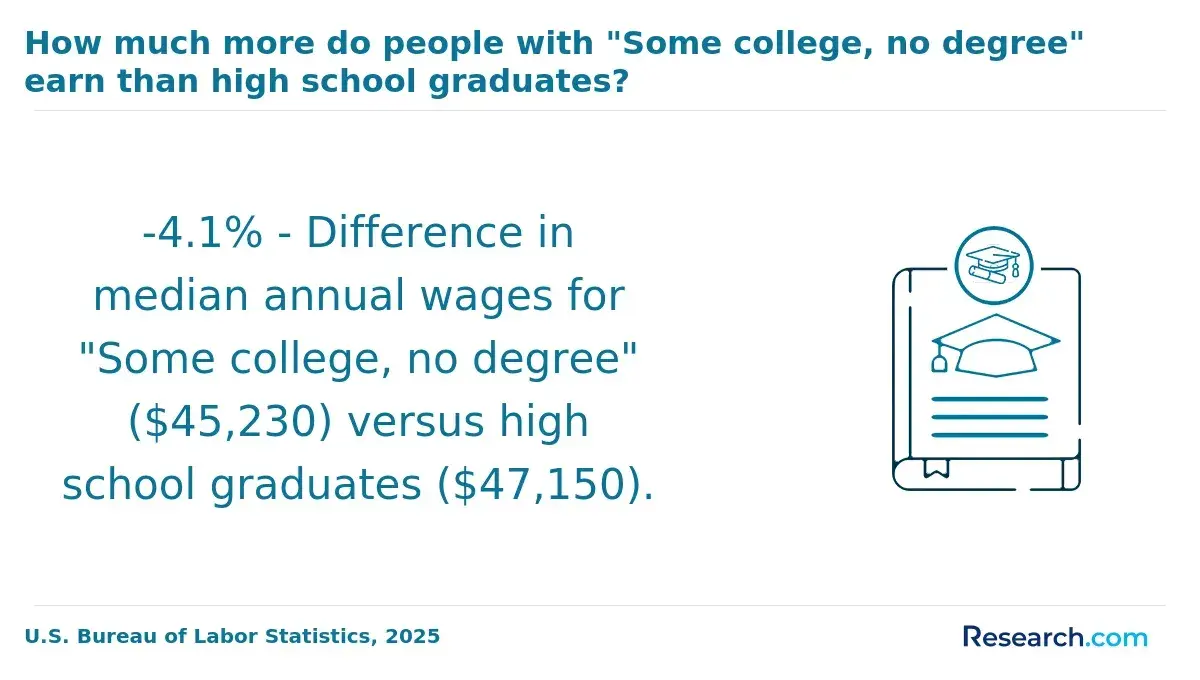
Entry-level criminal justice careers often hinge on associate degrees that equip candidates for roles like corrections officers or community service coordinators, where employers prioritize practical certifications over specialized knowledge. These degrees, while foundational, typically restrict upward mobility beyond mid-tier positions without further education.
Bachelor's programs focused on criminology, forensic science, or law enforcement administration provide access to supervisory roles such as federal agents, parole officers, or crime analysts—positions demanding stronger analytical and investigative skills. Many government agencies set bachelor's degree attainment as a baseline recruitment standard.
Advancement into leadership, policy, or research-intensive roles generally requires a master's-level degree, with specialized majors like criminal psychology or cybersecurity addressing niche labor market demands. These degrees are essential for senior roles in corrections administration or federal intelligence, where theoretical depth and applied frameworks matter. Choosing programs with active agency partnerships and rigorous research prepares students for these trajectories.
Net career ROI is influenced heavily by tuition structure. Western Governors University's flat-rate tuition of about $3,755 per six-month term offers a substantial 40% cost saving over traditional private per-credit offerings. This affordability directly affects hireability in sectors where debt-to-income ratios impact security clearance eligibility, critical for federal detective positions.
Students evaluating online criminal justice degree majors and career paths should weigh educational level, specialization, and cost against immediate job criteria and long-term financial sustainability. For those researching cost-effective options, resources like the cheapest online Spanish degree can offer tactical insights into affordable degree models applicable across disciplines.
What core courses and specializations should a quality online criminal justice program include?
Exceptional online criminal justice degree core courses must encompass criminology, criminal law, ethics, law enforcement operations, the judicial system, and corrections to establish a substantive field foundation. Overlooking the need for research methods and statistics risks leaving graduates unprepared for data-driven responsibilities increasingly demanded by law enforcement and policy agencies.
Specializations in quality online criminal justice programs are not interchangeable commodities; they signal specific career intent. For instance, cybersecurity and digital forensics are essential for roles involving cybercrime investigation, whereas forensic psychology or victim advocacy better align with counseling or social service pathways.
Practical, scenario-based coursework addressing case management, evidence handling, or interagency collaboration can markedly improve graduate readiness to meet real-world challenges.
Working professionals should scrutinize transfer credit policies, as some programs credit up to 30 tuition-free credits for prior learning and accept up to 90 transfer credits from four-year institutions—potentially halving tuition costs, according to AffordableCollegesOnline's 2025 review.
Employers prioritize candidates demonstrating specialized skills validated through coursework over generic degrees. This dynamic emphasizes the importance of programs offering applied training with clear career alignment.
Additionally, curricula must evolve consistently to incorporate emerging technologies and legislative developments—omitting instruction on body-worn cameras or community policing strategies risks market irrelevance. Robust academic advising and career counseling tailored for career pivots also substantially affect post-degree employment outcomes.
Prospective students should weigh these factors alongside labor market realities, including considerations like the sports analyst salary as a comparative example of how specialized knowledge intersects with compensation expectations.
What admission requirements and prior experience do online criminal justice programs typically expect?
Admission criteria for online criminal justice programs often reflect real-world workforce demands. While a high school diploma typically suffices for bachelor's entry, relevant work experience—especially 1 to 3 years in law enforcement or related fields—is frequently expected for master's candidacy.
Candidates with prior certifications or agency experience can leverage these to accelerate degree progress and better align studies with their occupational roles, such as police officers or probation officers.
Tuition models adapted to working professionals reduce friction by offering flat term rates rather than per-credit fees. This arrangement accommodates variable shift schedules common among law enforcement personnel, allowing enrollment in 15 to 18 credits per term without additional cost, thus improving cost-efficiency for those balancing education with demanding careers.
PoliceOfficer.org's rankings reinforce this pricing strategy as favoring practical affordability over traditional per-credit billing.
Specialized tracks, notably forensic master's programs, impose stricter admission filters, requiring academic backgrounds in science or criminal justice demonstrated through transcripts or licensure. Personal statements frequently serve to verify candidates' alignment with long-term career objectives, while background checks and drug screening parallel employment standards, reflecting the field's security sensitivity.
Prospective students must weigh program flexibility against their career stage: undergraduate options generally prioritize broad access, whereas midcareer programs emphasize demonstrable experience. Opting for a competency-based curriculum that acknowledges job demands and financial constraints correlates with higher retention and shorter workforce reentry delays.
How long do online criminal justice degrees take and what scheduling options are offered?
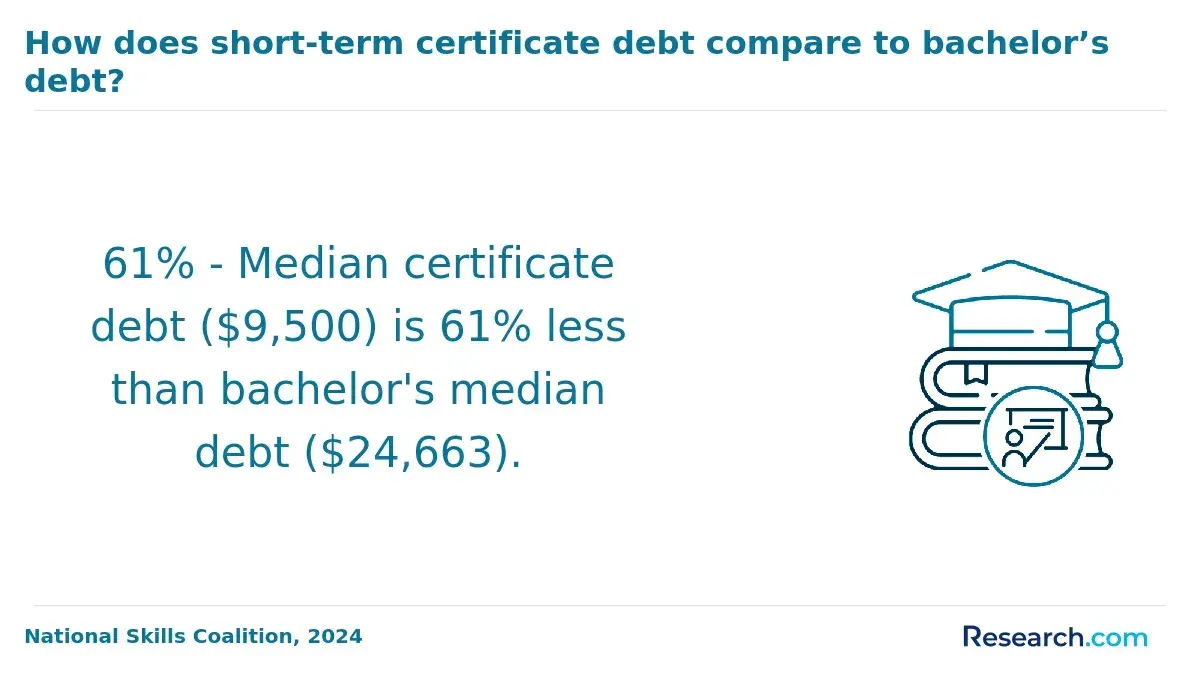
Time to completion for online criminal justice degrees varies sharply with program focus and enrollment status, requiring strategic consideration for those balancing professional demands. Associate degrees generally take two years full-time, while bachelor's degrees are closer to four, though accelerated tracks can compress this to 18-24 months. Master's programs often extend from 18 months to three years, especially when part-time attendance accommodates working professionals.
Scheduling flexibility is a practical necessity, particularly for professionals such as law enforcement officers or cybersecurity analysts who contend with shift work. Asynchronous courses dominate, permitting access to materials outside rigid hours, but programs emphasizing technical skills in areas like cybercrime or digital forensics frequently mandate synchronous sessions to complete hands-on labs or simulations. Those pursuing homeland security specializations may experience fewer synchronous requirements given the field's operational variability.
Workforce demand, especially amid a 70% increase in federal cybercrime reports since 2018 and $12.5 billion in losses reported in 2023, drives programs toward rigorous, skill-oriented curricula aligned with employer expectations. This dynamic impacts scheduling and program length, requiring candidates to weigh the intensity of synchronous commitments against career timing and skill mastery.
What tuition, fees, and financial aid options affect the true cost of online study?
Cost disparities in online criminal justice degrees reshape how professionals budget for education and debt. Public universities such as Kennesaw State University provide a substantial price advantage at $190 per credit for all students, outpricing private programs by 40-60% per credit. Over a bachelor's degree, this can reduce borrowing significantly, altering loan repayment stress for mid-career officers or corrections staff.
Additional mandatory fees—covering technology and access—can add $500 to $1,500 yearly and are often overlooked yet impactful, especially for students balancing work and family obligations.
Financial aid mixes vary widely: federal grants and loans depend on income and enrollment status, while state grants frequently exclude out-of-state online learners despite uniform tuition rates in some public programs. Institutional scholarships and private loans fill gaps but are often restrictive and competitive. Employer tuition reimbursement, a critical benefit for law enforcement professionals, requires approval and may limit program options.
Decision-making should weigh total attendance costs against career timelines and salary thresholds. For example, a police officer aiming for promotion might prioritize a public university with employer assistance over pricier private degrees, minimizing debt while aligning education with sector pay structures and advancement opportunities.
What are typical salaries and earning potential for criminal justice careers by role and degree?
Salary outcomes in criminal justice fluctuate significantly by role, education, and sector, demanding critical evaluation of return on investment when choosing educational pathways. Entry-level positions like police officers or forensic technicians with associate degrees typically earn between $40,000 and $55,000 annually, often requiring substantial on-the-job experience for advancement. Moving into supervisory, investigative, or specialized positions usually mandates a bachelor's or higher, with wages rising to about $75,000 or more.
Federal law enforcement roles almost always require at least a bachelor's degree and offer starting salaries from $55,000 to $65,000, rapidly increasing to $90,000-$110,000 within five to ten years. Candidates should note that federal agents' higher pay reflects not only degree requirements but also advanced skills and certifications beyond the classroom.
Social service roles like corrections management or probation often pay $50,000 to $70,000, depending on educational levels and certifications. Fields emphasizing forensic science or cybersecurity may exceed six figures but demand specialized technical training beyond general criminal justice degrees.
Labor market forecasts indicate approximately 423,600 annual openings in protective services between 2024 and 2034, driven largely by replacement needs rather than growth. This underscores the importance of practical skills, certifications, and relevant experience because degree attainment alone rarely ensures salary premiums or rapid promotion.
Prospective students must weigh costs and timelines against salary ceilings and job realities, especially when considering graduate degrees aimed at federal employment or specialized niches.
What licensing, certification, or background requirements apply to major criminal justice jobs?
Licensing and certification processes in criminal justice careers create significant practical barriers that must factor into educational and career planning. State peace officer certification demands rigorous academy training and physical tests, eliminating many candidates regardless of academic qualifications.
Private investigators and security personnel face state licensing coupled with felony-focused background checks, while correctional and parole officers often undergo stringent screenings that exclude applicants with recent criminal histories or substance issues.
These credentialing requirements impose time and resource tradeoffs, particularly for candidates targeting federal roles where background investigations extend beyond state standards to include deep financial and personal history reviews. This complexity makes early alignment of education and experience vital to mitigate delays and improve employability outcomes.
Graduate and professional degrees are not optional for certain pathways. Over one-third of criminal justice bachelor's graduates progress to law, criminology, or public policy fields within six years to satisfy licensing mandates or qualify for supervisory positions.
For example, attorneys must pass the state bar after earning a Juris Doctor, while forensic scientists often require certification from bodies like the American Board of Criminalistics, which combine academic credentials with supervised experience.
Planning for multi-layered qualification requirements—education, exams, and experience—and anticipating jurisdictional variations help candidates navigate a fragmented landscape where practical employability hinges on more than degree completion alone.
How can you compare and choose reputable online criminal justice schools and programs?
Choosing an online criminal justice program requires balancing accreditation, curriculum relevance, and actual workforce demands rather than defaulting to perceived convenience or cost alone. Regional accreditation remains a critical threshold for employers and federal aid access, but specialized accreditations in criminal justice or law enforcement validate curriculum rigor and industry alignment, influencing graduate credibility in niche areas like cybercrime or forensic analysis.
Tuition disparities between online and on-campus formats can be significant—an accelerated program charging $400 per credit versus $525 on campus cuts costs by nearly a quarter, a meaningful saving for working professionals managing tight budgets. However, cost savings may come with tradeoffs, particularly limited face-to-face networking, which remains a valued attribute in many law enforcement hiring processes.
Graduation and job placement statistics provide practical proxies for the effectiveness of student support and realistic academic workloads. Programs with higher rates are more likely to prepare and propel students into employment successfully.
Technology platforms and scheduling flexibility also warrant scrutiny, as asynchronous learning models must genuinely accommodate employed students without sacrificing instructional quality or peer interaction opportunities.
Other Things You Should Know About Criminal Justice
Online degrees vary in specialization breadth; general criminal justice programs offer broader career flexibility but may lack depth in areas like cybersecurity or forensic science. Specializing narrows job prospects but strengthens eligibility for niche positions. Students seeking long-term career adaptability should choose programs with transferable skills and electives that apply to multiple sectors rather than overly narrow tracks that limit options.
Asynchronous courses offer maximum schedule flexibility, essential for working professionals but reduce live interaction and immediate feedback, which can hinder networking and engagement. Synchronous courses simulate classroom dialogue and often improve comprehension but require strict adherence to scheduled times. Students must prioritize either flexibility or interaction based on their need for employer support, peer connection, and learning style.
Programs that include internships or practicums provide critical hands-on experience and often facilitate employer connections, improving job prospects immediately after graduation. Without field experience, graduates may face barriers in competitive job markets despite academic credentials. Therefore, prioritizing programs with mandatory real-world practicums is advisable for students targeting employment in traditional criminal justice roles like policing, probation, or corrections.
References
- What Can You Do with a Criminal Justice Degree? | NEIT https://www.neit.edu/blog/what-can-you-do-with-criminal-justice-degree
- How to Choose a Criminal Justice Specialization | AIU https://www.aiuniv.edu/degrees/criminal-justice/articles/how-to-choose-a-criminal-justice-specialization
- Most Affordable Online Criminal Justice Degrees https://www.affordablecollegesonline.org/degrees/criminal-justice-programs/
- Criminal Justice Careers | Accredited Schools Online https://www.accreditedschoolsonline.org/criminal-justice-degree/careers/
- Accreditation for Criminal Justice Colleges and Universities https://criminaljusticeonlineblog.com/10/accreditation-for-criminal-justice-colleges-and-universities/
- Explore Online Criminal Justice Bachelor's Degree Programs https://www.criminaljusticedegreeschools.com/degrees/online/
- Explore Bachelor's Degree in Criminal Justice | All Criminal Justice Schools https://www.allcriminaljusticeschools.com/criminal-justice/criminal-justice-bachelors-degree/
- Online Criminal Justice Degree & Career Information https://www.criminaljustice.com/online-degrees/
- Best Criminal Justice Degree Programs for 2026 | PoliceOfficer.org https://policeofficer.org/degree-programs/criminal-justice/
- Online Criminal Justice Degrees: Find the Right Program https://www.degreesforgood.org/online-degrees/criminal-justice-programs/