2027 Online Criminal Justice Degrees That Help Build Administrative Leadership Skills

Co-Founder and Chief Data Scientist
Mid-level criminal justice professionals often confront a critical bottleneck: acquiring leadership skills while balancing demanding schedules and career responsibilities. The challenge intensifies given the sector's growing managerial complexity, where oversights can mean operational failures or legal repercussions.
According to the National Center for Education Statistics, online enrollment surged by over 15% between 2022 and 2024, signaling a distinct shift toward flexible learning models that accommodate working adults.
This trend reflects rising demand for programs that integrate administrative leadership training without requiring full-time campus presence. This article examines current online criminal justice degrees designed to strengthen administrative leadership capabilities and optimize career advancement strategies.
Key Things You Should Know
- Online criminal justice leadership degrees average 24 months and $20K cost per NCES 2024 data, constraining working professionals balancing advancing skills with economic and time-based tradeoffs in career pivots.
- Employers increasingly prioritize applied leadership coursework; 58% of federal law enforcement managers prefer candidates with strategic administration training relevant to policy compliance and resource allocation.
- Graduates face labor market segmentation: while mid-level roles see 12% growth per BLS, upper administrative jobs demand 5+ years' experience, limiting direct entry via online degrees alone.
What is an online criminal justice degree focused on administrative leadership, and who is it for?
Choosing an online criminal justice degree program with an administrative leadership emphasis often signals a deliberate shift from frontline operational duties to complex management responsibilities. Candidates who advance through these programs typically prepare for roles that demand managing personnel, crafting policy, and overseeing budgets within law enforcement or related agencies.
For example, a mid-career police officer might pursue this degree to transition into a precinct commander role, responsible for strategic planning, staffing decisions, and crisis response coordination.
Students should consider the real-world challenges of balancing coursework with workplace demands and gaining applicable leadership experience, often through internships or capstone projects with local agencies. This practical emphasis compensates for the remote nature of many programs and helps build the administrative competencies that employers expect.
Employment growth projections for supervisory law enforcement positions remain steady, highlighting the stable need for leaders who can navigate fiscal constraints and enhance operational efficiency. For those evaluating online criminal justice degree programs with administrative leadership emphasis, commitment to strategic thinking and ethical decision-making replaces traditional investigative skill development.
Professionals best suited for these programs include current officers seeking promotion, individuals transitioning from operational roles to administration, and those aiming to enter civilian leadership positions within justice systems.
Prospective students can assess program affordability and suitability by reviewing online criminal justice degree options tailored for administrative leadership.
How do online criminal justice leadership programs compare to campus-based options in flexibility and outcomes?
Flexibility defines online criminal justice leadership program outcomes when compared to campus-based formats, especially for professionals balancing demanding schedules. Online programs accommodate irregular shifts common in law enforcement, enabling mid-career investigators to pursue advanced degrees without interrupting active duty, thus maintaining income and work continuity.
However, campus-based programs afford access to hands-on resources like simulation labs and face-to-face mentorship, which can be decisive for those needing agency internships or localized networking.
The 2025 median annual wage of $94,690 for detectives and criminal investigators signals sustained employer demand for leadership competency grounded in both academic and operational experience.
Effective leadership training covers personnel management, budgeting, and strategic decision-making-skills well taught online through interactive and scenario-based modules, though practical application often depends on concurrent fieldwork.
Understanding outcomes of campus-based versus online criminal justice degrees requires weighing the tradeoffs between theoretical knowledge and experiential learning. Professionals must assess how program delivery aligns with job demands and opportunities for embedding leadership roles in practice. Online pathways offer flexible theory mastery, while campus options remain critical for hands-on skill development and agency connections.
For those exploring credential options, including best paralegal certificate programs, scrutinizing program format against career stage and workforce integration is key to sustainable advancement in criminal justice leadership.
Are online criminal justice degrees with an administrative leadership focus respected and properly accredited?
Online criminal justice degrees with administrative leadership accreditation matter in practice because regional accreditation for online criminal justice leadership programs greatly influences how hiring managers weigh candidates for supervisory roles.
Many law enforcement administrators advance not just through years of service but by demonstrating mastery in budgeting, policy analysis, ethical leadership, and data-driven decision-making-competencies often embedded within accredited curricula.
Absent such credentials, officers risk stagnation at baseline salaries, with the Bureau of Labor Statistics reporting a median annual wage of $76,920 for patrol officers as of May 2025, which typically does not reflect management responsibilities.
Employers prefer programs accredited regionally and by institutions recognized by the U.S. Department of Education or the Council for Higher Education Accreditation. Degrees from non-accredited or primarily for-profit institutions frequently limit upward mobility despite advanced degrees. Applicants should scrutinize a program's accreditation status and leadership training rigor by reviewing course syllabi or advisory boards.
Professionals maintaining full-time work achieve better outcomes when online programs require applied projects tied to their current roles, enabling immediate skill application and leadership capacity building.
Online degrees incorporating pathways to leadership certification or preparatory exams increase competitiveness within federal, state, or local agencies. Choosing programs without verified accreditation or leadership alignment risks undesired career pivots and diminished return on investment.
For those considering specialization, exploring options such as an online masters degree in forensic psychology may offer a complementary track relevant to advanced administrative roles in criminal justice.
What courses and concentrations help build administrative and supervisory skills in criminal justice programs?
Administrative leadership courses in criminal justice programs prioritize management and organizational behavior tailored to public safety environments where leadership decisions incur tangible operational impact. Concentrations in supervisory skills within criminal justice degrees frequently encompass ethics, strategic planning, budgeting, human resources, and conflict resolution aimed at preparing professionals for supervisory roles in law enforcement or corrections.
For instance, a first-line supervisor in a municipal police department balancing community policing expectations against resource constraints must navigate practical challenges in workforce deployment and policy enforcement simultaneously.
Certificate programs in criminal justice administration offer a faster, more affordable option than traditional degree paths, often resulting in median federal student loan debt under $10,000, according to U.S. Department of Education data.
This debt benchmark reduces financial exposure for mid-career professionals seeking to upskill and qualify for leadership roles without the longer commitment a full degree requires. However, the tradeoff involves a narrower curriculum that may lack the depth of extended academic study but emphasizes immediate applicability and practical skills.
Specialized coursework blending criminology with data analysis gives supervisors tools to interpret crime trends and allocate personnel effectively. Beyond theory, navigating union negotiations, regulatory compliance, and high-stress incident management introduces real-world complexity that programs integrating case studies or internships better address, enhancing readiness for roles demanding both administrative oversight and frontline decision-making.
Those exploring career transitions or advancement via educational routes should also consider how related analytical roles intersect with criminal justice skills; resources like how to become a sports analyst reflect transferable competencies in data interpretation and strategic assessment useful outside traditional law enforcement contexts.
What admission requirements and prior experience are needed for online criminal justice leadership degrees?
Admission to online criminal justice leadership degrees in 2026 prioritizes candidates with substantial professional experience and academic consistency over purely test-based credentials. Programs typically require a bachelor's degree from an accredited institution, preferably in criminal justice or related fields, with a minimum GPA around 3.0.
However, the decisive factor remains demonstrated operational experience, often two to three years in roles like probation officer or corrections staff, which equips candidates with insights critical for leadership responsibilities.
Applicants lacking team management or supervisory experience encounter significant barriers, as employers expect leadership graduates to immediately handle strategic planning, policy implementation, and interagency collaboration.
Consequently, programs that weigh professional recommendations and personal statements for leadership aptitude alongside coursework in ethics and criminology better align with workforce demands.
For mid-career professionals, degrees waiving GRE or other standardized tests in favor of work experience provide practical advantage by accommodating the balance of full-time employment and study.
Employment projections from the U.S. Bureau of Labor Statistics estimate 5% growth for probation officers and correctional treatment specialists through 2034, intensifying demand for well-prepared administrators who can navigate complex policies rather than basic operational tasks.
Applicants should assess programs by how rigorously they enforce criteria that mirror real-world expectations, since successful transitions into advanced leadership roles depend on prior supervisory experience and strategic capabilities.
How long do online criminal justice programs take, and what do they typically cost?
Online criminal justice master's programs present a fundamental tradeoff: shorter durations facilitate rapid workforce re-entry but often limit depth in administrative policy and leadership, while longer programs enhance comprehensive expertise at the expense of prolonged time and financial commitment. Full-time study usually spans 18 to 36 months, but part-time enrollment-common among mid-career professionals-can extend completion to 3 to 5 years.
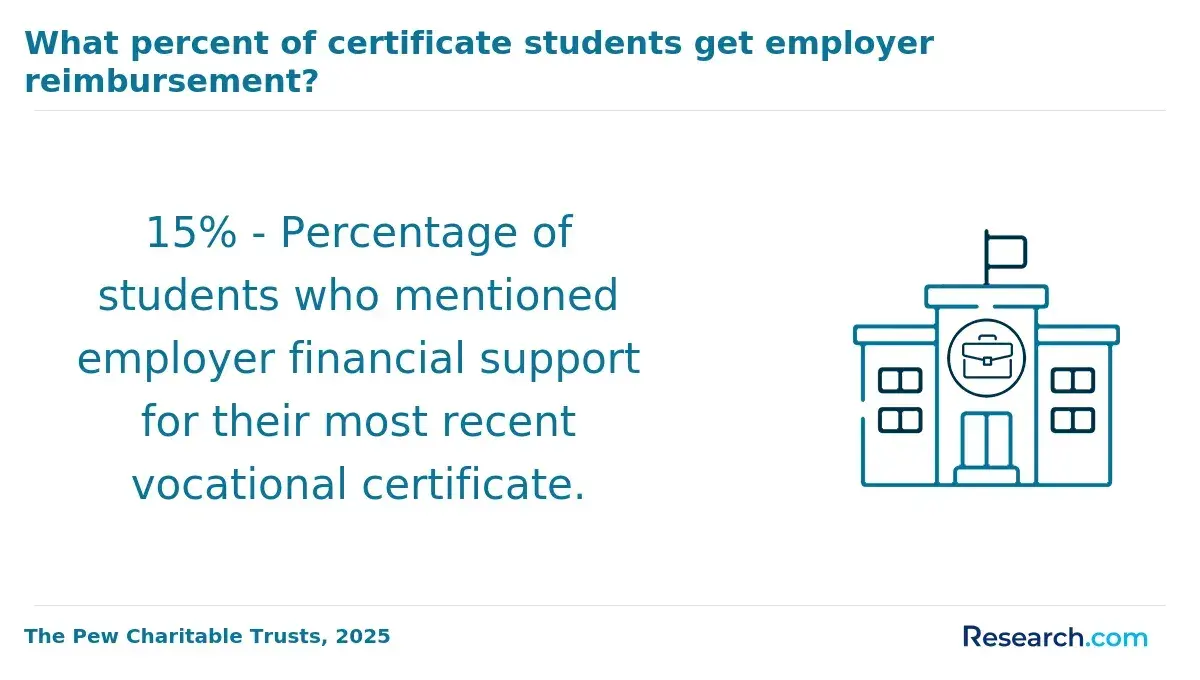
Costs reflect this variability, with public universities charging roughly $12,000 to $25,000 and private institutions exceeding $40,000 for the full degree. Tuition models frequently depend on credit load or course format, influencing total investment. Employer tuition reimbursement and federal aid may offset expenses but require careful planning.
Consider a mid-career correctional administrator studying part-time over four years with an approximate $20,000 tuition cost versus a recent graduate investing two years and $30,000 for an intensive leadership curriculum.
This distinction affects not only financial outlays but also preparedness for advanced roles in policy and administration, where employers now increasingly demand candidates who demonstrate practical leadership skills amid evolving agency staffing pressures.
Key decision points include:
- Balancing program length with the evolving complexities of criminal justice administration.
- Weighing immediate workforce needs against long-term strategic positioning.
- Assessing affordability in the context of potential tuition aid and employer support.
These considerations substantially impact career pathways and the timing of professional advancement within criminal justice sectors facing persistent turnover challenges.
Which criminal justice careers and leadership roles can these degrees prepare you for?
Graduates of online criminal justice degrees often face the direct challenge of balancing administrative responsibilities with operational realities in law enforcement and corrections.
First-line supervisors, for example, must manage personnel logistics, enforce policy, and interpret legal standards all while maintaining community relationships and internal discipline. This requires nuanced leadership that adjusts to diverse teams-from patrol officers to specialized units-and rapid decision-making under pressure.
Administrators frequently lead community outreach, program implementation, and compliance monitoring, demanding strategic planning tuned to strict budget and legal constraints. This dual focus on management and legal frameworks is critical given the funding complexities and regulatory scrutiny in public safety sectors.
Practical skills in organizational behavior and crisis leadership underpin success in these roles. Employers reward this with above-average compensation: the median wage for first-line supervisors of police and detectives was $105,980 in May 2025, indicating the premium placed on supervisory and administrative expertise.
Graduates should weigh the operational expectations against the educational investment. The ability to adapt leadership style swiftly and manage team dynamics under evolving law enforcement standards often distinguishes candidates in competitive hiring.
What salary ranges and promotion prospects exist for criminal justice professionals in administrative roles?
Administrative salaries in criminal justice vary widely, typically ranging from $65,000 to over $120,000 annually based on position, agency, and location. Middle management roles, such as corrections administrators or police captains, usually earn between $75,000 and $95,000, while top-level executives-including chiefs or directors-can command $110,000 to $125,000 or more.
These figures align with government labor statistics and FBI 2025 Crime Data Explorer insights, emphasizing the critical need for strong, data-informed leadership in response to violent crime pressures.
Promotion in this field hinges not only on performance but also on advanced education, notably degrees focused on executive management and leadership in criminal justice.
For instance, a police lieutenant with a master's degree in criminal justice leadership may advance to deputy chief faster than colleagues without such credentials, as agencies increasingly prioritize candidates who demonstrate strategic oversight abilities and fiscal management competence.
Practical advancement requires navigating bureaucratic complexities and delivering measurable operational success. Leaders must integrate intelligence and crime data to adapt to shifting public safety demands. Continuous skill development and networking within public safety remain essential to accessing emerging leadership openings.
Key professional considerations include:
- Advanced degrees provide a measurable edge but do not replace demonstrated leadership outcomes.
- Bureaucratic structures necessitate patience and strategic relationship-building to secure promotions.
- Data literacy and fiscal acumen are increasingly non-negotiable for executive roles.
How is the job outlook for criminal justice managers and administrators across different agencies?
Career advancement for criminal justice managers hinges less on frontline growth and more on navigating complex administrative challenges amid shifting institutional priorities. For example, the U.S. Bureau of Labor Statistics estimates only 3% growth for correctional officers and jailers between 2024 and 2034, signaling limited expansion in entry-level roles.
However, management positions face steady openings due to retirements and escalating demands for expertise in regulatory compliance, technology integration, and resource allocation.
State correctional administrators confront budget contractions and reform pressures, requiring proficiency in policy execution and financial oversight beyond traditional supervision. Federal roles demand specialized skills in organizational leadership and interagency collaboration, where advanced degrees focusing on leadership and data management substantially improve promotion prospects.
Private and non-profit agencies, which emphasize rehabilitation and alternative sentencing, experience faster demand growth. These settings prioritize administrators skilled in grant management and multi-stakeholder coordination, often necessitating ongoing professional development to stay competitive.
Promotion from entry-level positions depends heavily on demonstrating strategic decision-making, compliance acumen, and adaptability to regional labor market dynamics. Prospective candidates should target education aligned with public administration frameworks and evidence-based justice practices to manage these realities effectively.
How can you evaluate and choose a reputable online criminal justice leadership program?
Prospective students must recognize that accreditation extends beyond formality; it determines whether a program's curriculum meets rigorous standards recognized by employers and qualifies for federal aid. Programs with specialized accreditation in criminal justice or public administration tend to offer curricula aligned with current operational demands and leadership expectations.
For example, employers in government agencies prioritize candidates who demonstrate both theoretical knowledge and applied skills such as budgeting and policy analysis.
Curriculum content is a practical filter: programs omitting organizational management or applied leadership case studies often ill-prepare graduates for executive roles, leading to skill gaps when managing public safety budgets or coordinating interagency efforts. Faculty expertise rooted in active research or leadership experience often correlates with stronger networks and relevant insights that improve post-graduate career trajectory.
Graduation rates mean little without scrutinizing job placement metrics-especially metrics emphasizing leadership roles over frontline positions. As reported by BLS data, executive roles in government can yield significantly higher wages than entry-level jobs, underscoring the need to evaluate a program's demonstrated impact on career progression.
Delivery formats also matter: asynchronous options and strong virtual platforms reduce friction for working professionals balancing employment and education.
Cost should be assessed against tangible outcomes. Contacting alumni to confirm how well programs enable navigation of real-world leadership challenges can reveal whether a school's claims on rapid promotion and mentorship hold water or represent overpromising. Avoid programs lacking evidence of employer partnerships as administrative roles demand proven competence beyond academic credentials.
Other Things You Should Know About Criminal Justice
Online criminal justice programs often limit direct, in-person interaction with peers and instructors, which are crucial for developing practical leadership skills like crisis management and negotiation. While simulations and case studies are common substitutes, they may not fully replicate the pressure and spontaneity of real-world scenarios. Prospective students should prioritize programs that offer hybrid options or require internships to gain tangible leadership experience valued by employers.
Working criminal justice professionals face significant time-management challenges when enrolling in online leadership programs, as coursework often demands critical analysis and sequence-sensitive assignments. Employers expect candidates to demonstrate competencies rather than just complete credits, so lacks in timely project completion can delay degree completion and stall career advancement. Selecting programs with flexible pacing but strong academic support ensures steady progress without sacrificing professional responsibilities.
Administrative leadership skills gained through coursework improve theoretical understanding but may not guarantee immediate marketability without relevant field experience. Employers often require demonstrated ability to lead teams and manage resources under pressure, which is seldom achieved solely through online study. Students should supplement their degrees with leadership roles or certifications during or after their programs to enhance competitive positioning.
References
- Find Criminal Justice Administration Degrees https://www.criminaljusticeprograms.com/specialty/criminal-justice-administration/
- How Long Does A Criminal Justice Program Take? https://criminaljusticecareernow.com/articles/how-long-is-criminal-justice-school
- What Can You Do With a Degree in Criminal Justice? | UMass Global https://www.umassglobal.edu/blog-news/what-can-you-do-with-a-criminal-justice-degree
- Criminal Justice Salary - How Much Can I Make With a Criminal Justice Degree? - Grace Christian University https://gracechristian.edu/blog/criminal-justice-salary/
- Most Affordable Online Criminal Justice Degrees https://www.affordablecollegesonline.org/degrees/criminal-justice-programs/
- Criminal Justice Administration Degrees | Compare Programs https://www.criminaljusticedegreeschools.com/degrees/administration-degree/
- 2025's Best Online Master’s Programs: Criminal Justice https://www.onlinemastersdegrees.org/best-programs/criminal-justice/
- Careers With a Criminal Justice Degree (Requirements & FAQ) https://www.allcriminaljusticeschools.com/criminal-justice/criminal-justice-careers/
- Online Criminal Justice Degrees: Find the Right Program https://www.degreesforgood.org/online-degrees/criminal-justice-programs/
- Criminal Justice Degree Requirements | University of Bridgeport https://www.bridgeport.edu/news/criminal-justice-degree-requirements/