2027 Online Criminal Justice Degrees for Students Who Want Broad Justice-System Preparation

Co-Founder and Chief Data Scientist
Facing career advancement in criminal justice often means navigating a fragmented education landscape that struggles to balance broad foundational training with specialized practical skills. Many professionals encounter rigid program structures that complicate integrating studies with existing job demands.
Enrollment data from the National Center for Education Statistics shows a 21% surge in online criminal justice program participation since 2022, indicating a shift toward flexible learning formats that accommodate working adults. This suggests rising demand for accessible, comprehensive curricula that support immediate application and long-term adaptability in complex justice-system roles.
This article examines online criminal justice degrees offering broad system preparation to guide career-driven students through strategic program choices aligned with workforce realities and professional mobility.
Key Things You Should Know
- National Center for Education Statistics data from 2024 shows a 12% wage premium for graduates with broad criminal justice degrees versus specialized certificates, yet broader study extends time-to-degree by an average of 10 months, impacting opportunity cost.
- The U.S. Bureau of Labor Statistics projects 7% job growth for criminal justice roles through 2032, but employers increasingly prioritize graduates demonstrating interdisciplinary skills in policy analysis and technology integration, complicating program selection.
- Programs emphasizing wide-ranging justice systems knowledge often trade depth in law enforcement techniques, leading to mixed employer feedback, where agencies weigh broad academic grounding against immediate operational readiness.
What is an online criminal justice degree and how does it compare to campus programs?
Choosing an online criminal justice degree requires recognizing distinct tradeoffs compared to traditional campus programs. While curriculum content typically parallels that of in-person degrees—covering law enforcement, corrections, legal studies, and criminology—online delivery demands greater self-discipline and often lacks immediate access to experiential learning such as ride-alongs or on-site internships. This deficit particularly affects students pursuing investigative roles, where practical experience is indispensable.
Employers tend to value online degrees from accredited institutions similarly to traditional ones, but graduates must proactively secure real-world experience to counterbalance the format's limitations. For example, an aspiring detective should pursue internships or entry-level part-time positions regardless of the program structure to meet employer expectations and develop specialized skills.
U.S. Bureau of Labor Statistics data emphasize career variations: criminal justice and law enforcement teachers earned a median annual wage of $69,030 in May 2024, whereas detectives and criminal investigators averaged $91,100, reflecting the premium on applied competence and fieldwork in investigative careers.
Those evaluating online criminal justice degree benefits compared to campus programs should assess whether programs incorporate hands-on elements remotely or collaborate with local agencies for internships.
Students targeting systemic roles like education or policy may find online degrees suitable due to flexible scheduling, while those focused on frontline investigative work must anticipate additional in-person commitments.
Prospective students concerned about financial investment can explore detailed insights on criminal justice degree cost to make informed decisions.
Are online criminal justice degrees respected by employers and the justice system?
Online criminal justice degrees are increasingly viewed as valid credentials, yet their acceptance varies significantly across different sectors of the justice system. Public safety and protective service employers often prefer candidates who combine academic credentials with practical experience.
For instance, police departments seek applicants who have completed verified ride-along or practicum hours, a requirement many purely online programs find challenging to fulfill. This gap often places online graduates at a disadvantage unless supplemented by certifications or hands-on training.
Employers emphasize degrees from accredited institutions that integrate experiential learning aligned with real-world justice system demands. Students must carefully evaluate programs on the basis of academic rigor, internship availability, and employer partnerships rather than just delivery format.
Graduates augmenting their education with certifications such as CPR or crisis intervention demonstrate better hiring prospects, particularly in competitive protective service roles. This nuance underscores why online criminal justice degrees valued by employers are those paired with practical credentials and fieldwork.
Job market forecasts from the Bureau of Labor Statistics project over 420,000 annual openings in protective service occupations over the next decade, driven by replacement and expansion needs. However, federal agencies and specialized law enforcement often require traditional campus or regionally accredited degrees, restricting online degree applicability for those career paths.
Students planning to pivot strategically should consider supplementing studies with internships, volunteering, or part-time work to gain experiential advantage. Additionally, those exploring adjacent legal fields might explore paralegal courses online as another pathway to enter justice-related professions with practical skillsets.
How can I tell if an online criminal justice program is properly accredited?
Accreditation standards for online criminal justice programs are a critical determinant of degree validity and career outcomes. Employers and licensing bodies primarily recognize degrees from institutions accredited by the U.S. Department of Education or the Council for Higher Education Accreditation (CHEA).
Regional accreditors like the Middle States Commission on Higher Education or the Southern Association of Colleges and Schools hold more weight than program-specific accreditations, which serve only as supplements and do not guarantee institutional legitimacy.
Prospective students must verify accreditation status directly through official accreditor websites. Failure to confirm can result in nontransferable credits, ineligibility for federal aid, and reduced access to specialized roles.
For instance, Maryland detectives and criminal investigators, with a reported mean wage of $130,040 in May 2025, often require credentials from fully accredited programs to meet state licensing standards. These outcomes underscore the practical necessity of accreditation in aligning education with labor market demands.
Students should also confirm whether the program aligns with Bureau of Labor Statistics guidelines and if the institution publicly shares student outcomes. Ignoring these metrics risks enrollment in diploma mills that do not support meaningful workforce entry.
Those comparing pathways may benefit from exploring alternatives such as Spanish degrees online, which sometimes offer different cost or duration tradeoffs.
How to verify a reputable criminal justice online degree requires scrutiny beyond superficial claims: accreditation status, course content relevance, transferable credits, and alignment with employer and licensing expectations are essential checkpoints.
What courses and specializations are typically offered in online criminal justice programs?
Online criminal justice degree courses and specializations often impose clear tradeoffs between depth of expertise and program length, especially when pursuing technical tracks like cybersecurity or forensic science. Such specializations require acquiring niche skills, including digital forensics or crime scene analysis, which can extend study time and increase costs beyond the average annual $10,570 for social or behavioral science degrees.
Students should assess whether the additional investment aligns with job market demand and salary outcomes in their target roles.
Typical curriculum and specialization options in online criminal justice programs balance foundational knowledge—criminology, criminal law, and corrections—with applied skills such as policy analysis and scenario-based exercises. Supervisory career paths demand integrated leadership and management studies emphasizing budgeting, resource allocation, and personnel oversight, preparing graduates for administrative roles in law enforcement and corrections.
Employers stress competencies in critical thinking, ethical judgment, and legal procedures, which translate into course requirements for case study interpretation and operational strategy development.
However, workforce readiness also hinges on external requirements like internships, certifications, and background checks, which online programs may not fully provide or coordinate, presenting logistical challenges for students completing degree mandates.
For candidates curious about specific career outcomes, comparing program specializations with real-world salary benchmarks like autopsy tech salary data can aid in realistic career planning and return on investment calculations.
What are the admission requirements and application steps for online criminal justice degrees?
Admission to online criminal justice bachelor's programs commonly requires a high school diploma or equivalent alongside official transcripts, but minimal flexibility exists for conditional entry. Programs typically expect a GPA between 2.5 and 3.0, a threshold reflecting both accreditation standards and employer expectations for academic competence.
Unlike some fields, substitute experience in law enforcement or related social services may offset lower academic metrics, especially when standardized tests like the SAT or ACT are waived—a common accommodation aimed at working adults or transfer students.
The application process often involves a structured online portal where candidates must submit transcripts, test scores (if required), and identification documents, alongside background checks owing to the profession's sensitive nature. Missed deadlines or incomplete documentation can delay or derail acceptance, directly influencing enrollment timing and subsequent career launch.
Practical considerations include requirements for interviews or written assessments to demonstrate critical thinking and communication skills necessary in criminal justice roles. Residency verification can affect in-state tuition eligibility, altering the overall cost-benefit analysis for many applicants.
Employment data from the U.S. Bureau of Labor Statistics shows that over one-third of criminal justice workers hold bachelor's degrees, underscoring the importance of aligning academic progress with labor market realities.
How long do online criminal justice degrees take and what do they cost?
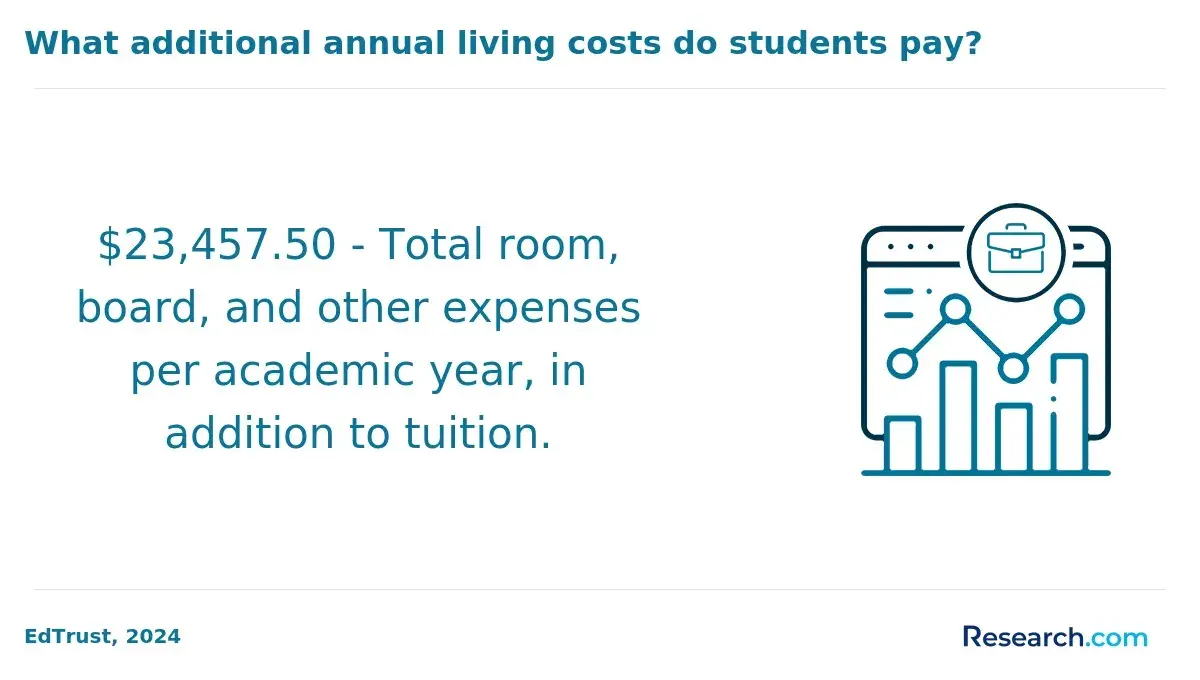
Choosing an online criminal justice degree requires balancing time, cost, and employment outcomes. Associate degrees offer a quicker path, usually completed in about two years, suitable for those needing faster workforce reentry but with more limited credentials. Bachelor's degrees, typically four years full-time, deliver broader qualifications valued by many employers but demand greater time and financial investment.
Cost varies substantially by institution and residency status, with median tuition for online bachelor's degrees ranging from $15,000 to $40,000. Public universities usually provide more affordable options for in-state students, whereas private or niche programs often carry higher costs plus extra fees for technology and materials, which can add 10-20% to expenses.
Working professionals must weigh the benefits of practical components like externships embedded in some programs, which enhance real-world employability, though they can extend completion time. Those prioritizing rapid credentialing might prefer accelerated or associate tracks yet face tradeoffs in job market recognition.
Prospective students should analyze their specific career objectives and balance program duration against practical outcomes when selecting an online criminal justice degree.
What criminal justice careers can an online degree prepare me for?
Holding an online criminal justice degree offers access to a wide range of roles, but the path to stable, well-paid employment often requires careful specialization and supplemental credentials. For instance, law enforcement and corrections jobs typically demand state-specific licensing or certification beyond the degree itself; without these, employability can be severely limited despite academic attainment.
Graduates frequently assume positions such as probation officers, crime analysts, or forensic science technicians, where foundational understanding of legal protocols informs daily tasks. However, advancing into management roles—with average salaries near $115,590 according to Bureau of Labor Statistics data—usually depends on a combination of experience, leadership skills, and strategic career moves within police departments or government agencies.
Integrating technical expertise, particularly in information systems or cybersecurity, can open doors to roles like information security analyst, which commands a median wage of about $102,470. This intersection requires additional technical training but leverages the degree's legal and investigative framework for advantage in a competitive technology-driven job market.
Employers strongly prefer candidates offering practical experience over those with purely academic backgrounds. Internships or partnerships with local justice agencies provide crucial insights into real-world operations and significantly improve hiring prospects.
What salary ranges and job outlook can graduates in criminal justice expect?
Starting salaries for graduates with degrees in criminal justice typically range between $40,000 and $60,000 annually, though this varies markedly by specialization, geography, and employer type. For instance, entry-level roles in local law enforcement often begin around $45,000, whereas federal agencies and private security consulting generally start closer to $60,000.
Legal roles within criminal justice demand advanced qualifications and experience, with median salaries between $90,000 and $120,000. These figures align with data from the U.S. Bureau of Labor Statistics and provide a benchmark for realistic salary expectations.
Employment growth is moderate, with projected increases of 5% to 7% for positions like probation officers and forensic technicians through 2034. While some law enforcement roles exhibit slower growth, reform-driven public safety initiatives sustain demand. Job seekers should anticipate competitive hiring environments, especially within smaller jurisdictions constrained by budget limits.
Several practical considerations influence career trajectories:
- Gender pay disparity exists—female criminal justice lawyers earned about 95% of male counterparts' wages in 2022.
- Federal law enforcement roles require meeting stringent physical, academic, and procedural standards, often entailing lengthy hiring processes.
- Advanced certifications or graduate degrees in forensic science or legal studies can boost earnings by 10% to 30%.
- Geographic mobility affects access to higher-paying opportunities, with federal and high-crime regions typically offering better compensation but demanding relocation and higher living costs.
These factors illustrate that a criminal justice degree's value must be gauged not only by initial salary but also by the candidate's ability to navigate specialized requirements, regional labor markets, and career advancement barriers.
Do criminal justice careers require licenses, certifications, or background checks?
Licensing, certification, and background investigations impose significant entry barriers in criminal justice careers, directly shaping hiring decisions and career longevity. For example, law enforcement roles mandate state or federal peace officer licenses, while correctional officers require certification from specialized state or national bodies.
These prerequisites are non-negotiable and routinely involve checks on criminal records, drug use, and sometimes financial history-disqualifying candidates who fail these stringent screens.
Federal positions often add layers of complexity with security clearances that demand lengthy, in-depth background investigations and personal verifications, sometimes taking months to complete. The inability to obtain or maintain these credentials frequently leads to job loss or stalled progression, a practical constraint that students and workers must weigh carefully.
Early-career earnings for 25- to 29-year-olds with bachelor's degrees in criminal justice and related fields average around $45,410 annually, reflecting roles where formal authorization affects employability and salary ceilings.
Prospective students should consider these factors before selecting a degree program. Not all programs align with necessary licensing requirements, and certification renewals typically require ongoing education or retesting to maintain eligibility. Missing these renewals can abruptly halt advancement.
How should I compare and choose between different online criminal justice schools?
Choosing an online criminal justice program requires prioritizing accreditation and curriculum relevance over convenience. Regional accreditation recognized by the U.S. Department of Education ensures credits transfer and that employers value the credential.
Equally important is curriculum alignment with your targeted role—for example, forensic science, digital forensics, corrections management, or law enforcement administration—plus access to internships or practicum experiences, which many agencies require.
Consider geographic wage variation as a direct factor in tuition ROI. For instance, police and sheriff's patrol officers earned a median annual wage of $72,280 nationwide in May 2024, but salaries differ significantly by location. Graduates tied to programs with strong employer networks in their desired region tend to secure more competitive roles.
Assess program delivery carefully. Online offerings vary widely in scheduling flexibility and learner support, like career counseling or networking, which influence your ability to balance work and study while preparing effectively for the field. State residency restrictions may apply due to internship placements or professional certification limits; verifying these upfront prevents barriers that could stall graduation or licensure prospects.
Other Things You Should Know About Criminal Justice
Programs with live faculty interaction provide clearer guidance, timely feedback, and networking opportunities, which can improve comprehension and career advice. Fully asynchronous courses offer flexibility but may reduce accountability and limit personalized support. Students aiming to enter complex justice careers should prioritize hybrid or synchronous formats for better engagement and mentorship, especially where understanding nuanced legal or ethical issues is essential.
Balancing a full-time job with an online criminal justice program is feasible but depends on course intensity and program design. Accelerated tracks or those with frequent graded assignments often require significant weekly hours, which can strain working students. Those with less demanding pacing and flexible deadlines can manage full-time employment but should expect longer time to completion. Choosing a program aligned with your work schedule is critical to avoid burnout and maintain performance.
Broad criminal justice degrees deliver foundational knowledge across the system but may limit competitive advantage in specialized fields like cybersecurity, forensic analysis, or juvenile justice. Employers often prefer candidates with focused skills or certifications alongside general degrees. For career advancement, prioritizing programs that offer at least one specialization or allow elective concentration enhances relevance and employability by matching market demands.
References
- Bachelor of Criminal Justice Online | UC Online | UC Online https://uconline.ac.nz/courses/bachelor-of-criminal-justice
- Master's Degree in Criminal Justice: Salary & Career Options https://www.gograd.org/resources/criminal-justice-masters-careers/
- What Can You Do With a Degree in Criminal Justice? | UMass Global https://www.umassglobal.edu/blog-news/what-can-you-do-with-a-criminal-justice-degree
- Online Bachelor’s Degree in Criminal Justice https://www.monroeu.edu/academics/undergraduate-programs/school-criminal-justice/online-bachelors-degree-criminal-justice
- Have a Criminal Record? This New Law May Help You Get Work in Pennsylvania https://clsphila.org/criminal-records/occupational-licensing-reform-law/
- Criminal Justice Jobs - June 2026 - The High Court https://thehighcourt.co/criminal-justice-jobs/
- Criminal Justice Salary Guide | All Criminal Justice Schools https://www.allcriminaljusticeschools.com/criminal-justice/criminal-justice-salaries/
- Online Bachelor’s Degree in Criminal Justice | Warner Pacific https://www.warnerpacific.edu/programs/criminal-justice/
- Earning a Criminal Justice Degree Online | University of Bridgeport https://www.bridgeport.edu/news/earning-a-criminal-justice-degree-online/
- What to do With a Criminal Justice Degree - Paladin Security https://paladinsecurity.com/security-careers/become-security-guard-canada/