2027 How to Compare Online Criminal Justice Degrees by Transfer Friendliness

Co-Founder and Chief Data Scientist
Facing a sudden job relocation or a break in studies, many criminal justice students find themselves stymied by rigid transfer policies that threaten to extend graduation timelines and increase costs. Over 45% of adult learners report transfer credit difficulties as their primary barrier to degree completion, according to the National Student Clearinghouse Research Center. This reflects broader enrollment shifts where flexibility can determine whether a student stays on track or drops out entirely.
Employer demand for timely credentialing amplifies these stakes, making transfer-friendliness a critical filter for online programs. This article examines key criteria to accurately compare online criminal justice degrees by transfer policies, guiding students toward options that safeguard their academic progress and career momentum.
Key Things You Should Know
- High transfer credit acceptance correlates with 25% faster degree completion rates, but inconsistent accreditation standards often force revalidation of coursework, increasing time-to-degree by up to 30%, impacting career entry timing.
- Employers in public safety report 42% preference for candidates with regionally accredited degrees including transfer credits from law enforcement agencies, influencing hiring pipelines based on program articulation agreements.
- Institutions with clear transfer-friendly policies reduce average tuition costs by 15% through credit portability, yet students face tradeoffs in elective marketability due to limited specialized course equivalencies affecting advanced skill acquisition.
How can you compare online criminal justice degrees for transfer-friendliness between schools?
Transfer-friendly online criminal justice degree programs vary significantly in how they handle credit acceptance, directly impacting costs and time-to-degree. For instance, transferring twenty credits toward a bachelor's degree can save approximately $7,200 based on the average annual tuition for related social sciences.
Schools with transparent articulation agreements and detailed credit equivalency guides reduce uncertainty and limit lost credits, which is essential for working professionals managing career and education simultaneously.
Programs that require specialized core courses to be completed on-site or enforce stringent content matching tend to reduce transferability, increasing expenses and prolonging completion time. Efficient advising and evaluation tools streamlined for transfer students enhance credit application speed and degree integration, which align closely with the expectations of employers valuing both credential relevancy and timely completion.
From a workforce perspective, delays caused by poor transfer policies can impede eligibility for specialized roles or promotions in law enforcement or forensic fields. Schools supporting accelerated credit policies improve the return on investment by enabling students to maintain employment while minimizing redundant coursework.
When comparing transfer policies for online criminal justice degrees, assess credit acceptance rates alongside advisory support and workforce alignment to reduce educational friction and optimize career outcomes.
For those exploring cost-effective options, reviewing bachelor's in criminal justice programs with transparent transfer frameworks can provide actionable pathways tailored to professional advancement.
What accreditation and institutional factors affect how criminal justice credits will transfer?
Transferability of online criminal justice degree credits hinges on accreditation status and institutional transfer policies, which directly affect how credits move between programs. Credits earned from regionally accredited institutions are far more likely to transfer to four-year universities and be recognized by employers or licensure boards.
National accreditation limits credit acceptance and can restrict career opportunities, especially in federal and state law enforcement roles that demand specific standards.
Transfer credit limits vary widely; some schools allow up to 90 credits, while others cap at 60. This cap often forces students to retake courses, extending time and costs before workforce entry.
For example, a student entering a criminal justice bachelor's program with 60 transferable credits paying $190 per credit saves over $11,000 versus a program charging $380 per credit, illustrating how tuition differences greatly impact net savings and efficient completion. Flexible transfer policies paired with reasonable tuition directly influence student outcomes and career timing.
Course specificity also impacts transfer success. Core criminal justice courses with narrowly defined content, such as forensic psychology or criminal procedure, often do not transfer as readily as broader social science electives. Students targeting careers in corrections or federal law enforcement must ensure new curricula meet professional certification requirements to avoid redundant coursework and delays.
Practical guidance for prospective students includes obtaining official credit evaluations before enrolling, verifying institutional accreditation through the Council for Higher Education Accreditation or the U.S. Department of Education databases, and understanding credit policies especially for military training or community college credits.
Evaluating these factors upfront addresses common hurdles tied to the transferability of online criminal justice degree credits and supports smoother career progression.
For those evaluating options, resources on the best degrees for felons provide additional insights into accessible pathways and employer-relevant credentials in the field.
How do online criminal justice programs differ from campus options for transfer students?
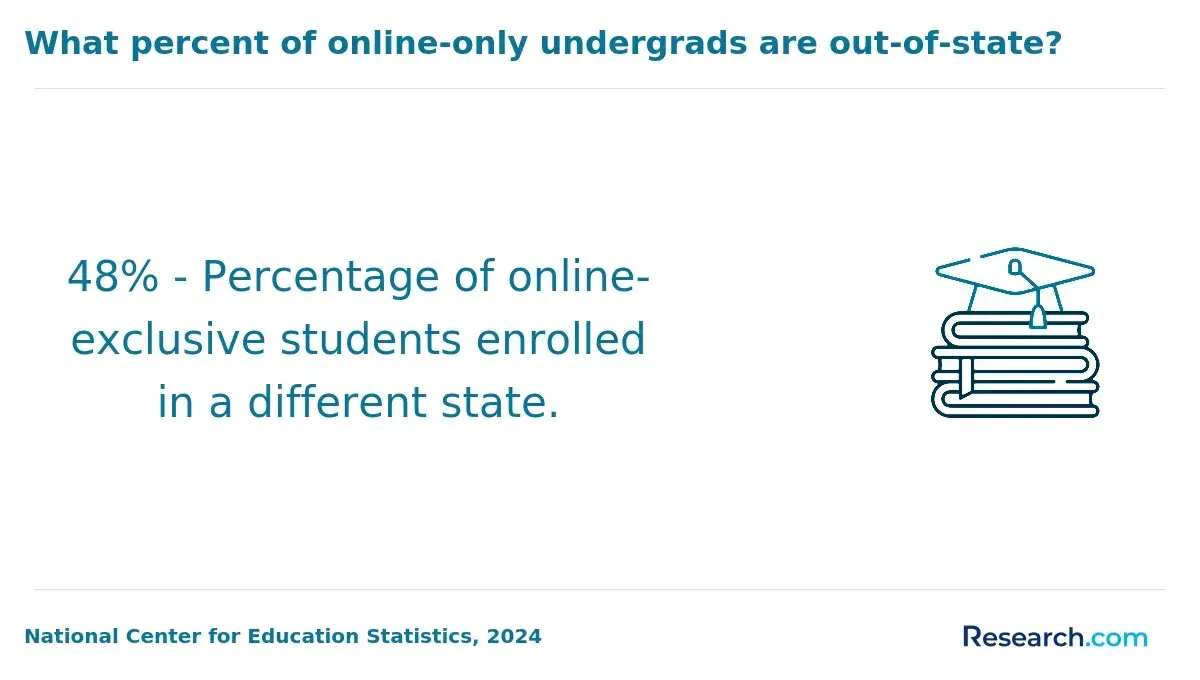
Transfer students navigating online criminal justice programs face a complex landscape shaped by residency-based tuition models and variable transfer credit policies. Public online options typically charge out-of-state students roughly $10 more per credit, about $344 in 2026, compared to in-state students, making residency a crucial consideration.
For someone transferring 60 credits, this difference can represent nearly $20,640 in savings by enrolling in an in-state online program rather than an out-of-state alternative. This financial disparity underscores the importance of evaluating transfer-friendly programs with attention to residency requirements and credit articulation.
Unlike campus-based degrees, which often apply in-state tuition more uniformly and feature more standardized credit evaluations due to local agreements, online criminal justice programs vary widely in their acceptance of transfer credits and timeline flexibility.
Many online programs enforce limits on accepted credits to maintain accreditation standards and program integrity. Prospective transfer students should obtain detailed credit transfer policies and verify alignment of core criminal justice requirements with prior coursework.
Employer emphasis on accreditation and institution reputation tends to overshadow delivery mode, but transfer students must weigh practical factors such as graduation timelines, advising availability, and course pacing.
Campus programs usually provide in-person advising that can streamline transfer processes, while online programs may offer accelerated or year-round courses that demand strong time management. A working professional transferring 60 credits must balance tuition cost premiums with program reputation and transfer clarity to optimize return on investment.
Consider exploring online colleges for forensic science as they often share similar transfer policies and financial considerations, providing additional pathways within the criminal justice field.
What should you look for in a criminal justice transfer credit policy and residency requirements?
Transfer credit policies for criminal justice degrees are a decisive factor in accelerating time to degree completion, particularly for working professionals balancing full-time employment.
Schools with clear policies accepting at least 60 semester credits often enable students to finish in two years rather than the typical three to four, but this efficiency hinges on how many credits the program requires overall and the extent of required residency-often 30 to 45 credits earned directly through the institution. This residency requirement can offset transfer gains if on-site attendance or synchronous participation is mandatory.
Articulation agreements directly impact the real-world applicability of prior learning. If foundational courses such as introduction to criminal justice, criminal law, or ethics are excluded from transfer, students face retaking core classes, increasing both time and cost to degree. Additionally, residency requirements for online criminal justice programs sometimes include internships or practicums with geographic constraints, potentially disrupting work schedules and limiting flexibility.
Effective transfer credit policies prioritize transparency through credit calculators and dedicated advisors familiar with criminal justice-specific credits to minimize administrative delays. For those seeking a strategic pivot within the justice sector, these elements influence not only how quickly a degree can be earned but also ongoing employment stability.
Workers considering a move into cyber-related fields may also explore pathways like an online cyber security degree for veterans as alternative career options offering distinct credit transfer structures and workforce demand.
How do prior college, military, and professional experience count toward an online criminal justice degree?
Leveraging prior college credits, military training, and professional experience can significantly reduce both the duration and cost of completing an online Criminal Justice degree, though outcomes depend heavily on institutional policies and evaluation rigor.
Transfer credits from regionally accredited institutions or formal articulation agreements-common among community colleges and bachelor's programs-allow students to bypass foundational courses, often entering programs with junior standing.
For instance, an Illinois community college's Criminal Justice Associate in Arts pathway costs about $10,500 total for 2025-2026, providing a financially strategic route compared to pursuing a bachelor's separately.
Military veterans and active service members may gain credit through official evaluations like the Joint Services Transcript (JST) or American Council on Education (ACE) recommendations, primarily for military law enforcement or investigative roles. However, approval processes vary, requiring extensive documentation submission. Employers in law enforcement and corrections often view these credits as valid proof of hands-on expertise, which can shorten degree completion and improve job readiness.
Professional experience alone seldom equates to direct academic credit but can support credit-by-examination options like CLEP or DSST, contingent on each institution's policies. Students should proactively verify how prior experience may translate into elective credits and understand related documentation requirements.
Strategically combining transfer-friendly pathways with military credit evaluation can cut time-to-degree and reduce educational expenses, but careful planning is critical given institutional variability and employer expectations in Criminal Justice careers.
What curriculum and course equivalencies matter most when transferring into criminal justice programs?
Transfer credit evaluations in criminal justice programs hinge on precise alignment of core subject areas rather than a broad accumulation of credits. Essential courses include foundational criminal justice theory, criminology, criminal law, corrections, and justice system ethics. Missing equivalencies in these domains frequently cause extended degree timelines and wasted tuition.
General education courses-such as English composition, statistics, psychology, and sociology-must also strictly meet receiving institutions' standards. For instance, a student transitioning from a community college with an associate degree must verify that research methods and criminal law classes cover comparable content and credit hours to avoid redundant coursework.
Consider a mid-career law enforcement officer transferring vocational courses like criminal procedures or investigative techniques into a bachelor's program. If these courses fall short of the university's academic rigor or credit hour requirements, they often fail to transfer, prolonging the degree and increasing costs.
Credit hour caps-often 60 or 90 credits-alongside accreditation standards further limit transferability, demanding students actively consult equivalency guides, academic advisors, and official syllabi for confirmation.
Career impact is tangible: data from Criminal Justice reveal median pay for criminal justice bachelor's degree holders rises significantly from $43,439 early in their career to $74,750 with two decades' experience, compared to an associate degree peak of $50,811. Therefore, strategically securing relevant transfer credits is a pragmatic step toward maximizing professional and financial outcomes.
How do program length, tuition, and fees change when you maximize transfer credits in criminal justice?
Maximizing transfer credits within a criminal justice degree program directly shortens time-to-degree and lowers overall tuition, revealing a tangible financial strategy often overlooked. For instance, a curriculum requiring 181 quarter credit hours can drop below 120 when previous coursework is fully credited, enabling students to finish earlier and reduce living and incidental expenses over extended semesters.
This accelerated pacing also changes the debt-to-benefit ratio by speeding up workforce reentry and salary gains, which is crucial for working professionals balancing current employment and educational goals. However, transfer credit acceptance varies extensively across programs, and insufficient credit recognition can force students to repeat foundational coursework, inflating costs and delaying graduation.
Consider the cost implications of one leading online criminal justice program where total tuition based on 181 credits is $65,160, but becomes approximately $47,810 with generous transfer policies and related scholarships-a savings of $17,350. This difference is critical for those financing education through loans or personal funds.
Successful credit maximization requires early articulation agreements and precise credit evaluations to ensure transferred credits align with specialized requirements in law enforcement, corrections, or related fields. While credit transfer shortcuts reduce cost and duration, they should be weighed against the need for current, workforce-relevant coursework demanded by employers and accrediting bodies.
What admission requirements and GPA standards apply specifically to criminal justice transfer applicants?
Transfer applicants to online criminal justice programs face stringent academic and administrative hurdles that directly influence their time to degree and employability. A minimum cumulative GPA, often between 2.5 and 3.0, sets a baseline, with more competitive programs requiring 3.2 or above.
Crucially, applicants must submit official transcripts from all prior accredited institutions for thorough credit evaluation focusing on relevant coursework such as law enforcement, criminology, and legal studies.
This credit review is not merely procedural; institutions frequently cap transferable credits, typically allowing up to 60 of 120 total credits toward the bachelor's degree. This cap shapes how much prior learning accelerates degree completion and impacts overall cost and labor market readiness.
Additional prerequisites like English composition and introductory sociology must be met before full admission, underscoring the need for foundational knowledge. Non-academic factors-letters of recommendation, personal statements, and pertinent work or military experience-frequently tip admission decisions and mirror employer emphasis on communication and applied skills.
For military-affiliated students, leveraging prior training with tuition discounts, for example $250 per credit compared to $380 standard rates, can generate savings of $7,800 on a 60-credit transfer block. This cost distinction often accelerates transition into roles such as law enforcement, corrections, or forensic analysis.
However, neglecting existing articulation agreements risks credit loss, extended time-to-degree, and increased expenses-delays that can undermine strategic career pivots.
How does choosing a transfer-friendly criminal justice program impact careers, salaries, and advancement?
Choosing a transfer-friendly criminal justice program can shorten degree completion by half or more, directly influencing eligibility for promotions and specialized roles in law enforcement and corrections.
For example, a corrections officer transferring 60 credits into an accelerated online program may finish the remaining coursework in about two years by taking two courses every eight weeks year-round, instead of four years typical for non-transfer students. This compressed timeline allows faster transitions into management positions, typically yielding thousands more annually.
Employers in police and federal agencies often require completed degrees for supervisory roles, making programs that accept prior credits highly advantageous. The reduction in redundant coursework prevents skill stagnation and lessens financial burden by lowering tuition and opportunity costs during career transitions.
Tradeoffs include vetting the quality and transparency of transfer credit policies to avoid surprises that can delay graduation. Failure to transfer sufficient credits can extend coursework unnecessarily, risking lost promotion opportunities.
In balancing work and study demands, transfer-friendly programs also limit credit loss and overlap, fostering better retention and graduation outcomes. This practical alignment between prior learning and program requirements improves workforce readiness by matching educational investment with real-world job market criteria.
Which tools and strategies help you verify that criminal justice credits will transfer before enrolling?
Confirming which criminal justice credits will transfer before enrollment is essential to avoid lengthening degree timelines and risking financial and professional delays. Transfer equivalency evaluation tools-such as those maintained by California State University and University of California systems-compare course codes, descriptions, and credit hours against target institutions' requirements, revealing exact matches and identifying credit gaps.
For instance, a law enforcement officer with credits from an out-of-state academy might find some courses accepted due to recognized professional certifications, but gaps often persist if course content or accreditation varies.
Students should also pursue a preliminary transcript evaluation or transfer credit matrix from admissions or registrar offices early in the process. These documents clarify transferable credits and prevent surprises that can extend time to degree completion by semesters or even years, impacting earnings and job market timing.
Given the sector's projected 6-7% job growth over a decade, upfront diligence in credit transfer decisions enhances career trajectory and minimizes costly delays.
Other Things You Should Know About Criminal Justice
Curriculum relevance varies significantly between programs; some update content regularly to reflect changes in criminal law, technology, and social justice issues, while others rely on outdated materials. Prioritize programs that demonstrate agile curriculum development and include contemporary topics like cybercrime, racial equity, and policy reform. Static curricula could diminish your preparedness for current employer expectations and evolving criminal justice challenges.
Accelerated programs can shorten time to degree completion but demand consistent high performance and time management due to compressed schedules. Transfer students with existing credits should weigh whether the intensity aligns with their work and life commitments. If balancing multiple responsibilities, selecting a program with a more traditional pacing will likely result in better academic outcomes and retention of complex criminal justice concepts.
Employers increasingly accept online degrees when they come from accredited institutions with rigorous standards, but preference still exists for candidates with in-person training or campus networking. Graduates of entirely online programs may need to compensate with demonstrable field experience or certifications. For career advancement, supplementing the degree with internships or law enforcement certifications often improves job prospects and employer confidence.
References
- Transfer Credit Opportunities for Criminal Justice Professionals https://go.tiffin.edu/blog/transfer-credit-opportunities-for-criminal-justice-professionals/
- College Transfer Credits | University of Phoenix https://www.phoenix.edu/tuition-financial-aid/transfer-credits.html
- Why Transfer into Criminal Justice? | University of Bridgeport https://www.bridgeport.edu/news/transfer-into-online-criminal-justice-program/
- The Importance of Understanding Transfer Credit Policies https://www.sophia.org/blog/higher-education/understanding-transfer-credit-policies/
- How to Accelerate a Degree in Criminal Justice: Flexible Pathways and Planning Strategies https://www.aiuniv.edu/degrees/criminal-justice/articles/accelerate-online-criminal-justice-degree
- Transfer Access for All? Depends on Where You Start https://www.nists.org/post/transfer-access-for-all-depends-on-where-you-start
- Online Criminal Justice Associate Degree https://www.uagrantham.edu/online-degrees/criminal-justice-associates/
- Criminal Justice | EICC https://eicc.edu/classes-programs/pathway/government/criminal-justice-transfer/default.aspx
- Criminal Justice A.A. - Transfer Degree - College of Lake County https://www.clcillinois.edu/programs/bssdv/criminal-justice/criminal-justice-aa-transfer-degree