2027 Online Criminal Justice Degrees That Help Build Data and Statistics Skills

Co-Founder and Chief Data Scientist
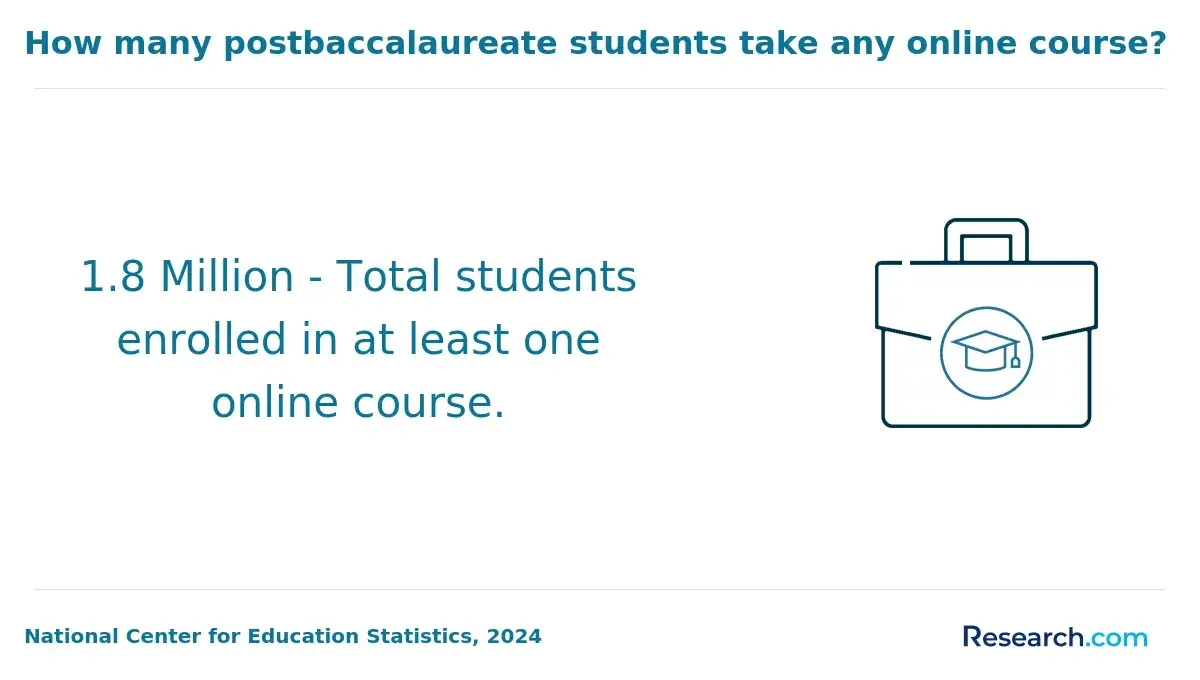
Law enforcement agencies increasingly rely on accurate data analysis to allocate resources and predict crime trends, yet many professionals lack the advanced skills necessary to interpret complex statistics effectively. With a 28% rise in online criminal justice degree enrollments reported by the National Center for Education Statistics, working adults are seizing more flexible options to upskill while balancing job demands.
This shift reflects growing recognition that remote learning can bridge skill gaps without interrupting career momentum. However, choosing the right program involves weighing curriculum rigor, data proficiency, and practical applicability. This article evaluates online criminal justice degrees that emphasize data and statistics to help professionals make informed educational decisions that enhance analytical capabilities and career prospects.
Key Things You Should Know
- Data-driven criminal justice degrees yield 23% higher employment rates in forensic analyst roles, but often require supplemental technical certificates, increasing total credentialing costs by up to 40%, impacting budget-sensitive candidates.
- Employers prioritize graduates with integrated statistics skills; 67% of federal law enforcement agencies report improved case clearance rates when teams include professionals trained in robust data analytics.
- Programs averaging 18 months shorten workforce entry compared to traditional tracks, yet accelerated curricula may sacrifice depth in advanced statistical methodologies, requiring on-the-job skill refinement.
What is an online criminal justice degree that emphasizes data and statistics skills?
Data-driven skills have become essential in criminal justice careers, where proficiency in analyzing large datasets directly shapes operational decisions. An example includes a graduate employed by a metropolitan police department using predictive modeling and incident data analysis to optimize patrol routes, reducing response times and improving resource allocation. This practical application illustrates how online criminal justice degree programs with data analysis focus equip students to meet evolving employer demands.
The U.S. Department of Justice's 2024 Police Data Initiative report reveals a significant shift: over 60% of major law enforcement agencies employ data analytics tools, compared to less than 30% a decade ago. Consequently, agencies prioritize candidates skilled in quantitative research and statistical software like SPSS, R, or Python. Candidates lacking hands-on experience with real-world data projects may face challenges securing these roles.
Programs emphasizing criminal justice online degrees emphasizing statistics and research skills typically require coursework in applied statistics, GIS, criminological research design, and database management. Selecting programs with virtual labs or partnerships that provide access to authentic datasets is a critical factor; it addresses the gap between theoretical knowledge and technical competency employers seek.
For working professionals, flexibility offered by online formats often demands disciplined time management and ready access to technical resources. Developing a portfolio of practical data dashboards or reports substantially improves employability prospects.
Prospective students evaluating pathways for a strategic shift should consider comprehensive outcomes and practical tradeoffs, such as balancing applied skills with theoretical grounding.
For more information on pathways that tailor to these criteria, consult the best online criminal justice degree options available.
How do online criminal justice programs build data analysis and statistics competencies?
Effective online criminal justice programs with data analysis training center on applied competencies that integrate statistical software like SPSS, R, or Python with practical crime mapping. By involving students in hands-on assignments using real arrest records and socio-demographic statistics, these programs develop skills that go beyond theoretical knowledge to meet employer demands for actionable insights. For example, analyzing five years of neighborhood crime data to create a resource allocation model directly supports strategic community policing efforts.
These degrees balance technical proficiency with critical legal and ethical considerations, including data privacy laws affecting evidence use. Students encounter challenges in mastering statistical tools independently online, necessitating discipline and reliable computing resources. Programs often incorporate modules on policy frameworks and ethical data handling to address these complexities inherent in criminal justice analytics.
The U.S. Bureau of Labor Statistics projects a 6% growth rate for crime analysts and intelligence roles through 2031, exceeding average occupational growth, making data competencies in criminal justice degrees strategically relevant for workforce needs. Practical experience interpreting complex datasets enhances employability in government and private sectors.
Prospective students assessing educational options should also consider accessibility factors. For those exploring options within online colleges that accept felons, programs with integrated quantitative training offer viable pathways despite common barriers.
What careers in criminal justice use strong data and statistics skills, and how do degrees prepare you?
Data analysis skills reshape specific criminal justice roles by emphasizing operational impact over theoretical knowledge. Careers in criminal justice requiring data analysis skills-such as crime analysts, forensic statisticians, and policy researchers-demand more than raw technical ability; hiring managers expect professionals who convert complex datasets into strategic, actionable insights under real-world constraints. For example, crime analysts assess crime reports and patterns to assist resource deployment within departments, directly influencing how investigations proceed.
How criminal justice degrees develop statistical expertise is vital to managing practical challenges like incomplete data and inherent biases. Curricula focused on data-driven crime analysis typically combine training in regression analysis, probability theory, geographic information systems (GIS), and predictive analytics, equipping students with applied competencies rather than abstract theory. This skill set is essential for producing legally and ethically sound reports or predicting recidivism trends.
Workforce realities also require graduates to balance remote learning flexibility with hands-on proficiency in statistical software and data validation, critical when addressing evolving crime trends at both local and federal levels. USC Upstate's 2025 Crime Analysis concentration reports average starting salaries for crime analysts between $47,000 and $55,000, framing a realistic entry point that reflects market demand and growth potential linked to deepening expertise.
For broader context on rehabilitation and behavioral assessment within forensic environments, prospective students often ask what can I do with a masters in forensic psychology, a question that intersects with advanced quantitative analysis roles in criminal research.
How do online criminal justice degrees compare with campus programs for learning analytics?
Online criminal justice degrees offer analytics training on par with campus programs, particularly at institutions with advanced digital infrastructures. For example, North Carolina A&T's 2024 online B.S. in Criminal Justice emphasizes data analysis, statistics, and research methods essential for evidence-based decision making. Tuition rates-$360 per credit hour for in-state and $432 for out-of-state students-result in a total around $43,000 to $52,000 for the 120-credit degree, aligning with or undercutting many traditional campus offerings. This pricing framework invites scrutiny when weighing long-term return on investment, especially for those considering online criminal justice degrees vs campus programs for data analytics.
Employers seek candidates fluent in analytical tools like SPSS, Python, or R. Online programs often integrate these through virtual labs and projects, though they face challenges replicating the immediacy of on-campus collaboration. Undergraduates or mid-career professionals juggling obligations benefit from online flexibility, but must proactively secure internships or community research opportunities-missing from many virtual pathways-which can delay practical skill acquisition and local professional networking.
Comparing online and traditional criminal justice education in statistics highlights tradeoffs between convenience and experiential learning. While campus routes embed students within institutional ecosystems, online learners often navigate independent pathways for field experience. This dynamic affects workforce readiness and should influence strategic decisions for those pivoting to data-centric roles after or alongside careers in fields such as forensic science or roles like an autopsy tech.
What courses and concentrations strengthen data, research, and statistical skills in criminal justice?
Proficiency in data analytics and quantitative methods is increasingly indispensable in criminal justice roles, especially within crime analysis and policy evaluation. For instance, law enforcement agencies expect analysts to utilize advanced regression models and hypothesis testing to assess policy impacts or optimize resource distribution. Practical coursework often involves software such as SPSS or R, training students to handle complex datasets-including GIS for spatial crime mapping-that are essential for predictive analytics and trend forecasting.
These data-focused skills align closely with workforce needs identified by the Bureau of Justice Statistics, emphasizing rigorous training beyond typical criminal justice curricula. Specialized courses on survey methodology, experimental design, and statistical analysis provide hands-on experience analyzing arrest records or recidivism rates, preparing professionals to generate actionable insights influencing local and federal policy decisions.
Choosing a crime analysis concentration entails weighing significant tuition investment against tangible labor market benefits. For example, Boston University's online MS in Criminal Justice estimates part-time tuition ranging from $21,948 to $23,700, reflecting the premium placed on analytical expertise prized in intelligence units, federal agencies, and private security sectors. Students must carefully consider salary gains relative to program cost and job market saturation.
Persistent challenges include adapting to evolving data science tools and integrating diverse data sources within privacy constraints. Career progress demands continual learning that blends statistical acumen with nuanced understanding of criminal justice trends.
What admission requirements do online criminal justice programs with data focus typically have?
Admission into online criminal justice programs with a data specialization often requires more than basic credentials; institutions expect demonstrable analytical skills through transcripts showcasing coursework in statistics, sociology, or public policy. While some undergraduate programs have moved away from mandatory ACT/SAT scores post-2023, graduate applicants frequently need GRE results with respectable quantitative reasoning scores to remain competitive.
Work experience can notably offset strict academic requirements, particularly for professionals pivoting mid-career. For example, a law enforcement analyst with hands-on statistical software experience may gain admission based on documented project work and strong recommendations. However, background checks and proof of legal study authorization remain non-negotiable due to the sensitivity of criminal justice data.
Technical preparedness is a persistent factor; missing prior exposure to programming languages such as Python or R and foundational statistics can extend time to degree completion. This delay may increase overall costs and affect entry timing into the workforce. Programs like those at Southern New Hampshire University, which enroll over 170,000 online students, illustrate the competitive environment where students must carefully align their skills with employer expectations.
How long do online criminal justice degrees take and what do they cost?
Choosing a criminal justice degree requires balancing time commitment with workforce demands, especially where data analytics increasingly shape policing. Associate programs take about 2 years, serving those targeting prompt employment in entry-level roles. Bachelor's degrees typically span 4 years but can shorten to roughly 3 with transferred credits or accelerated tracks, aligning better with employer expectations for statistical literacy in crime analysis. Master's programs add 1 to 2 years and focus on data-informed decision-making critical for advanced agency functions.
Cost considerations vary sharply by institution and residency: public universities charge $8,000-$15,000 yearly for in-state online students, with out-of-state fees around $20,000 or more. Private schools generally range from $20,000 to $40,000 annually. This cost differential can frame decisions, especially given findings from William Paterson University's 2024 brief, which noted analytics-driven policing reduced targeted crimes by double-digit percentages-implying that investing in data-centric criminal justice education can translate into measurable field impact.
Students working while studying must weigh extended timelines against income continuity, as part-time enrollment often stretches programs beyond 4 years. Employers are increasingly pivoting toward candidates proficient in data tools and statistical reasoning, intensifying the value of expedient, cost-effective programs with applied analytics content. Funding pathways like employer tuition aid or federal assistance influence affordability and practical completion feasibility.
How can you verify accreditation and program quality for online criminal justice degrees?
Choosing an online criminal justice degree without verifying recognized accreditation-either regional or national-is a practical misstep that often limits employer recognition and credit transferability. Specialized accreditation, such as from the Academy of Criminal Justice Sciences (ACJS), directly impacts curriculum relevance to analytics, research, and policy skills increasingly demanded in the field.
Programs like the University of Cincinnati's online Graduate Certificate in Crime Analysis and Prevention illustrate how rigor and experience prerequisites shape student readiness for data-focused roles. Requiring a 3.0+ GPA or five years of professional experience, with the possibility of GRE waivers, signals an emphasis on practical expertise over general academic credentials, aligning education with workforce expectations.
Critical program elements extend beyond credentials: curricula must integrate quantitative methods, program evaluation, and crime data analysis taught by faculty with professional or research backgrounds. This ensures graduates gain real-world skills valued by employers in government agencies and private sector roles.
Operational factors such as flexible delivery combined with robust student support-career advising and technical help-directly influence completion rates, particularly for working professionals balancing career pivots or advancement. Access to workforce outcomes data provides an additional metric to assess program impact on employability.
When evaluating online criminal justice education, weigh accreditation, admission rigor, curriculum analytics focus, and student resources against your current experience and career goals to avoid costly detours and maximize long-term workforce relevance.
What are typical salaries and job outlook for criminal justice roles using data skills?
Data skills in criminal justice significantly impact earning potential and job mobility, with median salaries from $55,000 to $85,000 depending on role and agency. For example, crime analysts starting at around $55,000 can progress to federal or specialized positions paying up to $85,000. This wage premium reflects agencies' increasing preference for candidates proficient in tools like Python, R, SAS, GIS, and database management, which improve case resolution efficiency and resource allocation.
Employment growth for data-savvy criminal justice professionals is projected at 7% through 2032, surpassing broader criminal justice job growth. This trend ties directly to legislative mandates driving adoption of evidence-based policing and predictive analytics, requiring candidates to combine technical proficiency with foundational field knowledge.
New entrants with data expertise command higher starting salaries than those relying solely on traditional law enforcement skills. However, this advantage comes with the expectation of continuous certification and training to maintain competitiveness. Agencies often require up-to-date credentials in sector-specific analytics, highlighting the need for ongoing investment in professional development.
Practical workforce realities include:
- Cross-jurisdictional mobility between local, federal, and military agencies due to transferable analytic skills
- The necessity to balance technical and domain expertise for effective performance
- Increased competition for advanced roles demanding both experience and specialized certifications
How should students choose a reputable online criminal justice program to build data expertise?
Data competency defines modern criminal justice education's practical value more than traditional theory-based curricula. Graduates aiming for roles like urban crime analysts must prioritize programs integrating GIS mapping, predictive modeling, and intelligence-led policing to meet actual employer demands where analytics directly influence decision-making and resource allocation.
Accreditation remains a baseline filter, but real differentiation lies in programs providing hands-on experience with up-to-date software and meaningful data projects similar to those in federal or large law enforcement agencies. Without this, students risk credentials that lack relevancy in rapidly evolving analytic environments.
Employment outcomes provide an essential metric: successful programs typically see graduates enter data analyst or policy analyst roles within justice agencies at competitive salary levels. Prospective students should cross-reference these trends with documented labor market analyses to align educational investment with realistic career trajectories and skill demand.
Online delivery must transcend surface-level lectures by incorporating simulations, interactive data labs, and expert instructors to effectively develop applied analytic skills remotely-an area where many programs fall short. Furthermore, balancing curriculum depth with time-to-completion and flexible pacing critically affects persistence and genuine mastery.
Other Things You Should Know About Criminal Justice
Employers prioritize demonstrated data and analytical skills over whether a degree was earned online or on campus. However, some law enforcement agencies and federal employers still show preference for traditional degrees due to perceived rigor and networking opportunities. Graduates should ensure their online program integrates applied data projects and uses current software tools to match industry expectations. When choosing between program types, prioritize how well the curriculum and hands-on experience align with targeted job requirements rather than delivery mode alone.
Many online programs offer asynchronous coursework, which allows working professionals to continue full-time employment. However, managing both work responsibilities and courses heavy in data analysis requires strong time management and self-discipline. Students should prioritize programs that allow flexible pacing or offer part-time enrollment options. Choosing programs with clear guidance on balancing coursework with work commitments improves completion rates and reduces burnout risk.
Specializing in data and statistics provides a clear competitive advantage in career paths involving policy analysis, crime mapping, or research-based roles, where quantitative skills are essential. Employers increasingly value this expertise for evidence-based decision making, which is a growing trend across public safety and corrections sectors. However, if your goal is frontline policing or probation work, a general degree might suffice and offer more relevant practical training. Prioritize specialization when aiming for roles in analytics, research departments, or federal agencies focused on intelligence and data-driven strategies.
References
- What Are the Entry Requirements for a Criminal Justice Program? | University of Bridgeport https://www.bridgeport.edu/news/entry-requirements-for-a-criminal-justice-program/
- What Can You Do With a Degree in Criminal Justice? | UMass Global https://www.umassglobal.edu/blog-news/what-can-you-do-with-a-criminal-justice-degree
- Criminal Justice (BA) - Computer Forensics Concentration https://www.uagrantham.edu/online-degrees/criminal-justice-computer-forensics-concentration/
- 25 Jobs You Can Get With A Criminal Justice Degree https://www.criminaljusticedegreeschools.com/careers/best-criminal-justice-jobs/
- How to choose a bachelor's in criminal justice | edX https://www.edx.org/resources/how-to-choose-a-bachelors-in-criminal-justice
- Most Affordable Online Criminal Justice Degrees https://www.affordablecollegesonline.org/degrees/criminal-justice-programs/
- Online Bachelor’s Degree in Criminal Justice https://www.monroeu.edu/academics/undergraduate-programs/school-criminal-justice/online-bachelors-degree-criminal-justice
- Top Online Criminal Justice Degrees https://www.criminaljusticeprograms.com/online-criminal-justice-degrees/
- Criminal Justice Jobs, Criminal Justice Salary Outlook | HCU https://hc.edu/articles/criminal-justice-salary-and-job-outlook/
- Crime Analysis Concentration https://uscupstate.edu/academics/college-of-arts-humanities-and-social-science/sociology-criminal-justice-and-womens-studies/criminal-justice/upstate-crime-analysis/