2027 Best Criminal Justice Degrees for Federal Career Preparation

Co-Founder and Chief Data Scientist
Law enforcement professionals seeking federal roles face intense competition amplified by rigid eligibility standards and dynamic policy shifts in agencies like the FBI and DEA. Navigating these barriers requires strategic educational choices tailored to evolving federal career pathways. Recent data from the National Center for Education Statistics reveals a 35% increase in enrollment for online criminal justice programs among adult learners since 2023, signaling a shift in accessibility and career mobility options for working professionals. Understanding this trend is vital for applicants balancing job experience, degree requirements, and timing. This article identifies top criminal justice degrees optimized for federal career preparation, focusing on program flexibility, accreditation, and employer expectations to guide informed decisions in advancing a federal career pathway.
Key Things You Should Know
- Federal agencies filled 62% of criminal justice roles via specialized degrees in 2024, yet only 35% of programs align curricula with federal competency frameworks, creating a skills mismatch that delays workforce integration.
- Agencies prioritize candidates with internships or security clearances, doubling employment likelihood; programs lacking embedded federal partnerships limit practical experience and reduce hiring competitiveness.
- Median debt for criminal justice graduates reached $29,000 in 2024 per Department of Education data, pressuring students to choose accelerated or hybrid degree models despite potential losses in deep specialization.
Which criminal justice degrees best prepare for federal careers?
Degrees tailored with federal policy, cybersecurity, and intelligence concentrations offer a strategic edge for those targeting federal law enforcement careers. Generic criminal justice programs often fall short when competing for federal roles, where agencies like the FBI and Department of Homeland Security prioritize candidates with focused expertise and internship experience aligned with their protocols. For instance, a bachelor's degree emphasizing cybercrime equips candidates for specialized investigations, unlike corrections-focused degrees that mostly limit opportunities to local jurisdictions.
Data from the U.S. Bureau of Labor Statistics shows police officers' median federal wages reach $77,270 annually, significantly exceeding the national median wage of $48,060, which demonstrates the practical value of federal alignment in training. However, higher pay correlates with rigorous hiring standards requiring candidates to present targeted qualifications and federal exposure through internships or specialized training.
Evaluating the best criminal justice degrees for federal law enforcement careers means prioritizing program accreditation, faculty experience with federal agencies, and internship pipelines. Typical pathways include undergraduate degrees combined with federal internships for initial eligibility, graduate degrees in criminal justice administration or cybercrime for advancement, and certificates in federal criminal procedures or intelligence to enhance generalist degrees.
Those seeking the top criminal justice programs for federal career training should also consider online options, such as a 2 year criminal justice degree online, which can offer flexibility alongside relevant curriculum content and experiential learning pathways.
What accreditation should a criminal justice program have?
Federal agencies strictly require regional accreditation recognized by the U.S. Department of Education or the Council for Higher Education Accreditation (CHEA) as a baseline for criminal justice degrees targeting federal careers. Without it, candidates often encounter immediate disqualification or must pursue costly supplemental certifications due to non-transferable or unrecognized credentials. This barrier can delay or derail federal background investigations and security clearances.
Beyond institutional validation, specialized programmatic accreditation from bodies like the Academy of Criminal Justice Sciences (ACJS) materially enhances employability in federal law enforcement roles. ACJS accreditation signals a curriculum aligned with current investigative standards, making graduates notably more attractive to agencies such as the FBI. For example, many FBI hiring panels specifically prioritize ACJS-accredited programs because they emphasize evidence-based practices critical to federal investigative work.
As criminal justice is the most common bachelor's degree among FBI employees, choosing accredited criminal justice programs for federal careers is a pragmatic decision to avoid competitive disadvantages. Nationally accredited or otherwise unaccredited programs rarely provide the same leverage and often require additional training or evaluations, imposing time and financial costs with uncertain outcomes.
When weighing program options, prospective students should prioritize regional accreditation as essential and ACJS accreditation as a key differentiator, balancing academic legitimacy with targeted federal workforce readiness.
For those exploring broader legal support roles, investigating degrees for paralegals can offer insight into complementary pathways that intersect with criminal justice careers.
Can you earn a criminal justice degree online for federal jobs?
Federal agencies mandate criminal justice degrees that strictly align with accreditation and curricular standards emphasizing federal law, investigative methods, and security protocols. Online criminal justice degree programs intended for federal jobs must bridge academic theory with practical experience. Without applied training such as internships or field exercises, candidates often face significant hurdles during federal hiring processes. For example, an online degree lacking exposure to cybercrime and counterterrorism modules or federal internship opportunities may diminish an applicant's competitiveness.
Employment in roles like police officers or federal detectives-which frequently lead to national security positions-is projected to grow at a rate consistent with overall labor market trends. These positions typically require at least a bachelor's degree combined with hands-on experience. When evaluating online criminal justice programs for federal career preparation, prioritize those verified for accreditation and integrated with experiential learning that mirrors federal hiring expectations.
Key practical considerations include:
- Valid accreditation recognized by federal human resources to ensure eligibility for federal positions.
- Curricula covering subjects such as federal criminal statutes, cybercrime, intelligence analysis, and counterterrorism to meet role-specific demands.
- Opportunities for internships or cooperative education within federal agencies to build relevant experience.
- Supplemental requirements like security clearances and physical fitness, which online coursework alone cannot fulfill.
For those considering a career pivot or advancement in criminal justice, selecting programs aligned with these criteria is critical to passing background checks and demonstrating job readiness. Candidates requiring more specialized pathways might also investigate forensic psychology master's programs online as a complementary credential depending on their career objectives.
What courses are in a federal-focused criminal justice curriculum?
A curriculum centered on federal criminal justice degree courses addresses the specific operational and legal standards that differentiate federal careers from state or local law enforcement roles. Core classes focus on federal criminal law, constitutional protections emphasizing Fourth and Fifth Amendments, and investigative methods designed to ensure compliance with federal evidence rules. Specialized training in cybercrime, terrorism, intelligence analysis, and federal sentencing guidelines is essential to meet the demand for professionals adept at handling national security priorities across agencies such as the FBI and DHS.
Federal corrections policy and homeland security policy courses provide insight into the organizational and interagency complexities unique to federal systems. The curriculum for federal career in criminal justice often extends into leadership development, ethics, and intergovernmental relations, aligning education with the nuanced expectations of federal employers.
Employment in federal law enforcement requires navigating stringent hiring processes including advanced background checks and a demonstrated grasp of federal statutes, making targeted coursework crucial to competitive candidacy. Graduates face mean annual wages of $77,270 as of May 2024, underscoring the financial viability of such specialized education. Practical experience through federal internships is frequently necessary given the high barrier to entry.
Absent federal-specific credentialing, candidates primarily versed in state criminal procedure may struggle to pivot effectively. Considering these factors alongside market insights, including comparative salary data for related fields such as sports analysis, helps candidates make informed decisions about the scope and focus of their studies. For additional context on occupational earnings, see how much does a sports analyst make.
What admission requirements do criminal justice programs usually ask for?
Admission criteria for criminal justice programs reflect the field's blend of academic baseline and practical demands. Most programs require a high school diploma or equivalent, with official transcripts demonstrating a GPA typically around 2.5 to 3.0, which aligns with federal career standards. Applicants lacking traditional credentials may gain conditional admission by passing foundational assessments, a tradeoff that prioritizes skill readiness over formal academic history.
Standardized tests like the SAT or ACT are frequently optional, mirroring a shift towards competency over test scores, but candidates aiming at federal roles must consider programs that include background checks and clearly address security clearance requirements. Such prerequisites directly impact employability in government law enforcement or investigative positions, where ethical conduct and clean records are non-negotiable.
Work experience and professional certifications strengthen applications, especially for nontraditional students pursuing online or accelerated tracks. Letters of recommendation and personal statements, although less common, remain useful for selective programs assessing communication and motivation. Managing application deadlines aligned with hiring cycles is critical to avoid career entry delays.
The tuition gap in online programs illustrates financial tradeoffs: some offer rates as low as $190 per credit, compared to a 2020 average of $9,910 per year, presenting significant cost advantages for those who evaluate options beyond headline institutional brands.
How long does a criminal justice degree take to finish?
Federal agencies prioritize criminal justice candidates who align their education with practical federal hiring cycles and evolving interdisciplinary demands. Completing a traditional four-year bachelor's degree before age 25 maximizes entry-level opportunities for roles like FBI special agents or border patrol agents, as part-time or associate degrees often delay eligibility and limit competitive positioning.
Increased emphasis on cybersecurity and intelligence within federal roles creates a distinct advantage for students supplementing criminal justice studies with minors or certifications in these areas. Approximately 6-10% of federal criminal justice positions specifically require cybercrime expertise, necessitating technical foundations often absent from conventional programs.
Graduate-level education, typically requiring 1-2 additional years, is more relevant for mid-career professionals seeking leadership roles in federal law enforcement or intelligence agencies. This advanced study involves balancing coursework intensity with demands such as security clearances and operational fieldwork.
Recruitment data from agencies like the FBI and Department of Homeland Security confirm that candidates integrating criminal justice with cybersecurity or intelligence consistently outperform peers in both application success and retention. Key considerations for candidates include:
- Timing degree completion to fit federal hiring windows
- Building technical skills alongside core criminal justice knowledge
- Understanding how degree length impacts service retirement and promotion potential
How much do criminal justice degrees cost?
Cost considerations for criminal justice degrees vary widely, influencing how students must weigh immediate expenses against long-term career benefits. Bachelor's programs at public in-state universities average around $9,000 per year, whereas private or out-of-state tuition often surpasses $35,000. Fully online options might reduce tuition slightly but typically add fees and incorporate in-person requirements that increase overall investment. Graduate programs, particularly master's degrees, command higher tuition-around $20,000 to $30,000 annually-reflecting advanced content designed to meet federal-level competencies.
From a workforce perspective, federal agencies consistently value graduate qualifications, offering a 5-7.49% salary increase to officers holding master's degrees over those with only a bachelor's. This wage premium can justify additional upfront costs but requires students to assess timing, financial aid, and program pacing carefully.
Consider these tradeoffs when evaluating program formats and financing:
- Part-time or employer-sponsored tracks ease cash flow but may delay skill acquisition and promotion eligibility.
- Accelerated, full-time paths increase short-term workload and expenses but shorten time to federal entry and advancement.
- Unaccredited programs or those misaligned with federal requirements can hinder career progression despite lower costs.
These dynamics emphasize the importance of integrating cost analysis with accreditation, curriculum relevance, and career services quality to optimize hiring prospects in federal law enforcement or intelligence roles.
Which federal jobs can a criminal justice degree lead to?
A criminal justice degree serves as a targeted credential for entry into multiple federal roles but requires complementary qualifications and strategic planning to maximize employability. Federal agencies like the FBI, DEA, U.S. Marshals Service, and Department of Homeland Security emphasize candidates' grasp of legal procedures, investigative techniques, and ethics-domains directly reinforced through criminal justice curricula. However, securing positions such as federal law enforcement agents or intelligence analysts also depends heavily on demonstrated specialized skills in threat assessment or data analysis developed within and beyond academic settings.
Employment within federal correctional institutions and probation services reflects a distinct demand for practical knowledge in criminology and behavioral sciences, linking degree content to operational realities like inmate rehabilitation and offender supervision. Graduates should anticipate stiff competition and recognize that federal positions often require additional certifications, federal civil service exams, and continuous professional training which a degree alone does not cover.
Financially, select law enforcement scholarship programs mitigate education costs by offering up to $16,500 in tuition support and $6,500 for dependents. Yet, candidates must weigh this against rigorous hiring timelines and the necessity of accumulating on-the-job expertise to qualify for advanced roles or specialized task forces.
- Practical value increases with integration of federal experience and certifications post-degree.
- Applicants face significant logistical challenges including exam pass rates and agency-specific training requirements.
- Relatively few federal roles permit direct entry solely on degree credentials without supplementary qualifications.
What salaries do federal criminal justice careers offer?
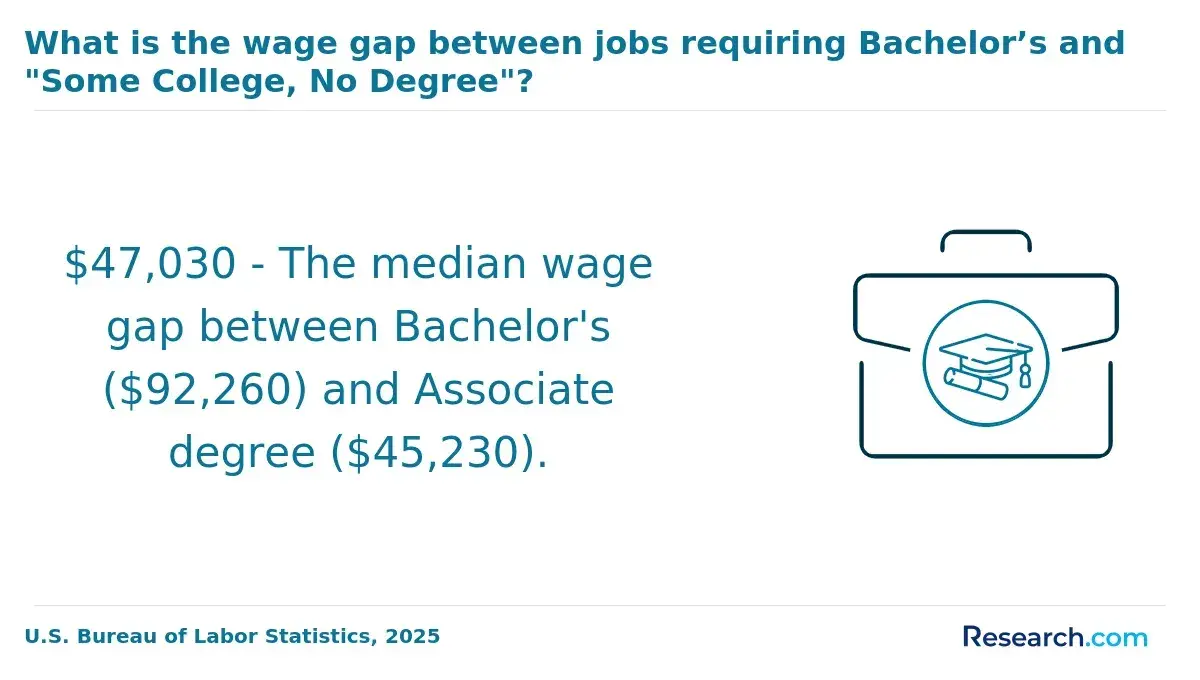
Federal criminal justice roles demand a bachelor's degree as the baseline credential for meaningful salary advancement and competitive eligibility. Unlike associate degrees or law enforcement certificates that may facilitate earlier entry at local levels, federal agency positions prioritize candidates with a bachelor's for detective-track and specialized assignments. This academic requirement directly influences pay scales, hiring pools, and career mobility.
For instance, FBI special agents start at GS-10 with salaries ranging approximately from $59,000 to $77,000, depending heavily on geographic location and tenure increments. With experience and rank progression, salaries can exceed $110,000 at GS-13. Similarly, U.S. Marshals typically enter at GS-09 or GS-11 levels, where a combination of training, clearance status, and years of service impacts upward movement.
Prospective candidates should weigh:
- The immediate accessibility offered by associate degrees versus the federal preference for bachelor's degrees.
- The necessity of credible internships or agency connections to overcome intense competition in hiring.
- The long-term financial and professional tradeoffs inherent to initial educational choices in federal criminal justice.
According to the U.S. Bureau of Labor Statistics 2024 data, the median salary for federal law enforcement officers surpasses $73,000, a figure that illustrates the economic return tied to federal educational and professional benchmarks established in the sector.
What certifications improve federal criminal justice job prospects?
Certifications in federal criminal justice careers function as targeted proofs of expertise, often outweighing general academic qualifications in hiring and advancement decisions. For instance, a Certified Fraud Examiner (CFE) credential is essential for roles in agencies like the FBI's financial crimes division, while Certified Protection Professional (CPP) status benefits candidates aiming for federal protective services or border security leadership.
These certifications provide tangible benefits such as earlier promotion eligibility and specialized leadership tracks, which increasingly require master's-level education combined with verified competencies. However, candidates must critically assess the ongoing requirements and costs associated with maintaining these certifications, including continuing education and recertification periods.
Strategic alignment between certifications and specific federal agency priorities proves indispensable. For example, professionals targeting homeland security roles gain more immediate return by obtaining certifications in cybersecurity or emergency management, which align tightly with job demands and can result in salary advantages.
Key considerations for candidates include balancing foundational certifications that facilitate entry-level hiring against advanced credentials signaling managerial readiness, especially when paired with graduate education. Choosing certifications without matching organizational needs or career stage may limit employability or overload the candidate with unnecessary obligations.
- Certifications like CPP, CFE, and Criminal Intelligence Analysis demonstrate skill sets beyond academic degrees
- Maintenance and renewal requirements impact long-term professional planning
- Specialized certifications aligned with agency functions offer measurable career advantages
- Integrating certifications with degree attainment improves competitiveness for leadership roles
Other Things You Should Know About Criminal Justice
Choosing between a specialized or general degree depends on long-term career goals and the specific federal agency targeted. Specialized degrees-like cybercrime or forensic science-align better with technical roles but can narrow job flexibility. A broad criminal justice degree offers wider eligibility but may require additional training to qualify for specialized positions. Prioritize specialization if you have a clear job target; otherwise, a general degree maximizes federal job entry points.
Program format directly affects networking and skill acquisition critical for federal roles. Traditional in-person programs are better for developing practical communication, critical thinking in dynamic settings, and relationships with professors who may recommend students for internships. Online degrees offer flexibility but often lack robust experiential learning components valued by federal employers. Select programs that incorporate live or hybrid options with practical elements to maintain readiness.
Federal agencies focus more on degree relevance, accreditation, and candidate experience than university prestige. High-profile institutions may provide stronger alumni networks and recruiting pipelines but do not guarantee job offers. Graduates from lesser-known schools can match or exceed outcomes by excelling in internships and gaining clear federal-sector skills. Decision-makers should weigh cost differences and opportunities for applied learning over brand name alone.
References
- How Long to Complete MA in Criminal Justice | University of Bridgeport https://www.bridgeport.edu/news/how-long-to-complete-masters-in-criminal-justice/
- How Quickly Can You Get a Degree in Law Enforcement? https://golawenforcement.com/articles/how-long-does-it-take-to-get-a-degree-in-law-enforcement/
- Explore Bachelor's Degree in Criminal Justice | All Criminal Justice Schools https://www.allcriminaljusticeschools.com/criminal-justice/criminal-justice-bachelors-degree/
- ACJS Program Endorsement FAQ https://www.acjs.org/acjs-program-endorsement-faq/
- Find Top Online Bachelor's In Criminal Justice Programs https://www.accreditedschoolsonline.org/criminal-justice/bachelors/
- 2025-2026 Catalog https://catalog.monroeu.edu/catalog/course-descriptions/undergraduate-course-descriptions/cj/
- How Long is a Master's in Criminal Justice (MSCJ) Program? https://www.forensicscolleges.com/blog/resources/how-long-to-earn-masters-in-cj
- Graduate Application Guide for Criminal Justice Majors - CriminalJustice.com https://www.criminaljustice.com/resources/graduate-application-guide/
- Online Bachelor’s Degree in Criminal Justice https://www.monroeu.edu/academics/undergraduate-programs/school-criminal-justice/online-bachelors-degree-criminal-justice
- Most Affordable Online Criminal Justice Degrees https://www.affordablecollegesonline.org/degrees/criminal-justice-programs/