2027 Best Online Bachelor's in Criminal Justice With Credit for Military Training

Co-Founder and Chief Data Scientist
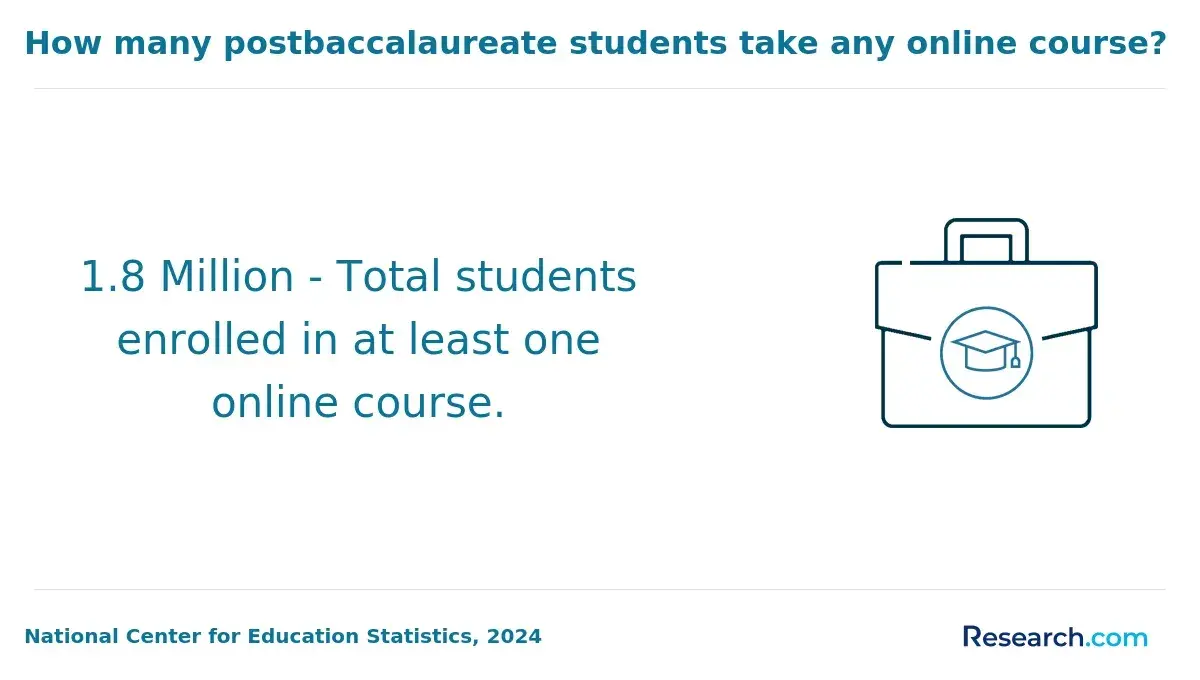
For military veterans seeking a bachelor's degree in criminal justice, transferring operational training into academic credit often determines the feasibility of career advancement. Without efficient credit recognition, service members face prolonged degree timelines, increased tuition, and delayed labor market entry. Recent data from the National Center for Education Statistics shows that over 40% of adult learners enroll in online programs due to their flexibility-a critical factor for working professionals balancing education with demanding schedules.
This shift signals growing institutional responsiveness, yet military credit policies remain uneven, complicating strategic enrollment decisions. This article evaluates top online bachelor's programs that maximize credit for military training, guiding informed choices for accelerated degree completion and workforce impact.
Key Things You Should Know
- Military credit transfers reduce time-to-degree by an average of 25%, per the Department of Defense, but uneven acceptance across programs risks prolonging transition timelines and escalating total education costs.
- Employers in federal and state law enforcement increasingly prioritize candidates with formal degrees over experience alone, with 62% requiring bachelor's credentials per recent Bureau of Labor Statistics data, heightening credential inflation pressures.
- Programs emphasizing experiential learning tied to military skills correlate with 18% higher job placement rates within 12 months, signaling workforce readiness disparities dependent on program structure and credit articulation.
What is an online bachelor's in criminal justice with credit for military training?
An online bachelor's degree in criminal justice with military credit can significantly reduce time to completion by awarding academic credit for verified military training. For example, a former military police officer might bypass foundational courses such as investigative procedures or security management, allowing for faster degree completion and reduced tuition costs. This integration of military experience with academic credentials is especially valued in law enforcement and security sectors, where practical discipline complements theoretical learning.
Programs assessing credit transfer options for military training in criminal justice programs typically rely on established standards like the American Council on Education's (ACE) recommendations. Prospective students should consult admissions officials early to understand specific credit acceptance policies and necessary documents like Joint Service Transcripts (JST).
Online degree formats accommodate active-duty personnel and working adults by offering flexible schedules without geographic limitations. From a workforce standpoint, leveraging military credit can accelerate entry into protective service roles, which reported a median wage of $50,940-above the general occupational median.
However, not all military training aligns with academic requirements, so incomplete credit transfers may extend degree timelines and increase costs. Students must balance maximum credit awards against maintaining program rigor to ensure meaningful credentials in a competitive job market. Those seeking a 2 year criminal justice degree online should also weigh how credit transfer policies affect acceleration options and overall educational investment.
How does military training translate into college credit in criminal justice programs?
Leveraging military training credit transfer in criminal justice programs can significantly shorten degree timelines but demands strategic evaluation of institutional policies and workforce requirements. Military courses aligned with law enforcement, corrections, or investigative specialties often receive academic credit through the American Council on Education (ACE) evaluations accepted by over 2,300 accredited colleges. This credit reduces degree hours by 12 to 30 credits, accelerating educational progress for veterans and active-duty personnel.
Applying military experience toward criminal justice degree completion requires submitting detailed military transcripts like the Joint Services Transcript (JST) or Community College of the Air Force (CCAF) records. However, transfer credit caps and curricular misalignment mean not all technical or leadership skills translate fully, especially when institutions prioritize regional accreditation and academic rigor-a factor employers increasingly consider in hiring decisions.
Professionals aiming for specialized roles such as probation officer or criminal investigator should weigh these limitations against the faster academic progression military credit enables. Often supplemental civilian coursework is necessary to meet state- or employer-mandated licensing or certification.
Practical considerations include selecting programs with transparent ACE credit policies and verifying credit applicability before enrollment. For those comparing pay scales or career outcomes, understanding how military credit integrates within a broader criminal justice education is essential-a context also relevant when evaluating fields like paralegal studies, where paralegal salary varies widely by credential and experience.
Which accredited schools offer online criminal justice degrees honoring military experience?
Online bachelor's in criminal justice programs that accept military credit offer a decisive advantage for veterans navigating education alongside professional and personal commitments. Schools like Thomas Edison State University, University of Maryland Global Campus, and Liberty University apply formal evaluations, aligned with the American Council on Education standards, to convert military occupational specialties directly into academic credits. However, transfer limits-often capped around 60 credits-necessitate completing upper-division criminal justice coursework online, impacting time to degree completion.
From an employability standpoint, graduates who combine military experience with a bachelor's degree often secure higher-ranking law enforcement or federal agency positions, leveraging both operational expertise and academic credentials. Veteran students benefiting from these credit transfers are approximately 2.5 times more likely to complete a bachelor's degree, minimizing overlapping coursework and reducing tuition, which is especially critical when balancing civilian employment.
Prospective students should scrutinize military credit acceptance policies and the availability of military advisors as these factors materially influence program fit and academic timeline. Institutions that evaluate credits thoroughly and offer streamlined application processes improve outcomes for those pursuing long-term workforce integration or career pivots in public safety and justice fields.
For professionals considering complementary fields, exploring what can you do with a forensic psychology degree provides perspective on interdisciplinary career opportunities beyond traditional criminal justice roles. Choosing accredited schools offering criminal justice degrees with military training credit demands careful assessment of how military experience translates into academic progress and aligns with job market requirements.
What admission requirements apply to online criminal justice programs for military and veterans?
Transfer credit policies for military training in criminal justice programs hinge on precise evaluation of military transcripts, most commonly the Joint Services Transcript (JST) or Community College of the Air Force (CCAF). This approach expedites degree completion and avoids redundant coursework, a critical factor for veterans aiming to reenter or advance in law enforcement swiftly. Military veterans face varying institutional practices that can affect how military occupational specialties (MOS) are equated to academic credits, making early, direct engagement with admissions counselors essential for realistic planning.
Admission criteria for online criminal justice programs that grant credit for military veterans typically require official documentation including military discharge papers (DD-214) and proof of residency to verify eligibility for specific benefits. Academic baselines such as a high school diploma or GED remain standard, often supplemented by standardized tests or prior college credits unless waived under veteran-friendly policies. Prerequisites in English, math, or social sciences are sometimes enforced to ensure preparedness for core curriculum demands.
Consider an active-duty police officer transitioning to federal law enforcement. Veterans account for nearly 19% of federal officers, more than double their share in the general U.S. population, underscoring how effective credit articulation impacts workforce competitiveness. Failure to secure proper transfer credit can extend education timelines, delaying workforce reentry and competitive positioning.
Prospective students evaluating online criminal justice admission criteria for military veterans should anticipate institutional differences, prerequisite requirements, and the necessity for thorough credit transfer planning. Balancing these factors with career goals lets individuals avoid educational detours that erode previously acquired expertise. For a broader range of related program costs and fees, reviewing animal science degrees online provides contextual insight into tuition trends for online education overall.
How do online criminal justice degrees compare with campus-based programs in quality and outcomes?
Online criminal justice degrees now provide curriculum rigor, accreditation, and outcomes on par with campus-based programs, but prospective students must weigh the tradeoffs related to practical experience and networking. For roles demanding hands-on training or internships-often critical in law enforcement and corrections-campus study may simplify local field placements and mentorship access. Online programs excel in flexibility and cost-efficiency, especially for military personnel juggling deployments and civilian responsibilities.
For instance, a military police officer seeking federal law enforcement employment can maintain active duty while completing an online degree without relocating, minimizing income disruption. Yet, online students need to independently secure local internships and professional guidance, as virtual formats do not guarantee placements. Quality online curricula incorporate simulations and case studies to approximate skills development but require stronger self-discipline and time management.
Tuition disparities reflect accessibility considerations: in 2025, public four-year online criminal justice programs averaged $332 per credit, while military-friendly schools often capped active-duty undergraduate tuition near $250 per credit. Prospective students should verify accreditation, military credit transfer options, and employer recognition in their target sector to ensure their online credential translates into meaningful workforce advantage.
What courses and concentrations are typically included in online criminal justice curricula?
Online criminal justice programs must balance theoretical foundations with practical skills directly relevant to diverse career tracks. Core courses in criminology, law enforcement, judicial procedures, corrections, and ethics establish essential operational knowledge, but specialization choices-such as cybersecurity or juvenile justice-significantly influence employability and role functions. For instance, a cybersecurity focus trains students in digital investigation techniques essential for private sector security roles, while homeland security aligns with emergency management competencies valued in government agencies.
Programs that integrate applied skills like evidence handling, report writing, constitutional law, and civil rights prepare graduates for immediate workplace demands, whether in frontline law enforcement or probation settings. Veterans face unique opportunities when military training translates into academic credit, shortening program length and mitigating repetitive instruction in key security protocols.
This credit advantage often correlates with tangible labor market benefits: veterans working in protective services earn a median annual wage of $57,500, roughly 13% higher than comparable nonveteran employees, according to the U.S. Bureau of Labor Statistics Current Population Survey. Prospective students should prioritize programs with flexible scheduling and transparent military credit policies to accommodate ongoing employment and reduce time-to-degree.
How long does it take to complete an online criminal justice bachelor's using military credits?
Military credits can shorten an online criminal justice bachelor's degree by one to two years, but this accelerated timeline depends heavily on credit relevance and transfer policies. Of the 120 semester credits typically required, military transcripts such as JST or CCAF often cover 30 to 60 credits, which can translate to completing 25% to 50% of coursework upfront. For example, personnel with military law enforcement experience may apply more of their credits directly toward core criminal justice courses, while others might see those credits fulfill only general education requirements.
This differentiation affects the total time and effort needed to meet degree competencies. Students should verify credit applicability early with admissions to avoid unexpected delays caused by degree components like capstones or practicums that generally cannot be replaced by military experience. The practical benefit of military credit transfer lies in a shortened on-campus or online study period, typically reducing a four-year degree to two or three years.
Still, this acceleration demands careful planning to ensure alignment with industry expectations for comprehensive knowledge combined with specialized skills. Employers in law enforcement and related sectors consistently expect graduates to demonstrate both foundational understanding and relevant applied abilities, regardless of degree duration. Without strategic mapping, students risk excess coursework or gaps that undermine the objective of quicker completion.
What are the typical costs, financial aid options, and military education benefits for these programs?
The cost of an online bachelor's degree in criminal justice typically ranges between $15,000 and $40,000, with significant variation based on credit hour pricing and residency status. Many programs charge between $300 and $600 per credit, so earning transfer credits from previous coursework or military training directly reduces both time and expense. For military-affiliated students, recognizing 12 to 30 credits for training and occupational specialties can save thousands-often between $3,600 and $18,000-by cutting down required course loads.
Financial aid streams such as federal student loans and Pell Grants are commonly available, but veterans should prioritize applying for benefits like the Post-9/11 GI Bill, which covers tuition up to public in-state rates, housing, and supply allowances. However, private institution caps and program eligibility differ, making early engagement with admissions counselors and submission of military transcripts (e.g., ACE evaluations) essential to maximize benefits and credit transfer.
Between 2014 and 2024, undergraduates using VA benefits for fully online degrees increased by 82%, surpassing 780,000 students. Yet, disparate credit acceptance policies and potential out-of-pocket expenses when VA benefit limits are reached remain challenges. Military-connected students aiming to optimize return on investment should focus on programs with transparent credit-for-military training policies and robust veteran support to balance cost savings with realistic graduation timelines.
What criminal justice careers can you pursue with this degree and prior military service?
Entering law enforcement with a bachelor's degree in criminal justice coupled with military experience offers strategic advantages. Military skills in security management and intelligence facilitate faster qualification for agencies such as the FBI, DEA, or Department of Homeland Security, where demonstrated leadership can accelerate promotions. Conversely, local police roles often emphasize academy completion over academic credentials, necessitating a careful evaluation of geographic and agency-specific hiring criteria.
Transitioning veterans can leverage their crisis management expertise in probation or correctional treatment roles, but must also document military occupational specialties precisely to maximize credit transfer. This reduces redundant coursework, saving 9-14 months and $6,000-$10,000 on tuition based on a 2024 Council for Adult and Experiential Learning study, thereby shortening time-to-employment and enhancing return on educational investment.
Not all criminal justice careers can be accessed with a degree alone. Specialized areas such as forensic analysis or cybersecurity require supplementary certifications beyond the degree, demanding foresight in educational planning.
Hiring preferences differ significantly: federal agencies heavily weight verified military experience and academic credentials, while local agencies prioritize practical academy training. Prospective students must balance accelerated learning via prior military credit against the reality of certification demands and regional employment norms to align education with realistic career outcomes.
What are the salary expectations and job outlook for criminal justice roles for military graduates?
Military veterans with an online bachelor's in criminal justice significantly outperform peers lacking a degree in both earnings and job security. Data from the U.S. Bureau of Labor Statistics shows veterans holding this degree earn a median annual income of $65,300 versus $46,100 for those with only a high school diploma. Unemployment rates follow a similar pattern, with just 2.7% for degree holders compared to 4.3% for non-degree veterans. This wage and stability gap reflects how formal education combined with military experience can open advanced employment pathways.
For instance, a veteran aiming for a federal criminal investigator position will typically find higher starting pay and quicker advancement when holding a bachelor's in criminal justice, thanks to the recognized synergy of academic credentials and military discipline. In contrast, veterans without the degree often face capped salaries and limited upward mobility.
Key practical considerations include maximizing credit transfers for military training to reduce time and costs, understanding variable credential recognition across states, and preparing for supplemental certifications often required in policing or probation roles. Local labor market conditions also matter; metropolitan areas with competitive veteran applicant pools often demand degrees as a minimum hiring standard.
Other Things You Should Know About Criminal Justice
Respect from employers is crucial as it impacts job prospects post-graduation. An online criminal justice degree with military credit signifies adaptability, discipline, and a commitment to service. Ensuring that your program is accredited and recognized within the industry enhances its value, making it more appealing to prospective employers in the field.
Online criminal justice degrees often require self-discipline and strong time management, as most coursework relies on asynchronous study paired with occasional live sessions. Programs granting military credit reduce total coursework but expect you to handle upper-division criminal justice classes at graduate-level rigor. Prospective students should assess their ability to balance professional, personal, and academic commitments before enrollment.
Yes, selecting a program with concentrations aligned to your career goals-such as cybercrime, corrections, or forensic science-can create clear advantages during hiring and promotion. Specialized tracks also sharpen your expertise beyond generalist knowledge, meeting increasing employer expectations for targeted skills. Prioritize schools that offer robust, practically oriented specializations embedded in the curriculum rather than broad, theoretical options.
Completing an accelerated degree using military credit enables faster credential attainment but may limit time spent gaining practical experience during study. Employers often value on-the-job expertise equally or more than academic credentials alone in criminal justice roles. Candidates should balance speed with opportunities to acquire supervised fieldwork, internships, or professional networking to maximize both credentials and work readiness.
References
- College Credit https://www.todaysmilitary.com/education-training/college-credit
- Criminal Justice Jobs, Criminal Justice Salary Outlook | HCU https://hc.edu/articles/criminal-justice-salary-and-job-outlook/
- Online Bachelor's Degree: Criminal Justice (Law Enforcement Track) https://www.umgc.edu/online-degrees/bachelors/criminal-justice-law-enforcement
- Online Bachelor’s Degree in Criminal Justice | Warner Pacific https://www.warnerpacific.edu/programs/criminal-justice/
- 15 Best Online Bachelor's In Criminal Justice https://www.criminaljusticedegreeschools.com/rankings/best-online-bachelors/
- Military Service Translates Into Academic Credit in Many States • Stateline https://stateline.org/2013/09/27/military-service-translates-into-academic-credit-in-many-states/
- Online Criminal Justice Degrees: Find the Right Program https://www.degreesforgood.org/online-degrees/criminal-justice-programs/
- Criminal Justice Salary Guide | All Criminal Justice Schools https://www.allcriminaljusticeschools.com/criminal-justice/criminal-justice-salaries/
- Criminal Justice Jobs: 11 Careers You Can Pursue With a Criminal Justice Degree | PLNU https://www.pointloma.edu/resources/accelerated-undergraduate/criminal-justice-jobs-11-careers-you-can-pursue-criminal
- Earning a Criminal Justice Degree Online | University of Bridgeport https://www.bridgeport.edu/news/earning-a-criminal-justice-degree-online/