2027 Best Online Bachelor's in Criminal Justice With Flexible Transfer Credit Policies

Co-Founder and Chief Data Scientist
Professionals aiming to advance in criminal justice often face a critical hurdle: transferring previously earned credits into flexible programs that accommodate their unique schedules and career trajectories. Amid an 18% rise in adult online learning enrollments reported by the National Center for Education Statistics in 2024, many find that rigid transfer policies create costly delays or force unnecessary course repetition.
The impact is tangible-lost wages, extended time-to-degree, and stalled career momentum. Understanding which online bachelor's programs offer robust transfer credit acceptance without compromising quality enables realistic educational planning. This article evaluates such programs, guiding readers to informed choices that optimize transfer flexibility and career advancement potential.
Key Things You Should Know
- Flexible transfer credit policies accelerate degree completion but may reduce core criminal justice coursework exposure, risking misalignment with evolving law enforcement competencies identified by the Bureau of Labor Statistics 2024 projections.
- Employers in corrections and federal agencies now prioritize candidates with 60+ transferable credits to ensure breadth and depth, affecting hiring odds for transfer-heavy students lacking standardized curricula.
- Programs accepting higher transfer credits reduce tuition burden by up to 40% per NCES 2024 data but require earlier enrollment decisions to optimize applicability before criminal justice labor market certification updates in 2027.
What is an online bachelor's in criminal justice and who is it best suited for?
Advancement into investigative and supervisory roles within law enforcement increasingly depends on formal qualifications, with a bachelor's degree now a baseline in many agencies. Detectives earn a median wage near $91,490, substantially higher than general protective service roles, reflecting market demand for deeper expertise in criminal law and forensic analysis. Candidates pursuing these roles benefit most from an online criminal justice degree that balances academic rigor with practical application.
Working professionals pursuing an online bachelor's in criminal justice programs face distinct logistical challenges: balancing employment, family, and studies while meeting credential requirements. Programs with flexible transfer credit policies for criminal justice degrees can significantly reduce time to completion by accepting police academy credits or prior coursework. This flexibility is particularly valuable for mid-career correctional officers aiming for investigative promotions without pausing their careers.
Such programs are not only tools for career pivots into private security or federal agencies but also a response to realistic workforce conditions. Prospective federal agents, for example, can meet degree prerequisites while maintaining relevant employment, ensuring ongoing income and cumulative experience. The strategic benefit lies in a credential that aligns with employer expectations and salary structures without forcing full-time study interruptions.
How do online criminal justice bachelor's programs compare to campus-based options?
Transfer credit policies in online bachelor's in criminal justice programs often afford greater flexibility compared to campus-based options, impacting degree completion time and cost significantly. Data from the National Student Clearinghouse Research Center reveals that 37.2% of students transferring from two-year to four-year institutions between 2016 and 2018 lost at least 10% of their credits, with 15.1% losing over 90%. This rigid credit loss commonly found in campus-based vs online criminal justice degree comparison can delay workforce re-entry, a critical issue in fields like law enforcement where timing affects certification and employment.
Working professionals with prior coursework or associate degrees usually find online programs' broader credit acceptance and explicit articulation agreements more accommodating. Campus programs, meanwhile, often enforce stricter residency requirements forcing retakes of foundational courses. The tradeoff includes more direct networking and hands-on practicum experiences available on campus, which some roles may require.
Employers in federal investigations or probation emphasize efficient degree completion as prolonged enrollment can hinder eligibility for practical training or certification. Prospective students must weigh transfer policy advantages against experiential benefits in deciding the appropriate educational pathway for their criminal justice career.
For those also considering related fields, evaluating options such as online paralegal programs can provide additional flexibility and quicker credential advancement.
What accreditation and quality standards should these online criminal justice programs meet?
Employers in federal and state law enforcement increasingly require graduates from accredited online criminal justice degree programs, reflecting a practical demand for rigorous, verifiable education. Without regional accreditation accepted by the U.S. Department of Education or CHEA, students risk delayed graduations and non-transferable credits that undermine timely entry or advancement in the field. Specialized accreditation, such as from the Academy of Criminal Justice Sciences, reinforces adherence to quality standards for online criminal justice education by validating curriculum relevance to current professional expectations.
Decisions about programs should weigh stringent learning outcomes tied to essential competencies such as legal procedures, ethics, and data analytics. Transfer credit policies have real consequences for those leveraging prior community college or military experience; in many cases, only elective credits apply, which may prolong degree completion and increase costs.
Significant workforce implications arise from the blend of accreditation and transfer transparency, as shown by 41% of undergraduate distance learners pursuing fully online formats in 2024, underscoring the need for programs that minimize credit loss and speed academic progress.
Students comparing educational investments might also explore financial and duration benchmarks, available in analyses of the online marketing degree, which illustrate parallels in balancing cost efficiency and quality outcomes.
How do flexible transfer credit policies work for online criminal justice degrees?
Flexible transfer credit policies play a pivotal role in how transfer credits apply to online criminal justice programs, particularly for professionals seeking efficient degree completion. For instance, law enforcement officers holding an associate degree often transfer up to 60 credits, bypassing foundational courses and entering bachelor's programs with advanced standing. This practical flexibility reduces overlap in prior learning and directs focus toward specialized subjects such as forensic analysis or cybercrime law enforcement.
However, challenges persist in credit alignment and residency requirements, often requiring 30 to 45 credits completed at the degree-granting institution. Programs lacking transparent transfer evaluations risk extending time to degree and increasing costs, which can impede workforce reentry or advancement in corrections, federal agencies, or private security compliance.
Statistics confirm that students entering with substantial transfer credits achieve higher six-year completion rates (77% for those with 60+ credits versus 48% with fewer than 15), demonstrating that strategic credit transfer supports persistence and timely graduation. Employers also prioritize recent coursework reflecting current criminal justice trends, underscoring the importance of programs with clear advisement and transfer pathways.
Prospective students evaluating this pathway must weigh practical outcomes against potential credit loss or delays. For comprehensive career planning, understanding how much does a sports analyst make may provide additional perspective on labor market expectations related to analytical roles within the justice system.
What courses and concentrations are typically offered in an online criminal justice curriculum?
Choosing an online criminal justice program requires balancing cost, specialization, and employer expectations within a field that demands both theoretical knowledge and applied skills. Foundational courses cover criminology, criminal law, ethics, research methods, and the U.S. legal system. However, specialization areas-such as law enforcement administration, corrections, forensic science, homeland security, juvenile justice, and cybercrime-shape employability based on distinct career trajectories.
For example, a student aiming for federal law enforcement roles must prioritize homeland security and cybercrime, while those targeting corrections should focus on rehabilitation and prison management. Practical skills in investigations, report writing, and criminal profiling are critical to meet operational standards expected by employers, which differentiates candidates prepared for frontline duties from those suited for policy development.
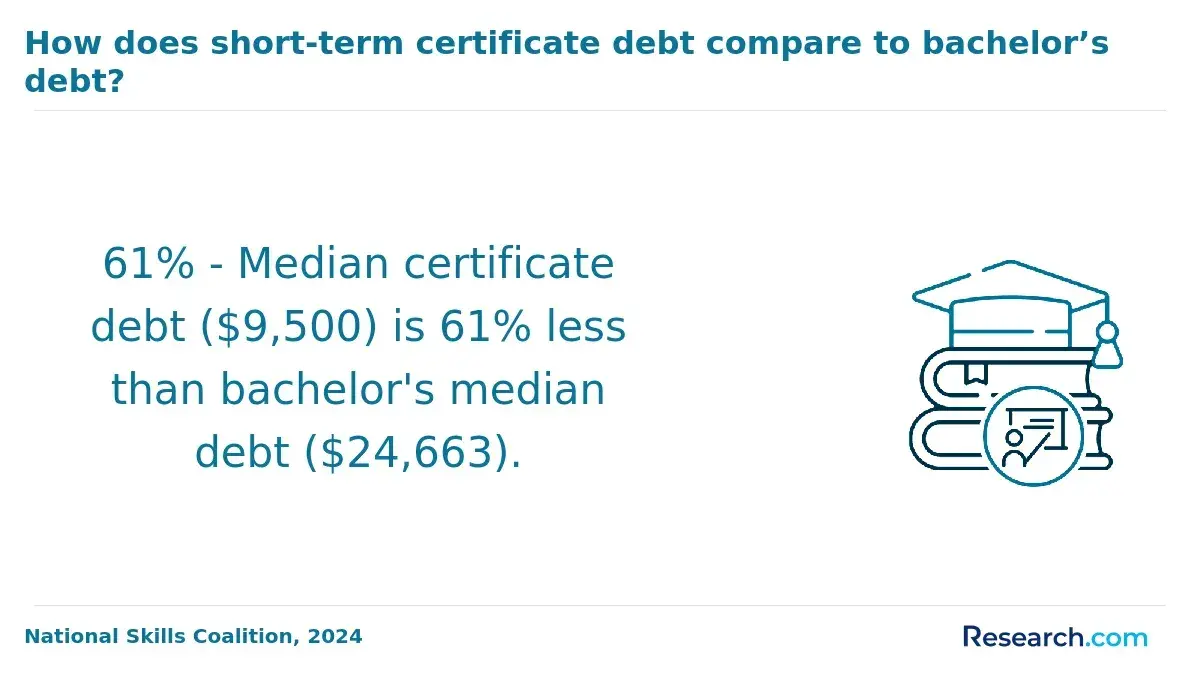
Transfer credits from related fields like sociology or psychology can shorten time-to-degree, providing meaningful cost-efficiency, especially given that a full 120-credit online criminal justice degree often costs around $47,520 compared to approximately $11,540 for on-campus public tuition. Evaluating if the higher online investment justifies potential gaps in in-person internships or networking opportunities is essential.
Prospective students should carefully assess curriculum relevance to state licensing requirements and federal career paths to avoid unnecessary expenses or extended study periods, especially mid-career professionals pivoting within criminal justice sectors.
What are the typical admission requirements and application steps for these programs?
Admission to online bachelor's in criminal justice programs with flexible transfer credit policies requires strategic navigation beyond simply meeting minimum GPA thresholds or submitting transcripts. Most programs expect a minimum of 24 transferable credits and generally maintain transfer GPA floors between 2.0 and 2.5, but the critical friction point lies in credit evaluation. For example, a student transferring from an associate degree in sociology may find that generic course titles are insufficient for direct credit equivalency without providing detailed syllabi or course descriptions to demonstrate overlap with criminal justice content. This documentation process can delay credit approval and extend degree completion timelines.
Transfer limits commonly cap accepted credits between 60 and 75 hours toward the standard 120-credit bachelor's degree, imposing a necessary sequencing of core criminal justice courses post-transfer. This impacts students targeting fields with licensure or professional standards, such as probation officers or emergency management directors, whose occupations are forecasted to grow by 4% and 5% respectively from 2024 to 2034 according to the U.S. Bureau of Labor Statistics. Understanding these practical constraints ahead of enrollment enables better financial and academic planning.
Applicants should anticipate supplying a completed application, official transcripts from all prior institutions, and typically a written statement of intent. English proficiency proof may also be required for non-native speakers, whereas standardized tests like the ACT or SAT are rarely demanded for transfers. Navigating these admission elements pragmatically is critical for working professionals pursuing a cost-efficient, credential-focused pathway into criminal justice careers.
How long does it usually take to finish an online criminal justice bachelor's degree, and what does it cost?
Completing an online bachelor's degree in criminal justice typically requires four years without prior credits, but transfer policies can cut this time considerably. Data from the Community College Research Center, Transfer Outcomes Update 2024, reveals students with an associate degree graduate within six years at a 62% rate, compared to 45% for those without. This gap reflects the strategic advantage of earning an associate degree to avoid extended enrollment and added costs.
Tuition ranges sharply: public online programs usually fall between $10,000 and $30,000 total, while private institutions may exceed $40,000. Effective transfer of credits mitigates these costs by reducing redundant coursework and accelerating degree completion. For instance, a working professional who first earns an associate degree at a community college can save thousands and limit exposure to tuition hikes over multiple years.
Employers in law enforcement, corrections, and forensic fields favor candidates showing steady academic progress, linked to higher completion rates among transfer students. Programs accepting up to 90 prior credits offer the greatest flexibility, minimizing delayed workforce entry due to prolonged schooling or debt. Failing to maximize transfer credits often translates to longer enrollment, increased debt, and slower career advancement.
Opting for programs with flexible credit evaluation aligns educational decisions with workforce demands and financial realities.
What criminal justice careers can graduates pursue, and what education level do they need?
Entry-level roles such as probation officer, police detective, or crime analyst typically require only a bachelor's degree in criminal justice, paired with necessary on-the-job training or certification. However, more specialized or supervisory positions-like federal law enforcement agents or forensic psychologists-demand advanced credentials or graduate degrees, often with licensure requirements. This distinction shapes career trajectory and influences time and financial investment in education.
Employers increasingly value candidates who complete programs efficiently and transfer credits seamlessly, as these factors correlate with faster hiring and workforce readiness. Online programs with flexible transfer policies attract many working adults balancing economic constraints and family responsibilities. Statistics from the National Center for Education Statistics show that 38% of exclusively online criminal justice undergraduates receive Pell Grants, compared to 34% attending in person, illustrating the economic realities affecting program choice.
For those aiming at federal or supervisory roles, a bachelor's degree often serves as a foundation but is insufficient alone. Long-term advancement typically requires ongoing professional development and, in many cases, master's degrees or specialized certifications. Weighing these realistic demands can help students make informed decisions about educational pathways and their alignment with targeted occupations.
What salary ranges and job outlook can criminal justice majors expect in key roles?
Entry-level roles in criminal justice, such as correctional officers, start around $45,000, while experienced detectives and probation officers can earn $90,000 or more. Federal agents like FBI and DEA personnel typically begin near $60,000 but may surpass $100,000 with specialization. Employment growth in protective services, which encompass many criminal justice positions, is projected at 6% through 2032, aligning with average occupational expansion but varies by region.
Career trajectories differ significantly: police officer candidates must navigate academy training and competitive hiring, whereas probation officers' outlook improves with policies favoring rehabilitation over incarceration. Private security and corporate compliance roles often start with lower pay but offer advancement through certifications and practical experience.
Balancing part-time or full-time work alongside online study presents a practical challenge. Data shows 58% of exclusively online criminal justice undergraduates work over 30 hours per week, often prolonging degree completion but reducing income gaps during education.
Transfer credits require careful assessment against specific subfields and certification demands. Delays in course completion risk postponing entry into workforce positions where current legal frameworks and procedural proficiency are critical.
How can students evaluate and choose a reputable online criminal justice program?
Accreditation and state authorization are decisive factors in assessing online criminal justice programs since they affect credit transfer, licensure eligibility, and employer recognition. Regional accreditation, for example, helps ensure that coursework meets federal standards, enabling smoother credit transfers between institutions and meeting prerequisites for graduate certification. Meanwhile, state authorization determines whether a program can legally enroll students residing in certain states; some jurisdictions restrict out-of-state online enrollments or do not accept credits from unauthorized providers.
Evaluating transfer credit policies is essential. Programs with clear articulation agreements and flexible credit acceptance better serve military personnel and working adults by reducing redundant coursework and accelerating degree completion. The surge in fully online undergraduate enrollment at public four-year institutions-up 23% since fall 2019 according to the National Student Clearinghouse Research Center-reflects growing demand for adaptable, transparent transfer pathways.
Curriculum must align with career targets: law enforcement roles require understanding of federal/state regulatory frameworks, forensics, and juvenile justice, while probation or corrections careers demand specialized, practical training. Applied experience through internships or capstone projects remains a key marker of program relevance to employers.
Cost considerations and financial aid access should be weighed alongside graduation rates and employment outcomes. Programs that minimize credit loss and facilitate straightforward credentialing reduce risks of wasted time and resources. Real alumni feedback on transfer challenges or administrative delays offers valuable insight into potential pitfalls that affect workforce entry and career trajectories.
Other Things You Should Know About Criminal Justice
Online criminal justice degrees demand consistent time management due to rigorous reading, research, and writing assignments. Working professionals should expect a workload comparable to traditional programs, including group projects and case studies that may require synchronous participation. Programs with asynchronous coursework and flexible deadlines reduce stress and improve completion rates. Assessing the program's structure before committing is essential, as rigid schedules can conflict with work shifts typical in criminal justice careers.
Employer perception of online criminal justice degrees varies by agency and region but is increasingly neutral when the program is accredited and from a recognized institution. However, some employers may favor candidates with traditional campus experience due to perceived rigor and networking advantages. Candidates should focus on schools with established reputations and opportunities for experiential learning like internships and simulations. Demonstrating practical skills and relevant certifications can offset any employer bias toward online degrees.
Choosing between specialized and general degrees hinges on your career goals. Specialized concentrations (e.g., cybersecurity, forensic science, corrections) align with niche roles and can provide a competitive edge in specific job markets. General degrees offer broader foundational knowledge, ideal for students undecided about focus or seeking flexibility in career paths. Prioritize programs offering hands-on experience in your concentration of choice to increase employability by developing applicable skills rather than purely academic knowledge.
References
- Online Criminal Justice Degrees (Types, Benefits & FAQ) https://www.allcriminaljusticeschools.com/criminal-justice/criminal-justice-online-degree/
- Most Affordable Online Criminal Justice Degrees https://www.affordablecollegesonline.org/degrees/criminal-justice-programs/
- Online Transfer Completion Program for Criminal Justice https://www.niagara.edu/colleges/college-of-arts-and-sciences/online-transfer-completion-program-for-criminal-justice/
- Jobs with a degree in Criminal Justice | Monroe University https://www.monroeu.edu/academics/undergraduate-programs/school-criminal-justice/what-can-you-do-criminal
- Why Transfer into Criminal Justice? | University of Bridgeport https://www.bridgeport.edu/news/transfer-into-online-criminal-justice-program/
- How to Accelerate a Degree in Criminal Justice: Flexible Pathways and Planning Strategies https://www.aiuniv.edu/degrees/criminal-justice/articles/accelerate-online-criminal-justice-degree
- Best Online Associate Degree In Criminal Justice https://www.criminaljusticedegreeschools.com/rankings/best-online-associates/
- Types of Criminal Justice Careers https://www.criminaljusticeprograms.com/criminal-justice-careers/
- What to do With a Criminal Justice Degree - Paladin Security https://paladinsecurity.com/security-careers/become-security-guard-canada/
- Should I Get My Bachelor’s Degree in Criminal Justice Online? | CSU Global https://csuglobal.edu/blog/should-i-get-my-bachelors-degree-criminal-justice-online