2027 Criminal Justice Degrees That Work Best for Agency-Sponsored Students

Co-Founder and Chief Data Scientist
Law enforcement professionals seeking agency sponsorship face a critical bottleneck: selecting a degree program that balances stringent work schedules, evolving operational requirements, and limited institutional flexibility.
As the Urban Institute reported in 2024, over 60% of adult learners prioritize fully online or hybrid formats due to work commitments, signaling a shift that directly impacts degree accessibility for active personnel. Yet, many traditional Criminal Justice programs lag in accommodating qualifications required by agencies, delaying career advancement or jeopardizing eligibility for new roles.
This article identifies the most viable Criminal Justice degrees tailored for agency-sponsored students, focusing on program structure, employer recognition, and retention of professional momentum.
Key Things You Should Know
- Agency-sponsored students face a median program duration of 3.2 years versus 2.5 for independent students, reflecting extended skill integration but higher opportunity costs per the National Center for Education Statistics 2024.
- Employers increasingly prioritize certifications tied to cybercrime and digital forensics, with 42% of federal agencies requiring specialized training beyond degree completion, impacting agency-supported curriculum selection.
- Cost coverage tradeoffs mean agencies often limit tuition reimbursement to public institutions, reducing access to accelerated private programs that yield 18% faster employment outcomes, per the Bureau of Labor Statistics 2024.
Which criminal justice degrees align best with agency-sponsored education and tuition assistance?
The most valuable criminal justice degree programs with agency tuition assistance are those that mesh tightly with the workforce demands of law enforcement agencies. Degrees emphasizing law enforcement administration, forensic science, or homeland security deliver specific skills agencies prize, especially when paired with practicums or internships recognized for on-the-job relevance and promotion eligibility.
Students sponsored by agencies face unique scheduling complexities, such as shift work and deployments, making asynchronous or hybrid formats essential.
A law enforcement officer pursuing a degree part-time benefits from programs with rolling admissions and competency assessments that accelerate progress without interrupting operational duties. Degrees that focus heavily on criminal justice theory or broad policy often fail to align with immediate agency staffing and advancement needs, risking wasted time and resources.
Recruitment challenges compound this need: 69% of agencies in the International Association of Chiefs of Police's 2024 survey reported difficulty filling sworn vacancies, up sharply since 2019. This reality drives agencies to invest in students whose education supports practical competencies linked to promotion within their ranks.
For candidates, verifying accreditation and articulation agreements with their employing agency is mandatory to unlock tuition assistance and maximize ROI.
Effective programs balance credential value and scheduling flexibility without requiring rigid on-campus presence. Degrees tied to recognized certifications, such as POST or forensic credentials, offer tangible returns in employability and career progression.
For those evaluating options, exploring the criminal justice online degree offerings can reveal pathways that match operational realities while leveraging agency sponsorship.
How do agency-sponsored criminal justice programs differ from traditional student-funded pathways?
Agency-sponsored criminal justice degree benefits emerge most clearly in the alignment of education to specific workforce needs, contrasting sharply with traditional self-funded pathways that often lack direct employer integration.
Candidates sponsored by agencies typically pay reduced tuition, such as full-time officers at Kennesaw State University who pay roughly $190 per credit, amounting to about $11,400 for 60 credits post-transfer, and follow curricula designed around immediate tactical and leadership competencies rather than broad academic theory.
This model emphasizes operational flexibility, often including scheduling accommodations for shift work, and provides faster promotional opportunities since coursework dovetails with agency requirements and certification pathways.
However, these benefits come with notable tradeoffs: mandatory service commitments or role restrictions frequently limit geographic or employer mobility after graduation. Additionally, administrative complexities in approval and transfer processes can hinder educational progression more than in traditional programs.
A defining workforce implication is agencies' strategic investment in tuition to reduce turnover and swiftly fill skill gaps in niche areas like cybercrime and community policing. These long-term commitments effectively bind candidates to their sponsoring organizations but offer a stable route to in-demand positions.
In contrast, traditional student-funded programs often provide broader credential options and fewer contractual constraints but without the same direct employer alignment or guaranteed support.
For professionals evaluating these pathways, weighing the balance between upfront cost savings, certification expediency, and post-graduation flexibility is critical. Those seeking alternatives might also explore the landscape of online paralegal certificate programs for varied legal and justice-related career trajectories.
What accreditation and institutional quality standards matter most for agency-sponsored criminal justice degrees?
Regional accreditation recognized by the U.S. Department of Education remains the definitive criterion for agency-sponsored criminal justice degrees, directly impacting officer eligibility for promotions within municipal or state police forces. Departments rejecting degrees without this recognized accreditation often cite insufficient institutional quality criteria for criminal justice programs, which compromises the rigor and relevance expected in law enforcement education.
Beyond general accreditation, program-specific elements such as applied curriculum, internships, and ethical training critically influence an agency's acceptance of a degree. Agencies expect degrees to deliver practical criminal justice skills and leadership capabilities grounded in policy analysis and research literacy, neither of which are assured by vocational or nationally accredited programs that lack comprehensive oversight.
Agencies also tie tuition reimbursement and credential recognition under collective bargaining agreements to meeting strict accreditation and program relevance standards. This dynamic creates a real-world tradeoff. Degrees failing to meet these benchmarks risk not only denied reimbursements but stalled advancement, despite time and effort invested.
For prospective students balancing workforce realities, understanding institutional quality criteria for criminal justice programs is essential. Some may explore alternative pathways, such as an online master's degree in forensic psychology, which offers specializations related to criminal justice through regionally accredited institutions with measurable outcomes and workforce alignment.
Confirming both institutional accreditation and program-specific value ensures education functions as a reliable lever for career mobility within law enforcement agencies rather than a costly detour.
Which criminal justice degree levels (associate, bachelor's, master's) fit common agency career tracks?
Associate degrees in criminal justice for law enforcement careers are practical entry points but often limit candidates to frontline roles like patrol or corrections deputies. Such degrees meet minimum hiring standards in many municipal or regional agencies, allowing faster onboarding if combined with mandatory academy training. However, they typically lack the specialization or advancement potential that employers seek beyond initial recruitment.
Bachelor's and master's criminal justice degrees for federal agency roles reflect a different trajectory focused on investigative specialties, supervisory positions, and policy or research capacities.
Agencies increasingly require a bachelor's degree for mid-level investigative or community outreach roles, emphasizing legal knowledge and management skills. Master's programs further develop strategic leadership abilities vital for command ranks, intelligence work, and multi-jurisdictional policy development.
Between 2019 and 2024, certificate programs in criminal justice and law enforcement rose by 31%, illustrating agencies' preference for targeted upskilling options that supplement degrees and expedite credential refreshing. These certificates offer cost-effective, focused training to address specific operational skills without the time and expense of full degrees.
Choosing the right educational path depends on career urgency and agency requirements:
- If immediate field entry is critical, an associate degree or certificate offers the quickest route.
- For long-term advancement, bachelor's and master's degrees align better with promotional frameworks and specialized roles.
Students and professionals should also consider complementary educational options, such as an online electrical engineering bachelor degree for veterans, to diversify skills relevant to broader criminal justice technology and infrastructure roles.
How do online criminal justice programs compare to campus-based options for working agency professionals?
Choosing between online and campus criminal justice programs requires weighing flexibility against experiential depth and employer expectations. Online formats serve officers or analysts juggling irregular shifts or rural duties, enabling study without pausing work but frequently missing immersive elements like ride-alongs or live simulations.
This absence can challenge skill verification, especially since many law enforcement agencies and corrections departments favor candidates demonstrating applied field experience and professional networking.
Campus programs demand fixed schedules and commuting but provide access to internships and faculty guidance, crucial for developing practical skills and stronger agency ties. Agency-sponsored students often face a tradeoff: cost efficiency versus the value of in-person training.
For instance, New Mexico's Opportunity Scholarship covering full tuition for first-time in-state associate or bachelor's students at institutions like Western New Mexico University effectively reduces financial barriers, making campus options more viable when available locally.
Officers needing career advancement into investigative or supervisory roles may benefit from blended models combining online coursework with mandatory on-site practica, balancing operational continuity and comprehensive skills. Those relying solely on online degrees should actively secure supplemental field experiences through agency collaborations to offset inherent limitations and meet employer priorities.
What core coursework and specialized concentrations benefit law enforcement, corrections, and investigative roles?
Knowledge in criminal law, criminology, investigative techniques, and criminal procedure forms the operational backbone for roles in law enforcement, corrections, and investigations. These core subjects establish critical understanding of legal systems, suspect behavior, and evidence protocols but require augmentation through specialized tracks like forensic science, cybersecurity, or correctional administration to meet distinct job demands.
For instance, law enforcement personnel benefit concretely from courses in forensic analysis and constitutional law, which sharpen investigative accuracy and protect civil liberties during evidence gathering.
Corrections staff focusing on offender rehabilitation and behavioral psychology can more effectively manage inmate populations and reduce recidivism risks. Investigators engaged in digital forensics and cybercrime develop essential skills tackling complex, tech-driven offenses increasingly prevalent in the field.
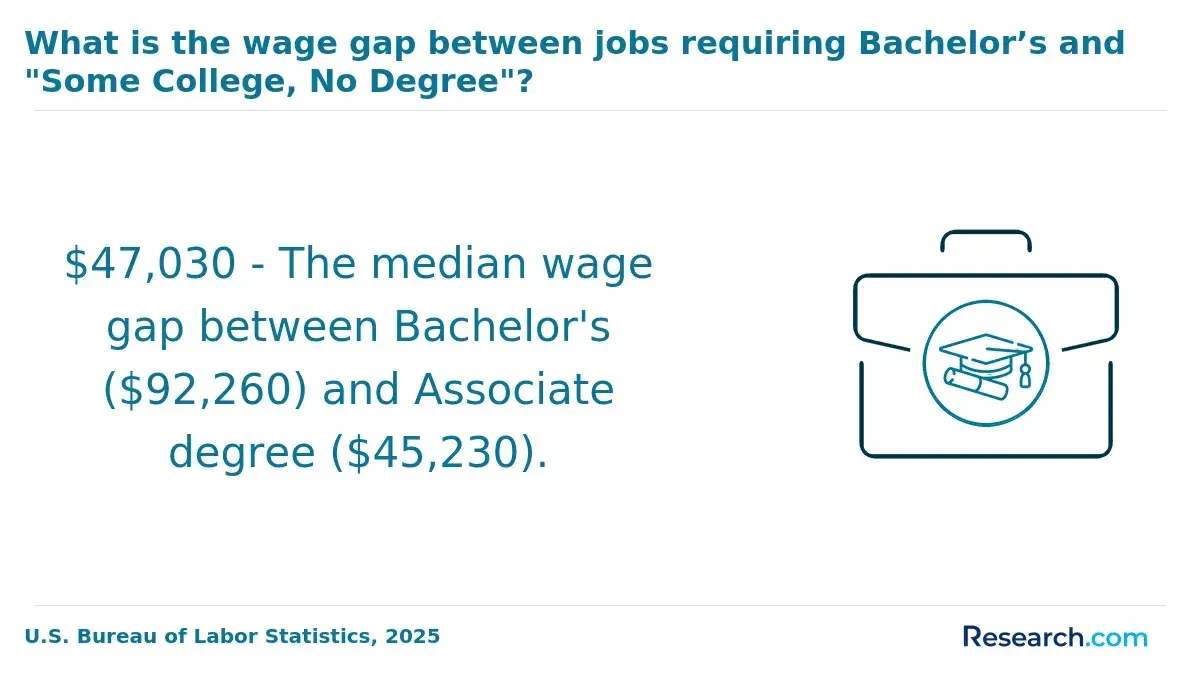
The pay differential observed between bachelor's degree holders and those with partial college or associate credentials, about $24,500 annually, reflects employer valuation of comprehensive academic preparation combined with applicable specialization.
Agency-sponsored candidates should weigh programs offering a balance of theory and hands-on experience, such as internships with law enforcement or correctional agencies. Practical exposure addresses common barriers like limited real-world context and cultivates competencies that smooth the transition into positions requiring immediate operational readiness.
What are typical admission requirements and credit transfer policies for agency-sponsored criminal justice students?
Admission criteria for agency-sponsored criminal justice candidates emphasize prior academic and professional credentials over standardized testing, reflecting the operational realities of working professionals.
Agencies typically require official transcripts with cumulative GPAs ranging from 2.5 to 3.0 and proof of high school completion or equivalent. Waivers for SAT or ACT scores are often negotiated to accommodate active workforce status. Application materials usually include recommendation letters from agency supervisors that attest to job relevance and readiness for advanced academic work.
Transfer policies frequently recognize a wide array of community college, military, and vocational credits, including law enforcement certifications, allowing students to leverage existing qualifications. Some regionally accredited programs accept up to 90 transfer credits, accelerating degree completion.
However, transfer credit approval depends on detailed course equivalencies and accredited institution status, necessitating thorough documentation of prior learning and syllabi for agency applicants.
In practice, criminal justice professionals balancing unpredictable shifts benefit most from programs with multiple annual start dates and asynchronous coursework, over 85% of well-established online bachelor's programs offer six or more start opportunities annually, enhancing flexibility and reducing attrition risk.
Successful navigation of both admissions and transfer credit procedures critically depends on proactive agency support and academic advising tailored to minimize administrative delays and maximize credit relevance.
How long do criminal justice degrees usually take for full-time and part-time agency employees, and what do they cost?
Achieving advanced credentials in criminal justice requires balancing educational demands with operational realities. Full-time agency employees generally complete bachelor's degrees in four years, but part-time students often extend to six to eight years due to shift commitments and workload.
Graduate degrees, necessary for many leadership roles, typically take two to three years full-time and up to five years part-time, complicating skill relevance and promotion timing for officers.
Tuition varies considerably. Public in-state rates average $5,000 to $15,000 annually, while private and out-of-state costs may double or triple those figures. Tuition assistance programs reduce direct costs but often include service obligations that restrict job mobility. For instance, a detective pursuing a master's in public administration must weigh extended study against potential promotion speed, contingent on employer valuing advanced credentials.
Promotions to chief or warden increasingly require master's-level qualifications emphasizing criminal justice or related fields. Agencies favor candidates able to integrate degree progress with professional development to minimize lost time. Program flexibility, such as asynchronous delivery or condensed terms, better accommodates irregular law enforcement schedules.
Employers and students alike confront tradeoffs where prolonged part-time enrollment may delay upward mobility, but strategic partnerships linking education with career pathways can enhance return on investment.
What criminal justice careers, promotions, and specialized assignments are unlocked or advanced by these degrees?
Advancement within criminal justice increasingly hinges on credentials tied to specialized fields such as cyber investigations, forensics, and intelligence analysis. Federal and local law enforcement agencies expanded cybercrime roles by roughly 35% between 2018 and 2024, while overall sworn officer positions grew just 5%. This disparity signals a clear preference for candidates with targeted education beyond traditional law enforcement training.
Officers equipped with degrees focused on cyber forensics or intelligence analysis often secure faster promotions and preferential placement in specialized units, including fusion centers and federal task forces.
These units prioritize analytical skills and technical expertise, making degree specialization a practical necessity rather than an optional enhancement. Without academic credentials in these areas, candidates may face barriers to detective or supervisory roles, especially in agencies enforcing formal education minimums.
Real-world constraints also affect degree completion. Balancing shift work with academic demands challenges students, emphasizing the value of asynchronous, competency-based programs aligned with 24/7 operational schedules.
Graduates with credentials in forensic digital investigations or intelligence analytics tend to achieve higher-impact assignments and promotions within 3 to 5 years, reflecting the critical intersection of schedule flexibility and curriculum relevance.
Key considerations for prospective students include:
- Targeting degree programs with recognized specialization to meet employer requirements in cyber and analytical roles
- Assessing program delivery formats that accommodate irregular work hours
- Understanding that lacking specialized credentials may limit advancement opportunities despite operational experience
How do salaries, job outlook, and certification or licensing requirements affect the value of criminal justice degrees?
Degree programs in criminal justice significantly vary in value depending on how they integrate professional certification and licensure requirements. For example, police officer positions mandate state-specific peace officer certification requiring academy completion and exams, making degrees that grant academy credit far more efficient. Students without such credit face overlapping costs and extended timelines, diluting employment readiness and salary potential.
From a workforce perspective, agencies sponsoring education must prioritize programs that reduce tuition through substantial transfer credits and prior learning assessments. Some online programs accept up to 90 transfer credits and align academic credit with mandatory training, lowering tuition by 30-60%. This approach allows agencies to expedite deployment of qualified personnel without inflating budgets.
Key practical considerations include:
- Job growth rates in law enforcement and related roles are moderate, around 5% to 7% through 2032, indicating steady but competitive hiring environments.
- Correctional officer wages tend to be lower than police officers, influencing return on educational investment.
- Prioritizing programs with explicit academy credit policies minimizes duplicative training and accelerates licensure eligibility.
Balancing degree affordability with licensure alignment is critical. Agencies and students alike benefit most from criminal justice degrees that strategically integrate training credentials, optimize cost-efficiency, and meet realistic employment windows.
Other Things You Should Know About Criminal Justice Degrees
In 2027, agency-sponsored criminal justice programs typically prioritize practical experience to enhance real-world skills. Many programs integrate internships or fieldwork as essential components, complementing coursework. This hands-on approach helps students meet employer expectations and prepares them effectively for specialized roles.
Employers in criminal justice increasingly prioritize degree level and relevant coursework over institutional prestige. A bachelor's or master's degree with applied skills and certifications can outweigh a diploma from a more prestigious but less practical program. For agency-sponsored students, focusing on programs accredited for their applied justice curriculum and connections to law enforcement networks delivers a clearer career advantage than reputation alone.
Accelerated programs allow agency-sponsored students to complete degrees faster but often at the cost of increased weekly workloads and less time for critical reflection or practical skill development. Traditional-paced programs better accommodate shift work and offer a steadier learning rhythm, which supports long-term retention and deeper understanding. Students should prioritize program pacing based on their availability and the complexity of the skills they need rather than speed alone.
Specializations such as cybersecurity, forensic science, or corrections administration provide targeted expertise that agencies value for advanced roles and promotions. However, a generalist criminal justice degree offers broader career flexibility, especially for personnel uncertain about their ultimate path. Agency-sponsored students should weigh current job goals carefully: if a promotion requires specific skills, a specialization is preferable; if long-term mobility is a priority, a generalist track may serve better.
References
- Best Criminal Justice Degree Programs for 2026 | PoliceOfficer.org https://policeofficer.org/degree-programs/criminal-justice/
- Online Criminal Justice Degree & Career Information https://www.criminaljustice.com/online-degrees/
- Earn An Online Criminal Justice Degree | OEDb.org https://www.oedb.org/rankings/online-criminal-justice-programs/
- Top Online Criminal Justice Degrees https://www.criminaljusticeprograms.com/online-criminal-justice-degrees/
- Jobs with a degree in Criminal Justice | Monroe University https://www.monroeu.edu/academics/undergraduate-programs/school-criminal-justice/what-can-you-do-criminal
- Undergraduate Programs https://www.utoledo.edu/programs/undergrad/criminal-justice
- Why Transfer into Criminal Justice? | University of Bridgeport https://www.bridgeport.edu/news/transfer-into-online-criminal-justice-program/