2027 Best Online Bachelor's in Criminal Justice for Working Adults

Co-Founder and Chief Data Scientist
Balancing full-time work with educational advancement poses a critical challenge for professionals seeking a bachelor's in criminal justice, especially when rigid class schedules and geographic constraints limit access. Recent data from the National Center for Education Statistics reveals that over 45% of online bachelor's degree earners in the U. S. are adult learners prioritizing flexibility to accommodate employment and family obligations.
This shift underscores a growing demand for programs that deliver rigorous content without sacrificing career momentum, as delayed credentialing can hinder eligibility for promotions and specialized assignments.
This article evaluates the leading online bachelor's in criminal justice programs designed expressly for working adults, focusing on admissions flexibility, curriculum relevance, and career outcomes to guide strategic enrollment decisions.
Key Things You Should Know
- Bachelor's in criminal justice graduates face employment competition intensified by a 15% workforce growth predicted through 2031 by the U.S. Bureau of Labor Statistics, pressing candidates toward programs with direct law enforcement partnerships.
- Programs emphasizing experiential learning tie closely to employer hiring preferences; nearly 70% of public safety agencies prioritize internships or practicum experience, shifting hiring toward applicants with demonstrable field skills.
- Online offerings reduce median completion time by up to 20%, yet cost premiums averaging 12% over traditional formats create critical budgeting decisions impacting return on investment for working adults balancing income stability and tuition.
What makes an online bachelor's in criminal justice a good fit for working adults?
Online bachelor's in criminal justice programs for working adults address scheduling challenges inherent to law enforcement and legal support roles by offering flexible, asynchronous classes with condensed modules. This structure reduces semester length, enabling students to maintain full-time employment while pursuing their degrees.
Cost remains a significant factor; the National Center for Education Statistics identifies the average annual expense for an online social sciences bachelor's as $13,676, reflecting the financial constraints of professionals who cannot afford prolonged unpaid leave or excessive student debt. Budget-conscious students must weigh tuition costs against program speed and employer tuition assistance options to manage opportunity costs effectively.
Programs emphasizing applied skills-such as case analysis, digital forensics, and crime database proficiency-align closely with employer demands for verifiable competencies, increasing job readiness for positions like crime analyst or probation officer. For example, a corrections officer advancing through a program that credits prior experience or certifications can bypass redundant coursework, minimizing time away from work.
Additional practical considerations include access to industry networking and robust academic advising, critical for career mobility. Prospective students exploring accredited online criminal justice associate degree programs may find that strong support services markedly influence successful navigation of rigorous coursework alongside professional responsibilities.
How does an online criminal justice bachelor's compare to a campus-based program?
For working adults, choosing between online and campus-based criminal justice programs hinges on urgent workforce realities and the balance of flexibility versus experiential learning. Accelerated online programs, often compressing degree completion into 2 to 3 years compared to four on-campus, offer a critical advantage for professionals needing timely credentials to advance or shift roles within law enforcement or corrections.
This scheduling agility complements irregular work hours common in police or probation roles, enabling asynchronous study and immediate application of concepts in the field; key benefits of an online criminal justice bachelor's degree for working adults.
However, the tradeoff involves limited access to in-person simulations, internships, and direct faculty engagement that campus programs uniquely provide.
These hands-on experiences are instrumental in cultivating investigative skills and leadership qualities valued by employers, especially in complex or specialized positions relying on networking and local agency connections. Consequently, students in online tracks must proactively seek external field opportunities to mitigate these gaps.
When evaluating these delivery modes, consider these factors:
- Online formats accelerate degree timelines and accommodate nontraditional schedules but require disciplined self-direction and strategy to build practical experience.
- Campus programs provide richer mentorship and experiential learning but demand significant time and geographic commitments that can delay immediate workforce integration.
- Employers often weigh real-world experience and networking capacity heavily, which can be more directly fostered through campus-based training.
Prospective students balancing employment should also explore complementary options such as paralegal courses online for adjacent skill development. The decision on program format must align with both professional timing needs and the tradeoffs in hands-on experiences vital to longer-term career trajectories in criminal justice.
Which types of schools offer the most reputable online criminal justice degrees?
Employers in law enforcement and corrections prioritize candidates with degrees from regionally accredited public universities because these programs meet established academic and professional standards. Verification of accreditation through bodies like the Council for Higher Education Accreditation (CHEA) often determines eligibility for federal financial aid, veteran benefits, and crucial certifications.
Graduates from nationally accredited or unaccredited schools frequently face barriers to employment and advanced training opportunities, making the choice of institution a practical decision with long-term consequences.
Working professionals evaluating online criminal justice degree programs from accredited universities must weigh affordability against credibility. Kennesaw State University exemplifies scalable cost-efficiency with a confirmed rate of $190 per credit hour, significantly lower than private or out-of-state alternatives charging upwards of $300-$400 per credit. This impacts return on investment and debt management, especially for adult learners balancing career and education.
Best regionally recognized schools for online criminal justice degrees invest in strong online platforms, faculty with practical field experience, and connections enabling internships with criminal justice agencies. Such integration provides critical real-world exposure that purely academic programs often lack. Practical curriculum emphasis supports skills directly relevant to employer needs.
Prospective students might also consider alternative fields with parallel affordability advantages and career viability by reviewing options like Spanish degrees online. This comparative perspective aids in aligning educational investment with workforce demands.
What accreditation should an online criminal justice bachelor's program have?
Regional accreditation for online criminal justice programs is fundamental in preserving degree value, transferability, and eligibility for federal financial aid. Without it, graduates often face barriers in job markets, as many law enforcement and corrections employers mandate degrees from regionally accredited institutions.
Programs lacking this recognition may hinder federal employment qualification or advanced credentialing. National or program-specific accreditations like those from the Academy of Criminal Justice Sciences (ACJS) enhance curriculum relevance but do not substitute for regional accreditation.
A concrete example concerns working adults leveraging prior learning credits. Southern New Hampshire University accepts 30 such credits at $354 each, reducing the tuition balance to $31,860. This cost saving depends on transferring credits within a regionally accredited framework, which many online programs lack.
For students comparing options, verifying accreditation status through recognized bodies such as the Higher Learning Commission can reveal potential financial and professional obstacles early on.
Prospective students should weigh these accreditation considerations against their career path and potential graduate study plans to avoid non-transferable credits and wasted effort. Because regional accreditation aligns more reliably with employer expectations and graduate program admissions, it remains the critical benchmark when evaluating online criminal justice degree accreditation standards.
For related insights into other fields, see what do sports analysts do.
What courses and concentrations are typically included in online criminal justice majors?
Online criminal justice programs are structured around foundational knowledge with concentrations that reflect real sector demands, including law enforcement, forensic science, and homeland security. These specializations prepare students for specific operational environments-from federal counterterrorism units to local corrections facilities-by integrating applied skills like evidence handling and cybercrime investigation.
Students juggling employment benefit from curricula focused on actionable competencies such as report writing and technology relevant to policing and security roles. For instance, a homeland security concentration equips graduates for emergency response roles requiring coordination across government and private sectors, highlighting the necessity of both policy understanding and practical execution.
Programs often incorporate policy analysis and legal frameworks that align with public administration and legal support careers, while research methods courses enable graduates to contribute meaningfully to data-driven public safety strategies. This analytical capacity reflects employers' growing reliance on evidence-based decisions to enhance community outcomes.
Considering the financial aspect, data from Affordable Colleges Online indicates an average annual tuition of $13,676 for online social science bachelor's programs. This cost efficiency becomes a key factor for working professionals evaluating education ROI relative to potential wage growth in various criminal justice roles.
What are the admission requirements for online bachelor's programs in criminal justice?
Admission criteria for online bachelor's degrees in criminal justice frequently reflect the balance between academic rigor and practical accessibility for working adults. A high school diploma or GED is standard, with many programs requiring a minimum GPA between 2.0 and 3.0 to screen for basic readiness.
Some institutions still request SAT or ACT scores, though these are often waived for applicants who bring relevant professional experience or previous college credits. Personal statements focusing on career objectives remain common, revealing a candidate's understanding of how the degree serves tangible workforce goals.
The field's sensitivity to public safety necessitates additional hurdles such as background checks and verification of time management skills. Employers typically value applicable work experience, such as in law enforcement or corrections, which some programs request evidence of in the form of resumes.
Managing full-time employment while enrolled demands reliable internet and technological proficiency, often confirmed through assessments or orientations before full admission.
Transfer credit policies also impact degree length and affordability, with many programs accepting 30 to 60 semester hours from accredited sources. Given projections like the U.S. Bureau of Labor Statistics' 3% growth in police and detective occupations and 6% in private investigation through 2032, prospective students must weigh admissions flexibility against alignment with labor market requirements.
Programs that accommodate adult learners realistically reduce barriers but may impose tradeoffs in curriculum pace or support. The choice of degree pathway influences not only employability but the ability to pivot efficiently within a competitive criminal justice labor market.
How long does it take to finish an online criminal justice bachelor's while working?
Completing an online bachelor's in criminal justice while working full-time realistically requires four to six years for most adults, depending on course load flexibility and prior credits. Accelerated programs, often leveraging credit for police academy training or related experience, can shorten this to around three years but demand significant weekly study time not always feasible alongside shift work.
Employers in criminal justice fields frequently weigh practical, on-the-job skills as heavily as formal education, so spreading coursework to maintain income and job performance is usually more strategic than rushing degree completion.
Consider a patrol officer aiming to become a detective: pursuing the degree part-time over five years allows steady progression without jeopardizing financial stability or wellness.
The median salary of $91,610 for detectives reported by Forbes Advisor aligns with the value placed on incremental skill and credential accumulation rather than hastened graduation. Attempting full-time study on top of demanding law enforcement hours often leads to burnout, undercutting both academic success and professional effectiveness.
Key operational factors include:
- Access to asynchronous classes to fit irregular shifts.
- Institutional credit transfer policies recognizing prior training.
- Employer support for study time and financial aid options.
- Balancing course workload to avoid income loss or fatigue.
The convergence of education and experience forms the practical foundation employers expect. Therefore, a paced approach aligned with workplace realities generally yields the most sustainable advancement in criminal justice careers.
What does an online criminal justice degree cost, and how can adults pay for it?
Choosing an online criminal justice degree demands careful evaluation of cost structures tied to program length, residency, and institutional policies. Tuition rates typically range from $300 to $600 per credit hour, with total expenses between $15,000 and $40,000. Accelerated tracks may cost more upfront but can shorten time-to-degree, balancing higher per-credit prices against quicker entry into the workforce.
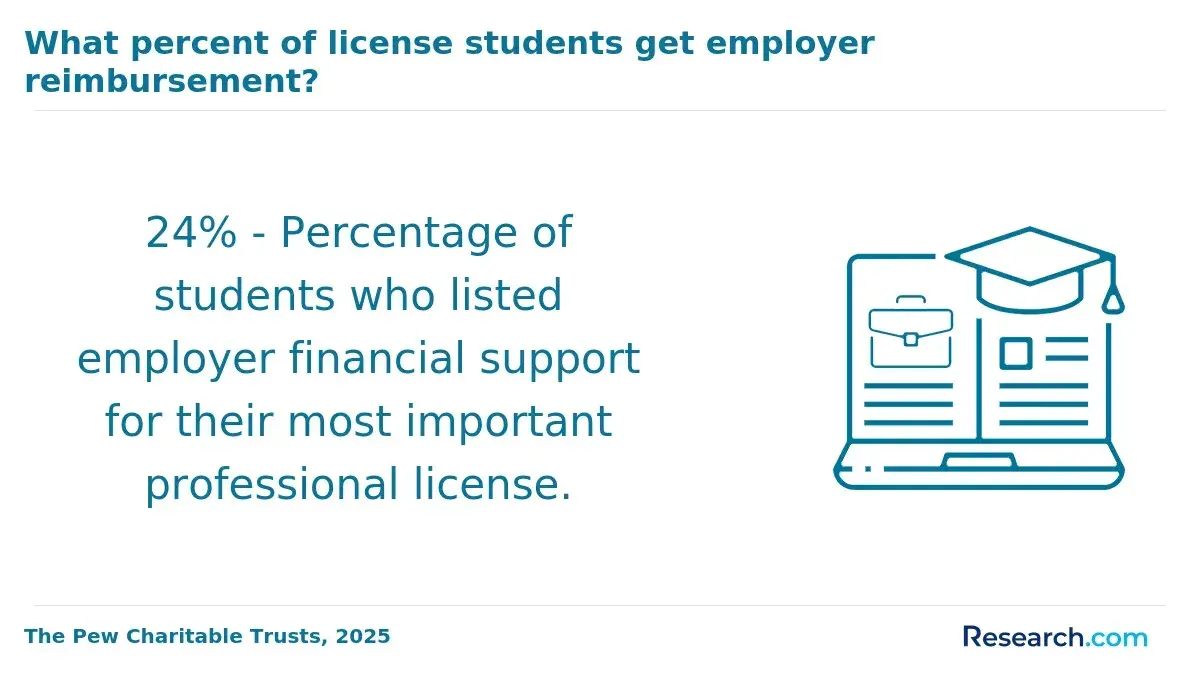
Funding often combines federal aid-like Pell Grants and Direct Loans-with employer tuition assistance, particularly relevant for those already employed in law enforcement or legal services. Public agencies may offer education reimbursement conditional on continued service after graduation, while veterans should consider GI Bill and Yellow Ribbon benefits.
Programs offering tuition guarantees stabilize financial planning by preserving initial cost rates across the program's duration, mitigating risks of unexpected tuition hikes-especially critical for adults facing variable incomes within criminal justice careers.
Graduates' employment often lands in public or nonprofit sectors where salaries may be modest relative to student debt. Prospective students should weigh transparent tuition models and debt management strategies with available aid to optimize return on investment amid competitive labor market conditions.
What careers can you pursue with an online criminal justice bachelor's degree?
A criminal justice bachelor's degree equips graduates with foundational knowledge and practical skills necessary for roles ranging from law enforcement to cybersecurity.
However, employer expectations are shifting: specialized expertise in cybercrime prevention and data privacy now significantly improves employability, particularly for positions like cybersecurity analyst or federal agent. This specialization represents a crucial pivot point, as rising digital threats reshape workforce demand.
Graduates targeting corrections or probation roles should anticipate additional state certification or licensing requirements after graduation. Federal law enforcement careers tend to be highly competitive and often require advanced degrees or specific certifications beyond a bachelor's. For example, a working adult pursuing a federal agent role might face multiyear timelines due to these extra prerequisites.
Economic considerations are pivotal. Western Carolina University's online program provides an affordable annual tuition of $6,249, with graduates earning an average of $53,478 per year, balancing cost with realistic salary expectations. For many working adults, integrating internships or agency partnerships within their education is essential to meet employer demands for hands-on experience.
Understanding these operational factors helps align degree choices with long-term goals, minimizing surprises that slow career progress. Selecting a program that integrates practical training while addressing state or federal credentialing hurdles is vital for a strategic career pivot into criminal justice fields.
What are the salary expectations and job outlook for criminal justice graduates?
Salary outcomes for criminal justice graduates hinge heavily on role specificity and geographic factors, with median annual wages around $67,000 but wide fluctuations depending on position and location.
For instance, probation officers typically earn near $56,000, while law enforcement managers exceed $95,000, reflecting varying employer demands and responsibility levels documented by the U.S. Bureau of Labor Statistics 2024 data. Employment growth at 7% through 2032 matches average occupational expansion, but opportunities and compensation differ significantly across regions and specialties.
Working adults who accelerate degree completion reduce time out of the workforce and debt accumulation, a critical consideration when balancing earning needs with education. Programs permitting up to 90 transferred credits, such as Lamar University's online BS in Criminal Justice, allow students to focus on completing 30 credits at $314 per credit. This setup minimizes disruption and expedites readiness for advancing or pivoting careers.
Entry-level roles, often starting near $40,000, demand practical experience and certifications alongside degrees, while federal or managerial paths require additional qualifications that justify salaries from $60,000 to $80,000 or more. Geographic factors play a role: urban and federal positions tend to pay more but may entail longer commutes or relocation, complicating personal and financial tradeoffs.
To optimize outcomes, students should prioritize transfer-friendly programs, secure relevant internships or agency experience, and research local labor markets carefully. This pragmatic approach addresses the tension between educational investment and realistic employment prospects in the criminal justice field.
Other Things You Should Know About Criminal Justice
Balancing a full-time job with an online criminal justice degree requires careful time management because these programs often include complex case studies, research projects, and discussion participation. Many programs offer asynchronous classes, which provide schedule flexibility, but adult learners must still commit 15 to 20 hours per week to coursework. Prioritize programs with clear timelines and streamlined coursework designed for working adults to reduce risk of burnout and incomplete assignments.
Employer acceptance of online criminal justice degrees varies by agency and sector. Large law enforcement organizations and federal agencies tend to prefer degrees from programs with regional accreditation and some in-person components, such as internships or field work. Public safety employers often scrutinize program rigor and may prioritize candidates with practical experience over the degree format alone, so choosing programs with strong employer connections and applied learning opportunities enhances hiring prospects.
Choosing between specialization and a broad criminal justice degree depends on your career goals and the job market segment. Specializations like cybersecurity or forensic science can increase competitiveness in niche roles but limit flexibility if you want to shift fields later. A general criminal justice degree offers wider job options but may face higher competition. For working adults seeking career pivot options, a balanced curriculum with electives tailored to market demands is advisable to maintain adaptability.
In 2027, several accredited institutions offer online bachelor's programs in criminal justice specifically designed for working adults. These programs include flexible schedules, allowing students to balance work and study. Notable schools include Arizona State University, University of Cincinnati, and Penn State World Campus, all highly recognized for their comprehensive curriculum and industry relevance.
References
- Online Bachelor’s Degree in Criminal Justice | Warner Pacific https://www.warnerpacific.edu/programs/criminal-justice/
- Criminal Justice Careers | Accredited Schools Online https://www.accreditedschoolsonline.org/criminal-justice-degree/careers/
- Top Online Criminal Justice Degree https://www.onlinecolleges.net/rankings/best-online-bachelors-criminal-justice-degree-programs/
- Top Online Criminal Justice Degrees https://www.criminaljusticeprograms.com/online-criminal-justice-degrees/
- Earning a Criminal Justice Degree Online | University of Bridgeport https://www.bridgeport.edu/news/earning-a-criminal-justice-degree-online/
- Should I Get My Bachelor’s Degree in Criminal Justice Online? | CSU Global https://csuglobal.edu/blog/should-i-get-my-bachelors-degree-criminal-justice-online
- Online Bachelor's Degree Criminal Justice https://www.umgc.edu/online-degrees/bachelors/criminal-justice
- Guide To Criminal Justice Degrees And Majors https://www.criminaljusticedegreeschools.com/degrees/
- How Quickly Can You Get a Degree in Law Enforcement? https://golawenforcement.com/articles/how-long-does-it-take-to-get-a-degree-in-law-enforcement/
- Most Affordable Online Criminal Justice Degrees https://www.affordablecollegesonline.org/degrees/criminal-justice-programs/