2027 Online Criminal Justice Degrees for Students With Prior Military Training

Co-Founder and Chief Data Scientist
Professionals transitioning from military service into criminal justice roles often confront the challenge of aligning their operational skills with formal academic credentials required for advancement. This friction intensifies given the industry's demand for flexible education models that respect prior training yet provide comprehensive theoretical frameworks.
According to the National Center for Education Statistics, over 40% of postsecondary students in 2024 were adult learners balancing work, family, and education, highlighting a growing reliance on online programs that accommodate irregular schedules and experiential credit. Understanding how online degrees tailor pathways for veterans becomes essential for strategically navigating career mobility and employer expectations.
This article examines the most relevant online criminal justice programs designed explicitly for individuals with prior military experience, focusing on admission flexibility, credential recognition, and career outcomes to aid informed decision-making.
Key Things You Should Know
- Military training credits can cover 30-50% of degree requirements in criminal justice, yet inconsistent credit acceptance across institutions forces students to extend timelines, increasing total educational costs by an average of 20% according to the National Center for Education Statistics.
- Employers in law enforcement increasingly prioritize candidates with online criminal justice degrees demonstrating applied military skills integration; however, 42% of surveyed agencies require supplemental credentials beyond a bachelor's for supervisory roles, impacting advancement paths.
- Accelerated online programs leveraging military experience reduce time-to-degree by up to 40%, but tradeoffs include limited availability of specialized electives and reduced networking opportunities critical for civilian career transitions, according to American Council on Education data.
What is an online criminal justice degree and how does prior military training apply?
Military training offers a distinct advantage when pursuing an online criminal justice degree for veterans by providing transferable skills in leadership, discipline, and tactical operations, often recognized for academic credit. This can substantially shorten degree duration and reduce costs, enabling veterans to enter law enforcement or federal agencies more quickly.
Employers prefer candidates combining military experience with formal education because it signals both practical readiness and theoretical understanding. However, students must scrutinize each program's transfer military training to criminal justice programs policy, as inconsistent credit recognition—often guided by the American Council on Education (ACE) recommendations—can unexpectedly extend degree timelines.
For example, a Marine Corps veteran aiming for a civilian police officer role benefits from programs that integrate prior military coursework, facilitating faster state certification. Given the Bureau of Labor Statistics forecasts a 7% growth in police and detective roles with roughly 63,000 annual vacancies, aligning educational choices with military experience sharply improves employability.
Programs that accommodate veterans typically offer flexible scheduling to manage transition and work-life balance challenges. Yet, translating specialized military skills, such as intelligence or cybersecurity, into criminal justice credit remains limited without additional targeted credentials.
Prospective students should evaluate how well their military background aligns with program curricula and credit practices to optimize their pathway. More detailed analyses of options can be found through resources like the criminal justice associate degree online guide.
How do online criminal justice programs compare to campus-based options for military students?
Military students weighing online criminal justice degrees for military students must consider how program format impacts practical career outcomes amid distinct workforce demands. Online programs offer essential flexibility by removing geographic and scheduling barriers, vital for service members managing deployments or transitions.
However, this flexibility may come at the cost of limited access to embedded practicum opportunities, which are critical in criminal justice roles that emphasize hands-on experience and often require security clearances.
Campus versus online criminal justice programs for veterans presents a tangible tradeoff: on-campus programs connect students directly with local law enforcement agencies for internships, accelerating clearance processes and providing indispensable field exposure.
Veterans targeting federal policy or remote analytic careers might, conversely, leverage online programs without sacrificing career trajectory, assuming they proactively secure practical experience.
A 2024 Council on Criminal Justice estimate that veterans constitute 8-10% of the incarcerated U.S. population underscores the complex social and workforce context influencing employer preferences.
Criminal justice employers often prioritize candidates with verified, site-specific experience; thus, program reputation and embedded experiential components factor heavily in hiring decisions.
Veterans pursuing cost-effective pathways may explore options such as the cheapest ABA-approved paralegal programs, which illustrate budget-conscious pathways within adjacent legal fields.
Choosing between program types requires weighing immediate accessibility and affordability against the long-term value of mentorship, local agency ties, and experiential learning that enhance employability in criminal justice professions.
What admission requirements and transfer-credit policies affect applicants with military training?
Military experience creates a mixed landscape for applicants seeking online criminal justice degrees, where transfer credit policies and admission criteria decisively shape educational timelines and costs. Transfer credit evaluations prioritize military training closely aligned with criminal justice competencies, but the acceptance of credits varies widely, typically capping between 30 and 60 credits.
For instance, a veteran transitioning from military law enforcement specialties might receive significant credit, expediting degree completion, whereas someone from a combat arms background often faces additional coursework requirements to cover foundational criminal justice concepts. This differentiation directly influences mid-career professionals aiming for accelerated academic progress.
Admission requirements for online criminal justice degrees with military experience generally include official military transcripts like Joint Services Transcript (JST) or Community College of the Air Force (CCAF) records alongside minimum GPA thresholds of approximately 2.5 to 3.0.
Additionally, due to the sensitive nature of many criminal justice roles, verification of U.S. citizenship and background checks are frequent prerequisites. Military backgrounds sometimes give candidates an edge by evidencing discipline and eligibility for security clearances within admissions committees.
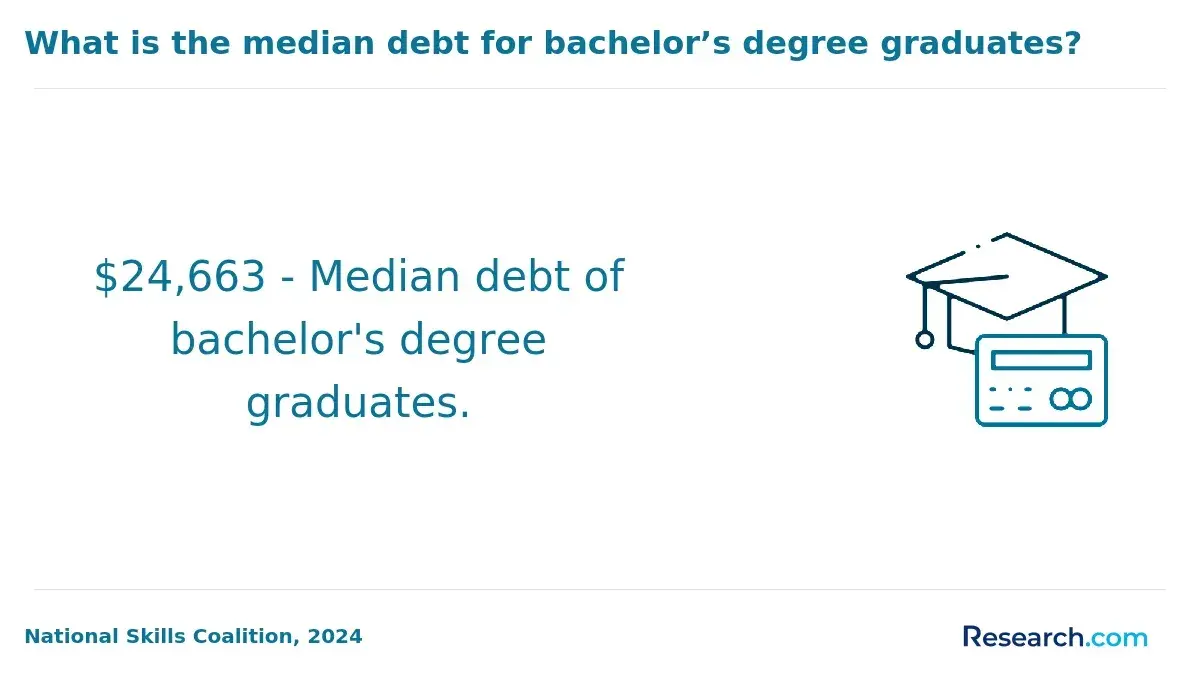
Cost factors merit strategic consideration: Kennesaw State University charges $190 per credit hour for its online BS in criminal justice, resulting in total tuition near $22,800, which ranks among the most affordable options nationwide. Such pricing, combined with transfer credit decisions, substantially impacts the overall financial burden, particularly for veterans leveraging GI Bill benefits or tuition assistance.
Prospective students should weigh credit transfer potential, admission standards, and tuition rates against long-term workforce implications. For those exploring cross-sector career pivots, comparing degree costs and credit policies alongside other offerings, such as masters in digital marketing, may clarify the best investment aligned with evolving market demands.
Which accreditation standards should online criminal justice programs meet to be considered reputable?
Regional accreditation recognized by the U.S. Department of Education or the Council for Higher Education Accreditation is an essential threshold for online criminal justice programs to be credible and effective.
Accreditation through bodies like the Higher Learning Commission (HLC), Southern Association of Colleges and Schools Commission on Colleges (SACSCOC), or Middle States Commission on Higher Education (MSCHE) ensures program rigor, credit transferability, and employer recognition.
For students pursuing the best accredited criminal justice degrees for military veterans, additional validation from the Academy of Criminal Justice Sciences (ACJS) confirms the curriculum aligns with professional standards in law enforcement, corrections, and public safety.
Attending nonaccredited or regionally unrecognized programs often results in limited credit transfer, exclusion from federal financial aid, and obstacles to employment or professional licensing.
For example, military service members may leverage programs with aggressive transfer credit policies—such as Purdue Global, where a student applied 92 credits, including 77 from Army training, reducing tuition from $41,400 to $20,240—accelerating degree completion while lowering costs.
Employers increasingly demand degree verification from accredited institutions when considering promotions or certification eligibility, making accreditation status a critical factor in career viability. Prospective students should carefully evaluate both regional and ACJS accreditation and look for programs that incorporate competency-based learning and maximum military credit acceptance.
For those exploring educational alternatives, examining options like online cybersecurity degree programs for veterans may offer a comparative pathway with distinct workforce demand and credential value.
What levels of criminal justice degrees are available online for students with service experience?
Selecting an online criminal justice degree demands clear-eyed consideration of how educational levels align with practical employment outcomes, especially for veterans transitioning to civilian roles. An associate degree primarily opens doors to entry-level positions such as correctional officer or security supervisor but often restricts access to federal or advanced law enforcement roles that mandate a bachelor's degree.
Bachelor's degrees are the standard credential for most federal agencies and mid-level police departments. They combine foundational knowledge with leadership skills veteran students often bring, supporting roles that require operational expertise and supervisory potential.
According to National University's 2026 criminal justice data, the median annual salary for 25-to-29-year-olds holding this degree is $45,410, illustrating moderately competitive early-career earnings.
Advanced degrees signal readiness for specialized or policy-oriented positions. Master's programs emphasize strategic decision-making, research, and administration, fitting roles such as probation officers or forensic analysts. Doctoral credentials, which are rarer, prepare graduates for academia, high-level program evaluation, or government policy development.
Veterans must evaluate accreditation rigor, military credit transfers, and internship opportunities carefully since these factors influence both program duration and employer reception. Federal agencies often require degrees with substantial practical components. Approaching degree selection with these pragmatic criteria ensures alignment with long-term career pathways rather than mere credential accumulation.
What core courses and specializations are common in online criminal justice programs?
Criminal justice programs emphasize analytical skills applied across diverse roles in law enforcement, corrections, and social services. Core courses in criminology, criminal law, and juvenile justice establish foundational knowledge, while specialized tracks-such as cybersecurity or forensic science-address evolving workforce demands.
For instance, a military veteran aiming to transition into cybercrime investigation must focus on computer crime law and network security, aligning education with the technical expectations of modern law enforcement IT teams.
Employers expect graduates to manage complex legal evidence and interpret statutes with precision, making research methods and data analysis indispensable for roles involving crime pattern recognition or risk management. Balancing synchronous and asynchronous coursework with employment obligations presents a significant challenge, often determining student success as much as the curriculum itself.
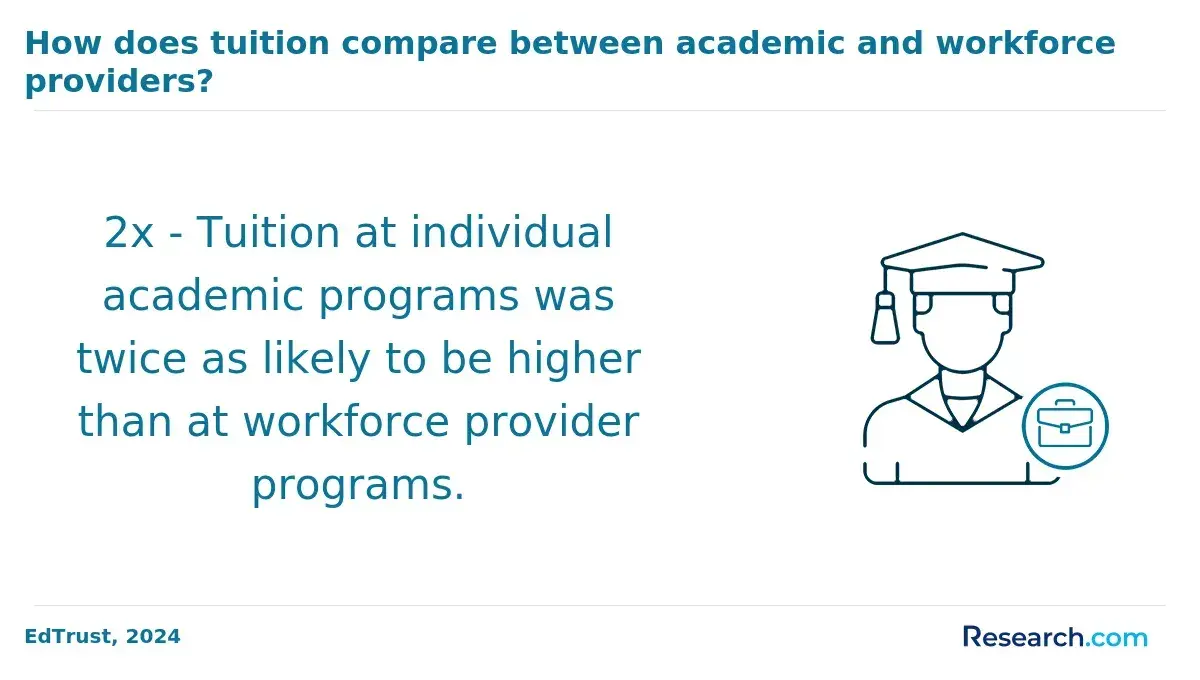
Cost efficiency is a practical consideration: the National Center for Education Statistics data, summarized by Affordable Colleges Online, places the average annual cost for an online bachelor's degree in social sciences, including criminal justice, at $13,676. This figure favors working adults and veterans who require flexible, accessible education paths without sacrificing curricular depth or relevant specializations.
How long do online criminal justice degrees typically take and what do they cost?
Online criminal justice degrees require a careful balance between time investment and tangible career outcomes. For many students, the opportunity to leverage prior military training and transfer credits can significantly reduce the traditional 36 to 48 months needed for a bachelor's degree, sometimes compressing it to under two years in accelerated or competency-based formats. However, not all programs equally facilitate credit transfers, which can delay degree completion and increase costs.
Cost remains a key consideration, with per-credit tuition typically ranging from $300 to $600, resulting in a bachelor's degree price tag between $18,000 and $36,000 before fees for technology, textbooks, and military credit evaluations. This financial commitment demands that students weigh potential wage gains against educational expenses.
Employers in law enforcement prioritize candidates who combine academic credentials with applied knowledge, making the extended duration of a full bachelor's degree a potentially worthwhile investment for increased hiring competitiveness and salary potential.
According to National University's 2026 data, median police and detective salaries hover around $69,160 annually, with the top 10% exceeding $109,580.
Practical decisions when selecting online criminal justice programs should include:
- How effectively the school transfers veteran or experiential credits
- The structure of coursework and opportunities for accelerated completion
- The alignment of curricula with law enforcement industry standards
What criminal justice careers are open to graduates with military backgrounds?
Military veterans seeking criminal justice careers must navigate distinct operational and credentialing demands that shape employability and workplace effectiveness. Their leadership and tactical expertise often translate well to law enforcement roles, such as local police or federal agencies like the FBI, where managing high-risk scenarios requires discipline and situational awareness.
However, a direct transition is rarely seamless; agencies typically expect specific certifications or clearance levels that extend timeframes before full deployment.
Corrections and probation roles represent a pragmatic entry point, supported by projected job growth nationally and especially in California, where corrections-related positions are expanding at a 12% rate.
Veterans familiar with institutional chain-of-command and crisis management are well-suited here, though these roles demand continuous on-the-job skill reinforcement amid evolving rehabilitation and safety protocols.
Advanced roles, including criminal justice research analysts or cybersecurity specialists within justice systems, integrate military technical skills but require targeted academic credentials and possibly additional state or federal clearances.
Pursuing these often entails longer timelines and added educational investment, emphasizing the need to balance immediate employability against long-term career scope.
Employers prioritize candidates with applied knowledge in criminal law, ethics, and investigative procedures over purely theoretical training. Veterans should focus on degree programs offering flexible scheduling and credit for prior learning to reduce redundancy and accelerate entrance into the workforce.
What salary ranges and promotion opportunities can criminal justice graduates expect?
For criminal justice graduates with military experience, initial salary expectations range broadly due to sector-specific hiring practices and veteran preferences. Federal agencies like the FBI and DEA place many veterans near GS-5 or GS-7 levels, commonly earning $45,000 to $58,000 annually, while state and local roles start slightly lower, around $40,000 to $55,000.
A critical advantage for veterans lies in preference points and accelerated hiring steps, often providing earlier access to supervisory roles and commensurate pay increases compared to civilians without military backgrounds.
Mid-career salaries reflect specialization and educational attainment, with managerial positions typically offering $70,000 to $95,000. Specialized areas such as cybersecurity and forensic analysis enhance earning potential, frequently pushing senior salaries past $100,000. However, these roles demand continuous credentialing beyond initial degrees, aligning with employer expectations for ongoing training.
Tuition costs directly affect career trajectory flexibility. For example, military discounts reducing graduate credit hour costs to roughly $310, as observed in Liberty University's 2026-27 data, ease financial burdens and promote timely completion of advanced degrees, which are often prerequisites for higher pay grades.
Practical career planning for veterans involves balancing educational investments with agency-specific promotion criteria and leveraging military experience strategically during recruitment and advancement. Recognizing the interplay between education cost-efficiency, specialized skill acquisition, and veteran status is essential to maximize long-term earnings and positional growth.
How can prospective students choose a high-quality online criminal justice program?
Selecting a criminal justice program requires more than accreditation; it demands alignment with concrete career outcomes and measurable success indicators like graduation and job placement rates.
This is essential because employer recognition and future credentialing depend on verified academic rigor. Servicemembers transitioning out of active duty—nearly 200,000 annually according to Department of Justice data—benefit notably from online programs offering both synchronous and asynchronous learning to accommodate varied schedules.
Program flexibility extends beyond scheduling. Military training credits and prior experiential learning evaluations can significantly reduce course loads, trimming costs and time-to-degree, but this varies widely by institution. Prospective students must scrutinize these policies in relation to their unique backgrounds.
Practical application is a differentiator. Programs that mandate internships or maintain partnerships with criminal justice agencies facilitate networking and skill development directly relevant to law enforcement, corrections, or federal positions.
Coursework aligned with credentialing bodies such as the American Society of Criminology or the International Association of Chiefs of Police signals preparation for roles demanding recognized competency.
Employers increasingly expect technological savvy, data literacy, and updated legal knowledge. When comparing curricula, prospective students should prefer offerings that integrate these elements rather than those focused solely on theoretical frameworks, which offers limited real-world applicability.
Other Things You Should Know About Criminal Justice
The workload in online criminal justice programs tends to mirror that of on-campus degrees but requires substantial self-discipline and time management. Military students must often balance coursework with ongoing service or employment, so programs offering flexible deadlines and asynchronous classes better suit these constraints. Prioritizing programs with structured modules and clear pacing helps prevent burnout and ensures consistent progress, which is critical given the rigorous reading, writing, and case analysis involved in criminal justice curricula.
Criminal justice degrees tailored for veterans typically leverage prior discipline and leadership experience, but the degree content must align with intended career goals. For strategic career pivots, prioritize programs emphasizing practical skills like investigative techniques, legal writing, or cybersecurity, rather than only theory. Advancement-focused students should select programs incorporating management or policy courses to meet promotion criteria in law enforcement or corrections. Assess how well the curriculum integrates with civilian credentialing or certification requirements to maximize real-world value.
Hands-on training remains critical for many criminal justice roles, but it is often limited in fully online programs. Military students should evaluate whether a program incorporates practical components through local internships, simulations, or partnerships with agencies. Programs lacking real-world exposure may compromise skill development necessary for frontline positions, increasing the need for supplemental experience elsewhere. For those prioritizing direct field skills, a hybrid program or one with robust practicum options offers a stronger return on investment despite potentially higher time commitments.
References
- careers Law and Order https://www.airforce.com/careers/law-and-order
- Earning a Criminal Justice Degree Online | University of Bridgeport https://www.bridgeport.edu/news/earning-a-criminal-justice-degree-online/
- Most Affordable Online Criminal Justice Degrees https://www.affordablecollegesonline.org/degrees/criminal-justice-programs/
- Criminal Justice Salary Guide | All Criminal Justice Schools https://www.allcriminaljusticeschools.com/criminal-justice/criminal-justice-salaries/
- Find Top Online Bachelor's In Criminal Justice Programs https://www.accreditedschoolsonline.org/criminal-justice/bachelors/
- Accreditation for Criminal Justice Colleges and Universities https://criminaljusticeonlineblog.com/10/accreditation-for-criminal-justice-colleges-and-universities/
- Online Bachelor's Degree in Criminal Justice | CSU Global | Accredited https://csuglobal.edu/academic-programs/undergraduate-degrees/bachelors-degree-criminal-justice
- Top Online Criminal Justice Degrees https://www.criminaljusticeprograms.com/online-criminal-justice-degrees/
- 15 Best Online Bachelor's In Criminal Justice https://www.criminaljusticedegreeschools.com/rankings/best-online-bachelors/
- Online Criminal Justice Degrees: Find the Right Program https://www.degreesforgood.org/online-degrees/criminal-justice-programs/