2027 Online Criminal Justice Degrees for Students Who Want State and Local Government Justice Careers

Co-Founder and Chief Data Scientist
Midcareer professionals aiming for state or local government roles in criminal justice face a complex balancing act: securing relevant qualifications without sacrificing ongoing employment or personal obligations. With nearly 40% of undergraduate enrollments now in fully online programs as reported by the National Center for Education Statistics, accessibility has shifted notably, yet the challenge remains selecting programs aligned with evolving agency expectations and certification mandates.
Online degrees vary widely in flexibility and career-readiness, impacting the timing and ability to pivot or advance effectively. This article breaks down key online criminal justice degree options tailored to state and local government career paths, helping prospective students navigate program selection and overcome practical barriers to entry.
Key Things You Should Know
- State and local agencies prioritize candidates with degrees featuring practicum components; absence of such experience can reduce employability by up to 20% according to the Bureau of Labor Statistics, pressing students to weigh hands-on training against purely online convenience.
- Employer demand in 2024 for public sector criminal justice roles has risen 8%, yet budget constraints limit salary growth below 3%, intensifying competition and favoring candidates with dual-certifications or specialized policy knowledge.
- Tuition averages for accredited online criminal justice bachelor's programs vary by 45%, influencing the return on investment timing, as student debt delays entry into public sector roles where starting pay averages $58K annually per National Center for Education Statistics data.
What are online criminal justice degrees for state and local government careers?
Online criminal justice degrees for government careers cater specifically to the legal and operational demands of state and local public safety roles. These programs align closely with employer expectations and licensure requirements by emphasizing practical skills in criminal law, ethics, community policing, and public administration.
Flexibility is a key advantage, permitting working professionals to integrate coursework with remote internships and scenario-based training. For instance, training tailored for a sheriff's office in a rural county diverges significantly from that designed for urban police departments, reflecting the varied challenges across jurisdictions. This nuance is a critical consideration when choosing a program.
The workforce impact is evident: over 80% of criminal justice graduates secured jobs within six months, according to CJGSU University Criminal Justice Statistics. Yet, meeting state certification mandates remains a hurdle as some online degrees lack the necessary accreditation or practical fieldwork component.
Prospective students assessing state and local justice careers with online criminal justice degrees should weigh program accreditation, jurisdictional licensing alignment, and practicum opportunities carefully. These factors influence the speed and ease of transitioning into operational roles where effective performance depends on both theoretical knowledge and hands-on experience.
Those aiming to identify programs that offer these attributes can consult comprehensive resources such as the online criminal justice degree listings, which highlight cost-effective options tailored to these practical realities.
Why does accreditation matter for online criminal justice programs?
Accreditation fundamentally determines the practical value of an online criminal justice program accreditation importance, impacting both employment prospects and academic mobility. Employers in state and local government, especially law enforcement agencies like police and sheriff's departments, mandate degrees from accredited institutions to confirm candidates' competency and compliance with legal standards.
For instance, a projected 7.6% growth in patrol officer roles through a recent BLS analysis underscores growing demand-but accreditation remains a gatekeeper for eligibility, background checks, and specialized training.
State and local government criminal justice degree accreditation often comes from nationally recognized bodies such as the Academy of Criminal Justice Sciences (ACJS) or regional accreditors. Without this, students risk earning credentials that agencies may reject, limiting career entry or advancement.
Additionally, non-accredited credits usually fail to transfer, creating barriers for professionals seeking further education or certifications that require recognized academic infrastructure.
Beyond employment, accreditation status affects access to federal financial aid and smooth licensing workflows. Prospective students should carefully verify how program accreditation aligns with their target agency requirements to avoid costly delays or disqualification.
Working professionals evaluating educational pivots in this field may also explore related options and practical advice on what can a felon go to college for to better understand their pathways given criminal justice's workforce landscape.
What state and local justice jobs can this degree prepare you for?
State and local government criminal justice careers demand specific qualifications beyond degree completion, making an online criminal justice degree a targeted but not exhaustive preparation. Graduates typically enter roles such as police officers, probation and parole officers, correctional treatment specialists, and crime analysts.
These positions require hands-on competencies in legal procedures, ethical decision-making, and nuanced report writing, which many programs provide but must be supplemented by state-mandated training academies or certifications.
Employment competition is significant in many jurisdictions, with agencies increasingly prioritizing candidates who hold bachelor's degrees due to the growing complexity of policing tactics and data-driven crime analysis.
For example, crime analysts in municipal police departments may leverage their analytical skills to improve resource deployment, while probation officers focus on reducing recidivism through offender rehabilitation strategies-core career opportunities with a state and local criminal justice degree.
Understanding workforce realities means acknowledging median earnings around $45,410 for early-career professionals, reflecting both job demands and public budget constraints. Students should prepare for variable state requirements that can delay immediate entry into roles without additional certification or academy attendance.
Given these tradeoffs, prospective students might also consider related fields such as a forensic psychology degree, which intersects with criminal justice in areas like offender assessment and legal research, potentially broadening career pathways.
How do online and campus criminal justice programs compare?
Cost remains a pivotal factor when evaluating online criminal justice degree programs vs campus programs, with online options typically costing between $6,000 and $36,000, substantially less than the $10,000 to $100,000 range for in-person degrees. This cost gap influences accessibility, especially for those balancing work and family, or targeting state and local government criminal justice career pathways where budget constraints are common.
Campus-based programs offer key advantages through structured, hands-on experiences such as internships and immersive labs with law enforcement agencies. These direct field exposures matter for roles like detectives or probation officers, where employer preferences often tilt toward candidates with tangible agency contacts and practical training.
Online programs deliver flexibility beneficial for professionals already working within the justice system, enabling educational advancement without employment disruption. This, however, places responsibility on students to independently secure externships and practical experience, a challenge that can impact real-world readiness.
Furthermore, the less frequent face-to-face interaction can reduce informal mentoring, a factor valued by some local government employers when vetting applicants.
Employers increasingly accept accredited online degrees but emphasize verified field experience or certifications beyond coursework. Students considering these pathways must weigh lower tuition against potential delays in networking and applied learning, which can affect entry and progression in competitive justice careers.
Those assessing criminal justice educational options should also explore specialized resources like online cybersecurity degrees for veterans to expand career prospects within intersecting public safety fields.
What classes are in an online criminal justice curriculum?
Criminal justice curricula designed for state and local workforce entry prioritize practical knowledge over theory to meet employer expectations and operational realities. Core courses such as Introduction to Criminal Justice and Criminal Law cover legal frameworks relevant to local jurisdictions, while applied classes like Policing Strategies and Correctional Systems emphasize offender management and compliance with agency policies.
For instance, a city police officer candidate relies on training in Criminal Investigation and Ethics in Criminal Justice to navigate nuanced community interactions and legal decision-making daily. Those targeting probation or public safety administration roles benefit from focused instruction in Juvenile Justice and Program Evaluation, preparing them for balancing supervision demands with budgetary and regulatory pressures.
Growing employer demand for data-literate professionals shapes curricula to include quantitative and qualitative research methods, cybercrime, and data analysis, essential for adapting to technological advances and crime pattern assessment. Students engaging in online criminal justice programs must compensate for limited hands-on experiences through scenario-driven simulations and community partnerships, which require heightened self-motivation and networking skills to build practical competence.
Given that over 1.2 million students enroll in criminal justice programs, with nearly 60% studying online according to CJGSU University Criminal Justice Statistics, this blend of theoretical and applied content addresses diverse agency needs yet presents distinct challenges for remote learners seeking real-world exposure.
What admission requirements do online criminal justice programs require?
Entry into online criminal justice programs hinges on more than academic records; practical career alignment and employer expectations shape admission outcomes. For undergraduates, a high school diploma or equivalent plus a GPA typically between 2.5 and 3.0 is standard. Graduate applicants generally need a bachelor's degree with transcripts showing solid academic performance.
While some programs still require standardized tests like the SAT or ACT, many waive them if candidates provide relevant work experience or previous college credits, acknowledging the realities of nontraditional students and career changers.
Working professionals must often provide a detailed resume highlighting experience in law enforcement, social services, or related sectors. This serves as a proxy for career readiness, especially when paired with letters of recommendation and personal statements that emphasize ethical commitment and measurable career objectives.
Failure to meet these criteria, such as lacking adequate recommendations or not demonstrating consistent GPA, can delay or block admission, illustrating the operational friction for many applicants.
Technology access and flexible scheduling remain critical, as some level-one courses require synchronous participation, posing challenges for professionals with unpredictable hours.
The shifting demographic landscape, with female enrollment now at 55% according to CJGSU University Criminal Justice Statistics, signals evolving workforce compositions and employer demands for graduates prepared to engage diverse and complex community environments.
How long does an online criminal justice degree take to finish?
Completing an online criminal justice degree typically requires a strategic approach to balance time, cost, and career goals. While the standard full-time track spans four years, accelerated paths leveraging transfer credits or prior learning can reduce this to two or three years. Part-time study, often necessary for working professionals, may extend the timeline beyond five years, potentially increasing total tuition costs due to prolonged enrollment.
Employers, especially in public safety and local government roles, expect candidates to have fully completed degrees before hiring. This expectation impacts working adults shifting careers-for example, a municipal administrator transitioning into law enforcement must juggle job duties alongside coursework over multiple years if opting for part-time enrollment.
Key considerations include:
- Verifying transfer credit policies early to avoid unexpected program lengthening.
- Ensuring required internships or practical training fit into personal schedules without delaying graduation.
- Weighing the higher immediate expenses of accelerated formats against longer-term costs and career entry delays from part-time pacing.
The average annual tuition for comparable online social science degrees is approximately $10,570, making financial planning critical. Judicious selection of program structure directly influences both educational investment and eligibility timing for government criminal justice positions requiring degree completion.
How much do online criminal justice degrees cost?
A bachelor's degree in criminal justice represents a significant financial and professional commitment, with tuition costs varying sharply by institution type and residency status. Public in-state programs typically charge between $15,000 and $30,000, whereas private or out-of-state options frequently exceed $40,000, impacting affordability and career planning. For instance, a local law enforcement candidate might prioritize an accredited, lower-cost program recognized by state agencies to maximize return on investment.
Beyond tuition, expenses such as technology fees, textbooks, and occasional in-person residencies add to the financial burden. Professionals balancing work and study face the additional tradeoff of potential lost wages. Online formats can reduce income disruption but often bill per credit hour, underscoring the importance of efficient course progression to manage total cost.
Data from National University's 2026 criminal justice statistics indicate that roughly 34.5% of individuals working in the criminal justice field hold a bachelor's degree, a credential often necessary for state and local government hiring and promotion.
Students should weigh not only price but also program transparency in tuition, credit transfer policies, and alignment with current workforce demands. Programs lacking these can leave graduates with degrees less recognized by employers or without sufficient career resources.
What salaries and job outlook apply to state and local justice careers?
Compensation in state and local government justice careers varies sharply by role and geography, with entry-level corrections officers earning around $45,000 annually, while senior state police supervisors may exceed $95,000. Positions like probation officers and detectives typically fall between $60,000 and $85,000, but regional budget constraints and duty scope impact earnings.
Job growth is forecasted at roughly 5% through 2032, yet opportunities concentrate in urban centers investing in crime prevention, whereas many rural jurisdictions experience stagnant or declining hiring.
Prospective candidates must weigh the practical value of educational credentials. Data from The Badge Report highlights a 15% rise in four-year criminal justice program enrollment, signaling employer preference for graduates with analytical and theoretical training over community college pipeline programs, which are contracting. This shift reflects a demand for professionals who can handle complex challenges beyond routine enforcement.
Specializations in forensic analysis, cybercrime, or criminal psychology align closely with local government needs, enhancing employability and salary prospects. However, navigating varied state certification requirements and budget limits remains a barrier, as many advanced roles require additional field experience or credentials beyond the degree. Understanding these operational realities is critical when planning an educational pathway toward law enforcement or allied roles in the public sector.
What certifications or licensing rules apply after graduation?
Pursuing a career in state or local government justice roles demands navigating varied and stringent certification and licensing requirements that differ significantly by state and position. For frontline roles like police or correctional officers, candidates must complete state-certified academy training and pass exams governed by entities such as the peace officer standards and training (POST) commission.
This process also includes physical fitness, psychological evaluations, and background checks-factors critical to passing and timing entry into the workforce.
Specialized positions such as probation officers or forensic analysts require additional credentials, often from bodies like the American Probation and Parole Association or forensic certification organizations.
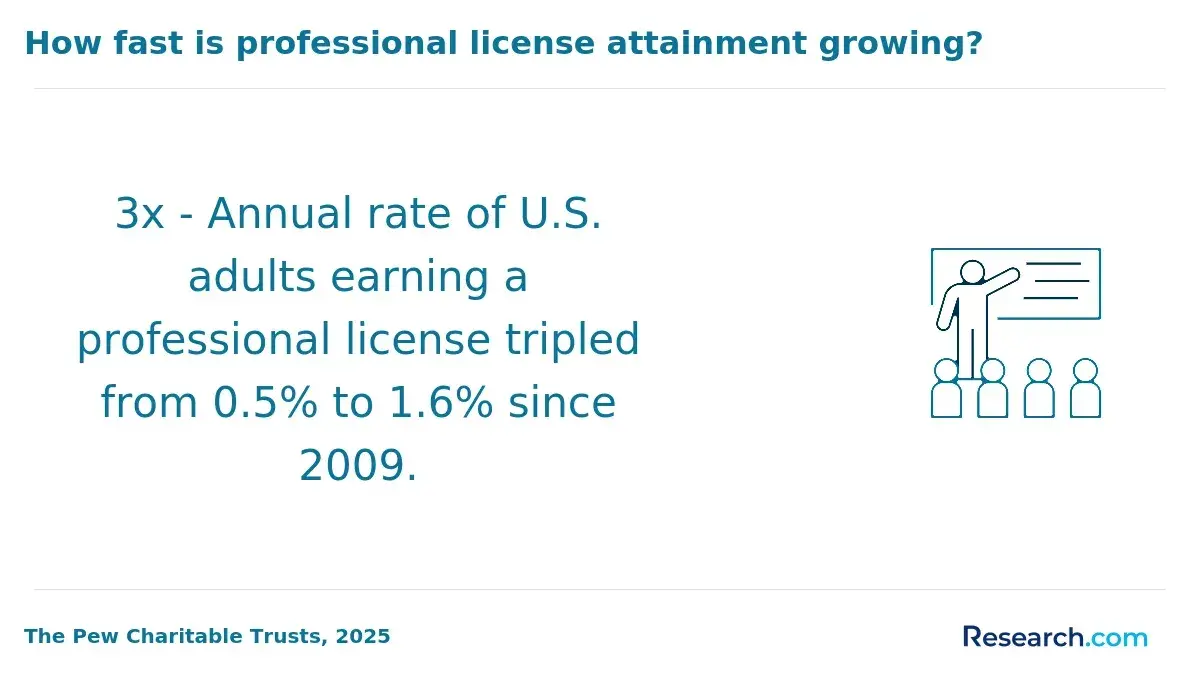
Technology-focused roles, such as information security analysts within justice agencies, rely on certifications like CISSP, CISM, or CompTIA Security+, which directly influence employability and salary, with median earnings around $102,470 annually according to National University data.
Licensing mandates vary widely and affect re-certification demands, which in many states include ongoing continuing education. For example, a police officer in California faces distinct training cycles and renewal criteria compared to counterparts in Texas or New York, illustrating the operational complexity that candidates must plan around.
Key tradeoffs include balancing the cost and scheduling of training, exam fees, and assessments against realistic hiring timelines, where failure or delays in certification can impede employment prospects or lead to decertification.
Other Things You Should Know About Criminal Justice
In 2027, online criminal justice degrees are designed to provide students foundational knowledge in law, policy, and ethics essential for state and local government roles. Programs typically emphasize communication, critical thinking, and legal understanding to ensure graduates are well-prepared for the demands of the justice sector.
Internships and hands-on components are critical differentiators in criminal justice education for state and local careers. Programs lacking practical experiences may leave graduates underprepared for agency-specific demands and departmental culture. When selecting an online degree, prioritize those incorporating supervised field placements or partnerships with local justice organizations to gain applicable insights and networking opportunities essential for job placement and advancement.
Specialized programs focusing on areas like corrections, forensic science, or juvenile justice can offer clearer pathways into niche roles but risk limiting flexibility if your career goals shift. Generalized degrees provide broader knowledge but may require additional on-the-job training or certifications to meet employer expectations in specialized positions. For strategic career planning, choose the format that aligns best with your targeted role and prioritize programs with adaptable curricula or elective options addressing your desired specialization.
While online programs cover theoretical and procedural aspects, they often fall short in replicating the high-pressure, dynamic environment of many justice careers. Employers expect resilience and stress management skills developed through real-world exposure. Students should seek courses with scenario-based training and pursue extracurricular activities like ride-alongs or volunteer work to build practical coping mechanisms alongside academic knowledge.
References
- Top Online Criminal Justice Degrees https://www.criminaljusticeprograms.com/online-criminal-justice-degrees/
- Jobs with a degree in Criminal Justice | Monroe University https://www.monroeu.edu/academics/undergraduate-programs/school-criminal-justice/what-can-you-do-criminal
- Certificates, Certifications and Licenses https://trainingindustry.com/wiki/professional-development/certificates-certifications-and-licenses/
- Criminal Justice Jobs, Criminal Justice Salary Outlook | HCU https://hc.edu/articles/criminal-justice-salary-and-job-outlook/
- Salary Guide for Criminal Justice Professionals in New York https://www.allcriminaljusticeschools.com/criminal-justice/criminal-justice-salaries/new-york/
- Online Criminal Justice Degree & Career Information https://www.criminaljustice.com/online-degrees/
- Online Bachelor’s Degree in Criminal Justice | Warner Pacific https://www.warnerpacific.edu/programs/criminal-justice/
- Earning a Criminal Justice Degree Online | University of Bridgeport https://www.bridgeport.edu/news/earning-a-criminal-justice-degree-online/
- Most Affordable Online Criminal Justice Degrees https://www.affordablecollegesonline.org/degrees/criminal-justice-programs/
- Online Bachelor's Degree Criminal Justice https://www.umgc.edu/online-degrees/bachelors/criminal-justice