2027 Criminal Justice Degrees With the Broadest Public Sector Mobility

Co-Founder and Chief Data Scientist
Faced with a fragmented public sector landscape, many criminal justice students struggle to find degrees that offer flexibility across government agencies, law enforcement, social services, and policy roles. The challenge intensifies as nearly 55% of adult learners pursue part-time or online study modes, according to recent NCES data, signaling a demand for programs that accommodate work-life balance without sacrificing career mobility.
This shift reflects a broader realignment of education delivery meeting workforce realities, where rigid traditional pathways limit adaptability amid evolving public safety priorities. This article evaluates degrees with proven cross-sector versatility, empowering readers to pinpoint programs that optimize accessibility, skill transferability, and long-term employment options.
Key Things You Should Know
- Degree focus on forensic psychology or cybercrime correlates with 23% higher public sector employment rates, but requires supplementary technical certifications, extending total training time by 12-18 months per National Center for Education Statistics 2024 data.
- Agencies prioritize candidates with combined policy analysis and legal process knowledge, raising hiring thresholds and narrowing roles by 17%, per 2024 Bureau of Labor Statistics reports, driving demand for interdisciplinary curricula.
- Public sector wage growth stagnation amid rising applicant volume pressures candidates toward advanced degrees, with median salary hikes below 3% annually, highlighting critical ROI tradeoffs in time and tuition costs according to 2024 OPM workforce analytics.
Which criminal justice degrees offer the widest career mobility across public sector agencies?
Degrees in criminal justice and corrections offer the broadest public sector career opportunities by equipping graduates for roles across multiple agencies without the need for retraining. This versatility contrasts with more specialized degrees, such as forensic science or cybersecurity, that limit agency options due to their technical focus. Employers in departments like homeland security, state police, and juvenile justice value graduates who understand applied law enforcement practices and public safety policies, enabling seamless transitions between corrections, probation, parole, and federal law enforcement roles.
Graduates with such degrees experience steady wage growth, with median early-career earnings around $40,300 and mid-career wages reaching approximately $61,800 according to Data USA, demonstrating workforce demand and upward mobility. However, those targeting highly technical or specialized fields may face slower entry without supplemental credentials or experience.
For candidates prioritizing adaptability across government roles, criminal justice programs enabling versatile roles in government agencies can provide practical knowledge of inter-agency policies and operational skills. Yet tradeoffs include less direct access to specialized career tracks and a potential need for certifications when shifting to forensic or intelligence positions.
Hiring managers often prefer professionals who can pivot operationally without repeating fundamental training, making criminal justice degrees with broadest public sector career opportunities strategically valuable. Prospects can explore options through programs such as a criminal justice online degree aligned with these mobility goals.
How do criminal justice degrees translate into different public service roles and job titles?
Criminal justice degrees for public sector careers offer more than entry into traditional law enforcement; they provide access to diverse government roles requiring nuanced legal and organizational knowledge. The integration of policy analysis, forensic psychology, and leadership coursework equips graduates with adaptable skills to function effectively in bureaucratic environments. For example, probation officers apply legal knowledge to supervise cases, while regulatory compliance analysts enforce local ordinances through detailed statutory understanding.
Career paths with criminal justice degrees in government increasingly demand specialized competencies beyond foundational knowledge. The decline in degrees conferred-about 11% from 2012 to 2022-signals a competitive labor market. Candidates benefit from pursuing certifications or advanced studies in areas like cybersecurity enforcement or forensic analysis to differentiate themselves.
Employers prioritize practical experience in data interpretation, community relations, and interagency coordination, which can be developed through internships and targeted electives. This hands-on exposure permits fluid career transitions into areas such as victim advocacy or emergency management.
Students should consider the tradeoffs between broad criminal justice curricula and focused programs, including options like a paralegal studies associate degree, which may offer quicker practical application but narrower pathways. Understanding these distinctions is critical in matching educational investment to long-term career goals and labor market realities.
What criminal justice degree levels best support long-term advancement in government careers?
Bachelor's degrees in criminal justice provide the most practical foundation for government roles by balancing entry requirements with promotion potential. Unlike associate degrees, which grant quick access to patrol or basic detective jobs but often restrict upward mobility, a bachelor's degree meets the increasingly common minimum for municipal, state, and federal hiring. It also positions candidates for analytic and leadership responsibilities, such as federal agent positions or mid-level management in larger departments, where a four-year credential is an internal promotion prerequisite.
Employment projections from the U.S. Bureau of Labor Statistics, referenced by NMU Global Campus, estimate 63,000 annual openings for police officers and detectives through 2033, with about 4% growth. This steady demand favors those holding the best criminal justice degrees to enhance public sector promotion opportunities, particularly bachelor's degrees that combine foundational education with career scalability.
A criminal justice master's degree primarily benefits mid-career professionals seeking specialized or supervisory roles within federal agencies or administrative tracks but tends to require significant prior work experience. Immediate post-graduate employment advantages are limited without such experience, making it strategically sound to build hands-on skills after a bachelor's before pursuing graduate credentials.
Students weighing educational pathways in public safety should also consider financial and temporal investment tradeoffs compared to alternative fields. For example, exploring affordable, outcome-oriented options like marketing masters programs could offer faster returns in some cases. Deciding on a criminal justice degree level for government career advancement means assessing immediate hiring hurdles against long-term promotion ceilings.
How do online and campus-based criminal justice programs compare for public sector careers?
Choosing between online vs campus-based criminal justice degree programs for public sector employment centers on the tangible differences in practical training and networking opportunities that directly affect early career success. Campus programs frequently facilitate internships, in-person labs, and collaborations with local law enforcement agencies-advantages that align with employer preferences for candidates with supervised field experience in roles such as probation officers or correctional treatment specialists.
In contrast, online programs cater to working professionals or those with family demands by offering flexibility but often require additional effort to secure hands-on learning and meet local certification mandates. Employment data from the U.S. Bureau of Labor Statistics, referenced by NMU Global Campus, lists a median annual wage of $61,800 for probation officers and correctional treatment specialists with an expected 4% growth rate over the decade.
This steady demand underscores the importance of practical exposure beyond academic credentials, where campus students benefit from embedded career services and alumni networks funneling into public agencies. Meanwhile, online learners must proactively pursue field experience to satisfy jurisdictional licensure requirements and employer expectations, a challenge that can delay or complicate workforce entry.
Decision-making in comparing career outcomes of online and traditional criminal justice education requires weighing immediate job responsibilities against the need for immersive experiential learning. Students should consider leveraging mentorships, recruitment events, and strong experiential components when selecting a program. For those veterans or professionals exploring career pivots, consulting resources on best military friendly online electrical engineering degrees can provide insight into flexible education models with proven workforce integration strategies.
What accreditation and program quality standards matter most for criminal justice students?
Accreditation from entities like the Council for the Accreditation of Educator Preparation (CAEP) or regional bodies is a non-negotiable for criminal justice programs, directly impacting graduate employability and career flexibility. Programs without alignment to current law enforcement practices, federal regulations, and ethical standards hinder student mobility within public agencies, especially in specialized roles like private investigators.
Practical experience through internships or agency partnerships is a critical differentiator. Students gaining hands-on exposure become immediately more competitive for roles such as probation officers or federal agents, where employers prioritize demonstrated workplace competence alongside theoretical knowledge. Modern criminal justice education must also integrate skills in digital forensics, data analytics, and community interaction, reflecting how law enforcement agencies increasingly depend on technology.
Employment trends reinforce this shift: private investigators earned a median wage of $49,540 in May 2023, with job growth expected at 5% over the decade-faster than many traditional law enforcement roles. Without accredited credentials and current skill sets, graduates risk being unprepared for these evolving demands.
What core courses and specializations broaden public sector options in criminal justice?
Criminal justice degree programs that focus narrowly on foundational courses without interdisciplinary breadth often funnel graduates into limited entry-level roles, mainly patrol or routine enforcement. In contrast, core coursework spanning policing, criminology theories, constitutional and criminal law, along with criminal procedure, creates a baseline for eligibility across federal, state, and local agencies.
Adding specialized tracks such as forensic science, homeland security, cybersecurity, or corrections management significantly broadens job prospects. For instance, a specialization in cybersecurity prepares graduates for roles in digital forensics or cyber threat analysis-areas where public safety increasingly relies on technology-based crime prevention. Without these targeted skills, a candidate risks stagnation in conventional roles.
Practical skills training in legal writing, scenario simulations, and data analysis directly affects employability, allowing faster access to supervisory or analyst positions. Employers prefer candidates who contribute immediately to operational needs, not just theoretical understanding.
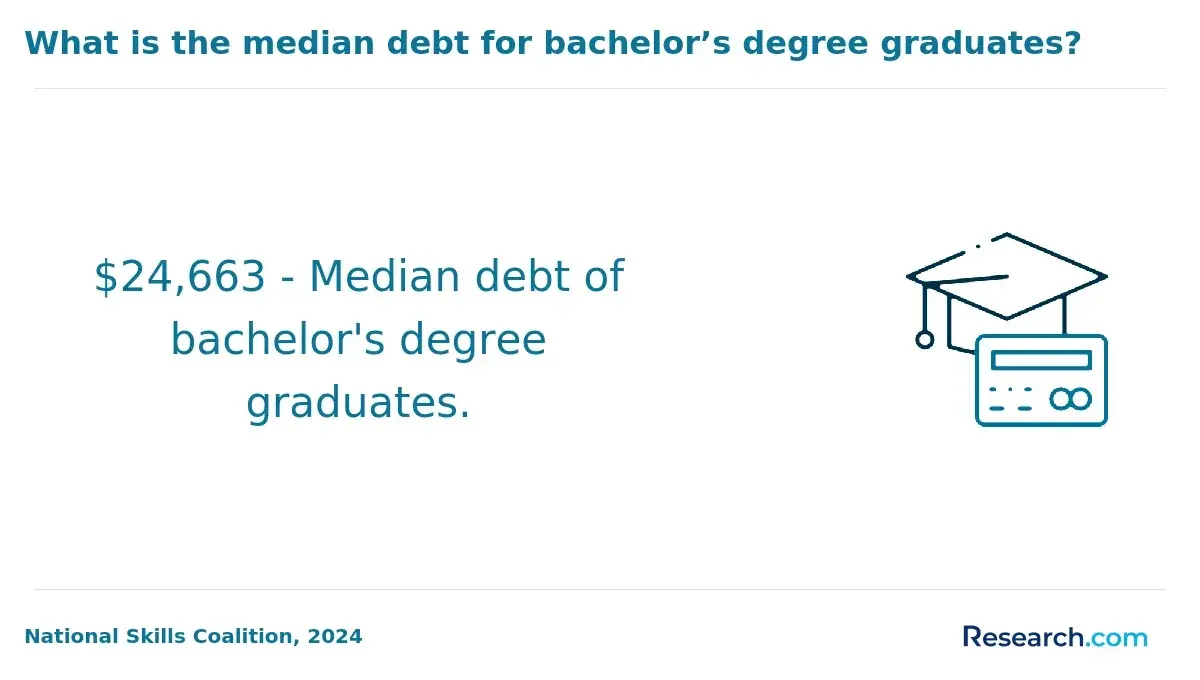
Investing about $50,400 in a bachelor's degree demands strategic specialization selection aligned with high-demand agency functions, such as community outreach or probation for programs incorporating public administration or social services. Graduates overlooking interdisciplinary coursework may face underemployment and slower career mobility within the public sector.
What are typical admission requirements and program lengths for criminal justice degrees?
Choosing between associate, bachelor's, and master's degrees in criminal justice involves weighing program duration, credential impact, and workforce demands. An associate degree offers faster entry, typically requiring 60-70 credits over two years, but limits eligibility for supervisory or investigative roles primarily accessed through bachelor's or graduate education. Bachelor's degrees, usually 120-130 credits completed in about four years, provide broader career access, including federal and detective positions that prioritize a four-year credential. Master's programs, with 30-40 credits over 1.5 to 2 years full-time, often serve those targeting senior policy or specialized federal roles.
Admission standards reflect these differences: associate and bachelor's candidates generally need a high school diploma or equivalent, some with minimum GPAs near 2.5, while master's applicants must hold a relevant bachelor's, often with a 3.0 GPA baseline. Background checks and letters of recommendation are common, especially when internships or law enforcement placements are involved.
About 34.5% of criminal justice professionals hold bachelor's degrees, illustrating how advanced education correlates with career mobility and wage potential. Applicants should anticipate balancing financial costs, time investment, and internship requirements. These factors define whether a path accelerates workforce entry or unlocks roles inaccessible to those with only an associate degree.
What are the main public sector career paths and promotion ladders for graduates?
Advancement in public sector criminal justice roles requires deliberate navigation of hierarchical structures tied closely to experience and formal qualifications. For example, entry-level police officers can progress to supervisory ranks such as sergeant or lieutenant largely through tenure and performance, but breaking into senior leadership typically demands graduate-level education or specialized training. Federal agencies follow the GS pay scale, where moving beyond GS-12 often depends on demonstrated leadership and investigative proficiency, not just time served.
Choosing between frontline enforcement and administrative tracks involves assessing tradeoffs: enforcement promotion paths often yield higher salaries but entail elevated stress and safety risks, while administrative roles offer steadier income and wider managerial scope but less direct field engagement. A probation officer advancing into policy or program management generally combines work experience with targeted graduate degrees, illustrating how academic credentials support upward mobility in non-patrol criminal justice careers.
Postsecondary education roles, including law enforcement instruction, represent a viable public sector pathway with substantial wage potential-top educators surpass $134,000 annually-yet require master's or doctoral degrees plus practical experience. This route suits professionals prioritizing academic credentials and institutional stability over operational duties.
- The GS pay scale defines federal criminal justice career progression, emphasizing leadership skills for higher grades.
- Frontline promotions tend to increase compensation alongside job stress and risk.
- Graduate degrees can pivot an officer or probation officer toward program administration or education roles.
What salary ranges and benefits can criminal justice graduates expect in government roles?
Government roles for criminal justice graduates offer a salary range that varies significantly by experience, position, and jurisdiction, from approximately $40,000 at entry-level to beyond $90,000 for senior roles. Entry-level jobs such as probation officers or corrections deputies typically start between $40,000 and $50,000, while federal agents or policy analysts often earn $60,000 to $85,000. Senior positions, including criminal justice lawyers or program directors, may exceed $90,000, but geographic location and agency budgets heavily influence actual pay.
Tradeoffs in public sector employment are clear: slower salary progression due to structured pay grades contrasts with more stable benefits packages, including health insurance, retirement plans, tuition reimbursement, and paid leave. For instance, a candidate with a law degree targeting a federal agency will encounter predictable General Schedule raises and locality adjustments, whereas state or local roles might offer less pay but greater community engagement.
Disparities persist despite standardized pay, with women criminal justice lawyers earning about 95% of men's average salary. Racial and ethnic wage gaps remain evident; for example, Asian lawyers averaged $46,845 compared to $42,588 for Black or African American lawyers, reflecting structural inequities even in government positions.
Employers prioritize candidates with relevant experience, certifications, and accredited education credentials. Gaining advanced degrees can improve promotion potential but does not accelerate advancement speed significantly given budget constraints. Graduates weighing public sector roles must balance steady, if modest, remuneration growth with long-term job security and benefits.
How can students strategically choose a criminal justice program for maximum public mobility?
Students pursuing degrees that combine criminal justice with interdisciplinary skills must carefully evaluate program breadth and employer connections to avoid limiting career mobility. Narrowly focused curricula often fail to prepare graduates for transitions between law enforcement, fire services, and federal agencies, where knowledge of administrative law, forensic methods, and emergency management is critical.
For instance, an officer moving from a local police department to a federal agency benefits from exposure to a wider skill set, including investigative techniques and regulatory frameworks seldom covered in specialized programs. Employment data from the National Center for Education Statistics, cited by National University, reveals median annual wages of $45,410 in 2022 for U.S. workers aged 25-29 with bachelor's degrees in criminal justice and fire protection.
This combination enhances hiring prospects by expanding eligibility across public safety sectors that seek multifaceted expertise. Graduates lacking such breadth risk confinement to entry-level roles with fewer advancement options. To maximize practical outcomes, students should carefully verify program elements such as:
- Course diversity extending beyond traditional policing into cybercrime, juvenile justice, and emergency response.
- Access to certifications like EMT or incident command system credentials applicable across agencies.
- Documented employer engagement and career office data demonstrating federal, state, and local placement rates.
These considerations reduce the likelihood of costly retraining or certification gaps, ensuring that educational investments translate into tangible workforce advantages.
Other Things You Should Know About Criminal Justice
Specializations like cybercrime or forensic analysis align you with niche roles but can reduce flexibility across broader agency functions. For those targeting wide public sector mobility, a generalist program with elective options in emerging fields strikes a better balance. Agencies often value adaptable graduates who can transition between enforcement, policy, and administrative roles over candidates confined to a narrow expertise.
Programs designed for public sector mobility often combine theory, applied projects, and capstone experiences to mirror workplace demands, resulting in heavier workloads than degree tracks focused solely on academic research. Time management between coursework, internships, and sometimes shift-based public service jobs requires disciplined scheduling. Prospective students should assess program flexibility and support structures to avoid burnout and ensure completion within standard timeframes.
While advanced degrees like a master's improve qualifications for leadership and policy roles, immediate continuation may delay crucial on-the-job experience valued by most public agencies. Employers often prefer candidates with field experience supplemented by education rather than extended academic tenure alone. A recommended approach is to accrue several years of government service before pursuing advanced studies, ensuring practical context enriches academic learning and career advancement.
References
- Guide To Criminal Justice Degrees And Majors https://www.criminaljusticedegreeschools.com/degrees/
- News Western Dakota Tech https://www.wdt.edu/news/article/criminal-justice-law-enforcement-program-earns-prestigious-calea-accreditation-904/
- PSJD | Public Sector Career Paths https://www.psjd.org/advice/public-sector-career-paths
- Choosing a Criminal Justice Concentration https://www.allcriminaljusticeschools.com/blog/how-to-choose-the-right-criminal-justice-concentration/
- Academic Program Review https://www.acjs.org/academic-program-review/
- Online Criminal Justice Program Tips | University of Bridgeport https://www.bridgeport.edu/news/succeeding-in-online-criminal-justice-program/
- Career Path in the public service https://www.publicjobs.ie/en/information-hub/civil-service-career-path
- Criminal Justice Salary - How Much Can I Make With a Criminal Justice Degree? - Grace Christian University https://gracechristian.edu/blog/criminal-justice-salary/
- Law enforcement accreditation: Why it matters https://apbweb.com/2026/03/law-enforcement-accreditation-why-it-matters/
- What Do You Learn In A Bachelor’s Degree In Criminal Justice Program https://www.ucumberlands.edu/blog/what-do-you-learn-bachelors-degree-criminal-justice-program