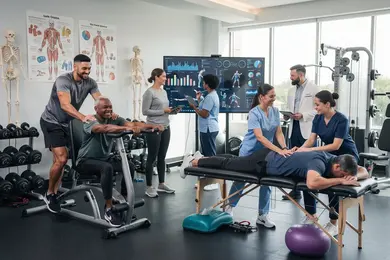
2027 Exercise Science Practicum Requirements Explained

Co-Founder and Chief Data Scientist
Exercise science students often discover that the hardest part of a practicum is not the work itself, but getting approved, placed, documented, and evaluated on time. A practicum can affect graduation timing, certification eligibility, professional references, and readiness for roles in fitness, wellness, rehabilitation, sports performance, and allied health settings.
The requirements can differ by institution, state, specialization, and placement site. Students may need a minimum GPA, completed prerequisite courses, approved supervision, background checks, immunizations, liability documentation, and a verified number of field hours. According to a 2023 survey, over 70% of exercise science students reported delays due to placement coordination issues.
This guide explains what an exercise science practicum involves, how eligibility and placement usually work, what paperwork is commonly required, how hours are tracked, and how the experience may support certification or licensure pathways. It is designed to help students plan early, avoid preventable delays, and use the practicum as a serious step toward career readiness.
Key Things To Know About Exercise Science Practicum Requirements
- Practicum training provides direct application of theoretical knowledge-enhancing critical thinking and problem-solving skills within real-world exercise science settings.
- Structured clinical placements offer essential supervised hours, building professional competence and ensuring readiness for certification or licensure exams.
- Internships facilitate networking opportunities with industry professionals—fostering mentorship and potential employment prospects post-graduation.
What Is A Practicum In Exercise Science Program?
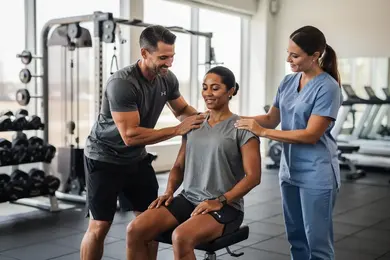
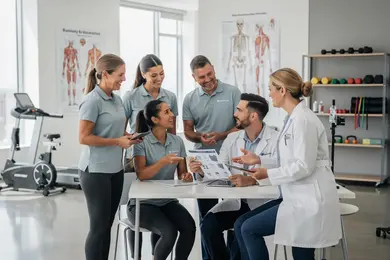
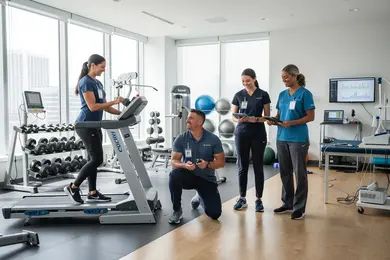
A practicum in an exercise science program is a supervised field experience that helps students apply classroom learning in a real professional setting. Instead of only studying anatomy, physiology, kinesiology, assessment, and exercise programming, students observe and participate in work with clients, patients, athletes, or community members under approved supervision.
Approximately 85% of programs include experiential learning components to align with employer expectations and improve graduate readiness. In practice, the practicum is often the point where students begin to understand how exercise science principles are used in client screening, program design, documentation, safety procedures, and professional communication.
How a practicum differs from regular coursework
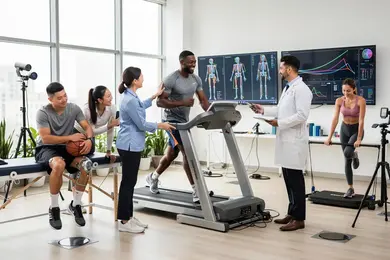
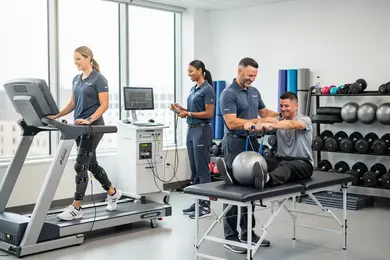
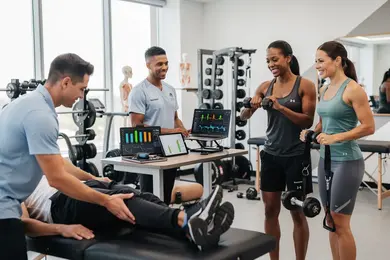
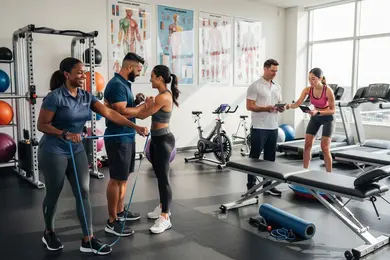
Coursework builds the academic foundation. A practicum tests whether the student can use that foundation responsibly in a supervised environment. Students may assist with fitness assessments, collect data, help implement wellness plans, support rehabilitation exercises, or observe performance testing, depending on the site and program track.
- Structured fieldwork: Practicum activities are tied to course outcomes and usually require faculty approval, site supervision, and documented learning objectives.
- Timing and eligibility: Most students begin practicum after completing foundational coursework and meeting program requirements such as a minimum GPA or competency review.
- Supervision and evaluation: A qualified professional monitors student performance, provides feedback, and verifies whether the student meets expected standards.
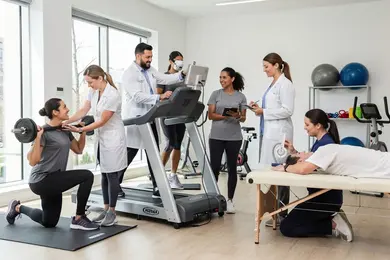
- Approved placements: Sites may include fitness centers, wellness programs, hospitals, rehabilitation clinics, athletic performance facilities, community organizations, or research settings.
- Graduation and certification relevance: Many programs require practicum completion for graduation, and some certification or licensure pathways may rely on verified supervised experience.
Students comparing exercise-related pathways may also want to review a sports science online degree to understand how online programs may handle fieldwork expectations. Students exploring structured healthcare education more broadly might compare this model with the easiest BSN program to get into, where clinical and practicum requirements also shape degree completion.
What Are The Eligibility Requirements For Exercise Science Practicum?
Eligibility requirements are used to confirm that a student is academically prepared, professionally reliable, and cleared to enter a field site. They also protect clients, patients, supervisors, host organizations, and the college or university. Studies show that over 75% of accredited exercise science programs enforce formal readiness assessments.
While requirements vary, students should expect the practicum approval process to review academic progress, completed coursework, professional conduct, and compliance documents before a placement is confirmed.
Common eligibility criteria
- Minimum GPA: Many programs require students to maintain a minimum grade point average, often ranging from 2.5 to 3.0. Falling below the threshold can delay placement even if all other requirements are complete.
- Prerequisite coursework: Students are commonly required to complete courses such as anatomy, physiology, kinesiology, biomechanics, assessment, and exercise prescription before beginning fieldwork.
- Demonstrated competencies: Some programs require exams, skill demonstrations, portfolios, lab checkoffs, or faculty evaluations to confirm that students can perform basic tasks safely.
- Faculty or coordinator approval: An academic advisor, practicum coordinator, or department faculty member may review whether the student is ready for placement and whether the proposed site fits program goals.
- Administrative clearances: Students may need background checks, drug screenings, immunization records, health forms, CPR or basic life support certification, liability insurance, orientation modules, or site-specific training.
How students can avoid eligibility delays
The most common mistake is waiting until the placement term to ask about requirements. Students should request a practicum checklist at least one term earlier, confirm deadline dates, and keep copies of all approvals and health records. If a site serves minors, older adults, patients, or other vulnerable populations, additional clearance steps may take longer than expected.
Students interested in healthcare pathways that combine clinical preparation and affordability might also compare options such as the cheapest nurse practitioner programs to see how practicum and clinical readiness requirements appear in related fields.

How Many Practicum Hours Are Required For Exercise Science Program?
Exercise science practicum hour requirements vary by school, degree level, concentration, accreditation expectations, and site type. Many programs emphasize a minimum of 300 supervised hours, but students should not assume that one school’s requirement applies everywhere.
Undergraduate exercise science programs generally mandate between 300 and 500 total practicum hours, while graduate-level or specialized tracks can require over 600 hours to meet professional licensure or certification criteria. Students typically need to dedicate 10 to 15 hours weekly to their practicum over one or more academic terms.
What counts toward practicum hours?
Programs usually count supervised activities that directly support approved learning objectives. These may include observation, client interaction, assessment support, exercise program implementation, documentation, meetings with supervisors, and approved professional development activities. Activities outside the learning plan may not count, even if they occur at the placement site.
- Observation hours: Students watch supervisors perform assessments, lead sessions, interact with clients, or manage workflow before taking on more responsibility.
- Direct engagement: Students may assist with screening, coaching, exercise instruction, data collection, or wellness programming under supervision.
- Administrative and documentation tasks: Programs may count relevant recordkeeping, client notes, reports, reflective logs, and evaluation meetings if they are required by the practicum plan.
- Rotations or phases: Some programs divide hours across settings such as rehabilitation clinics, sports performance labs, fitness facilities, or community health programs.
- Verified logs: Hours generally must be recorded, signed, and submitted according to the program’s format. Unverified hours may be rejected.
Planning for the weekly workload
Practicum hours can be difficult to complete if students also work, commute, take heavy course loads, or have limited availability during normal business hours. Before accepting a site, students should ask whether hours are available during evenings, weekends, school breaks, or specific shift blocks. They should also clarify whether missed hours can be made up and who has authority to approve changes.
A professional who pursued an exercise science degree described the experience as demanding but useful: “It wasn’t just about clocking hours—it was learning to adapt in real settings, gaining confidence with clients and procedures.” He noted that keeping detailed logs and requesting supervisor feedback felt time-consuming, but those steps helped him understand his progress and prepare for professional work beyond the classroom.
What Courses Must Be Completed Before Starting Practicum?
Prerequisite courses are meant to ensure that students enter practicum with enough scientific knowledge, safety awareness, and communication skill to work responsibly under supervision. Studies show students completing core courses are 30% more likely to meet employer expectations for workplace competency.
Exact requirements differ by program, but most exercise science practicums require students to complete a set of core courses before they can apply for placement.
Typical prerequisite course areas
- Human anatomy and physiology: These courses help students understand body systems, movement, cardiovascular response, muscular function, and the physiological effects of exercise.
- Kinesiology and biomechanics: Students learn how movement occurs, how forces affect the body, and how to identify movement patterns relevant to training or rehabilitation.
- Exercise testing and prescription: These courses prepare students to assist with fitness assessments, interpret basic results, and support safe exercise programming.
- Health, wellness, or behavior change: Programs may require coursework in coaching, health promotion, motivational strategies, or lifestyle intervention.
- Research and assessment methods: Students learn how to interpret evidence, collect data, evaluate outcomes, and apply research-informed practice.
- Professional ethics and communication: Courses may address confidentiality, documentation, client interaction, teamwork, scope of practice, and workplace conduct.
- Specialized track courses: Students in rehabilitation, strength and conditioning, clinical exercise physiology, or wellness coaching may need track-specific prerequisites before placement.
Why prerequisites matter
Practicum sites expect students to arrive with basic competence. A student who has not completed required preparation may struggle to understand assessments, follow safety procedures, communicate with clients, or document work accurately. Students should also check whether prerequisite courses must be completed with a minimum grade, not merely attempted.
Prospective students interested in shortening their academic timeline can compare options such as accelerated degree programs, but they should still review how accelerated formats schedule prerequisite courses and practicum approval.
How Does The Exercise Science Practicum Placement Process Work?
The practicum placement process connects students with approved organizations that can provide supervised, relevant field experience. It is usually managed through the academic department, a practicum coordinator, or a field education office. Students may be assigned to a site, asked to rank preferences, or allowed to propose a site for approval.
Studies show that 70% of employers prefer candidates who have gained practical experience through placements or internships before hiring. Because placements can influence references, future employment, and certification readiness, students should treat the process as a professional application rather than a routine course registration step.
Typical placement steps
- Eligibility verification: The program confirms that the student has completed required courses, meets GPA standards, and satisfies any preliminary readiness requirements.
- Application submission: Students may submit a practicum application, resume, personal statement, site preferences, availability, and career interests.
- Matching or site approval: Coordinators review whether the site fits the student’s academic track and whether the organization can provide appropriate supervision and activities.
- Host organization review: The site may review the student’s qualifications, schedule, goals, and compliance documents before accepting the placement.
- Interview or screening: Some sites interview students to assess professionalism, communication style, reliability, and fit.
- Learning agreement: The school and site may document expected duties, required hours, supervision structure, safety policies, evaluation methods, and start and end dates.
- Onboarding: Students complete orientation, background checks, health clearances, confidentiality agreements, training modules, or other site-specific requirements.
- Ongoing oversight: Faculty advisors or coordinators monitor progress through time logs, check-ins, supervisor evaluations, and final documentation.
Questions to ask before accepting a placement
- Will this site help me build skills related to my career goal?
- Who will supervise me, and how often will feedback be provided?
- What tasks am I allowed to perform, and what tasks are outside my role?
- Can the site offer enough hours within the academic term?
- Are there costs for background checks, health screenings, parking, uniforms, travel, or certifications?
- What happens if the site cancels hours or the supervisor changes?
A professional who launched her career after completing an exercise science practicum described the process as rigorous but useful. She remembered managing placement deadlines while finishing coursework and said faculty guidance helped her understand site expectations. “The interview was nerve-wracking, but it helped set clear goals for the experience,” she said. Regular check-ins with advisers kept her on track and helped her see the practicum as a bridge between academic preparation and professional practice.

What Documents And Paperwork Are Required Before Practicum?
Pre-practicum paperwork confirms that a student is eligible, cleared, insured, informed, and ready to enter a professional setting. Nearly 85% of healthcare and allied health programs have strengthened compliance processes during student onboarding to uphold quality and regulatory requirements.
Students should expect paperwork to take time. Some forms require signatures from multiple offices, some clearances expire, and some sites will not allow a student to begin until every document is approved.
Common documents required before practicum
- Practicum application: This may include personal information, academic standing, career interests, placement preferences, availability, and acknowledgment of program policies.
- Faculty or advisor approval: Programs often require written authorization confirming that the student meets academic and professional readiness standards.
- Learning agreement or affiliation paperwork: The school and site may define the placement dates, learning objectives, required hours, duties, supervision plan, and evaluation process.
- Medical clearance and immunization records: Students may need proof of vaccinations, physical exam results, tuberculosis screening, or other health documentation required by the site.
- Background check and drug screening results: These are common when students work in healthcare, school, community, or vulnerable-population settings.
- Liability insurance or waiver forms: Programs may require proof of coverage or signed acknowledgments of risk and responsibility.
- Confidentiality and privacy agreements: Students may need to confirm they understand privacy laws, ethical expectations, and limits on sharing client or patient information.
- Certification documentation: Some sites require CPR, first aid, basic life support, or other safety-related certifications before students begin.
- Site-specific onboarding forms: These may include orientation attestations, dress code agreements, emergency contact forms, technology access forms, parking documents, or training certificates.
Paperwork mistakes that cause delays
Students commonly lose time by submitting expired records, using the wrong background check vendor, missing signatures, assuming electronic copies are acceptable, or overlooking site-specific forms. The safest approach is to keep a dated checklist, save copies of every submission, and confirm in writing that the practicum office has received and approved each requirement.
What Background Checks, Immunizations, Or Clearances Are Needed?
Background checks, immunizations, and clearances are used to protect students, clients, patients, athletes, staff, and the host organization. They are especially important when placements involve healthcare facilities, schools, older adults, minors, rehabilitation settings, or community health programs. According to recent research, over 85% of healthcare-related practicum programs require comprehensive background and health clearances as part of enrollment.
Requirements are not universal. A university fitness center may have different clearance standards than a hospital-based cardiac rehabilitation program or a youth sports organization. Students should confirm requirements with both the academic program and the placement site.
Common clearance categories
- Criminal background checks: Programs may require county, state, or national checks, and some placements may require fingerprinting. These checks help determine eligibility for work with protected populations.
- Drug screening: Some healthcare, rehabilitation, and institutional sites require drug testing before placement begins or at specified points during the practicum.
- Immunization records: Students may need documentation for measles, mumps, rubella, tetanus, influenza, hepatitis B, or other vaccinations required by the site.
- Tuberculosis screening: Sites may require a skin test, blood test, or chest x-ray, depending on policy and health risk considerations.
- CPR or basic life support certification: Many sites expect students to demonstrate emergency response readiness before interacting with clients or patients.
- Health clearance: A physical exam or provider statement may be required to confirm that the student can safely perform practicum duties.
- Special population clearances: Placements involving minors, older adults, or other protected groups may require child abuse background reviews, elder neglect screenings, or additional state-specific documentation.
- Site orientation and safety training: Students may need to complete modules on infection control, emergency procedures, equipment use, confidentiality, or workplace conduct.
Why timing matters
Clearances can take days or weeks, and some must be completed through approved vendors. Students should avoid completing checks too early if the site requires current documentation, but they also should not wait until the start date. The best practice is to ask the practicum coordinator for the official timeline and confirm whether any clearance has an expiration date.
What Should Students Expect During Exercise Science Practicum Placement?
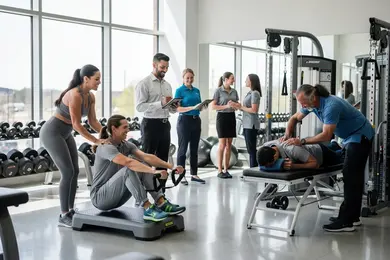
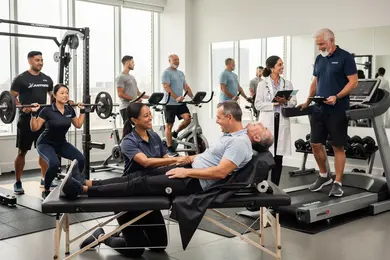
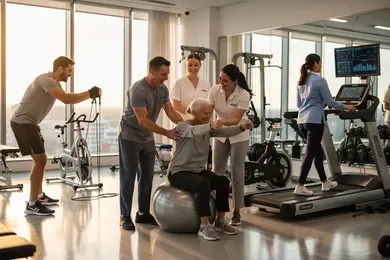
During an exercise science practicum, students should expect a supervised transition from academic learning to workplace performance. The experience may include observation, client interaction, assessments, documentation, program support, meetings, and regular feedback. Studies reveal that 87% of employers in allied health fields highly value hands-on practicum experience for assessing the readiness of recent graduates.
The practicum is not simply a way to accumulate hours. It is an opportunity to develop judgment, professionalism, communication skills, and confidence in real settings where schedules, client needs, safety concerns, and team expectations can change quickly.
Common day-to-day responsibilities
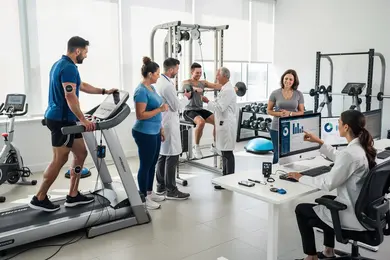
- Observation: Students may begin by watching supervisors conduct assessments, coach clients, document sessions, or manage safety procedures.
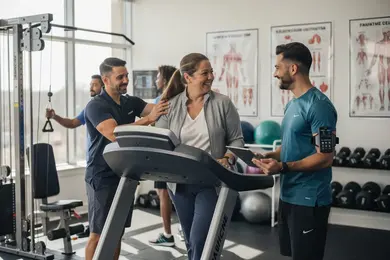
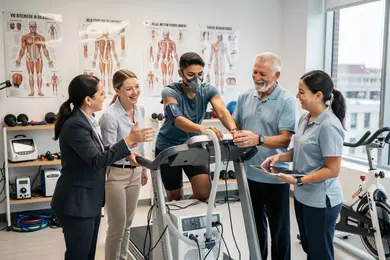
- Assisted assessments: Students may help collect health histories, measure fitness indicators, record data, or prepare equipment under supervision.
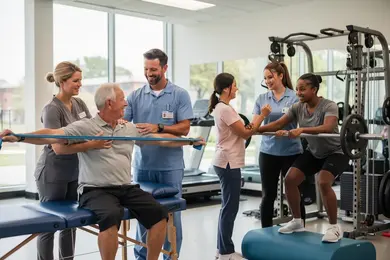
- Exercise programming support: Depending on the site, students may assist with warm-ups, corrective exercises, strength routines, conditioning sessions, wellness activities, or rehabilitation support.
- Client communication: Students learn how to explain exercises, listen to concerns, maintain boundaries, and adapt communication to different populations.
- Documentation: Accurate notes, logs, progress summaries, and reflective assignments are often part of the experience.
- Team collaboration: Students may interact with trainers, clinicians, coaches, faculty, therapists, administrators, or wellness staff.
- Professional conduct: Punctuality, confidentiality, respectful communication, appropriate attire, and ethical behavior are expected from the first day.
Challenges students should prepare for
Students may need to balance practicum hours with classes, exams, transportation, work, and personal responsibilities. They may also face unfamiliar workplace routines, different supervisor styles, or clients whose needs do not match textbook examples. A strong practicum student asks questions, documents carefully, accepts feedback, and clarifies scope of practice before taking on new tasks.
For those considering related nutrition and wellness careers, exploring dietetics programs can show how supervised practice requirements may differ across allied health pathways.
How Are Practicum Students Supervised And Evaluated?
Practicum supervision is designed to help students improve while ensuring that their work remains safe, ethical, and aligned with program standards. Evaluation provides evidence that the student has completed required activities, developed relevant skills, and met academic expectations. Recent data shows that well-executed experiential learning can improve skill acquisition by up to 40% across exercise science programs.
Who supervises practicum students?
Supervision often involves more than one person. An on-site mentor may oversee daily work, while a faculty advisor or practicum coordinator monitors academic requirements. In some placements, a site coordinator also manages schedules, onboarding, and performance documentation.
- On-site supervisor: Provides daily or weekly guidance, observes performance, assigns appropriate tasks, and verifies hours.
- Faculty advisor: Connects practicum work to academic outcomes, reviews assignments, and helps resolve problems.
- Practicum coordinator: Confirms placement compliance, manages paperwork, and ensures the site meets program requirements.
How evaluation usually works
- Direct observation: Supervisors watch how students communicate, perform tasks, follow protocols, and respond to feedback.
- Competency checklists: Programs may use structured forms to assess skills such as assessment support, program design, safety awareness, documentation, and professionalism.
- Time logs: Students record completed hours and may need supervisor signatures or electronic approval.
- Progress reviews: Midpoint and final evaluations help identify strengths, areas for improvement, and whether the student is on track.
- Reflective assignments: Journals or reports may require students to connect field experiences with coursework and professional standards.
- Final performance evaluation: The site supervisor and academic program may assess whether the student met practicum objectives and completed all required documentation.
How to respond to feedback
Feedback is part of the learning process, not a sign of failure. Students should ask for specific examples, clarify expectations, and document action steps. If supervision is inconsistent or duties do not match the approved learning plan, students should contact the faculty advisor early rather than waiting until the end of the term.
Students seeking the fastest way to become a nurse practitioner or another practice-based healthcare path will see a similar pattern: strong supervision and documented evaluation are central to workplace preparedness.
How Does Practicum Help With Licensure Or Certification Requirements?
A practicum may support licensure or certification by providing verified supervised experience, documented competencies, and evidence of field-based training. The exact value depends on the profession, credentialing organization, state rules, program accreditation, and the student’s specialization. Students should never assume that a practicum automatically satisfies a licensing or certification requirement without checking the relevant authority.
Ways practicum can support credentialing
- Clinical or field hours fulfillment: Some pathways require a set number of supervised hours. Practicum documentation may help demonstrate that the student completed approved experience.
- Competency assessment: Supervisors may verify that students can apply academic knowledge in areas such as assessment, exercise programming, safety, communication, and documentation.
- Qualified supervision: Credentialing pathways may require supervision by professionals with specific licenses, certifications, or experience. Students should confirm supervisor qualifications before starting.
- Documentation and verification: Programs may maintain logs, evaluations, learning agreements, and competency forms that can be used to support graduation or credential applications.
- Discipline-specific preparation: Exercise science students may pursue different directions, including health coaching, athletic training, rehabilitation support, strength and conditioning, wellness programming, or clinical exercise-related roles. Each pathway may treat practicum experience differently.
What students should verify early
Before choosing a placement, students should ask whether the site’s duties, supervisor credentials, and hour structure align with their intended certification or licensure pathway. They should also ask who signs final verification forms and whether the program keeps copies after graduation. Missing documentation can be difficult to recreate later.
What Do Students Say About Their Exercise Science Practicum Experience?
- : "My practicum experience in exercise science was both challenging and rewarding. At first, I was confused about eligibility requirements, and that delayed my placement. Once everything was approved, the hands-on work was more valuable than I expected. My mentor gave regular feedback, which helped me build confidence and improve my practical skills. Arthur"
- : "The structured evaluation process helped me understand what I was doing well and where I needed to improve. I felt supported, although the workload was heavier than I expected at times. Overall, the practicum helped me understand exercise science in practical terms and gave me a clearer view of professional expectations. Roger"
- : "I was excited about my exercise science practicum from the beginning, and it delivered in most ways. The eligibility screening was straightforward, so I could focus on learning instead of administrative problems. Supervision was somewhat hands-off, but that pushed me to become more self-reliant and confident in the field. Miles"
Other Things You Should Know About Exercise Science Degrees
Yes, many exercise science programs allow students to fulfill practicum hours across multiple approved sites. This approach can provide broader exposure to diverse populations and settings, enhancing practical skills. However, each site must meet the program's criteria and have qualified supervision to ensure consistent learning outcomes.
The 2027 exercise science practicum emphasizes developing professional skills such as effective communication, critical thinking, problem-solving, and teamwork. These skills are crucial as students engage with real-world challenges and interact with clients and professionals in health and fitness environments.
While programs usually set minimum weekly hour requirements, many offer flexible scheduling to accommodate students' academic and personal commitments. Evening, weekend, or part-time placements are common options, though some sites may have fixed hours based on their operational needs. Students should coordinate scheduling details with both their academic advisor and site supervisor.
Practicum placements serve as valuable networking platforms by connecting students with professionals in exercise science and related fields. Through direct interaction with supervisors and staff, students can establish mentorship relationships and gain references for future employment. This real-world engagement often opens doors to job prospects after graduation.
References
- LibGuides: Internship Guide: Internship Documentation Checklist https://guides.centralpenn.edu/internship/documentationchecklist
- What are background checks and security clearances? https://help.usajobs.gov/faq/job-announcement/security-clearances
- Q. Are there eligibility requirements prior to starting the internship/clinical practicum? https://chat.library.berkeleycollege.edu/faq/195897
- Practicum in Exercise Science or Health Science | Rockhurst University https://www.rockhurst.edu/career-services/co-ops-internships/EHS-practicum-internship-guide
- Background Checks and Security Clearances for Federal Jobs https://gogovernment.org/application-process/background-checks-and-security-clearances-for-federal-jobs/
- What is a Counselling Practicum and Why It Matters? - Yorkville https://www.yorkvilleu.ca/blog/macp/what-is-a-counselling-practicum-and-why-it-matters/
- Immunization Requirements in Healthcare Higher Education https://blog.verifiedcredentials.com/immunization-requirements-in-healthcare-higher-education
- Section 4: Professional Practice - CACREP https://www.cacrep.org/section-4-professional-practice/
- EN | The documents for starting an internship or job | XIRO.bg https://xiro.bg/en/career-adviser/section/2-selection/category/3-preparation/post/18-the-documents-for-starting-an-internship-or-job
- Healthcare Background Check Requirements: What You Need to Know https://www.cisive.com/blog/healthcare-background-check-requirements