2027 How to Start College Strong in 2026

Co-Founder and Chief Data Scientist
Starting college means making early choices that affect your grades, costs, career options, and confidence. College Board's 2024 data lists average published tuition and fees at $11,610 for in-state public four-year colleges and $43,350 for private nonprofit four-year colleges, so planning matters before mistakes become expensive.
This guide is for first-year, transfer, online, and returning students who want a strong start. You will learn how to compare programs, manage money, choose a major, use support services, and build habits that improve your odds of long-term success.
Key Things You Should Know
- Start with fit, not prestige: compare accreditation, total cost, transfer policies, support services, and career outcomes before committing to a school or schedule.
- Use current cost realities in your plan: College Board reported 2024-2025 average published tuition and fees of $11,610 at public in-state four-year colleges and $43,350 at private nonprofit four-year colleges.
- Connect academics to employability early: BLS 2024 data shows workers with a bachelor's degree had median weekly earnings of $1,543, compared with $930 for workers with only a high school diploma, but outcomes still vary by major, location, experience, and industry.
How can you build a strong academic foundation in your first college term?
A strong first term is less about being perfect and more about building a repeatable system. In college, the syllabus is your contract, credit hours estimate workload, office hours are a built-in support channel, and your learning management system is where deadlines, grades, readings, and instructor updates usually live.
Your first goal is to understand expectations before you fall behind. Use the first two weeks to map requirements, identify challenging courses, and create a support plan while it is still easy to adjust.
- Read every syllabus and enter exams, papers, labs, discussion deadlines, and withdrawal dates into one calendar.
- Calculate weekly study time by course difficulty, not just credit hours; a writing-heavy three-credit course may need more time than an introductory lecture.
- Attend office hours early with a specific question so instructors know you are engaged before a problem appears.
- Use tutoring, writing centers, math labs, and library research help before your first low grade, not after midterms.
- Check your grades weekly and compare them with the grading formula in the syllabus so you know whether you are actually on track.
Common first-term mistakes often come from treating college like high school with more freedom. The table below highlights early academic risks and what they usually signal.
| Common mistake | What it can signal | Why it matters |
| Skipping class when attendance is not graded | Weak routine and low course engagement | Unrecorded participation often affects understanding even when it does not appear as a grade item. |
| Waiting until the night before a paper | Poor project planning | College assignments often require research, drafting, citation checking, and revision. |
| Ignoring a low quiz score | Delayed feedback response | Small early assessments can reveal gaps before larger exams determine most of the grade. |
| Taking too many difficult courses at once | Unbalanced academic load | Students may underestimate how labs, clinicals, studios, or quantitative courses affect weekly workload. |
The best academic foundation combines preparation, feedback, and adjustment. If a course feels confusing by week three, assume the issue needs action rather than waiting to "catch up later."
What steps help you choose the right major and long-term career path?
Choosing a major is a career decision, a financial decision, and a learning-style decision. A major is your primary field of study, but your career path may also depend on internships, graduate school, licensure, certifications, portfolios, location, and professional networks.
Start by separating interest from fit. Interest asks what you enjoy; fit asks whether the coursework, job tasks, labor market, salary range, and required credentials match the life you want. If earnings are a major factor, compare fields carefully and review resources on the highest-paying degree options without assuming pay should be the only reason to choose a major.
Use the following sequence to narrow your options before declaring or changing a major. These steps help you avoid choosing based only on family pressure, a favorite class, or a single salary headline.
- List three career outcomes you would accept, not just one dream job, because majors often lead to multiple occupations.
- Review required courses for each major and flag subjects that have historically been difficult for you.
- Check whether the career requires licensure, graduate school, supervised hours, a portfolio, or certifications beyond the bachelor's degree.
- Meet with both an academic advisor and a career advisor before the add/drop or major declaration deadline.
- Test the field through a student organization, job shadowing, informational interview, entry-level campus job, research project, or short internship.
The comparison below shows how different decision lenses can change your major choice. Use it to balance passion with practicality.
| Decision factor | What to compare | Best-fit student |
| Career alignment | Job duties, industries, credentials, and advancement paths | Students who want a clear route into a specific occupation |
| Academic fit | Course difficulty, math or writing intensity, labs, studios, and prerequisites | Students who want a sustainable GPA and realistic workload |
| Financial return | Program cost, likely debt, entry-level openings, and median pay context | Students borrowing heavily or supporting family expenses |
| Flexibility | Transferability of skills across industries | Students who are undecided or expect career changes later |
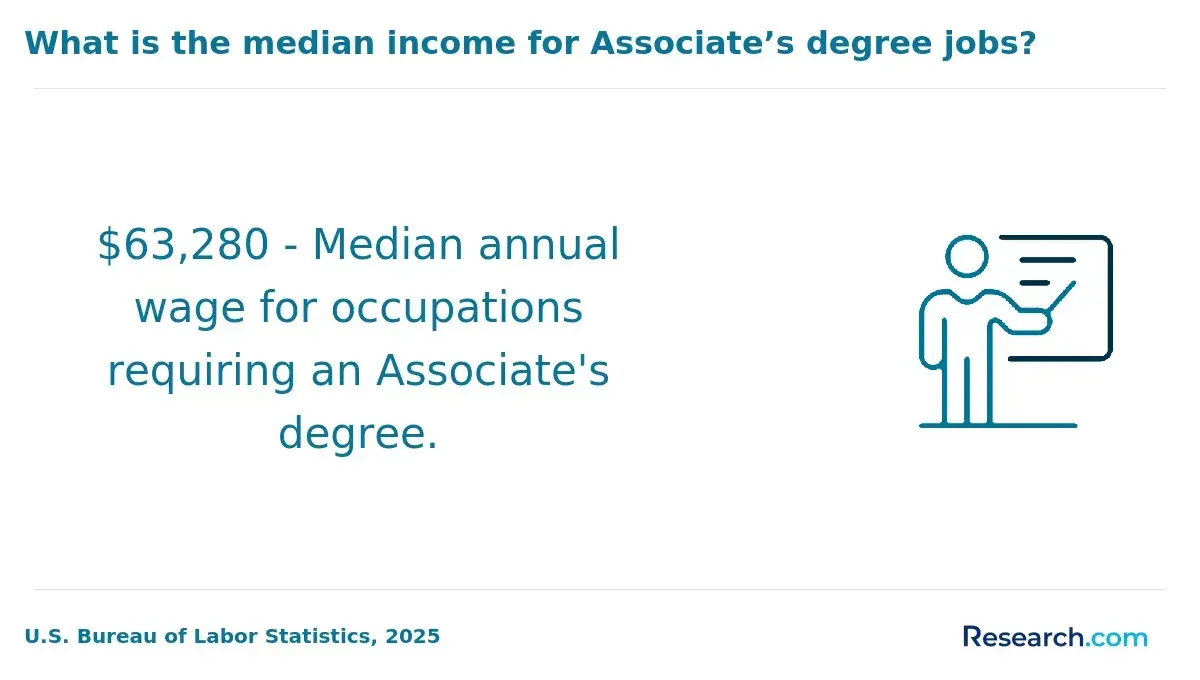
Be careful with salary data. BLS earnings by education level and occupation describe medians, not promises. Your outcome can vary widely based on internships, geography, school reputation in the field, economic conditions, and how well you build job-ready skills.
How do online, hybrid, and campus-based programs compare for new students?
College format affects your schedule, social experience, learning support, costs, and accountability. Online programs deliver most or all coursework virtually, hybrid programs combine online learning with scheduled in-person requirements, and campus-based programs require regular physical attendance.
Online learning has become a mainstream option, but it is not automatically easier. Students who need flexibility may benefit from asynchronous courses or competency-based universities, while students who need structure, labs, campus life, or face-to-face support may prefer hybrid or campus-based study.
The table below compares common formats so you can match the program structure to your learning style and obligations.
| Format | Typical strengths | Potential drawbacks | Often fits |
| Online asynchronous | High schedule flexibility and reduced commuting | Requires strong self-management and proactive communication | Working adults, caregivers, military students, and self-directed learners |
| Online synchronous | Live interaction without relocating | Fixed meeting times can conflict with work or time zones | Students who want structure but cannot attend campus |
| Hybrid | Balances flexibility with in-person support | Travel is still required for some classes, labs, or exams | Students in technical, health, education, or lab-based programs |
| Campus-based | Strong access to facilities, clubs, labs, housing, and face-to-face networking | Less flexible and often higher living or transportation costs | Traditional-age students, residential learners, and students needing a structured environment |
Before choosing a format, ask whether the program includes live faculty access, tutoring, advising, disability accommodations, exam proctoring, internship support, and technology help. A flexible format is only useful if the support system is also accessible when you need it.
What should you look for in an accredited and reputable college or university?
Accreditation is a quality review process that affects credit transfer, federal financial aid eligibility, graduate school admission, employer recognition, and licensure pathways. Institutional accreditation applies to the college or university as a whole, while programmatic accreditation applies to specific fields such as nursing, education, social work, business, engineering, counseling, or public health.
For any program, especially online or accelerated options, verify accreditation directly with recognized accreditors and the school's official catalog. If you are comparing advanced pathways such as PhD programs online, accreditation and dissertation, residency, faculty supervision, and research expectations become even more important.
Use this checklist when evaluating a school. It focuses on quality signals that affect your ability to transfer credits, qualify for aid, complete your program, and use the credential after graduation.
- Confirm institutional accreditation through a recognized accrediting agency rather than relying only on marketing language.
- Check programmatic accreditation if your career involves licensure, certification, clinical practice, teaching, engineering, accounting, counseling, or healthcare.
- Review graduation, retention, transfer-out, loan repayment, and job placement information when available.
- Ask whether credits transfer in and out, especially if you may move, change majors, or pursue graduate school later.
- Read the academic catalog for policies on withdrawals, repeated courses, prior learning credit, academic probation, and satisfactory academic progress.
- Watch for pressure tactics, vague career claims, unclear tuition pages, or promises that a credential will automatically lead to a specific job or salary.
A reputable school should make its costs, policies, accreditation, faculty qualifications, student services, and complaint process easy to find. If basic information is hard to verify, treat that as a red flag rather than a minor inconvenience.
How can you design a realistic study, work, and life schedule for college?
A realistic college schedule begins with your fixed commitments, not your ideal version of yourself. Class meetings, work shifts, caregiving, commuting, sleep, meals, labs, and study blocks all compete for the same limited hours.
Full-time study can be efficient, but it may not be best if you work many hours or have major family responsibilities. Part-time study can protect grades and health, but it may extend your timeline and affect aid eligibility. Students considering an accelerated degree program should be especially honest about weekly workload because shorter timelines usually compress assignments rather than reduce expectations.
Build your schedule in this order so your plan reflects real constraints instead of wishful thinking.
- Place fixed obligations first, including class meetings, labs, work shifts, commuting, childcare, medical appointments, and religious or family commitments.
- Add sleep and meals as protected time, because exhaustion usually reduces academic efficiency rather than creating more usable hours.
- Assign study blocks by course difficulty, with extra time for writing, quantitative work, lab reports, and exams.
- Reserve one weekly planning block to review deadlines, financial tasks, advising messages, and upcoming assignments.
- Create a backup plan for illness, technology failure, transportation problems, or work schedule changes.
The table below shows how different enrollment choices usually affect time, cost, and momentum. It is a comparison tool, not a rule.
| Enrollment pattern | Typical advantage | Main trade-off | Often makes sense when |
| Full-time | Faster progress and stronger campus engagement | Less flexibility for paid work or caregiving | You have stable finances, support, and enough study time |
| Part-time | More room for work, family, and adjustment | Longer timeline and possible aid implications | You need to protect grades or maintain income |
| Accelerated | Shorter calendar time to credential completion | Compressed workload and limited recovery time | You have transfer credits, strong self-discipline, and fewer outside obligations |
| Summer or winter courses | Can help catch up or get ahead | Fast pace and fewer breaks | You are retaking a course, completing prerequisites, or reducing future term loads |
If your planned week has no buffer, it is not realistic. College success usually depends on a schedule that can survive a bad week, not one that works only when everything goes smoothly.
What financial planning strategies help you manage tuition, aid, and living costs?
College affordability depends on total cost, not tuition alone. Your real budget may include fees, books, supplies, housing, food, transportation, health insurance, technology, childcare, lost work hours, and loan interest.
College Board's 2024 Trends in College Pricing reported average published tuition and fees of $4,050 at public two-year colleges for in-district students, compared with $11,610 at public four-year colleges for in-state students. That difference can make community college, transfer pathways, and shorter credentials financially attractive when they align with your goals; for some learners, an associate degree in 6 months online may be worth exploring only if accreditation, transferability, workload, and career fit are clear.
Use the following steps to build a practical college money plan. The goal is to reduce preventable debt while keeping enough academic and personal stability to finish.
- Complete the FAFSA as early as possible and correct errors quickly, especially if your school or state has priority aid deadlines.
- Compare net price, not sticker price, by subtracting grants and scholarships before estimating loans and out-of-pocket costs.
- Separate free aid from borrowed aid so grants and scholarships do not get mentally grouped with loans.
- Ask the financial aid office how dropping, withdrawing, repeating courses, or changing enrollment status could affect satisfactory academic progress.
- Estimate living costs realistically, including rent increases, commuting, food, required software, clinical supplies, uniforms, or exam fees.
- Limit work hours if your grades begin to fall, because failing or retaking courses can erase the short-term benefit of extra income.
The table below summarizes major college cost categories so you can compare schools more accurately.
| Cost category | What it includes | Why students underestimate it |
| Tuition and fees | Instructional charges, mandatory fees, lab fees, online fees, and campus fees | Published tuition may exclude program-specific or course-specific charges. |
| Books and materials | Textbooks, access codes, software, equipment, art supplies, or lab kits | Some courses require paid digital platforms that cannot be bought used. |
| Housing and food | Dorms, rent, meal plans, groceries, utilities, and deposits | Off-campus living may look cheaper until utilities, transportation, and leases are included. |
| Transportation | Gas, parking, transit passes, rideshare, maintenance, or flights | Hybrid and clinical programs may require travel beyond regular class days. |
| Opportunity cost | Reduced work hours or delayed full-time earnings | Students often budget bills but not lost income. |
Financial planning is not just about choosing the cheapest school. The better question is whether the program is affordable enough to complete and credible enough to support your next academic or career step.
How do you use campus and online support services to start college successfully?
Support services are not only for students in crisis. They are part of the value you pay for, and using them early can help you avoid academic, financial, and personal setbacks.
Most colleges offer a combination of academic advising, tutoring, writing support, library research help, career services, financial aid counseling, accessibility services, mental health counseling, technology support, and student success coaching. Online students should have access to many of these services virtually, though hours and formats vary by institution.
Use this support plan during your first month. It helps you identify the right office before you urgently need help.
- Schedule an advising appointment to confirm your courses apply to your degree plan, prerequisites, transfer goals, or licensure path.
- Visit tutoring or writing support with an actual assignment so you learn how the service works before a high-stakes deadline.
- Meet career services early to explore majors, resume basics, campus jobs, internships, and career assessments.
- Contact accessibility services promptly if you need accommodations for a documented disability, because accommodations are usually not retroactive.
- Save contact information for financial aid, billing, registrar, IT help, counseling, and emergency support in one place.
A common mistake is assuming asking for help means you are unprepared. In college, high-performing students often use support services more strategically because they understand that feedback and resources shorten the learning curve.
What habits and tools improve time management and organization in college?
Time management in college is really decision management. You need a system for choosing what matters today, what can wait, what requires deep focus, and what needs help from someone else.
Digital calendars, task managers, note-taking apps, cloud storage, and AI tools can all help, but tools do not replace judgment. AI can summarize notes, generate practice questions, or help brainstorm study plans, but students should follow course policies and avoid submitting AI-generated work as their own.
These habits create a dependable organization system without making planning more complicated than studying.
- Use one calendar for academic, work, personal, and financial deadlines so conflicts are visible early.
- Break large assignments into milestones such as topic selection, research, outline, draft, citation check, revision, and submission.
- Review each course page at the same time every week to catch hidden announcements, changed due dates, or new materials.
- Study with active methods such as practice problems, self-testing, concept mapping, teaching the material aloud, or writing from memory.
- Keep files in clearly labeled folders by term, course, and assignment so you can find drafts, feedback, and receipts quickly.
- Use AI tools only within course rules and verify outputs against assigned materials, instructor guidance, and credible sources.
The biggest red flag is a system that depends on memory. If deadlines, readings, and financial tasks live only in your head, your workload will eventually outgrow your recall.
How can you build a professional network and gain early career experience?
Career preparation should begin before senior year. Employers often look for evidence that you can communicate, solve problems, collaborate, use technology responsibly, and apply classroom knowledge in real settings.
Your early network does not need to be large. It should include people who can help you understand a field, find opportunities, improve your materials, and make better decisions. That may include instructors, advisors, alumni, supervisors, classmates, club leaders, and professionals you meet through informational interviews.
Use the first year to build career evidence gradually. These actions work for students who are undecided as well as students with a clear career goal.
- Create a basic resume that includes education, work, service, projects, technical skills, and campus involvement, then update it each term.
- Join one career-relevant student organization or professional association chapter instead of joining many groups superficially.
- Ask career services about job shadowing, micro-internships, undergraduate research, service learning, co-ops, or campus employment.
- Conduct two informational interviews with people in fields you are considering and ask about daily tasks, entry-level expectations, and recommended preparation.
- Build a small portfolio of projects, writing samples, code, designs, lab work, presentations, or case studies when relevant to your field.
- Track accomplishments with dates and results so scholarship, internship, and transfer applications are easier to complete later.
AI and automation are changing entry-level work by increasing demand for digital fluency, data awareness, communication, and adaptability. Instead of trying to predict every future job title, focus on transferable skills and evidence of applied learning.
What health and well-being practices support sustained success throughout college?
College success depends on energy, attention, and emotional resilience as much as intelligence. Sleep loss, food insecurity, untreated anxiety, isolation, financial stress, and overwork can all affect grades and persistence. Well-being is not a separate goal from academic performance. It is part of the system that allows you to attend class, remember material, communicate clearly, and recover from setbacks.
Build a maintenance plan before stress peaks. The following practices help protect your ability to keep going throughout the term.
- Protect a consistent sleep window during the week, especially before exams, clinicals, labs, presentations, and work shifts.
- Plan affordable meals and snacks around your class schedule so long days do not depend on skipped meals or expensive last-minute food.
- Use counseling, peer support, crisis lines, or medical services early if stress, anxiety, depression, grief, or substance use affects daily functioning.
- Create social anchors through one club, study group, faith community, fitness activity, volunteer role, or cohort-based program.
- Set boundaries around work hours, family expectations, and digital distractions when they begin to interfere with academic progress.
- Know emergency and after-hours support options, especially if you are an online, commuter, or evening student.
A common mistake is waiting until burnout feels severe before making changes. If your attendance, sleep, eating, motivation, or mood changes noticeably for more than a short period, treat it as a signal to seek support and adjust your workload.
Other Things You Should Know About
Many full-time students take 12 to 15 credits, but the right load depends on course difficulty, work hours, commuting, family responsibilities, and aid requirements. If you are unsure, choose a balanced schedule and ask an advisor how changes could affect your timeline and financial aid.
Online study can be better if you need flexibility and are self-directed. Campus-based study may be better if you want structure, labs, housing, clubs, and face-to-face support. Hybrid programs can be a good middle option, especially for students who need both flexibility and in-person resources.
Choose or change your major after reviewing degree requirements, career outcomes, prerequisites, and transfer or licensure implications. The earlier you decide, the easier it is to avoid excess credits, but it is better to change thoughtfully than to stay in a poor-fit major.
One of the biggest mistakes is waiting too long to ask for help. Academic, financial, scheduling, and mental health problems are usually easier to fix early. Use advising, tutoring, financial aid counseling, and student support services before a problem becomes urgent.
References
- College Planning for Families with Different Incomes https://avior.com/insights/wealth-management/education-planning/college-planning-families-different-income-levels/
- 10 Tips for Effective Networking https://phern.communitycommons.org/early-career-professional-learning-series/build-your-network/
- How to Choose a Major in College – Tips to Consider https://www.umassglobal.edu/blog-news/choose-a-major-college-tips-consider
- Starting strong: tips for networking in your early career - Oliver & Co Solicitors Cheshire https://www.oliverandco.co.uk/starting-strong-tips-for-networking-in-your-early-career/
- Time Management Tips for Students—Balance Study & Life https://www.ue-amsterdam.com/blog/time-management-tips-for-students
- Time Management for Students: Create the Perfect Study Schedule | BSBI https://www.berlinsbi.com/blog/time-management-for-students-how-to-create-the-perfect-study-schedule
- Online vs Hybrid vs Campus Learning in Healthcare: Which Is Right for You? https://www.edumed.org/articles/online-vs-hybrid-vs-campus/
- How to build & grow your career network https://www.citylit.ac.uk/blog/professional-networking-steps-to-build--grow-your-network
- How to Create an Effective Study Schedule https://www.slingshotedu.com/how-to-create-an-effective-study-schedule